http://www.ted.com In a lively show, mathemagician Arthur Benjamin races a team of calculators to figure out 3-digit squares, solves another massive mental equation and guesses a few birthdays. How does he do it? He’ll tell you.
TEDTalks is a daily video podcast of the best talks and performances from the TED Conference, where the world’s leading thinkers and doers are invited to give the talk of their lives in 18 minutes — including speakers such as Jill Bolte Taylor, Sir Ken Robinson, Hans Rosling, Al Gore and Arthur Benjamin. TED stands for Technology, Entertainment, and Design, and TEDTalks cover these topics as well as science, business, politics and the arts. Watch the Top 10 TEDTalks on TED.com, at http://www.ted.com/index.php/talks/top10
Secrets of Mental Math: The Mathemagician’s Guide to Lightning Calculation and Amazing Math Tricks
These simple math secrets and tricks will forever change how you look at the world of numbers.
Secrets of Mental Math will have you thinking like a math genius in no time. Get ready to amaze your friends—and yourself—with incredible calculations you never thought you could master, as renowned “mathemagician” Arthur Benjamin shares his techniques for lightning-quick calculations and amazing number tricks. This book will teach you to do math in your head faster than you ever thought possible, dramatically improve your memory for numbers, and—maybe for the first time—make mathematics fun.
Yes, even you can learn to do seemingly complex equations in your head; all you need to learn are a few tricks. You’ll be able to quickly multiply and divide triple digits, compute with fractions, and determine squares, cubes, and roots without blinking an eye. No matter what your age or current math ability, Secrets of Mental Math will allow you to perform fantastic feats of the mind effortlessly. This is the math they never taught you in school.
Students in school are advised to practice their Math! It turns out many of the best jobs in the 21st Century are related to Maths. Even if you are not thinking of becoming a Mathematician, it is good to know your Quadratic Equations well. Math may prove useful when you need it in your job!
Want one of the best jobs in the nation? Then do the math — and do a lot of it. According to a new report, mathematicians, statisticians and actuaries are now three of the four best jobs to be had.
The CareerCast.com report ranks 200 jobs each year based on a number of criteria, including income, outlook, environmental factors, stress and physical demands. Mathematician, this year’s No. 1 job, and statistician, No. 3, both jumped up 17 places from last year’s ranking. Actuary, last year’s winner, fell to No. 4, while tenured university professor took second place on the new list.
Mathematicians came in first because demand for people who can do statistical analysis is growing in all business sectors. That need is expected to lead to a 23 percent increase in demand by 2022. As you might expect, the pay isn’t too bad. Last year, mathematicians earned a median annual salary of $101,360.
“In today’s data-driven economy, math skills unlock a world of career opportunities,” Tony Lee, CareerCast’s publisher said in a statement. “In fact, the outlook for all STEM careers is very positive, as evidenced by many of this year’s best jobs — mathematician, statistician, actuary, software engineer and computer systems analyst.”
Mathematics teaches patience, discipline, and step-by-step problem-solving skills. For those with a substantial background in mathematics, an unlimited number of career opportunuities are available. According to Jobs Rated Almanac , a 1990 publication of World Almanac Books of New York, NY, careers that require a very strong background in mathematics were listed as the five “best” jobs. They were :
Another day, another reason to get better at math.
It’s no secret that quantitative skills are in high demand on the job market—one analytics recruiter recently told The Journal that workers who can’t crunch numbers may ultimately face a “permanent pink slip.”
Now, a new ranking from the job-search website CareerCast.com names mathematician as the best occupation of 2014. “Math skills unlock a world of career opportunities,” publisher Tony Lee said. (Cue the Square One theme, and tune in Mathnet.)
Data whizzes of all stripes fared well in the annual list: Statisticians (No. 3), actuaries (No. 4) and computer systems analysts (No. 8) all landed near the top.
Mathematicians pull in a midlevel income of $101,360, according to CareerCast.com, and the field is expected to grow 23% in the next eight years. Other high earners include actuaries and software engineers, who can expect to earn about a midlevel income of $93,000 per year.
Speaking of math, the list is tallied by scoring 200 types of jobs according to four categories: environment, which rates things like competitiveness; income at low, middle, and high career positions; the outlook for income and employment growth; and stress factors such as travel and deadlines.
Really hate math? Want to change your mindset about Math? Read this award-winning and Top Selling Math Book:
Help the Gorilla find bananas by adding the numbers correctly!
Suitable for ages 5 and above.
More games: Math Memo – click on cards to match the correct pairs Star alphabet – press letters on the keyboard to hear their names Star numbers – press digits
This post is all about finding Vertical and Horizontal asymptotes of graphs.
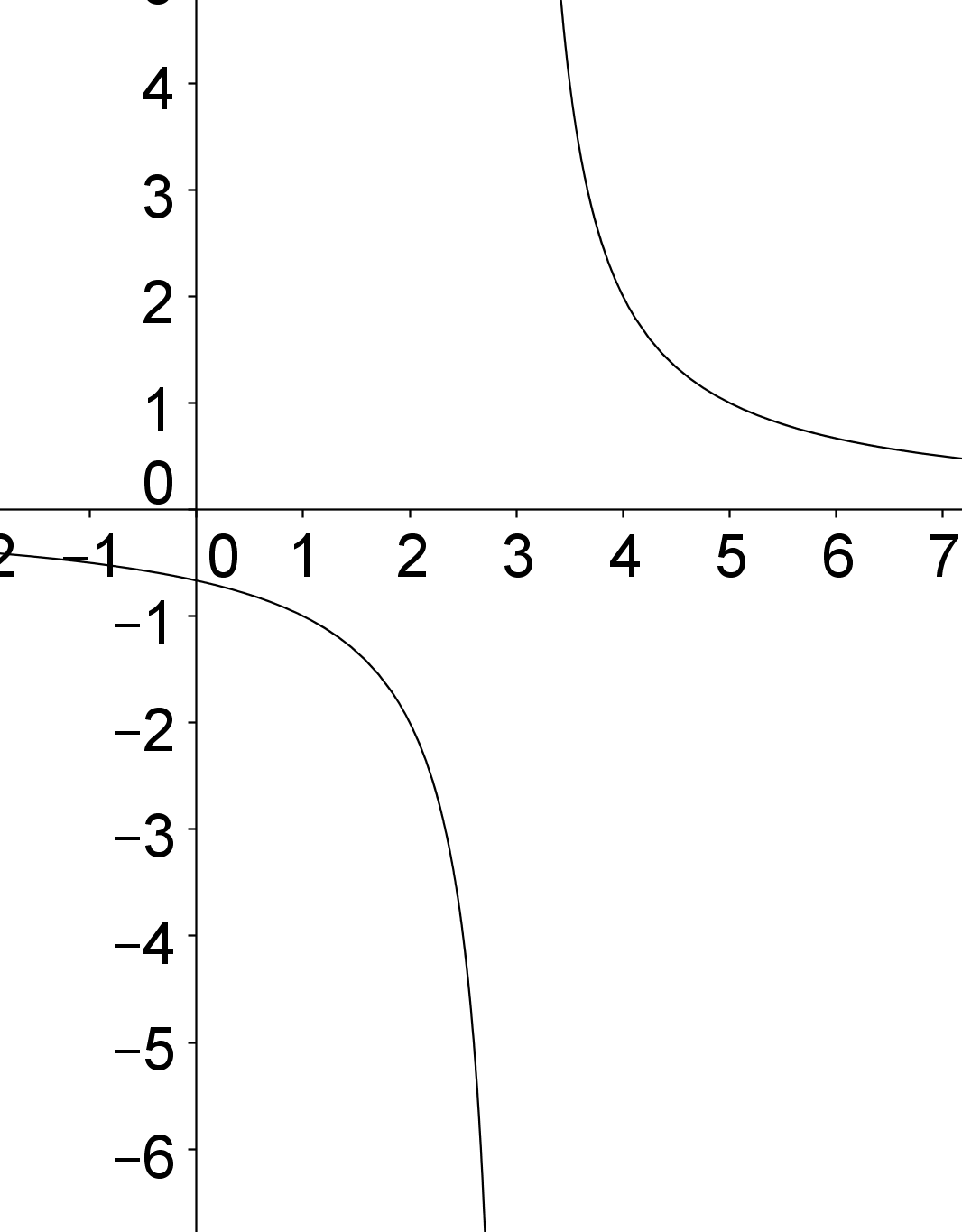
Vertical Asymptotes
Usually, vertical asymptotes come about when there is a rational function with a numerator and a denominator, for instance, . When the denominator is 0, the function is undefined, and hence there is a vertical asymptote there.
Hence, to find the asymptote, let the denominator be 0. E.g. , so .
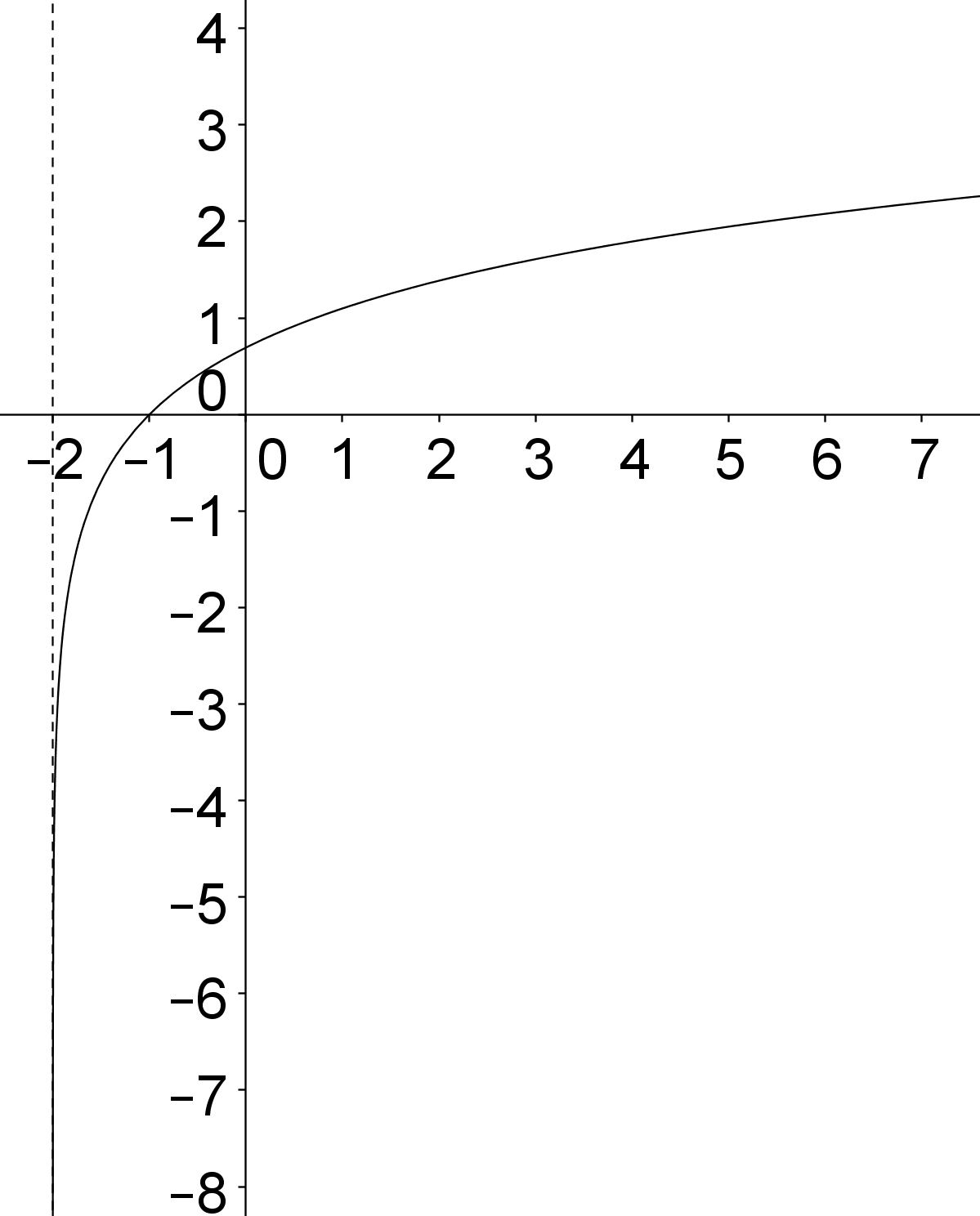
Another way vertical asymptotes can come about is via logarithmic graphs, e.g. .
is undefined, so when or , there will be a vertical asymptote at .
Horizontal Asymptote
Horizontal asymptotes usually come about when one of the terms approaches zero as approaches infinity.
To find the Horizontal Asymptote, find the value of y when x approaches infinity (i.e. when x becomes a very big number).
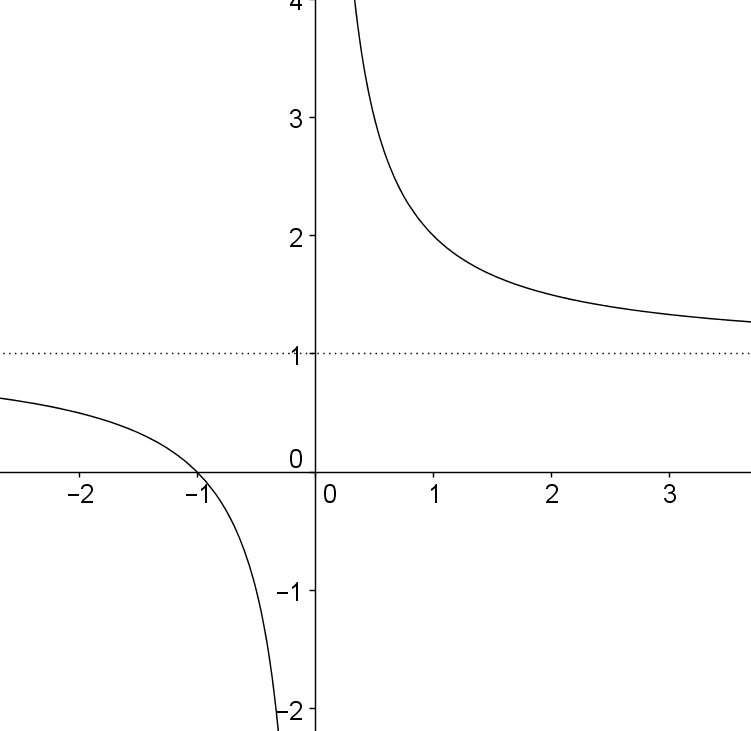
For example, . When x is a very big number, say x=10000, y will be close to 1 since 1/10000 is almost zero. Hence, the horizontal asymptote is .
Another time where Horizontal Asymptotes appear is for Exponential Graphs. For instance, . When x is very large, will be very small, and hence approaches 1. This means that the Horizontal Asymptote will be .
How many times has Good Friday fallen on the 13th? I have looked at
your formulas and don’t seem to find one that fits this question,
since Good Friday doesn’t fall on the same date each year. I’ve looked
at some other sources as well, to no avail.
Thanks for your help on this,
Susan Melanson
Check out the above website for the answer! It turns out that Good Friday will fall on the 13th approximately once in 29 years.
The calculation of the date of Easter is called Computus. It turns out calculating the date of Easter is quite complicated. Even the great Mathematician Gauss made a mistake (see http://en.wikipedia.org/wiki/Date_of_Easter#Gauss_algorithm).
In 1800, the mathematician Carl Friedrich Gauss presented this algorithm for calculating the date of the Julian or Gregorian Easter[38][39] and made corrections to one of the steps in 1816.[40] In 1800 he incorrectly stated p = floor (k/3). In 1807 he replaced the condition (11M + 11) mod 30 < 19 with the simpler a > 10. In 1811 he limited his algorithm to the 18th and 19th centuries only, and stated that 26 April is always replaced with 19 April and 25 April by 18 April. In 1816 he thanked his student Peter Paul Tittel for pointing out that p was wrong in 1800.[41]
There are many free or affordable Kindle Math Books online for download/purchase. Other than Math books, the Kindle can also be used for reading other books, and also for playing games and using apps. It is a decent alternative to the Ipad, if you are not a fan of Apple.
The object of Math BINGO is to practice math facts while playing BINGO!
Features:
-Choose from 5 games: Addition, Subtraction, Multiplication, Division and Mixed
-Choose from 3 different levels of difficulty: Easy, Medium and Hard
-Create up to 5 player profiles
-Choose from 8 different fun cartoon avatars
-Keep track of number of games played by player profile
-The Scoreboard keeps track of scores for each game and level
-Collect and play with BINGO Bugs when you earn a high score!
-Fun bonus game: BINGO Bug Bungee
“I used to think that the iPad was the king of the tablets, but not any more. It’s time to whip the crown away from Apple and give it to its rightful holder – Amazon’s Kindle Fire HDX.”
Want to watch movies about Mathematics? There is a nice website with Free Movies involving Math. It is not the full movie, but the portion of the movie that involves math.
This is a collection of movie clips in which Mathematics appears. The site is now in HTML5 video and should be accessible by all devices. If not, chose the direct video links. To include a clip into a presentation, chose the quicktime version.
If you are really interested in Math in the Movies, check out this book: Math Goes to the Movies
Mel Gibson teaching Euclidean geometry, Meg Ryan and Tim Robbins acting out Zeno’s paradox, Michael Jackson proving in three different ways that 7 x 13 = 28. These are just a few of the intriguing mathematical snippets that occur in hundreds of movies. Burkard Polster and Marty Ross pored through the cinematic calculus to create this thorough and entertaining survey of the quirky, fun, and beautiful mathematics to be found on the big screen.
Math Goes to the Movies is based on the authors’ own collection of more than 700 mathematical movies and their many years using movie clips to inject moments of fun into their courses. With more than 200 illustrations, many of them screenshots from the movies themselves, this book provides an inviting way to explore math, featuring such movies as:
• Good Will Hunting• A Beautiful Mind• Stand and Deliver• Pi• Die Hard• The Mirror Has Two Faces
The authors use these iconic movies to introduce and explain important and famous mathematical ideas: higher dimensions, the golden ratio, infinity, and much more. Not all math in movies makes sense, however, and Polster and Ross talk about Hollywood’s most absurd blunders and outrageous mathematical scenes. Interviews with mathematical consultants to movies round out this engaging journey into the realm of cinematic mathematics.
This fascinating behind-the-scenes look at movie math shows how fun and illuminating equations can be.
Look no further! In this post I will recommend the Top 5 Math Games for kids, on Amazon.com. Amazon is one of the biggest companies in the world, and is a highly trusted and respected online retailer. Sometimes, it is hard to find Math Games in the local area, the internet provides a convenient and hassle-free way to buy Fun Math Games.
Without further ado, these are the Top 5 Math Games for children:
The Math teaching from primary schools to secondary / high schools should begin from the journey of Symmetry.
After all, the Universe is about Symmetry, from flowers to butterflies to our body, and the celestial body of planets. Mathematics is the language of the Universe, hence Math = Symmetry
It was discovered by the 19th century French tragic genius Evariste Galois who, until the eve of his fatal death at 21, wrote about his Mathematical study of ambiguities.
Another French genius of the 20th century, Henri Poincaré, re-discovered this ambiguity which is Symmetry : Group, Differential Equation, etc.
Only in university we study the Group Theory to explore the Symmetry.
Israel Gelfand, the student of Kolmogorov (the Russian equivalent of
Gauss), created in 1964 the famous VZMSh, a national Math Correspondence School.
He wrote: “4 important traits which are common to Math, Music, and
other arts and sciences:
1st Beauty
2nd Simplicity
3rd Precision
4th Crazy ideas.
”
The Russian mathematicians also built special Math-Physics schools:
Moscow School #7, #2, #57 (one of the best high school in the world, http://www.sch57.msk.ru) Leningrad Schools #30, #38, #239 (Perelman studied here)
Rukshin at 15 was a troubled russian kid with drink and violence, then a miracle happened: He fell in love with Math and turned all his creative, aggressive, and competitive energies toward it.
He tried to compete in Math olympiads, but outmatched by peers. Still he believed he knew how to win; he just could not do it himself.
He formed a team of schoolchildren a year younger than he and trained them.
At 19 he became an IMO coach who produced Perelman (Gold IMO & Fields/Clay Poincare Conjecture). In the decades since, his students took 70 IMO, include > 40 Golds.
Rukshin’s thoughts on IMO:
1. IMO is more like a sport. It has its coaches, clubs, practice sessions, competitions.
2. Natural ability is necessary but NOT sufficientfor success: The talented kid needs to have the right coach, the right team, the right kind of family…
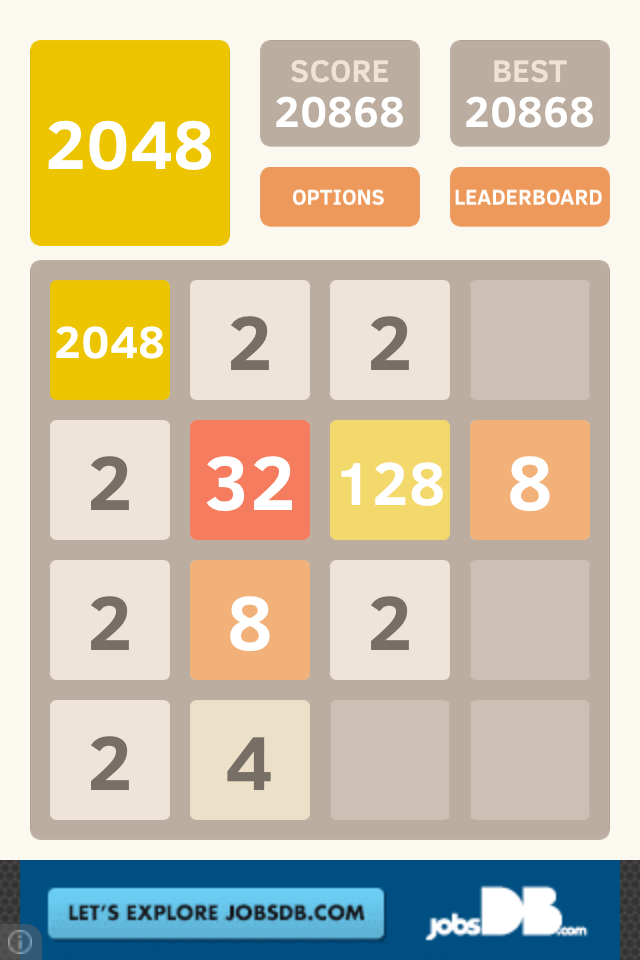
2048 is a highly popular Math/Puzzle game that can be played on the computer or on mobile devices. The game is about adding two tiles together until you get the number 2048.
Like most fun games, the concept of 2048 is deceptively simple, even a 5 year old kid could play it. However, it is hard to master it, and getting the coveted “2048” could prove quite tricky. Do not despair, for after reading this strategy guide, you have a much higher chance of winning the game!
Finally…!!! This is a screenshot of my personal game
Strategy Guide / Walkthrough / FAQ
The 3 Top Priorities for 2048 game:
1) Keep your highest tile in the top left corner of the grid. This is your top priority.
2) Do not let low tiles, especially 2’s or 4’s, clog up the upper two rows. This is your second priority.
3) Keep your top row in the following order, from left to right, . An example would be, 512, 256, 128, 64.
The reason for Priority 1 is that this immensely increases your chances of successful merges of two higher numbers into 1. It synergises with Priority 3 to create a chain-effect. For example, imagine you have 512, 256, 128, 64 on the top row. After merging another 64 with the 64 on the top row, you will have 512, 256, 128, 128. The two 128’s can merge together, making 512, 256, 256. The two 256’s can merge together, making 512, 512. And then, we have a 1024!
The reason for Priority 2 is that letting 2 or 4’s clog up the top rows is very bad. It greatly reduces your mobility (the top 2 rows clogged up with even a single ‘2’ is hard to move). The 2 or 4’s up there have little to no chance to get merged since most of the numbers at the top are high numbers.
Top 3 Guidelines for 2048 game:
1) Press up and left arrows only. Only press right when the upper row is full. Press down only when you have utterly no other choice.
2) Keep the top row filled up, as far as possible.
3) Your general aim is to target the lowest tile on the upper row, to set up the chain effect described above.
Reason for Guideline 1: Pressing right when the upper row is not full has the chance of introducing a new tile on the upper left corner, so now your highest tile is no longer on the upper left corner. This is not good. (Violates Priority 1)
Reason for Guideline 2: Keeping the top row filled up enables you to press “right” without fear of introducing a new tile on the upper left corner.
Reason for Guideline 3: After reaching the late game, we need to think a few steps in advance, and think of which is the best move in accordance to the Top 3 Priorities, and also can target the lowest tile on the upper row to set up a chain effect.
Top 3 Time Saving Quick and Fast Tips for 2048 game
1) The first few steps do not require thinking. Just spam up and left until you get a moderately high number like 128 or 256. There is no harm done about this as the board is uncluttered and there is little chance of losing. You only need to start thinking deeper during the later part of the game, when your highest tile is 512 or more.
2) If Priority 1 is violated, i.e. your highest tile is no longer in the top left corner of the grid, try a few steps to see if you can salvage the situation and get it back to the top left corner. If no, it is better to quit and start a new game to save time. Same for Priority 2, if there is a 2 or 4 clogging the upper row, try a few more steps to see if you can salvage the situation, by merging to make a higher number. If no, we can restart to save time. Priority 3 is less crucial, if the numbers in the top row do not form , no need to restart. But keep it in mind and keep trying your best to achieve the ideal order.
3) When there is only one possible move, make that move without thinking to save time. (No other choice anyway)
This is the best video on youtube about 2048 Strategy. (Note: They put the highest tile on the bottom right instead. Should be no difference due to the symmetry of the board)
Note: Even the expert maker of this video only has a 30% winning rate! 2048 has some element of luck (the tiles arrive randomly). Personally, I took quite some time to beat the game too.
This is the list of Top Weekly Math News around the world. To view more Math News, you can scroll down to the bottom of this website, and there will be more Free Math News for your viewing.
Math Academy expands program in county Shelby Star
The summer program that serves Cleveland County Schools students to enhance their math skills is planning to have a permanent location in Kings …
“People think they don’t understand math, but it’s all about how you explain it to them.
If you ask a drunkard what number is larger , 2/3 or 3/5, he won’t be able to tell you. But if you rephrase the question:
What is better, 2 bottles of vodka for 3 people or 3 bottles of vodka for 5 people, he will tell you right away: 2 bottles for 3 people, of course.”
The Basel Problem is:
$latex displaystyle sum_{k=1}^{infty} frac {1}{k^2} = frac {{pi}^2}{6}$
Euler was 28 years old when he proved that it converged.
The Basel Problem is also called the Riemann Zeta function: ζ(2).
He studied the function sin x which has zeroes,
i.e. sin x= 0 for
$latex x=npi, n = 0,pm1,pm 2, pm 3…$
In other words, we can factor sin x this way:
$latex sin x = x.(1+frac {x}{pi}) .(1-frac {x}{pi}).(1+frac {x}{2pi}). (1-frac {x}{2pi}).(1+frac {x}{3pi}). (1-frac {x}{3pi})…
&s=3$
Note: the right side any factor = 0 when
$latex x=npi, n = 0,pm1,pm 2, pm 3…$
1. Spot the odd magic cube
2. “Drain man” Arithmetics
3. The mental Hanzi (汉字笔画) strokes
4. The ‘Breathing and Smelling’ (气息触觉) cognitive power of a blind.
I found (3) fantastic but the judge Dr. Wei disqualified her for being an “Asperger’s Syndrome” rather than a skill.
Ah Beng was asked to make a sentence using 1, 2, 3, 4, 5, 6, 7, 8, 9,10.
Not only did he do it 1 to 10, he did it again from 10 back to 1. This is what he came up with…..
1 day I go 2 climb a 3 outside a house to peep. But the couple saw me, so I panic and 4 down. The man rushed out and wanted to 5 with me. I ran until I fell 6 and threw up. So I go into 7-eleven and grabbed some 8 to throw at him. Then I took a 9 and try to stab at him. 10 God he run away.
10 I put the 9 back and pay for the 8 and left 7-eleven. Next day I called my boss and told him I was 6. He said 5 , tomorrow also no need to…
Math isn’t hard. Love is.
Currently in its eighteenth printing in Japan, this best-selling novel is available in English at last. Combining mathematical rigor with light romance, Math Girls is a unique introduction to advanced mathematics, delivered through the eyes of three students as they learn to deal with problems seldom found in textbooks. Math Girls has something for everyone, from advanced high school students to math majors and educators.
Praise for Math Girls!
“…the type of book that might inspire teens to realize how much interesting mathematics there is in the world—not just the material that is forced upon them for some standardized test.” “Recommended”
—CHOICE: Current Reviews for Academic Libraries
“Imagine the improbable: high-school students getting together on their own — not in a Math Club or Math Circle, not in preparation for any Math Olympiad or “regular” test, not on the advice of any of their teachers, not as part of any organized program — to talk about pure math, math more interesting than the math found in their textbooks. The three students in this book do that for the sheer love of it. That to me is the beauty and fascination of this novel for young people, mostly young people interested in math.”
—Marion Cohen, Arcadia University, MAA Reviews
“Sometimes the math goes over your head—or at least my head. But that hardly matters. The focus here is the joy of learning, which the book conveys with aplomb.”
—Daniel Pink, NYT and WSJ best-selling author of Drive and A Whole New Mind
“if you have a…teenager who’s really into math, this is a really interesting choice”
—Carol Zall, Public Radio International, The World
“Math Girls provides a fun and engaging way to learn and review mathematical concepts…the characters’ joy as they explore and discover new and old ideas is infectious.” —review, “Experiments in Manga” blog
Reviews from amazon.co.jp
“As a physics major, math has always been a painful tool to use and nothing more. But Math Girls changed the way I look at mathematics. Now I actually find it interesting!”
— “Au”
“Math Girls is a fun read, but I was surprised to find that it’s also a serious math book chock full of careful explanations. I hope that people who think they don’t like math will read it. Even when the formulas go over your head, just following the story gives you a great feel for how fun math can be.”
— “Nyanta”
“I got hooked on this book during summer vacation, and had a great time reading it by the pool. It was so good that I read it twice, the second time while working out the problems on the hotel stationary.”
— “Kei0210”
“Advanced math, explained in a playful way. But it’s not just a textbook, with dry solutions to problems. It’s a bittersweet story, with mathematics telling part of the tale. A brilliant comparison between the uncertainties of youth and the absolute proofs of symbols and numbers.”
— Shiori Oguchi
Another proof of infinite primes by Reiman Zeta function. I like this more ‘frontal attack’ of proof than by ‘Reductio ad absurdum’ (by contrdiction) from Euclid and Erdős.
Paul Erdos’ Proof that there are Infinite Primes (with Examples)
Every integer can be uniquely written as , where is square-free (not divisible by any square numbers). For instance, 6 is square-free but 18 is not, since 18 can be divided by .
We can do this by letting to be the largest square number that divides , and then let . For instance, if , is the largest square number that divides 108, so we let .
Now, suppose to the contrary that a finite number k of prime numbers exists. We fix a positive integer , and try to over-estimate the number of integers between 1 and . Using our previous argument, each of these numbers can be written as , where is square-free and and are both less than .
By the fundamental theorem of arithmetic, there are only square free numbers. (The number of subsets of a set with k elements is 2k) Since , we have .
Hence, the number of integers less than N is at most . ( choices for and choices for )
i.e. , for all N.
This inequality does not hold for sufficiently large. For instance, we can let , then .
Hence, this is a contradiction, and there are infinitely many primes!
An example of how the above argument works: Suppose the only prime numbers are 2, 3, 5. (k=3)
Then, there are only square-free numbers, namely, 1, 2, 3, 5, 2×3=6, 2×5=10, 3×5=15, 2x3x5=30.
There is a common proverb in my Chinese dialect Fujian spoken today in China Fujian province, Taiwan, Singapore and Malaysia, which says
“A nephew is like his maternal uncle” 外甥像母舅
In modern Biology we know mother passes some genes to her children. Some disease like colorblind is carried by mother down to her sons, the mother herself is immune but her brothers are colorblind as the nephews.
Interesting behavior, intelligence are also similarly inherited from mother and maternal uncles.
Two greatest mathematicians in the history, Newton and Gauss, were the lucky nephews from their maternal uncles who were highly educated to spot the nephew’s genius, although the boys’ parents were uneducated.
Newton’s father died early, mother Hannah Ayscough had a brother William Ayscough educated in Cambridge. William convinced Hannah to send the talented boy Newton to Cambridge.
Gauss’s father was a bricklayer, mother Dorothy Benz had a younger brother Friedrich…
Newton on how he made his discoveries:
“I keep the subject constantly before me and wait until the first dawnings open little by little into the full light.”
Newton was Lucasian prof of math at Cambridge. It was not obvious to
his students that he would become the greatest scientist in history.
His students wrote:
“… So few went to hear him, and fewer yet understood him, that
oftimes he did in a manner, for want of Hearers, read to ye Walls. ”
“He always kept close to his studies, very rarely went a visiting, &
had as few visitors… I never knew him take any Recreation or
Pastime, either in Riding out to take ye Air, Walking, Bowling, or any
other Exercise whatever, thinking all Hours lost, that was not spent
in his studies… He very rarely went to Dine in ye Hall…& then, if He has not been minded, would…
First discovered by the Chinese Mathematician Minggatu 明安图 (清 康熙, 1730), later by the French (né Belgian) Ecole Polytechnique mathematicianEugène Charles Catalan (1814 – 1894).
Sometimes, E Maths can seem more difficult than A Maths!
Nevertheless, exposure and practising E Maths questions will make it easier as the student gets used to the problem solving techniques required to solve “tricky” E Maths questions.
Can you solve the following E Maths Problem? 🙂
It takes 8 workers to complete a certain job. The job can be completed 2 days earlier if 8 more workers are added. How many workers are needed if the house has to be completed 3 days earlier?
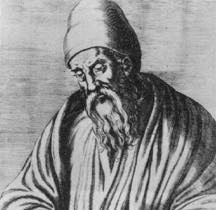
Once upon a time, there lived a Mathematician named Euclid.
Euclid came up with an ingenious method of proving that there are infinitely many prime numbers. Prime numbers are whole numbers that only have two factors, one and itself. For instance, 7 is a prime number while 6=2×3 is not.
The proof is by contradiction. Suppose that there are only a finite number of prime numbers, .
Now, we consider the number .
P is either a prime number, or it is a composite number.
If P is a prime number, then we have just contradicted the assumption that there are only a finite number of prime numbers !
If P is a composite number, then, it has a factor (smaller than P). However, none of can be a factor since P divided by those primes will leave a remainder of 1! Hence, P has another factor that is not in the original list, contradicting the initial assumption once again.
(Strictly speaking, Euclid’s proof is not by contradiction, instead he used a similar argument to show that given any finite list of primes, there is at least one other prime.)
This is the link to the Straits Times Education Forum, for parents who are interested to attend. The keynote speaker is Mr Heng Swee Keat, Minister of Education.
If you are looking for tuition for other subjects, be it English Tuition, Social Studies Tuition, Geography Tuition, Physics Tuition, Chemistry Tuition, Biology Tuition, Chinese Tuition, Economics Tuition, GP Tuition or Piano/Violin Lessons …
Donald Knuth, et al
:
“The most powerful way to deal with sequences of numbers, …, is to manipulate infinite series that generate those sequences.” – “Concrete Mathematics
”
“…to discover the equation in the first place, using the important method of generating functions, which is a valuable technique for solving so many problems.” – “The Art of Computer Programming Volume I”
Chapter 3 on Rotation is excellent ! He combines Analytic Geometry, Linear Algebra (Matrix) , and Physics (Rotation) into “one same thing” to show the beauty of Mathematics:
The following matrix represents a rotation $latex rho (theta)$ by an angle $latex theta$:
$latex begin{pmatrix}
cos {theta} & -sin {theta}
sin {theta} & cos {theta}
end{pmatrix}
$
Rotate by $latex 2theta $ will be:
$latex begin{pmatrix}
cos {2theta} & -sin {2theta}
sin {2theta} & cos {2theta}
end{pmatrix}
$
Which is equivalent to rotate 2 successive angle of $latex theta $:
$latex rho (theta) .rho (theta) = rho^2 (theta) $:
$latex begin{pmatrix}
cos {theta} & -sin {theta}
sin {theta} & cos {theta}
end{pmatrix}^2
$
= $latex begin{pmatrix}
cos {theta} & -sin {theta}
sin {theta} & cos {theta}
end{pmatrix} $ $latex begin{pmatrix}
cos {theta} & -sin {theta}
sin {theta} & cos {theta}
end{pmatrix}$
= $latex begin{pmatrix} cos ^2 {theta} – sin ^2 {theta…
Come for E Maths Tuition at Bishan! Conveniently located at Block 230 Bishan Street 23 #B1-35 S(570230), near Catholic High School.
Schedule:
Monday 7pm-9pm (E Maths)
(Perfect for students who have CCA in the afternoon, or students who want to keep their weekends free.)
Do not underestimate E Maths!
Those who truly understand the Maths Syllabus at Secondary Level will know that E Maths is in some ways, more difficult than A Maths. Not to mention the infamous E Maths Bell Curve, which is definitely well above 75 marks to get a chance of A1. (Some sources say the Bell Curve for E Maths is 90 marks. See http://forums.sgclub.com/singapore/questions_about_o_378705.html )
“Amaths is good, like ditzy said, I tell you, if you practise amaths everyday and do past years papers, you can see amaths quite okay one. During my secondary school years i felt that emaths more difficult than amaths.”
“You can ask many people out there, which one is more tedious and require thinking more, they’ll say emaths.
Reason simple very simple:
Emaths:
They throw an entire paragraph at you which hidden clues here and there, slight errors is almost unavoidable.
Amaths:
Short and simple, they throw question at you. Just solve. End of story.”
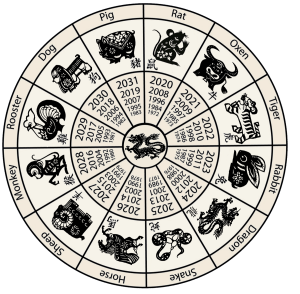
How to use Math to calculate Chinese Zodiac and Impress your Friends
The Shengxiao (Chinese: 生肖, literally “birth likeness”), also known in English as the Chinese zodiac (“zodiac” derives from the similar concept in Western Astrology and means “circle of animals”), is a scheme and systematic plan of future action, that relates each year to an animal and its reputed attributes, according to a 12-year cycle. It remains popular in several East Asian countries, such as China, Vietnam, Korea and Japan. (Wikipedia: Chinese Zodiac)
Simple Mental Calculation: Years after 1900
Subtract 1900 from the year you are finding. E.g. 1988-1900=88
Divide your answer by 12 and find the remainder. E.g. 88/12=7R4
Add 1 to your answer. E.g. 4+1=5
The answer represents the Chinese Zodiac of that year! (1-Rat 鼠, 2-Ox 牛, 3-Tiger 虎, 4-Rabbit 兔, 5-Dragon 龙, 6-Snake 蛇, 7-Horse 马, 8-Goat 羊, 9-Monkey 猴, 10-Rooster 鸡, 11-Dog 狗, 12-Pig 猪) Hence, 1988 is the Year of the Dragon, since 5 represents Dragon.
Calculation for Years after 2000
Very similar to the above, with some slight changes.
Subtract 2000 from the year you are finding. E.g. 2015-2000=15
Divide your answer by 12 and find the remainder. E.g. 15/12=1R3
Add 5 to your answer. E.g. 3+5=8 (Note: If your answer is greater than 12, subtract 12 from it)
The answer represents the Chinese Zodiac of that year! (1-Rat, 2-Ox, 3-Tiger, 4-Rabbit, 5-Dragon, 6-Snake, 7-Horse, 8-Goat, 9-Monkey, 10-Rooster, 11-Dog, 12-Pig) Hence, 2015 is the Year of the Goat, since 8 represents Goat.
Year 1900: Rat
Year 1901: Ox
Year 1902: Tiger
Year 1903: Rabbit
Year 1904: Dragon
Year 1905: Snake
Year 1906: Horse
Year 1907: Goat
Year 1908: Monkey
Year 1909: Rooster
Year 1910: Dog
Year 1911: Pig
Year 1912: Rat
Year 1913: Ox
Year 1914: Tiger
Year 1915: Rabbit
Year 1916: Dragon
Year 1917: Snake
Year 1918: Horse
Year 1919: Goat
Year 1920: Monkey
Year 1921: Rooster
Year 1922: Dog
Year 1923: Pig
Year 1924: Rat
Year 1925: Ox
Year 1926: Tiger
Year 1927: Rabbit
Year 1928: Dragon
Year 1929: Snake
Year 1930: Horse
Year 1931: Goat
Year 1932: Monkey
Year 1933: Rooster
Year 1934: Dog
Year 1935: Pig
Year 1936: Rat
Year 1937: Ox
Year 1938: Tiger
Year 1939: Rabbit
Year 1940: Dragon
Year 1941: Snake
Year 1942: Horse
Year 1943: Goat
Year 1944: Monkey
Year 1945: Rooster
Year 1946: Dog
Year 1947: Pig
Year 1948: Rat
Year 1949: Ox
Year 1950: Tiger
Year 1951: Rabbit
Year 1952: Dragon
Year 1953: Snake
Year 1954: Horse
Year 1955: Goat
Year 1956: Monkey
Year 1957: Rooster
Year 1958: Dog
Year 1959: Pig
Year 1960: Rat
Year 1961: Ox
Year 1962: Tiger
Year 1963: Rabbit
Year 1964: Dragon
Year 1965: Snake
Year 1966: Horse
Year 1967: Goat
Year 1968: Monkey
Year 1969: Rooster
Year 1970: Dog
Year 1971: Pig
Year 1972: Rat
Year 1973: Ox
Year 1974: Tiger
Year 1975: Rabbit
Year 1976: Dragon
Year 1977: Snake
Year 1978: Horse
Year 1979: Goat
Year 1980: Monkey
Year 1981: Rooster
Year 1982: Dog
Year 1983: Pig
Year 1984: Rat
Year 1985: Ox
Year 1986: Tiger
Year 1987: Rabbit
Year 1988: Dragon
Year 1989: Snake
Year 1990: Horse
Year 1991: Goat
Year 1992: Monkey
Year 1993: Rooster
Year 1994: Dog
Year 1995: Pig
Year 1996: Rat
Year 1997: Ox
Year 1998: Tiger
Year 1999: Rabbit
Year 2000: Dragon
Year 2001: Snake
Year 2002: Horse
Year 2003: Goat
Year 2004: Monkey
Year 2005: Rooster
Year 2006: Dog
Year 2007: Pig
Year 2008: Rat
Year 2009: Ox
Year 2010: Tiger
Year 2011: Rabbit
Year 2012: Dragon
Year 2013: Snake
Year 2014: Horse
Year 2015: Goat
Year 2016: Monkey
Year 2017: Rooster
Year 2018: Dog
Year 2019: Pig
Year 2020: Rat
Year 2021: Ox
Year 2022: Tiger
Year 2023: Rabbit
Year 2024: Dragon
Year 2025: Snake
Year 2026: Horse
Year 2027: Goat
Year 2028: Monkey
Year 2029: Rooster
Year 2030: Dog
Year 2031: Pig
Year 2032: Rat
Year 2033: Ox
Year 2034: Tiger
Year 2035: Rabbit
Year 2036: Dragon
Year 2037: Snake
Year 2038: Horse
Year 2039: Goat
Year 2040: Monkey
Year 2041: Rooster
Year 2042: Dog
Year 2043: Pig
Year 2044: Rat
Year 2045: Ox
Year 2046: Tiger
Year 2047: Rabbit
Year 2048: Dragon
Year 2049: Snake
Year 2050: Horse
Year 2051: Goat
Year 2052: Monkey
Year 2053: Rooster
Year 2054: Dog
Year 2055: Pig
Year 2056: Rat
Year 2057: Ox
Year 2058: Tiger
Year 2059: Rabbit
Year 2060: Dragon
Year 2061: Snake
Year 2062: Horse
Year 2063: Goat
Year 2064: Monkey
Year 2065: Rooster
Year 2066: Dog
Year 2067: Pig
Year 2068: Rat
Year 2069: Ox
Year 2070: Tiger
Year 2071: Rabbit
Year 2072: Dragon
Year 2073: Snake
Year 2074: Horse
Year 2075: Goat
Year 2076: Monkey
Year 2077: Rooster
Year 2078: Dog
Year 2079: Pig
Year 2080: Rat
Year 2081: Ox
Year 2082: Tiger
Year 2083: Rabbit
Year 2084: Dragon
Year 2085: Snake
Year 2086: Horse
Year 2087: Goat
Year 2088: Monkey
Year 2089: Rooster
Year 2090: Dog
Year 2091: Pig
Year 2092: Rat
Year 2093: Ox
Year 2094: Tiger
Year 2095: Rabbit
Year 2096: Dragon
Year 2097: Snake
Year 2098: Horse
Year 2099: Goat
Year 2100: Monkey



 . When the denominator is 0, the function is undefined, and hence there is a vertical asymptote there.
 , so
 .
 .
 is undefined, so when
 or
 , there will be a vertical asymptote at
 approaches infinity.
 . When x is a very big number, say x=10000, y will be close to 1 since 1/10000 is almost zero. Hence, the horizontal asymptote is
 .
 . When x is very large,
 will be very small, and hence
 approaches 1. This means that the Horizontal Asymptote will be




 . An example would be, 512, 256, 128, 64.


 Source:


 , where
 is square-free (not divisible by any square numbers). For instance, 6 is square-free but 18 is not, since 18 can be divided by
 .
 to be the largest square number that divides
 , and then let
 . For instance, if
 ,
 is the largest square number that divides 108, so we let
 .
 , and try to over-estimate the number of integers between 1 and
 square free numbers. (The number of subsets of a set with k elements is 2
 , we have
 .
 . (
 choices for
 )
 , for all N.
 , then
 .
 square-free numbers, namely, 1, 2, 3, 5, 2×3=6, 2×5=10, 3×5=15, 2x3x5=30.
 ,
 .
 , which is a contradiction.


 .
 .