Math Blog

Leibniz was a universal genius, but why is Isaac Newton more known? Does it have to do with Newton being British and Leibniz being German?

Answer by Albert Heisenberg, Science Historian M.A. Brown University

Leibniz’s formulation of differential and integral calculus was more refined, elegant, and ‘generalizable’ than Newton’s ‘fluxions.’ Leibniz, the natural genius that he was, became interested in mathematics much later in his life than Newton, and yet was able to generalize Descartes work on analytic geometry into calculus in a way that is so clear that till this day we still use Leibniz’s notation (e.g. dx/dy; his symbolism for time integration/differentiation, etc). Newton’s Principia is a work of incredible genius, but it is riddled with errors and inconsistent notation. As the co-founder of classical physics (along with Galileo) and the culmination of the scientific revolution, his legacy was deeply tied to the spread of natural philosophy as a mathematically rigorous discipline even though Leibniz’s formulation of infinitesimal calculus was superior. Newton achieved greater fame for a few reasons:

Read more at: https://www.quora.com/Leibniz-was-a-universal-genius-but-why-is-Isaac-Newton-more-known-Does-it-have-to-do-with-Newton-being-British-and-Leibniz-being-German

DSA Interview Questions

Interviews can be intimidating even for adults, let alone 12 year olds. However, the DSA interview is a very important aspect, especially since many would have the same qualifications / test results. Familiarizing with some of the questions can be useful, but not overtraining to the extent of being unnatural or memorizing a script written by mommy or daddy, which can be easily detected by the interviewing committee.

Frankly speaking, at age 12, it is very rare for a child, unprepared, to naturally just perform well in an interview. Most children at that age would be well-versed in games/cartoons but not in current news or social issues. Hence, some preparation, like preparing for PSLE English oral, would be useful and even necessary.

Some DSA Interview questions are compiled below. Clearly, developing good spoken English language is a foundational step that has to be addressed too. Judging from the questions, knowledge of the school history, culture and values would help too. Knowledge of current affairs like basic Singapore news would be of use too.


I Can Ace My College Interview: A step-by-step guide based on an Admissions Officer’s experience evaluating applicants

This book (though in a college context, since in Western countries they don’t interview children as young as 12 years old) provides some tips to ace school admission interviews. DSA interviews do ask very mature questions like “What are your weaknesses” that even adults struggle to answer properly. Hence this book is still very relevant.


Speakers’ Club: Public Speaking for Young People

Another useful book is the above. Public speaking involves the same skills as interview, just that it is delivered to a larger audience.


Different schools asked different DSA interview questions, even within the same school, the questions are different. Some examples of questions, for my DS and his friends are:
(1) Why did you DSA to this school?
(2) Did you DSA to another school? If both offer you a place, which would you choose?
(3) How did you think you can contribute to this school?
(4) If you have the chance to have dinner with a public figure, who will it be and why?
(5) What do you think is the most important colour in the world? Why?
(6) If there is something you can change in your primary school, what will it be and why?

Source: Kiasuparents

1.Tell me about yourself?
2.Why do you want to come to our school?
3.Why did you apply to our school / programme?
4.What are the things you like about our school that other schools do not include?
5.How many schools have you applied to and which school is your first choice?
6.Are you applying to this school because it is a branded/ elite school?
7.What is your definition of a good school?
8.Why should we accept you among all the great candidates /applicants who apply?
9.What are the problems of accepting students to a school based on their exam results?
10.Tell us what you enjoy doing when you are NOT attending school
11.Who is the greatest influence in your life or who do you admire the most?
12.What do you think about Steve Jobs and iPhone?
13.Tell us about an event that is significant in your life?
14.What is your goal for life?
15.What are your strengths?
16.What are your weaknesses? How do you overcome them?
17.What is your favourite subject?
18.How do you think you can help the CCA achieve greater heights?
19.Do you have any question about our school?
20.What questions would you like to ask us?

Source: Kiasuparents

There is even this website www.dsainterview.com dedicated to the DSA Interview. One point that they mentioned seems very important:

10. NEVER ANSWER WITH ‘my mommy said or my daddy said…’  

This is a very common occurrance. The student should always present HIS/HER opinions as his or hers. Even if the student got the opinion from a parent or a teacher, the student should just state his thoughts without mentioning who said it to him​.

Another tip is from http://smartification.net/how-to-handle-dsa-interview-questions/,

“Why do you want to come to our school or how many schools have you applied to and which school is your first choice?”

Interviewers ask these questions to determine how motivated students are about attending the school. The best way to tackle this question is to talk about the academic programs or CCA that the school offers. Visiting the open house and speaking to students, coaches and teachers will help students acquire valuable information. Looking through the school website will also provide more information about the school. Try to avoid common reasons such as ‘Your school is the best school in Singapore” or “My parents want me to attend your school because it can help me get into a top university in the future”. These answers are just too cliché.

As to which school is the first choice, the answer should be the school which the student is interviewing with at the moment. In most cases, schools who ask this question do it as a formality. Answering it with an “I don’t know or I have not decided” will give the impression the student is not serious about attending the school and the interviewers will feel like they have just wasted their time.

RGS DSA Interview Questions

–> In one sentence, introduce yourself.
–> Why do you wish to come to RGS?
–> What are the things you like about RGS that other school does not include?
–> Is it because RGS is a ‘branded’ school, you do not bother checking up on other schools?
–> What is a good school?
–> What are the problems of accepting students to a school only based on their exam results?
–> What are questions you would like to ask us?

Source: https://agirlwhowishestoliveinafantasy.wordpress.com/2013/07/22/rgs-dsa-interview-2/

Certain hot topics (like Singapore Olympic Games, news on Joseph Schooling / Feng Tian Wei) have a high chance to come out:

The application procedures were quite straightforward—online application, followed by GAT tests and interviews.  DD enjoyed the tests and interviews, though those were the very first interviews she ever had.  One of interviews was happened in the week when our table tennis team won first Bronze medal at London Olympic.  there were some questions during the interview:-

“What news has she read?” 
She replied “Feng Tian Wei won Bronze medal for Singapore.”
“What is your goal for life?
She replied “To represent Singapore in Olympic.”

I guess she was in Olympic fever then.

Source: http://full-time-mothers.blogspot.sg/2012/08/our-journey-of-dsa.html


Donate to SOSD (very pitiful dog)

Recently chanced upon SOSD Facebook, and saw this dog, with a very serious maggot wound. They have a few other such dogs under medical care too. Just to spread some awareness through my blog, as not many people have heard of SOSD. Do donate any amount (through their Donation page) if you can afford. It is hard to imagine how did they get such wounds, and the pain they must be suffering.


Update (from SOSD Facebook):
Thank you for your generosity and kindness. We have reached our target amount for August. Stay in tune for update on his development coming soon.

August needs your help!

Sweet-natured August was first spotted hiding in the workers’ dormitories with a large maggot-infested wound on the back of his neck.

Being awfully shy and afraid of strangers, August proved to be a challenging rescue to our volunteers. After a few nights of futile attempts, we finally succeeded with the help of a dog trapper.

Clinical examinations revealed that his blood count was very low, and the poor boy was also diagnosed with Babesia Gibsoni, a dangerous strain of tick fever.

Over the past two months, our volunteers have carefully tended to his wound and with medication, his tick fever is resolved. Due to the severity of the wound, he still has not fully recovered and will continue to require medical attention.

Although August is still rather shy and takes a while to warm up to people, he has been very gentle and mild-mannered, allowing our volunteers to clean his wound and carry him without making a fuss.

Newly sterilized, August is well on his way to becoming a healthy and strong doggy. To date, his vet bills total $1,600 so we are appealing to charitable dog lovers to help cover the accumulating costs. Please help us with the bills if you can. Any amount will be most appreciated!

To donate via GivingSg, please click on this link: http://bit.ly/2itG5N2

August is HDB-approved, if you would like to adopt, please fill in this form: http://bit.ly/2gOlYbo

Lichess to FIDE Elo Rating Conversion

Lichess is a free Chess Server – one of the best out there in fact. It comes with free engine (Stockfish) analysis, and many other nice features. It is well known that Lichess ratings are inflated compared to FIDE / USCF / most other rating systems. The following are some of the best conversion systems to convert Lichess rating to other ratings.

1) Dudeski_robinson’s Formula

FIDE Rating = 187 + Lichess Classical Rating X 0.38 + Lichess Blitz Rating X 0.48

Dudeski_robinson’s formula is pretty scientific, he actually uses linear regression out of real data to produce the above formula.

A rough estimate would be:
Fide ELO = Lichess Classical – 170
or
Fide ELO = Lichess Blitz – 80

Source: Lichess Forum

2) Chess Rating Comparison 2016 (Google Sheets)

This is also pretty scientific, with the added plus that it also compares between USCF and Chess.com, in addition to FIDE.

Chess.com Lichess.org USCF FIDE
Bullet Blitz Rapid Bullet Blitz Classical Regular Regular
860 1100 1160
900 1125 1200
930 1150 1250
960 1175 1290
1000 1200 1330 1370 1530 1590 1270 1260
1030 1225 1360 1390 1550 1620 1290 1280
1060 1250 1400 1410 1570 1640 1320 1310
1090 1275 1430 1440 1590 1670 1340 1330
1130 1300 1460 1460 1610 1690 1360 1350
1160 1325 1490 1480 1630 1720 1390 1370
1190 1350 1520 1510 1650 1740 1410 1390
1230 1375 1550 1530 1670 1770 1430 1410
1260 1400 1570 1550 1690 1790 1460 1430
1290 1425 1590 1580 1710 1810 1480 1460
1320 1450 1610 1600 1730 1830 1500 1480
1360 1475 1630 1620 1750 1860 1530 1500
1390 1500 1650 1650 1770 1880 1550 1520
1420 1525 1670 1670 1790 1900 1570 1540
1460 1550 1680 1690 1810 1920 1600 1560
1490 1575 1700 1720 1830 1940 1620 1580
1520 1600 1710 1740 1850 1960 1640 1610
1550 1625 1730 1760 1870 1980 1670 1630
1590 1650 1740 1790 1890 2000 1690 1650
1620 1675 1750 1810 1910 2010 1710 1670
1650 1700 1760 1840 1930 2030 1740 1690
1690 1725 1770 1860 1950 2050 1760 1710
1720 1750 1780 1880 1970 2070 1780 1730
1750 1775 1790 1910 1990 2080 1810 1760
1790 1800 1800 1930 2010 2100 1830 1780
1820 1825 1810 1950 2030 2110 1850 1800
1850 1850 1820 1980 2050 2130 1880 1820
1880 1875 1820 2000 2070 2150 1900 1840
1920 1900 1830 2020 2090 2160 1920 1860
1950 1925 1840 2050 2120 2180 1950 1880
1980 1950 1850 2070 2140 2190 1970 1910
2020 1975 1860 2090 2160 2210 1990 1930
2050 2000 1870 2120 2180 2220 2020 1950
2080 2025 1880 2140 2200 2230 2040 1970
2110 2050 1890 2160 2220 2240 2060 1990
2150 2075 1900 2190 2240 2250 2090 2010
2180 2100 1910 2210 2260 2270 2110 2030
2210 2125 1930 2230 2280 2280 2130 2060
2250 2150 1940 2260 2300 2290 2160 2080
2280 2175 1950 2280 2320 2300 2180 2100
2310 2200 1970 2300 2340 2300 2200 2120
2340 2225 1980 2330 2360 2310 2230 2140
2380 2250 2000 2350 2380 2320 2250 2160
2410 2275 2020 2370 2400 2330 2270 2180
2440 2300 2040 2400 2420 2340 2300 2210
2480 2325 2420 2440 2340 2320 2230
2510 2350 2440 2460 2350 2340 2250
2540 2375 2470 2480 2360 2370 2270
2580 2400 2490 2500 2360 2390 2290
2610 2425 2510 2520 2370 2410 2310
2640 2450 2540 2540 2370 2440 2330
2670 2475 2560 2560 2380 2460 2360
2710 2500 2580 2580 2380 2480 2380
2740 2525 2610 2600 2380 2500 2400
2770 2550 2630 2620 2390 2530 2420
2810 2575 2650 2640 2390 2550 2440
2840 2600 2680 2660 2390 2570 2460
2870 2625 2700 2680 2390 2600 2480
2900 2650 2720 2700 2400 2620 2510

Source: Google Docs

Discussion: Reddit

3) Mathtuition88’s Formula (2020 Version)

FIDE rating = (0.8399)*(Lichess Blitz Rating) + 179.8890

Read more about the methodology for the 2020 Lichess Blitz Rating Conversion Formula.


Related chess blog posts:

Making big data a little smaller

While this result is nice, it also seems to mean that theoretically, we have already reached the limit in dimensional reduction for data compression.

Source: Science Daily

Harvard computer scientist demonstrates 30-year-old theorem still best to reduce data and speed up algorithms

Date:
October 19, 2017
Source:
Harvard John A. Paulson School of Engineering and Applied Sciences
Summary:
Computer scientists have found that the Johnson-Lindenstrauss lemma, a 30-year-old theorem, is the best approach to pre-process large data into a manageably low dimension for algorithmic processing.

When we think about digital information, we often think about size. A daily email newsletter, for example, may be 75 to 100 kilobytes in size. But data also has dimensions, based on the numbers of variables in a piece of data. An email, for example, can be viewed as a high-dimensional vector where there’s one coordinate for each word in the dictionary and the value in that coordinate is the number of times that word is used in the email. So, a 75 Kb email that is 1,000 words long would result in a vector in the millions.

This geometric view on data is useful in some applications, such as learning spam classifiers, but, the more dimensions, the longer it can take for an algorithm to run, and the more memory the algorithm uses.

As data processing got more and more complex in the mid-to-late 1990s, computer scientists turned to pure mathematics to help speed up the algorithmic processing of data. In particular, researchers found a solution in a theorem proved in the 1980s by mathematics William B. Johnson and Joram Lindenstrauss working the area of functional analysis.

Known as the Johnson-Lindenstrauss lemma (JL lemma), computer scientists have used the theorem to reduce the dimensionality of data and help speed up all types of algorithms across many different fields, from streaming and search algorithms, to fast approximation algorithms for statistical and linear algebra and even algorithms for computational biology.

Source:

Harvard John A. Paulson School of Engineering and Applied Sciences. “Making big data a little smaller: Harvard computer scientist demonstrates 30-year-old theorem still best to reduce data and speed up algorithms.” ScienceDaily. ScienceDaily, 19 October 2017. <www.sciencedaily.com/releases/2017/10/171019101026.htm>.

SOSD Dog Adoption Drive

Just saw this. SOSD (something like SPCA for dogs) is organizing an adoption drive tomorrow 22 Oct Sunday. So if you are interested to see the dogs and perhaps adopt one, you are free to attend (above One-North MRT Station).

I read on their Facebook that they are facing some problems due to too many stray dogs, their “enclosures are all full; we do not even have space in our quarantine unit to house any more dogs”.

They also do have dogs suitable for HDB, under this project called Project ADORE. If more dog lovers adopt instead of buy, the problem of stray dogs in Singapore can be solved humanely.

New PR Singpass

Googling info on this is quite hard. Just to share what is the procedure. Basically you need to apply for a new Singpass based on your new PR NRIC, as the previous Singpass based on FIN will be invalid.

Also, most would soon encounter this problem: Your mobile phone is tied to the old Singpass account, and the system would not let you use it for the 2FA.

The solution (took quite a while for me to find this): (Source)

Q: I am a FIN holder who has been granted Singapore PR, how can I continue to use SingPass?

Ans: You will need to register for a new account using your NRIC number. Upon successful registration, your account details will be mailed to you within four working days. Click here for more details. Please note that one mobile number can only be registered with one SingPass account. If you have previously registered your mobile number in your existing account, and would like to use the same number for your new account, please email support@singpass.gov.sg with the following details:
Your FIN number
Your new NRIC number
Your mobile number

Source: Singpass FAQ

Disclaimer: This info is dated 21 October 2017. The procedure may or may not change in the future. Also, please double check with the official website before taking any actions.

“Actual” GEP Questions 2017 (from Forum)

Since the actual GEP papers are never released, the next best source is from those who have actually taken it and post on forums like Kiasuparents.

Some Maths questions my girl remembers.

“ In a fishing competition, five kids caught 50 fish in total. A is the winner – she got 12 fish. B and C caught the same number of fish and both are at second place. D is at fourth place. E came in last, got only 6 fish. How many fish did B get?“

( my girl couldn’t solve this one. )

“ The red ribbon is twice as long as the blue ribbon. The green ribbon is 2cm shorter than the blue ribbon. A red ribbon and two green ribbon together measure 16cm. How Long is the blue ribbon? “

( she managed to solve this one- but only after spending a lot of time on it. )

Source: https://www.kiasuparents.com/kiasu/forum/viewtopic.php?f=72&t=89066&start=160

Review by mathtuition88: These two questions are not that hard. Can be solved by either model method or algebra.

Some tips from parents: English and GAT is actually harder to prepare than Maths:

Just sharing based on our experience last year. Of the 6 that were selected for GEP eventually from my child’s class, it seems English and GAT were the determining factors. For maths, a lot of kids are already very advanced and well – prepared nowadays. The majority of the balance 14 who went for round 2 found English harder than maths. According to them, English is somewhat like pitched at sec 1 and sec 2 standard, while maths was like up to P6 and Primary Maths Olympiad standard and more manageable. I think it was also more because anything can come out under the sun for English and you can’t really prepare for it. That’s what I heard last year.

Source: https://www.kiasuparents.com/kiasu/forum/viewtopic.php?f=72&t=89066&start=140


For more GEP tips and recommended GEP books, check out: Recommended Books for GEP Selection Test and How to Get Into GEP.

The State of Being Stuck

Nice story (with drawings) on Andrew Wiles and the Fermat’s Last Theorem.

Ben Orlin's avatarMath with Bad Drawings

Last year, I got the high school math teacher’s version of a wish on a magic lamp: a chance to ask a question of the world’s most famous mathematician.

20161031143242_00026

Andrew Wiles gained his fame by solving a nearly 400-year-old problem: Fermat’s Last Theorem. The same puzzle had captivated Wiles as a child and inspired him to pursue mathematics. His solution touched off a mathematical craze in a culture where “mathematical craze” is an oxymoron. Wiles found himself the subject of books, radio programs, TV documentaries—the biggest mathematical celebrity of the last half-century.

View original post 1,324 more words

Why do people get so anxious about math? – Orly Rubinsten

View full lesson: http://ed.ted.com/lessons/why-do-peop… Have you ever sat down to take a math test and immediately felt your heart beat faster and your palms start to sweat? This is called math anxiety, and if it happens to you, you’re not alone: Researchers think about 20 percent of the population suffers from it. So what’s going on? And can it be fixed? Orly Rubinsten explores the current research and suggests ways to increase math performance. Lesson by Orly Rubinsten, animation by Adriatic Animation.

Also view my previous post on Coping with maths anxiety.

McCleary User’s Guide to Spectral Sequences (Errata)

(pg 455) When an element u\in H_{n-1}(X) satisfies ru=0, then, by exactness, there is an element \mathbf{\bar{u}\in H_n}(X;\mathbb{Z}/r\mathbb{Z}) with \partial(\bar{u})=u. Should be H_n instead of H_{n+1}.

(pg 458) The first differential is given by d^1=\boxed{{\text{red}_p}_*\circ\partial}=\beta. The order in the printed version is incorrect. Note that the first differential should be d^1=j\circ k for the exact couple.


See also Recommended Books for Spectral Sequences.

Free Video about GEP

Video URL: https://video.toggle.sg/en/series/talking-point-2017/ep23/540809

Talking Point 2017 – EP23

Thu 5 Oct 2017
23 MINS

By Channel 5 Published: 05 Oct 2017 Audio: English

Each year, only the top 1% of the primary school cohort will enter the Gifted Education Programme. Yet scores of parents send their children to preparatory classes in hopes that their child will ace the GEP Selection Exercise. Authorities frown on such courses. Learning centres say there’s overwhelming demand. Can a child be trained to be gifted? And should he? Talking Point gives you an inside look into how primary school students are being prepped to take a screening test for gifted kids.

Free Movie about PSLE

There are 2 short films on the subject of PSLE, free on YouTube. Quite accurate about the lives of kids in Singapore currently. Do feel free to watch if you are interested.

It is truly a first-world problem (only kids in middle to high income families will suffer from this, as tuition is not cheap), but it does reflect the stress that children go through nowadays.

Look at the child’s timetable: https://youtu.be/FQB7ritn580?t=116. Completely packed from Monday to Sunday. (Quite realistic as I have seen real life examples of such scenarios.)

More expat students catch the ‘tuition bug’ and other Educational News

More expat students catch the ‘tuition bug’

Singapore has gained a reputation for being a “tuition nation”, with surveys … Mr Shaun Lim, a partner at Quintessential Education, said the “kiasu” …
SUSS to weave social impact into all courses

The Singapore University of Social Sciences (SUSS) will expand its … It provides an applied education approach that targets fresh school leavers and …
NTU alumni to receive $1600 credits each to take up courses

SINGAPORE – About 222,000 alumni of Nanyang Technological University (NTU) will receive $1,600 credits each which they can use for a wide …
How can the public learn more about the history of Chinese education inSingapore?

A new book by the National Library looks back on the development of Chinese education in Singapore, through more than a century’s worth of …
How Singapore Encourages Lifelong Learning and Workforce Resilience

SkillsFuture Singapore (SSG), for example, is a statutory board under the Ministry of Education that provides an array of lifelong learning and …

Visionary mathematician Vladimir Voevodsky

ChefCouscous's avatarMath Online Tom Circle

A self-study Russian mathematician, kicked out 3 times in high schools, expelled from Moscow University, all because he did not attend classes, preferred to self-study in a broader scope for his curiosity, at his own faster speed than the rigid curriculum and boring test-and-exams regime in classrooms.

He did the PhD in Harvard by invitation even he did not have a Bachelor degree, and he barely passed the Harvard’s QE (Qualifying Exams) in Algebraic Geometry, a field in which he made a revolutionary discovery few years later, and for which he was awarded the highest honor : Fields Medal.

This is the typical trait of the geniuses like Evariste Galois, Albert Einstein, Ramanujian, Hua Luogeng (华罗庚), Zhang YiTang (张益唐 – proved “70m Twin Prime Gap”) [#] , Chen Jingrun (陈景润, proved Goldbach Conjecture “1+2”) [##]… with self-motivated curiosity in their field of passion, with reading from the Masters’ works…

View original post 49 more words

Univalent Foundation – Computer Proof of All Maths

ChefCouscous's avatarMath Online Tom Circle

The scary complex field of Math worried the mathematicians who would prove a theorem relying on the previous theorems assumed proven correct by other mathematicians.

A sad example was Zhang YiTang (1955 – ) who prepared his PhD Thesis based on a previous “flawed” Theorem proved by none other than his PhD Advisor Prof Mok in Purdue University. Unfortunately his Thesis was found wrong, and the tragic happened to Zhang as he had revealed the mistake of his PhD advisor who insisted his (Mok’s) Theorem was correct. As a result Zhang failed the 7-year PhD course without any teaching job recommendation letter from his angry advisor. He ended with a Subway Sandwich Kitchen job offered by his Chinese friend, sleeping in another Chinese music conductor’s house on a sofa. It was there he spent another 7 years thinking on Math, finally an Eureka breakthrough one 2013 morning in the backyard…

View original post 45 more words

Motif (Motive 目的)

ChefCouscous's avatarMath Online Tom Circle

Below is an excellent intuitive explanation (in Chinese) of the abstract concept Motif by Grothendieck:

Brief summary – Motif is the source of all “beautiful things” expressed in different forms.

Example : God created Natural Numbers (N), we express N in different forms: Binary (0, 1), Decimal (0, 1, 2 …9), Hexadecimal (0,1, 2…9, a, b, c, …f), etc. However, the “Motif” behind these forms is they all follow : 1) Commutative Law ; 2) Distributive Law.

Similarly, in Algebraic Geometry applying the cohomology from Algebraic Topology: étale cohomology, crystalline cohomology, de Rham cohomology are the different forms (~ Binary, Decimal, Hexadecimal), factored throught the common “Motif” of the Universal cohomology (~N).

[My Analogy in IT Language]:
Motif is like Interface or Generic, it spells out only the specification, leaving out the implementation (method) for actual classes / functions…

View original post 121 more words

Free Math Games For Everyone

Free Math Games For Everyone

Multiplication of big numbers, complex mathematical problems – there are so many issues that people can face not only at school but also in their everyday lives! People need math everywhere and always! That is why understanding the fundamental principles of math is not less important than being able to read or write! Going shopping or starting your own business – gaining the needed mathematical knowledge and being able to apply it in practice will come in handy for everyone, no matter where they go and what they do!

How to learn this subject? Just like any other science, it requires time and efforts to learn it! However, thanks to the modern technologies and the Internet, everything has become a bit easier today and now, it is enough to find a few useful resources to resolve any academic matters! Some of the most useful resources offer people not only to find the answers for their homework sheets and read the main rules but also to enjoy math games and learn while playing!

Where To Look For Free Math Games For Everyone?

It is not a secret that children of a younger age, perceive the information much better if it is presented in a fun and engaging form, for example, while playing. This explains such a high demand for online educational games. However, not only kids can enjoy free maths games, in fact, many adults will also find such activities quite useful and fun!

What are the other benefits? The platforms that offer you to study maths online by means of playing games will help you to master all the possibilities of mathematics easily – you will learn how to add, subtract, divide and multiply. For kids, such activities will be useful for admission to the school. For adults, such activities can help fill in the gaps that they have in their knowledge!

Below you can find a list of top five free sources where you can learn mathematics fast and easily while enjoying an exciting game right from your browser in the online mode!

Math Playground

The website is convenient. There are many different categories, which make it simple to find suitable activities for everyone, while good graphics make the whole process really fun and enjoyable!

Math Game Time

This is one of the best platforms! All the games are organized by grade, but what really makes this site stand out is a wide range of additional opportunities like problem-solving, shapes and geometry, algebra or time and money games!

Cool Math Games

There are many strategy and logic activities. Also, on this platform, you can find some exciting and useful “skill games” that are aimed at developing the basic mathematical skills, and they can come in handy not only for the children but also for the whole family!

Knowledge Adventure

Unlike the previous platforms, this website offers a wide variety of fun educational activities on numerous subjects, including spelling, reading, science, etc. All the games are bright and colorful. This creates a pleasant atmosphere and will be especially interesting for younger kids. The highest age for games specified on the site is 12. However, some of them will also be useful for grown-ups!

Learning Games For Kids

Although from the first glance it seems like this site is created exclusively for children, I am sure that adult users will also find something interesting and useful for them! There is a wide range of choices. All activities are divided by their goals and grades, and there are also addition and random math activities; such divisions help to navigate through the website with ease and find exactly what you were looking for! There are also many other possibilities. The site also features many vocabularies, art, science, health, brain, literature, and some other activities!

There are just a few sources of many! You can look for more opportunities on the Internet. Find out what options you have – test a few games from different platforms to compare their efficiency, and, without a doubt, you should find something suitable for yourself! Also, if you are enjoying playing on the go – there are numerous applications for tablets and smartphones that you can use at any time and from any place, which will be convenient for busy people!

Final Words

Why is math so important in our lives? It is one of the basic sciences that every person should understand. It does not mean that each of you needs to become well-versed on this subject because if you lack certain skills that are needed to cope with your homework, you can always hire a tutor or turn to www.customwriting.com for academic help. However, having the necessary knowledge base is a must! Without it, you will find it difficult to do the most usual things like count the change in the grocery store, and thus, you will feel less confident!


How to prepare for ASEAN Scholarships Pre-U Entrance Test

Recently I received an email from a reader (name removed for anonymity). Just posting here in case it is useful to other readers. Good luck for those interested in applying for the scholarship!

I am a 16-year old Malaysian student and I am interested in applying for the ASEAN scholarships for Malaysian Pre-University One Scholarships, yet I am lost as to how to prepare for the entrance tests(especially the mathematics test) and thought that i could ask you since I’ve frequently browsed your website for a while and have read that you’re experienced in the O’level and A’level fields of mathematics.

If you wouldn’t mind, I have a few questions to ask:
1. How should i prepare for the entrance tests?(as in what should i study/focus on for the Math entrance test)
2. Is it necessary for me to learn the SEAB A-levels/ JC syllabus? If yes, what textbooks would you recommend me buying in order to prepare for the exam?
3. What is the difference between IGCSE Additional Math syllabus(I’m in the IGCSE class in my school) and the Singapore O’level syllabus?(I’d like to know what I’d possibly be lacking in)

It would be most helpful if you could answer my questions. I hope to hear from you. Thank you!


Here are my answers:

Thanks for visiting my website.

I will try to answer your questions:

1. I think you should focus on the Additional math / Elementary math for O Levels.

2. I don’t think JC syllabus should be necessary as that is usually taught for 17-18 year old students, which should be beyond the scope of the pre-university exams.

3. Overall it should be the same, but there may be some small differences. You may check out this new syllabus: http://www.seab.gov.sg/content/syllabus/olevel/2017Syllabus/4047_2017.pdf

For example, for the Singapore syllabus, there is this sum of cubes/differences of cubes formula that is tested: https://mathtuition88.com/2014/10/27/sum-of-cubes-a-maths-tuition/

For practice questions, you may want to check out this set of papers (with solutions): https://sellfy.com/p/l4w2/

They are representative of what is tested in the Singapore A Maths syllabus.

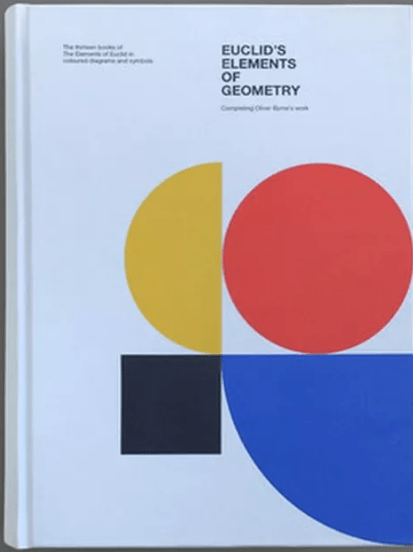
One of the world’s most influential math texts is getting a beautiful, minimalist edition – The Verge

ChefCouscous's avatarMath Online Tom Circle

https://www.theverge.com/2017/9/2/16247282/euclids-elements-kroncker-wallis-math-text-beautiful-minimalist-kickstarter

Little print-edition of Math Classics: Euclidean 《The Elements》(几何原理) – the second printing by volume after 《The Bible》.

The Euclidean Geometry was less emphasised in Secondary school from 1970s in the world (80s in Singapore) to be replaced by Vector Geometry (UK/USA) and Abstract Linear Algebra aka Vector Space / Affine Geometry (in France). It was a pedagogical mistake now these countries recognise – never “Throw the baby (Euclidean Geometry) together with the bath water (Old Maths )”.

IMO Competition usually has 2 out of 6 problems in Euclidean Geometry but no modern math or Calculus, reason being to cater for 100+ countries still with Classical Math. That’s why the Asian countries – South Korea (2017 IMO Champion), China (2nd IMO 2017), Vietnam (3rd IMO 2017) , HK, Taiwan, Thailand, – with old syllabus are top IMO but not the Advanced countries (France, UK, other European, Japan, USA, Singapore…).

View original post

Zhihu 知乎: 环Ring, 域Field, (半Semi-)群Group, 幺半群 MonoId

ChefCouscous's avatarMath Online Tom Circle

数学中代数的有两个名词:环,半群,请问环为什么叫做环,它和汉字里的环(字典中的意思)有什么相同之处;同样,半群为什么叫做半群,这个”半“字是怎么解释呢?

[葛利流,数学科技]

(I) 环和域
环 (Ring) 是德文, 这名词是David Hilbert发明的。
“环”最好的例子: 整数(Integer) 记作 Z (德文Zahl) 是个环。 他研究 Clock Arithmetic 时钟 是个 Modular Arithmetic (Mod 12)运算, 比如 15 = 3 mod 12
…
钟表上的整数 Z 数字 排成 一个钟的环状, 故称 此数是 “Zahl Ring” 整数 “环”。

Hilbert 的得意女弟子 Emile Noether 把 环论 发扬光大, 创造 “Noether Ring”。

如果 把 “12” 变成 任一素数 p , “环”就升级成”域” (Field) – 除了有环的( + – *) 运算, 还可以 (÷)。

Hilbert 发现 “环”有个重要性质是含有 “理想” (Ideal) – 理想 * 任何”外面”的东西 还回来”里面”。
例子: Z Ring 里有 “0”, 2Z, nZ…
0 * 任何Z数 => 回来 “0家族里面”
偶数 2 * 任何Z数 => 回来” 偶数 (2Z)家族里面”
…
大名鼎鼎的中国古代算术”韩信点兵”就是 含有 “环 和理想”的理论。

(II) 群 Group / 半群 Semi-Group / 幺半群MonoId
Group 群 有4个性质 C.A.N.I.
C: Close 封闭性
A: Associative 连续性
N: Neutral (or Identity = Id) 幺元
I: Inverse 逆元

Semi-Group 半群 只有2个性质: C.A.

Monoid 么半群 : C.A. + N (= Id) => Mono + Id

https://www.zhihu.com/question/20564445/answer/233486338

View original post

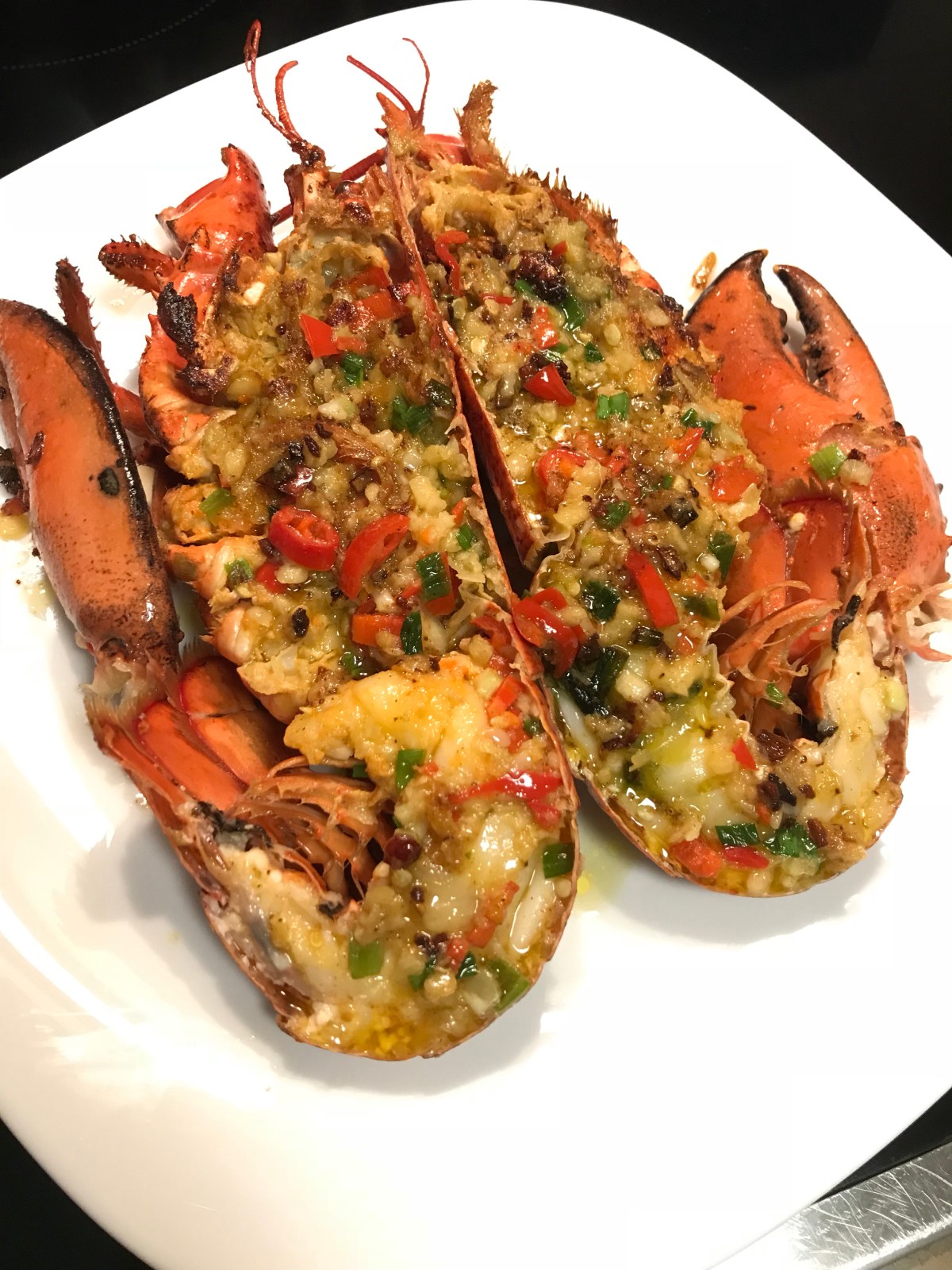
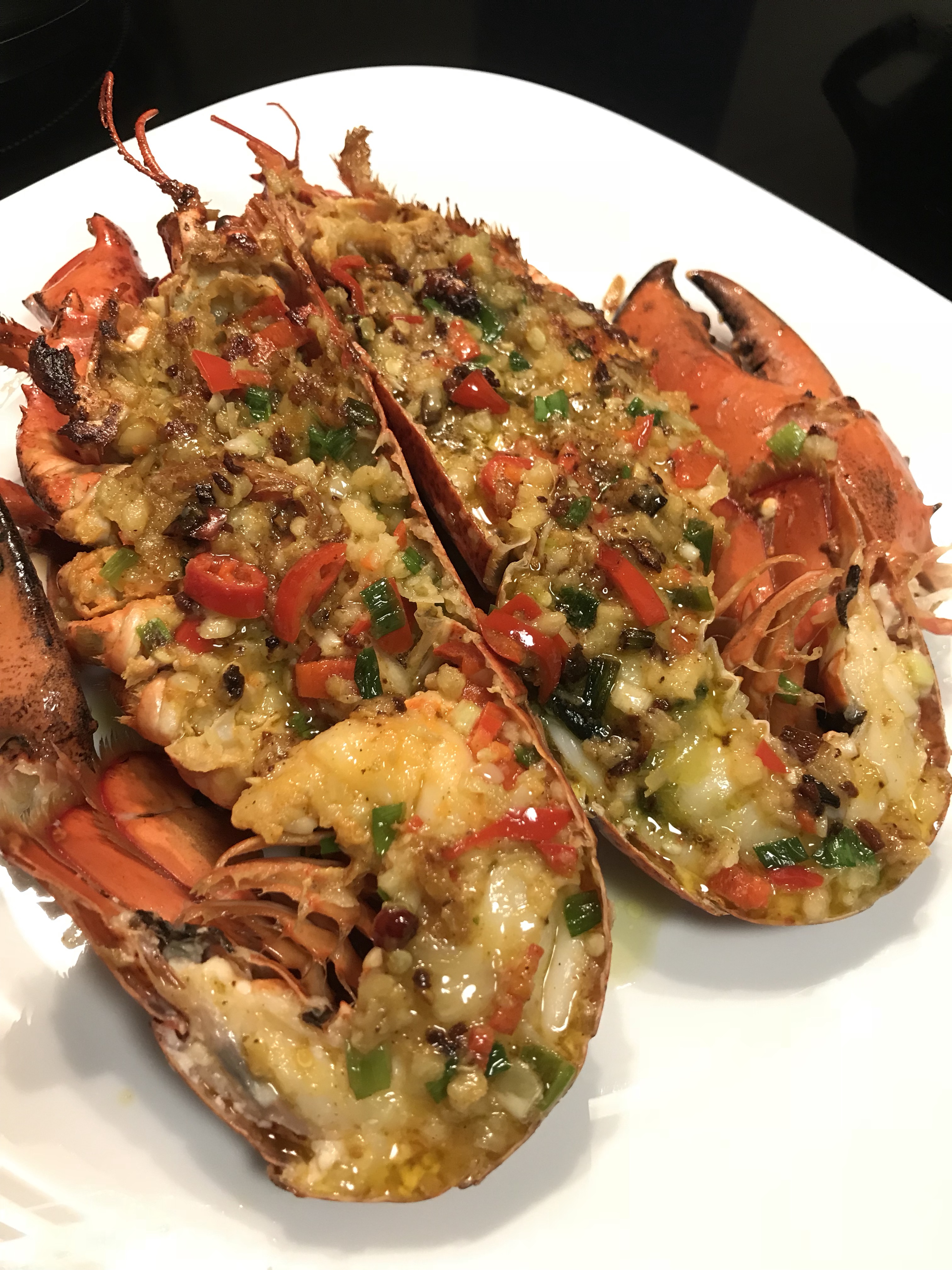
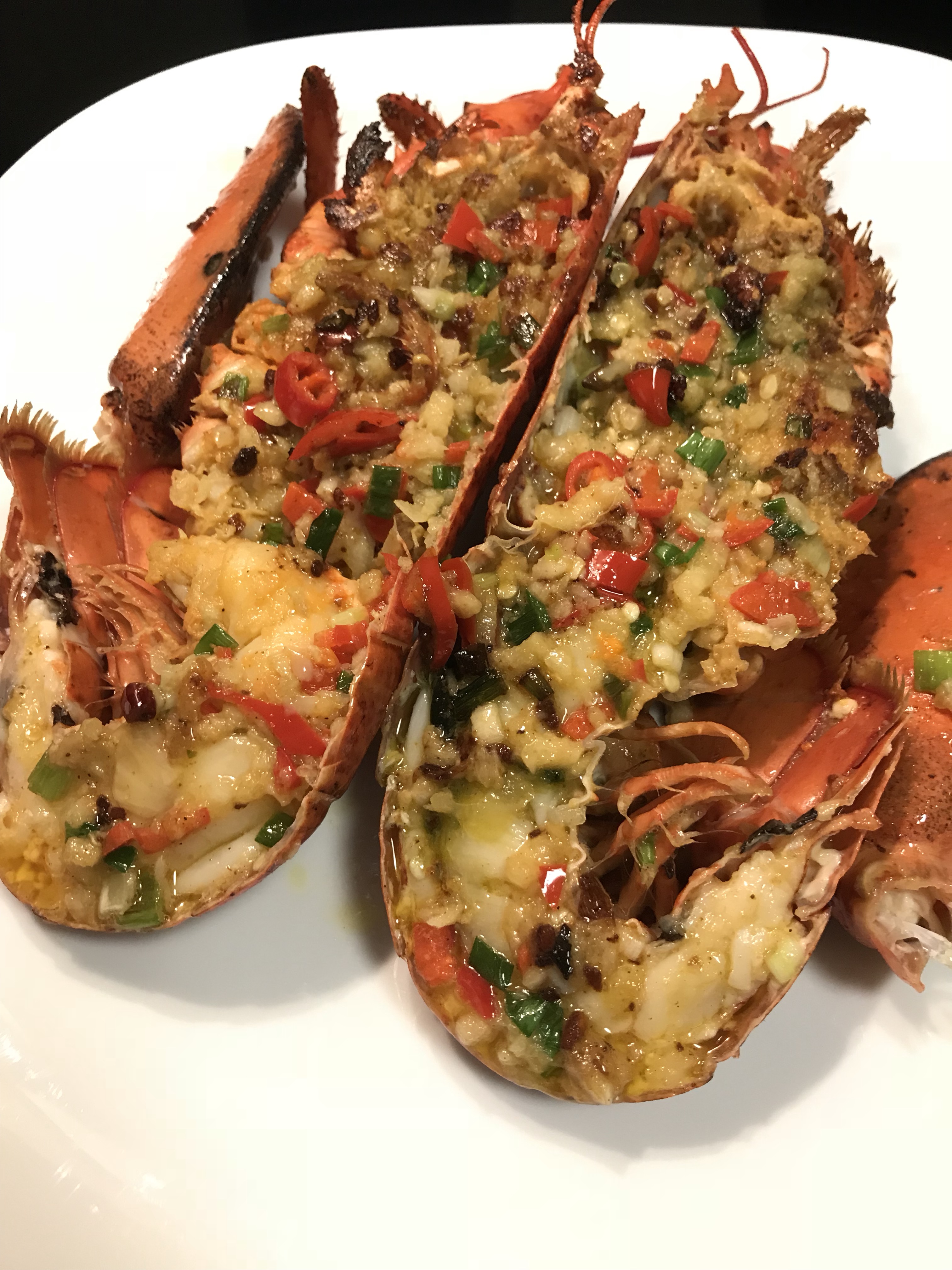
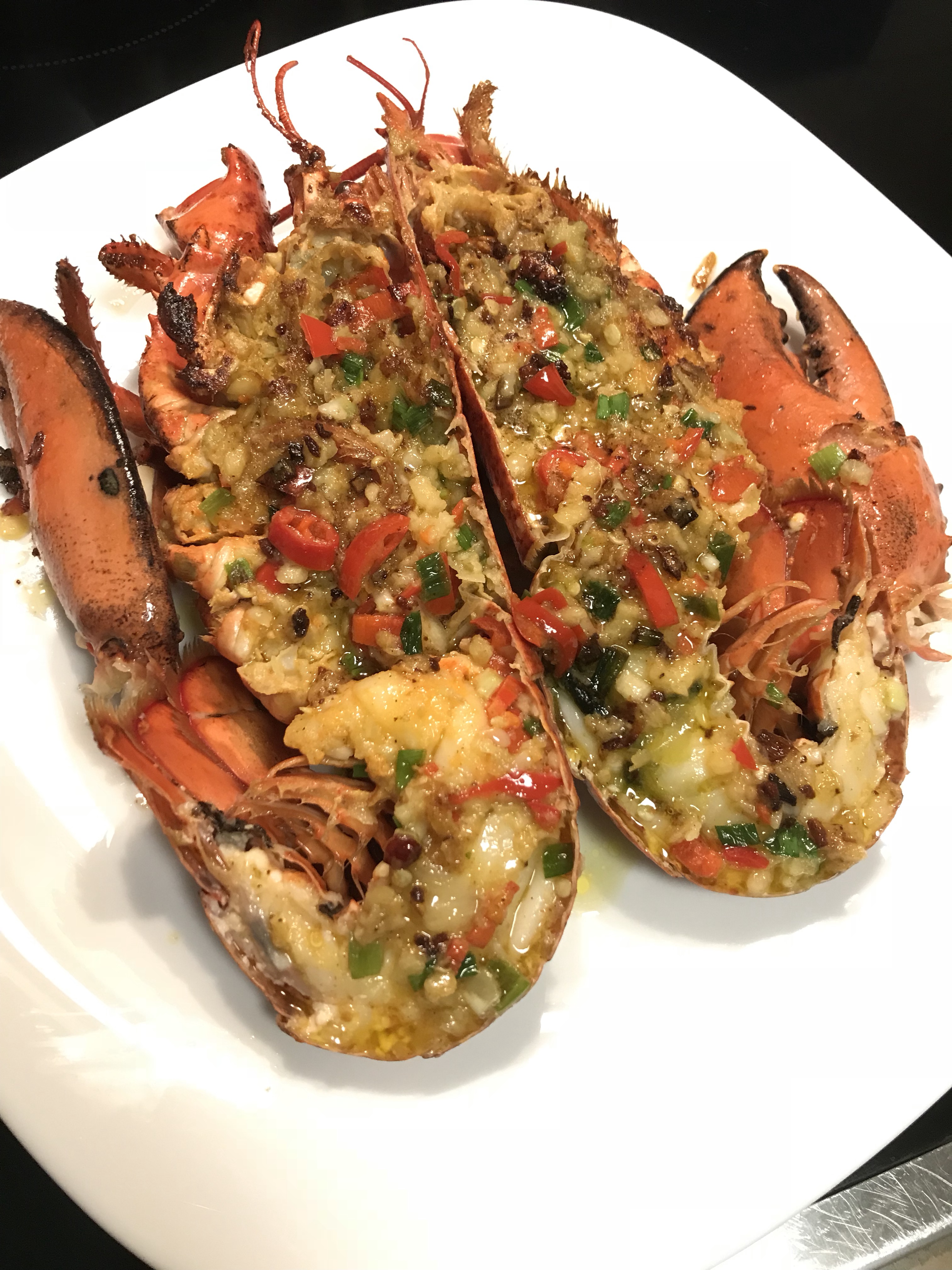
Garlic Butter Lobster

chinesetuition88's avatarCooking For Fun

1. Put lobster in boiling water for 4 mins.

2. Take lobster out and soak it into cold water.

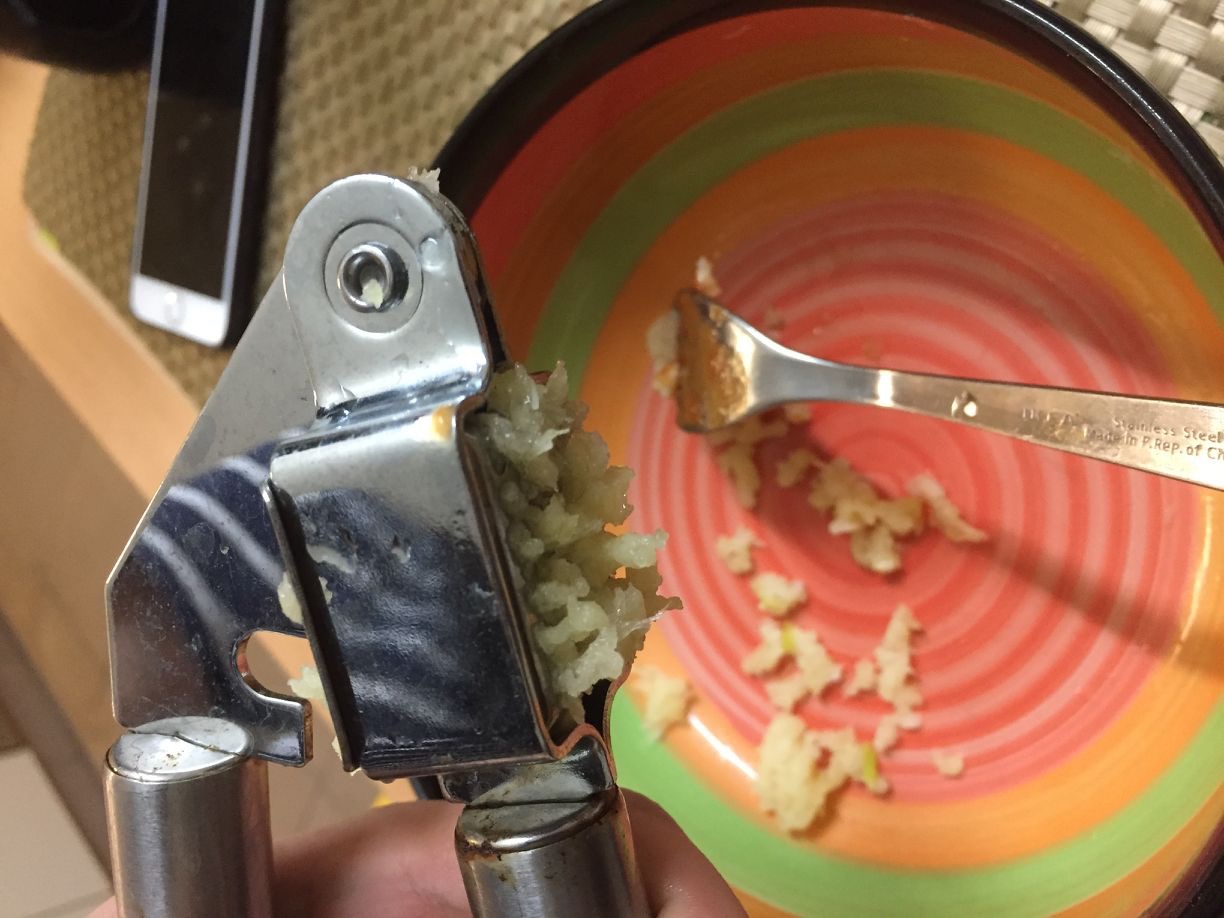
3. In a bowl, add in minced garlic.


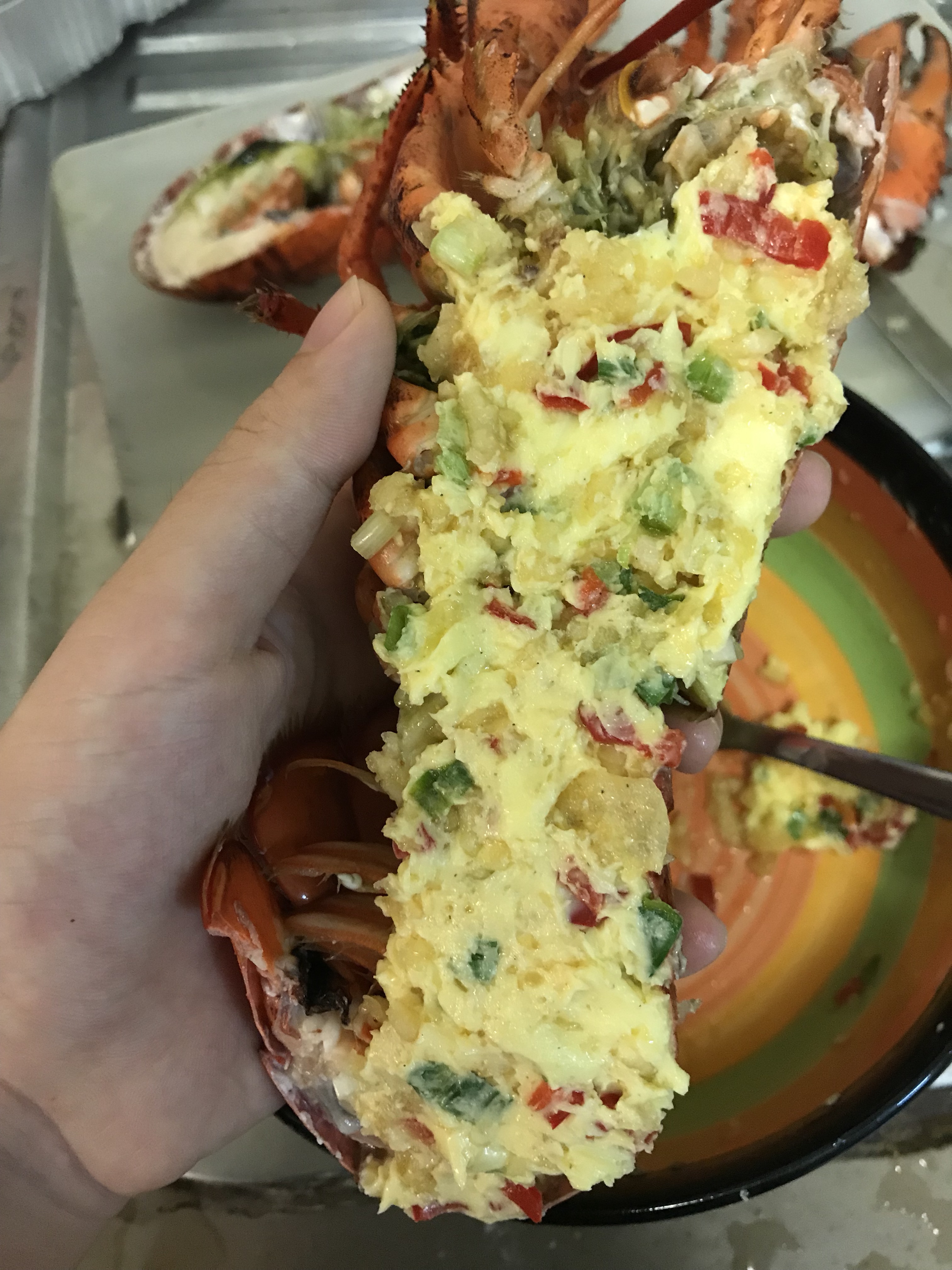
Then chopped chili, parsley and sprinkle salt. Mix well. Then add in butter. Stir them.

4. Cut lobster into halves.


5. Spread garlic butter onto lobster.


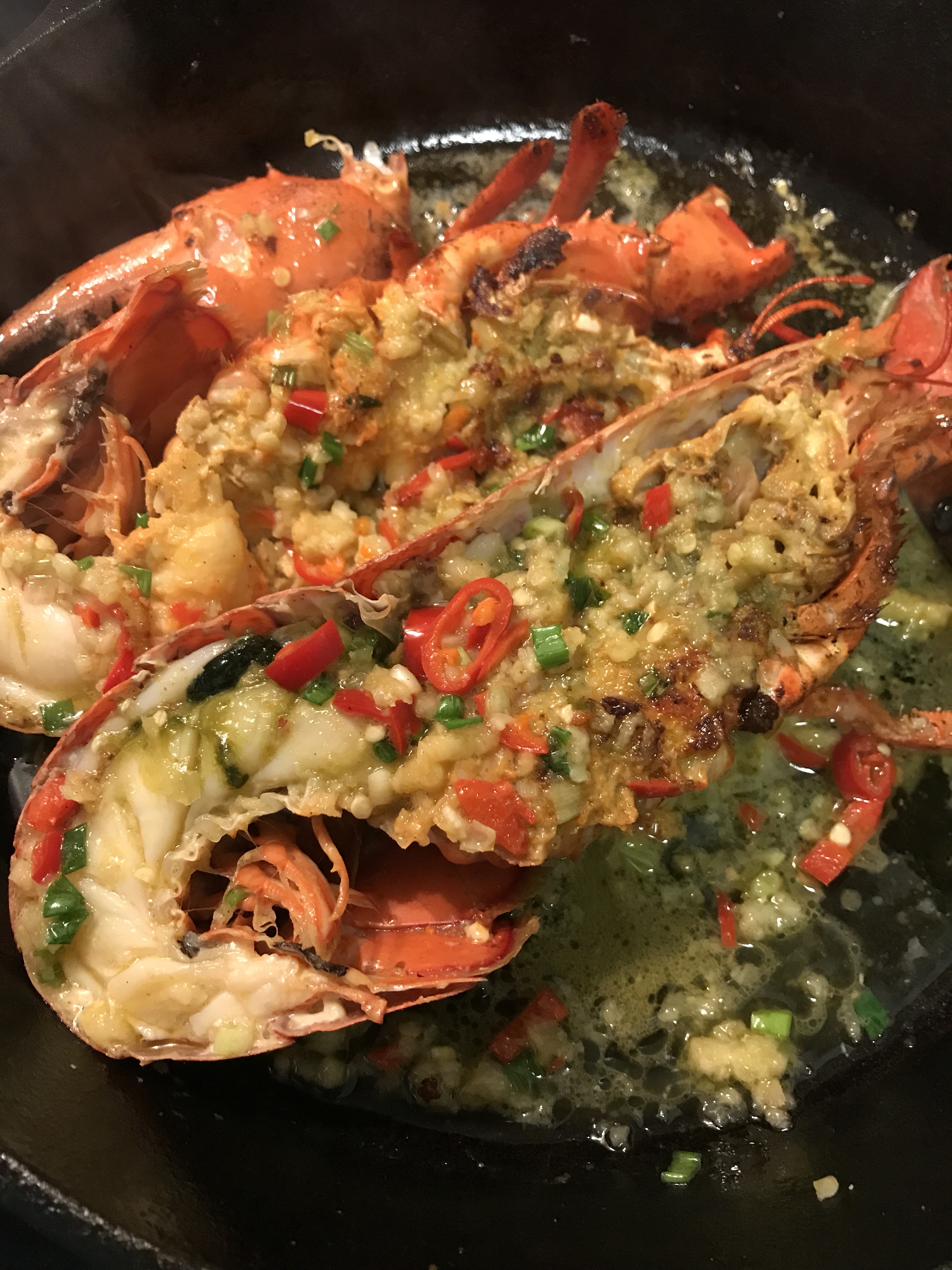
6. Heat a skillet on the stove. When it becomes smoke hot, put the lobster in with the butter side down.


7. Heat a bit then turn them over.


8. Place lobster in a plate. Pour garlic butter over it.


My husband loves it.

View original post

Train delay: Students given full duration for paper (PSLE English Language and GCE O-level Music Performing)

Fortunately, students affected by the train disruption are given the full duration for their respective papers. It would have been quite a traumatic experience though.

Source: Straits Times

SINGAPORE – No exam candidates were affected by the train delay on the East-West Line on Thursday (Sept 28) morning, said the Singapore Examinations and Assessment Board (SEAB) in response to queries from The Straits Times.

As at 8.30am, no schools have informed SEAB that candidates sitting the PSLE English Language and GCE O-level Music Performing examinations were affected by the disruption, said the exam board.

Earlier in the morning, the Ministry of Education said that students who are affected by the train delay on EWL do not need to submit an excuse letter and will be given the full paper duration.

Online Technology News Media Teknologi & Internet

The following is a new Online Tech News site: onlinetech.news.

Category: Media Berita Internet

Keywords related to the site:

Online Technology News Media Teknologi & Internet
Berita harian internet
Situs berita internet
situs berita teknologi
Berita online
teknologi online
berita teknologi
berita online
berita internet
situs berita teknologi
situs berita online
situs online

Travel Advisory: Volcanic Activity in Bali

On 22 September 2017, Indonesian authorities raised the alert-level for Mount Agung on Bali island to level 4 (Awas or Warning) due to an increased possibility of a volcanic eruption within 24 hours. Indonesia’s National Disaster Mitigation Agency has warned residents and tourists to stay 9 kilometres away from the crater and up to 12 kilometres away to the north, northeast, southeast and south-southwest.

Given the possible eruption of Mount Agung, Singaporeans should defer non-essential travel to the affected areas at this juncture. Volcanic eruptions could result in ash clouds that could severely disrupt air travel. Singaporeans currently in Bali should monitor these developments closely and avoid Mount Agung and its vicinity. They are advised to take all necessary precautions for their personal safety, monitor the local news closely and heed the instructions of the local authorities, such as to be ready to evacuate at short notice. They should also purchase comprehensive travel and medical insurance and be familiar with the terms and coverage.

Singaporeans are advised to stay in touch with your family and friends so that they know you are safe. Singaporeans travelling overseas are also strongly encouraged to e-Register with the Ministry of Foreign Affairs at https://eregister.mfa.gov.sg/, so that we can contact you should the need arise. Those in need of urgent consular assistance may contact the Singapore Embassy in Jakarta or the Ministry of Foreign Affairs Duty Office at:

Embassy of the Republic of Singapore in Indonesia (Jakarta)
Jln H R Rasuna Said, Kuningan, Block X/4, KAV No 2,
Kuningan, Jakarta Selatan 12950
Tel: + 62 (21) 2995 0400 or +62 811 863 348 (24-hours)

Ministry of Foreign Affairs Duty Office (24-hours)
Tanglin, Singapore 248163
Tel: 6379 8800, 6379 8855
Email: mfa_duty_officer@mfa.gov.sg

PSLE Chinese Listening Exam (mrbrown) Very Funny!

Recently, there is a PSLE Chinese Listening Exam that does not make sense.

Question: Student A bought a new clothes. Student B asks Student A: “You bought new clothes?” Student A said: ” No, it is sewn by my mother, do you think it is beautiful?” Student B said: It is very beautiful, I didn’t knew your mother could sew?”.

What did Student A say next?

1) My mother will sew clothes for me whenever she is free.
2) My mother does not like to spend money to buy clothes.
3) My mother just started learning how to sew.

I am totally puzzled by this question. The three options seems equally plausible. How are we supposed to know which is the truth?

Answer is option 3 by the way.

Recommended Books for Spectral Sequences

Best Spectral Sequence Book

So far the most comprehensive book looks like McCleary’s book: A User’s Guide to Spectral Sequences. It is also suitable for those interested in the algebraic viewpoint. W.S. Massey wrote a very positive review to this book.

A User’s Guide to Spectral Sequences (Cambridge Studies in Advanced Mathematics)

Another book is Rotman’s An Introduction to Homological Algebra (Universitext). This book is from a homological algebra viewpoint. Rotman has a nice easy-going style, that made his books very popular to read.

The classic book may be MacLane’s Homology (Classics in Mathematics). This may be harder to read (though to be honest all books on spectral sequences are hard).

***Update: I found another book that gives a very nice presentation of certain spectral sequences, for instance the Bockstein spectral sequence. The book is Algebraic Methods in Unstable Homotopy Theory (New Mathematical Monographs) by Joseph Neisendorfer.

Interesting Facts about Green’s Theorem

Firstly, Green’s Theorem is named after the mathematician George Green (14 July 1793 – 31 May 1841). Something remarkable about George Green is that he is almost entirely self-taught. He only went to school for one year (when he was 8 years old). His father was a baker, and George helped out in the bakery. Later, at the age of 40 he went to Cambridge to get a formal degree, but even before that he had already discovered Green’s Theorem. It is a mystery where did George Green learn his mathematical knowledge from. (During his time there was clearly no such thing as internet.)

It is unclear to historians exactly where Green obtained information on current developments in mathematics, as Nottingham had little in the way of intellectual resources. What is even more mysterious is that Green had used “the Mathematical Analysis,” a form of calculus derived from Leibniz that was virtually unheard of, or even actively discouraged, in England at the time (due to Leibniz being a contemporary of Newton who had his own methods that were championed in England). This form of calculus, and the developments of mathematicians such as Laplace, Lacroix and Poisson were not taught even at Cambridge, let alone Nottingham, and yet Green had not only heard of these developments, but also improved upon them.
-Wikipedia

One of the applications of Green’s Theorem that I find interesting is finding the area of the ellipse: https://www.whitman.edu/mathematics/calculus_online/section16.04.html. (Scroll down to Example 16.4.3). I find the proof very neat, you may want to check it out.

Pierre-Simon de Laplace; French Newton

To increase your interest in mathematics, let me introduce the French mathematician Pierre-Simon de Laplace, also known as the “French Newton” or “Newton of France”. He helped to calculate projectile motion for Napoleon’s artillery. Laplace was also the examiner for Napoleon when he entered military school. Laplace also invented “Laplace transform” and “Laplacian” which will be useful in advanced engineering calculations.

Some quotes:

In September 1785 Laplace subjected Napoleon to a rigorous examination in differential equations and algebra as well as the practical applications of mathematics.
Book on Napoleon

The French Revolution began in 1789. Laplace was fortunately situated for avoiding its dangers, in part because, like Lagrange, his talents were found useful in calculating artillery trajectories. Napoleon esteemed Laplace, and after the Revolution showered him with honors.
https://www.umass.edu/wsp/resources/french/personnnes/laplace.html

Napoleon himself was good at math, he proved a theorem called Napoleon’s Theorem. Napoleon was “close friends with several mathematicians and scientists, including Fourier, Monge, Laplace, Chaptal, Berthollet, and Lagrange.”

Napoleon also made the following quote:

The advancement and perfection of mathematics are intimately connected with the prosperity of the State. — Emperor Napoléon Bonaparte.

Hope the above interesting facts increase your interest in math.

5 Skills Students Need To Cope With School Pressures

According to an article published by the American Psychological Association (APA), many teenagers in the USA say they experience stress in patterns comparable to what adults go through. Teenagers also report higher stress levels than adults during the school year.

Tutors from Leaps ‘n Bounds, a learning center in Dubai, also observe that teen stress is not just confined to adolescents in certain countries; it is slowly becoming a widespread issue.

Teen stress can be caused by different factors including the pressure to perform well (or at least to pass) academically and in sports, and to have a great social life. In school, adolescents constantly face tough academic demands and responsibilities and experience social pressure.

Unfortunately, these challenges spill over even after the afternoon school bell rings, which can cause teenagers to feel even more stressed.

Dealing with Teen Stress

For teenagers to learn how to effectively deal with school pressures, they need to develop and rely on key personal skills. These include:

1.    Time management

All teenagers today always seem to be swamped with numerous activities: assignments, studying, extracurricular activities and sports. They need to find time for their friends, too.

Because teenagers need to have enough time to go through and complete these activities, they need to learn how to manage their time properly. Time management is an important skill they need to develop. This skill pertains to their ability to plan and control how they spend the hours in their day to complete their tasks and accomplish their goals.

 With proper time management, teens will be able to establish which tasks to prioritize and how to set their goals, and learn how to monitor where their time actually goes. As such, they will be able to avoid the stress of not having enough time on their hands to finish their assignments, complete their projects, meet their friends, and see their maths tutors in Dubai, if they have additional weekly tutorial or learning sessions.

2.    Setting realistic goals

Being number one in the class and, at the same time, for example, being the captain of the school football team are goals worth working hard for. However, overachieving teens tend to feel more pressure. When they fail or feel they didn’t perform up to expectations, they may develop low self-esteem and other negative feelings and attitudes.

Teenagers, therefore, are encouraged to lower their goals or set more realistic ones so that they can achieve more. By doing so, teens will also avoid pressure and boost academic success.

3.    Positive coping skills

 Coping skills are daily strategies and activities everyone uses or relies on to deal with, work through, or process emotions. Examples of positive coping skills include exercising, meditating, talking with friends or other family members, and having healthy hobbies such as reading and gardening.

Teenagers need to develop and practice positive coping skills instead of negative ones so that they will learn how to deal with stress through healthy ways. Positive coping strategies increase long-term resilience and well-being.

Negative coping techniques such as smoking and using drugs, on the other hand, may provide temporary relief from difficult emotions and pressure but lead to substance dependency and abuse.

For teenagers to effectively withstand adversity and deal confidently with daily stress and other challenges, they need to choose and apply positive coping strategies.

4.    Self-care

 For teens to better cope with pressure, they also need to have strong, healthy bodies. Teenagers, therefore, need to get enough sleep and rest, have a well-balanced diet, and get the right amount of exercise their bodies they need every day.

Adolescents need to take some time to pause from the relentless pace of everyday life and enjoy some creative activities that will help keep them from dwelling on or stressing over school pressures. This, in turn, will help them lower their stress levels.

5.    Optimism

Generally, stress is precipitated by stressful thinking. As such, teens can avoid stress and its negative effects by changing the way they think. When they have a positive mental attitude, they will have stronger coping strategies, better health, and a more stable, less stressful emotional life.

Adopting a positive way of thinking also helps teens complete their work and handle all their responsibilities. If they consistently think they won’t finish something or they don’t have enough time on their hands, they will lack the motivation to complete what they already started or even begin their task.

Teenagers only have a few more years before they enter another important phase in their lives: adulthood. But they can still enjoy all the experiences that come with adolescence and, at the same time, cope with all their school work and other activities without all the stress by simply developing the right skills.

AUTHOR BIO

Bushra Manna is one of the founders and Principal of Leaps and Bounds Education Centre – Motorcity. She has 20 years’ experience teaching the British and American curricula internationally at primary level – early middle school level, ages 4-12. Bushra believes in imparting deep learning to a child and not just rote learning, which is why she recommends the Magikats programme at her centre, to promote a genuine understanding with its multisensory, differentiated and interactive approach within a small group setting.



Best Online Resources to Improve Your Math Skills

Best Online Resources to Improve Your Math Skills

Although Maths is a compulsory subject in all the educational institutions all over the world, many students consider it as a complete waste of time and skip this issue, claiming that they prefer not mathematically oriented disciplines but only social sciences. But will it really help you in your future or it is just something you have to learn because everybody does it? Math, as well as other exact sciences, is essential for the intellectual development of a person from early years, it helps to develop intelligence and better your critical, analytical, deductive and prognostic abilities together with improving your abstract thinking. Very often people understand the importance of logic and algebra when they are already adults and try to make up for lost time, but do not know where to find a qualified help quickly. We think that a man is never too old to study, that is why we have selected the best online sources to improve your knowledge of numerous subjects:

  • Online courses

There are plenty of courses available on the web, which can offer math courses online at low prices or even for free. Online learning is a trendy way of getting new knowledge and experience nowadays, but still, there are people, who prefer old and traditional methods and say it is useless and wastefulness. But, if you keep up with the times, you can visit such sites as Academic Earth, Edx, TED, University of the People, Coursera and others and get a unique experience in exploring new things from universities all over the world, just sitting on your sofa and holding a laptop.

  • Online libraries

For those, who still hesitate, exist online libraries, where you can download books you need and dive into learning by yourself. Of course, there is nothing better than a smell of a written word, but the theme of books varies depending on the site, and mostly they have a plethora of them available for free, so everybody could find the one he needs. The one drawback of using web libraries is that you have to organize an academic process yourself, thus have good time-management and organizational skills. Nevertheless, if you are a person, who is self-motivated and can move towards the goal on your own, this type of e-learning is exactly what you need. Among the most popular web libraries are The Online Library, Harvard Library, Wiley Library, Open Library and others.

  • Online Tutors

There are different types of school teachers, some of them focus on the needs of each student, other – use discipline as a key to successful learning, but the thing that is common for all of them, is strict correspondence to the school program, established in the country. School program doesn’t care whether the student understood the material he had just learned, or he still needs time to master it. This is the time when online tutors come to stage. If you need to learn math or other subjects that you have missed at school or simply improve them, they can assist you as they are 100% students oriented and can present the material according to the students’ abilities and needs.

  • Online lessons

This type of lessons is a perfect variant of distance learning for those, who are limited on time and want to master something quickly and get great results. Individual classes can take place in the form of face-to-face conversation by means of various apps or programs such as Skype and other video calls. Among the advantages of this type of e-learning is easy access – you can learn from home and build up your own learning schedule, also there is wide choice of tutors available on the Internet, no matter how far away they are, different educational content – video and audio which you can find for free on the web and, of course, you can choose the subject or skills you want to level up – it could be mathematics assignment writing, organic chemistry, etc.

There are plenty of ways how to study maths online, and it depends on which directions of studying will you choose, the pros and cons of each method based on your goal and preferences. The one thing you should remember is that it is never late to gain new knowledge or skills. As Benjamin Franklin once said, “An investment in knowledge pays the best interest.”


An ancient Babylonian tablet known as Plimpton 322

Source: NY Times

One of my favorite YouTube Math Professors, Norman Wildberger, has made a historical math discovery: that the ancient Babylonian tablet known as Plimpton 322 is actually a trigonometric table.

“It’s a trigonometric table, which is 3,000 years ahead of its time,” said Daniel F. Mansfield of the University of New South Wales. Dr. Mansfield and his colleague Norman J. Wildberger reported their findings last week in the journal Historia Mathematica.

Check out my other blog posts on Prof. Norman Wildberger:
1) Algebraic Topology Video by Professor N J Wildberger

2) Video on Simplices and Simplicial Complexes

3) Critique on the Modern Axiomatic Approach of Mathematics

4) AlgTop1: One-dimensional objects

Garry Kasparov Masterclass Review

Garry Kasparov Teaches Chess is the latest Masterclass by World Champion Garry Kasparov. I am sure that even from the trailer, you can see that it is of exceptional quality.

According to the FAQ, “the class will test players with a US rating of 1300-1700 and include more advanced concepts and examples that will benefit 1800+ rated players”. Most amateur players will fall under this range.

The price may seem steep ($90), but it is lifetime access so one can watch it over and over again. Also, there are 20+ lessons.

Click on this link to purchase: Garry Kasparov Teaches Chess

Review by one of our readers (Nicholas): I have seen it. It is fantastic. A general view of chess and many thoughts, well explained, well presented, it is what is called a Master Class, no less, with a player that is better than any of the 30 top world players right now. So, it is the best 90 dollars I’ve spent in may years…

(See comment below. Feel free to add your comment too!)

Personally, I like the way Garry Kasparov plays the Queen’s Gambit. He often plays the Exchange variation (cxd5), and sets up the formation of Bishop d3, Knight e2, with the plan of f3 to support an eventual e4. This is suitable for attacking players who play 1. d4! The other plan in the Queen’s Gambit is the Minority Attack which is suitable for positional players.

The Summer 2017 Mathematics A To Z: Morse Theory

Joseph Nebus's avatarnebusresearch

Today’s A To Z entry is a change of pace. It dives deeper into analysis than this round has been. The term comes from Mr Wu, of the Singapore Maths Tuition blog, whom I thank for the request.

Summer 2017 Mathematics A to Z, featuring a coati (it&#039;s kind of the Latin American raccoon) looking over alphabet blocks, with a lot of equations in the background. Art courtesy of Thomas K Dye, creator of the web comic Newshounds. He has a Patreon for those able to support his work. He’s also open for commissions, starting from US$10.

Morse Theory.

An old joke, as most of my academia-related ones are. The young scholar says to his teacher how amazing it was in the old days, when people were foolish, and thought the Sun and the Stars moved around the Earth. How fortunate we are to know better. The elder says, ah yes, but what would it look like if it were the other way around?

There are many things to ponder packed into that joke. For one…

View original post 1,164 more words

Education and the Blockchain – Should We be Teaching Blockchain in Schools?

Source: https://preply.com/

It goes without saying that tech progress is moving at a rapid pace. Futurists point to Moore’s law – the idea that tech capabilities double every two years – as evidence for tech’s expansion into nearly every facet of our lives.

Teaching Technology

Education has seen its own dramatic tech advances. Kids can learn math from gamified apps while riding in the backseat of the family minivan. Students can hire an online algebra tutor and learn from anywhere via Skype. Aspiring students can virtually attend free Ivy-league classes (Massive Open Online Course, or MOOC) with millions of other learners of all ages and backgrounds. And NASA now collaborates with high school students in inventive hardware and robotics projects.

The most significant advance in computer-based education isn’t AI or virtual-based learning or even big data – it’s the blockchain. Blockchain has its origins in cryptocurrency, i.e. Bitcoin. The blockchain is essentially a way of managing data transactions – and it’s considered a radical disruption of traditional banking.

Plus, its applications in education – both virtual and classroom-based – have the potential to change everything about schools, from instruction to student achievement.

Exposure Versus Creativity

In the US, three-quarters of children have access to a smartphone. But on its own, that’s not necessarily a good thing. Kids who simply learn to operate a phone, just downloading and playing games, become consumers. The future lies with creators.

US Department of Labor statistics tell us that 2020 will bring with it 1.4 million computer specialist job openings. But American universities produce woefully inadequate numbers of graduates in the right fields – enough to fill a mere 29% of the jobs.

So what’s wrong with the picture? Why the big gap? There are many societal reasons we could point to, but one thing seems to stand out. We’re teaching tech literacy the wrong way.

Textbook-style curriculum may have its place, but not in tech ed. When kids are taught to memorize coding sequences and churn out the same answers to the same textbook questions, there’s no creative spark. No outside-the-box thinking.

In the best way, blockchain is wildly unconventional. To advance the world-changing potential of anti-dogmatic thinking, we need to encourage kids’ inventiveness. If the educational focus is on robot-like achievements rather than innovation, where will we find our climate change-tackling problem solvers?

We’ve labeled a generation of kids “tech-savvy” without giving them the tools to move from consumption to creation. It’s a waste of their brain power to hook kids on the addictive side of tech without pulling back the curtains and showing them the remarkable inner workings. Children and teens want to know how things work.

One solution? Teach tech like art. Coding has more in common with drawing than accounting. Yes, there is a necessary foundation in understanding digital languages and principles – but without encouraging creativity, we’re creating a generation of the same brain. Even gamified learning, if done improperly, can be perilously bland.

Tackling the Education Gap

There are few key components of a sound approach to teaching creative thinking around technology.

  1. Let it be accessible. Kids will shy away from a big learning curve – learning and doing need an intimate relationship.
  2. Remove the achievement roof. Learning platforms and educational approaches which employ standardized tests as the litmus for success – and for what the content can achieve –inhibit creativity. Rather than saying “do this to produce this result,” what if we said, “here are your tools – now, what can you create?” Consider The Lego Movie’s message of the importance of imagination – for future tech innovation, we need makers, not managers.
  3. Embrace a shifting curriculum. In other subjects, things might stand as eternal truths; the Magna Carta will always have been signed in 1215. But in technology education, things move at a blistering pace. A particular tool or lesson may become quickly outdated, so the educational format needs flexibility, just like the subject it teaches.

Blockchain is set to change the world. But as we continue to encounter environmental and societal problems, we need amazing minds to solve them. Revolutionizing how we teach technology education might be the answer we didn’t know we needed.

Read more at: https://preply.com/

Symmetry, Algebra and the “Monster”

ChefCouscous's avatarMath Online Tom Circle

Very good introduction of Modern Math concept “Group” to secondary school math students by an American high school teacher.

https://www.quantamagazine.org/symmetry-algebra-and-the-monster-20170817/

Summary:

  • Symmetry of a Square
  • Isometry (*) or Rigid Motion (刚体运动) = no change in shape and size after a transformation
  • What is a Group (群 “CAN I” ) ? = Closure Associative Neutral Inverse
  • Monster Group = God ?
  • String Theory: Higgs boson (玻色子) aka “God Particles”

Note (*): “保距映射” (Isometry),是指在度量空间 (metric space) 之中保持距离不变的”同构“关系 (Isomorphism) 。几何学中的对应概念是 “全等变换”。

View original post

Son of taxi driver among this year’s President’s Scholars

Source: http://www.straitstimes.com/singapore/education/son-of-taxi-driver-among-this-years-presidents-scholars

Mr Lee Tat Wei lives in a four-room flat in Woodlands. He and his older brother went to neighbourhood schools. His father is a taxi driver and his mother works as a part- time sales assistant.

Despite his humble background, the 19-year-old said he has never felt shortchanged. “My parents gave me an environment that money couldn’t buy. They never pressured me to get straight As. They taught me to live in the moment,” said the Anglo-Chinese School (Independent) graduate who had a perfect score of 45 for his International Baccalaureate diploma exams.

Mr Lee, who is one of the five recipients of the President’s Scholarship this year, will be going to read liberal arts at Yale University.

I’m a Rare Breed: An Elite Chess Player Who’s Open About His Faith

A nice interview by Wesley So, one of the top chess grandmasters from Philippines.

On the small planet where elite chess players dwell, very few people worship Jesus Christ. If anyone discovers that you’re one of those “superstitious,” “narrow-minded idiots,” you’re likely to see nasty comments accumulate on your Facebook fan page. On a regular basis, I receive emails from strangers lecturing me about the dangers of following Jesus. Out of pity or disgust, they wonder how I, the world’s second-ranked chess player, can be so “weak-minded.” I have been assured that identifying openly as a Christian will interfere with sponsorship, support, and invitations to events. I have been told that spending time reading my Bible, praying, and going to church will inevitably weaken my performance. People plead with me to at least keep quiet. They say thanking God publicly makes me look ridiculous. So why did I make such a risky move?

Read more at: http://www.christianitytoday.com/ct/2017/september/im-rare-breed-elite-chess-player-whos-open-about-his-faith.html?start=1

From Wikipedia:

As a young player, So’s aggressive and tactical style of play caught the attention of a former Philippine chess champion, International MasterRodolfo Tan Cardoso. Cardoso said of So:

“The young lad…would sacrifice a queen or any other pieces in his arsenal to get a winning attack….He cannot afford decent training given by well known GM-coaches and has to rely on his pure talent…before competing.”

UK Textbooks à la Chinese / Singapore Math Style

ChefCouscous's avatarMath Online Tom Circle

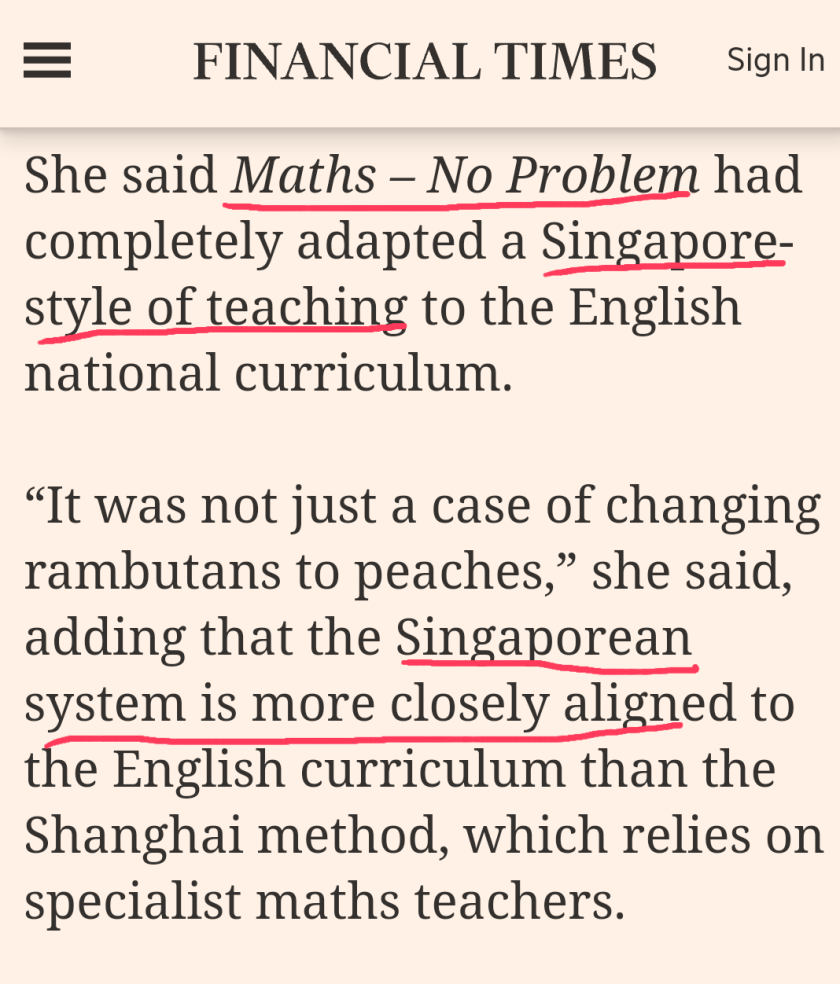
[Original Financial Times Article] Google: UK maths books fail DfE test

$latex boxed {text {The Ideal Math = (Chinese + English) * French }}&fg=aa0000&s=3 $

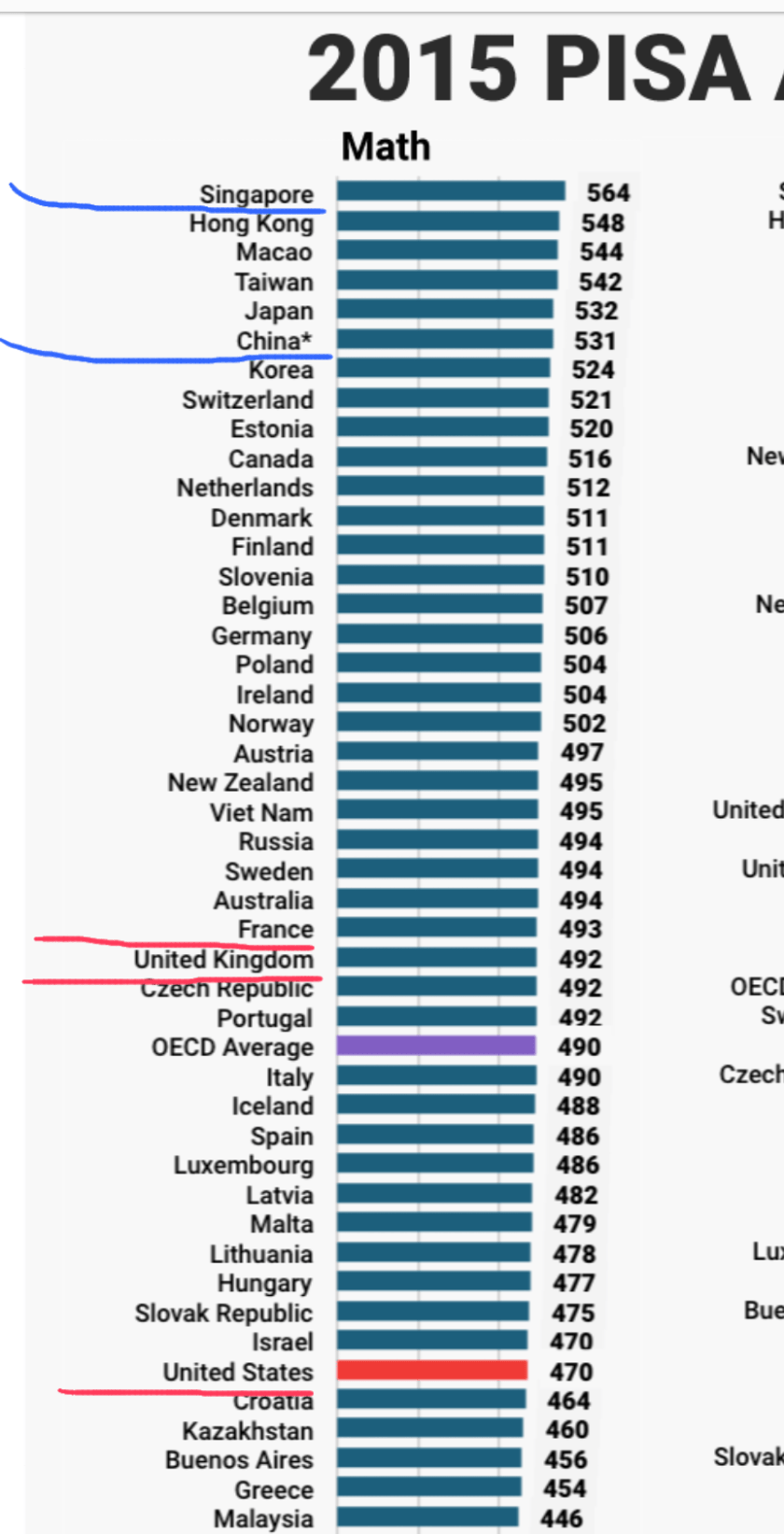
UK, USA, France are copying Chinese Math (from which the “Singapore Modeling Math” derived) in Primary schools, this proves my above-mentioned “Ideal Math” formula is correct. The 2 Asian countries were top in 2015 PISA Math Test for 15-year-old students, while UK was ranked 27th.

It remains to see if China / Singapore reciprocate the French Math theoretical foundation rigor in High Schools (Junior Colleges) and in the first 2 years of undergraduates for STEM (Science, Technology, Engineering, Math) students.

Compared with Fields Medals (equivalent to Nobel Prize in Math), the picture is reversed – where USA, France and UK are top. The secret lies in the formula : the multiplying factor – (* French), ie the math theoretical foundation notably…

View original post 26 more words

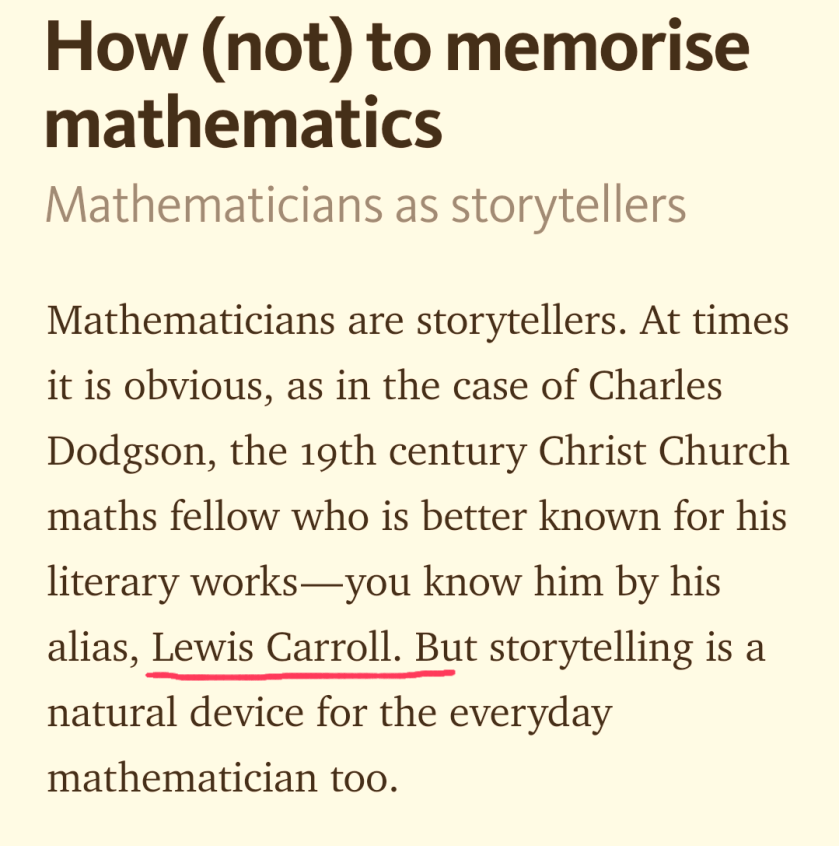
How (not) to memorise mathematics

ChefCouscous's avatarMath Online Tom Circle

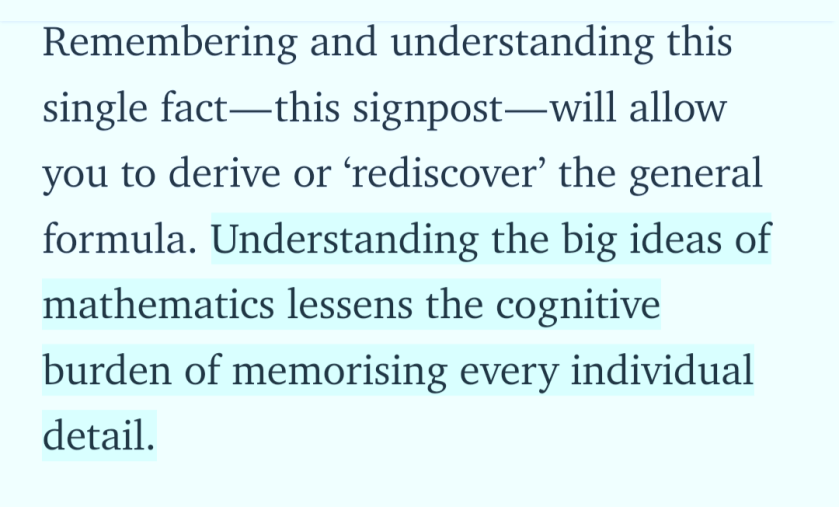
Many excellent Math students after leaving universities more than 10 years forget 90% of math they learned, save some primary school arithmetics – few could do Singapore PSLE Modelling Math or solve quadratic equations.

The “Story-Telling” memory technique via “Signposts” can be used to reconstruct math from first principles:

https://medium.com/@fjmubeen/how-not-to-memorise-mathematics-98fef71aefcf

Note: Lewis Carroll: the author of “Alice in wonderland”

Cambridge Professor Tim Gowers (Fields Medalist) suggested the similar pedagogy of “Memorise by First Principles”.

View original post