Singapore Math Books for Homeschool
Just to share my earlier page on Singapore Math Books for Homeschool. Highly recommended for parents who are homeschooling their kids and want a comprehensive Math syllabus.
Singapore Math Books for Homeschool
Just to share my earlier page on Singapore Math Books for Homeschool. Highly recommended for parents who are homeschooling their kids and want a comprehensive Math syllabus.
I find the plot quite disappointing. While the CGI graphics are good, and the acting is decent, the storyline is what I find lacking. Ever since George Lucas sold the Star Wars franchise to Disney, I find that the essence of Star Wars has changed.
Not just The Last Jedi, the previous Force Awakens plot was formulaic. There seems to be a fixed pattern to it:
There are some loopholes that don’t fit the style of the previous Star Wars movies. Rey defeating Kylo Ren without any prior training, and Luke Skywalker doing some kind of “Astral Projection”. As a fan who have watched all prior Star Wars movies, the style and plot of the new movies (post-Disney) are strikingly different in a bad way. In fact, it is so bad that I don’t think I will watch any Star Wars movies in movie theatres anymore.
This is actually one of the best motivational videos on Math I have seen. Unfortunately there is no English translation. It covers how useful Math is, and also some history of Math in ancient China. (It is rarely known, but China discovered negative numbers and calculated pi to high accuracy much earlier than in Western civilization.)
However, (according to the video), Math in ancient China went downhill in the Ming dynasty after it was scrapped from the imperial examination. Seems like removing Math from the examination syllabus is always a bad idea!
Finally, the video ends off with a note not to discourage budding mathematicians. Many budding mathematicians, will face strange looks from well-intentioned friends and society. Will learning math be useful or can it make money? Such thoughts can discourage people from learning mathematics (like the speaker himself).
By the way, at the start of the video, the speaker tells a humorous story of how he used Math to propose to his crush in England. This is related to my earlier post on Valentine’s Day Math on how to draw a heart using math.
Very nice to see their passion in cooking, and daring to choose the road less travelled. Do support them at their stall, Prawn Village, which currently at 20 Ghim Moh Road, #01-62, 199583.
SINGAPORE: They had not yet graduated from university, but like many of their peers, Joanne Heng and Chan Kheng Yee were already out and about looking for a full-time job. A posting on online portal Gumtree caught their attention, and they responded to the call for “interns” the very next day.
Like any job application, the two friends had to go through a job interview filled with questions about their sincerity, motivation and commitment to the position.
But this job required very different skill sets from your typical office job: Anson Loo, the person who made the post on Gumtree, was looking for young interns to help him run his hawker stall.
“I realised that there are young people who want to become hawkers, but face a lot of financial constraints,” said Anson, who sells prawn mee at Ghim Moh food centre. “So I thought, why not target young people with no experience, so I can give them the training from scratch?”
YOUNG AND INEXPERIENCED, BUT PASSIONATE
Of the seven who applied, Anson said Joanne and Kheng Yee fit his requirements the best. They were young, passionate and completely new to the hawker trade. And indeed, the two, who met while they were studying in the polytechnic, recalled bonding over a shared interest in F&B even as students.
Read more at https://www.channelnewsasia.com/news/singapore/the-hawker-interns-selling-prawn-mee-choosing-the-hawker-life-9420332
I think this is the latest best selling motivational book (out in Jan 2018). It is quite true, many successful people aren’t necessarily ‘A’ students. They do have some common traits that everyone can learn from.
The book is quite applicable to students. Most often, for students who aren’t performing well in school, the main reason is motivation. They are either not motivated, or their motivation is misplaced (e.g. motivated in computer games). Most parents will actually notice that their child is quite intelligent, but underperforming in school. The problem is psychological (motivation) rather than anything else.
The Motivation Myth: How High Achievers Really Set Themselves Up to Win
Source: Jeff Haden Linkedin
Listen to most teachers — and most parents — and it’s easy to assume that getting good grades in school is a requirement for professional success.
Nope.
Tom Corley, an accountant and financial planner, surveyed a number of high net-worth individuals. Many of them are self-made millionaires. (Not that you have to be a millionaire to be successful, of course.) He found most of the people surveyed did not earn high GPAs in school.
In fact, only 21% of the self-made millionaires were “A” students. 41% reported they were “B” students, and 29% were “C” students.
That’s right: More of the self-made millionaires were C students than were A students.
And if you’re wondering if family background played a part, 59% of the self-made millionaires came from middle-class households and 41% came from poor households — proving where you start does not dictate where you finish.
As Corley writes:
“…success in life does not come easy. It is fraught with pitfalls, obstacles, failure, and mistakes. Success requires persistence, mental toughness and emotional toughness in overcoming these pitfalls. Its pursuit pushes you to the edge emotionally and physically. You must grow a thick skin and become accustomed to struggle if you hope to succeed.
“Individuals who struggle academically may be more accustomed to dealing with struggle and making it a daily habit to overcome pitfalls.”
In short, they become mentally tough, which creates a foundation for long-term success.
For students scoring in the borderline of around 190- 200 PSLE score, there is a dilemma of going to Express stream in a neighborhood school, or Normal Academic N(A) in a more established school. Note that even good schools like Anderson, ACS (Barker) do have N(A) streams.
Here are some advices from people who have experience:
Source: Hardwarezone
First opinion says that N(A) in a good school is better:
“NA in good school
i myself is living example
in the end my parent chose express at neighborhood school
in the end that school is a s**** school. i cannot keep up with studies.
by secondary 2 i drop to NA
then stuck with the lousy neighborhood school and my whole life got ruin until now
if i can go back time i sure chose NA at good school”
This post (from Hardwarezone) made a good argument of why express stream is better:
“I think you have been grossly misinformed about the life of a NA student. You say your son is addicted to computer games but it seems like he is doing relatively ok to be able to qualify for the express stream.
Yes he will be learning at a slower pace but over the next 4 years your son will have to be resilient to constant peer pressure and have a good amount of perseverance as many if not most students from NA are known to be more boisterous and mischievous causing them to deviate from their studies. Not to mention the stigma associated with being in NA. During my time in one of your “preferred NA schools”, I’ve seen many good students fall out of their studies because of the influence of their peers. The “just because I’m in NA I cmi” mentality will sadly creep up to many.
In my batch, iirc out of 3 classes of NA students, only 1 class of about 30 people was able/ motivated enough to take their O Levels. If your son decides not to take his O’s in the future and goes to ITE instead, whatever good name the school has will not have any effect on his resume.
Moreover, it is not like “school reputation” has any standing in the hiring process. Unless you’re from a top school like RI/Hwa Chong, no one would give two hoots. Recruiters mostly look at your highest education obtained or post secondary education to see if there is any relation to the job scope you are applying for.
In my opinion, you are better off applying to an express neighbourhood school and see if he is able to cope rather to a “prestigious” school in the NA stream. He can always drop out of the express stream if he’s not suitable for it.”
This parent from Kiasuparents gives very compelling reasons in favor of Express:
“Every year, there are parents asking the same question: Exp or NA?
Every year, I would encourage parents to choose Express for their children, for the simple reason that O level syllabus is very rigorous. Children are expected to work hard right from the start, unlike NA.
Even though the school you get will not be a ‘good school’ (if you choose Express), the classmates your child mixes with are likely to be of similar academic profile, with some that only have ‘Exp’ as their option. Similarly, if your child chooses NA, the children he or she mixes with will also have some that only have ‘NA’ as their option.
There are children who transfer from NA to Exp, but how many are there? From what I heard, very few manage to do that. You may want to check with the schools you are interested in choosing NA for for the probability that your child could transfer to Exp though.
I just want to let you know that if it happens to my own child, I would choose Exp. If the child is willing to work hard, he will make it anywhere. And if he can make it anywhere, then why wouldn’t I choose a better stream for him so that he can get used to the rigorous syllabus earlier?”
This parent from Kiasuparents recommended Anderson and Presbyterian High as two good schools with Normal Academic:
“I would choose one where the school discipline is good, and the teachers are supportive of students etc, with good academic and non – academic programs to expose / stretch the child. If going for NA, you can consider Anderson Sec, Presbyterian High.. these are generally pretty good schools.”
Amos Yee (“famous” for posting controversial videos) actually has good talent and aptitude in Mathematics. His mother is a Math secondary teacher with decades of experience. Many people know him for his infamous videos and his “American English” pronunciation, but few know that he was actually one of the top students in his secondary school in terms of Maths. His English results were good too, and so was his Pure Chemistry. Perhaps even more impressive (and rare), is Amos Yee has a Grade 8 guitar certification (ABRSM merit) (Source: Amos Yee “Happy Teachers’ Day” YouTube video). In March 2011, Yee also won awards for Best Short Film and Best Actor at The New Paper’s First Film Fest (FFF) for his film Jan. He was also an actor in Jack Neo’s movie We Not Naughty.
Unfortunately, Yee seemed to have not used his talents well to benefit society, but instead got himself into a lot of trouble. Who knows, if he turns over a new leaf it could be still possible to have a bright future.
Quote from Amos Yee Facebook:
“OK my fellow friends, sorry it’s been so late, I shall announce my O level results.
Apparently I did better than I expected, for all the wrong subjects, so if you truly want to see the innate comedy of my results, you should check out the results which I’d predicted before in my previous post before reading this, and then I think you’ll laugh as much as I did.
E Maths (Dogs truly can get A1 for E Maths)
English: A1 (Well this was surprising, I’d finally gained the coveted A1 for English that I had always hoped for in my Secondary School, and mastered the art of English Comprehension.
A Maths: A2 (So apparently if you leave out 4 entire questions that are 7 marks each, you can still get an A2. So I guess I did really ****ing well for the questions that I did. My mother, being a highly coveted A maths and E maths teacher for 3 decades, threw herself out of the building when she heard her darling son did not attain an A1 for A maths. If you look out of the window, you can still hear the faint cries of ‘****! MY SON IS SUCH A DISAPPOINTMENT’. Well, you threatened to disown me when I became an Atheist, and in the end you didn’t, so I think you’ll do just fine.)
L1R5:11
Raw Aggregate Score: 7(-2 for CCA, -2 for MSP)
Best school I can go to: Nanyang JC”
Source: Amos Yee Facebook, January 14, 2015
Amos also claimed that he “had only studied extensively for the first E maths and A maths papers during the O levels period”. He didn’t really study during the month before the O levels, rather he was “abandoning studying just for that last month, and instead using that month to Complete 4 seasons of Daria, play Spirit Tracks and smash brothers on the DS, create a tuition namecard I now rarely use, and listening to all the best albums of the Beatles”. His Prelim results were also great:
Quote:
“For reference and comparison, this was my mark for prelim 2, the final exam I took in school that isn’t O levels, I think by Prelim 2, the tedium of studying and the uselessness of it was already bearing down on me, and I studied for all the papers, 2 days before and tried to do the best I can with the retained knowledge I had for CA1 (Which I also got an L1R5 of 12 but a slightly higher % of 72 % compared to CA2’s 70%, due largely in part to 93% and 88% for E maths and A maths respectively)
E Maths: A1 (82%)
A maths: A1 (82%)
English: A2 (72%)
Chemistry: A2 (71%)
Chinese: B3 (68%/)
Literature: B3 (65%)
Combined Humans: B3 (65%)
Malay: B4 (64%)
L1R5: 12Source: Amos Yee Facebook, January 11, 2015
His prediction of his O Level results are also quite accurate:
Quote:
“So here it is, my predicted O level results that are coming out tomorrow:
E maths: A1 (Dogs can get A1 for E maths)
English: A2 (Honestly, I might get an A1 in lieu of the bellcurve,but I never got A1 for English in any full paper before, neither would I feel proud if I did, why would I feel proud about mastering the art of the language of robots.)
Chemistry A2(SPA will help me probably, and though I didn’t study, retention from previous exams was surprisingly good when I did the paper)
A Maths: B3 (Though this was my best subject ever in previous exams(I got 100 plus bonus mark for an A maths paper for God’s sakes), apparently the few weeks I didn’t study was significant enough to make me forget my concepts, to the point that I had skipped an entire 2-3 questions with about 7 marks each, and I think with my inclination to be careless and forget units, it’s going to be a deprovement that will send shock waves)”
Source: Amos Yee Facebook, January 11, 2015
Finally, Amos Yee was also a top student in Secondary 3, 4 (Zhonghua Secondary School) and nominated for a Humanities scholarship. He was consistently getting As for E maths, A maths, Chemistry and English. (Source: Amos Yee WordPress blog, January 25, 2015).

Quite an amazing story. The road from PSLE 181 to NUS Medicine is a long and arduous journey. Read how Mr Tan Jun Xiang, 22, managed to overcome the odds to enter the prestigious NUS Medicine faculty.
NUS Medicine is very hard to get in (even perfect scorers can get rejected). His overjoyed father “booked two tables at a restaurant and invited (his) relatives to celebrate.”
SINGAPORE – Mr Tan Jun Xiang, 22, is not your typical medical student who aced all his school examinations.
In fact, he scored only 181 points in the Primary School Leaving Examination (PSLE) and had to go into the longer five-year Normal stream in secondary school.
The polytechnic graduate, who made it to the prestigious medicine faculty at the National University of Singapore (NUS), is among the rare few who do not fit the mold.
When he was younger, he never thought he would go to university – much less the highly competitive Yong Loo Lin School of Medicine at NUS, where only about one in seven applicants get in.
So what sparked his stunning academic turnaround?
A few things: seeing how disappointed his parents were with his results, getting into the secondary school of his choice after an appeal and discovering that he could indeed do well if he put his mind to it.
Read more at Straits Times
Source: https://www.reddit.com/r/singapore/comments/73cmgi/o_level_bellcurve/
It is well known that the “bell curve” is applied to the O Levels result. The most notorious example is E Maths, where 90+ or high 80s is required for the top grade of A1. The traditional mark of 75 is only enough for B3/B4 in the actual O levels.
Update: According to official sources, “grade boundaries” instead of bell curve is being applied to O Levels / A Levels. Technically, there is a subtle difference between the two since the bell curve refers to the normal distribution in statistics. Hence, technically, “bell curve” is not applied to O levels. However, for laymen, “grade boundaries” and “bell curve” are essentially the same thing, meaning that the percentage of A1s or As is being externally controlled by the examiners in the form of “grade boundaries”. It is definitely not the case that 75 marks is sufficient for A1 in ‘O’ Levels, or 70 marks is sufficient for A in ‘A’ Levels. It is being moderated and controlled via the “grade boundaries” determined by Cambridge which depends on the difficulty of the paper and possibly other factors like the cohort’s overall performance.
The quintessential discussion on bell curve in O Levels is this Reddit post: https://www.reddit.com/r/SGExams/comments/c1jqzr/o_levels_no_bell_curve/.
According to multiple users on Reddit, the bell curve estimate for Maths in 2016 is:
Emath: 95
Estimated a 92. Was pretty confident that I’ll get an A1. My math teacher even said that it’ll be ~88 due to the difficulty of the paper. Ended up with an A2 zzz.
Amath: 90
Paper 1 was tricky but paper 2 was manageable. Same thing as above. Estimated a 87, but got an A2.
“2015 O levels, I got double A1s for both maths. My E-Math estimate is on 96% and A-Math on 90%. The curve on E-Math is far steeper than A-Math, but if you wanna get the double A1s, grind and aim for perfection.”
For the A2/B3 grade, it is less demanding, but still significantly above 70:
Bellcurve is always unfavourable to E Maths student but kinda favourable to A Maths student.
I think I only got 78-79% for E Maths and I got A2 in the end.
While for A Maths, I know I only got 60-64% and in the end B3.
Other sources like Kiasuparents gave the following estimate:
Even if people minus a lot of marks for working… The emath A1 won’t be less than 85.. The paper is too easy. That’s why They moderate the bell curve up by so much.
And not only my teachers, but teachers in other schools as well have told their students that if they think a score of ~75 can get them an A1, they should b expecting a B3/B4 instead.
Do you have any experience with the bell curve? Share your experience in the comments below!
Wishing all readers a joyous Christmas ahead! Here are some ideas for a mathematical Christmas gift for your loved ones who are math lovers:
1)
This Christmas-themed Math book is the perfect gift for your child. According to Amazon, it is rated 4.5/5, and one reviewer even remarked that his 7 year old daughter loved reading it:
“I don’t write reviews normally but I was sitting in bed reading it when my 7 year old daughter snuggled up next to me to read it too – she would not let me turn the pages till she finished which was cute even though I had to wait.” (Amazon)
The Indisputable Existence of Santa Claus: The Mathematics of Christmas
2)
This book is rated very highly on Amazon; it is one of the best sellers in the Math category. It is ideal for homeschoolers, and for Singaporean primary school students who want to learn in advance, during the school holidays. (American Middle School syllabus should be accessible to upper primary Singaporean students) It is written in a very interesting manner as well.
Everything You Need to Ace Math in One Big Fat Notebook: The Complete Middle School Study Guide (Big Fat Notebooks)
3)
This book is extremely popular in the United States. It is a #1 New York Times bestseller, as well as based on true history. “The phenomenal true story of the black female mathematicians at NASA whose calculations helped fuel some of America’s greatest achievements in space. Soon to be a major motion picture starring Taraji P. Henson, Octavia Spencer, Janelle Monae, Kirsten Dunst, and Kevin Costner.”
Hidden Figures: The American Dream and the Untold Story of the Black Women Mathematicians Who Helped Win the Space Race
A few days ago, I was talking with Ed Dunne, who is currently the Executive Editor of Mathematical Reviews (and in particular with its online incarnation at MathSciNet). At the time, I was mentioning how laborious it was for me to create a BibTeX file for dozens of references by using MathSciNet to locate each reference separately, and to export each one to BibTeX format. He then informed me that underneath to every MathSciNet reference there was a little link to add the reference to a Clipboard, and then one could export the entire Clipboard at once to whatever format one wished. In retrospect, this was a functionality of the site that had always been visible, but I had never bothered to explore it, and now I can populate a BibTeX file much more quickly.

This made me realise that perhaps there are many other useful features of…
View original post 695 more words
We show how to solve “Clock” olympiad questions, which appear often in APMOPS/ SMOPS Olympiad questions.
Question: (SMOPS 2001, Q9)
Between 12 o’clock and 1 o’clock, at what time will the hour hand and minute hand make an angle of 110 degrees?
Full Solution:
We first analyse the hour hand:
It takes 60 min for the hour hand to move 360/12=30 degrees.
30 deg — 60 min
1 deg — 60/30=2 min
x deg — 2x min
(We measure the degree from the 12 o’clock vertical position.)
Next we analyse the minute hand:
It takes 5 min for the minute hand to move 30 degrees.
30 deg — 5 min
1 deg — 5/30=1/6 min
(x+110) deg — (x+110)/6 min
Now, we want the hour hand to be at x deg, and the minute hand to be at (x+110) deg simultaneously:
2x=(x+110)/6
12x=x+110
11x=110
x=10
Since x deg — 2x min, hence the answer is
2x=20 min after 12 o’clock
Ans: 12.20
Tessellation is a cool topic in primary level to PSLE math. Most students will enjoy it even if they hate other types of Math. It is a natural human instinct to be amazed at how different shapes can fit together perfectly to tile the plane.
Apparently, tessellation is going to be removed from the entire PSLE syllabus soon (see http://schoolplus.com.sg/primary-math-syllabus-2017/). That is certainly quite sad for many reasons.
Triangles and quadrilaterals (even irregularly shaped ones) can be easily tessellated. However for pentagons, it is less clear and some pentagons (including the regular pentagon) cannot be tessellated!
For more information read the article here at: https://www.quantamagazine.org/the-math-problem-with-pentagons-20171211/

Quite interesting list. Wonder who is the 80 year old?
Source: http://www.familyfriendlyhq.ie/family-blog/50-life-lessons-from-80-year-old-everyone-should-know
We absolutely love these pieces of advice from an 80 year old man.
The type of sheep in Israel is the “Awassi” sheep, a type of desert sheep. In Israel, the principal lambing season is December through January. It makes sense, since the winter in Israel is around 8 degrees Celsius, which is not too freezing cold. Something interesting to know!
Source: Aleteia
Long ago, I accepted the idea that December 25 was probably not the actual date of Christ’s birth, that the real date was unknown but probably in the spring. Knowing the exact date doesn’t really impact the liturgical celebration, after all. It was just one more sad thing about being an adult, one more little bit of wonder gone from life.
Since then, I’ve become well acquainted with the historical evidence in favor of a date of December 25. The date can be derived historically from the dating of Zechariah’s entry into the temple to burn incense. It can also be derived theologically from the ancient tradition that a great prophet entered and left the world on the same calendar day. Thus, the Annunciation was determined to have occurred on the same day as the crucifixion, March 25. December 25 naturally follows nine months later. They are good arguments, held to strict standards of historical research and logic, within their own fields.
But neither ever quite satisfied my desire for something really concrete. One continual objection was that the shepherds in the fields at night were presumed to be attending to the dropping of lambs. And lambs didn’t drop in December. Lambs dropped in the spring, not the winter.
So, when yet another person asked “Why do we celebrate Christmas in December if lambs are born in the spring?” instead of explaining the significance of March 25, I suddenly wondered: ARE lambs actually born in the spring in Israel? Can I find out?
The Awassi sheep is a desert sheep, a fat-tailed breed that has existed in the Middle East for an estimated 5,000 years. It is the only indigenous breed of sheep in Israel. They are raised for wool, meat, and milk. Awassi sheep breed in the summer and drop lambs in the winter, when there is sufficient pasture for the ewes in milk. In Israel, the principal lambing season is December through January.
This is practical, I thought. This is fact. This is biology.
For $1, you can bid on this R2-D2 Droid inventor kit at Hachi.Tech (https://www.hachi.tech/auction/RHOTFI). This is a very reliable online site that is owned by Challenger.
The Droid is perfect for those kids who want to learn more about robotics during their holidays. You may also purchase it from Amazon:
Source: https://www.theatlantic.com/business/archive/2017/12/innovation-income-chetty/547202/
Millions of children from poor families who excel in math and science rarely live up to their potential—and that hurts everyone.
Consider two American children, one rich and one poor, both brilliant. The rich one is much more likely to become an inventor, creating products that help improve America’s quality of life. The poor child probably will not.
That’s the conclusion of a new study by the Equality of Opportunity project, a team of researchers led by the Stanford economist Raj Chetty. Chetty and his team look at who becomes inventors in the United States, a career path that can contribute to vast improvements in Americans’ standard of living. They find that children from families in the the top 1 percent of income distribution are 10 times as likely to have filed for a patent as those from below-median-income families, and that white children are three times as likely to have filed a patent as black children. This means, they say, that there could be millions of “lost Einsteins”—individuals who might have become inventors and changed the course of American life, had they grown up in different neighborhoods. “There are very large gaps in innovation by income, race, and gender,” Chetty told me. “These gaps don’t seem to be about differences in ability to innovate—they seem directly related to environment.”
Just read that appealing to transfer from RGS (Raffles Girls School) to NYGH (Nanyang Girls High) is possible:
dd moved out of rgs to nygh. she got 262+2. she appealed to nygh and was granted interview on Thursday. was given the good news after her interview.

nygh her first choice. she probably missed by decimal points. thus tried to appeal. was telling her both schools are equally good thus if not successful for nygh in her appeal, just move on 🙂
https://www.kiasuparents.com/kiasu/forum/viewtopic.php?f=48&t=7127&start=3940
NYGH cut off point has been higher than RGS for the recent past years. It is the opposite situation of their boy school counterparts: RI cut off point is usually higher than Hwa Chong (Chinese High).
Just read about this rather amazing biography: https://today.duke.edu/2017/10/hau-tieng-wu-vital-signs. From a medical doctor, Hau-tieng Wu pursued a Ph.D. in math, and is now a math professor at Duke. Quite an interesting transition, that is quite rare, possibly less than 100 such cases in the world. Most mathematicians know little about medicine, and most medical doctors know little about math. It is rare to have someone know both fields.
Listen to your heartbeat with a stethoscope and you’ll hear a rhythmic lub-dub, lub-dub that repeats roughly 60 to 100 times a minute, 100,000 times a day.
But the normal rhythm of a healthy heart isn’t as steady as you might think, says Hau-tieng Wu, M.D., Ph.D., an associate professor of mathematics and statistical science who joined the Duke University faculty this year.
Rather than beating like a metronome, heart rhythm varies depending on whether you’re asleep or awake, sitting or jogging, calm or driving in rush hour. Breathing rate, brain activity and other physiological signals vary in much the same way, Wu says.
He should know. Before becoming a professor, Wu trained as a medical doctor in Taiwan. In his fifth year of medical school he was doing clinical rotations in the hospital when he was struck by the complex fluctuations in heart rhythm during anesthesia and surgery.
Where some saw noisy patterns — such as the spikes and dips on an electrocardiogram, or ECG — Wu saw hidden information and mathematical problems. “I realized there are so many interesting medical data that aren’t fully analyzed,” Wu said.
When a patient is in the hospital, sensors continuously monitor their heart rate and rhythm, breathing, oxygen saturation, blood pressure, brain activity and other vital signs.
The signals are sent to computers, which analyze and display the results and sound an alarm if anything veers outside normal ranges.
An ECG, for example, translates the heart’s electrical activity into a squiggly line of peaks and valleys whose frequency, size and shape can change from one moment to the next.
Wu is using techniques from differential geometry and harmonic analysis to detect patterns hidden in these oscillating signals and quantify how they change over time.
His methods have been applied to issues in cardiology, obstetrics, anesthesiology, sleep research and intensive care.
Fractions indeed are challenging for kids from ages 7-12. Probably the mental picture of a pie/pizza helps. Also, making fractions to the same denominator is a technique that once mastered will make addition/subtraction of fractions much easier.
Source: Scientific American
Many children never master fractions. When asked whether 12/13 + 7/8 was closest to 1, 2, 19, or 21, only 24% of a nationally representative sample of more than 20,000 US 8th graders answered correctly. This test was given almost 40 years ago, which gave Hugo Lortie-Forgues and me hope that the work of innumerable teachers, mathematics coaches, researchers, and government commissions had made a positive difference. Our hopes were dashed by the data, though; we found that in all of those years, accuracy on the same problem improved only from 24% to 27% correct.
Such difficulties are not limited to fraction estimation problems nor do they end in 8th grade. On standard fraction addition, subtraction, multiplication, and division problems with equal denominators (e.g., 3/5+4/5) and unequal denominators (e.g., 3/5+2/3), 6th and 8th graders tend to answer correctly only about 50% of items. Studies of community college students have revealed similarly poor fraction arithmetic performance. Children in the US do much worse on such problems than their peers in European countries, such as Belgium and Germany, and in Asian countries such as China and Korea.
This is a very nice and concise 8 minute introduction to cohomology. Very clear and tells you the gist of cohomology.
URL: Aleteia
It’s an Asian-style mathematics similar to Common Core that’s actually fun to do.
Confession time: I’m terrible at math. I don’t just mean like “struggled with calculus” bad, I mean like “had to watch YouTube videos to relearn long division in order to help my 4th grader with her homework” bad. I don’t know my times tables, except the easy ones. I can’t do fractions or percentages. I count on my fingers.
It’s sad and shameful, and I was determined that my children would not share my fate. So when my oldest daughter was 5, I bought the insanely expensive starter package from Right Start Math and set about teaching her how to do math the right way.
It did not go well, nor did it last long. I found even the very simple activities baffling because I couldn’t grasp the intention. It was like trying to teach my daughter a foreign language I didn’t know.
However, my abject failure to understand it did not diminish my enthusiasm for the Asian method of mathematics. One of the reasons I like Common Core math is because there are lots of similarities. If you’ve never been exposed to the wonder of Asian-style mathematics, allow me to remedy that for you:
Check out the video on the page, it is quite amazing. (Japanese method of multiplying with lines).
URL: Aleteia
WWW.QOO10.SG
I think currently this is the best budget laptop below $400. Size wise it is about the size of an iPad (around A4 size). The 4GB RAM makes it better and faster than those budget laptops with only 2GB RAM.
From the reviews on Qoo10, it is good for everyday uses such as YouTube, Microsoft Word etc.
Buying from Qoo10 has free shipping, Free Xiaomi Smart Scale and also “Free MS Office 365 Personal 1 Year” Pre-Installed Worth $98. (as of Nov 2017, check the updated terms and conditions to see if it is still valid)
URL: https://www.qoo10.sg/su/415685937/Q100000595
WWW.QOO10.SG
It turns out that US students aren’t that bad at math, they just have no motivation to do the PISA test properly. (The PISA test is an external test that has no bearing on their school academic results.)
Source: https://qz.com/1130505/us-students-arent-bad-at-math-theyre-just-not-motivated/
It’s no secret that young Americans perform poorly on math and science tests, especially compared to their peers in countries like Singapore, Korea and China, where math scores are among the highest in the world. Now, a working paper surfaces a fundamental reason for that weak performance: American students are simply not trying hard enough.
In the latest results of the Programme for International Student Assessment (PISA), US students ranked roughly average among the 75 participating countries. The PISA tests, administered by the OECD every three years, assess 15-year-olds around the world on math, science and reading. Governments and policy makers point to the outcomes when making the case for education reform.
…
The researchers also ran a simulation, and found that if the 15-year-olds in the US had been given the same cash bonus in 2012 when taking the assessment, America would have ranked 19th in the PISA math test instead of 36th among 65 nations.
Very nice and calming Christian music. Composed by Marty Haugen.
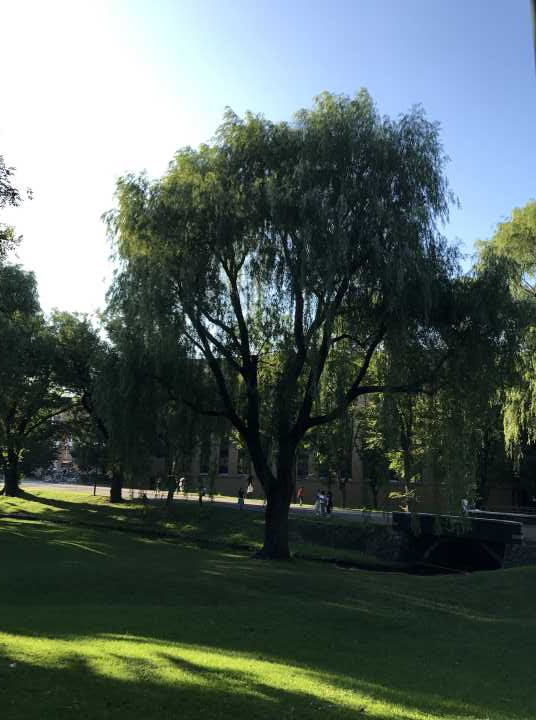
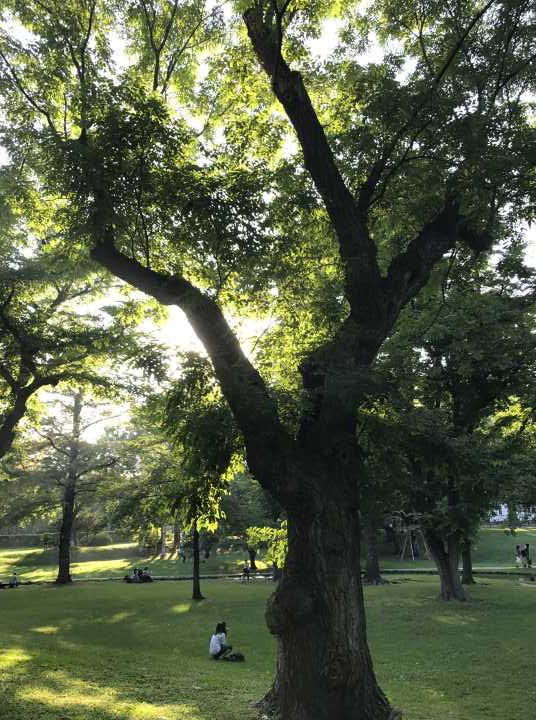
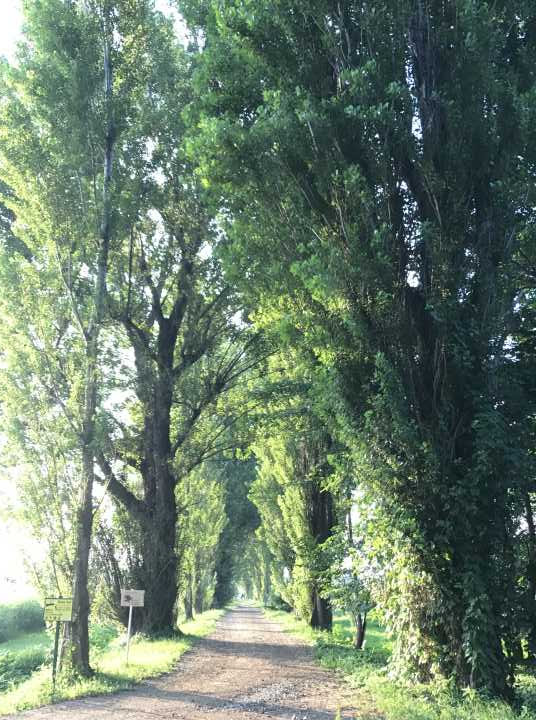
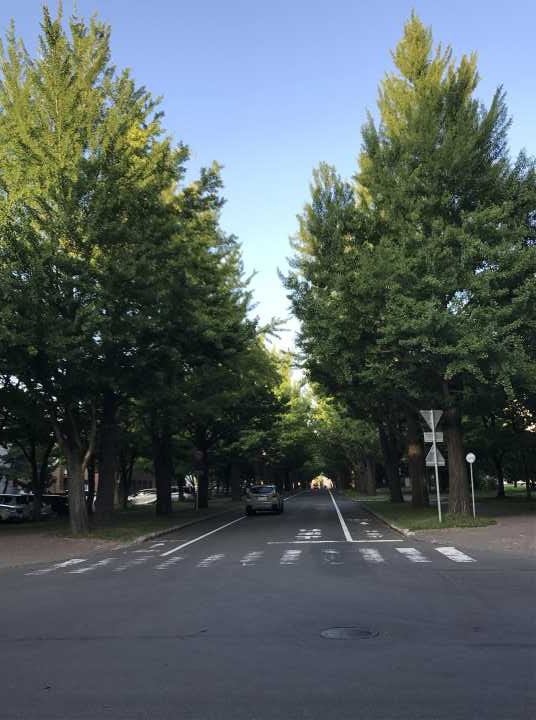
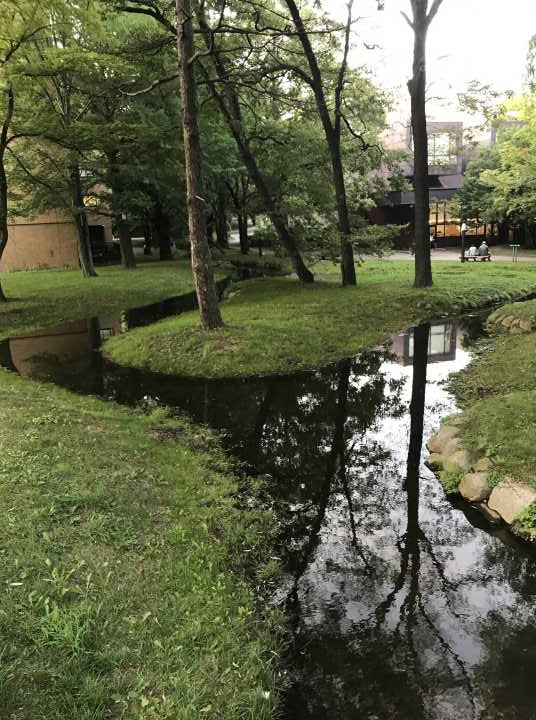
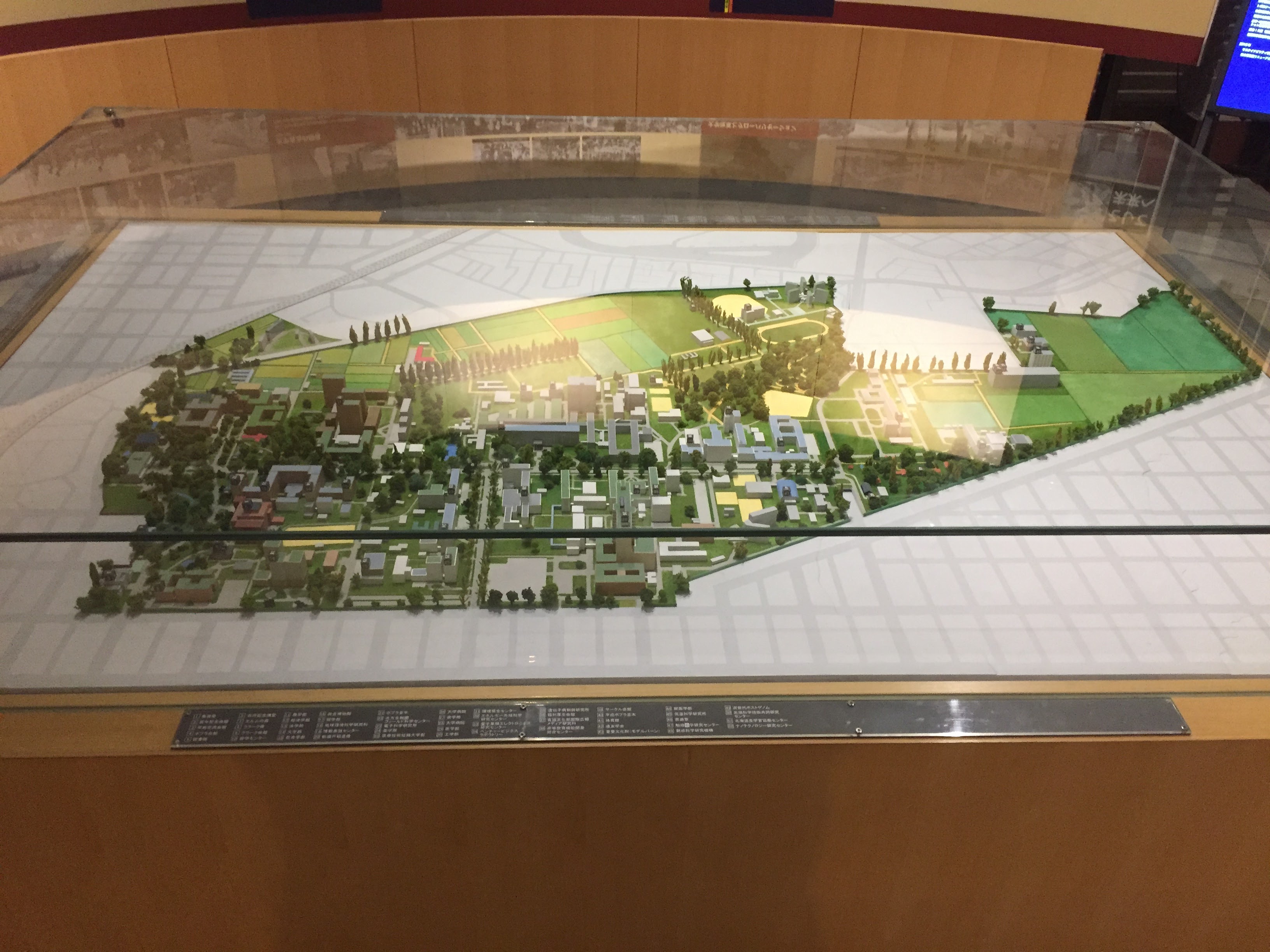
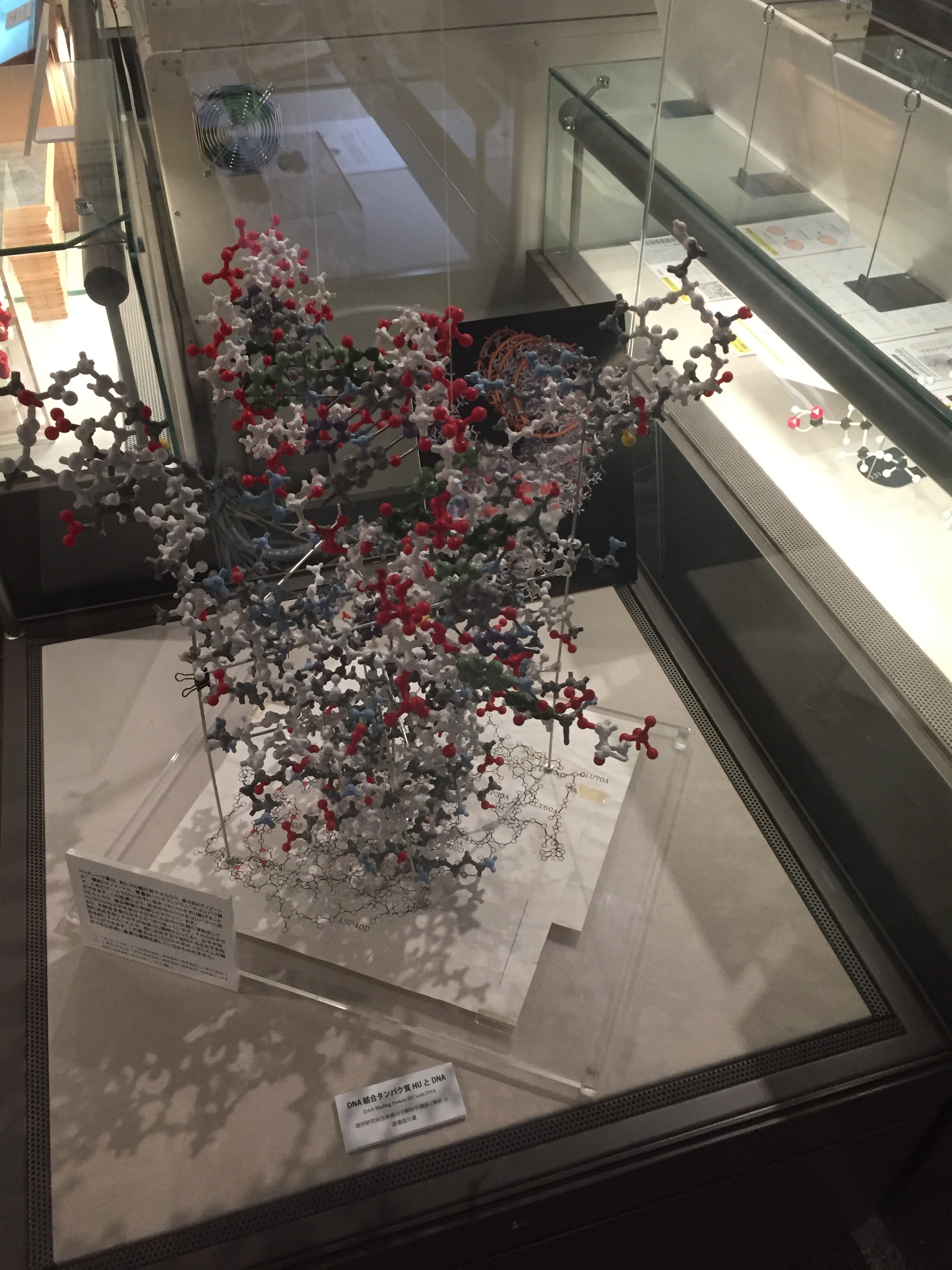
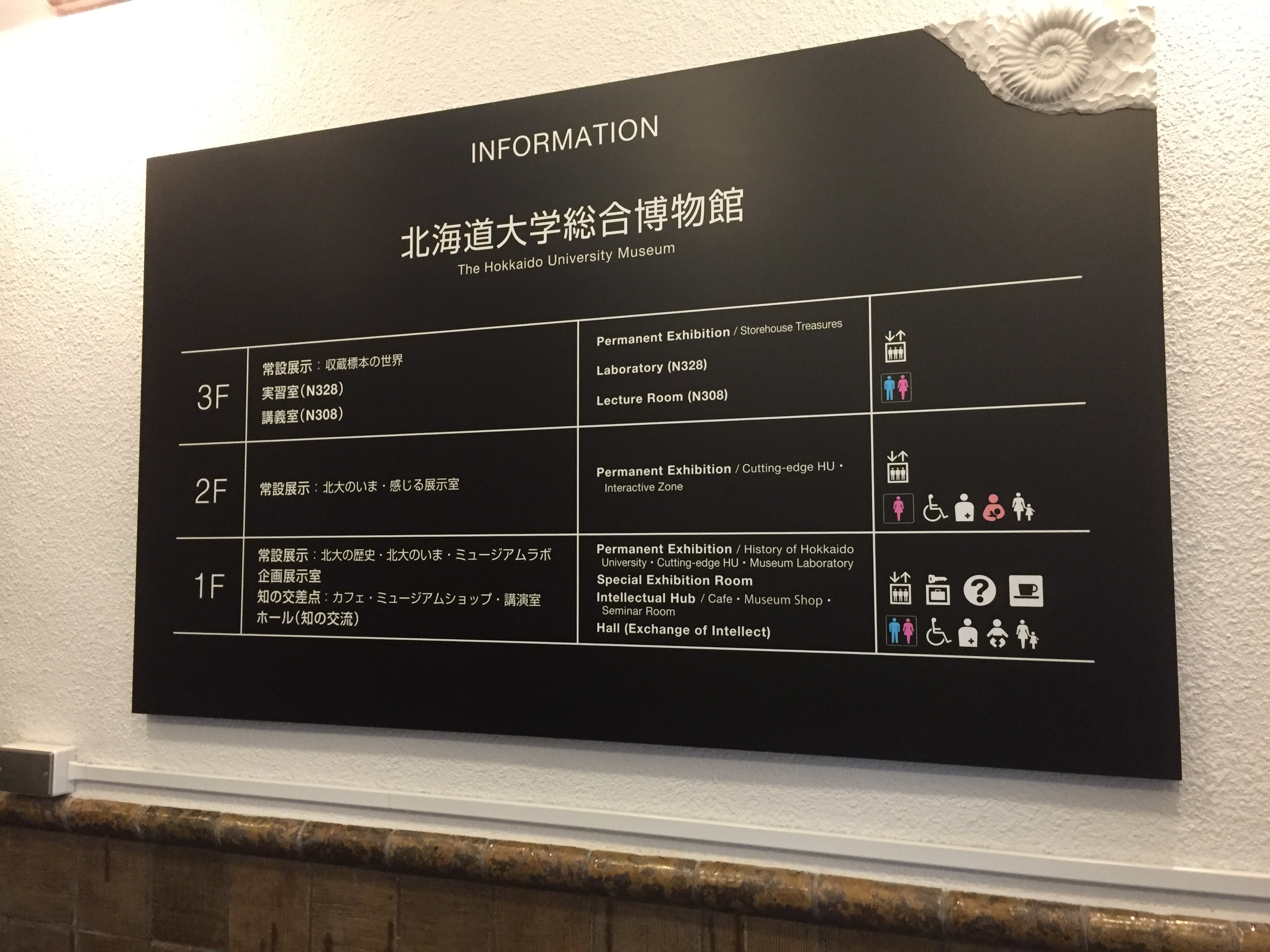
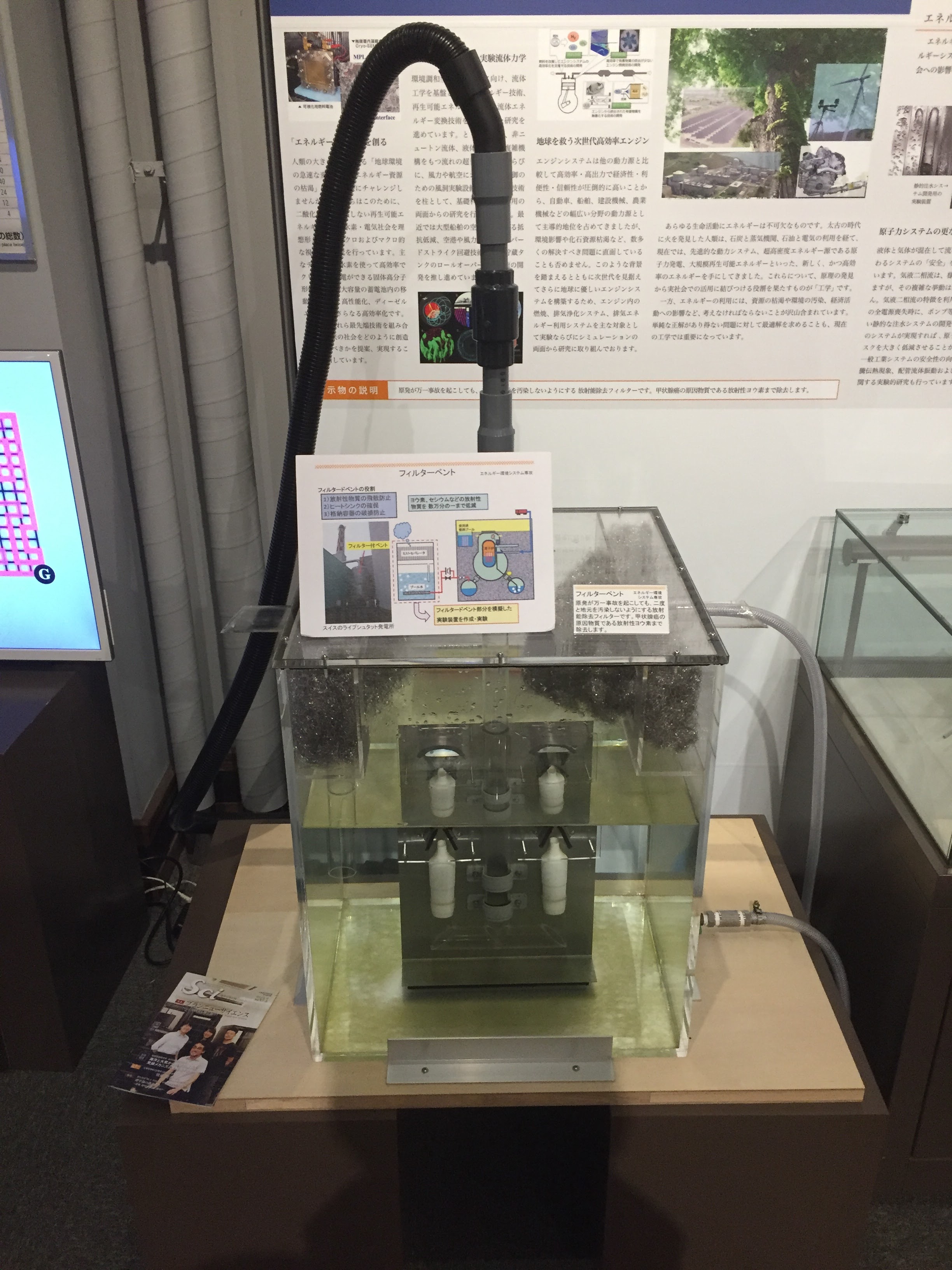
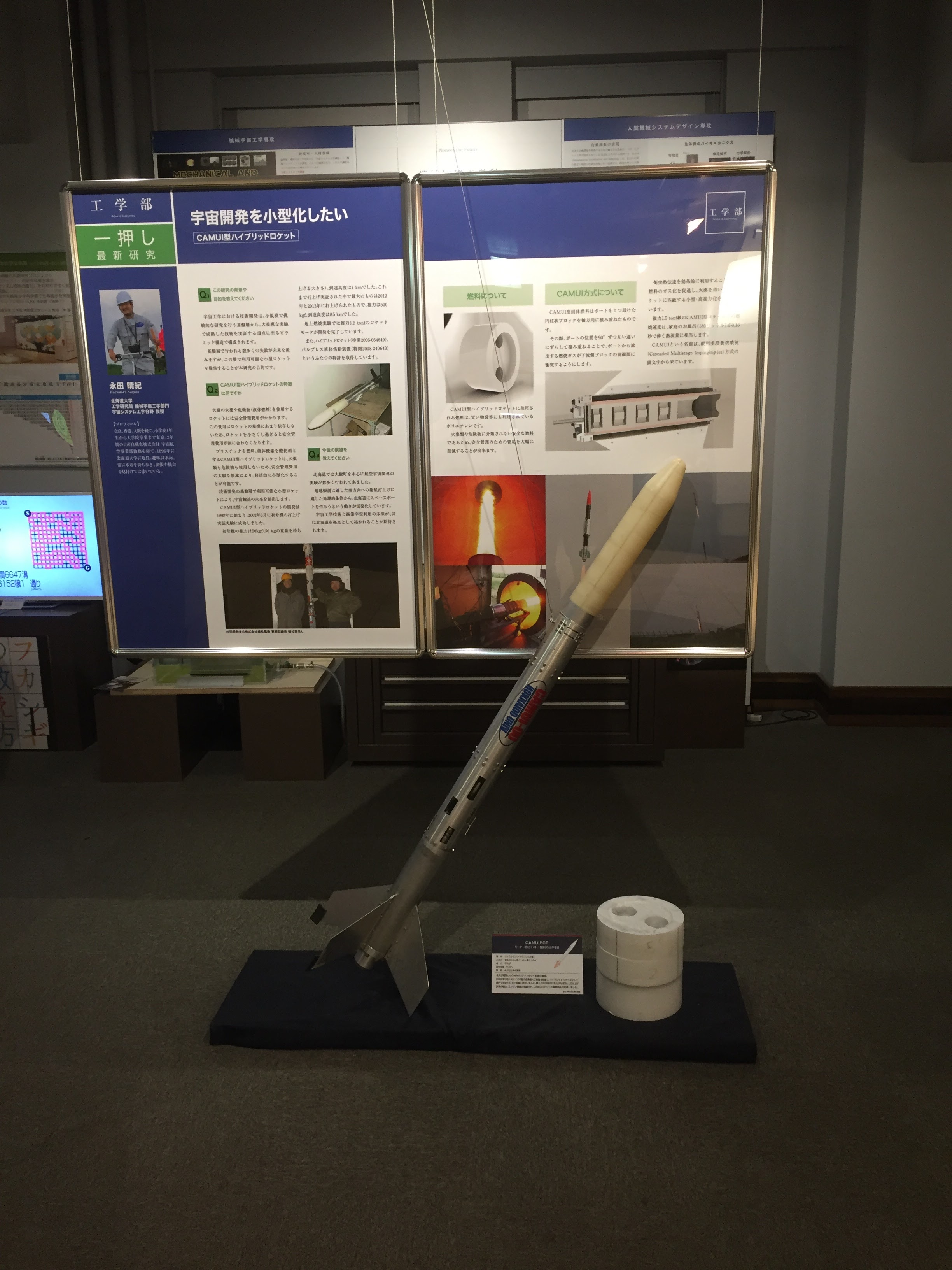
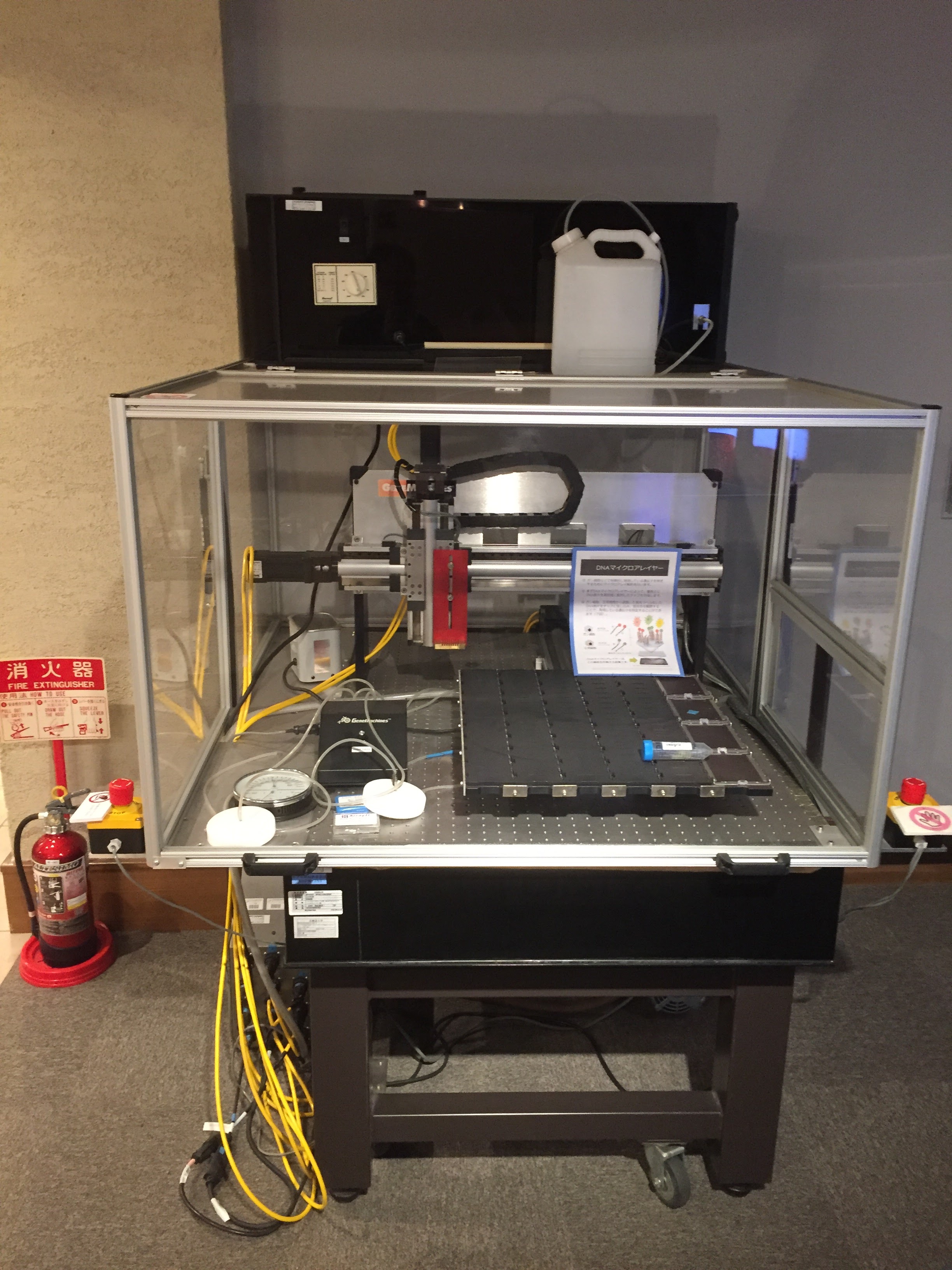
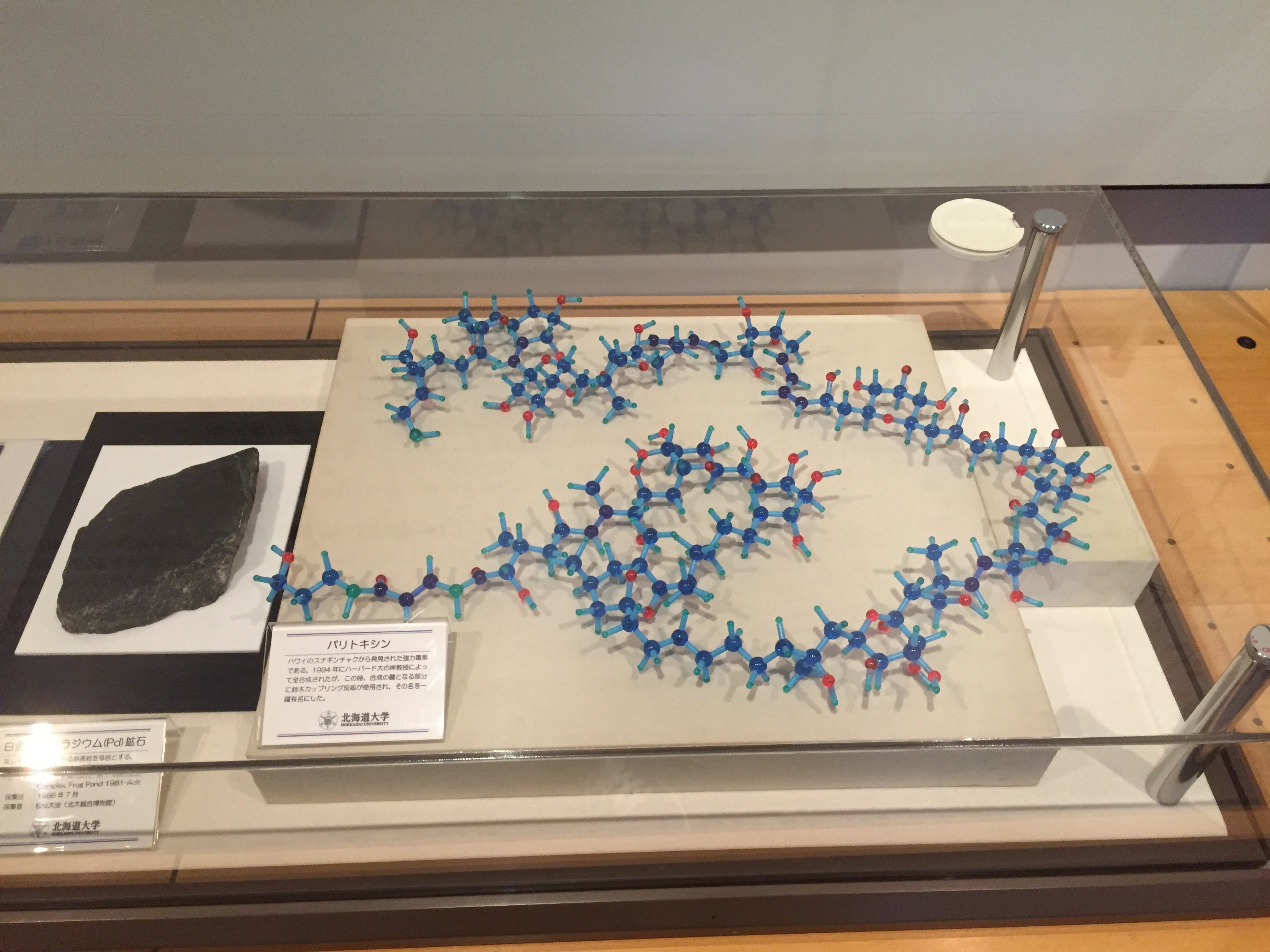
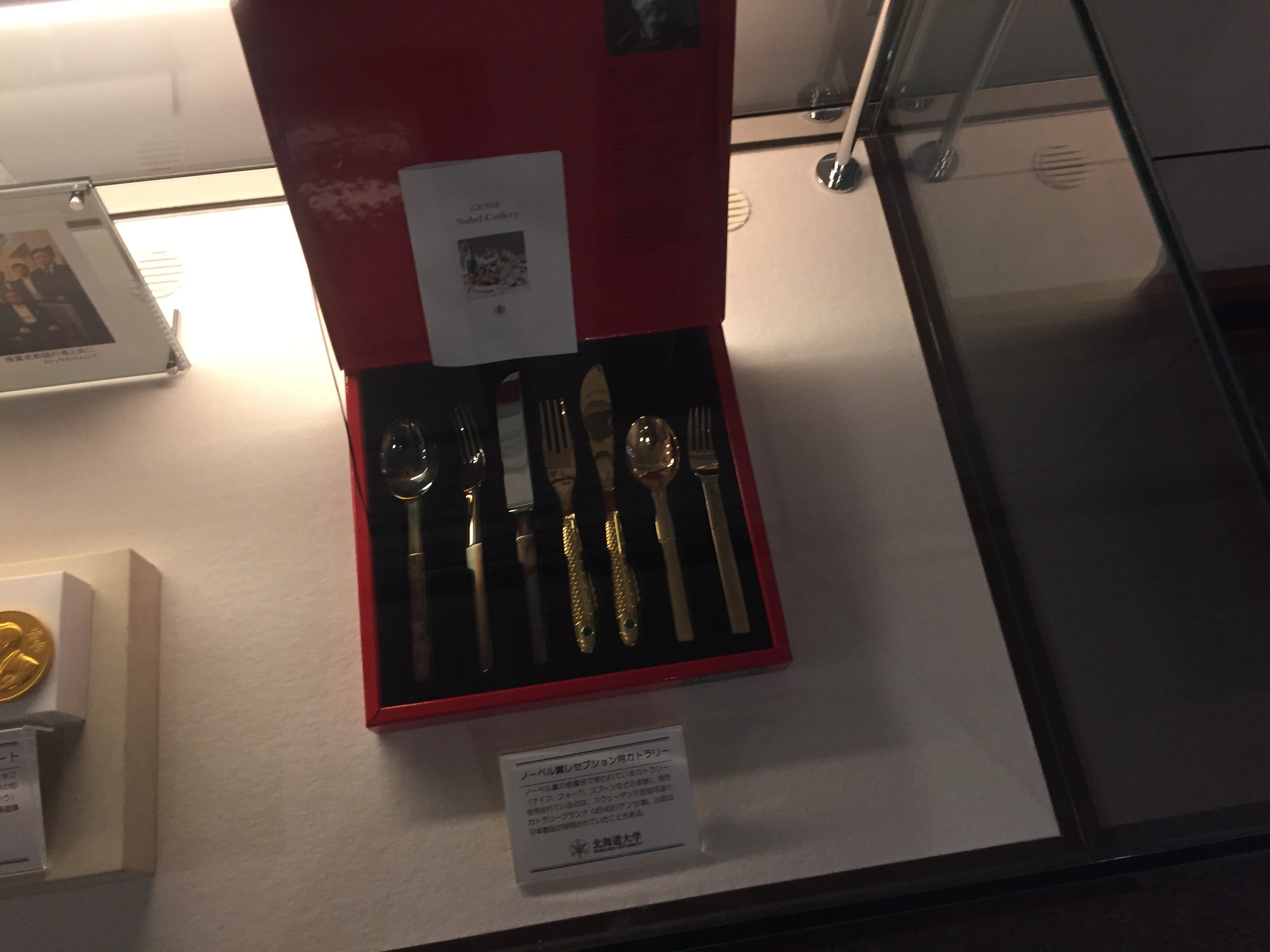
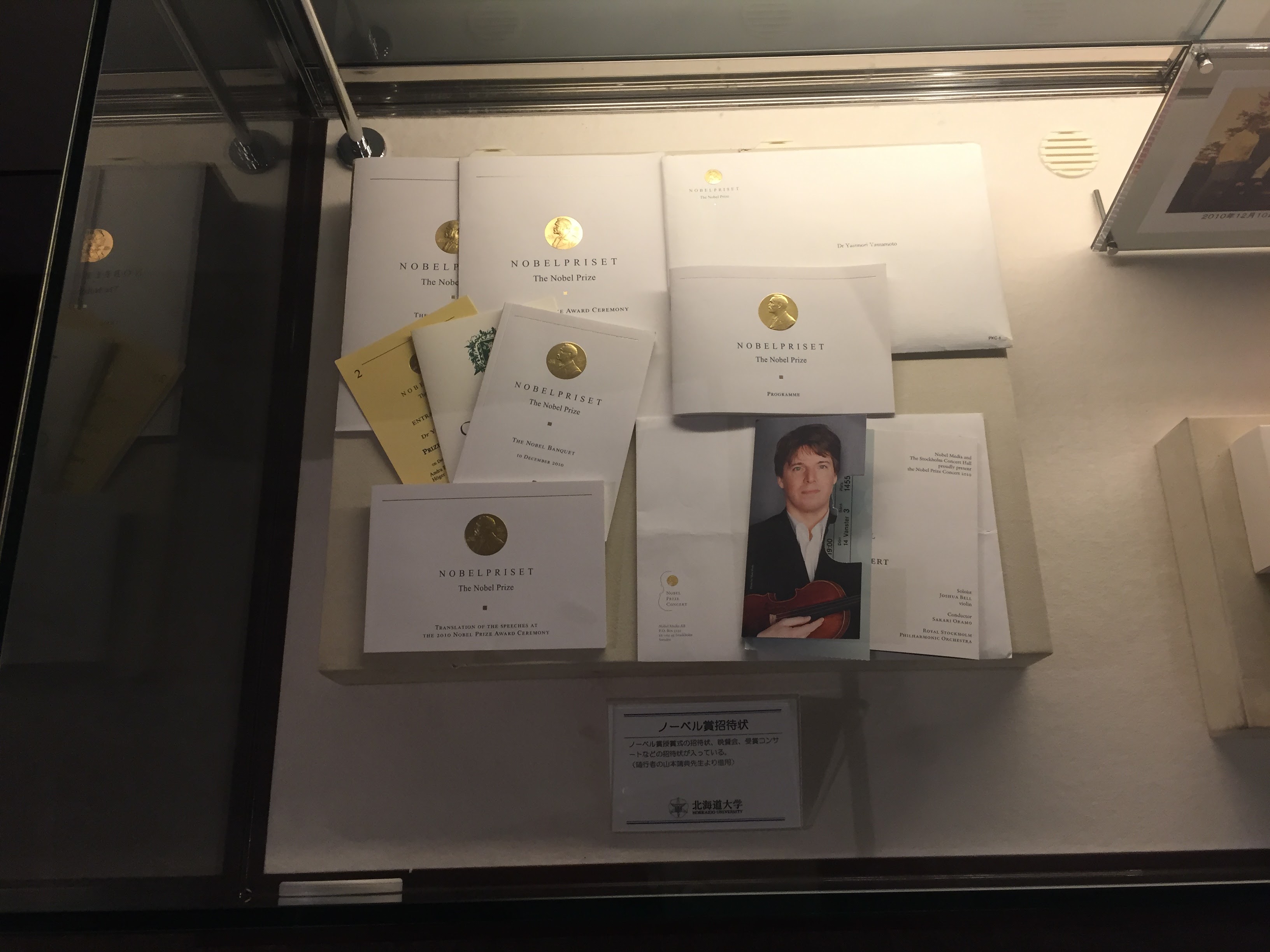
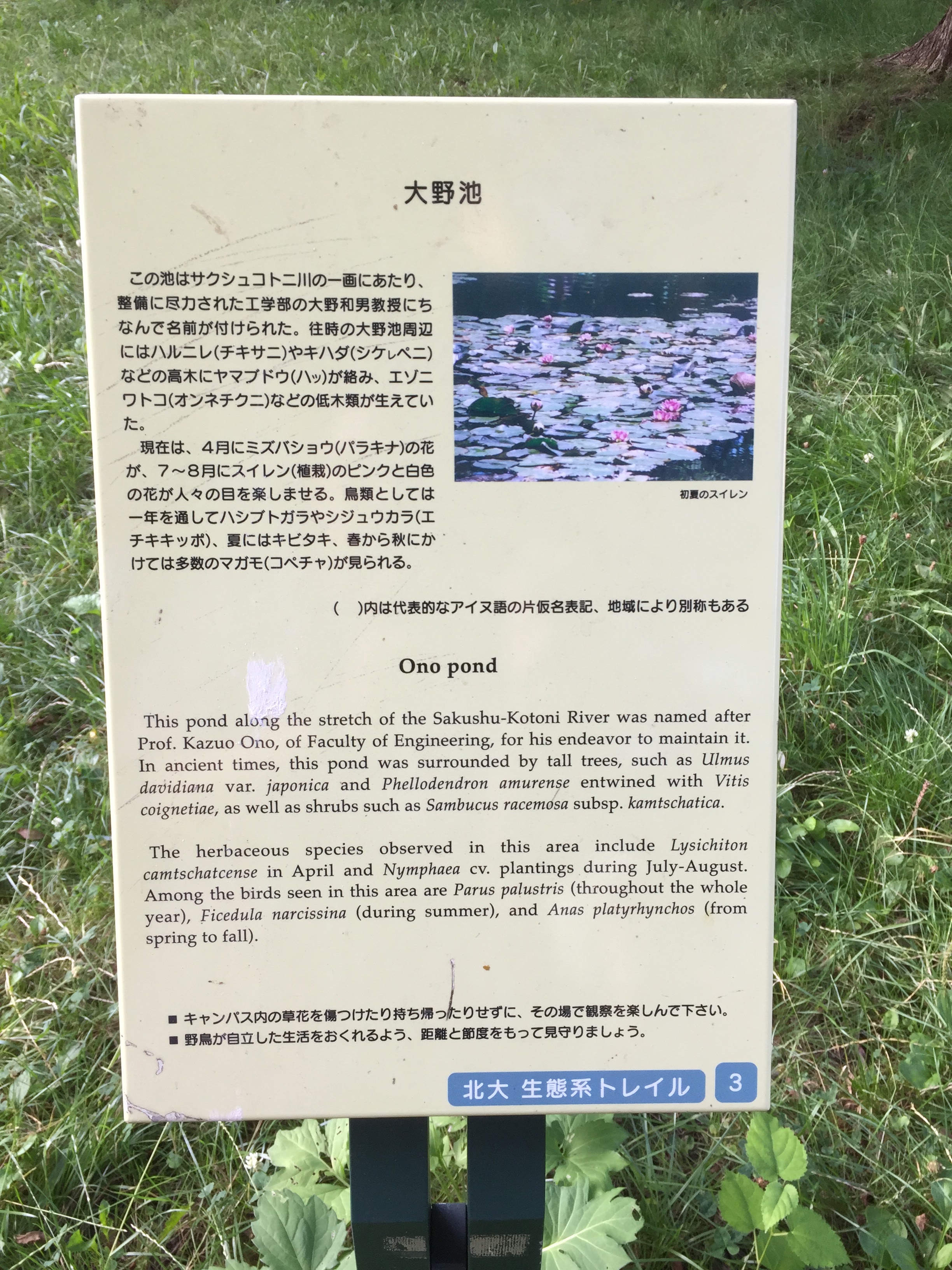
These photos are from a trip to Hokkaido University in August 2017. Hokkaido University is just walking distance away from Sapporo station, and is worth spending an afternoon there. Admission is free. Even in the hottest summer, Hokkaido has cool weather, ranging from around 17 degrees to 25 degrees.
Some places to visit are the Poplar Avenue, and also the Hokkaido University Museum (check the time, it can close as early as 5pm.) Also, the statue of one of the founders, Dr. William Smith Clark, is also a good place to visit. There is also a monument of the school motto: “Be ambitious!” (少年よ、大志を抱け )
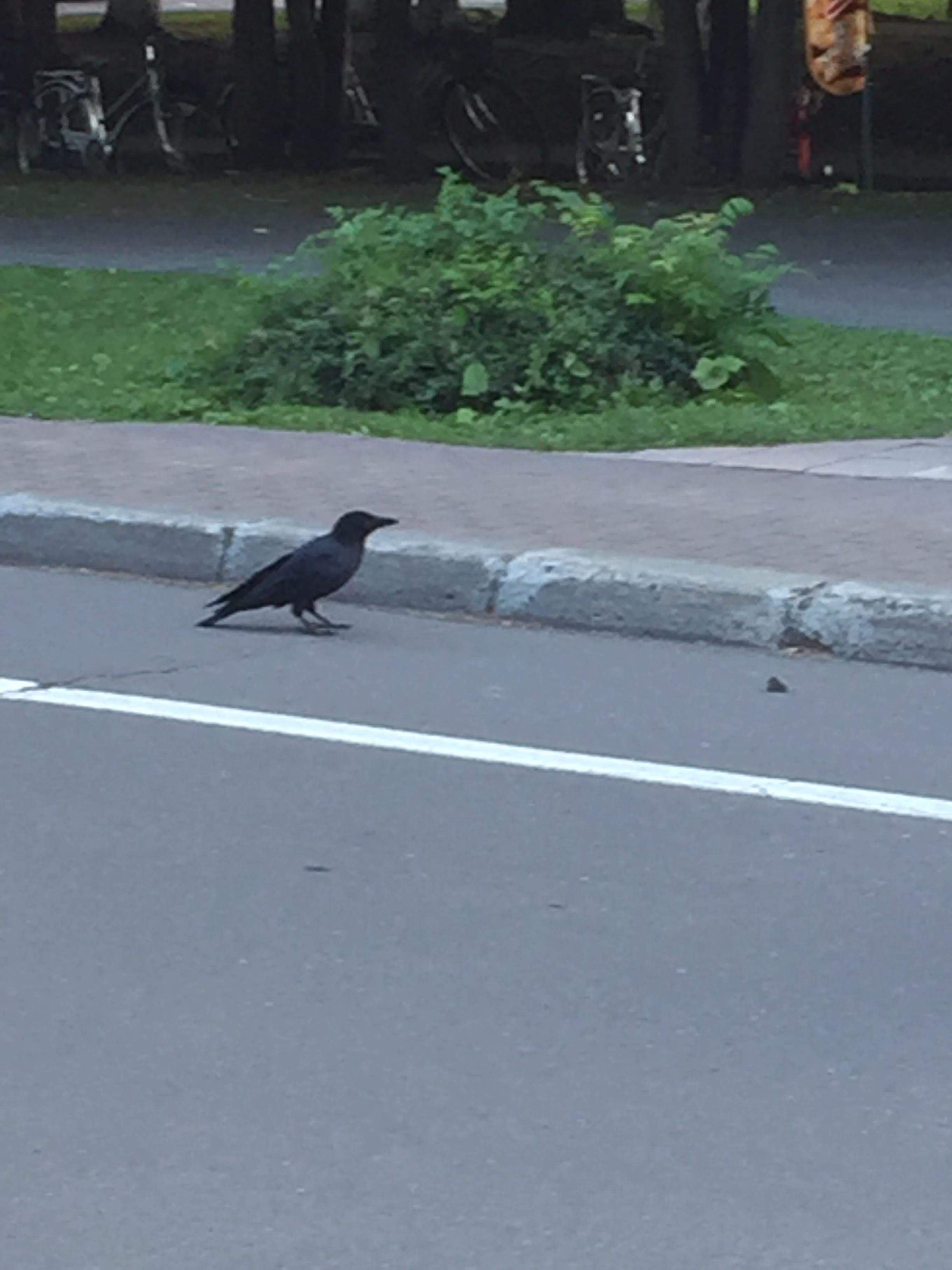
Raven/crows can be spotted all around the campus of Hokkaido University. They are the largest raven I have ever seen, about the size of a small eagle.


The below are some photos from inside the Hokkaido University Museum.


Nice article on infinity. Also little known is the fact that the symbol of infinity was introduced by clergyman and mathematician John Wallis, hundreds of years ago in 1655. Although not well-known, John Wallis was a talented individual as can be deduced from his biography. His works include integral calculus, analytic geometry, and collision of bodies. He was the one who coined the term “momentum”.
Source: ThoughtCo
Infinity has its own special symbol: ∞. The symbol, sometimes called the lemniscate, was introduced by clergyman and mathematician John Wallis in 1655. The word “lemniscate” comes from the Latin word lemniscus, which means “ribbon,” while the word “infinity” comes from the Latin word infinitas, which means “boundless.”
Wallis may have based the symbol on the Roman numeral for 1000, which the Romans used to indicate “countless” in addition to the number. It’s also possible the symbol is based on omega (Ω or ω), the last letter in the Greek alphabet.
FREE Promo Code discount: http://myfave.com/invite/KJMDZ?city=singapore
Fave (previously known as Groupon) is a fantastic deals site that offers many discounts. It includes discounts to many restaurants/buffets in Singapore.
Quite many famous restaurants are offering discounts there: e.g. Dancing crab, Mouth Restaurant, Ah Yat Abalone, JUMBO Seafood, Charcoal Thai and more.
Here is a free Promo Code, for first-time users who sign up on Fave: KJMDZ
You will get a further first-timer’s discount upon sign-up.
Click here to sign up with the Promo Code: http://myfave.com/invite/KJMDZ?city=singapore
This is very bad news. Graduate students are already poor (stipend is already low to begin with and fixed for the duration of study). A very bad policy for grad students.
The tax overhaul passed Thursday by House Republicans could cost graduate students thousands of dollars, prompting a backlash from students and university leaders who say the proposal could make graduate degrees unaffordable, especially for low-income students.
A provision tucked away in the House’s bill would count the tuition discounts given to many grad students as income, meaning that students would pay taxes on tens of thousands of dollars that they never see. The bill would double or even triple many students’ taxes.
Source: Buzzfeed

Source: PhD Comics
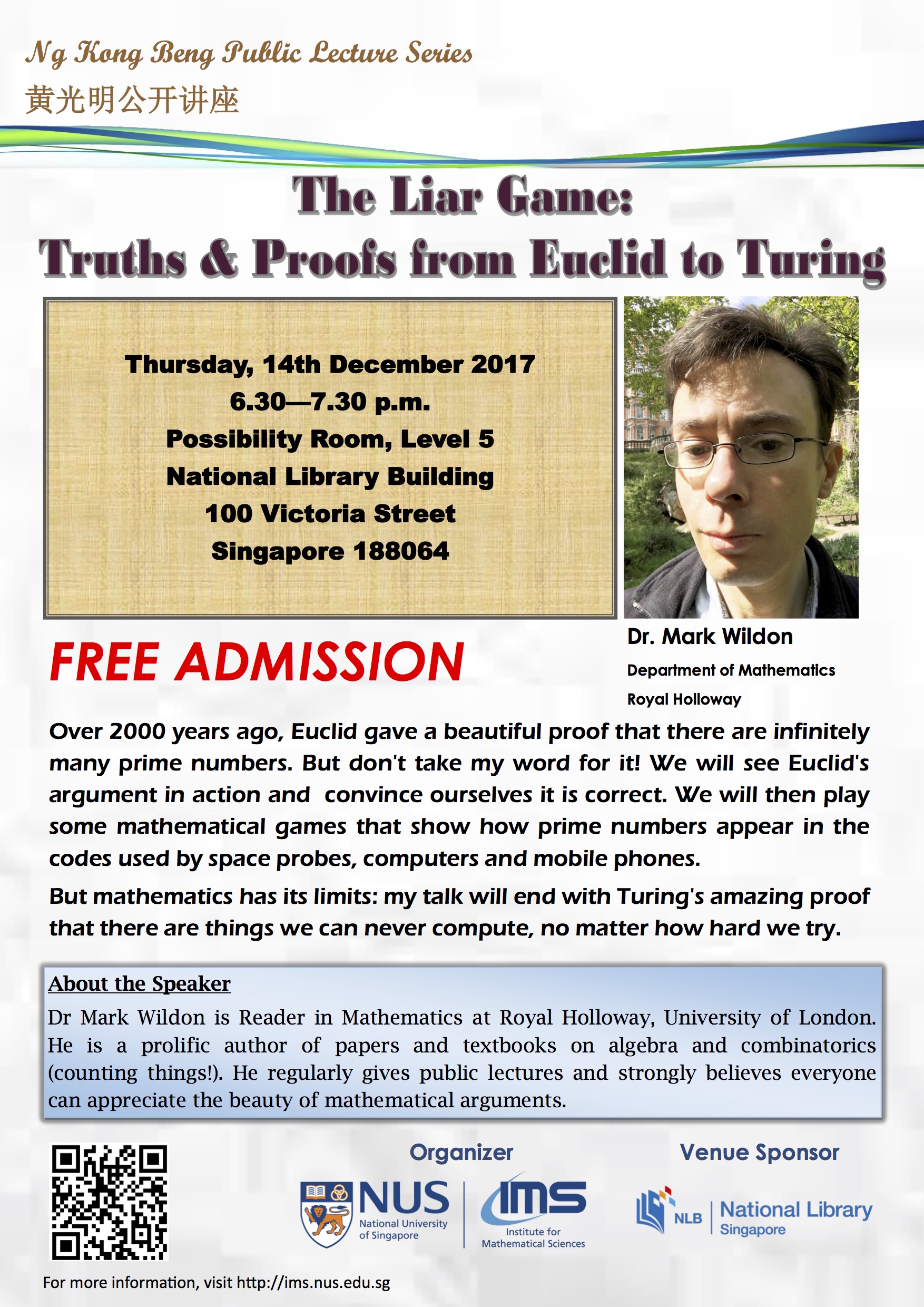
Interested students may want to attend. It is at the National Library, on 14th December 2017.
The Liar Game: Truths & Proofs from Euclid to Turing
Ng Kong Beng Public Lecture Series
Mark Wildon, Royal Holloway, University of London, UK
(14 Dec 2017, 6.30pm – 7.30pm)
Just read about this conjecture: Union-closed sets conjecture.
The conjecture states that for any finite union-closed family of finite sets, other than the family consisting only of the empty set, there exists an element that belongs to at least half of the sets in the family. (Wikipedia)
It is quite interesting in the sense that the statement is extremely elementary (just basic set notation knowledge is enough to understand it). But it seems that even the experts can’t prove it.
One basic example is: {{1},{2},{1,2}}. The element 2 belongs to 2/3>1/2 of the sets in the family.
In light of the recent MRT train collision in Singapore (Joo Koon), where at least 23 passengers were injured, it may be of interest to consider scientifically, where is the safest place to sit/stand in a train?
We sincerely hope the 23 injured passengers are fine and will recover quickly.
Summary:
According to this article on Huffington Post, scientifically the safest place is the middle of the train.
On a passenger train, your safest bet just may be to sit in the middle cars, or one car behind the middle. After all, most collisions happen at the front or rear of a train, and the types of issues that cause derailments, such as broken rails or welds, tend to occur near the front of the train, according to findings cited by Live Science.
It is quite common sense actually, most collisions happen at the front or rear; it is highly unlikely that the collision happen in the middle given the configuration of the tracks. Also, the front/back will absorb most of the impact of the collision.
Also, rear facing seats are the most safe (but they are not present in Singapore MRT).
In other words, “it comes down to basic physics,” as Placencia said. “When something happens, most of the time you have a problem when a train has to stop quickly… If I’m in a forward-facing seat, then I’m going to be pushed out of my seat. But if I’m rearward-facing, what happens is, I would be pushed back into my seat.”
So the next best thing is if you are standing, stand leaning against a support (e.g. the panel near the doors or the metal pole) facing in the opposite direction of the train motion. So that if the train brakes suddenly, you are pushed back onto the support instead of falling down.
[Auction] iPhone 8 64GB [Gold]
Hachi.tech (online website of the Challenger store) is holding an auction. From time to time, the items there are actually quite good and useful. This time the auction is a iPhone 8 64GB. The auction starts at $1.
It is a lucky draw type of auction, meaning that it is not the higher bidder that wins, but rather your chance of winning is proportional to your bid. Also, you only pay if you win the bid, i.e. at no point are you paying anything until you are selected as the lucky winner.
Use the link here to start bidding!: https://www.hachi.tech/auction/67RO6G
Most people who have been living in Singapore all their lives wouldn’t know this: Singapore is in the wrong timezone. To be precise, Singapore should be in the GMT +7 timezone, but we are using the GMT +8 instead. This means that, for instance, 7am in the current time is actually supposed to be 6am.
I only realized it myself after googling, and only after some suspicions after going overseas: Comparatively, why does the sun rise in Singapore so late (around 7am), and why does the sun set in Singapore so late (around 7pm). In Singapore, it is common that the day is still very bright at 7pm. At first I attributed it to the fact that Singapore is in the equator and hence experiences “summer” all year round. It turns out that a bigger reason may be the wrong GMT timezone.
In this article: Singapore’s time zone biggest contributor to sleeplessness problem, it is argued that being in the wrong timezone causes lots of problems, such as sleeplessness. This is because the body’s true time (circadian rhythm) is out of sync of the “fake” GMT +8 time.
The biggest issue may be the time school starts for school going children. In most schools, the morning assembly starts at around 7.30am. Depending on where the children live and their mode of transport, it is common for children to have to wake up at around 5.30am. By the previous logic, this corresponds to the true time of 4.30am!
Quite interesting term “Stemaritans”, referring to people who promote STEM (Science Technology Engineering Math).
|
‘Stemaritans’ help breathe life into maths and science
“Parents think highly of the Singapore education system and like the fact that the bulk of our teachers had taught in mainstream Singapore schools …
|
Other interesting educational news from Singapore.
|
‘Titles culture’ in Singapore stifles entrepreneurial streak, say foreign-born businessmen
Mr Staarman, 60, who is from the Netherlands, added that the results-driven, exam-centric approach in Singapore’s education system does not require …
|
|
Tech, the road less travelled by girls
In Singapore, the programme has reached more than 6,500 girls in more … This programme comes amid a push by education institutes to get girls …
|
|
Skills portal to guide S’poreans from age 11
… and plan their careers”, said the Ministry of Education (MOE), Workforce Singapore (WSG) and SkillsFuture Singapore (SSG) in a joint statement.
|
|
What the rollout of IHL SkillsFuture Series means for workers and highereducation
Given the longstanding policy of heavy state subsidies for higher education in Singapore, the state has a significant influence in determining the main …
|
|
Rising school fees for non-S’poreans force rethink among Johoreans
The Singapore government began sharpening the distinction between citizens and non-citizens in education, healthcare and other major policy areas …
|
|
Be less ‘uptight’ about times tables, urges Singaporean maths mastery expert
Dr Yeap Ban Har spent 10 years at the National Institute of Education in Singapore, a country that has played a leading role in the development of the …
|
From Baidu Baike:
知之者不如好之者,好之者不如乐之者: 对于学习,了解怎么学习的人,不如喜爱学习的人;喜爱学习的人,又不如以学习为乐的人。比喻学习知识或本领,知道它的人不如爱好它的人接受得快,爱好它的人不如以此为乐的人接受得更快。
Translation: He who knows how to learn, is not as good as he who likes learning. He who likes learning, is not as good as he who loves learning. (Confucius)
I guess this applies to mathematics as well. The first step to do well in mathematics is to keep an open mindset and try to get rid of any negative thoughts regarding math. Then, slowly proceed to like and enjoy, and even love math. Only then can one reach his full potential in mathematics.
Like most things, there is a nature and nurture component to this. Some people just naturally love logical things including math. Environment like parents and teachers are very important too, a negative encounter in early childhood can easily give a child a bad impression of learning math.
Learning to Love Math: Teaching Strategies That Change Student Attitudes and Get Results
According to Math, no one can live forever. So far, the only counterexample that I know of is Turritopsis dohrnii, also known as the “immortal jellyfish”. The article doesn’t seem to address this counterexample though.
Source: Science Daily
Aging is a natural part of life, but that hasn’t stopped people from embarking on efforts to stop the process.
Unfortunately, perhaps, those attempts are futile, according to University of Arizona researchers who have proved that it’s mathematically impossible to halt aging in multicellular organisms like humans.
“Aging is mathematically inevitable — like, seriously inevitable. There’s logically, theoretically, mathematically no way out,” said Joanna Masel, professor of ecology and evolutionary biology and at the UA.
Masel and UA postdoctoral researcher Paul Nelson outline their findings on math and aging in a new study titled “Intercellular Competition and Inevitability of Multicellular Aging,” published in Proceedings of the National Academy of Sciences.
Current understanding of the evolution of aging leaves open the possibility that aging could be stopped if only science could figure out a way to make selection between organisms perfect. One way to do that might be to use competition between cells to eliminate poorly functioning “sluggish” cells linked to aging, while keeping other cells intact.
However, the solution isn’t that simple, Masel and Nelson say.
Two things happen to the body on a cellular level as it ages, Nelson explains. One is that cells slow down and start to lose function, like when your hair cells, for example, stop making pigment. The other thing that happens is that some cells crank up their growth rate, which can cause cancer cells to form. As we get older, we all tend, at some point, to develop cancer cells in the body, even if they’re not causing symptoms, the researchers say.
Read more at: Science Daily
Answer by Albert Heisenberg, Science Historian M.A. Brown University
Leibniz’s formulation of differential and integral calculus was more refined, elegant, and ‘generalizable’ than Newton’s ‘fluxions.’ Leibniz, the natural genius that he was, became interested in mathematics much later in his life than Newton, and yet was able to generalize Descartes work on analytic geometry into calculus in a way that is so clear that till this day we still use Leibniz’s notation (e.g. dx/dy; his symbolism for time integration/differentiation, etc). Newton’s Principia is a work of incredible genius, but it is riddled with errors and inconsistent notation. As the co-founder of classical physics (along with Galileo) and the culmination of the scientific revolution, his legacy was deeply tied to the spread of natural philosophy as a mathematically rigorous discipline even though Leibniz’s formulation of infinitesimal calculus was superior. Newton achieved greater fame for a few reasons:
Interviews can be intimidating even for adults, let alone 12 year olds. However, the DSA interview is a very important aspect, especially since many would have the same qualifications / test results. Familiarizing with some of the questions can be useful, but not overtraining to the extent of being unnatural or memorizing a script written by mommy or daddy, which can be easily detected by the interviewing committee.
Frankly speaking, at age 12, it is very rare for a child, unprepared, to naturally just perform well in an interview. Most children at that age would be well-versed in games/cartoons but not in current news or social issues. Hence, some preparation, like preparing for PSLE English oral, would be useful and even necessary.
Some DSA Interview questions are compiled below. Clearly, developing good spoken English language is a foundational step that has to be addressed too. Judging from the questions, knowledge of the school history, culture and values would help too. Knowledge of current affairs like basic Singapore news would be of use too.
I Can Ace My College Interview: A step-by-step guide based on an Admissions Officer’s experience evaluating applicants
This book (though in a college context, since in Western countries they don’t interview children as young as 12 years old) provides some tips to ace school admission interviews. DSA interviews do ask very mature questions like “What are your weaknesses” that even adults struggle to answer properly. Hence this book is still very relevant.
Speakers’ Club: Public Speaking for Young People
Another useful book is the above. Public speaking involves the same skills as interview, just that it is delivered to a larger audience.
Different schools asked different DSA interview questions, even within the same school, the questions are different. Some examples of questions, for my DS and his friends are:
(1) Why did you DSA to this school?
(2) Did you DSA to another school? If both offer you a place, which would you choose?
(3) How did you think you can contribute to this school?
(4) If you have the chance to have dinner with a public figure, who will it be and why?
(5) What do you think is the most important colour in the world? Why?
(6) If there is something you can change in your primary school, what will it be and why?Source: Kiasuparents
1.Tell me about yourself?
2.Why do you want to come to our school?
3.Why did you apply to our school / programme?
4.What are the things you like about our school that other schools do not include?
5.How many schools have you applied to and which school is your first choice?
6.Are you applying to this school because it is a branded/ elite school?
7.What is your definition of a good school?
8.Why should we accept you among all the great candidates /applicants who apply?
9.What are the problems of accepting students to a school based on their exam results?
10.Tell us what you enjoy doing when you are NOT attending school
11.Who is the greatest influence in your life or who do you admire the most?
12.What do you think about Steve Jobs and iPhone?
13.Tell us about an event that is significant in your life?
14.What is your goal for life?
15.What are your strengths?
16.What are your weaknesses? How do you overcome them?
17.What is your favourite subject?
18.How do you think you can help the CCA achieve greater heights?
19.Do you have any question about our school?
20.What questions would you like to ask us?Source: Kiasuparents
There is even this website www.dsainterview.com dedicated to the DSA Interview. One point that they mentioned seems very important:
10. NEVER ANSWER WITH ‘my mommy said or my daddy said…’
This is a very common occurrance. The student should always present HIS/HER opinions as his or hers. Even if the student got the opinion from a parent or a teacher, the student should just state his thoughts without mentioning who said it to him.
Another tip is from http://smartification.net/how-to-handle-dsa-interview-questions/,
“Why do you want to come to our school or how many schools have you applied to and which school is your first choice?”
Interviewers ask these questions to determine how motivated students are about attending the school. The best way to tackle this question is to talk about the academic programs or CCA that the school offers. Visiting the open house and speaking to students, coaches and teachers will help students acquire valuable information. Looking through the school website will also provide more information about the school. Try to avoid common reasons such as ‘Your school is the best school in Singapore” or “My parents want me to attend your school because it can help me get into a top university in the future”. These answers are just too cliché.
As to which school is the first choice, the answer should be the school which the student is interviewing with at the moment. In most cases, schools who ask this question do it as a formality. Answering it with an “I don’t know or I have not decided” will give the impression the student is not serious about attending the school and the interviewers will feel like they have just wasted their time.
–> In one sentence, introduce yourself.
–> Why do you wish to come to RGS?
–> What are the things you like about RGS that other school does not include?
–> Is it because RGS is a ‘branded’ school, you do not bother checking up on other schools?
–> What is a good school?
–> What are the problems of accepting students to a school only based on their exam results?
–> What are questions you would like to ask us?Source: https://agirlwhowishestoliveinafantasy.wordpress.com/2013/07/22/rgs-dsa-interview-2/
Certain hot topics (like Singapore Olympic Games, news on Joseph Schooling / Feng Tian Wei) have a high chance to come out:
The application procedures were quite straightforward—online application, followed by GAT tests and interviews. DD enjoyed the tests and interviews, though those were the very first interviews she ever had. One of interviews was happened in the week when our table tennis team won first Bronze medal at London Olympic. there were some questions during the interview:-
“What news has she read?”
She replied “Feng Tian Wei won Bronze medal for Singapore.”
“What is your goal for life?
She replied “To represent Singapore in Olympic.”I guess she was in Olympic fever then.
Source: http://full-time-mothers.blogspot.sg/2012/08/our-journey-of-dsa.html
Recently chanced upon SOSD Facebook, and saw this dog, with a very serious maggot wound. They have a few other such dogs under medical care too. Just to spread some awareness through my blog, as not many people have heard of SOSD. Do donate any amount (through their Donation page) if you can afford. It is hard to imagine how did they get such wounds, and the pain they must be suffering.
Update (from SOSD Facebook):
Thank you for your generosity and kindness. We have reached our target amount for August. Stay in tune for update on his development coming soon.
August needs your help!
Sweet-natured August was first spotted hiding in the workers’ dormitories with a large maggot-infested wound on the back of his neck.
Being awfully shy and afraid of strangers, August proved to be a challenging rescue to our volunteers. After a few nights of futile attempts, we finally succeeded with the help of a dog trapper.
Clinical examinations revealed that his blood count was very low, and the poor boy was also diagnosed with Babesia Gibsoni, a dangerous strain of tick fever.
Over the past two months, our volunteers have carefully tended to his wound and with medication, his tick fever is resolved. Due to the severity of the wound, he still has not fully recovered and will continue to require medical attention.
Although August is still rather shy and takes a while to warm up to people, he has been very gentle and mild-mannered, allowing our volunteers to clean his wound and carry him without making a fuss.
Newly sterilized, August is well on his way to becoming a healthy and strong doggy. To date, his vet bills total $1,600 so we are appealing to charitable dog lovers to help cover the accumulating costs. Please help us with the bills if you can. Any amount will be most appreciated!
To donate via GivingSg, please click on this link: http://bit.ly/2itG5N2
August is HDB-approved, if you would like to adopt, please fill in this form: http://bit.ly/2gOlYbo
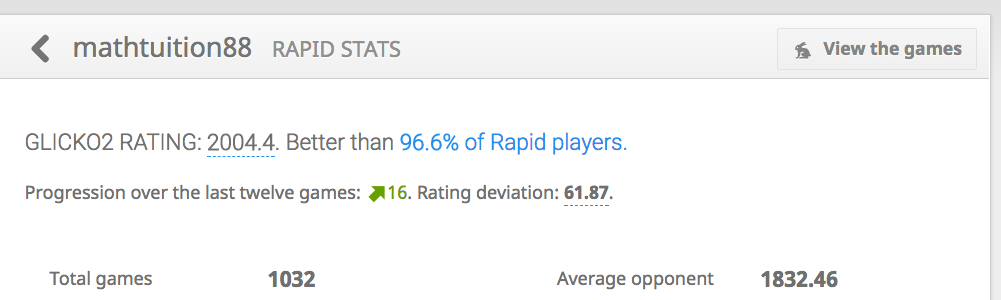
Lichess is a free Chess Server – one of the best out there in fact. It comes with free engine (Stockfish) analysis, and many other nice features. It is well known that Lichess ratings are inflated compared to FIDE / USCF / most other rating systems. The following are some of the best conversion systems to convert Lichess rating to other ratings.
1) Dudeski_robinson’s Formula
FIDE Rating = 187 + Lichess Classical Rating X 0.38 + Lichess Blitz Rating X 0.48
Dudeski_robinson’s formula is pretty scientific, he actually uses linear regression out of real data to produce the above formula.
A rough estimate would be:
Fide ELO = Lichess Classical – 170
or
Fide ELO = Lichess Blitz – 80
Source: Lichess Forum
2) Chess Rating Comparison 2016 (Google Sheets)
This is also pretty scientific, with the added plus that it also compares between USCF and Chess.com, in addition to FIDE.
| Chess.com | Lichess.org | USCF | FIDE | ||||
| Bullet | Blitz | Rapid | Bullet | Blitz | Classical | Regular | Regular |
| 860 | 1100 | 1160 | |||||
| 900 | 1125 | 1200 | |||||
| 930 | 1150 | 1250 | |||||
| 960 | 1175 | 1290 | |||||
| 1000 | 1200 | 1330 | 1370 | 1530 | 1590 | 1270 | 1260 |
| 1030 | 1225 | 1360 | 1390 | 1550 | 1620 | 1290 | 1280 |
| 1060 | 1250 | 1400 | 1410 | 1570 | 1640 | 1320 | 1310 |
| 1090 | 1275 | 1430 | 1440 | 1590 | 1670 | 1340 | 1330 |
| 1130 | 1300 | 1460 | 1460 | 1610 | 1690 | 1360 | 1350 |
| 1160 | 1325 | 1490 | 1480 | 1630 | 1720 | 1390 | 1370 |
| 1190 | 1350 | 1520 | 1510 | 1650 | 1740 | 1410 | 1390 |
| 1230 | 1375 | 1550 | 1530 | 1670 | 1770 | 1430 | 1410 |
| 1260 | 1400 | 1570 | 1550 | 1690 | 1790 | 1460 | 1430 |
| 1290 | 1425 | 1590 | 1580 | 1710 | 1810 | 1480 | 1460 |
| 1320 | 1450 | 1610 | 1600 | 1730 | 1830 | 1500 | 1480 |
| 1360 | 1475 | 1630 | 1620 | 1750 | 1860 | 1530 | 1500 |
| 1390 | 1500 | 1650 | 1650 | 1770 | 1880 | 1550 | 1520 |
| 1420 | 1525 | 1670 | 1670 | 1790 | 1900 | 1570 | 1540 |
| 1460 | 1550 | 1680 | 1690 | 1810 | 1920 | 1600 | 1560 |
| 1490 | 1575 | 1700 | 1720 | 1830 | 1940 | 1620 | 1580 |
| 1520 | 1600 | 1710 | 1740 | 1850 | 1960 | 1640 | 1610 |
| 1550 | 1625 | 1730 | 1760 | 1870 | 1980 | 1670 | 1630 |
| 1590 | 1650 | 1740 | 1790 | 1890 | 2000 | 1690 | 1650 |
| 1620 | 1675 | 1750 | 1810 | 1910 | 2010 | 1710 | 1670 |
| 1650 | 1700 | 1760 | 1840 | 1930 | 2030 | 1740 | 1690 |
| 1690 | 1725 | 1770 | 1860 | 1950 | 2050 | 1760 | 1710 |
| 1720 | 1750 | 1780 | 1880 | 1970 | 2070 | 1780 | 1730 |
| 1750 | 1775 | 1790 | 1910 | 1990 | 2080 | 1810 | 1760 |
| 1790 | 1800 | 1800 | 1930 | 2010 | 2100 | 1830 | 1780 |
| 1820 | 1825 | 1810 | 1950 | 2030 | 2110 | 1850 | 1800 |
| 1850 | 1850 | 1820 | 1980 | 2050 | 2130 | 1880 | 1820 |
| 1880 | 1875 | 1820 | 2000 | 2070 | 2150 | 1900 | 1840 |
| 1920 | 1900 | 1830 | 2020 | 2090 | 2160 | 1920 | 1860 |
| 1950 | 1925 | 1840 | 2050 | 2120 | 2180 | 1950 | 1880 |
| 1980 | 1950 | 1850 | 2070 | 2140 | 2190 | 1970 | 1910 |
| 2020 | 1975 | 1860 | 2090 | 2160 | 2210 | 1990 | 1930 |
| 2050 | 2000 | 1870 | 2120 | 2180 | 2220 | 2020 | 1950 |
| 2080 | 2025 | 1880 | 2140 | 2200 | 2230 | 2040 | 1970 |
| 2110 | 2050 | 1890 | 2160 | 2220 | 2240 | 2060 | 1990 |
| 2150 | 2075 | 1900 | 2190 | 2240 | 2250 | 2090 | 2010 |
| 2180 | 2100 | 1910 | 2210 | 2260 | 2270 | 2110 | 2030 |
| 2210 | 2125 | 1930 | 2230 | 2280 | 2280 | 2130 | 2060 |
| 2250 | 2150 | 1940 | 2260 | 2300 | 2290 | 2160 | 2080 |
| 2280 | 2175 | 1950 | 2280 | 2320 | 2300 | 2180 | 2100 |
| 2310 | 2200 | 1970 | 2300 | 2340 | 2300 | 2200 | 2120 |
| 2340 | 2225 | 1980 | 2330 | 2360 | 2310 | 2230 | 2140 |
| 2380 | 2250 | 2000 | 2350 | 2380 | 2320 | 2250 | 2160 |
| 2410 | 2275 | 2020 | 2370 | 2400 | 2330 | 2270 | 2180 |
| 2440 | 2300 | 2040 | 2400 | 2420 | 2340 | 2300 | 2210 |
| 2480 | 2325 | 2420 | 2440 | 2340 | 2320 | 2230 | |
| 2510 | 2350 | 2440 | 2460 | 2350 | 2340 | 2250 | |
| 2540 | 2375 | 2470 | 2480 | 2360 | 2370 | 2270 | |
| 2580 | 2400 | 2490 | 2500 | 2360 | 2390 | 2290 | |
| 2610 | 2425 | 2510 | 2520 | 2370 | 2410 | 2310 | |
| 2640 | 2450 | 2540 | 2540 | 2370 | 2440 | 2330 | |
| 2670 | 2475 | 2560 | 2560 | 2380 | 2460 | 2360 | |
| 2710 | 2500 | 2580 | 2580 | 2380 | 2480 | 2380 | |
| 2740 | 2525 | 2610 | 2600 | 2380 | 2500 | 2400 | |
| 2770 | 2550 | 2630 | 2620 | 2390 | 2530 | 2420 | |
| 2810 | 2575 | 2650 | 2640 | 2390 | 2550 | 2440 | |
| 2840 | 2600 | 2680 | 2660 | 2390 | 2570 | 2460 | |
| 2870 | 2625 | 2700 | 2680 | 2390 | 2600 | 2480 | |
| 2900 | 2650 | 2720 | 2700 | 2400 | 2620 | 2510 | |
Source: Google Docs
Discussion: Reddit
3) Mathtuition88’s Formula (2020 Version)
FIDE rating = (0.8399)*(Lichess Blitz Rating) + 179.8890
Read more about the methodology for the 2020 Lichess Blitz Rating Conversion Formula.
Related chess blog posts:
If generates a copy of
, then
.
Write , where
,
. Note that since
, hence
does not generate a copy of
. The only way that is possible is when
, i.e
.
While this result is nice, it also seems to mean that theoretically, we have already reached the limit in dimensional reduction for data compression.
Source: Science Daily
When we think about digital information, we often think about size. A daily email newsletter, for example, may be 75 to 100 kilobytes in size. But data also has dimensions, based on the numbers of variables in a piece of data. An email, for example, can be viewed as a high-dimensional vector where there’s one coordinate for each word in the dictionary and the value in that coordinate is the number of times that word is used in the email. So, a 75 Kb email that is 1,000 words long would result in a vector in the millions.
This geometric view on data is useful in some applications, such as learning spam classifiers, but, the more dimensions, the longer it can take for an algorithm to run, and the more memory the algorithm uses.
As data processing got more and more complex in the mid-to-late 1990s, computer scientists turned to pure mathematics to help speed up the algorithmic processing of data. In particular, researchers found a solution in a theorem proved in the 1980s by mathematics William B. Johnson and Joram Lindenstrauss working the area of functional analysis.
Known as the Johnson-Lindenstrauss lemma (JL lemma), computer scientists have used the theorem to reduce the dimensionality of data and help speed up all types of algorithms across many different fields, from streaming and search algorithms, to fast approximation algorithms for statistical and linear algebra and even algorithms for computational biology.
Source:
Harvard John A. Paulson School of Engineering and Applied Sciences. “Making big data a little smaller: Harvard computer scientist demonstrates 30-year-old theorem still best to reduce data and speed up algorithms.” ScienceDaily. ScienceDaily, 19 October 2017. <www.sciencedaily.com/releases/2017/10/171019101026.htm>.
https://chewbaccascook.wordpress.com/subscribe/
Feel free to subscribe to this Free Cooking Recipe Newsletter.
Hundreds of Home Cooking Recipes!
Just saw this. SOSD (something like SPCA for dogs) is organizing an adoption drive tomorrow 22 Oct Sunday. So if you are interested to see the dogs and perhaps adopt one, you are free to attend (above One-North MRT Station).
I read on their Facebook that they are facing some problems due to too many stray dogs, their “enclosures are all full; we do not even have space in our quarantine unit to house any more dogs”.
They also do have dogs suitable for HDB, under this project called Project ADORE. If more dog lovers adopt instead of buy, the problem of stray dogs in Singapore can be solved humanely.
Googling info on this is quite hard. Just to share what is the procedure. Basically you need to apply for a new Singpass based on your new PR NRIC, as the previous Singpass based on FIN will be invalid.
Also, most would soon encounter this problem: Your mobile phone is tied to the old Singpass account, and the system would not let you use it for the 2FA.
The solution (took quite a while for me to find this): (Source)
Q: I am a FIN holder who has been granted Singapore PR, how can I continue to use SingPass?
Ans: You will need to register for a new account using your NRIC number. Upon successful registration, your account details will be mailed to you within four working days. Click here for more details. Please note that one mobile number can only be registered with one SingPass account. If you have previously registered your mobile number in your existing account, and would like to use the same number for your new account, please email support@singpass.gov.sg with the following details:
Your FIN number
Your new NRIC number
Your mobile number
Source: Singpass FAQ
Disclaimer: This info is dated 21 October 2017. The procedure may or may not change in the future. Also, please double check with the official website before taking any actions.
Among current mathematicians, many people regard Professor Tao as the world’s finest… Opinions on such things vary, of course. Professor Tao kindly fielded some of our questions, including many submitted by Numberphile viewers. EXTRA FOOTAGE: https://youtu.be/48Hr3CT5Tpk (and more extras to come)
Since the actual GEP papers are never released, the next best source is from those who have actually taken it and post on forums like Kiasuparents.
Some Maths questions my girl remembers.
“ In a fishing competition, five kids caught 50 fish in total. A is the winner – she got 12 fish. B and C caught the same number of fish and both are at second place. D is at fourth place. E came in last, got only 6 fish. How many fish did B get?“
( my girl couldn’t solve this one. )
“ The red ribbon is twice as long as the blue ribbon. The green ribbon is 2cm shorter than the blue ribbon. A red ribbon and two green ribbon together measure 16cm. How Long is the blue ribbon? “
( she managed to solve this one- but only after spending a lot of time on it. )
Source: https://www.kiasuparents.com/kiasu/forum/viewtopic.php?f=72&t=89066&start=160
Review by mathtuition88: These two questions are not that hard. Can be solved by either model method or algebra.
Some tips from parents: English and GAT is actually harder to prepare than Maths:
Just sharing based on our experience last year. Of the 6 that were selected for GEP eventually from my child’s class, it seems English and GAT were the determining factors. For maths, a lot of kids are already very advanced and well – prepared nowadays. The majority of the balance 14 who went for round 2 found English harder than maths. According to them, English is somewhat like pitched at sec 1 and sec 2 standard, while maths was like up to P6 and Primary Maths Olympiad standard and more manageable. I think it was also more because anything can come out under the sun for English and you can’t really prepare for it. That’s what I heard last year.
Source: https://www.kiasuparents.com/kiasu/forum/viewtopic.php?f=72&t=89066&start=140
For more GEP tips and recommended GEP books, check out: Recommended Books for GEP Selection Test and How to Get Into GEP.
Nice story (with drawings) on Andrew Wiles and the Fermat’s Last Theorem.
Last year, I got the high school math teacher’s version of a wish on a magic lamp: a chance to ask a question of the world’s most famous mathematician.

Andrew Wiles gained his fame by solving a nearly 400-year-old problem: Fermat’s Last Theorem. The same puzzle had captivated Wiles as a child and inspired him to pursue mathematics. His solution touched off a mathematical craze in a culture where “mathematical craze” is an oxymoron. Wiles found himself the subject of books, radio programs, TV documentaries—the biggest mathematical celebrity of the last half-century.
View original post 1,324 more words