
Math Blog


The Ring Z/nZ, Fermat Little Theorem, Chinese Theorem (French)

Revision: Modulus Arithmetics
(1/2) Fermat Little Theorem
(1/2) Chinese Theorem
(Note: This is the “RING” foundation of “The Chinese Remainder Theorem” which deals with remainders )

The scientist nuns: In pursuit of faith and reason
Source: Aleteia
Making a career out of science, just like joining a religious order, requires dedication and discipline. Some tireless souls have managed to do both.
In 1965, Mary Kenneth Keller became the first woman to obtain a PhD in Computer Science. She was also a nun.
Born in Cleveland, Ohio, in 1913, Keller entered the Sisters of Charity of the Blessed Virgin Mary in Dubuque, Iowa, in 1932. Eight years later, she professed her vows, before obtaining B.S. and M.S. degrees in mathematics from DePaul University in Chicago, where she became fascinated by the incipient field of computer science.
As a graduate student, she spent semesters at other schools, including New Hampshire’s Ivy League college Dartmouth, which at that time was not coeducational. For her, however, the school relaxed its policy on gender, and she worked in the computer center, where she contributed to the development of the BASIC programming language that became so instrumental to the early generation of programmers.
Ideal Math Education

$latex boxed { text {Ideal Math Education } = (C + E) * F}&fg=aa0000&s=3$
C = Chinese 中文 = Primary school Arithematics sans “Algebra” (= Singapore Modeling Math). Abacus-Algorithmic thinking.
E = English = Secondary School Math
=> Applied, Tricky, Math Olympiad-style
=> Engineering, Business, Applied Science.
F = Français (French) = High-school / Baccalaureate & University Math = Theoretical, Abstract
=> Rigorous Math Philosophy for Advanced Concepts
=> New frontier Scientific Research.
Why (C+E) ?
C + E = Basic Math Foundation.
Why * F ?
If multiply by Theoretical F, like flying with added wings (如虎添翅)。
However,
if (C+E) -> 0 (less applied), or
if F -> 0 (lack theories),
then Total Math Education -> 0.
Theorem of the Day
Just to recommend this excellent website: Theoremoftheday where they feature one mathematical theorem each day.
The nice thing is that each theorem is a one-page summary, good for getting acquainted with the theorem, and subsequently you may read it up in more detail.
The website does have a XML feed, though it would be nice if there were a email subscription (with weekly emails).
How to win Sir Roger Penrose’s Chess puzzle (that computers can’t solve)
Source: http://www.telegraph.co.uk/science/2017/03/14/can-solve-chess-problem-holds-key-human-consciousness/
Despite chess computers being very highly rated and winning virtually all human grandmasters, there are still certain positions that the computers can’t solve.
Sir Roger Penrose has documented one of them here:
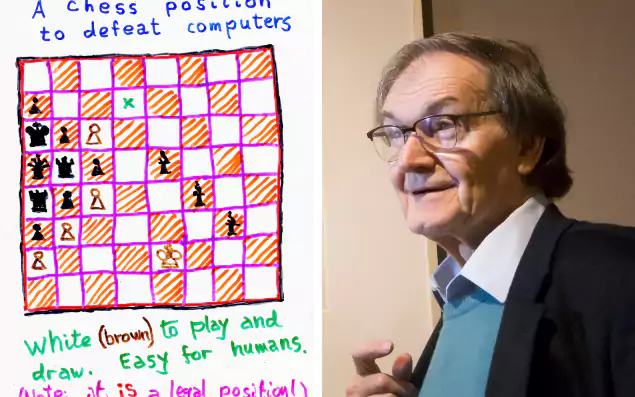
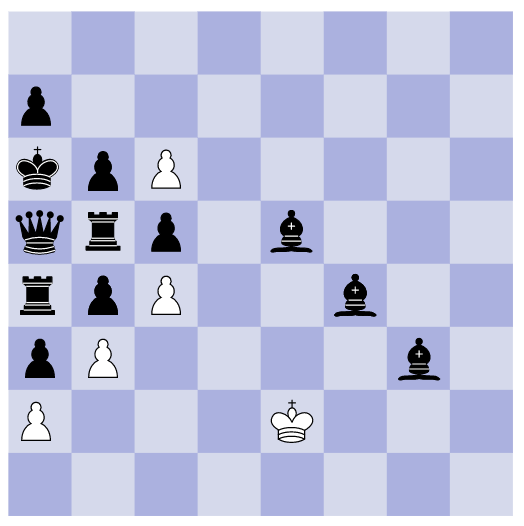
Chess engines will state that black is winning by a large margin, when in fact White can easily draw, or even win!
Drawing should be easy. Just move the king around (without moving the c6 pawn). The only black pieces that can move are the dark-squared bishops, which can’t checkmate your king.
Winning should be only possible if Black plays badly, e.g. Bishops all give up control of the c7 square. Then c7 followed by c8=B or c8=Q is checkmate!
Very nice study by Sir Penrose that illustrates the weakness of computers!
Math Olympiad (Primary Schools) 一筐鸡蛋
One basket of eggs.
1粒1粒拿,正好拿完。
Remove 1 by 1, nothing left in basket.
2粒2粒拿,还剩1粒。
Remove 2 by 2, one left in basket.
3粒3粒拿,正好拿完。
Remove 3 by 3, nothing left in basket.
4粒4粒拿,还剩1粒。
Remove 4 by 4, one left in basket.
5粒5粒拿,还差1粒才能拿完。
Remove 5 by 5, short of one to complete.
6粒6粒拿,还剩3粒。
Remove 6 by 6, 3 left in basket.
7粒7粒拿,正好拿完。
Remove 7 by 7, nothing left in basket.
8粒8粒拿,还剩1粒。
Remove 8 by 8, one left in basket.
9粒9粒拿,正好拿完。
Remove 9 by 9, nothing left in basket.
请问筐里最少有几粒鸡蛋 ?
At least how many eggs are there in the basket?
[Hint] This is a Chinese Remainder Problem (” 韩信点兵“)
—— [Solution] —–
Let there be minimum X eggs in the basket.
Remove 1 by 1, nothing left in basket:
X = 0 mod (1) …[1]
=> trivial & useless !
Remove 2 by 2, one left in basket:
X =…
View original post 445 more words
Alternate Admission Route to NUS Computing
Source: http://www.straitstimes.com/singapore/education/nus-eyes-more-aptitude-based-admissions
Good news to students who are interested to study Computer Science. There is now an alternative route for students who are short of the cut-off point (currently at least two A’s).
To win a place on the increasingly popular computer science degree course at the National University of Singapore (NUS), students need at least two As for their A levels. Next year though, students eyeing a computing degree can be admitted through another route.
They can take up a five-month-long computer programming course at NUS and if they do well, gain fast-track admission into the degree course, even though they may fall short of the required grades.
Topology application to Physics
Source: https://www.scientificamerican.com/article/the-strange-topology-that-is-reshaping-physics/?W
The Strange Topology That Is Reshaping Physics
Topological effects might be hiding inside perfectly ordinary materials, waiting to reveal bizarre new particles or bolster quantum computing
Charles Kane never thought he would be cavorting with topologists. “I don’t think like a mathematician,” admits Kane, a theoretical physicist who has tended to focus on tangible problems about solid materials. He is not alone. Physicists have typically paid little attention to topology—the mathematical study of shapes and their arrangement in space. But now Kane and other physicists are flocking to the field.
In the past decade, they have found that topology provides unique insight into the physics of materials, such as how some insulators can sneakily conduct electricity along a single-atom layer on their surfaces.
Some of these topological effects were uncovered in the 1980s, but only in the past few years have researchers begun to realize that they could be much more prevalent and bizarre than anyone expected. Topological materials have been “sitting in plain sight, and people didn’t think to look for them”, says Kane, who is at the University of Pennsylvania in Philadelphia.
Now, topological physics is truly exploding: it seems increasingly rare to see a paper on solid-state physics that doesn’t have the word topology in the title. And experimentalists are about to get even busier. A study on page 298 of this week’s Nature unveils an atlas of materials that might host topological effects, giving physicists many more places to go looking for bizarre states of matter such as Weyl fermions or quantum-spin liquids.
Read more at: https://www.scientificamerican.com/article/the-strange-topology-that-is-reshaping-physics/?WT.mc_id=SA_WR_20170726
What Would You Like In The Summer 2017 Mathematics A To Z?

 Art courtesy of Thomas K Dye, creator of the web comic Newshounds. He has a Patreon for those able to support his work.
I would like to now announce exactly what everyone with the ability to draw conclusions expected after I listed the things covered in previous Mathematics A To Z summaries. I’m hoping to write essays about another 26 topics, one for each of the major letters of the alphabet. And, as ever, I’d like your requests. It’s great fun to be tossed out a subject and either know enough about it, or learn enough about it in a hurry, to write a couple hundred words about it.
So that’s what this is for. Please, in comments, list something you’d like to see explained.
For the most part, I’ll do a letter on a first-come, first-serve basis. I’ll try to keep this page updated so that people know…
View original post 316 more words
How to do Proof by Cases in LaTeX
If one searches online, one will find many different methods to do “proof by cases” in LaTeX. The most simple and convenient method in my opinion is to use the description environment.
Something like this:
\begin{proof} Proceed by cases.
\begin{description}
\item[Case 1: This.] And so on.
\item[Case 2: That.] And more.
\end{proof}Source: Reddit
No additional package is needed. One drawback is there is no auto-numbering, but I am sure that is still ok, unless your proof has many many cases.
What Is The Shape of the Universe (Video)
(Important Changes) PSLE Math: Arrow -> vs Equal=
Source: Facebook
For those taking PSLE, please take note of this important update regarding the difference between arrow and equal sign. Forward this to your friends taking PSLE!
Basically, I think MOE is trying to instill students to be mathematically correct. (See update below: Marks will not be deducted in most cases but proper usage is highly encouraged.)
E.g. 100%=40 is wrong as 100%=100/100=1 technically. Similarly, 10 men = 40 hours is wrong as the units do not match (nor make sense).
Trying to enforce “units” instead of “u”, and banning “10 units -> 20” is a bit strict though, in my opinion.

Update: (http://mothership.sg/2017/07/moe-clarifies-use-of-%E2%86%92-in-revamped-primary-6-math-syllabus/)
MOE responds
In response to Mothership.sg queries, a Ministry of Education spokesperson clarified that the above information was not provided by the ministry.
The information above was originally sourced from the website of a private tuition centre, whose sources are currently unverified.
While the respective uses of the arrow and equal signs are accurate in the infographic, the MOE spokesperson said full credit will still be awarded to the student even when the signs are used interchangeably, as long as the student demonstrates a full understanding of the question.
Proper use of arrow and equal signs are, nonetheless, encouraged.
PhD Comic: 大智若愚
The new PhD Comic is related to the Chinese proverb: 大智若愚, which is roughly translated as “a wise man looks stupid.; great wisdom takes the looks of folly [appearance of stupidity]”.

SG Education News: More places for Medicine Students
Good news for those aspiring to be medical doctors.
|
Med school places to rise to 500 by next year The National University of Singapore (NUS) has had more than 2,000 top students fight for the 300 spaces in its Yong Loo Lin School of Medicine …
|
Other top Education news:
|
Hong Kong, UAE, Singapore Priciest Places for Education In Singapore, the government subsidizes schooling costs for locals and has doubled its education budget since 2005 as part of a plan to build the …
|
|
New NTU president has history of ties with Singapore New NTU president has history of ties with Singapore … Council and the International Academic Advisory Panel of Singapore’s Ministry of Education.
|
|
Building a `Smart Nation’ in Singapore Doesn’t Come Cheap Schooling isn’t cheap in Singapore: not just for citizens, but for the government too. The city state boasts one of the best education systems in the world …
|
|
How robots are teaching Singapore’s kids In Singapore, admired globally for its education system, authorities are trialling the use of robotic aides to teachers in kindergartens. Two humanoid …
|
Unique Cars and Parts
There are hundreds if not thousands of Automotive websites to be found on the net, so often it can be a little hit and miss as to finding the best of the best that is out there. Unique Cars and Parts is just one of those sites, one of the best that there is. Well researched and covering almost every automotive topic there is, the site also boasts a mammoth array of various media types, from old auto radio commercials, TV and cinema advertising, car brochures, press releases, car launches and biographies.
Even better is the ability to sell your old car and or parts for free, or even list your auto business if you are in the trade. No cost really does mean no cost – not sure how they do it – but what they have created is brilliant. If you are a car aficionado or even have a simple passing interest in the history of automobiles, from the earliest contraptions found on the roads at the beginning of last century, the the more modern vehicles we drive today – pay this site a visit and we would recommend you bookmark it for future reference.
Click here to go to the Unique Cars and Parts Classic Car Website

Les Categories Pour Les Nuls
“Categories for Dummies”
(French)
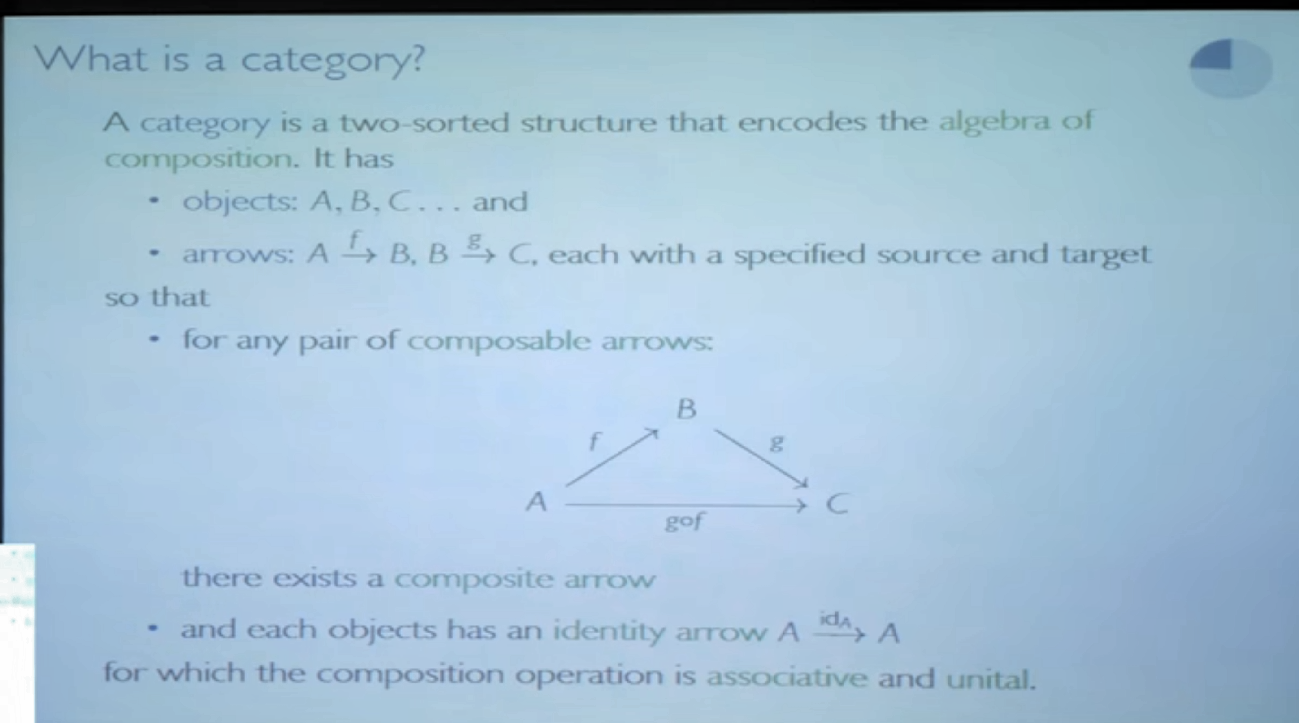
Example 1:
Paris (P) -> Rome (R) -> Amsterdam (A)
Objects: cities {P, R , A}
Morphism (Arrow): railway
- Identity: railway within the city
- Associative: (P -> R) -> A = P -> (R ->A)
=> Category
Example 2:
A, B are categories
functor f : A -> B
f (B) has the “information” on A, with some loss of information since f may not be a MONOMORPHISM.
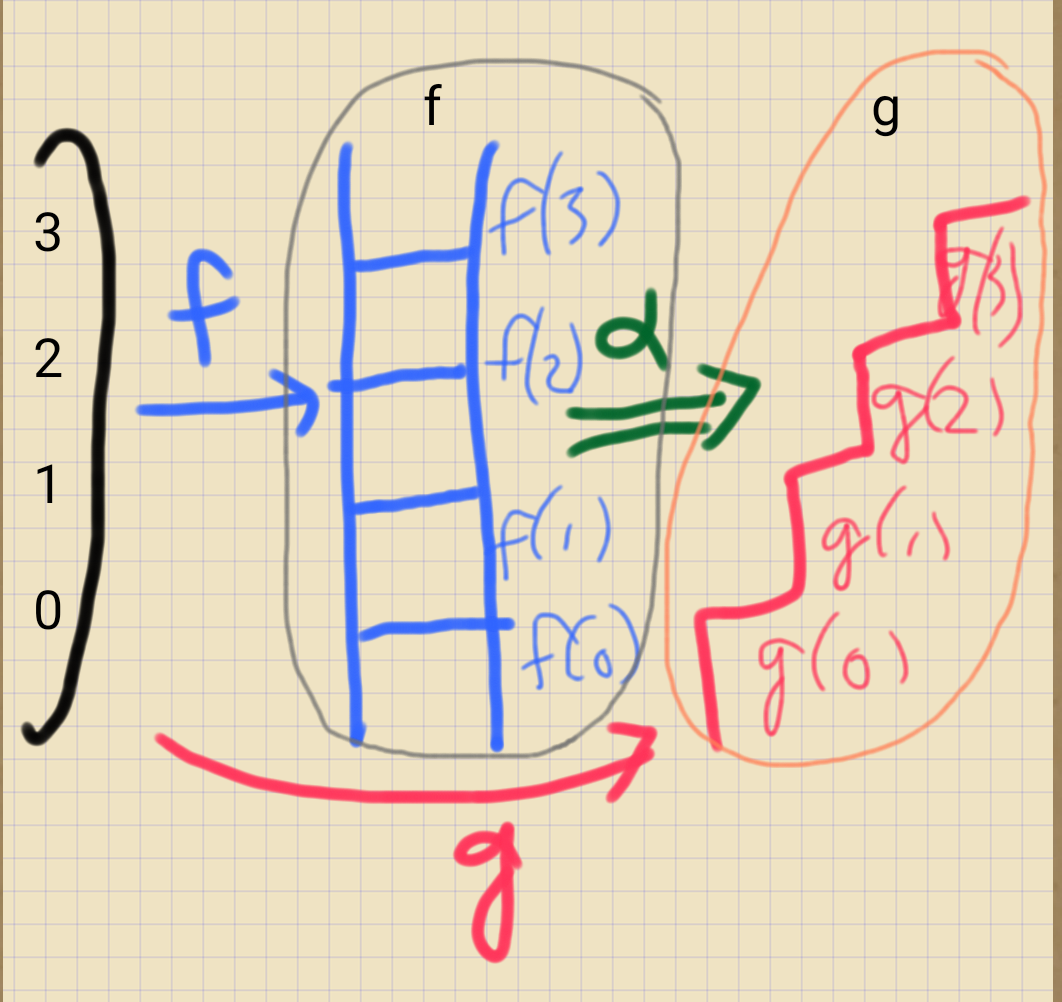
Example 3: Natural Transformation
A = 0 1 2 3 4
f : A -> B
B = Ladder steps:
f(0)|
f(1)|
f(2)|
f(3)|
g : A -> B
B = Staircase steps :
g(0)||
g(1)||
g(2)||
g(3)||
Natural Transformation: =>α
α : f (i) => g (i)
f(0)| =>g(0)||
f(1)|=>g(1)||
f(2)|=>g(2)||
f(3)|=>g(3)||
α transforms naturally the Ladder to the Staircase.
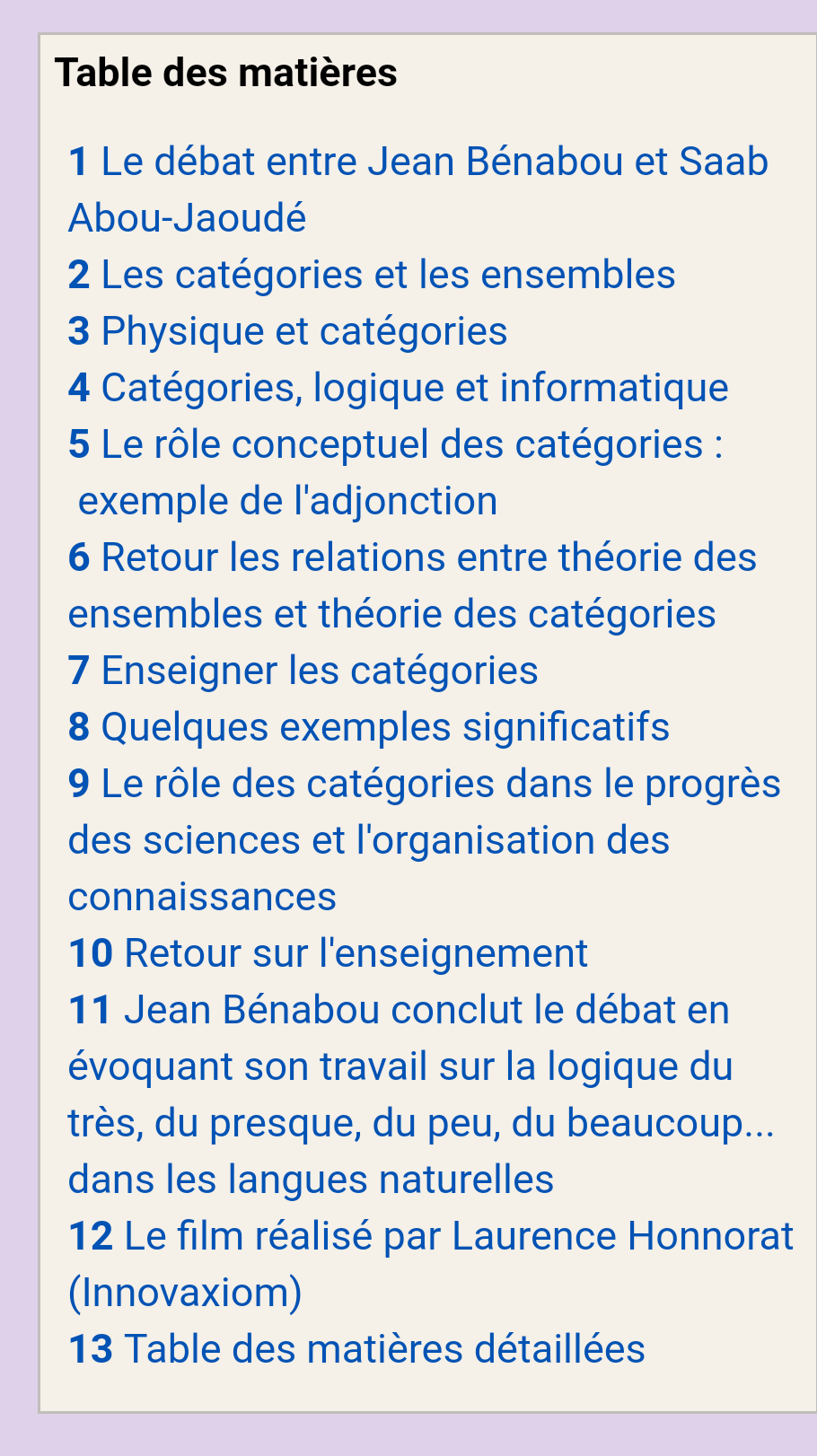
Debate (French): Set Theory vs Category Theory
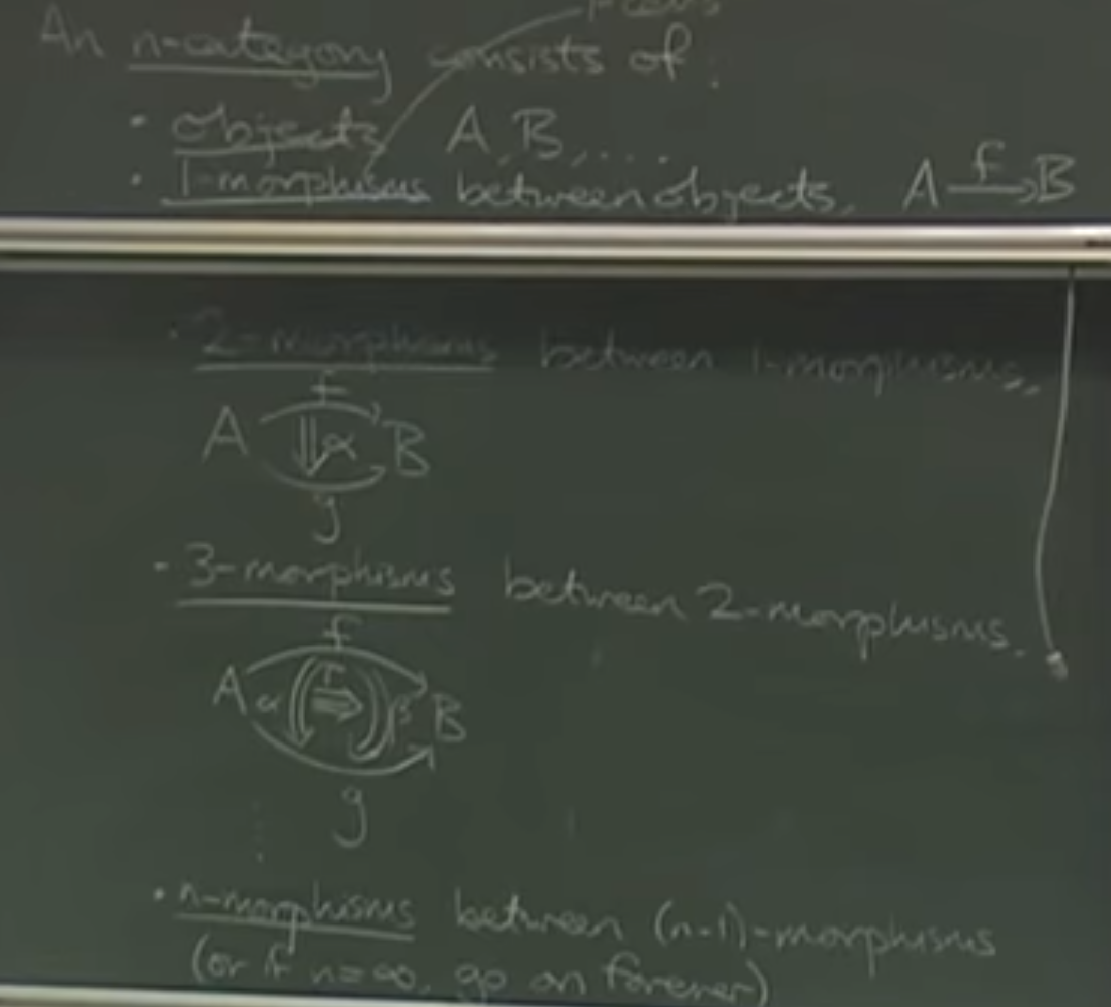
An Introduction to N-Categories
Tom Leinster
N = 0 : 0-Cat
- => Set, 0-morphism = function
N= 1: 1-Cat
- => Cat, 1-morphism = functor
N= 2: 2-Cat
- => 2-morphism = Natural Transformation
$latex text {f, g : 1-morphism }$
$latex alpha :: beta text { Natural Transformations : 2-morphism }$
Definition of n-Category:
Composition:
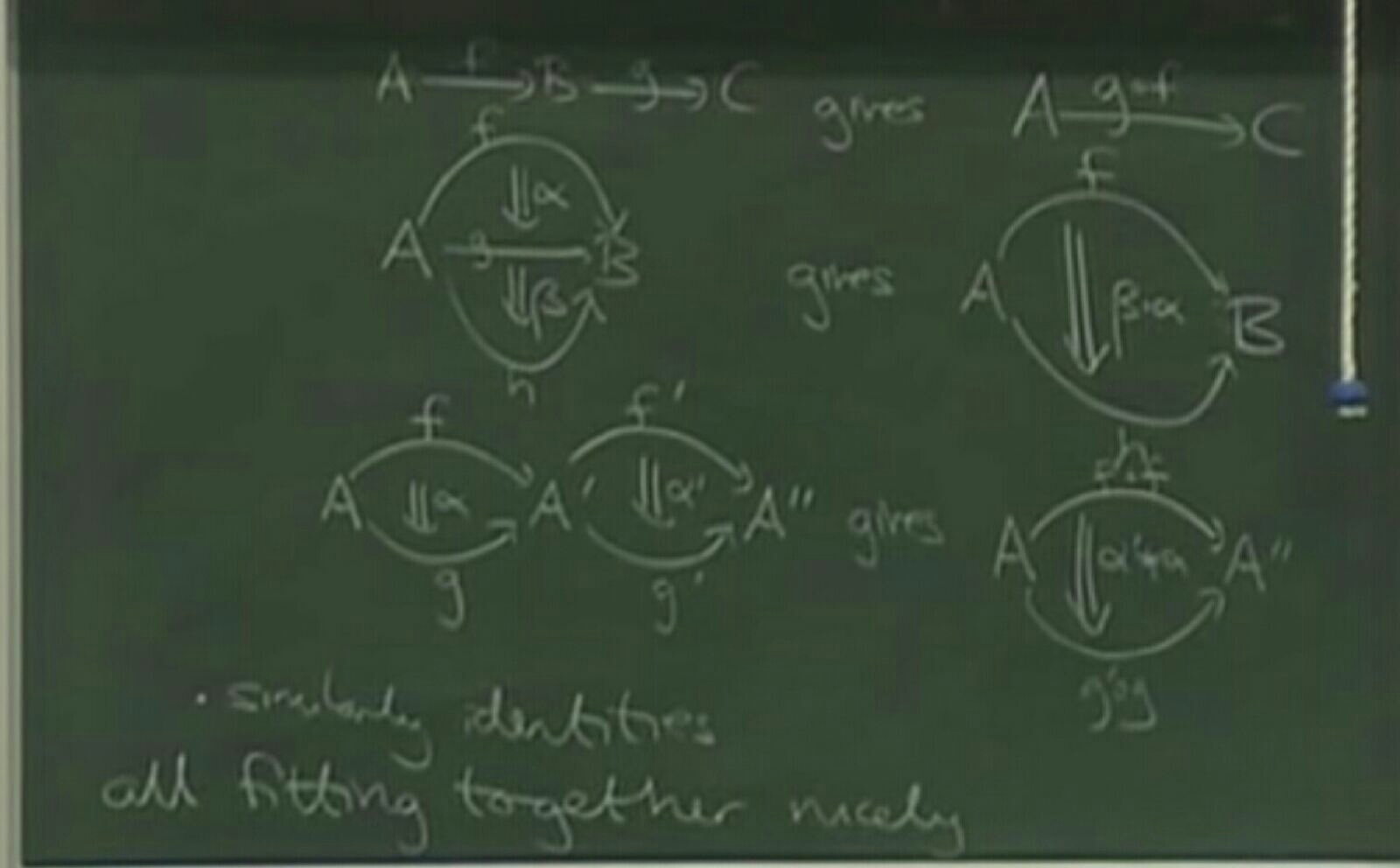
0-Cat : Set
1-Cat : Cat
Examples of n-Categories:
- Manifold
- Top (Topological Space) : 2-morphism = homotopy
Ref:
Best Technical Category Theory Book (2016) by Tom Leinster (Cambridge Press): “Basic Category Theory”
(Free downloadfrom arxiv)
Category Theory : “How to Make Pi”
Dr. Eugenia Cheng – Professor of Category Theory (Chicago University)
Author of the Best Selling Category Book Book : (for readers from 7-year-old to high school and undergraduate students)
“How to Bake Pi ?- an Edible Exploration to the Mathematics of Mathematics”
[Loan from NLB(eg. AMK Branch)]
Illustrations:
- Factors of 30 = {2, 3, 5, 6, 10, 15, 30} which form a Cube with these factors as the vertices.
- Knots
- Bach music
- Associativity: (sugar + milk + egg )
- Button cake = order 2 group (0,1)
- Bed mattress = rotate, flip, flop
- Icosahedral virus
Ref:
Best Technical Category Theory Book (2016) by Tom Leinster (Cambridge Press): “Basic Category Theory”
(Free downloadfrom arxiv)
Program = Category
2017
Keywords:
- Category
- Monad = Monoid + Endofunctor
Category Theory is replacing Set Theory as the foundation of Math. Nowadays, few Advanced Math papers are written without using Category to explain, and this trend is spreading to IT through Functional Programming languages (Google’s Kotlin, Haskell, Clojure…) - the latest paradigm to replace Object-Oriented languages like Java, C++, etc, as a safer “Strong Typed” languages for AI, BIG DATA…
$latex boxed {text {Type = Category }}&fg=aa0000&s=3$
Examples of “Types” in IT:
- Integers
- Real
- Double
- Boolean
- String
- etc

Free tutoring app for peer-tutoring
Do try out the new app AsknTeach. Quite a good idea, the app creator reportedly invested more than $100,000 to $200,000 into it.
Only problem I can foresee is that overall quality of answers may not be that good, since it is by peer students, also the engagement rate may not be high. The same problem may occur: more people asking questions than answering.
That being said, if the top echelon of students can be motivated to answer it, the quality of answers will be great. E.g., the top secondary school students are easily at JC level or beyond, they can easily answer questions at their level.
Source: http://www.straitstimes.com/singapore/education/tutoring-app-for-students-to-asknteach
One of the founders of free tutoring app EduSnap is back with a new peer tutoring app – AsknTeach.
Back in 2013, Mr Chia Luck Yong set up EduSnap as a social enterprise with two Singapore Management University schoolmates, Mr Anders Tan and Mr Shaun Tan, and launched the app the next year.
At the time, the free mobile platform drew attention as it positioned itself as the first of its kind helping Singapore students, and was reported about in major media outlets.
Integral Domains 整环 (Abstract Algebra)
Remember when you cancel a common factor at both sides of an equation, you must check if the factor is non-zero, otherwise you would miss some answers.
This is about Cancellation Law, related tofewNumber Theory Properties :
- Zero Divisors,
- Integral Domain.
Origin of “Integral” => Integers
Definition of Integral Domian:
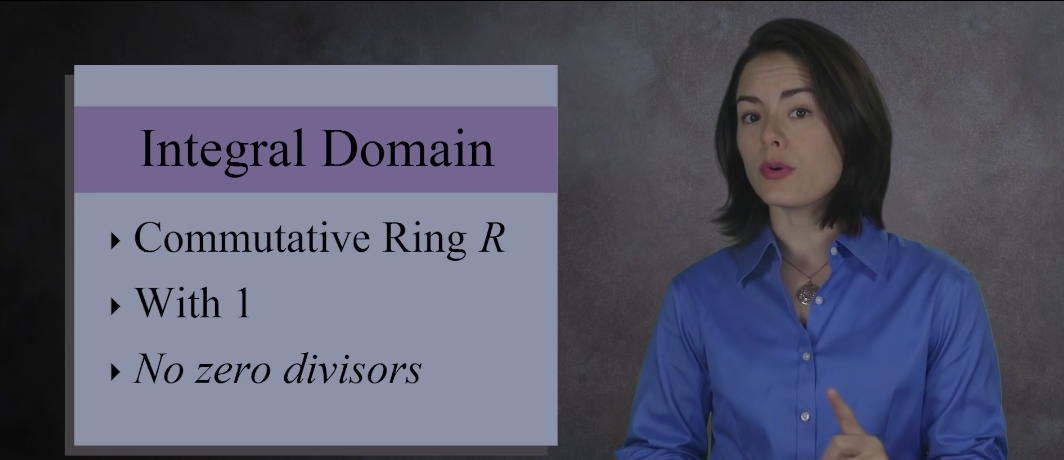
Property:Cancellation Law

Reading:
THEOREMS:(PROOF Here)
- Every Field is an Integral Domain.
- Every finite Integral Domain is a Field.
South Korean Young Mathematician June Huh
A weak South Korean Math studentJune Huhbecomes a top Mathematician in the Princeton Institute for Advanced Study by proving the Read’s Conjecture and Rota Conjecture.
“A path less taken to the peak of the Math World” :
https://www.quantamagazine.org/a-path-less-taken-to-the-peak-of-the-math-world-20170627/
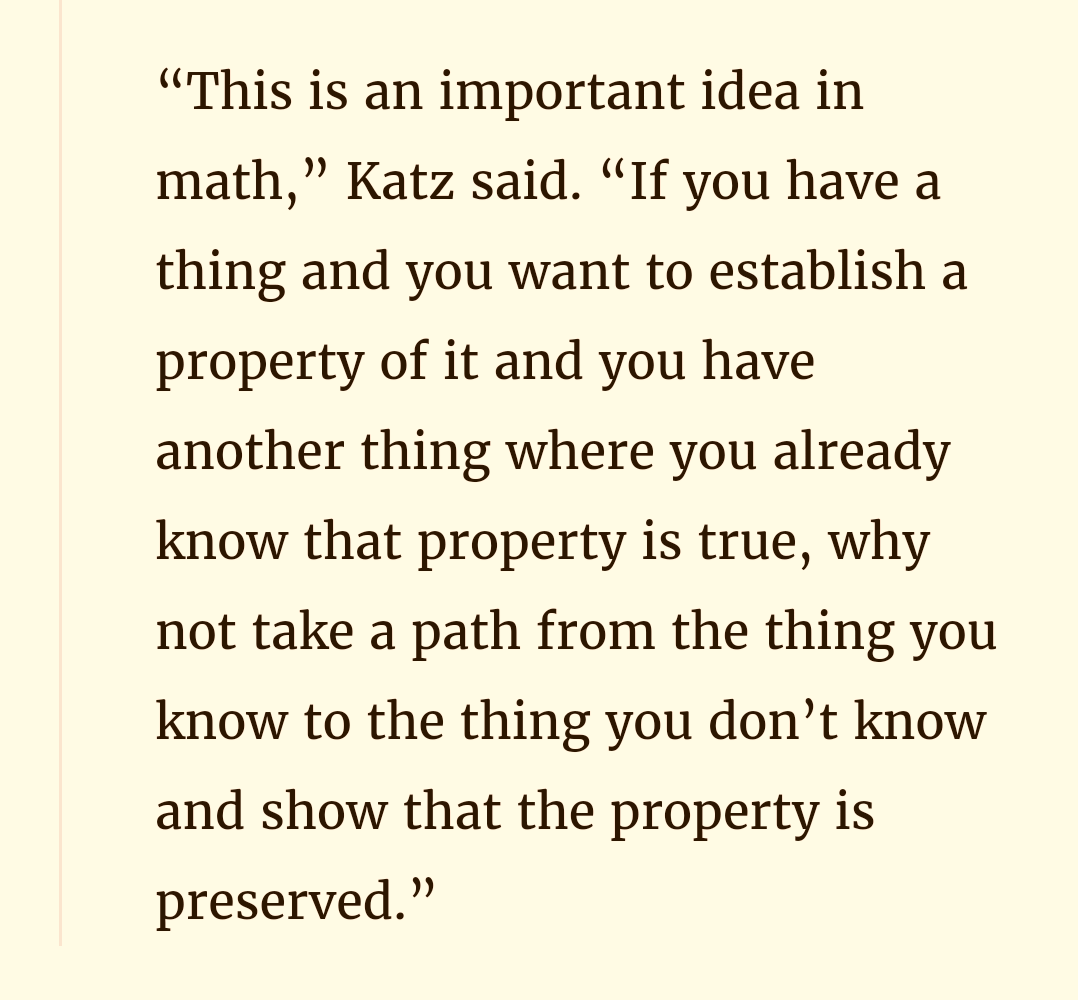
This important idea is called Isomorphism 同构…
Summary: Shapes, radius functions and persistent homology
This is a summary of a talk by Professor Herbert Edelsbrunner, IST Austria. The PDF slides can be found here: persistent homology slides.
Biogeometry (2:51 in video)
We can think of proteins as a geometric object by replacing every atom by a sphere (possibly different radii). Protein is viewed as union of balls in 
Decompose into Voronoi domains 
Inclusion-Exclusion Theorem:
Volume of protein 


Nerve Theorem: Union of sets have same homotopy type as nerve (stronger than having isomorphic homology groups).
Wrap (14:04 in video)
Collapses: 01 collapse means 0 dimensional and 1 dimensional simplices disappear (something like deformation retract).
Interval: Simplices that are removed in a collapse (always a skeleton of a cube in appropriate dimension)
Generalised Discrete Morse Function (Forman 1998): Generalised discrete vector field 
Critical simplex: The only simplex in an interval (when a critical simplex is added, the homotopy type changes)
Lower set of critical simplex: all the nodes that lead up to the critical simplex.
Wrap complex is the union of lower sets.
Persistence (38:00 in video)
Betti numbers in 


Incremental Algorithm to compute Betti numbers (40:50 in video). [Deffimado, E., 1995]. Every time a simplex is added, either a Betti number goes up (birth) or goes down (death).

Stability of persistence: small change in position of points leads to similar persistence diagram.
Bottleneck distance between two diagrams is length of longest edge in minimizing matching. Theorem: 
Expectation (51:30 in video)
Poisson point process: Like uniform distribution but over entire space. Number of points in region is proportional to size of region. Proportionality constant is density 
Paper: Expectations in 
Reduces to question (Three points in circle): Given three points in a circle, what is the probability that the triangle (with the 3 points as vertices) contains the center of the circle? Ans: 1/4 [Wendel 1963].
Brain has 11 dimensions
One of the possible applications of algebraic topology is in studying the brain, which is known to be very complicated.
Site: https://www.wired.com/story/the-mind-boggling-math-that-maybe-mapped-the-brain-in-11-dimensions/
If you can call understanding the dynamics of a virtual rat brain a real-world problem. In a multimillion-dollar supercomputer in a building on the same campus where Hess has spent 25 years stretching and shrinking geometric objects in her mind, lives one of the most detailed digital reconstructions of brain tissue ever built. Representing 55 distinct types of neurons and 36 million synapses all firing in a space the size of pinhead, the simulation is the brainchild of Henry Markram.
Markram and Hess met through a mutual researcher friend 12 years ago, right around the time Markram was launching Blue Brain—the Swiss institute’s ambitious bid to build a complete, simulated brain, starting with the rat. Over the next decade, as Markram began feeding terabytes of data into an IBM supercomputer and reconstructing a collection of neurons in the sensory cortex, he and Hess continued to meet and discuss how they might use her specialized knowledge to understand what he was creating. “It became clearer and clearer algebraic topology could help you see things you just can’t see with flat mathematics,” says Markram. But Hess didn’t officially join the project until 2015, when it met (and some would say failed) its first big public test.
In October of that year, Markram led an international team of neuroscientists in unveiling the first Blue Brain results: a simulation of 31,000 connected rat neurons that responded with waves of coordinated electricity in response to an artificial stimulus. The long awaited, 36-page paper published in Cell was not greeted as the unequivocal success Markram expected. Instead, it further polarized a research community already divided by the audacity of his prophesizing and the insane amount of money behind the project.
Two years before, the European Union had awarded Markram $1.3 billion to spend the next decade building a computerized human brain. But not long after, hundreds of EU scientists revolted against that initiative, the Human Brain Project. In the summer of 2015, they penned an open letter questioning the scientific value of the project and threatening to boycott unless it was reformed. Two independent reviews agreed with the critics, and the Human Brain Project downgraded Markram’s involvement. It was into this turbulent atmosphere that Blue Brain announced its modest progress on its bit of simulated rat cortex.
Read more at the link above.
How to explain this math magic trick?
Quite impressive math magic trick, that even impressed the very strict judge Simon Cowell. I am not sure how he did it, other than possible prearranged volunteers. Another possibility is that the calculator is modified.
London had the volunteers give their best guesses to different questions, including how many No. 1-selling artists Cowell has had on his record label, how many millions of records judge Mel B. sold worldwide with the Spice Girls and what year judge Heidi Klum started modeling.
Meanwhile, London asked host Tyra Banks multiply the three answers together using the calculator on her own phone. He then instructed Banks to close her eyes and add a random eight-digit number to the previous calculation. She revealed that the grand total came out to 73,928,547.
Watch the clip to see why that number left the judges and audience members stunned!
Is There a Multi-dimensional Mathematical World Hidden in the Brain’s Computation?
“Algebraic Topology” can detect the Multi-dimensional neural network in our brain – by studying the Homology (同调) and co-Homology (上同调) with the help of Linear Algebra (multi-dim Matrix) & Computers.
Homology = compute the number of “holes” in multi-dim space.
Neurons formed in the brain can be modeled in Math (Topology) by Simplex 单纯 (plural : Simplices), billions of them interconnected into a complex -“Simplicial Complex” (单纯复体)。
What is math?
What is Math ?
https://infinityplusonemath.wordpress.com/2017/06/17/what-is-math/
- Mathematics= “that which is learned“ –(Pythagoras)
Math is not about calculation, it is understanding the nature, the universe, the philosophy (logic, intelligence – both “human” and “artificial”)…
What is Axiom, Lemma, Proposition ? Why rigorous Calculus was needed hundred years afterNewton & Leibnizhad invented it – “Epsilon-Delta” Analysis.
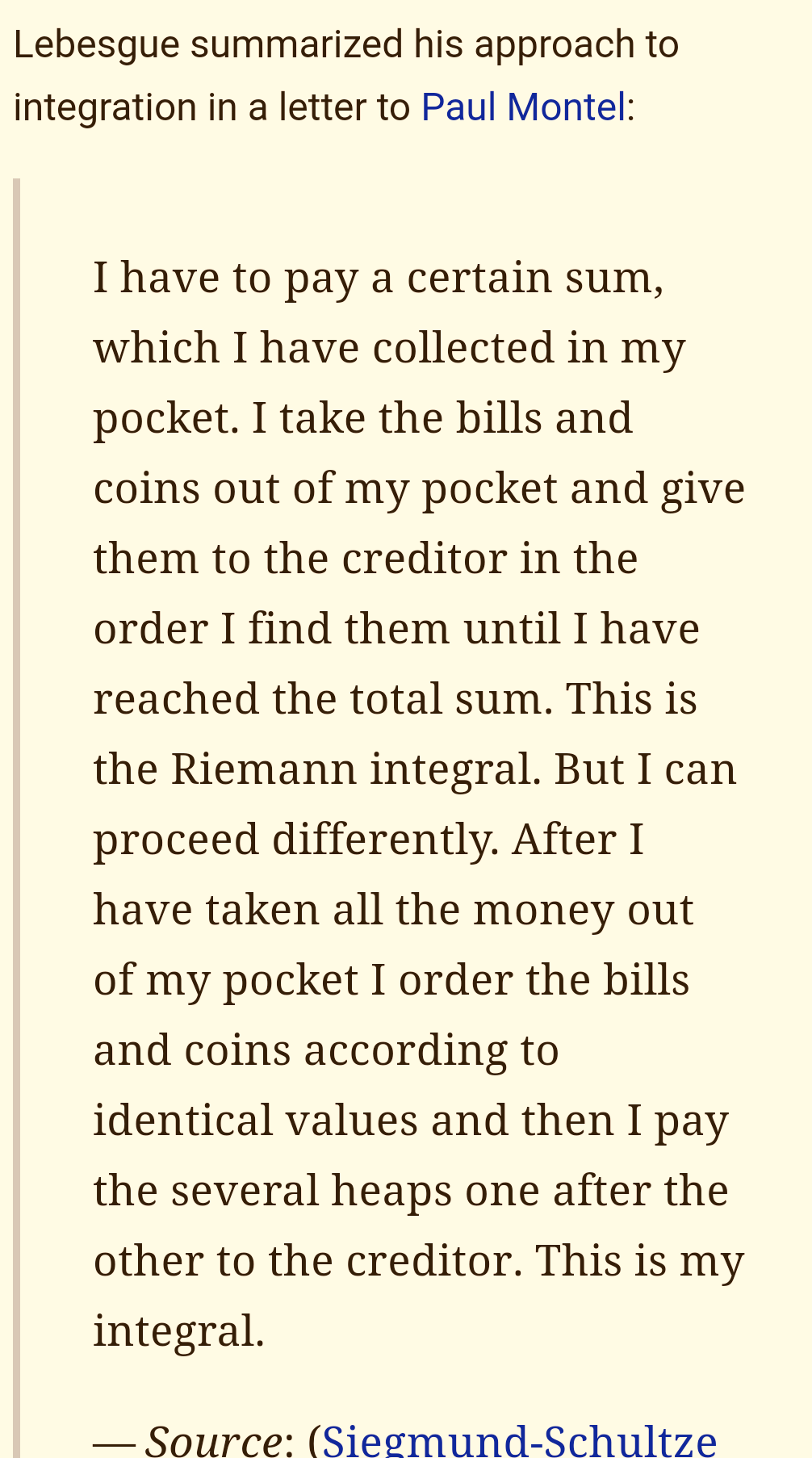
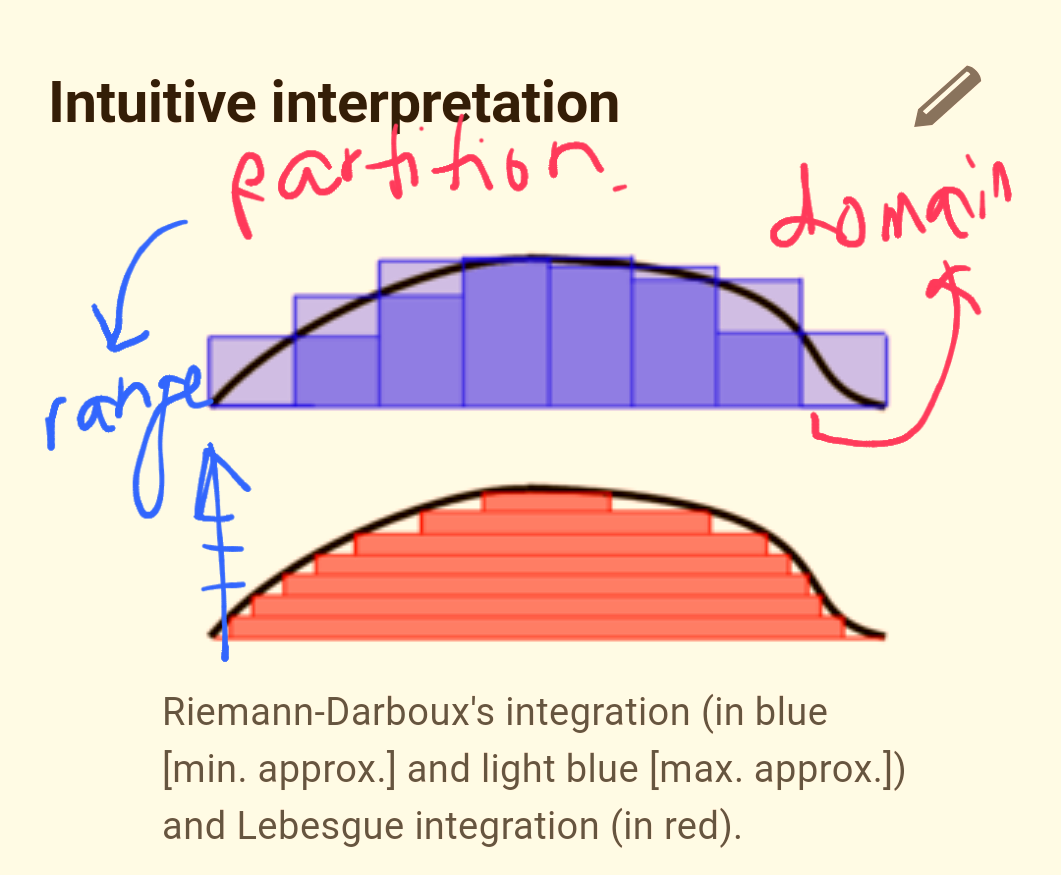
Difference between Riemann Integral & Lebesgue Integral ?
Yitang Zhang’s Santa Barbara Beach Walk
Professor Yitang Zhang is a famous Math professor who made important progress in number theory (Twin Prime Conjecture). Most strikingly, he made this progress in his fifties, which is kind of rare in the mathematical world.
Source: Quanta Magazine
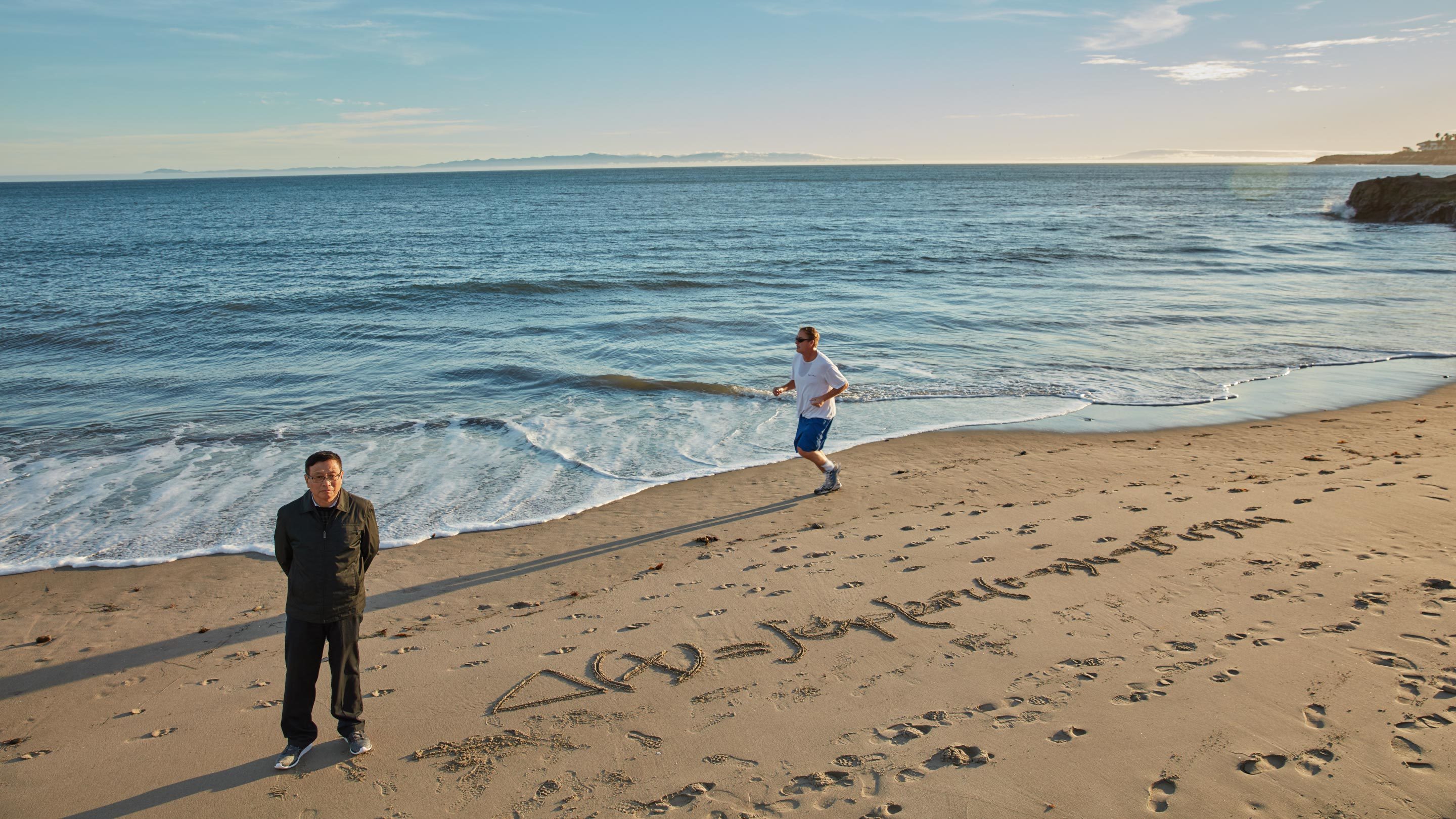
Yitang Zhang on the beach adjoining the University of California, Santa Barbara, after scratching a function in the sand related to his current work on the Landau-Siegel zeros problem.
As an adolescent during the Cultural Revolution in China, Yitang Zhang wasn’t allowed to attend high school. Later, in his 30s, he worked odd jobs in the United States and sometimes slept in his car. But Zhang always believed he would solve a great math problem someday. Still, despite becoming one of China’s top math students and completing his doctorate at Purdue University in Indiana, for seven years Zhang could not find work as a mathematician. At one point, he worked at a friend’s Subway sandwich restaurant to pay the bills.
“I was not lucky,” Zhang, who is both incredibly reserved and self-confident, told Quanta in a 2015 interview.
At 44, after finally being hired to teach math at the University of New Hampshire, he turned his attention to number theory, a subject he had loved since childhood. He analyzed problems in his head during long walks near his home and the university. In his 50s, well past what many mathematicians consider their prime years (indeed, the Fields Medal is awarded to mathematicians under the age of 40), he began trying to prove the twin primes conjecture, which predicts an infinite number of prime number pairs that have a difference of two, such as 5 and 7, 29 and 31, and 191 and 193. No one had been able to prove this in over 150 years, and top number theorists could not even prove the existence of a bounded prime gap of any finite size.
In 2013, at 58, Zhang published his proof of a bounded prime gap below 70 million in one of the world’s most prestigious journals, the Annals of Mathematics. The paper’s referees wrote that Zhang, who had been unknown to established mathematicians, had proved “a landmark theorem in the distribution of prime numbers.”
Read more at: Quanta
Finally received WordAds payout by WordPress
Thanks to all readers of mathtuition88.com, I have received WordAds payout by WordPress.
Mathtuition88.com first joined WordAds in 01-2014, where the payout was quite miserable (less than $1 for 5000 views). The payout has since increased considerably, thanks to higher quality adverts localized in Singapore.
The advertisements shown are quite relevant (usually tuition by top tutors/schools, travel and other deals in Singapore), so do turn off ad-blockers when visiting mathtuition88.com. Thanks once again!
Singapore Math for Primary School Kids
Singapore scores the 2017 PISA Test World’s First in Math.
Below is the “Singapore Math” shown by an USA School adopting the pedagogy.
I had the opportunity to meet the inventor of the “Singapore Math” Prof Lee PengYee (李彝义) in a Math seminar at NUS few years ago, who said he took the inspiration of the ancient Chinese math 算术 (literary means “Counting Technique” sans Algebra), combined with the PolyaProblem Solving Methodology, with a visual tool called “The Model Diagram”.
Note that this pedagogy is based on concrete visualisation, while good for majority of young students to learn computation and problem solving, it doesn’t train the opposite skill in “abstractness” which is required in university Advanced Math, where the French, Russian and USA university students excel more than the Asian cohorts.
The Ideal Math Education for the next 22ndCentury:
Singapore Math (Computation for…
View original post 19 more words
Guide to Starting Javaplex (With Matlab)
Guide to Starting Javaplex (With Matlab)
Step 1)
Visit https://appliedtopology.github.io/javaplex/ and download the Persistent Homology and Topological Data Analysis Library
2)
Download the tutorial at http://www.math.colostate.edu/~adams/research/javaplex_tutorial.pdf and jump to section 1.3. Installation for Matlab.
3)
In Matlab, change Matlab’s “Current Folder” to the directory matlab examples that you just extracted from the zip file.
(See https://www.mathworks.com/help/matlab/ref/cd.html to change current folder)
Type this in Matlab: cd /…/matlab_examples
Where … depends on where you put the folder
4) In the tutorial (from the link given in step 2), proceed to follow the instructions starting from “In Matlab, change Matlab’s “Current Folder” to the directory matlab examples that you just extracted from the zip file. In the Matlab command window, run the load javaplex.m file.”.
5) Test: Run example 3.2 (House example) by typing in the code (following the tutorial)

Subtle Error in Wikipedia: Dedekind’s number
On Wikipedia (https://en.wikipedia.org/wiki/Dedekind_number), it is stated that the Dedekind’s number M(n) is the the number of abstract simplicial complexes with n elements.
This is incorrect, at least based on the Wikipedia definition of abstract simplicial complex, which does not allow the empty set as a face.
The correct definition is found in another Wikpedia site: https://en.wikipedia.org/wiki/Abstract_simplicial_complex
The number of abstract simplicial complexes on up to n elements is one less than the nth Dedekind number.
Habitica Mage Highest Intelligence Gear Guide
Habitica is a productivity app, something like a to-do list in a gamified form. Users gain experience and gold from completing tasks, and can join in quests with a party to defeat monsters.
The mage class has one of the highest damage in the game (after warrior), and its base stat is intelligence. The best mage gear with highest intelligence (as of June 2017) is as follows:
Armor: Jean Chalard’s Noble Tunic (+25 INT, +25 CON)
Headgear: Nameless Helm (+25 INT, +25 STR)
Shield-Hand Item: Diamond Stave (+16 INT)
Weapon: Trident of Crashing Tides (+15 INT)
For stats, put all stats into intelligence.
Donald Trump Math: 17×6=?
What is 17×6? (without using calculator)
Practicing basic mental math without calculator is good. Even for PSLE, where calculator is allowed, it is a good idea not to rely on it too much.
Pi hiding in prime regularities
Three mysterious Math Objects:
- Pi,
- Complex Numbers,
- Prime Numbers
are hiding in circle.

5 Math Tips That Will Speed Up Your Calculations
5 Math Tips That Will Speed Up Your Calculations
For most students, regardless of their age, studying math seems like a nightmare. Taking tuition for maths helps when you or your child struggle with calculations.
Check out these 5 simple tricks for making mental math faster and more accurate:
- 11 Times Trick – It’s easy to multiply single digit numbers with 11: just repeat the number, but what about double digits? This trick is almost shockingly simple: just add a space between the two digits, and insert their sum in the middle. E.g., 32 x 11 = 3(3+2)2, or 352.
If the total is more than 9, add 1 to the first digit and insert the second number, e.g. 78 x 11 = 7(7+8)8, or 7(15)8. Move the 1, so 7+1(5)8 = 858.
- Large Sums Trick – To add large numbers quickly in your head, convert them into multiples of 10. E.g. 762 + 816 can be rounded off to 760 + 820, so 1580. Add up the remaining numbers taken aside while rounding off the two, i.e. +2 and -4, so -2. Then add these to the previous total, so 1580 – 2 = 1578.
- Binary & Bisect Trick – To multiply two numbers, one of which is even, here’s what to do. Divide the even number by 2 and multiply the other by two, and continue doing this till you reach numbers that are easy to calculate. E.g. 12 x 37 = 6 x 74 = 3 x 148 = 444, and 20 x 43 = 10 x 86 = 860.
- Multiplication Trick – To multiply numbers quickly, follow these rules:
- Multiplying by 4: Multiply by 2 and then again by 2, e.g. 42 x 4 = 84 x 2 = 168.
- Multiplying by 5: Multiply by 10 and then divide by 2, e.g. 190 x 5 = 1900/2 = 950.
- Multiplying by 9: Multiply by 10 and then subtract the original number from the result, e.g. 26 x 9 = 260 – 26 = 234
- Multiplying by 99: Multiply by 100 and then subtract the original number from the result, e.g. 51 x 99 = 5100 – 51 = 5049.
- Percentages Trick – “Percent” literally means per 100, so break down a number into 100s to find a certain percentage. E.g. 8% of 400 = 8 per 4 hundreds, so 8 x 4 = 32. If the number is under 100, move the decimal point. E.g. 8% of 50 = 8 x 5 or 40, and with the decimal point moved, 4.
What about 8% of 350? Add up the 8s for each 100, and half of an 8 for the remaining 50, so (8 x 3) + 4 = 28. The same for 8 x 35, but moving the decimal point, so 2.8. Percentages can also be flipped, so 32% of 5 is the same as 5% of 32.
Math doesn’t have to be scary, and an online math tutor can help you deal with advanced problems without getting overwhelmed.
About Author: Making education simple and easy to comprehend is Dana Jandhayala’s forte. She’s had a long career as an educator where she has taught in several different schools and institutes in multiple countries. Today, she helps students with personalized online tutorials by SchoolPage that help make concepts easy to understand, making learning fast and fun. She writes to help students study better, and to coach parents so they can facilitate the success of their children.
AI “AlphaGo” beats World’s Best Go Player Ke Jie in 1st Match
After the defeat in 1st match, Ke Jie said “AlphaGo is approaching God!”.
This version of AlphaGo is 10x more powerful than last year’s version which has beateb the South-korean Go player Lee.
https://www.theguardian.com/technology/2017/may/23/alphago-google-ai-beats-ke-jie-china-go
Google officially supports Kotlin from May 2017
Kotlin is the “New Java” officially supported by Google from May 2017! It is less verbose (罗唆) than Java which is clumsy with boilerplates (样板), interoperates with Java on JVM, with modern functional programming features, and most importantly,it is Multi-Platform : Java, Android, Javascript, and future versions run as native codes on iOS, MacOS and Linux (Microsoft – work in progress). This eliminates the current headache of having to re-write the same applications for different platforms in different languages.
Google makes Kotlin a first-class language for writing Android apps
https://blog.plan99.net/kotlin-fp-3bf63a17d64a
Kotlin Tutorials:
https://kotlinlang.org/docs/tutorials/
https://developer.android.com/kotlin/get-started.html
Hands-on:
https://try.kotlinlang.org/#/Kotlin%20Koans/Introduction/Hello,%20world!/Task.kt
Two ways to program in Kotlin:
1) Google way: Download Android Studio 3.0 (with Kotlin and Java 8 Support):
2) (A better way): use Jetbrains “Intelli IDEA for kotlin” (bundled with Kotlin)
https://kotlinlang.org/docs/tutorials/getting-started.html
Books:
https://antonioleiva.com/kotlin-android-developers-book/
https://www.amazon.com/gp/aw/s/ref=is_s_ss_i_5_6?k=kotlin+for+android+developers&sprefix=kotlin
Math Tricks found in Chess
Just read this very nice article on Quora, on the relationship between Math and Chess: https://www.quora.com/What-math-tricks-are-hidden-in-chess
Also interesting is this YouTube documentary “My Brilliant Brain” featuring Susan Polgar.
Author:

There’s lots of clever math tricks hidden in chess. Here are some examples.
Pawn race: Want to know if you can catch your opponents pawn before it becomes a queen? Use simple geometry! Draw a diagonal line starting from the pawn to the first row, then make a box. If your king can enter that box, he can catch the pawn! No need to count moves or calculate.

Opposition: Want to know if you have the distant opposition in a king and pawn engame? Well you could calculate it out, or you could use simple parity! If the king’s are on the same line (diagonally, horizontally, or vertically) look at how many squares are in-between the kings. If it’s your turn: an even number of squares means you have the opposition, an odd number of squares means your opponent has the opposition. There’s six squares between the kings in the diagram below. If it’s white’s turn, they have the opposition!

Calculating the relative value of pieces:
If you randomly place a piece on an empty chess board, how many moves will it have on average? I calculated this out a long time ago, then I compared it to what the pieces are assumed to be worth.

This is over-simplistic, but interesting. So it looks like the king has a relative value of 4, and Bishop’s are slightly better than knights. The downside of only looking at available moves is that it ignores things like the fact that the Bishop can only attack one color square, or how pieces work together. The Bishop pair, for example, is worth more than the sum of each individual bishop, as they complement each other. This fact is used in chess engine programming.
Shortcut to calculating knight moves:
I use this trick all the time in my games. Want to know how long it takes a knight to get somewhere? Simply memorize this square. The knight square is a beautifully symmetrical pattern, which makes it really easy to memorize. Each number represents the number of moves it will take the knight to reach that square.
Interesting fact – If you wanna reach any of the fours, then any move the knight makes will get you closer to reaching that square.

Knight’s also operate according to parity. That is, they attack dark squares, then light squares, then dark squares, and so on. See the pattern above – even moves get you to the same color square that your sitting on, odd moves get you to the opposite colored square.
Pythagorean Theorem does not apply in chess:
Our brains are hardwired to think that diagonals are longer than edges of a square. This is not the case in chess. This can lead to some interesting positions. For example:
White to move. It looks like black is going to promote their pawn and white will lose. If white tries to promote their pawn right away the black king will catch it. Miraculously, white can actually force a draw here. They do so by marching their king diagonally as shown. They will either catch the black pawn or promote their white pawn. This is only possible because it takes the same number of moves for white to move their king from h8 – e5 t- h2 as it does to go in a straight line from h8 to h2. Counter intuitively, going diagonally doesn’t increase the trip length.

Centralization matters! Except for rooks…
(Almost) Every piece in chess will have more available moves in the center of the board than they will on the edge of the board. More available moves = more control. This is why chess strategy tells you to always control the center.
This doesn’t apply to rooks… Like the honey badger, rooks just don’t care. If you place a rook on an empty board, they will always have 14 moves. Doesn’t matter where you place them. This is due to the square symmetry of the board, which lines up with the way rooks move.

The 8 Queens Puzzle:
How many Queens can you place on a chessboard such that none of them could capture each other? 8 of course. After all, a chess board is just an 8 by 8 grid. But trying to find the solution is much more difficult. There are actually 96 solutions (12 if you don’t count symmetry or rotations). This is a complex math and computer science problem. They have solved the same puzzle for every solution on a 27 by 27 sized board.

Counting the number of possible games in chess:
A clever mathematician named Claude Shannon calculated the upper bound limit for chess, resulting in about 10^120 possible different games. This was a huge influence on the field of computer science and chess, and shows why we cannot solve chess using brute force.
There are many other interesting math tricks hidden in chess. I look forward to reading about others.
French youngest President Emmanuel Macron and his Education
Emmanuel Macron is the youngest French President (39) since Napoleon Bonaparte (40).
A brilliant student since young, he impressed his secondary school Drama teacher 24 years older, finally married her.
Like any genius (Einstein, Galois, Edison, …) who doesn’t adapt well in the traditional education system, Macron entered the prestigious and highly competitiveClasse Préparatoire (Art Stream) Lycée Henri IVin Paris to prepare for the “Concours” (法国抄袭自中国的)”科举” Entrance Examsin France’s top Ecole Normale Supérieure (ENS). Like the 19CE Math geniusEvariste Galoiswho failed the Ecole Polytechnique Concours twice in 2 consecutive years, Macron also failed ENS “Concours” in 2 consecutive years.
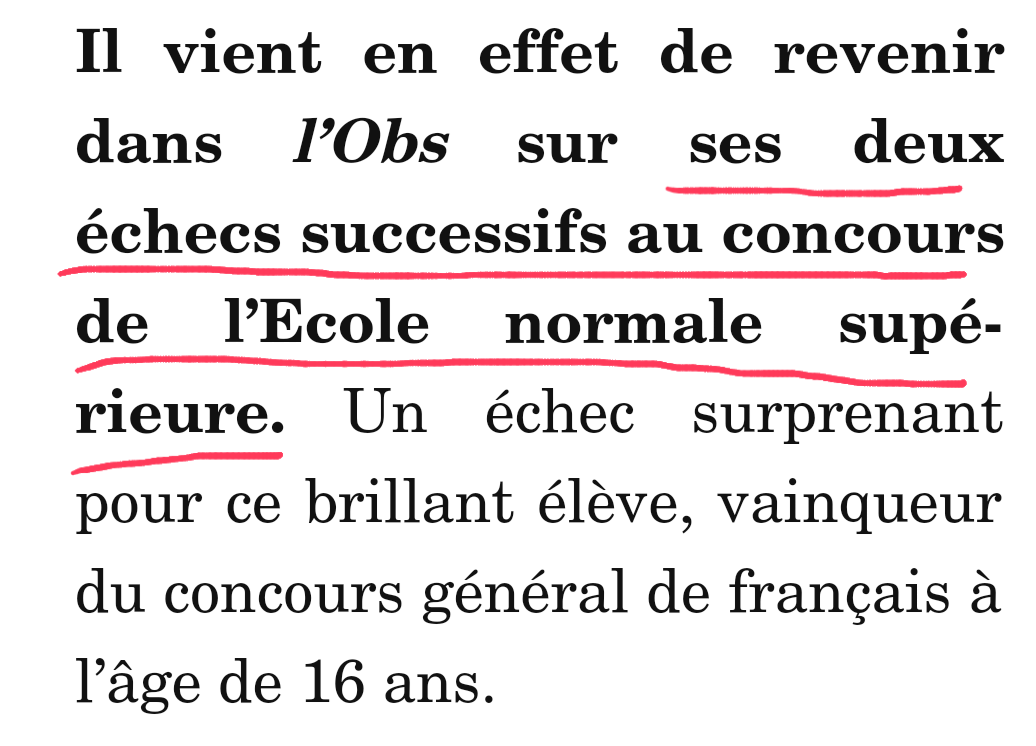
He revealed recently, ”The truth was I didn’t play the game. I was too much in love (with my former teacher) for seriously preparing the Concours …”
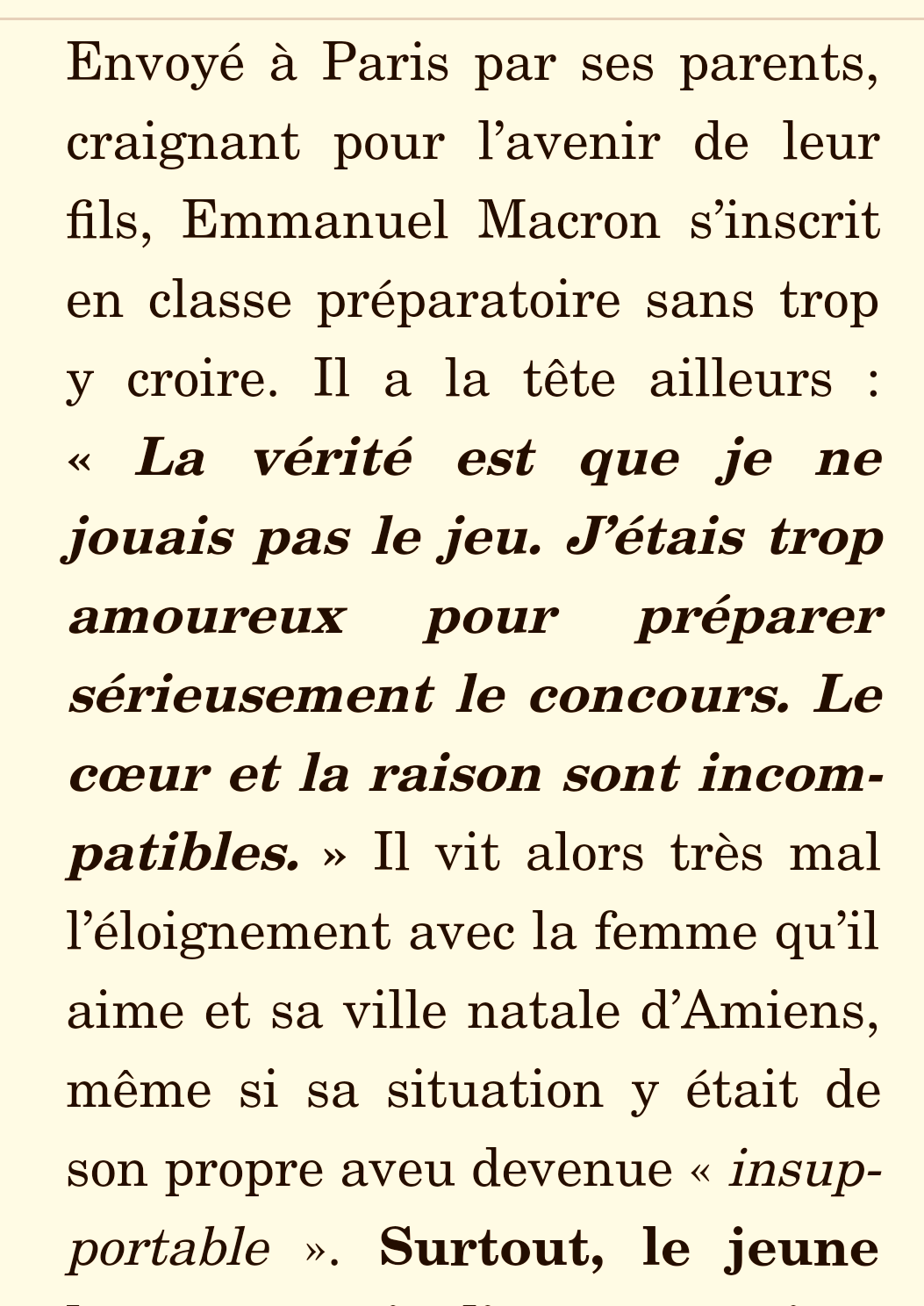

Note: French traditional name for the elitist tertiary education (first 2 or 3 years if repeat…
View original post 104 more words
LaTeX Thesis Template
This site (https://www.sharelatex.com/blog/2013/08/09/thesis-series-pt5.html) has a guide on how to create your own 
The actual Tex source code is found here: https://www.sharelatex.com/project/51fa85c3db89c3c351085071.
I like it as the source code is neat and clean, you can easily edit it if you know some basic Latex. Some other templates out there are quite complex and convoluted, it is hard to customize it.
Math Olympiad Tuition
Maths Olympiad Tuition
Tutor: Mr Wu (Raffles Alumni, NUS Maths Grad)
Email: mathtuition88@gmail.com
Syllabus: Primary / Secondary Maths Olympiad. Includes Number Theory, Geometry, Combinatorics, Sequences, Series, and more. Flexible curriculum tailored to student’s needs. I can provide material, or teach from any preferred material that the student has.
Target audience: For students with strong interest in Maths. Suitable for those preparing for Olympiad competitions, DSA, GEP, or just learning for personal interest.
Location: West / Central Singapore at student’s home
Nanyang Girls NYGH starts school later at 8.15am
Very good idea by NYGH. Sleep is important for students.
SINGAPORE: For almost a year now, Nanyang Girls High (NYGH) students have been starting school at 8.15am – a good 45 minutes later than most secondary schools.
And the results have been telling.
The school in Bukit Timah has been taking part in ground-breaking sleep studies conducted by Duke-NUS Medical School researchers – whose studies have shown that 80 per cent of teens here don’t get enough sleep, which affects their health, grades and cognitive abilities.
It was what the teachers of NYGH had been suspecting all along.
Mrs Ho-Sam Choon Juen, NYGH dean of student systems and info management, said: “For a long time, we’d known that our girls were not sleeping enough because of their academic and extra-curricular demands.
Read more at http://www.channelnewsasia.com/news/cnainsider/a-big-difference-in-students-after-nanyang-girls-starts-school-8833844
Jurong East Maths Tuition
Maths Tuition
Tutor (Mr Wu):
– Raffles Alumni
– NUS 1st Class Honours in Mathematics
Experience: More than 10 years experience, has taught students from RJC, NJC, ACJC and many other JCs. Also has experience teaching Additional Math (O Level, IP).
Personality: Friendly, patient and good at explaining complicated concepts in a simple manner. Provides tips for how to check for careless mistakes, and tackle challenging problems.
Email: mathtuition88@gmail.com
Areas teaching (West / Central Singapore, including Bukit Batok, Dover, Clementi, Jurong)
BM Category Theory II 8: F-Algebra, Lambek’s Lemma , Catamorphism, Coalgebra, Anamorphism
[Continued from previous BM Category Theory …]
$latex boxed {
text {type Algebra f a = f a} to text {a}
}&fg=aa0000&s=3$
Intuition: [Artificial Intelligence] You teach the computer, like a Primary 6 kid, that Algebra is atype of expression (f) which, after evaluation, returns a value.
If a = i (initial)[or u (terminal)],
$latex boxed {
text {(f i} to text {i )} implies
text {f = Fix-point}
}&fg=0000aa&s=3$
Intuition: Fix-point because, the Initial “i” after the evaluating the expression f, returns itself “i”.
Lambek’s Lemma
$latex boxed {
text {Endo-functor = Isomormphism}
}&fg=00aa00&s=3$
Note: Endo-functor is a functor (equivalent tofunction in Set Theory) within the same Category (Endo = Self = 自)


Video 8.1F-Algebras & Lambek’s Lemma
Video 8.2Catamorphism & Anamorphism
foldr ~ catamorphism (浅层变质) of a Fix-point endo-functor on a List.
Examples: Fibinacci, Sum_List
View original post 147 more words
Bukit Batok Maths Tuition
Maths Tuition
Tutor (Mr Wu):
– Raffles Alumni
– NUS 1st Class Honours in Mathematics
Experience: More than 10 years experience, has taught students from RJC, NJC, ACJC and many other JCs. Also has experience teaching Additional Math (O Level, IP).
Personality: Friendly, patient and good at explaining complicated concepts in a simple manner. Provides tips for how to check for careless mistakes, and tackle challenging problems.
Email: mathtuition88@gmail.com
Areas teaching (West / Central Singapore, including Bukit Batok, Dover, Clementi, Jurong)
Renowned Chinese mathematician Wu Wenjun dies at 98
Source: https://news.cgtn.com/news/3d517a4e33637a4d/share_p.html
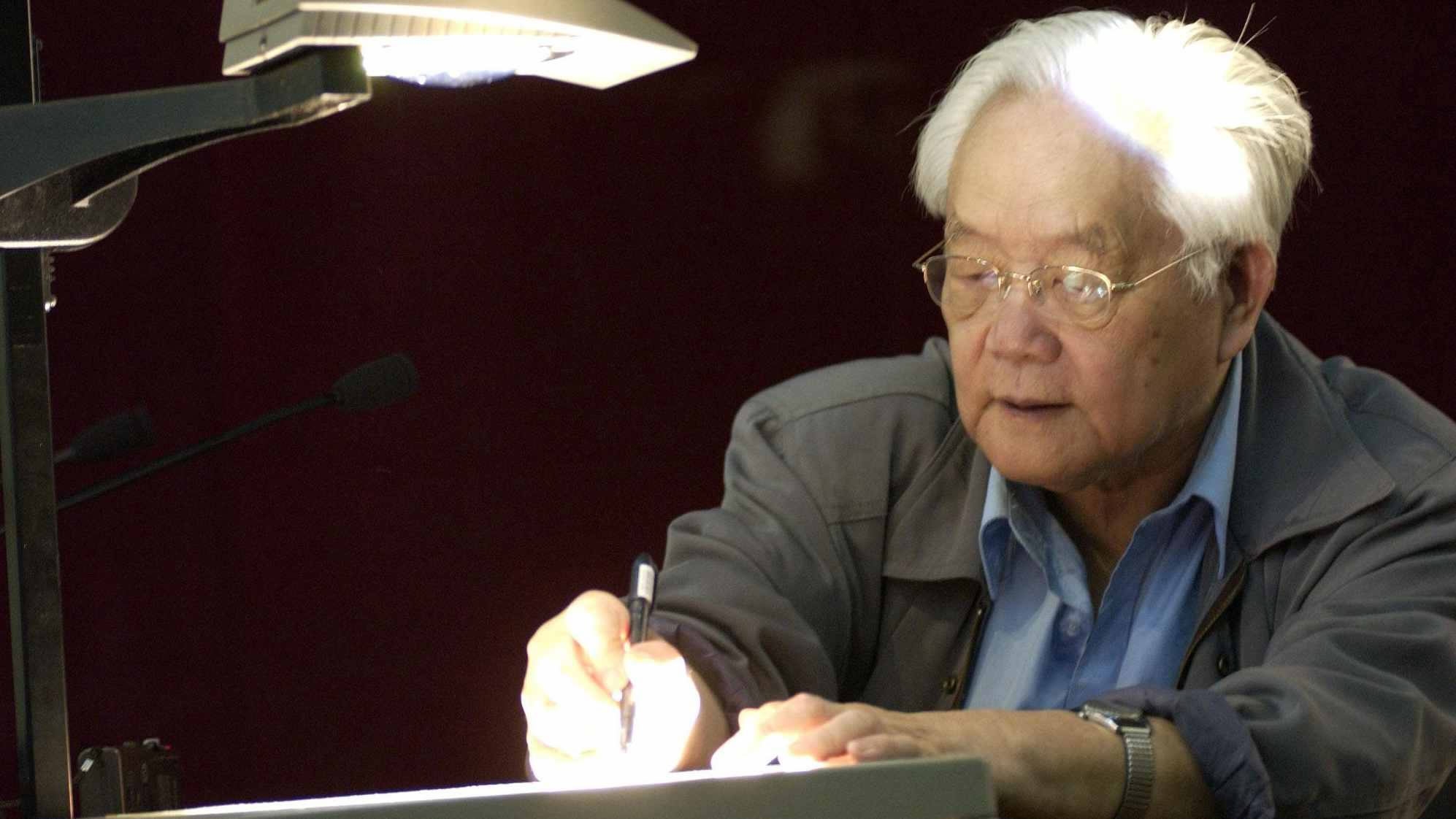
Wu Wenjun, distinguished mathematician, member of the Chinese Academy of Sciences (CAS), and winner of China’s Supreme Scientific and Technological Award winner, died at the age of 98 on Sunday in Beijing, according to the CAS.
Wu was born in Shanghai on May 12, 1919. In 1940, he graduated from Shanghai Jiao Tong University, and received a PhD from the University of Strasbourg, France in 1947.
In 1951, Wu returned to China and served as a math professor at Peking University. He made great contributions to the field of topology by introducing various principles now recognized internationally.
In the field of mathematics mechanization, Wu suggested a computerized method to prove geometrical theorems, known as Wu’s Method in the international community.
He was elected as a member of the CAS in 1957 and as a member of the Third World Academy of Sciences in 1990.
Wu Wenjun was given China’s Supreme Science and Technology Award by the then President Jiang Zemin in 2000, when this highest scientific and technological prize in China began to be awarded.
Rise in WordAds earnings March 2017
WordPress and WordAds have been doing a good job, I must say. In this year (2017), the earnings have increased gradually for my site (view count is approximately constant).
Certainly a great improvement from 2016, where I got a measly $0.70 for 11824 ad impressions in one month.
Keep it up, WordPress!

