I’m sure many secondary school/Junior College students have know some China scholars in your schools scoring results that are seemingly impossible to reach (90+ for H2 Maths etc.) But when asked what’s their secret to scoring so well, they said they just study & memorize the same way any other student would do before exams.
I heard from my seniors that China scholars usually study till 2 am every night, but I don’t buy into that. I think they’re just exaggerated rumors to explain their excellent grades. Some of my friends say that China’s education gave them really solid foundation, such that they can grasp concepts much faster than the rest.
Synopsis: Some have seen philosophy embedded in episodes of The Simpsons; others have detected elements of psychology and religion. Simon Singh, bestselling author of Fermat’s Last Theorem, The Code Book and The Big Bang, instead makes the compelling case that what The Simpsons’ writers are most passionate about is mathematics. He reveals how the writers have drip-fed morsels of number theory into the series over the last twenty-five years; indeed, there are so many mathematical references in The Simpsons, and in its sister program, Futurama, that they could form the basis of an entire university course. Using specific episodes as jumping off points – from ‘Bart the Genius’ to ‘Treehouse of Horror VI’ – Simon Singh brings to life the most intriguing and meaningful mathematical concepts, ranging from pi and the paradox of infinity to the origins of numbers and the most profound outstanding problems that haunt…
Minister for Education Heng Swee Keat has said parents should consider other factors apart from a school’s previous year cut-off point (COP) when helping their P6 children decide on which secondary school to choose.
Minister for Education Heng Swee Keat (Photo: MOE)
SINGAPORE: Minister for Education Heng Swee Keat has said parents should consider other factors apart from a school’s previous year cut-off point (COP) when helping their P6 children decide on which secondary school to choose.
Writing on his Facebook page, Mr Heng said it would be good for parents to have an open talk with their children to know what type of secondary school they are interested in.
…
Mr Heng, however, noted that how well a child does in school depends on how motivated he is.
So he encourages parents to carefully consider the kind of environment that will best motivate their children, and enable them to develop themselves fully in the next four to five years.
Some children, he said, are late developers and the right environment helps them thrive.
Mr Heng urged parents to think of how best they can help their children develop confidence and enjoy the space to discover his talents and passions.
Mr Wu’s O Level Certificate (with A1 for both Maths). Mr Wu sincerely wishes his students to surpass him and achieve their fullest potential.
Despite being in the Gifted Education Programme (GEP), Mr Wu is just an ordinary Singaporean. His secret to academic success is hard work and the Maths Techniques he has discovered by himself while navigating through the education system.
Directions to Bishan Tuition Centre:
A) Via BISHAN MRT (NS17/CC15)
(10 minutes by foot OR 2 bus stops from Junction 8. From J8, please take bus numbers, 52, 54 or 410 from interchange. The centre is just after Catholic High School, just beside Clover By-The-Park condominium.
Other landmarks are: the bus stop which students alight is in front of Blk 283, where Cheers minimart and Prime supermarket are.)
It’s one street away from Raffles Institution Junior College (RIJC), previously known as Raffles Junior College (RJC). It’s also very convenient for students of Catholic Junior College (CJC), Anderson Junior College (AJC), Yishun Junior College (YJC) and Innova Junior College (IJC).
Other secondary schools located near Bishan are Catholic High School, Kuo Chuan Presbyterian Secondary School, and Raffles Institution (Secondary). Schedule •Monday 7pm-9pm •Thursday 7pm-9pm
(Perfect for students who have CCA in the afternoon, or students who want to keep their weekends free.)
Math Olympiad Books are useful for GEP/DSA preparation. It is also useful for the latest type of test called Domain Tests, which is basically a subject test (Math included) for entry into top secondary schools like the Raffles / Hwa Chong family. There are different subject domains (depending on the school), ranging from General domain / Academic domain / CCA domain. A First Step to Mathematical Olympiad Problems (Mathematical Olympiad Series)
The first book is written by Professor Derek Holton. Prof Holton writes a nice column for a Math magazine, which gives out books as prizes to correct solutions.
GEP Math Olympiad Books
If you are searching for GEP Math Olympiad Books to prepare for the GEP Selection Test, you may search for Math Olympiad Books for Elementary School. Note that Math Olympiad Books for IMO (International Mathematics Olympiad) are too difficult even for a gifted 9 year old kid!
Math, Science, Reading Scores Show U.S. Schools Slipping Behind
Posted: December 10, 2010 PRINTER FRIENDLY VERSION: PDF
The United States received a stark wake-up call this week with the release of international test results showing students in other countries are surpassing American students when it comes to math, science and reading. China and Australia outperformed the U.S. in each of the three subject areas tested.
The results of a major international education assessment show that American students are lagging behind many other countries in crucial skills like reading, math and science.
“The United States came in 23rd or 24th in most subjects. We can quibble, or we can face the brutal truth that we’re being out-educated,” said U.S. Education Secretary Arne Duncan.
Test compares U.S. to other countries
The PISA tests how advanced students are in science, math and reading compared to their peers around the world.
The test, known as the Program for International Student Assessment (PISA), directly assesses how prepared teenagers are in math, science and reading compared to their peers in other countries.
The test is translated into each country’s language, and officials from the participating countries are able to review questions before students take the exam to make sure each test is fair and unbiased.
In the U.S., the participating schools and students are randomly selected. On average, about 4,500 students are tested in each of the participating countries.
China and Finland lead the way
Chinese and Finnish students scored highest on the PISA test.
Each PISA subject area is scored on a scale where 500 points is the average. The results announced this week show many countries outperforming the U.S. Here’s a sample:
Math: China 600, Germany 513, United States 487 (31st place)
Reading: China 556, Korea 539, United States 500 (17th place)
Science: China 575, Finland 554, United States 502 (23rd place)
The results of a major international education assessment show that American students are lagging behind many other countries in crucial skills like reading, math and science.
Patient and Dedicated Maths Tutor available for Maths Tuition (NUS Maths Major 1st Class Honours, Dean’s List, RI Alumni)
Past students have gone from fail to top in class! Mr Wu is a good mentor, and elder brother to two medical students (one studying in Monash University, Australia, another studying in NUS)
Despite being in the Gifted Education Programme (GEP), Mr Wu is just an ordinary Singaporean. His secret to academic success is hard work and the Maths Techniques he has discovered by himself while navigating through the education system.
He would like to teach these techniques to students, hence choosing to become a full-time Mathematics tutor. Mr Wu has developed his own methods to check the answer, remember formulas (with understanding), which has helped a lot of students. Many Math questions can be checked easily, leading to the student being 100% confident of his or her answer even before the teacher marks his answer, and reducing the rates of careless mistakes.
Mr Wu’s friendly and humble nature makes him well-liked by students. Many of his students actually request for tuition by themselves! (not the parents) His students also look forward to tuition, instead of dreading tuition.
O Level E Maths and A Maths Tuition starting next year at Bishan, the best location in Central Singapore.
Timings are Monday 7-9pm, Thursday 7-9pm. Perfect for students who have CCA in the afternoon, or students who want to keep their weekends free.
Register with us now by email (mathtuition88@gmail.com). Vacancies will be allocated on a first-come-first-serve basis.
Mr Wu’s O Level Certificate (with A1 for both Maths). Mr Wu sincerely wishes his students to surpass him and achieve their fullest potential.
Despite being in the Gifted Education Programme (GEP), Mr Wu is just an ordinary Singaporean. His secret to academic success is hard work and the Maths Techniques he has discovered by himself while navigating through the education system.
Directions to Bishan Tuition Centre:
A) Via BISHAN MRT (NS17/CC15)
(10 minutes by foot OR 2 bus stops from Junction 8. From J8, please take bus numbers, 52, 54 or 410 from interchange. The centre is just after Catholic High School, just beside Clover By-The-Park condominium.
Other landmarks are: the bus stop which students alight is in front of Blk 283, where Cheers minimart and Prime supermarket are.)
It’s one street away from Raffles Institution Junior College (RIJC), previously known as Raffles Junior College (RJC). It’s also very convenient for students of Catholic Junior College (CJC), Anderson Junior College (AJC), Yishun Junior College (YJC) and Innova Junior College (IJC).
Other secondary schools located near Bishan are Catholic High School, Kuo Chuan Presbyterian Secondary School, and Raffles Institution (Secondary).
Asia-Pacific higher education is becoming a global force, but only some nations in the region have achieved or approached parity with Western Europe and North America.
The truly spectacular success story is from the Confucian zone in East Asia. Japan achieved high participation rates and research-intensive universities in the 1970s: now Hong Kong, Singapore, South Korea, Taiwan and China are following suit. Student numbers and research are growing by leaps and bounds.
…
East Asia embodies a new Confucian model of higher education. The key is the willingness of families to invest in schooling, tertiary education and extra tuition. Households are driving the growth in participation. Private investment is secured less by neoliberal ideology than an older Confucian respect for self-formation via education, within a social hierarchy “harmonised” by fierce competition for university entry.
…
China and Singapore maintain higher public funding. But the jury is still out on the extent to which these systems can foster a spirit of openness, criticism and free-wheeling creativity.
O Level Group Tuition Flyer
O Level E Maths & A Maths
Tuition at Bishan
碧山数学补习
Location: Block 230 Bishan Street 23 #B1-35 S(570230)
Schedule:
• Monday 7pm-9pm (E Maths)
• Thursday 7pm-9pm (A Maths)
Website: https://mathtuition88.com/group-tuition/
Tutor: Mr Wu
(from RI GEP, NUS Maths 1st Class Honours, Dean’s List)
Class size is limited to 8 students only! (Small Group Tuition)
Even as an MIT student, you can’t study all the time. In fact, we learn better by switching gears frequently. Here are some tips for breaking up your study time effectively.
Approach the same material in several different ways. This increases learning by using different brain pathways. Read a textbook section, aloud if possible, then review your lecture notes on the same concept. Write a one-sentence summary of a chapter or a set of questions to test your understanding. Then move on to the next textbook section.
Study in blocks of time. Generally, studying in one-hour blocks is most effective (50 minutes of study with a ten-minute break). Shorter periods can be fine for studying notes and memorizing materials, but longer periods are needed for problem-solving tasks, psets, and writing papers.
Break down large projects (papers, psets, research) into smaller tasks. The Assignment Timeline can help with this. Check off each task on your to-do list as you finish it, then take a well-earned break.
Plan regular breaks. When building a schedule for the term, srategically add several regular breaks between classes and in the evenings. Take 20-30 minutes; never work through these scheduled breaks. Our minds need an occasional rest in order to stay alert and productive, and you can look forward to a reward as you study. If your living group has a 10 pm study break, or you have a circle of friends that likes to go out for ice cream together at 7 on Wednesdays, put that on your schedule. These small, brief gatherings will become more welcome as the term intensifies.
Get up and move.Research shows that sitting for more than three hours a day can shorten your life by up to two years. At least every hour, stand up, stretch, do some yoga or jumping jacks, or take a walk, and breathe deeply.
Schedule meals to relax and unwind with friends; don’t just inhale food while tooling.
Turn off your phone while studying and on when you take a break. You may think you are multitasking when you text someone while reading or doing problems, but often the reverse is true. An assignment done while texting or following tweets will likely take two or three times longer and not turn out as well.
If you tend to lose track of time while using your phone or computer, schedule fixed times for Facebook and other fun things, and set an alarm to remind you of the end of that period.
Quote: “Math, art, English, science, history, sports, music, plumbing, dancing in the rain all have one thing in common: to do it well you need to practice, practice, practice.”
Math, art, English, science, history, sports, music, plumbing, dancing in the rain all have one thing in common: to do it well you need to practice, practice, practice.
Most people think that ‘cramming’ and ‘nap osmosis’ are the best ways to study. Just cause you sit at Starbucks or the library or go to tutoring for x hours a day does not equal success. Here are some tips:
Here is a website from MIT’s Center for Excellence on how best to study: http://web.mit.edu/uaap/learning/study/breaks.html. MIT, they know what they are talking about. If you don’t know, MIT is one of the top universities on Earth- perhaps even in the universe…
“How many of our leaders and top officers who say that every school is a good school put their children in ordinary schools near their home? (Only) until they actually do so are parents going to buy (it).”
During the first panel discussion, which was attended by about 200 participants, several educators expressed hope that parents would recognise the efforts of all schools to bring out the best in students.
The neighbourhood school’s vice principal’s startling remark drew applause from those who attended the event.
A 37-year-old mother, who has a primary-school-going child and another child attending pre-school, who did not want to be named, told Yahoo Singapore she agrees with the vice-principal’s comments.
“Look at the ministers, most of them are from good schools, like SJI and Hwa Chong,” she said.
Mr Wu’s O Level Certificate (with A1 for both Maths). Mr Wu sincerely wishes his students to surpass him and achieve their fullest potential.
Despite being in the Gifted Education Programme (GEP), Mr Wu is just an ordinary Singaporean. His secret to academic success is hard work and the Maths Techniques he has discovered by himself while navigating through the education system.
Directions to Bishan Tuition Centre:
A) Via BISHAN MRT (NS17/CC15)
(10 minutes by foot OR 2 bus stops from Junction 8. From J8, please take bus numbers, 52, 54 or 410 from interchange. The centre is just after Catholic High School, just beside Clover By-The-Park condominium.
Other landmarks are: the bus stop which students alight is in front of Blk 283, where Cheers minimart and Prime supermarket are.)
It’s one street away from Raffles Institution Junior College (RIJC), previously known as Raffles Junior College (RJC). It’s also very convenient for students of Catholic Junior College (CJC), Anderson Junior College (AJC), Yishun Junior College (YJC) and Innova Junior College (IJC).
Other secondary schools located near Bishan are Catholic High School, Kuo Chuan Presbyterian Secondary School, and Raffles Institution (Secondary).
This book is the best introductory book on Topology, an upper undergraduate/graduate course taken in university. I have written a short book review on it.
Excerpt:
Book Review: Topology
Book’s Author: James R. Munkres
Title: Topology
Prentice Hall, Second Edition, 2000
It is often said that one must not judge a book by its cover. The book with a plain cover, simply titled “Topology”, is truly a rare gem and in a class of its own among Topology books.
One striking aspect of the book is that it is almost entirely self-contained. As stated in the preface, there are no formal subject matter prerequisites for studying most of the book. The author begins with a chapter on Set Theory and Logic which covers necessary concepts like DeMorgan’s laws, Countable and Uncountable Sets, and the Axiom of Choice.
The first part of the book is on General Topology. The second part of the book is on Algebraic Topology. The book covers Topological Spaces and Continuous Functions, Connectedness and Compactness, and Separation Axioms. Some other material in the book include the Tychonoff Theorem, Metrization Theorems and Paracompactness, Complete Metric Spaces and Function Spaces, and Baire Spaces and Dimension Theory.
The book defines connectedness as follows: The space is said to be connected if there does not exist a separation of . (A separation of is defined to be a pair , of disjoint nonempty open subsets of whose union is .) Other sources may define connectedness by, is connected if continuous .
Also, the proof of Urysohn’s Lemma in the book was presented slightly differently from other books as they did not use dyadic rationals to index the family of open sets. Rather, the book lets be the set of all rational numbers in the interval , and since is countable, one can use induction to define the open sets . In hindsight, the dyadic rationals approach in other sources may be more explicit and clearer.
An interesting new concept mentioned in the book is that of locally connectedness (not to be confused with locally path connectedness). A space is said to be locally connected at if for every neighborhood of , there is a connected neighborhood of contained in . If is locally connected at each of its points, it is said simply to be locally connected. For example, the subspace of is not connected, but it is locally connected. The topologists’ sine curve is connected but not locally connected.
In general, the content of the book is comprehensive. The other book, “Essential Topology”, did not cover some topics like the Urysohn Lemma, regular spaces and normal spaces.
Approach
The author’s approach is generally to give a short motivation of the concept, followed by definitions and then theorems and proofs. Examples are interspersed in between the text. The motivation tends to be a little bit too short though. For instance, in other books there is some motivation of how balls can determine the metric in a metric space, leading to the concepts of “candidate balls” . This useful concept is not found in the book Topology, nor the other book Essential Topology.
One interesting explanation of the terminology “finer” and “coarser” is found in the book. The idea is that a topological space is like “a truckload full of gravel”‘ — the pebbles and all unions of collections of pebbles being the open sets. If now we smash the pebbles into smaller ones, the collection of open sets has been enlarged, and the topology, like the gravel, is said to have been made finer by the operation.
Another point to note is that the book does not use Category Theory. Personally, I would prefer the Category approach, since it can make proofs neater, and it provides additional insight to the nature of the theorem. We also note that the other book “Essential Topology”, also does not explicitly use Category Theory. But upon closer examination, the book has expressed commutative diagrams in words, which is not as clear as in diagram form.
Organization
The organization of the book is similar to most other books, except that it covers Connectedness and Compactness before the Separation Axioms. The concept of Hausdorff spaces, however, is covered way earlier, immediately after the discussion of closure and interior of a set. This enables theorems like “Every compact subspace of a Hausdorff space is closed” to be proved in the Compactness chapter.
Style
The author’s style is to combine rigor in proofs and definitions, with intuitive ideas in the examples and commentary. This makes it both a good textbook to learn from, and a good reference for proofs too.
This informal style in the commentary makes for a especially good read. For instance, a mathematical riddle is mentioned: “How is a set different from a door?” (For interested readers, the answer can be found on page 93.)
Also, there are many figures in the book, 84 sets of figures to be precise. This is rather good for a math book, and I would recommend the book to visual learners.
However, to learn Topology from this book alone may be difficult. Even though there are exercises to practice, there are no solutions and very few hints. Also, the book uses the terminology “limit point”, which can be confusing.
The book has surprisingly few typographical errors. While reading through the book, I only spotted a trivial one on page 107, where a function written as “” should be “” instead. Upon consulting an errata list, there was only one page of errors.
Conclusion
In conclusion, despite some shortcomings of the book, Topology is a great book, and if there was one Topology book that I could bring to a desert island, it would be this one.
Recently, I read this article in The Atlantic about the myth of being innately “bad at math,” and how performing well in math is generally a result of hard work, not innate skill. By all accounts, I should have known this, but it only took that one semester to break down years of confidence in my aptitude. In the article, the author notes several patterns we see that reinforce this myth. The one that resonated most with me was as follows:
“The well-prepared kids, not realizing that the B students were simply unprepared, assume that they are ‘math people,’ and work hard in the future, cementing their advantage.”
And the B students (or in my case D student), well, they assume it’s about skill level and from that point forward it’s a self-fulfilling prophecy.
My mentor convinced me to apply to business school, and when he asked why I wouldn’t apply to Wharton, I said, “too quantitative.” I was scared. But he convinced me to apply, and after a crash course in Calculus, I learned that if I worked hard enough, indeed I could have success… even when my classmates were so-called quant jocks.
For me, it worked out, but for millions of kids in our education system, the ending isn’t so happy. Instead, parents determine at a very young age that a child has or does not have math skills. And, I would argue, they — we — do the same with reading. We decide that it’s one or the other, left or right brain. Instead, we can acknowledge our kids’ struggles with a particular subject, while continuing to encourage and remind them that a consistent effort can make a tremendous difference, but it takes perseverance.
What do I wish my teacher had done? I wish he had told me that I could do everything my classmates were doing, but I lacked the preparation beforeI ever stepped foot in his classroom. If only he had instilled that confidence in me, that simple knowing that I could do better, who knows what else I might have tackled coming out of high school.
Here are some useful study tips for Mathematics. The key to acing Maths is to understand that practice is key for Mathematics!
Sincerely hope these tips help.
Please do not study Maths like studying History, Literature or Geography, the study method for Maths is totally different and opposite from studying Humanities. Reading a Maths textbook without practicing is not very helpful at all.
Once a student understands the basic theory of a certain topic (usually just one or two pages of information), he or she can move on to practicing actual questions immediately. While practicing, the student will then learn more and more knowledge and question-answering strategies for that Maths topic.
Even if you already know how to do a question, it is useful to practice it to improve on speed and accuracy.
The study strategy for Maths and Physicsare kind of similar, hence usually you will find that students who are good in Maths will also be good in Physics, and vice versa.
Students from China usually do very well in Maths exams because they understand the strategy for studying Maths (which works very well up till JC level), namely a lot of practice with understanding. The strategy is called “题海战术” in Chinese, which means “immersing oneself in a sea of questions”.
Source for diagram below: Email from JobsCentral BrightMinds
For high school math, inborn talent is much less important than hard work, preparation and self-confidence.
How do we know this? First of all, both of us have taught math for many years — as professors, teaching assistants and private tutors. Again and again, we have seen the following pattern repeat itself:
Different kids with different levels of preparation come into a math class. Some of these kids have parents who have drilled them on math from a young age, while others never had that kind of parental input.
On the first few tests, the well-prepared kids get perfect scores, while the unprepared kids get only what they could figure out by winging it — maybe 80 or 85 percent, a solid B.
The unprepared kids, not realizing that the top scorers were well-prepared, assume that genetic ability was what determined the performance differences. Deciding that they “just aren’t math people,” they don’t try hard in future classes and fall further behind.
The well-prepared kids, not realizing that the B students were simply unprepared, assume that they are “math people,” and work hard in the future, cementing their advantage.
Thus, people’s belief that math ability can’t change becomes a self-fulfilling prophecy.
…
So why do we focus on math? For one thing, math skills are increasingly important for getting good jobs these days— so believing you can’t learn math is especially self-destructive. But we also believe that math is the area where America’s “fallacy of inborn ability” is the most entrenched. Math is the great mental bogeyman of an unconfident America. If we can convince you that anyone can learn math, it should be a short step to convincing you that you can learn just about anything, if you work hard enough.
Is America more susceptible than other nations to the dangerous idea of genetic math ability? Here our evidence is only anecdotal, but we suspect that this is the case. While American fourth- and eighth-graders score quite well in international math comparisons — beating countries like Germany, the U.K. and Sweden — our high-schoolers underperform those countries by a wide margin. This suggests that Americans’ native ability is just as good as anyone’s, but that we fail to capitalize on that ability through hard work.
In response to the lackluster high school math performance, some influential voices in American education policy have suggested simply teaching less math — for example, Andrew Hacker has called for algebra to no longer be a requirement. The subtext, of course, is that large numbers of American kids are simply not born with the ability to solve for x.
We believe that this approach is disastrous and wrong. First of all, it leaves many Americans ill-prepared to compete in a global marketplace with hardworking foreigners. But even more important, it may contribute to inequality. A great deal of research has shown that technical skills in areas like software are increasingly making the difference between America’s upper middle class and its working class. While we don’t think education is a cure-all for inequality, we definitely believe that in an increasingly automated workplace, Americans who give up on math are selling themselves short.
Too many Americans go through life terrified of equations and mathematical symbols. What many of them are afraid of is “proving” themselves to be genetically inferior by failing to instantly comprehend the equations (when, of course, in reality, even a math professor would have to read closely). So they recoil from anything that looks like math, protesting: “I’m not a math person.” And so they exclude themselves from quite a few lucrative career opportunities. This has to stop.
The secret to being good at Maths (or any other subject) is to like it and enjoy it. This would make working hard and practicing Maths easier and more efficient. 2 hours can easily fly past while doing Maths if one is interested in it.
Most people think of mathematicians as solitary, working away in isolation. And, it’s true, many of them do. But Paul Erdos never followed the usual path. At the age of four, he could ask you when you were born and then calculate the number of seconds you had been alive in his head. But he didn’t learn to butter his own bread until he turned twenty. Instead, he traveled around the world, from one mathematician to the next, collaborating on an astonishing number of publications. With a simple, lyrical text and richly layered illustrations, this is a beautiful introduction to the world of math and a fascinating look at the unique character traits that made “Uncle Paul” a great man.
‘Above all, it is a cultural thing.” Professor Lianghuo Fan is reflecting on the differences he has noticed between maths education in China and Singapore, where he lived and taught for 40 years, and in Britain, where he is now based. “In China, all parents know that maths is the number one subject in schools, and they expect that in a modern society everyone must be comfortable with maths, even if that means they have to work hard at it.“That attitude is passed on to their children. But here in Britain, you can feel students’ attitude about mathematics is different. They feel all right if they say they don’t like mathematics.”
Professor Fan is not alone in highlighting this national phobia of ours about maths. The government has this week shown itself determined to tackle the problem head on with the unveiling of a new “back-to-basics” primary school maths curriculum, with a renewed emphasis on times-tables, mental arithmetic, fractions and rote learning.
Most people over 40 will see the proposals as a return to the classroom practice of their childhood – but in its introductory remarks the Department for Education claimed inspiration from Asian model that Professor Fan knows so well: “I never heard a child in China or Singapore say that they don’t like maths’,” he stresses, “without a sense of embarrassment.”
We are sitting in a café near Southampton University – where 50-year-old Professor Fan has been head of the Mathematics and Science Education Research Centre since 2010 – as we try to decide if anything lies behind the popular stereotype that Asian children are “naturally” better at maths than those in the West. It is, for example, in the core storyline of Safe, the recent Hollywood blockbuster, starring Jason Statham. An 11-year-old girl, Mei (played by Chinese-born actress Catherine Chan), is a maths prodigy who can decode number sequences at a glance – and therefore has to be protected from the baddies.
Additional Mathematics is kind of important, if your child is intending to pursue any studies related to Mathematics in university. Business, Accounting, Economics, and of course Engineering and Physics are examples of courses requiring some Mathematics.
AIMS
The syllabus is intended to prepare students adequately for A Level H2 Mathematics and
H3 Mathematics, where a strong foundation in algebraic manipulation skills and mathematical reasoning skills are required.
The O Level Additional Mathematics syllabus assumes knowledge of O Level Mathematics.
The general aims of the mathematics syllabuses are to enable students to:
• acquire the necessary mathematical concepts and skills for continuous learning in mathematics and related disciplines, and for applications to the real world
• develop the necessary process skills for the acquisition and application of mathematical concepts and skills
• develop the mathematical thinking and problem solving skills and apply these skills to formulate and solve problems
• recognise and use connections among mathematical ideas, and between mathematics and other disciplines
• develop positive attitudes towards mathematics
• make effective use of a variety of mathematical tools (including information and
communication technology tools) in the learning and application of mathematics
• produce imaginative and creative work arising from mathematical ideas
• develop the abilities to reason logically, to communicate mathematically, and to learn cooperatively and independently
Hi, I am an ex-GEP student, who wish to share some tips about what books to read to prepare for GEP, or even for kids who are already in GEP. I strongly believe that IQ is not static, i.e. it is possible to increase IQ (to a certain extent of course) by reading books. (The Einstein Factor: A Proven New Method for Increasing Your Intelligence contains research that shows that IQ can be increased.)
The GEP test has 3 main sections: Logic, Math, English. This article will introduce books suitable for preparing for these 3 main sections.
Kids nowadays love electronic devices. However iPhone / iPad have too many games and thus are not ideal for educational purposes. The ideal electronic device is Amazon Kindle Ebook reader. Read more with Amazon!
WWW.QOO10.SG
I used to read a book by Mensa when I was a kid (just for interest, not for preparing for any tests), and found it to be interesting and challenging. The exact book is probably out of print already, but here are some bestsellers by Mensa on Amazon. Hope the recommendations are helpful! This list is not exhaustive, you may purchase other books you find on Amazon, they are equally likely to be as helpful.
GEP Logic Books
(Click on the image links to go to the Amazon.com page for more details)
These books are really helpful for the “Logic” part of the GEP selection test, which is not taught anywhere in the MOE syllabus and hence one of the most challenging to prepare for.
GEP Logic Sample Question
The above Logic Books are highly recommended by Amazon (4/5 stars and above)!
The following Puzzle Adventure books are also very useful for developing logical thinking and also English. Not to mention they are really fun to read for children. I have personally read the “2nd Puzzle Adventure Omnibus” book many times and enjoyed it very much. These kinds of books train both Logic and English skills.
Another good choice of books are encyclopedias. Although Encyclopedias like Britannica are almost extinct thanks to the internet, it is good to have a children’s Encyclopedia like The New Children’s Encyclopedia to have an all-round knowledge of the world and science.
Finally, you can check out the list of Recommended Math Books, which contains books useful for Math students.
Tips on How to Get Into GEP:
Based on my experience as a student, getting into GEP requires knowing and possessing skills more advanced than the age group. I.e., at the age of 9 (Primary 3), the student who gets into GEP is probably already at the level of Primary 4 and above in terms of Math and English. True genius is neither necessary nor sufficient to get into GEP, and it is not true that GEP students are smarter than others. There is a famous IMO World Number 1 in Singapore who wasn’t from the GEP. IMO (International Math Olympiad) is definitely harder than GEP Math. One can read this book 104 Number Theory Problems: From the Training of the USA IMO Team to get an idea of the IMO (International Math Olympiad).
To be honest, it is probably currently harder to get into GEP now than in the past (1990s). During my time, a Primary 6 student who knows the Gauss trick for adding a sum of an arithmetic progression (1+2+3+…+99+100) is really at the top of his/her cohort. During the 2000 PSLE, this question came out and few people could solve it. Nowadays (2015), an average Primary 3 student would know and be familiar with this technique. Hence the bar is set much higher nowadays. Math Olympiad is the way to go to get one’s Math skills honed at the highest level.
Singapore (and Asian in general) students are very academically smart. Even the average Singapore student is likely to be 2 to 3 years ahead of their American/UK/Australian counterparts in terms of Math and Science. And to get in the GEP, it is common sense that one has to perform better than the average Singapore student in the GEP selection test at least. Hence, it is not an easy task. However, one weakness of Singaporean students is that they are not a big fan of reading, to the extent that even Borders bookstore (and others) can close down in Singapore. Hence, if your child even read a few extra books you have an advantage over the rest. Check out this book by Moshe Kai Cavelin, a truly gifted kid who entered college at 8.
Ideally, only students who are genuinely interested in learning should be prepped for GEP. As the Chinese proverb 拔苗助长 tells us, there is no point pushing a child artificially beyond what he/she wishes to learn. But for those children who have curiosity to learn, books like Match Wits With Mensa: The Complete Quiz Book will be a good brainteaser for them. If one is looking for books to help prepare for GEP, the average assessment books sold in bookstores would not be of much help since they are catered to the mass market, not gifted children.
Amazon actually has a long list of books for gifted children and their parents: Books for Gifted Children. Gifted children are like raw unpolished diamonds. As the Chinese proverb 玉不琢,不成器 goes, even jade needs to be polished and cut before it can become a piece of jewellery, hence even gifted children need guidance to unlock their full potential. There is no single book that after reading it can get into the GEP. The GEP tests for a wide range of knowledge in the Math and English subjects and hence students need to read widely to acquire a broad spectrum of knowledge.
The above 3 GEP English Literature books are fun to read, and contain a lot of useful and advanced vocabulary and idioms. It is a good idea to read these books to get a hang of what GEP English is about (very different from normal mainstream English). One important technique to improve English by reading is to highlight any new words, and then record it in a notebook, followed by copying down the dictionary definition. From time to time, revise the notebook to refresh your memory. Soon, as the notebook grows, so will your vocabulary.
Remember to use the above technique of using the dictionary and recording in a notebook; simply skimming and flipping the pages is not likely to improve English! As Singapore follows British English, it is important to get a British English dictionary like Paperback Oxford English Dictionary. Try not to use Webster / Google as those are American English, which can be quite different.
Gifted students have the potential to learn material earlier and faster, to handle more complexity and abstraction, and to solve complex problems better. This potential, however, needs stimulating experiences from home and school or it will not unfold. These books are designed to help teachers provide the stimulating curricula that will nurture this potential in school. The units presented in this series are based on research into how these students actually think differently from their peers and how they use their learning styles and potential not merely to develop intellectual expertise, but to move beyond expertise to the production of new ideas.
The Math book includes units that ask students to develop a financial portfolio that includes high- and low-risk stocks, options and margins, AAA and junk bonds, mutual funds, and money markets; use math, science, engineering, technology, and art to design and build a miniature golf course; develop games based on probability; and run a real-life small business.
Grades 6–8
GEP Psychology Book
Mindset is the key to success. I highly recommend this book Mindset: The New Psychology of Success to students and parents. A psychologist has written this book, and it has many new insights. For instance, praising your child “intelligence and ability doesn’t foster self-esteem and lead to accomplishment, but may actually jeopardize success.” This is new psychological research supported by evidence. The correct way is actually to praise the child’s effort. Find out more tips and stories by reading this book.
Rubik’s Cube (Dayan Zhanchi)
For parents, buying a Rubik’s cube for your child is a great investment. Playing with the Rubik’s cube is a major intellectual challenge (it has 43 quintillion permutations, only 1 of which is correct), which will develop the child’s brain for logical thinking, which is especially useful for Math and Science. Most importantly, it is fun!
Special note for buying Dayan Zhanchi from Singapore:
If you are buying the Dayan Zhanchi from Singapore, at first it seems like the Dayan ZhanChi does not ship to Singapore. It actually does! We just have to choose the correct seller, Cube Puzl, which ships to Singapore.
Even though the GEP Screening/Selection Test does not test science, it is a good idea to get acquainted with science from a young age since the Sciences (Chemistry, Physics, Biology) form the bulk of the Singapore education system from upper primary school onwards till university. For example in Junior College, 3 out of 4 subjects will be sciences, for those in the Science Stream.
SINGAPORE: Education Minister Heng Swee Keat has said that two important shifts must be made in the education system in order to prepare the young for the future.
In a Facebook post on Friday evening, Mr Heng said firstly, the education system must help the young acquire deep skills and integrate theory with practice through applied learning.
Secondly, the system should make it easier for students to continue learning in their areas of strength and interest, and encourage lifelong learning.
Mr Heng said the education system needs to better link the interest and strengths of students to jobs of the future.
He explained that when students develop a deep interest, when their imagination is captured, they can go on to do wonderful things.
Math is logical, functional and just … awesome. Mathemagician Arthur Benjamin explores hidden properties of that weird and wonderful set of numbers, the Fibonacci series. (And reminds you that mathematics can be inspiring, too!)
Look out for this movie on Indian math genius Ramanujan starring Dev Patel from “Slumdog Millionaire”!
Ramanujan was a self-taught maths genius from India who had little to no formal education. Yet he was able to come out with stunning formulas such as this approximation for Pi:
(Reuters) – A new Hollywood film starring Dev Patel as Srinivasa Ramanujan will put the spotlight on the Indian math genius best known for his work on the theory of prime numbers.
Ramanujan, who died in 1920, was considered one of the brightest minds in mathematics, despite his lack of a formal education.
Patel, who caught Hollywood’s eye in 2008’s Oscar-winning film “Slumdog Millionaire”, has been cast as the lead. Filming begins in September with a British actor playing G.H. Hardy, the mathematician who recognized Ramanujan’s talent and brought him to England in 1914.
“The subject matter of Ramanujan is an Indian story but it is the story of the relationship of India and the West,” the film’s co-producer Edward Pressman told Reuters over the phone.
Researchers found that higher scores were related to greater sleep quality, especially less awakenings rather than the actual length of time asleep.
The team of researchers, led by Dr Jennifer Cousins at the University of Pittsburgh, studied 56 adolescents and compared their sleep patterns with their exam grades.
They found those that enjoyed deeper, less disturbed, sleep were the most successful, especially in maths but also in English and history.
Those who fell asleep and awoke easily – especially at weekends – were found to have better exam results.
Higher maths scores were related to less night awakenings, less time spent in bed, higher sleep efficiency and great sleep quality.
Try out this simple and effective time management and study strategy, named the Pomodoro Technique.
It helps to break up big tasks into smaller tasks, so that we don’t feel so overwhelmed by the task. Sometimes, students feel overwhelmed by the huge amount of material to study, so they don’t feel like starting. Using this method may be effective for beating procrastination and increasing efficiency.
Here is a Math Formula trick to have fun with your friends, to guess their Month of Birthdaygiven their NRIC, within two tries.
(only works for Singapore citizens born after 1970)
The formula is: take the 3rd and 4th digit of the NRIC, put them together, divide by 10, and multiply by 3.
For an example, if a person’s NRIC is S8804xxxx, we take 04, divide by 10 to get 0.4
Then, 0.4 multiplied by 3 gives 1.2
Then, guess that the person is either born in January (round down 1.2 to 1) or February (round up 1.2 to 2). There is a high chance that you are right! Usually, round up for the first six months (Jan to Jun), and round down for the last six months (Jul to Dec).
This formula was developed and tested by me. There are some exceptions to the rule, but generally it works fine especially for people born from 1980 to 2000.
Hope you have fun with maths, and impress your friends!
New Delhi: Google is celebrating the 84th birth anniversary of mathematical genius Shakuntala Devi, nicknamed “human computer” for her ability to make complex mental calculations, with a doodle on its India home page.
The doodle salutes Shakuntala Devi’s amazing calculating abilities with a doodle that resembles a calculator.
Shakuntala Devi found a slot in the Guinness Book of World Record for her outstanding ability and wrote numerous books like ‘Fun with Numbers’, ‘Astrology for You’, ‘Puzzles to Puzzle You’, and ‘Mathablit’. She had the ability to tell the day of the week of any given date in the last century in a jiffy. Coming from a humble family, Shakuntala Devi’s father was a circus performer who did trapeze, tightrope and cannonball shows.
Mathematician Professor Terry Speed wins PM’s science prize
Professor Terry Speed, Head of Bioinformatics at the Walter and Eliza Hall Institute of Medical Research, Melbourne, who has been awarded the Prime Minister’s Award for Science. Picture: Ray Strange Source: News Limited
The man who last night won the Prime Minister’s Science Prize agrees maths is “not sexy” but it saw him give evidence at the O.J Simpson trial, helped find diamonds and now is determining the cause of cancer.
Mathematician Professor Terry Speed was called as an expert witness for O.J. Simpson in the famous 1995 murder trial where he helped explain to the jury how statistics underpinning DNA worked.
Simpson was acquitted after a trial that lasted more than eight months because his lawyers were able to persuade the jurors that there was reasonable doubt about the DNA evidence.
Forty five years ago Professor Speed testified at the trial of Ronald Ryan, the last man to be hanged in Australia.
He had to explain the geometry of the trajectory of bullets in the case.
In an extensive career the 70 year old statistics whiz has helped determine the size and distribution of Argyle diamonds and looked at kangaroo genomics.
Right now he is working at the cutting edge of medical science helping scientists develop statistical tools to understand the huge volumes of information coming from the human genome.
Work he’s done for a company on a thyroid cancer diagnostic test could help prevent thousands of people from having their thyroids removed unnecessarily.
At present some thyroid tests are inconclusive and tumours are removed even though they turn out to be benign leaving the patient taking hormone replacement therapy for the rest of their lives.
Some of his work is in developing tools that find which genes or gene characteristics may cause cancer if they are switched on or off.
Professor Speed says part of the reason so many people don’t want to study maths and science is they don’t see its potential.
He’s spent his life applying mathematical theories to crime, farming, mining and medical science.
As you may already know, Danica McKellar, the actress and UCLA mathematics alumnus, has recently launched her book “Math Doesn’t Suck“, which is aimed at pre-teenage girls and is a friendly introduction to middle-school mathematics, such as the arithmetic of fractions. The book has received quite a bit of publicity, most of it rather favourable, and is selling quite well; at one point, it even made the Amazon top 20 bestseller list, which is a remarkable achievement for a mathematics book. (The current Amazon rank can be viewed in the product details of the Amazon page for this book.)
I’m very happy that the book is successful for a number of reasons. Firstly, I got to know Danica for a few months (she took my Introduction to Topology class way back in 1997, and in fact was the second-best student there; the class web…
Thomas’ Calculus is the recommended textbook to learn Undergraduate Calculus (necessary for Engineering, Physics and many science majors). It is used by NUS and can be bought at the Coop.
Full of pictures, and many exercises, this book would be a good book to read for anyone looking to learn Calculus in advance.
Note: Additional Mathematics is very helpful to take H2 Mathematics in JC!
Curriculum
There are three mathematics syllabi, namely H1 Mathematics, H2 Mathematics and H3 Mathematics.
Students who offered Additional Mathematics and passed the subject at the GCE ‘O’ level examination may take up H2 Mathematics. Students posted to the Arts stream and did not offer Additional Mathematics at the GCE ‘O’ level examination are not allowed to take H2 Mathematics but may consider taking up H1 Mathematics. However, students who are posted to the Science stream but did not offer Additional Mathematics at the GCE ‘O’ level examination are advised to offer H2 Mathematics if they intend to pursue Science or Engineering courses at a university. Students who wish to offer H3 Mathematics must offer H2 Mathematics as well.
The use of a Graphing Calculator (GC) without a computer algebra system is expected for these Mathematics syllabi. The examination papers will be set with the assumption that candidates will have access to GCs.
H1 Mathematics
H1 Mathematics provides a foundation in mathematics for students who intend to enrol in university courses such as business, economics and social sciences. The topics covered include Graphs, Calculus and Statistics. A major focus of the syllabus would be the understanding and application of basic concepts and techniques of statistics. This would equip students with the skills to analyse and interpret data, and to make informed decisions.
H2 Mathematics
H2 Mathematics prepares students adequately for university courses including mathematics, physics and engineering, where more mathematics content is required. The topics covered are Functions and Graphs, Sequences and Series, Vectors, Complex Numbers, Calculus, Permutations and Combinations, Probability, Probability Distributions, Sampling, Hypothesis Testing, and Correlation and Regression. Students would learn to analyse, formulate and solve different kinds of problems. They would also learn to work with data and perform statistical analysis.
H3 Mathematics
H3 Mathematics offers students who have a strong aptitude for and are passionate about mathematics a chance to further develop their mathematical modeling and reasoning skills. Opportunities abound for students to explore various theorems, and to read and write mathematical proofs. Students would learn the process of mathematical modeling for real-world problems, which involves making informed assumptions, validation and prediction. Students may choose from the three H3 Mathematics modules, namely the MOE-UCLES module, the NTU Numbers and Matrices module and the NUS Linear Algebra module.
The MOE-UCLES module is conducted by tutors from our Mathematics Department. The three main topics to be investigated are Graph Theory, Combinatorics and Differential Equations. This module would be mounted only if there’s demand.
The NTU Numbers and Matrices module is conducted by lecturers from the Nanyang Technological University (NTU). Students would have to travel to Hwa Chong Institution to attend this module.
The NUS Linear Algebra module is conducted by lecturers at the National University of Singapore (NUS). Students who offer this module would have to attend lessons together with the undergraduates at the university.
Doctor and Lawyer are the top two favourite careers in Singapore. Do doctors need to use Maths? Read the below to find out.
Even if Maths is not directly needed, the logical thinking skills learnt in Mathematics will definitely be of great use. 🙂
I am not a medical doctor, but my two younger siblings are medical students, and the Mathematical knowledge and thinking skills have definitely helped them in their medical studies.
Functional numeracy is as essential to an aspiring medical professional as functional literacy. As a physician, perhaps the most important mathematical skills you will need are:
1. Basic mathematical knowledge sufficient to calculate drug doses, concentrations, etc.
2. An understanding of the core statistical concepts most commonly represented in the medical literature.
3. Knowledge of algebra to understand calculations of acid–base status, etc.
4. Ability to appreciate whether or not results are mathematically plausible. (Nusbaum, 2006)
The careful logical reasoning that is necessary for the study of mathematics is an essential element of clinical reasoning. Although you do not need higher mathematics to get through medical school, you will need the ability to manipulate numbers, including fractions, ratios, powers of 10 and logarithms. You will also need a basic understanding of probability, graphs and simple algebra. You will need to rearrange equations and convert between units of measure.
It’s often unclear from your interactions with a doctor how much math she is using in order to treat you. While not all doctors have to use math as directly and frequently as engineers do, all of them must understand the complex mathematical equations that inform different medical treatments in order to administer treatments correctly.
Dosages and Half-Life
One of the most common ways in which doctors use mathematics is in the determination of medicine prescriptions and dosages. Doctors not only have to use basic arithmetic to calculate what dosage of a particular drug will be effective for your height and body type over a specific period of time, they will also have to be aware of the medicine’s cycle through the body and how the dosage of one drug compares with the dosage of a similar type of drug. Sometimes doctors have to use calculus to figure out the right dosage of a drug. Calculus is the study of how changing variables affect a system. In the human body, the kidney processes medicine. However, people’s kidneys are at varying levels of health. Doctors can designate the kidney as a changing function in a calculus equation known as the Cockroft-Gault equation. This equation uses the level of creatine in a patient’s blood to find the level of the kidney’s functioning, which allows the doctor to determine the appropriate dose.
Cancer Treatment
When a doctor administers radiation therapy to a cancer patient, the radiation beams have to cross each other at specific angles, so that they harm the cancerous tumor without harming the surrounding healthy tissue. The precise numbers for these angles must be calculated mathematically. Cancer tends to respond to any drug by mutating so that its DNA is no longer affected by that drug. Oncologists and medical scientists have decided to target cancerous tumors with many different kinds of drugs at once so that the cancer is unable to respond adequately. They use complex mathematical models that plot the speed and timing of the cancer’s different mutations to figure out what combinations and dosages of different drugs should be used.
Medical Images and Tests
Doctors in medical imaging use two-dimensional images of a patient’s body taken from thousands of angles to create a three-dimensional image for analysis. Determining what angles should be used and how they will fit together requires mathematics. Medical researchers who study disease will analyze the mathematical dimensions of these images. Neurologists who run EEGs on patients to measure their brain waves must add and subtract different voltages and use Fourier transforms to filter out signal static. Fourier transforms are used to alter functions in calculus.
Treatment Research
Medical scientists working with cardiologists use differential equations to describe blood flow dynamics. They also build sophisticated computer models to find the ideal size of an artificial aorta and where to place it in an infant pending a heart transplant. Doctors have to read medical journals to keep up on the latest scientific findings for the benefit of their patients. In addition to describing the calculus used to model health conditions, medical journal studies also make heavy use of statistics and probability to describe the health conditions of whole populations and the likelihood that different treatments will be effective.
Doctor and Lawyer are the top two favourite careers in Singapore. On the surface, Lawyers seem not to need much maths, but recent research shows that Mathematics skills and thinking may be crucial to becoming a better Lawyer.
There is a “highly significant relationship” between law students’ math skills and the substance of their legal analysis, according to research from Arden Rowell, a professor of law and the Richard W. and Marie L. Corman Scholar at Illinois.
CHAMPAIGN, Ill. — The stereotype of lawyers being bad with numbers may persist, but new research by two University of Illinois legal scholars suggests that law students are surprisingly good at math, although those with low levels of numeracy analyze some legal questions differently.
According to research from Arden Rowell and Jessica Bregant, there is a “highly significant relationship” between law students’ math skills and the substance of their legal analysis, suggesting that legal analysis – and by extension, legal advice – may vary with a lawyer’s native math skills.
“What the research shows is that math matters to lawyers more – and for different reasons – than people have realized,” said Rowell, a professor of law and the Richard W. and Marie L. Corman Scholar at Illinois. “People are only now starting to pay attention to the fact that lawyers and judges who are bad at math can make mistakes that ruin people’s lives. That implicates numeracy as a neglected but potentially critical aspect of legal education, because it’s not something that law schools have traditionally focused on when selecting students.”
Aggregate Scores of Junior Colleges (JC) Outliers: The Story of Success This is a very inspirational book on why do some people succeed, and what makes high-achievers different? Famous author Malcolm Gladwell reveals the secret and how it is possible for average ordinary people to achieve the same results. (Best Seller on Amazon.com)
For students seeking admission to JC/Poly/ITE and with the following CCA grades:a. Grades of A1 – A2 (2 points)b. Grades of B3 – C6 (1 point)
For students seeking admission to JC/MI courses and with grades of A1 to C6 in both their first languages (i.e. English and a Higher Mother Tongue). This is provided that these choices come before any Poly/ITE choices.(2 points)
For students seeking admission to JC/MI courses and with grades of A1 to C6 in Malay/Chinese (Special Programme) (MSP/CSP) or Bahasa Indonesia (BI) as their third language. This is provided that these choices come before any Poly/ITE choices.(2 points)
For students from feeder schools if they choose their affiliated Junior College course(s) as their:a. 1st choice, or b. 1st and 2nd choices. (2 points)
The bonus points can be deducted from their total points, and will be helpful to enter the JC (depending on the JC’s Cut Off Points). Theoretical Minimum Score is 0 points (if under CLEP or MLEP programme), otherwise minimum score is 2 points.



 Minister for Education Heng Swee Keat (Photo: MOE)


 . It covers the areas of Algebra, Geometry, Counting and Probability, and Number Sense, over 500 examples and problems with fully explained solutions.


 is said to be connected if there does not exist a separation of
  ,
,  of disjoint nonempty open subsets of
  continuous
  .
. be the set of all rational numbers in the interval
 ![[0,1]](https://s0.wp.com/latex.php?latex=%5B0%2C1%5D&bg=ffffff&fg=1a1a1a&s=0&c=20201002) , and since
, and since  . In hindsight, the dyadic rationals approach in other sources may be more explicit and clearer.
 if for every neighborhood
 ![[-1,0)\cup (0,1]](https://s0.wp.com/latex.php?latex=%5B-1%2C0%29%5Ccup+%280%2C1%5D&bg=ffffff&fg=1a1a1a&s=0&c=20201002) of
of  is not connected, but it is locally connected. The topologists’ sine curve is connected but not locally connected.
 . This useful concept is not found in the book Topology, nor the other book Essential Topology.
 ” should be “
 ” instead. Upon consulting an errata list, there was only one page of errors.


 contains research that shows that IQ can be increased.)
 page for more details)


 to have an all-round knowledge of the world and science.

 to get an idea of the IMO (International Math Olympiad).


 (Past Official P4 GEP Literature Book)
 (P5 GEP Literature Book)
 (P6 GEP Literature Book)


 . Try not to use Webster / Google as those are American English, which can be quite different.


 to students and parents. A psychologist has written this book, and it has many new insights. For instance, praising your child “intelligence and ability doesn’t foster self-esteem and lead to accomplishment, but may actually jeopardize success.” This is new psychological research supported by evidence. The correct way is actually to praise the child’s effort. Find out more tips and stories by reading this book.






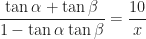




 into
into 
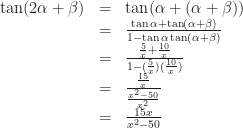
 is acute (1st quadrant),
  is positive.


 and
and  is needed


 Mathtuition88