For high school math, inborn talent is much less important than hard work, preparation and self-confidence.
How do we know this? First of all, both of us have taught math for many years — as professors, teaching assistants and private tutors. Again and again, we have seen the following pattern repeat itself:
Different kids with different levels of preparation come into a math class. Some of these kids have parents who have drilled them on math from a young age, while others never had that kind of parental input.
On the first few tests, the well-prepared kids get perfect scores, while the unprepared kids get only what they could figure out by winging it — maybe 80 or 85 percent, a solid B.
The unprepared kids, not realizing that the top scorers were well-prepared, assume that genetic ability was what determined the performance differences. Deciding that they “just aren’t math people,” they don’t try hard in future classes and fall further behind.
The well-prepared kids, not realizing that the B students were simply unprepared, assume that they are “math people,” and work hard in the future, cementing their advantage.
Thus, people’s belief that math ability can’t change becomes a self-fulfilling prophecy.
…
So why do we focus on math? For one thing, math skills are increasingly important for getting good jobs these days— so believing you can’t learn math is especially self-destructive. But we also believe that math is the area where America’s “fallacy of inborn ability” is the most entrenched. Math is the great mental bogeyman of an unconfident America. If we can convince you that anyone can learn math, it should be a short step to convincing you that you can learn just about anything, if you work hard enough.
Is America more susceptible than other nations to the dangerous idea of genetic math ability? Here our evidence is only anecdotal, but we suspect that this is the case. While American fourth- and eighth-graders score quite well in international math comparisons — beating countries like Germany, the U.K. and Sweden — our high-schoolers underperform those countries by a wide margin. This suggests that Americans’ native ability is just as good as anyone’s, but that we fail to capitalize on that ability through hard work.
In response to the lackluster high school math performance, some influential voices in American education policy have suggested simply teaching less math — for example, Andrew Hacker has called for algebra to no longer be a requirement. The subtext, of course, is that large numbers of American kids are simply not born with the ability to solve for x.
We believe that this approach is disastrous and wrong. First of all, it leaves many Americans ill-prepared to compete in a global marketplace with hardworking foreigners. But even more important, it may contribute to inequality. A great deal of research has shown that technical skills in areas like software are increasingly making the difference between America’s upper middle class and its working class. While we don’t think education is a cure-all for inequality, we definitely believe that in an increasingly automated workplace, Americans who give up on math are selling themselves short.
Too many Americans go through life terrified of equations and mathematical symbols. What many of them are afraid of is “proving” themselves to be genetically inferior by failing to instantly comprehend the equations (when, of course, in reality, even a math professor would have to read closely). So they recoil from anything that looks like math, protesting: “I’m not a math person.” And so they exclude themselves from quite a few lucrative career opportunities. This has to stop.
The secret to being good at Maths (or any other subject) is to like it and enjoy it. This would make working hard and practicing Maths easier and more efficient. 2 hours can easily fly past while doing Maths if one is interested in it.
Most people think of mathematicians as solitary, working away in isolation. And, it’s true, many of them do. But Paul Erdos never followed the usual path. At the age of four, he could ask you when you were born and then calculate the number of seconds you had been alive in his head. But he didn’t learn to butter his own bread until he turned twenty. Instead, he traveled around the world, from one mathematician to the next, collaborating on an astonishing number of publications. With a simple, lyrical text and richly layered illustrations, this is a beautiful introduction to the world of math and a fascinating look at the unique character traits that made “Uncle Paul” a great man.
‘Above all, it is a cultural thing.” Professor Lianghuo Fan is reflecting on the differences he has noticed between maths education in China and Singapore, where he lived and taught for 40 years, and in Britain, where he is now based. “In China, all parents know that maths is the number one subject in schools, and they expect that in a modern society everyone must be comfortable with maths, even if that means they have to work hard at it.“That attitude is passed on to their children. But here in Britain, you can feel students’ attitude about mathematics is different. They feel all right if they say they don’t like mathematics.”
Professor Fan is not alone in highlighting this national phobia of ours about maths. The government has this week shown itself determined to tackle the problem head on with the unveiling of a new “back-to-basics” primary school maths curriculum, with a renewed emphasis on times-tables, mental arithmetic, fractions and rote learning.
Most people over 40 will see the proposals as a return to the classroom practice of their childhood – but in its introductory remarks the Department for Education claimed inspiration from Asian model that Professor Fan knows so well: “I never heard a child in China or Singapore say that they don’t like maths’,” he stresses, “without a sense of embarrassment.”
We are sitting in a café near Southampton University – where 50-year-old Professor Fan has been head of the Mathematics and Science Education Research Centre since 2010 – as we try to decide if anything lies behind the popular stereotype that Asian children are “naturally” better at maths than those in the West. It is, for example, in the core storyline of Safe, the recent Hollywood blockbuster, starring Jason Statham. An 11-year-old girl, Mei (played by Chinese-born actress Catherine Chan), is a maths prodigy who can decode number sequences at a glance – and therefore has to be protected from the baddies.
Additional Mathematics is kind of important, if your child is intending to pursue any studies related to Mathematics in university. Business, Accounting, Economics, and of course Engineering and Physics are examples of courses requiring some Mathematics.
AIMS
The syllabus is intended to prepare students adequately for A Level H2 Mathematics and
H3 Mathematics, where a strong foundation in algebraic manipulation skills and mathematical reasoning skills are required.
The O Level Additional Mathematics syllabus assumes knowledge of O Level Mathematics.
The general aims of the mathematics syllabuses are to enable students to:
• acquire the necessary mathematical concepts and skills for continuous learning in mathematics and related disciplines, and for applications to the real world
• develop the necessary process skills for the acquisition and application of mathematical concepts and skills
• develop the mathematical thinking and problem solving skills and apply these skills to formulate and solve problems
• recognise and use connections among mathematical ideas, and between mathematics and other disciplines
• develop positive attitudes towards mathematics
• make effective use of a variety of mathematical tools (including information and
communication technology tools) in the learning and application of mathematics
• produce imaginative and creative work arising from mathematical ideas
• develop the abilities to reason logically, to communicate mathematically, and to learn cooperatively and independently
Hi, I am an ex-GEP student, who wish to share some tips about what books to read to prepare for GEP, or even for kids who are already in GEP. I strongly believe that IQ is not static, i.e. it is possible to increase IQ (to a certain extent of course) by reading books. (The Einstein Factor: A Proven New Method for Increasing Your Intelligence contains research that shows that IQ can be increased.)
The GEP test has 3 main sections: Logic, Math, English. This article will introduce books suitable for preparing for these 3 main sections.
Kids nowadays love electronic devices. However iPhone / iPad have too many games and thus are not ideal for educational purposes. The ideal electronic device is Amazon Kindle Ebook reader. Read more with Amazon!
WWW.QOO10.SG
I used to read a book by Mensa when I was a kid (just for interest, not for preparing for any tests), and found it to be interesting and challenging. The exact book is probably out of print already, but here are some bestsellers by Mensa on Amazon. Hope the recommendations are helpful! This list is not exhaustive, you may purchase other books you find on Amazon, they are equally likely to be as helpful.
GEP Logic Books
(Click on the image links to go to the Amazon.com page for more details)
These books are really helpful for the “Logic” part of the GEP selection test, which is not taught anywhere in the MOE syllabus and hence one of the most challenging to prepare for.
GEP Logic Sample Question
The above Logic Books are highly recommended by Amazon (4/5 stars and above)!
The following Puzzle Adventure books are also very useful for developing logical thinking and also English. Not to mention they are really fun to read for children. I have personally read the “2nd Puzzle Adventure Omnibus” book many times and enjoyed it very much. These kinds of books train both Logic and English skills.
Another good choice of books are encyclopedias. Although Encyclopedias like Britannica are almost extinct thanks to the internet, it is good to have a children’s Encyclopedia like The New Children’s Encyclopedia to have an all-round knowledge of the world and science.
Finally, you can check out the list of Recommended Math Books, which contains books useful for Math students.
Tips on How to Get Into GEP:
Based on my experience as a student, getting into GEP requires knowing and possessing skills more advanced than the age group. I.e., at the age of 9 (Primary 3), the student who gets into GEP is probably already at the level of Primary 4 and above in terms of Math and English. True genius is neither necessary nor sufficient to get into GEP, and it is not true that GEP students are smarter than others. There is a famous IMO World Number 1 in Singapore who wasn’t from the GEP. IMO (International Math Olympiad) is definitely harder than GEP Math. One can read this book 104 Number Theory Problems: From the Training of the USA IMO Team to get an idea of the IMO (International Math Olympiad).
To be honest, it is probably currently harder to get into GEP now than in the past (1990s). During my time, a Primary 6 student who knows the Gauss trick for adding a sum of an arithmetic progression (1+2+3+…+99+100) is really at the top of his/her cohort. During the 2000 PSLE, this question came out and few people could solve it. Nowadays (2015), an average Primary 3 student would know and be familiar with this technique. Hence the bar is set much higher nowadays. Math Olympiad is the way to go to get one’s Math skills honed at the highest level.
Singapore (and Asian in general) students are very academically smart. Even the average Singapore student is likely to be 2 to 3 years ahead of their American/UK/Australian counterparts in terms of Math and Science. And to get in the GEP, it is common sense that one has to perform better than the average Singapore student in the GEP selection test at least. Hence, it is not an easy task. However, one weakness of Singaporean students is that they are not a big fan of reading, to the extent that even Borders bookstore (and others) can close down in Singapore. Hence, if your child even read a few extra books you have an advantage over the rest. Check out this book by Moshe Kai Cavelin, a truly gifted kid who entered college at 8.
Ideally, only students who are genuinely interested in learning should be prepped for GEP. As the Chinese proverb 拔苗助长 tells us, there is no point pushing a child artificially beyond what he/she wishes to learn. But for those children who have curiosity to learn, books like Match Wits With Mensa: The Complete Quiz Book will be a good brainteaser for them. If one is looking for books to help prepare for GEP, the average assessment books sold in bookstores would not be of much help since they are catered to the mass market, not gifted children.
Amazon actually has a long list of books for gifted children and their parents: Books for Gifted Children. Gifted children are like raw unpolished diamonds. As the Chinese proverb 玉不琢,不成器 goes, even jade needs to be polished and cut before it can become a piece of jewellery, hence even gifted children need guidance to unlock their full potential. There is no single book that after reading it can get into the GEP. The GEP tests for a wide range of knowledge in the Math and English subjects and hence students need to read widely to acquire a broad spectrum of knowledge.
The above 3 GEP English Literature books are fun to read, and contain a lot of useful and advanced vocabulary and idioms. It is a good idea to read these books to get a hang of what GEP English is about (very different from normal mainstream English). One important technique to improve English by reading is to highlight any new words, and then record it in a notebook, followed by copying down the dictionary definition. From time to time, revise the notebook to refresh your memory. Soon, as the notebook grows, so will your vocabulary.
Remember to use the above technique of using the dictionary and recording in a notebook; simply skimming and flipping the pages is not likely to improve English! As Singapore follows British English, it is important to get a British English dictionary like Paperback Oxford English Dictionary. Try not to use Webster / Google as those are American English, which can be quite different.
Gifted students have the potential to learn material earlier and faster, to handle more complexity and abstraction, and to solve complex problems better. This potential, however, needs stimulating experiences from home and school or it will not unfold. These books are designed to help teachers provide the stimulating curricula that will nurture this potential in school. The units presented in this series are based on research into how these students actually think differently from their peers and how they use their learning styles and potential not merely to develop intellectual expertise, but to move beyond expertise to the production of new ideas.
The Math book includes units that ask students to develop a financial portfolio that includes high- and low-risk stocks, options and margins, AAA and junk bonds, mutual funds, and money markets; use math, science, engineering, technology, and art to design and build a miniature golf course; develop games based on probability; and run a real-life small business.
Grades 6–8
GEP Psychology Book
Mindset is the key to success. I highly recommend this book Mindset: The New Psychology of Success to students and parents. A psychologist has written this book, and it has many new insights. For instance, praising your child “intelligence and ability doesn’t foster self-esteem and lead to accomplishment, but may actually jeopardize success.” This is new psychological research supported by evidence. The correct way is actually to praise the child’s effort. Find out more tips and stories by reading this book.
Rubik’s Cube (Dayan Zhanchi)
For parents, buying a Rubik’s cube for your child is a great investment. Playing with the Rubik’s cube is a major intellectual challenge (it has 43 quintillion permutations, only 1 of which is correct), which will develop the child’s brain for logical thinking, which is especially useful for Math and Science. Most importantly, it is fun!
Special note for buying Dayan Zhanchi from Singapore:
If you are buying the Dayan Zhanchi from Singapore, at first it seems like the Dayan ZhanChi does not ship to Singapore. It actually does! We just have to choose the correct seller, Cube Puzl, which ships to Singapore.
Even though the GEP Screening/Selection Test does not test science, it is a good idea to get acquainted with science from a young age since the Sciences (Chemistry, Physics, Biology) form the bulk of the Singapore education system from upper primary school onwards till university. For example in Junior College, 3 out of 4 subjects will be sciences, for those in the Science Stream.
SINGAPORE: Education Minister Heng Swee Keat has said that two important shifts must be made in the education system in order to prepare the young for the future.
In a Facebook post on Friday evening, Mr Heng said firstly, the education system must help the young acquire deep skills and integrate theory with practice through applied learning.
Secondly, the system should make it easier for students to continue learning in their areas of strength and interest, and encourage lifelong learning.
Mr Heng said the education system needs to better link the interest and strengths of students to jobs of the future.
He explained that when students develop a deep interest, when their imagination is captured, they can go on to do wonderful things.
Math is logical, functional and just … awesome. Mathemagician Arthur Benjamin explores hidden properties of that weird and wonderful set of numbers, the Fibonacci series. (And reminds you that mathematics can be inspiring, too!)
Look out for this movie on Indian math genius Ramanujan starring Dev Patel from “Slumdog Millionaire”!
Ramanujan was a self-taught maths genius from India who had little to no formal education. Yet he was able to come out with stunning formulas such as this approximation for Pi:
(Reuters) – A new Hollywood film starring Dev Patel as Srinivasa Ramanujan will put the spotlight on the Indian math genius best known for his work on the theory of prime numbers.
Ramanujan, who died in 1920, was considered one of the brightest minds in mathematics, despite his lack of a formal education.
Patel, who caught Hollywood’s eye in 2008’s Oscar-winning film “Slumdog Millionaire”, has been cast as the lead. Filming begins in September with a British actor playing G.H. Hardy, the mathematician who recognized Ramanujan’s talent and brought him to England in 1914.
“The subject matter of Ramanujan is an Indian story but it is the story of the relationship of India and the West,” the film’s co-producer Edward Pressman told Reuters over the phone.
Researchers found that higher scores were related to greater sleep quality, especially less awakenings rather than the actual length of time asleep.
The team of researchers, led by Dr Jennifer Cousins at the University of Pittsburgh, studied 56 adolescents and compared their sleep patterns with their exam grades.
They found those that enjoyed deeper, less disturbed, sleep were the most successful, especially in maths but also in English and history.
Those who fell asleep and awoke easily – especially at weekends – were found to have better exam results.
Higher maths scores were related to less night awakenings, less time spent in bed, higher sleep efficiency and great sleep quality.
Try out this simple and effective time management and study strategy, named the Pomodoro Technique.
It helps to break up big tasks into smaller tasks, so that we don’t feel so overwhelmed by the task. Sometimes, students feel overwhelmed by the huge amount of material to study, so they don’t feel like starting. Using this method may be effective for beating procrastination and increasing efficiency.
Here is a Math Formula trick to have fun with your friends, to guess their Month of Birthdaygiven their NRIC, within two tries.
(only works for Singapore citizens born after 1970)
The formula is: take the 3rd and 4th digit of the NRIC, put them together, divide by 10, and multiply by 3.
For an example, if a person’s NRIC is S8804xxxx, we take 04, divide by 10 to get 0.4
Then, 0.4 multiplied by 3 gives 1.2
Then, guess that the person is either born in January (round down 1.2 to 1) or February (round up 1.2 to 2). There is a high chance that you are right! Usually, round up for the first six months (Jan to Jun), and round down for the last six months (Jul to Dec).
This formula was developed and tested by me. There are some exceptions to the rule, but generally it works fine especially for people born from 1980 to 2000.
Hope you have fun with maths, and impress your friends!
New Delhi: Google is celebrating the 84th birth anniversary of mathematical genius Shakuntala Devi, nicknamed “human computer” for her ability to make complex mental calculations, with a doodle on its India home page.
The doodle salutes Shakuntala Devi’s amazing calculating abilities with a doodle that resembles a calculator.
Shakuntala Devi found a slot in the Guinness Book of World Record for her outstanding ability and wrote numerous books like ‘Fun with Numbers’, ‘Astrology for You’, ‘Puzzles to Puzzle You’, and ‘Mathablit’. She had the ability to tell the day of the week of any given date in the last century in a jiffy. Coming from a humble family, Shakuntala Devi’s father was a circus performer who did trapeze, tightrope and cannonball shows.
Mathematician Professor Terry Speed wins PM’s science prize
Professor Terry Speed, Head of Bioinformatics at the Walter and Eliza Hall Institute of Medical Research, Melbourne, who has been awarded the Prime Minister’s Award for Science. Picture: Ray Strange Source: News Limited
The man who last night won the Prime Minister’s Science Prize agrees maths is “not sexy” but it saw him give evidence at the O.J Simpson trial, helped find diamonds and now is determining the cause of cancer.
Mathematician Professor Terry Speed was called as an expert witness for O.J. Simpson in the famous 1995 murder trial where he helped explain to the jury how statistics underpinning DNA worked.
Simpson was acquitted after a trial that lasted more than eight months because his lawyers were able to persuade the jurors that there was reasonable doubt about the DNA evidence.
Forty five years ago Professor Speed testified at the trial of Ronald Ryan, the last man to be hanged in Australia.
He had to explain the geometry of the trajectory of bullets in the case.
In an extensive career the 70 year old statistics whiz has helped determine the size and distribution of Argyle diamonds and looked at kangaroo genomics.
Right now he is working at the cutting edge of medical science helping scientists develop statistical tools to understand the huge volumes of information coming from the human genome.
Work he’s done for a company on a thyroid cancer diagnostic test could help prevent thousands of people from having their thyroids removed unnecessarily.
At present some thyroid tests are inconclusive and tumours are removed even though they turn out to be benign leaving the patient taking hormone replacement therapy for the rest of their lives.
Some of his work is in developing tools that find which genes or gene characteristics may cause cancer if they are switched on or off.
Professor Speed says part of the reason so many people don’t want to study maths and science is they don’t see its potential.
He’s spent his life applying mathematical theories to crime, farming, mining and medical science.
As you may already know, Danica McKellar, the actress and UCLA mathematics alumnus, has recently launched her book “Math Doesn’t Suck“, which is aimed at pre-teenage girls and is a friendly introduction to middle-school mathematics, such as the arithmetic of fractions. The book has received quite a bit of publicity, most of it rather favourable, and is selling quite well; at one point, it even made the Amazon top 20 bestseller list, which is a remarkable achievement for a mathematics book. (The current Amazon rank can be viewed in the product details of the Amazon page for this book.)
I’m very happy that the book is successful for a number of reasons. Firstly, I got to know Danica for a few months (she took my Introduction to Topology class way back in 1997, and in fact was the second-best student there; the class web…
Thomas’ Calculus is the recommended textbook to learn Undergraduate Calculus (necessary for Engineering, Physics and many science majors). It is used by NUS and can be bought at the Coop.
Full of pictures, and many exercises, this book would be a good book to read for anyone looking to learn Calculus in advance.
Note: Additional Mathematics is very helpful to take H2 Mathematics in JC!
Curriculum
There are three mathematics syllabi, namely H1 Mathematics, H2 Mathematics and H3 Mathematics.
Students who offered Additional Mathematics and passed the subject at the GCE ‘O’ level examination may take up H2 Mathematics. Students posted to the Arts stream and did not offer Additional Mathematics at the GCE ‘O’ level examination are not allowed to take H2 Mathematics but may consider taking up H1 Mathematics. However, students who are posted to the Science stream but did not offer Additional Mathematics at the GCE ‘O’ level examination are advised to offer H2 Mathematics if they intend to pursue Science or Engineering courses at a university. Students who wish to offer H3 Mathematics must offer H2 Mathematics as well.
The use of a Graphing Calculator (GC) without a computer algebra system is expected for these Mathematics syllabi. The examination papers will be set with the assumption that candidates will have access to GCs.
H1 Mathematics
H1 Mathematics provides a foundation in mathematics for students who intend to enrol in university courses such as business, economics and social sciences. The topics covered include Graphs, Calculus and Statistics. A major focus of the syllabus would be the understanding and application of basic concepts and techniques of statistics. This would equip students with the skills to analyse and interpret data, and to make informed decisions.
H2 Mathematics
H2 Mathematics prepares students adequately for university courses including mathematics, physics and engineering, where more mathematics content is required. The topics covered are Functions and Graphs, Sequences and Series, Vectors, Complex Numbers, Calculus, Permutations and Combinations, Probability, Probability Distributions, Sampling, Hypothesis Testing, and Correlation and Regression. Students would learn to analyse, formulate and solve different kinds of problems. They would also learn to work with data and perform statistical analysis.
H3 Mathematics
H3 Mathematics offers students who have a strong aptitude for and are passionate about mathematics a chance to further develop their mathematical modeling and reasoning skills. Opportunities abound for students to explore various theorems, and to read and write mathematical proofs. Students would learn the process of mathematical modeling for real-world problems, which involves making informed assumptions, validation and prediction. Students may choose from the three H3 Mathematics modules, namely the MOE-UCLES module, the NTU Numbers and Matrices module and the NUS Linear Algebra module.
The MOE-UCLES module is conducted by tutors from our Mathematics Department. The three main topics to be investigated are Graph Theory, Combinatorics and Differential Equations. This module would be mounted only if there’s demand.
The NTU Numbers and Matrices module is conducted by lecturers from the Nanyang Technological University (NTU). Students would have to travel to Hwa Chong Institution to attend this module.
The NUS Linear Algebra module is conducted by lecturers at the National University of Singapore (NUS). Students who offer this module would have to attend lessons together with the undergraduates at the university.
Doctor and Lawyer are the top two favourite careers in Singapore. Do doctors need to use Maths? Read the below to find out.
Even if Maths is not directly needed, the logical thinking skills learnt in Mathematics will definitely be of great use. 🙂
I am not a medical doctor, but my two younger siblings are medical students, and the Mathematical knowledge and thinking skills have definitely helped them in their medical studies.
Functional numeracy is as essential to an aspiring medical professional as functional literacy. As a physician, perhaps the most important mathematical skills you will need are:
1. Basic mathematical knowledge sufficient to calculate drug doses, concentrations, etc.
2. An understanding of the core statistical concepts most commonly represented in the medical literature.
3. Knowledge of algebra to understand calculations of acid–base status, etc.
4. Ability to appreciate whether or not results are mathematically plausible. (Nusbaum, 2006)
The careful logical reasoning that is necessary for the study of mathematics is an essential element of clinical reasoning. Although you do not need higher mathematics to get through medical school, you will need the ability to manipulate numbers, including fractions, ratios, powers of 10 and logarithms. You will also need a basic understanding of probability, graphs and simple algebra. You will need to rearrange equations and convert between units of measure.
It’s often unclear from your interactions with a doctor how much math she is using in order to treat you. While not all doctors have to use math as directly and frequently as engineers do, all of them must understand the complex mathematical equations that inform different medical treatments in order to administer treatments correctly.
Dosages and Half-Life
One of the most common ways in which doctors use mathematics is in the determination of medicine prescriptions and dosages. Doctors not only have to use basic arithmetic to calculate what dosage of a particular drug will be effective for your height and body type over a specific period of time, they will also have to be aware of the medicine’s cycle through the body and how the dosage of one drug compares with the dosage of a similar type of drug. Sometimes doctors have to use calculus to figure out the right dosage of a drug. Calculus is the study of how changing variables affect a system. In the human body, the kidney processes medicine. However, people’s kidneys are at varying levels of health. Doctors can designate the kidney as a changing function in a calculus equation known as the Cockroft-Gault equation. This equation uses the level of creatine in a patient’s blood to find the level of the kidney’s functioning, which allows the doctor to determine the appropriate dose.
Cancer Treatment
When a doctor administers radiation therapy to a cancer patient, the radiation beams have to cross each other at specific angles, so that they harm the cancerous tumor without harming the surrounding healthy tissue. The precise numbers for these angles must be calculated mathematically. Cancer tends to respond to any drug by mutating so that its DNA is no longer affected by that drug. Oncologists and medical scientists have decided to target cancerous tumors with many different kinds of drugs at once so that the cancer is unable to respond adequately. They use complex mathematical models that plot the speed and timing of the cancer’s different mutations to figure out what combinations and dosages of different drugs should be used.
Medical Images and Tests
Doctors in medical imaging use two-dimensional images of a patient’s body taken from thousands of angles to create a three-dimensional image for analysis. Determining what angles should be used and how they will fit together requires mathematics. Medical researchers who study disease will analyze the mathematical dimensions of these images. Neurologists who run EEGs on patients to measure their brain waves must add and subtract different voltages and use Fourier transforms to filter out signal static. Fourier transforms are used to alter functions in calculus.
Treatment Research
Medical scientists working with cardiologists use differential equations to describe blood flow dynamics. They also build sophisticated computer models to find the ideal size of an artificial aorta and where to place it in an infant pending a heart transplant. Doctors have to read medical journals to keep up on the latest scientific findings for the benefit of their patients. In addition to describing the calculus used to model health conditions, medical journal studies also make heavy use of statistics and probability to describe the health conditions of whole populations and the likelihood that different treatments will be effective.
Doctor and Lawyer are the top two favourite careers in Singapore. On the surface, Lawyers seem not to need much maths, but recent research shows that Mathematics skills and thinking may be crucial to becoming a better Lawyer.
There is a “highly significant relationship” between law students’ math skills and the substance of their legal analysis, according to research from Arden Rowell, a professor of law and the Richard W. and Marie L. Corman Scholar at Illinois.
CHAMPAIGN, Ill. — The stereotype of lawyers being bad with numbers may persist, but new research by two University of Illinois legal scholars suggests that law students are surprisingly good at math, although those with low levels of numeracy analyze some legal questions differently.
According to research from Arden Rowell and Jessica Bregant, there is a “highly significant relationship” between law students’ math skills and the substance of their legal analysis, suggesting that legal analysis – and by extension, legal advice – may vary with a lawyer’s native math skills.
“What the research shows is that math matters to lawyers more – and for different reasons – than people have realized,” said Rowell, a professor of law and the Richard W. and Marie L. Corman Scholar at Illinois. “People are only now starting to pay attention to the fact that lawyers and judges who are bad at math can make mistakes that ruin people’s lives. That implicates numeracy as a neglected but potentially critical aspect of legal education, because it’s not something that law schools have traditionally focused on when selecting students.”
Aggregate Scores of Junior Colleges (JC) Outliers: The Story of Success This is a very inspirational book on why do some people succeed, and what makes high-achievers different? Famous author Malcolm Gladwell reveals the secret and how it is possible for average ordinary people to achieve the same results. (Best Seller on Amazon.com)
For students seeking admission to JC/Poly/ITE and with the following CCA grades:a. Grades of A1 – A2 (2 points)b. Grades of B3 – C6 (1 point)
For students seeking admission to JC/MI courses and with grades of A1 to C6 in both their first languages (i.e. English and a Higher Mother Tongue). This is provided that these choices come before any Poly/ITE choices.(2 points)
For students seeking admission to JC/MI courses and with grades of A1 to C6 in Malay/Chinese (Special Programme) (MSP/CSP) or Bahasa Indonesia (BI) as their third language. This is provided that these choices come before any Poly/ITE choices.(2 points)
For students from feeder schools if they choose their affiliated Junior College course(s) as their:a. 1st choice, or b. 1st and 2nd choices. (2 points)
The bonus points can be deducted from their total points, and will be helpful to enter the JC (depending on the JC’s Cut Off Points). Theoretical Minimum Score is 0 points (if under CLEP or MLEP programme), otherwise minimum score is 2 points.
Education Minister Heng Swee Keat said teachers “grow knowledge, instill beliefs, inculcate values, nurture passion, and in so doing, they shape the future” of students.
File photo: Minister for Education Heng Swee Keat
SINGAPORE: Education Minister Heng Swee Keat said on Thursday “teachers affect all of us more deeply” than one can know.
In a Facebook post ahead of Teachers’ Day on Friday, Mr Heng sent his warmest thoughts and admiration to all teachers who dedicate themselves to bringing out the best in children.
In the tribute to all teachers, Mr Heng said they “grow knowledge, instill beliefs, inculcate values, nurture passion, and in so doing, they shape the future” of their students.
He added that every child who grows up confident and compassionate has been affected by a caring teacher in some way.
Mr Heng said in order to give every child a profound educational experience, every teacher must be a caring educator.
Firstly, apologies for the long gap. Very far from being Theorem of the Week, I know. Here’s another theorem for now, and I’ll do what I can to revert to a weekly post.
So, to this week’s theorem. I have previously promised to write about Fermat‘s Little Theorem, and I think it’s time to keep that promise. In that post (Theorem 10, about Lagrange’s theorem in group theory), I introduced the theorem, so I’m going to state it straightaway. If you haven’t seen the statement before, I suggest you look back at that post to see an example.
Theorem (Fermat’s Little Theorem) Let $latex p$ be a prime, and let $latex a$ be an integer not divisible by $latex p$. Then $latex a^{p-1} \equiv 1\mod{p}$.
If you aren’t comfortable with the notation of modular arithmetic, you might like to phrase the conclusion of the theorem as saying that $latex…
Senior Wrangler is the First position in the Math Tripos in Cambridge. Singapore Prime Minister Lee Hsien Loong was the Senior Wrangler in 1973, the first Singaporean student with such great honors, among other senior wranglers like Arthur Cayley (Group Theory), J.J. Sylvester (Inventor of Matrix, private tuitor of the “inventor of Nursing” Florence Nightingale), J.E. Littlewood (partnered in a twin research team with G.H. Hardy), Frank Ramsey (Ramsey’s Theorem), Stokes, Pell, etc.
Some great mathematicians like Bertrand Russell (Logician, Nobel Litterature Prize) , G.H. Hardy (20th century greatest Pure Mathematician, mentored 2 geniuses: Indian Ramanujian and Chinese Hua Luogeng 华罗庚*) were not Senior Wrangler. Prof Hardy hated Math Tripos syllabus (revealed in his autobiography: “A Mathematician’s Apology“).
1914 Brian Charles Molony
1923 Frank Ramsey
1928 Donald Coxeter
1930 Jacob Bronowski
1939 James Wilkinson
1940 Hermann Bondi
1952 John Polkinghorne
1953 Crispin Nash-Williams
1959 Jayant Narlikar 1970 Derek…
Forty years ago, in a paper in American Scientist, Herbert Simon and William Chase drew one of the most famous conclusions in the study of expertise:
There are no instant experts in chess—certainly no instant masters or grandmasters. There appears not to be on record any case (including Bobby Fischer) where a person reached grandmaster level with less than about a decade’s intense preoccupation with the game. We would estimate, very roughly, that a master has spent perhaps 10,000 to 50,000 hours staring at chess positions…
In the years that followed, an entire field within psychology grew up devoted to elaborating on Simon and Chase’s observation—and researchers, time and again, reached the same conclusion: it takes a lot of practice to be good at complex tasks. After Simon and Chase’s paper, for example, the psychologist John Hayes looked at seventy-six famous classical composers and found that, in almost every case, those composers did not create their greatest work until they had been composing for at least ten years. (The sole exceptions: Shostakovich and Paganini, who took nine years, and Erik Satie, who took eight.)
This is the scholarly tradition I was referring to in my book “Outliers,” when I wrote about the “ten-thousand-hour rule.” No one succeeds at a high level without innate talent, I wrote: “achievement is talent plus preparation.” But the ten-thousand-hour research reminds us that “the closer psychologists look at the careers of the gifted, the smaller the role innate talent seems to play and the bigger the role preparation seems to play.” In cognitively demanding fields, there are no naturals. Nobody walks into an operating room, straight out of a surgical rotation, and does world-class neurosurgery. And second—and more crucially for the theme of Outliers—the amount of practice necessary for exceptional performance is so extensive that people who end up on top need help. They invariably have access to lucky breaks or privileges or conditions that make all those years of practice possible. As examples, I focussed on the countless hours the Beatles spent playing strip clubs in Hamburg and the privileged, early access Bill Gates and Bill Joy got to computers in the nineteen-seventies. “He has talent by the truckload,” I wrote of Joy. “But that’s not the only consideration. It never is.”
Attached below are the Formula Lists for E Maths and A Maths (O Level)
Do be familiar with all the formulas for Elementary Maths and Additional Maths inside, so that you know where to find it when needed!
Wishing everyone reading this all the best for their exams. 🙂
Synopsis: ‘I have a truly marvellous demonstration of this proposition which this margin is too narrow to contain.’
It was with these words, written in the 1630s, that Pierre de Fermat intrigued and infuriated the mathematics community. For over 350 years, proving Fermat’s Last Theorem was the most notorious unsolved mathematical problem, a puzzle whose basics most children could grasp but whose solution eluded the greatest minds in the world. In 1993, after years of secret toil, Englishman Andrew Wiles announced to an astounded audience that he had cracked Fermat’s Last Theorem. He had no idea of the nightmare that lay ahead.
In ‘Fermat’s Last Theorem’ Simon Singh has crafted a remarkable tale of intellectual endeavour spanning three centuries, and a moving testament to the obsession, sacrifice and extraordinary determination of Andrew Wiles: one man against all the odds.
First Published: 1997, Reissued: 2002| ISBN-13: 978-1841157917
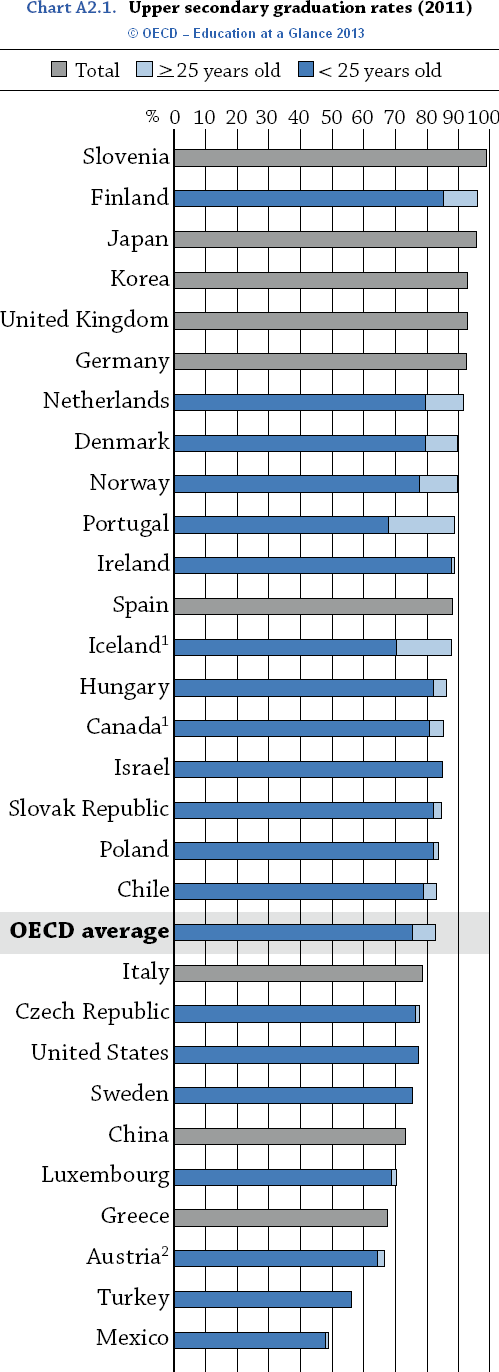
Countries which belong to the Organization for Economic Cooperation and Development (OECD) produce two-thirds of the world’s goods and services. The organization publishes reports on economic and social factors in the member states. School performance league tables are presented in the OECD report, Education at a Glance. It includes comparison tables of educational performance, class sizes, teachers’ salaries, tertiary education and more. The report can be downloaded as a PDF document.
Chart A2·1 [ page 42] ranks countries, in descending order, according to the percentage of adults who have completed an upper secondary education (the most recent data in the 2013 report is from 2011).
Chart A1·2 footnotes:
1. Year of reference 2010.
2. Some programmes not included. *China has a large rural / urban disparity in its education system.
Singapore Math emphasizes the development of strong number sense, excellent mental-math skills, and a deep understanding of place value.
The curriculum is based on a progression from concrete experience—using manipulatives—to a pictorial stage and finally to the abstract level or algorithm. This sequence gives students a solid understanding of basic mathematical concepts and relationships before they start working at the abstract level.
Singapore Math includes a strong emphasis on model drawing, a visual approach to solving word problems that helps students organize information and solve problems in a step-by-step manner.
Concepts are taught to mastery, then later revisited but not re-taught. It is said the U.S. curriculum is a mile wide and an inch deep, whereas Singapore’s math curriculum is said to be just the opposite.
The Singapore approach focuses on developing students who are problem solvers.
I suppose every reader of this ‘ere blog will know Heron’s formula for the area $latex K$ of a triangle with sides $latex a,b,c$:
$latex K = \sqrt{s(s-a)(s-b)(s-c)}$
where $latex s$ is the “semi-perimeter”:
$latex \displaystyle{s=\frac{a+b+c}{2}.}$
The formula is not at all hard to prove: see the Wikipedia page for two elementary proofs.
However, I have only recently become aware of Brahmagupta’s formula for the area of a cyclic quadrilateral. A cyclic quadrilateral, if you didn’t know, is a (convex) quadrilateral all of whose points lie on a circle:
And if the edges have lengths $latex a,b,c,d$ as shown, then the formula states that the area is given by
$latex K = \sqrt{(s-a)(s-b)(s-c)(s-d)}$
where as above $latex s$ is the semi-perimeter:
$latex \displaystyle{s=\frac{a+b+c+d}{2}.}$
This can be seen to be a generalization of Heron’s formula. Although the formula is named for Brahmagupta (598 – 670), who does indeed seem to…
Recently, in The Conversation, the Vice Chancellor of Monash University, wrote an article discussing MOOCs. He made some criticisms about the nature of assessment and grading that MOOCs offer. However, my attention was grabbed by two sentences:
The other major problem the MOOCs haven’t solved is assessment. They work very well for subjects like maths, which have objectively right and wrong answers, and can therefore be pretty easily marked by computers.
Now, here we have the Vice Chancellor of one of Australia’s leading universities – and indeed, one of the world’s leading universities (and incidently the University where I did both my Masters and my PhD) demonstrating an extraordinary lack of understanding about the fundamental nature of mathematics. He seems to think that mathematics is all about teaching students (in the fine words of John Power from Leeds University) about “finding ‘x'”. I suppose he thinks this…
WordPress.com supports LaTeX, a document markup language for the TeX typesetting system, which is used widely in academia as a way to format mathematical formulas and equations. LaTeX makes it easier for math and computer science bloggers and other academics in our community to publish their work and write about topics they care about.
If you’re a math genius — many of you are! — and you’ve blogged about equations you’ve worked on, you’ve probably used LaTeX before. If you’re just starting out (or simply curious to see how it all works), we’ve gathered a few examples of great math and computing blogs on WordPress.com that will inspire you.
In general, to display formulas and equations, you place LaTeX code in between $latex and $, like this:
$latex YOUR LATEX CODE HERE$
So for example, inserting this when you’re creating a post . . .
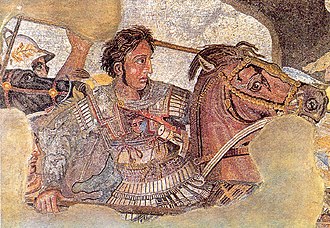
Alexander III of Macedon (20/21 July 356 – 10/11 June 323 BC), commonly known as Alexander the Great (Greek: Ἀλέξανδρος ὁ Μέγας, Aléxandros ho Mégasiii[›] from the Greek ἀλέξω alexo “to defend, help” + ἀνήρ aner “man”), was a king of Macedon, a state in northern ancient Greece. Born in Pella in 356 BC, Alexander was tutored by Aristotle until the age of 16. By the age of thirty, he had created one of the largest empires of the ancient world, stretching from the Ionian Sea to the Himalayas.[1] He was undefeated in battle and is considered one of history’s most successful commanders.[2]
Despite being in the Gifted Education Programme (GEP), Mr Wu is just an ordinary Singaporean. His secret to academic success is hard work and the Maths Techniques he has discovered by himself while navigating through the education system.
He would like to teach these techniques to students, hence choosing to become a full-time Mathematics tutor. Mr Wu has developed his own methods to check the answer, remember formulas (with understanding), which has helped a lot of students. Many Math questions can be checked easily, leading to the student being 100% confident of his or her answer even before the teacher marks his answer, and reducing the rates of careless mistakes.
Mr Wu’s friendly and humble nature makes him well-liked by students. Many of his students actually request for more tuition by themselves! (not the parents)
O Level E Maths and A Maths Tuition starting next year at Bishan, the best location in Central Singapore.
Timings are Monday 7-9pm, Thursday 7-9pm. Perfect for students who have CCA in the afternoon, or students who want to keep their weekends free.
Register with us now by email (mathtuition88@gmail.com). Vacancies will be allocated on a first-come-first-serve basis.
Thanks and wishing all a nice day.
Standard matrix in mathematics (Photo credit: Wikipedia)
Q5) The speed of a boat in still water is 60 km/h.
On a particular day, the speed of the current is km/h.
(a) Find an expression for the speed of the boat
(I) against the current, [1]
Against the current, the boat would travel slower! This is related to the Chinese proverb, 逆水行舟,不进则退, which means “Like a boat sailing against the current, we must forge ahead or be swept downstream.”
Hence, the speed of the boat is km/h.
(ii) with the current. [1]
km/h
(b) Find an expression for the time required to travel a distance of 80km
(I) against the current, [1]
Recall that
Hence, the time required is h
(ii) with the current. [1]
h
(c) If the boat takes 20 minutes longer to travel against the current than it takes to travel with the current, write down an equation in and show that it can be expressed as [2]
Note: We must change 20 minutes into 1/3 hours!
There are many ways to proceed from here, one way is to change the Right Hand Side into common denominator, and then cross-multiply.
Cross-multiply,
(shown)
(d) Solve this equation, giving your answers correct to 2 decimal places. [2]
Using the quadratic formula,
Answer to 2 d.p. is
(e) Hence, find the time taken, in hours, by the boat to complete a journey of 500 km against the current. [2]
Now we know that the speed of the current is 7.386 km/h.
(10 minutes by foot OR 2 bus stops from Junction 8. From J8, please take bus numbers, 52, 54 or 410 from interchange. The centre is just after Catholic High School, just beside Clover By-The-Park condominium.
Other landmarks are: the bus stop which students alight is in front of Blk 283, where Cheers minimart and Prime supermarket are.)
It’s one street away from Raffles Institution Junior College (RIJC), previously known as Raffles Junior College (RJC). It’s also very convenient for students of Catholic Junior College (CJC), Anderson Junior College (AJC), Yishun Junior College (YJC) and Innova Junior College (IJC).
Other secondary schools located near Bishan are Catholic High School, Kuo Chuan Presbyterian Secondary School, and Raffles Institution (Secondary).
The Mobius Strip is a really interesting mathematical surface with just one side. It is easy to make, and cutting it produces many surprising effects! 🙂
A model can easily be created by taking a paper strip and giving it a half-twist, and then joining the ends of the strip together to form a loop. In Euclidean space there are two types of Möbius strips depending on the direction of the half-twist: clockwise and counterclockwise. That is to say, it is a chiral object with “handedness” (right-handed or left-handed).
The Möbius band (equally known as the Möbius strip) is not a surface of only one geometry (i.e., of only one exact size and shape), such as the half-twisted paper strip depicted in the illustration to the right. Rather, mathematicians refer to the (closed) Möbius band as any surface that is homeomorphic to this strip. Its boundary is a simple closed curve, i.e., homeomorphic to a circle. This allows for a very wide variety of geometric versions of the Möbius band as surfaces each having a definite size and shape. For example, any closed rectangle with length L and width W can be glued to itself (by identifying one edge with the opposite edge after a reversal of orientation) to make a Möbius band. Some of these can be smoothly modeled in 3-dimensional space, and others cannot (see section Fattest rectangular Möbius strip in 3-space below). Yet another example is the complete open Möbius band (see section Open Möbius band below). Topologically, this is slightly different from the more usual — closed — Möbius band, in that any open Möbius band has no boundary.
It is straightforward to find algebraic equations the solutions of which have the topology of a Möbius strip, but in general these equations do not describe the same geometric shape that one gets from the twisted paper model described above. In particular, the twisted paper model is a developable surface (it has zero Gaussian curvature). A system of differential-algebraic equations that describes models of this type was published in 2007 together with its numerical solution.[4]
23 people. In a room of just 23 people there’s a 50-50 chance of two people having the same birthday. In a room of 75 there’s a 99.9% chance of two people matching.
Put down the calculator and pitchfork, I don’t speak heresy. The birthday paradox is strange, counter-intuitive, and completely true. It’s only a “paradox” because our brains can’t handle the compounding power of exponents. We expect probabilities to be linear and only consider the scenarios we’re involved in (both faulty assumptions, by the way).
Let’s see why the paradox happens and how it works.



 contains research that shows that IQ can be increased.)
 page for more details)


 to have an all-round knowledge of the world and science.

 to get an idea of the IMO (International Math Olympiad).


 (Past Official P4 GEP Literature Book)
 (P5 GEP Literature Book)
 (P6 GEP Literature Book)


 . Try not to use Webster / Google as those are American English, which can be quite different.


 to students and parents. A psychologist has written this book, and it has many new insights. For instance, praising your child “intelligence and ability doesn’t foster self-esteem and lead to accomplishment, but may actually jeopardize success.” This is new psychological research supported by evidence. The correct way is actually to praise the child’s effort. Find out more tips and stories by reading this book.






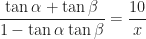




 into
into 
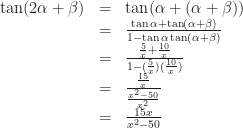
 is acute (1st quadrant),
  is positive.


 and
and  is needed


 File photo: Minister for Education Heng Swee Keat






 km/h.
km/h. km/h.
km/h. km/h
km/h
 h
h h
h [2]
[2]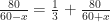


 h
h
