Amazon Founder Jeff Bezos Originally Wanted to be a Theoretical Physicist

The world’s richest man is currently Jeff Bezos, founder of Amazon.

Few people know that he was an undergraduate at Princeton with the goal of becoming a theoretical physicist! What made him change his mind? Watch the video below.

Summary: Jeff Bezos was stuck on a Partial Differential Equation (PDE) question for 3 hours. Even while collaborating with his room mate, he could not find the answer. Upon consulting his Sri Lankan genius classmate, “Yosantha”, Yosantha solved the problem almost instantaneously in his mind!

Also check out our previous posts on Partial Differential Equations:

Morse Inequalities

Let X be a CW complex (with a fixed CW decomposition) with c_d cells of dimension d. Let \mathbb{F} be a field and let b_d=\dim(H_d(X;\mathbb{F})).
(i) (The Weak Morse Inequalities) For each d,

\displaystyle c_d\geq b_d.
(ii)

\chi(X)=b_0-b_1+b_2-\dots=c_0-c_1+c_2-\dots,
where \chi(X) denotes the Euler characteristic of X.

Proof:

The proof is by linear algebra (see Hatcher pg. 147).

By rank-nullity theorem (秩-零化度定理), \dim C_d=\dim Z_d+\dim B_{d-1}.

By definition of homology, \dim Z_d=\dim B_d+\dim H_d.

\therefore c_d=\dim B_d+\dim B_{d-1}+b_d.

In particular, c_d\geq b_d.

Taking alternating sum gives \displaystyle \sum_d(-1)^d c_d=\sum_d(-1)^d b_d.

Reference: A user’s guide to discrete Morse theory by R. Forman.

Challenging P6 Math Question (Cycling)

One afternoon, 5 friends rented 3 bicycles from 5.00 p.m. to 6.30 p.m. and took turns to ride on them. At any time, 3 of them cycled while the other 2 friends rested.

If each of them had the same amount of cycling time, how many minutes did each person ride on a bicycle?

Hint: There is an “easy” way and also a “complicated” way to do this question. The “easy” way involves calculating total cycling time, while the “complicated” way involves working out a timetable to determine exactly who is cycling at which time.

(Source: Hardwarezone)

(Ans: 54)

Basics of Partial Differential Equations Summary

PDE: Separation of Variables

1) Let u(x,y)=X(x)Y(y).
2) Note that u_x=X'Y, u_y=XY', u_{xx}=X''Y, u_{yy}=XY'', u_{xy}=u_{yx}=X'Y'.
3) Rearrange the equation such that LHS is a function of x only, RHS is a function of y only.
4) Thus, LHS=RHS=some constant k.
5) Solve the two separate ODEs.

Wave Equation
\displaystyle c^2y_{xx}=y_{tt}, where y(t,0)=y(t,\pi)=0, y(0,x)=f(x), y_t(0,x)=0.

Solution of Wave Equation (with Fourier sine coefficients)
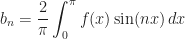
\displaystyle y(t,x)=\sum_{n=1}^\infty b_n\sin(nx)\cos(nct) where \displaystyle b_n=\frac{2}{\pi}\int_0^\pi f(x)\sin(nx)\,dx.

d’Alembert’s solution of Wave Equation
\displaystyle y(t,x)=\frac{1}{2}[f(x+ct)+f(x-ct)].

Heat Equation
\displaystyle u_t=c^2u_{xx},
u(0,t)=u(L,t)=0, u(x,0)=f(x).

Solution of Heat Equation
\displaystyle u(x,t)=\sum_{n=1}^\infty b_n\sin\left(\frac{n\pi x}{L}\right)\exp\left(-\frac{\pi^2n^2c^2}{L^2}t\right), where \displaystyle b_n=\frac{2}{\pi}\int_0^\pi f(x)\sin(nx)\,dx are Fourier sine coefficients of f(x).

Linear First Order ODE, Bernoulli Equations and Applications

Linear First Order ODE
DE of the form: y'+P(x)y=Q(x).

Integrating factor: R(x)=e^{\int P(x)\,dx}.
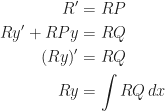
\begin{aligned}  R'&=RP\\  Ry'+RPy&=RQ\\  (Ry)'&=RQ\\  Ry&=\int RQ\,dx  \end{aligned}
\displaystyle \boxed{y=\frac{\int RQ\,dx}{R}}
(Remember to have a constant C when integrating the numerator \int RQ\,dx.)

Integration by parts
\displaystyle  \boxed{\int uv'\,dx=uv-\int u'v\,dx}

Acronym: LIATE (Log, Inverse Trig., Algebraic, Trig., Exponential), where L is the best choice for u. (This is only a rough guideline.)

Bernoulli Equations
DE of the form: y'+p(x)y=q(x)y^n.

y^{-n}y'+y^{1-n}p(x)=q(x)

Set \boxed{y^{1-n}=z}.

Then (1-n)y^{-n}y'=z'. The given DE becomes
\displaystyle  \boxed{z'+(1-n)p(x)z=(1-n)q(x)}.

Fundamental Theorem of Calculus (FTC)
Part 1: \displaystyle \frac{d}{dx}\int_a^x f(t)\,dt=f(x)

Part 2: \displaystyle \int_a^b F'(t)\,dt=F(b)-F(a)

Hyperbolic Functions
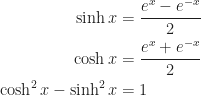
\begin{aligned}  \sinh x&=\frac{e^x-e^{-x}}{2}\\  \cosh x&=\frac{e^x+e^{-x}}{2}\\  \cosh^2 x-\sinh^2 x&=1\\  \end{aligned}
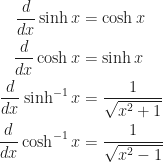
\begin{aligned}  \frac{d}{dx}\sinh x&=\cosh x\\  \frac{d}{dx}\cosh x&=\sinh x\\  \frac{d}{dx}\sinh^{-1}x&=\frac{1}{\sqrt{x^2+1}}\\  \frac{d}{dx}\cosh^{-1}x&=\frac{1}{\sqrt{x^2-1}}  \end{aligned}
\displaystyle \int \tanh(ax)\,dx=\frac{1}{a}\ln(\cosh(ax))+C.

Uranium-Thorium Dating
Starting Equations:
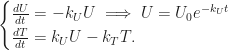
\displaystyle \begin{cases}  \frac{dU}{dt}=-k_U U\implies U=U_0e^{-k_Ut}\\  \frac{dT}{dt}=k_UU-k_TT.  \end{cases}

\frac{dT}{dt}+k_T T=k_U U_0e^{-k_Ut}

R=e^{\int k_T}=e^{k_T t}.

\displaystyle \boxed{T(t)=\frac{k_U}{k_T-k_U}U_0(e^{-k_Ut}-e^{-k_Tt})}

\displaystyle \boxed{\frac{T}{U}=\frac{k_U}{k_T-k_U}[1-e^{(k_U-k_T)t}]}

Happy Pi Day!

Happy Pi Day to all readers of Mathtuition88.com!

Check out our previous posts on Pi:

Did you know, Pi day is also Einstein’s Birthday?

How to get Pi on Calculator – Without pressing the Pi Button

The Mystery of e^Pi-Pi (Very Mysterious Number)

Euler’s proof of Pi^2/6 (Basel Problem)

Category Theory: How to Make Pi

Pi hiding in prime regularities

Also, check out our cooking blog for the following Pie recipes!

Beef Pie

Strawberry Cheesecake Pie

Lemon Pie

Easy Banana Pie

Fudgy Fudge Pie

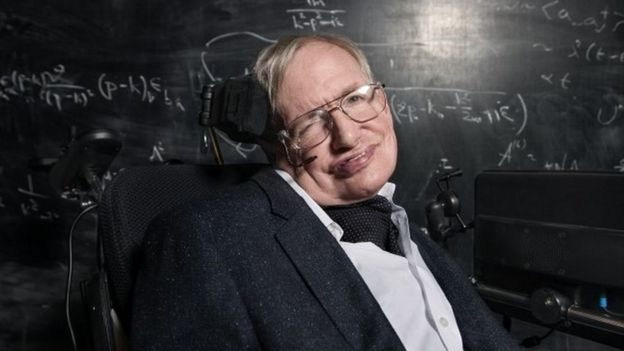
Stephen Hawking dies aged 76

RIP Stephen Hawking.

Source: http://www.bbc.com/news/uk-43396008

The British physicist was known for his work with black holes and relativity, and wrote several popular science books including A Brief History of Time.

“We are deeply saddened that our beloved father passed away today,” a family statement said.

At the age of 22 Stephen Hawking was given only a few years to live after being diagnosed with a rare form of motor neurone disease.

The magic (and math) of skating on thin ice without falling in

Very interesting video. Do try to imagine the sound of the ice and check out the video to confirm your guess. Very surprising sound! It is a pity that not many countries have such ice to skate in.

The main mathematical principle is Archimedes’ Principle:

Congelation ice, while a solid form of water, does bend slightly and acts like an elastic plate buoyed by the water below. To Anje, it’s Archimedes buoyancy principle in action.

“A body partially immersed in water is buoyed by a force equal to the weight of the water displaced by the body,” he said.

Source: https://www.pbs.org/newshour/science/the-magic-and-math-of-skating-on-thin-ice-without-falling-in

Stepping onto an inch-and-a-half thick piece of lake ice — much less doing laps on it — is a no-go for most people. But for experienced Swedish skaters Henrik Trygg and Mårten Anje, few things top skating on thin ice.

In December, still photographer Trygg filmed Anje skating on 1.8 inches of fresh ice on a lake outside Stockholm. The resulting mini-documentary— filled with the eerie, laser-like sounds of bending ice — went viral in February.

One shot shows the ice, commonly called “black ice,” visibly bending under the skater’s weight. Which raised the question: Why doesn’t this thin frozen surface break?

For the answer, we turned to Anje, a 35-year veteran of nordic skating whose day job is calculating risk. He is a mathematician and actuary at a consulting firm.

No homework, full-day school curriculum to help level playing field (Proposal, not implemented yet)

Full-day school is quite a drastic measure to combat tuition. Also, unless full-day means 7am to 7pm, it is unlikely to be different from the status quo.

Any parent with children in secondary school or JC is aware that school is already pretty much “full-day” as of today, from 7am to 5pm at the minimum on most days (including CCA). Hence, there is not much room to get more “full-day” than now. JC students are known to stay much later for CCA, probably some are already having schedules from 7am to 7pm, which more than qualifies as “full-day”.

Also, even if full-day school (say 7am to 7pm) is implemented, there seems nothing to stop students from having tuition during the weekends, or on weekdays 8pm-10pm.

Probably most students would not be too pleased at having a full-day school. If I were still a student, I would definitely be more stressed out by the full-day school. I would much rather have some homework but end school early. I would imagine teachers won’t be too happy too, full-day school for students means full-day school for teachers, since obviously some if not all teachers must stay back to supervise the students.

Most unhappy would be tutors, for obvious reasons. Probably if this is implemented, most tutors will have to change jobs. 😛

The underlying idea to level the playing field is good and makes sense though. Possibly make the full-day optional so that those who want to stay back and have the full-day can do so, those who want to leave can also do so.

Source: TodayOnline

SINGAPORE — To level the playing field for children from less advantaged socio-economic backgrounds, and break out of the country’s tuition culture, Nominated Member of Parliament Chia Yong Yong has suggested that all schools adopt a full-day curriculum.

That way, the children will complete their homework during school hours, and be able to spend more time on “push-frontier practicals” aimed at training them to become more comfortable in tackling problems and to grow an appetite for risk-taking. These qualities are essential traits for the current technological revolution, also known as Industry 4.0, she said.

In her Budget debate speech in Parliament on Wednesday (Feb 28), Ms Chia said the current academic model “runs the risk of not harnessing the potential of all our young people” who do not have access to enrichment and tuition classes. As a result, those from more advantaged socio-economic backgrounds who have access to these classes will outperform their peers.

Stressing that “every school is a good school, but not every home is equal”, the lawyer said the current system has been “abused” such that inequality continues to be perpetuated and deepened.

Higher paying job than Doctor / Lawyer

We encourage top students to look beyond the traditional Singaporean jobs of Doctor / Lawyer as there are new emerging jobs that can equal or even surpass the pay of Doctor/Lawyer.

At the end of the day, do also consider your passion and aptitude, which may be more important than the salary. No point being stuck in a high paying job that you absolutely hate.

Do share this post with your children/relatives/classmates who may be choosing their courses after receiving their ‘A’ level results.

Source: Todayonline

SINGAPORE — A high-paying job as a doctor or lawyer has traditionally been the career path that many Singaporeans aspire to. But there is now a new kid on the block, with double degree graduates in business and computer science joining the ranks of top earners here.

According to the latest graduate employment survey released by three local universities on Monday (Feb 26), fresh graduates from Nanyang Technological University’s (NTU) business and computing science double degree programme commanded a median starting salary of S$5,000 last year, up from S$4,600 in 2016.

The median salary for the batch of 20 graduates matched that of their peers who graduated from the law and medicine faculties. They were also in demand with employers, as they recorded a 100 per cent overall employment rate.

Meanwhile, fresh computing science graduates were also among the highest paid last year. Those who graduated from this course in NTU got a median starting pay of S$3,850 last year, up from S$3,500 in 2016. Their counterparts from the National University of Singapore (NUS) received S$4,285 – S$285 more than in 2016.

However, rankings differed for 75th percentile salaries — the base salary of the top 25 per cent of the batch — as SMU-schooled lawyers emerged as top earners at S$5,840, compared to NUS doctors’ starting pays of S$5,305, and S$5,362 for NTU’s business and computer science graduates.

Growth of starting salaries in law and medicine was tepid, however, as law graduates from NUS and SMU only received about S$100 and S$150 more respectively last year, while NUS doctors banked in about the same amount as their seniors.

The results of the 2017 Singapore-Cambridge General Certificate of Education Advanced Level (GCE A-Level) examination will be released on Friday, 23 February 2018.

Good luck to all collecting their A Level results today!

Check out our post on BMAT Book Recommendations for NTU Medicine, and also Alternate Admission Route to NUS Computing.

1. The results of the 2017 Singapore-Cambridge General Certificate of Education Advanced Level (GCE A-Level) examination will be released on Friday, 23 February 2018. School candidates may collect their results from their respective schools from 2.30pm that day.

2. Private candidates will be notified of their results by post. The result slips will be mailed on 23 February 2018 to the postal address provided by the candidates during the registration period. Private candidates who have SingPass1accounts can also use their SingPass to obtain their results online via the internet Examination Results Release System (iERRS) on the Singapore Examinations and Assessment Board’s website (www.seab.gov.sg) from 2.30pm on 23 February 2018.

Heroic math teacher saved her students from Florida shooting

Heroic math teacher saved her students from Florida shooting by covering classroom door’s window, ordering kids to the floor and refusing to let anyone in… even the SWAT team. Read more: http://www.dailymail.co.uk/news/article-5399143/Heroic-teacher-saved-students-Florida-shooting.html#ixzz57i0Hcvi9

Heroic math teacher saved her students from Florida shooting by covering classroom door’s window, ordering kids to the floor and refusing to let anyone in… even the SWAT team

  • Mrs Viswanathan realised something was wrong after two fire alarms sounded
  • Instead of letting pupils out her math class, she told them to duck in the corner 
  • Mrs V refused to let SWAT teams in, so they had to enter through the window
  • A mother of a pupil in the class said Mrs V’s actions helped to save student’s lives

Linear System of Differential Equations, Solutions, Phase Portrait Sketching

Solutions of Homogeneous Linear System of DE
\displaystyle \mathbf{y}'=\mathbf{A}\mathbf{y}
\displaystyle \mathbf{y}(t)=\mathbf{v}e^{rt}
where r and \mathbf{v} are eigenvalue and eigenvector for \mathbf{A} respectively.

Superposition Principle
If \mathbf{x_1}(t) and \mathbf{x_2}(t) are two solutions to a homogeneous SDE \mathbf{y'}=\mathbf{Ay}, then \displaystyle \mathbf{y}=c_1\mathbf{x_1}(t)+c_2\mathbf{x_2}(t) is also a solution for any scalars c_1, c_2.

Euler’s formula
\displaystyle e^{i\theta}=\cos\theta+i\sin\theta

General Solutions (Complex Eigenvalues)

1) Let r_1=a+bi be an eigenvalue corresponding to eigenvector \mathbf{v_1}. (The eigenvectors are complex conjugates: \mathbf{v_1,v_2}=\mathbf{p}\pm \mathbf{q} i.)
2) Construct
\displaystyle \mathbf{x}_\text{Re}(t)=e^{at}(\mathbf{p}\cos bt-\mathbf{q}\sin bt)
\displaystyle \mathbf{x}_\text{Im}(t)=e^{at}(\mathbf{p}\sin bt+\mathbf{q}\cos bt)
3) The general solution is \displaystyle \mathbf{y}=c_1\mathbf{x}_\text{Re}(t)+c_2\mathbf{x}_\text{Im}(t).

How to Sketch Phase Portrait

Probably the best video on how to sketch Phase Portrait:

Characteristic Polynomial, Eigenvalues, Eigenvectors

Characteristic Polynomial, \det(\lambda I-A)
\begin{aligned}  \lambda\ \text{is an eigenvalue of }A&\iff\det(\lambda I-A)=0\\  &\iff \lambda\ \text{is a root of the characteristic polynomial}.  \end{aligned}

Eigenspace
The solution space of (\lambda I-A)\mathbf{x}=0 is called the eigenspace of A associated with the eigenvalue \lambda. The eigenspace is denoted by E_\lambda.

Sum/Product of Eigenvalues
– The sum of all eigenvalues of A (including repeated eigenvalues) is the same as Tr(A) (trace of A, i.e. the sum of diagonal elements of A)
– The product of all eigenvalues of A (including repeated eigenvalues) is the same as \det(A).

Finding Least Squares Solution Review and Others

Rotation Matrix

The rotation matrix
\displaystyle  R=\begin{pmatrix}  \cos\theta & -\sin\theta\\  \sin\theta & \cos\theta  \end{pmatrix}
rotates points in the xy-plane counterclockwise through an angle \theta about the origin.

For example rotating the vector (1,0) 45 degrees counterclockwise gives us:
\displaystyle  \begin{pmatrix}  \cos 45^\circ & -\sin 45^\circ\\  \sin 45^\circ & \cos 45^\circ  \end{pmatrix}  \begin{pmatrix}  1\\  0  \end{pmatrix}  =  \begin{pmatrix}  \frac{\sqrt{2}}{2}\\  \frac{\sqrt{2}}{2}  \end{pmatrix}.

Finding Least Squares Solution

Given Ax=b (inconsistent system), solve
\displaystyle A^TAx=A^Tb instead to get a least squares solution of the original equation.

Projection

If we know a least squares solution \mathbf{u} of A\mathbf{x}=\mathbf{b}, we can find the projection \mathbf{p} of \mathbf{b} onto the column space of A by \displaystyle \mathbf{p}=A\mathbf{u}.

Dimension Theorem for Matrices (Also known as Rank-Nullity Theorem)

If A is a matrix with n columns, then \displaystyle rank(A)+nullity(A)=n.

(rank(A)=number of pivot columns,

nullity(A)=number of non-pivot columns.)

Linear Independence and the Wronskian
A set of vector functions \vec{f_1}(x), \dots, \vec{f_n}(x) from \mathbb{R} to \mathbb{R}^n is linearly independent in the interval (\alpha,\beta) if \displaystyle W[\vec{f_1}(x),\dots,\vec{f_n}(x)]\neq 0 for at least one value of x in the interval (\alpha,\beta).

5 Ways To Make Math More Fun And Meaningful For Kids

5 Ways To Make Math More Fun And Meaningful For Kids

Fun and meaningful – these are two words that children rarely use to describe math. There are several reasons why many kids dislike math, but according to kids and learning experts, the top reasons always include:

  • They always have to memorize mathematical formulas and concepts
  • They often have to make numerous complex and lengthy calculations (such as finding the surface area of cuboid or cylinder)
  • They always feel pressure to get perfect quiz or test scores
  • They have a hard time finding practical applications for the advanced mathematical formulas and concepts they’re learning

Because of these reasons (and more), parents always struggle to get kids to like math and excel in this subject.

How to Help Kids Change Their Attitude towards Math

According to a study published on the website of Stanford University’s Graduate School of Education, kids who outgrow their dislike and fear of of this subject will find it easier to do better on this subject.

If you are a parent or teacher, you can help children change their attitude towards math by making it more fun and meaningful for them. You can do this through the following ways:

1.    Enable your kids to realize the importance of math

When children understand that math is not all about theories and principles, they will start viewing the study of math as a valuable learning opportunity and thus become more interested in it. As such, you need to constantly show them how useful math is in real life.

For instance:

  • Teach your kids about basic finance whenever you go shopping
  • Train younger kids to sort coins and bills and how to use them when buying individual or small amounts of items
  • Allow your older children to help find the best prices for the items on your shopping list. Ask them to tally simple sums while grocery shopping.

Other activities that will help kids understand the relevance of math in real life include using measurements and basic operations when cooking and baking, telling time, checking temperatures, etc.

Although these activities seem simple, they are still effective ways of teaching kids the importance of knowing the right concepts and applications of certain mathematical operations.

2.    Take math outdoors

If you’re an educator, when you take math learning outside the classroom, you provide kids excellent ways of realizing that math can be found and used everywhere. This will also allow you to transfer lessons outside the classroom, and vice versa.

Below are examples of fun activities that will enable you to take math outdoors:

  • Treasure or scavenger hunt
  • Multiplication hopscotch
  • Leaf logic
  • Counting maze (for preschoolers)

3.    Enroll your kids in an after-school tutoring program

Sometimes, children need outside help to discover that math is interesting and meaningful. If you and your kids decide to get help from a tutor, find a tutoring center that specializes in teaching kids math.

The right math tutoring center will follow a unitary method that will help their students make sense of all the theories and concepts they are learning. They will assess the needs of the students and design a personalized learning program that will address their specific requirements.

Most tutoring centers today do not simply provide additional explanations and activities for kids to learn a particular concept. Tutors tailor their teaching techniques to ensure the students learn by heart and apply their knowledge.

As such, they also employ fun and creative methods to teach their students. They also check progress along the way to make sure kids truly understand, apply, and retain the concepts they learned.

4.    Incorporate math in games

Bring out your board games, a pack of cards, a puzzle, or even or old blocks and turn the game into a family competition. Activities and games that incorporate or focus on math are great in reinforcing the right mathematical skills and concepts.

Regardless of the activity, you can reward even small accomplishments and help your kids know that they just completed a fun math-related task. Children will love the recognition and prize, especially if they can compete with their siblings. They will also realize that knowing mathematical operations can be fun and applying them can be rewarding.

5.    Be supportive

Lastly, although you may want to empathize with your kids, saying things like “I was also never good at math” won’t do anything good for them. It is best to encourage your children to embrace challenges and see the fun in learning even if they are having a hard time with some mathematical concepts.

Be as involved as you can be in your children’s schoolwork and show enthusiasm. When you help your kids learn to associate math with fun, pleasure, parental love and attention, they will be excited about the subject throughout their learning years.

As a parent or educator, your support and willingness to think outside the box will go a long way in helping your kids think differently about math and eventually excel in the subject.

AUTHOR BIO

Maloy Burman is the Chief Executive Officer and Managing Director of Premier Genie FZ LLC. He is responsible for driving Premier Genie into a leadership position in STEM (Science, Technology, Engineering and Mathematics) Education space in Asia, Middle East and Africa and building a solid brand value. Premier Genie is currently running 5 centers in Dubai and 5 centers in India with a goal to multiply that over the next 5 years.

Dot Product and Span Summary

Dot Product
\mathbf{u}\cdot\mathbf{v}=\|u\|\|v\|\cos\theta
\cos\theta=\frac{\mathbf{u}\cdot\mathbf{v}}{\|u\|\|v\|}

Span
\text{span}\{\mathbf{u_1},\mathbf{u_2},\dots,\mathbf{u_k}\}=\{c_1\mathbf{u_1}+c_2\mathbf{u_2}+\dots+c_k\mathbf{u_k}\mid c_1,c_2,\dots,c_k\in\mathbb{R}\}=\text{set of all linear combinations of } \{\mathbf{u_1},\mathbf{u_2},\dots,\mathbf{u_k}\}.

Subspaces
V\subseteq\mathbb{R}^n is a subspace of \mathbb{R}^n if
1) V=\text{span}\{\mathbf{u_1},\mathbf{u_2},\dots,\mathbf{u_k}\} for some vectors \mathbf{u_1},\mathbf{u_2},\dots,\mathbf{u_k}.
2) V satisfies the closure properties:

(i) for all \mathbf{u},\mathbf{v}\in V, we must have \mathbf{u}+\mathbf{v}\in V.

(ii) for all \mathbf{u}\in V and c\in\mathbb{R}, we must have c\mathbf{u}\in V.

3) V is the solution set of a homogeneous system.

(Sufficient to check either one of Condition 1, 2, 3.)

Remark:
For V to be a subspace, zero vector \mathbf{0} must be in V. (Since for \mathbf{u}\in V, 0\in\mathbb{R}, we have 0\mathbf{u}\in V.)

Linear Independence and Dependence
\mathbf{u_1},\mathbf{u_2},\dots,\mathbf{u_k} are linearly independent if the system \displaystyle c_1\mathbf{u_1}+c_2\mathbf{u_2}+\dots+c_k\mathbf{u_k}=0 has only the trivial solution, i.e. c_1=c_2=\dots=c_k=0.

If the system has non-trivial solutions, i.e. at least one c_i not zero, then \mathbf{u_1},\mathbf{u_2},\dots,\mathbf{u_k} are linearly dependent.

Gaussian Elimination Summary

Row echelon form (REF)
For each non-zero row, the leading entry is to the right of the leading entry of the row above.

E.g. \begin{pmatrix}  0 & \mathbf{1} & 7 & 2\\  0 & 0 & \mathbf{9} & 3\\  0 & 0 & 0 & 0  \end{pmatrix}

Note that the leading entry 9 of the second row is to the right of the leading entry 1 of the first row.

Reduced row echelon form (RREF)
A row echelon form is said to be reduced, if in each of its pivot columns, the leading entry is 1 and all other entries are 0.

E.g. \begin{pmatrix}  1 & 0 & 0 & 2\\  0 & 1 & 0 & 3\\  0 & 0 & 1 & 4  \end{pmatrix}

Elementary Row Operations
1) cR_i — multiply the ith row by the constant c
2) R_i \leftrightarrow R_j — swap the ith and the jth row
3) R_i+cR_j — add c times of the jth row to the ith row.

Gaussian Elimination Summary
Gaussian Elimination is essentially using the elementary row operations (in any order) to make the matrix to row echelon form.

Gauss-Jordan Elimination
After reaching row echelon form, continue to use elementary row operations to make the matrix to reduced row echelon form.

Highly Motivational Math Video (in Chinese)

This is actually one of the best motivational videos on Math I have seen. Unfortunately there is no English translation. It covers how useful Math is, and also some history of Math in ancient China. (It is rarely known, but China discovered negative numbers and calculated pi to high accuracy much earlier than in Western civilization.)

However, (according to the video), Math in ancient China went downhill in the Ming dynasty after it was scrapped from the imperial examination. Seems like removing Math from the examination syllabus is always a bad idea!

Finally, the video ends off with a note not to discourage budding mathematicians. Many budding mathematicians, will face strange looks from well-intentioned friends and society. Will learning math be useful or can it make money? Such thoughts can discourage people from learning mathematics (like the speaker himself).

By the way, at the start of the video, the speaker tells a humorous story of how he used Math to propose to his crush in England. This is related to my earlier post on Valentine’s Day Math on how to draw a heart using math.

Amos Yee Math Talent

Amos Yee (“famous” for posting controversial videos) actually has good talent and aptitude in Mathematics. His mother is a Math secondary teacher with decades of experience. Many people know him for his infamous videos and his “American English” pronunciation, but few know that he was actually one of the top students in his secondary school in terms of Maths. His English results were good too, and so was his Pure Chemistry. Perhaps even more impressive (and rare), is Amos Yee has a Grade 8 guitar certification (ABRSM merit) (Source: Amos Yee “Happy Teachers’ Day” YouTube video). In March 2011, Yee also won awards for Best Short Film and Best Actor at The New Paper’s First Film Fest (FFF) for his film Jan. He was also an actor in Jack Neo’s movie We Not Naughty.

Unfortunately, Yee seemed to have not used his talents well to benefit society, but instead got himself into a lot of trouble. Who knows, if he turns over a new leaf it could be still possible to have a bright future.

Quote from Amos Yee Facebook:

“OK my fellow friends, sorry it’s been so late, I shall announce my O level results.

Apparently I did better than I expected, for all the wrong subjects, so if you truly want to see the innate comedy of my results, you should check out the results which I’d predicted before in my previous post before reading this, and then I think you’ll laugh as much as I did.

E Maths (Dogs truly can get A1 for E Maths)

English: A1 (Well this was surprising, I’d finally gained the coveted A1 for English that I had always hoped for in my Secondary School, and mastered the art of English Comprehension.

A Maths: A2 (So apparently if you leave out 4 entire questions that are 7 marks each, you can still get an A2. So I guess I did really ****ing well for the questions that I did. My mother, being a highly coveted A maths and E maths teacher for 3 decades, threw herself out of the building when she heard her darling son did not attain an A1 for A maths. If you look out of the window, you can still hear the faint cries of ‘****! MY SON IS SUCH A DISAPPOINTMENT’. Well, you threatened to disown me when I became an Atheist, and in the end you didn’t, so I think you’ll do just fine.)

L1R5:11

Raw Aggregate Score: 7(-2 for CCA, -2 for MSP)

Best school I can go to: Nanyang JC”

Source: Amos Yee Facebook, January 14, 2015

Amos also claimed that he “had only studied extensively for the first E maths and A maths papers during the O levels period”. He didn’t really study during the month before the O levels, rather he was “abandoning studying just for that last month, and instead using that month to Complete 4 seasons of Daria, play Spirit Tracks and smash brothers on the DS, create a tuition namecard I now rarely use, and listening to all the best albums of the Beatles”. His Prelim results were also great:

Quote:

“For reference and comparison, this was my mark for prelim 2, the final exam I took in school that isn’t O levels, I think by Prelim 2, the tedium of studying and the uselessness of it was already bearing down on me, and I studied for all the papers, 2 days before and tried to do the best I can with the retained knowledge I had for CA1 (Which I also got an L1R5 of 12 but a slightly higher % of 72 % compared to CA2’s 70%, due largely in part to 93% and 88% for E maths and A maths respectively)
E Maths: A1 (82%)
A maths: A1 (82%)
English: A2 (72%)
Chemistry: A2 (71%)
Chinese: B3 (68%/)
Literature: B3 (65%)
Combined Humans: B3 (65%)
Malay: B4 (64%)
L1R5: 12

Source: Amos Yee Facebook, January 11, 2015

His prediction of his O Level results are also quite accurate:

Quote:

“So here it is, my predicted O level results that are coming out tomorrow:

E maths: A1 (Dogs can get A1 for E maths)

English: A2 (Honestly, I might get an A1 in lieu of the bellcurve,but I never got A1 for English in any full paper before, neither would I feel proud if I did, why would I feel proud about mastering the art of the language of robots.)

Chemistry A2(SPA will help me probably, and though I didn’t study, retention from previous exams was surprisingly good when I did the paper)

A Maths: B3 (Though this was my best subject ever in previous exams(I got 100 plus bonus mark for an A maths paper for God’s sakes), apparently the few weeks I didn’t study was significant enough to make me forget my concepts, to the point that I had skipped an entire 2-3 questions with about 7 marks each, and I think with my inclination to be careless and forget units, it’s going to be a deprovement that will send shock waves)”

Source: Amos Yee Facebook, January 11, 2015

Finally, Amos Yee was also a top student in Secondary 3, 4 (Zhonghua Secondary School) and nominated for a Humanities scholarship. He was consistently getting As for E maths, A maths, Chemistry and English. (Source: Amos Yee WordPress blog, January 25, 2015).

Math Books for Christmas

Wishing all readers a joyous Christmas ahead! Here are some ideas for a mathematical Christmas gift for your loved ones who are math lovers:

1)

This Christmas-themed Math book is the perfect gift for your child. According to Amazon, it is rated 4.5/5, and one reviewer even remarked that his 7 year old daughter loved reading it:

“I don’t write reviews normally but I was sitting in bed reading it when my 7 year old daughter snuggled up next to me to read it too – she would not let me turn the pages till she finished which was cute even though I had to wait.” (Amazon)


The Indisputable Existence of Santa Claus: The Mathematics of Christmas

2)

This book is rated very highly on Amazon; it is one of the best sellers in the Math category. It is ideal for homeschoolers, and for Singaporean primary school students who want to learn in advance, during the school holidays. (American Middle School syllabus should be accessible to upper primary Singaporean students) It is written in a very interesting manner as well.


Everything You Need to Ace Math in One Big Fat Notebook: The Complete Middle School Study Guide (Big Fat Notebooks)

3)

This book is extremely popular in the United States. It is a #1 New York Times bestseller, as well as based on true history. “The phenomenal true story of the black female mathematicians at NASA whose calculations helped fuel some of America’s greatest achievements in space. Soon to be a major motion picture starring Taraji P. Henson, Octavia Spencer, Janelle Monae, Kirsten Dunst, and Kevin Costner.”


Hidden Figures: The American Dream and the Untold Story of the Black Women Mathematicians Who Helped Win the Space Race

America’s Lost Einsteins

Source: https://www.theatlantic.com/business/archive/2017/12/innovation-income-chetty/547202/

Millions of children from poor families who excel in math and science rarely live up to their potential—and that hurts everyone.

Consider two American children, one rich and one poor, both brilliant. The rich one is much more likely to become an inventor, creating products that help improve America’s quality of life. The poor child probably will not.

That’s the conclusion of a new study by the Equality of Opportunity project, a team of researchers led by the Stanford economist Raj Chetty. Chetty and his team look at who becomes inventors in the United States, a career path that can contribute to vast improvements in Americans’ standard of living. They find that children from families in the the top 1 percent of income distribution are 10 times as likely to have filed for a patent as those from below-median-income families, and that white children are three times as likely to have filed a patent as black children. This means, they say, that there could be millions of “lost Einsteins”—individuals who might have become inventors and changed the course of American life, had they grown up in different neighborhoods. “There are very large gaps in innovation by income, race, and gender,” Chetty told me. “These gaps don’t seem to be about differences in ability to innovate—they seem directly related to environment.”

From Medical Doctor to Math Professor

Just read about this rather amazing biography: https://today.duke.edu/2017/10/hau-tieng-wu-vital-signs. From a medical doctor, Hau-tieng Wu pursued a Ph.D. in math, and is now a math professor at Duke. Quite an interesting transition, that is quite rare, possibly less than 100 such cases in the world. Most mathematicians know little about medicine, and most medical doctors know little about math. It is rare to have someone know both fields.

Listen to your heartbeat with a stethoscope and you’ll hear a rhythmic lub-dub, lub-dub that repeats roughly 60 to 100 times a minute, 100,000 times a day.

But the normal rhythm of a healthy heart isn’t as steady as you might think, says Hau-tieng Wu, M.D., Ph.D., an associate professor of mathematics and statistical science who joined the Duke University faculty this year.

Rather than beating like a metronome, heart rhythm varies depending on whether you’re asleep or awake, sitting or jogging, calm or driving in rush hour. Breathing rate, brain activity and other physiological signals vary in much the same way, Wu says.

He should know. Before becoming a professor, Wu trained as a medical doctor in Taiwan. In his fifth year of medical school he was doing clinical rotations in the hospital when he was struck by the complex fluctuations in heart rhythm during anesthesia and surgery.

Where some saw noisy patterns — such as the spikes and dips on an electrocardiogram, or ECG — Wu saw hidden information and mathematical problems. “I realized there are so many interesting medical data that aren’t fully analyzed,” Wu said.

When a patient is in the hospital, sensors continuously monitor their heart rate and rhythm, breathing, oxygen saturation, blood pressure, brain activity and other vital signs.

The signals are sent to computers, which analyze and display the results and sound an alarm if anything veers outside normal ranges.

An ECG, for example, translates the heart’s electrical activity into a squiggly line of peaks and valleys whose frequency, size and shape can change from one moment to the next.

Wu is using techniques from differential geometry and harmonic analysis to detect patterns hidden in these oscillating signals and quantify how they change over time.

His methods have been applied to issues in cardiology, obstetrics, anesthesiology, sleep research and intensive care.

Kids struggling in math? Try this “magic” method from Japan (VIDEO)

URL: Aleteia

It’s an Asian-style mathematics similar to Common Core that’s actually fun to do.

Confession time: I’m terrible at math. I don’t just mean like “struggled with calculus” bad, I mean like “had to watch YouTube videos to relearn long division in order to help my 4th grader with her homework” bad. I don’t know my times tables, except the easy ones. I can’t do fractions or percentages. I count on my fingers. 

It’s sad and shameful, and I was determined that my children would not share my fate. So when my oldest daughter was 5, I bought the insanely expensive starter package from Right Start Math and set about teaching her how to do math the right way.

It did not go well, nor did it last long. I found even the very simple activities baffling because I couldn’t grasp the intention. It was like trying to teach my daughter a foreign language I didn’t know.

However, my abject failure to understand it did not diminish my enthusiasm for the Asian method of mathematics. One of the reasons I like Common Core math is because there are lots of similarities. If you’ve never been exposed to the wonder of Asian-style mathematics, allow me to remedy that for you:

Check out the video on the page, it is quite amazing. (Japanese method of multiplying with lines).

URL: Aleteia

US students aren’t bad at math—they’re just not motivated

It turns out that US students aren’t that bad at math, they just have no motivation to do the PISA test properly. (The PISA test is an external test that has no bearing on their school academic results.)

Source: https://qz.com/1130505/us-students-arent-bad-at-math-theyre-just-not-motivated/

It’s no secret that young Americans perform poorly on math and science tests, especially compared to their peers in countries like Singapore, Korea and China, where math scores are among the highest in the world. Now, a working paper surfaces a fundamental reason for that weak performance: American students are simply not trying hard enough.

In the latest results of the Programme for International Student Assessment (PISA), US students ranked roughly average among the 75 participating countries. The PISA tests, administered by the OECD every three years, assess 15-year-olds around the world on math, science and reading. Governments and policy makers point to the outcomes when making the case for education reform.

The researchers also ran a simulation, and found that if the 15-year-olds in the US had been given the same cash bonus in 2012 when taking the assessment, America would have ranked 19th in the PISA math test instead of 36th among 65 nations.

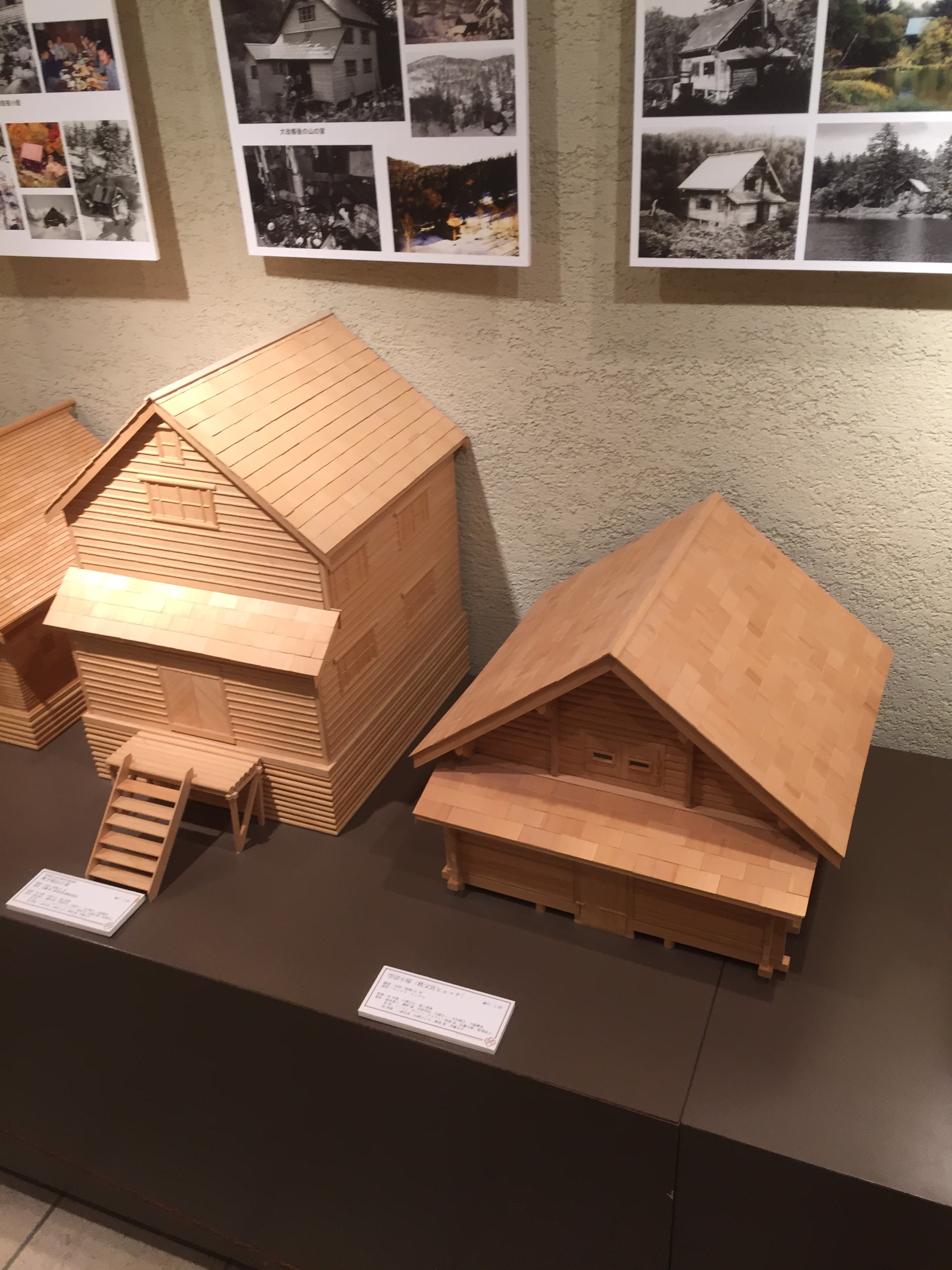
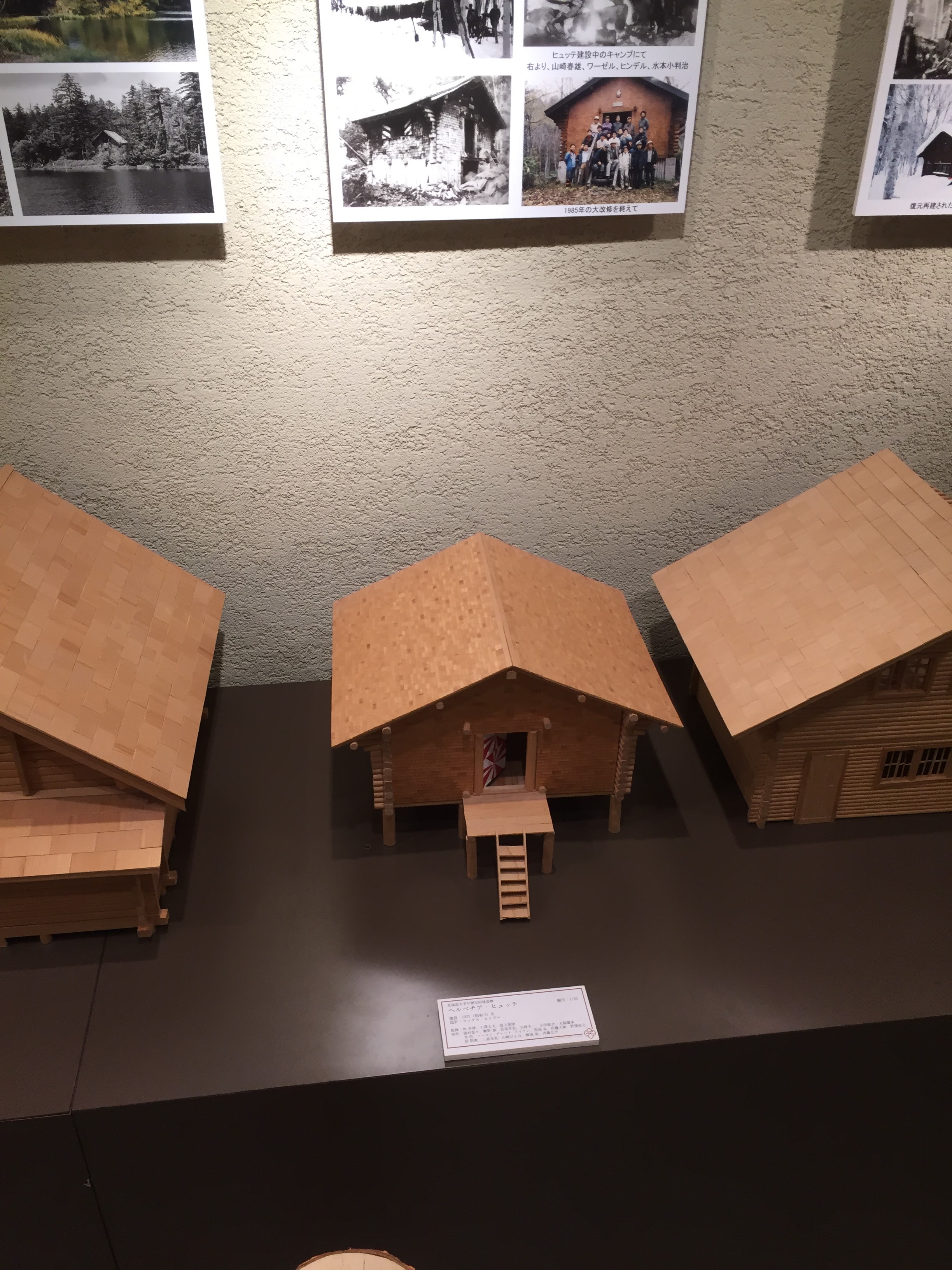
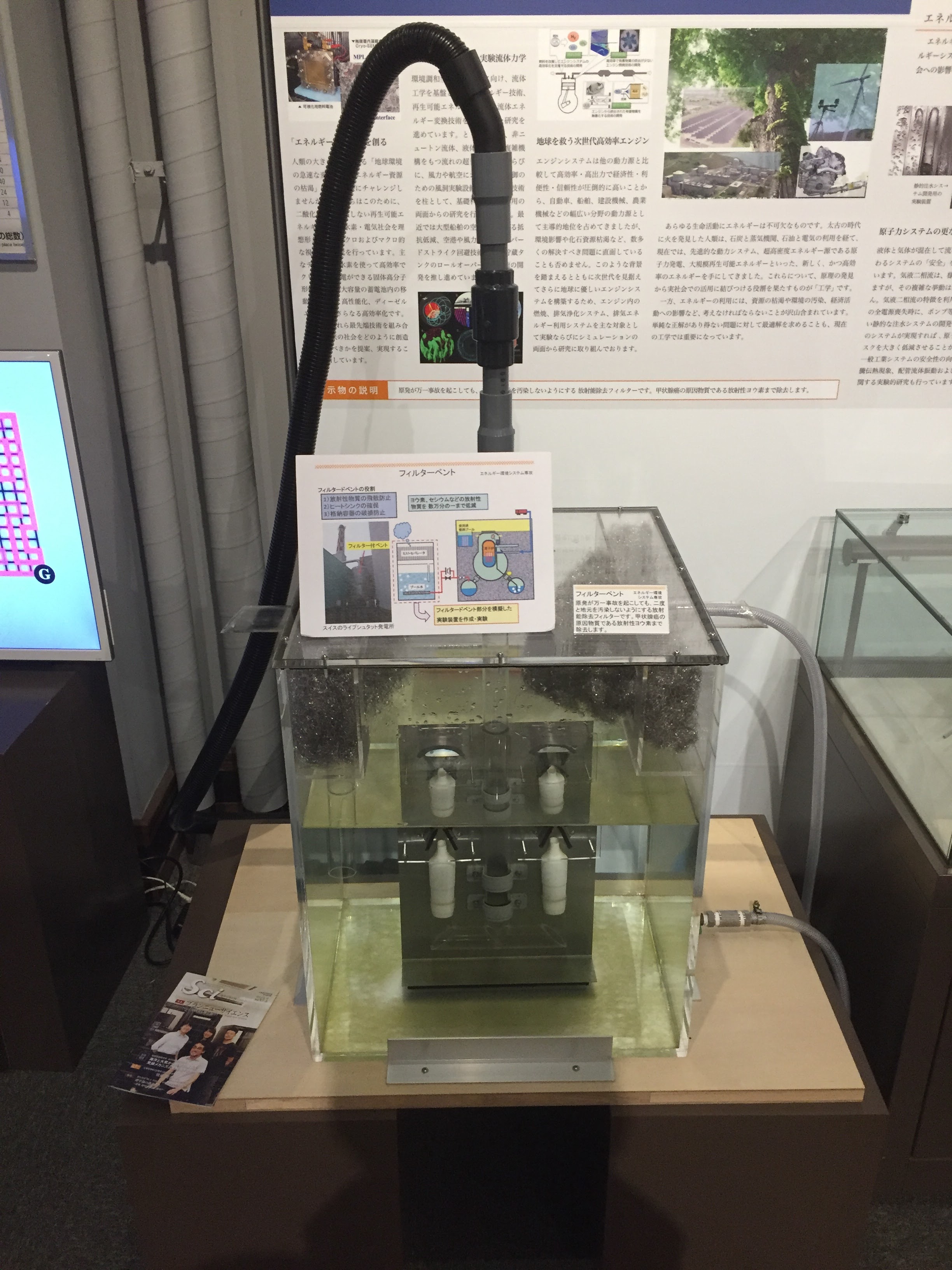
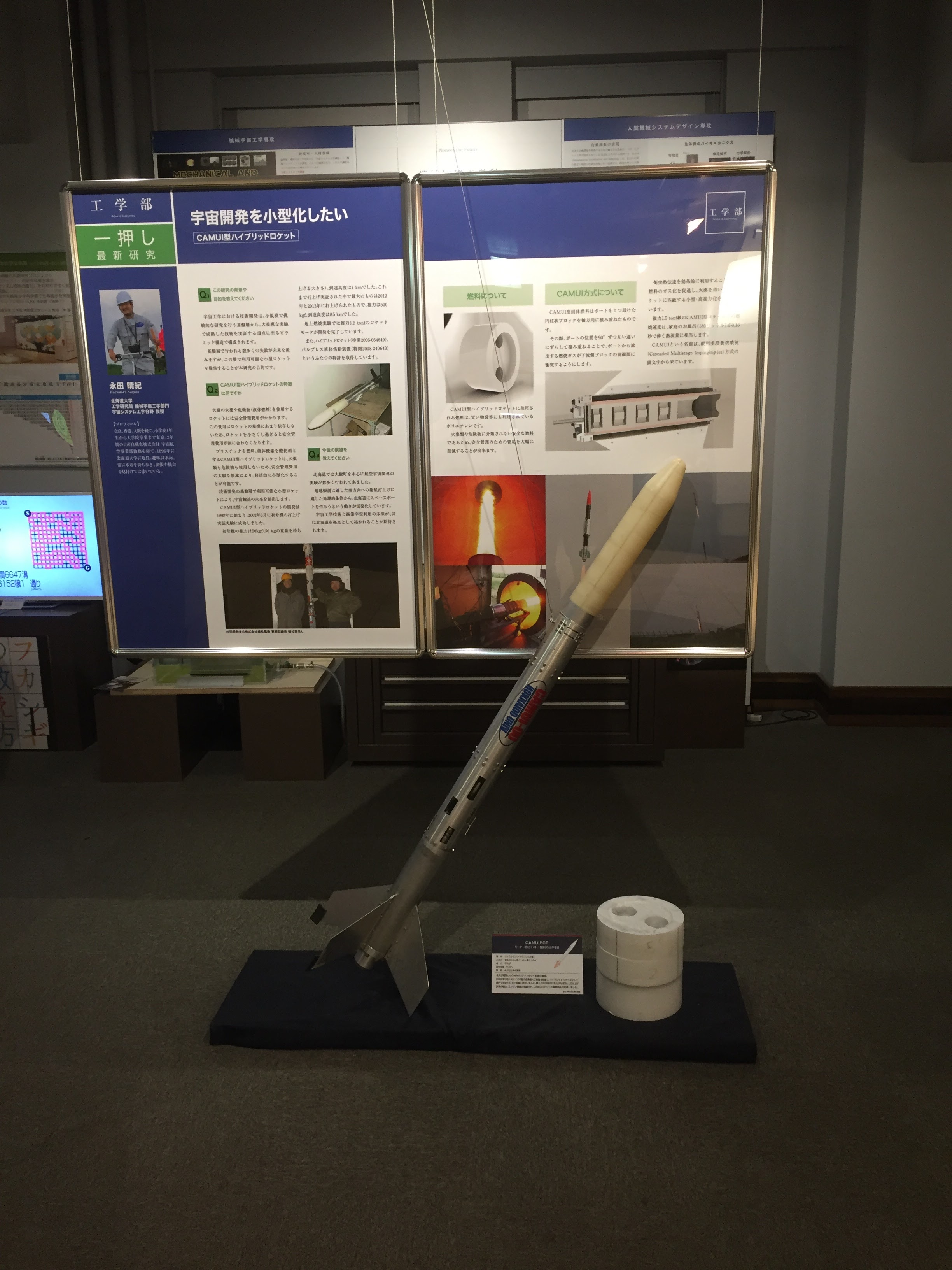
Hokkaido University Photo Gallery and Trip Guide

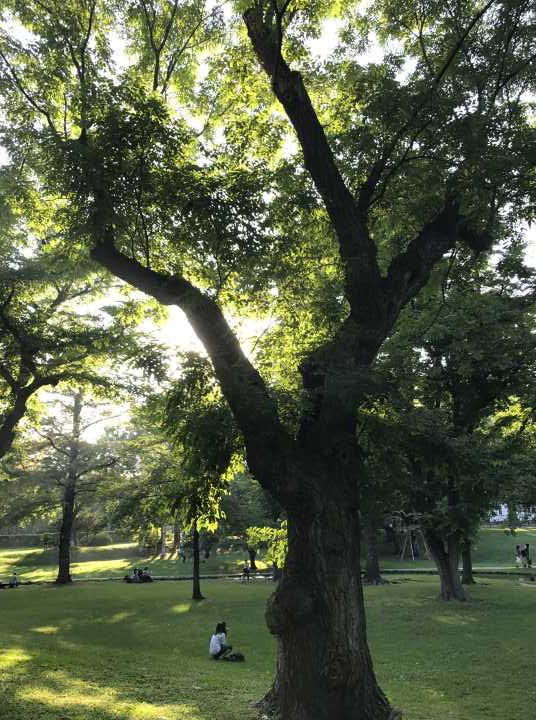
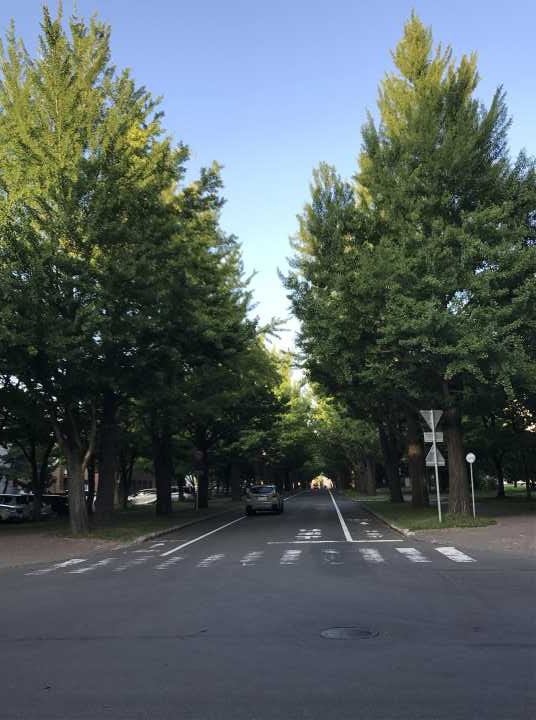
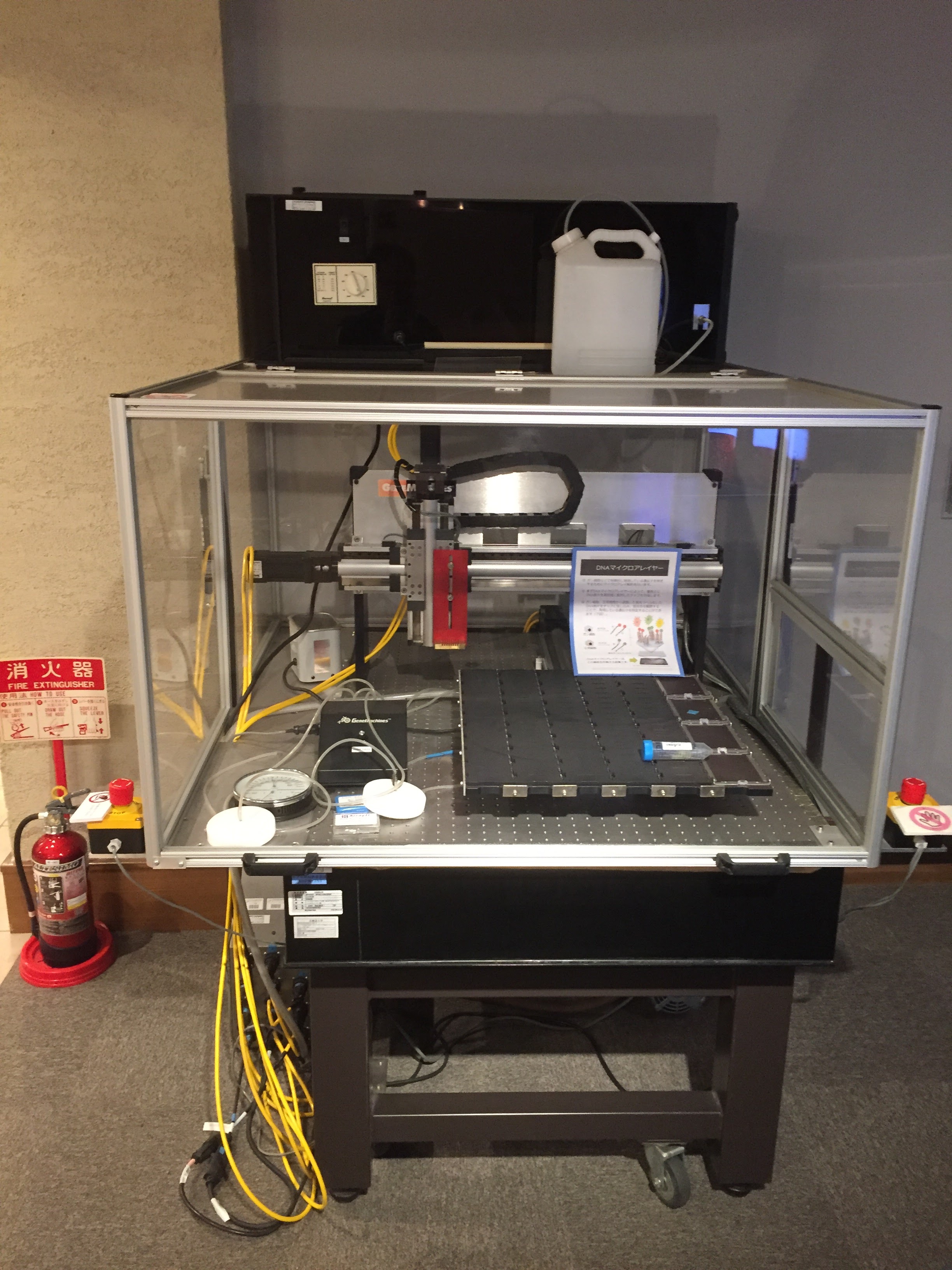
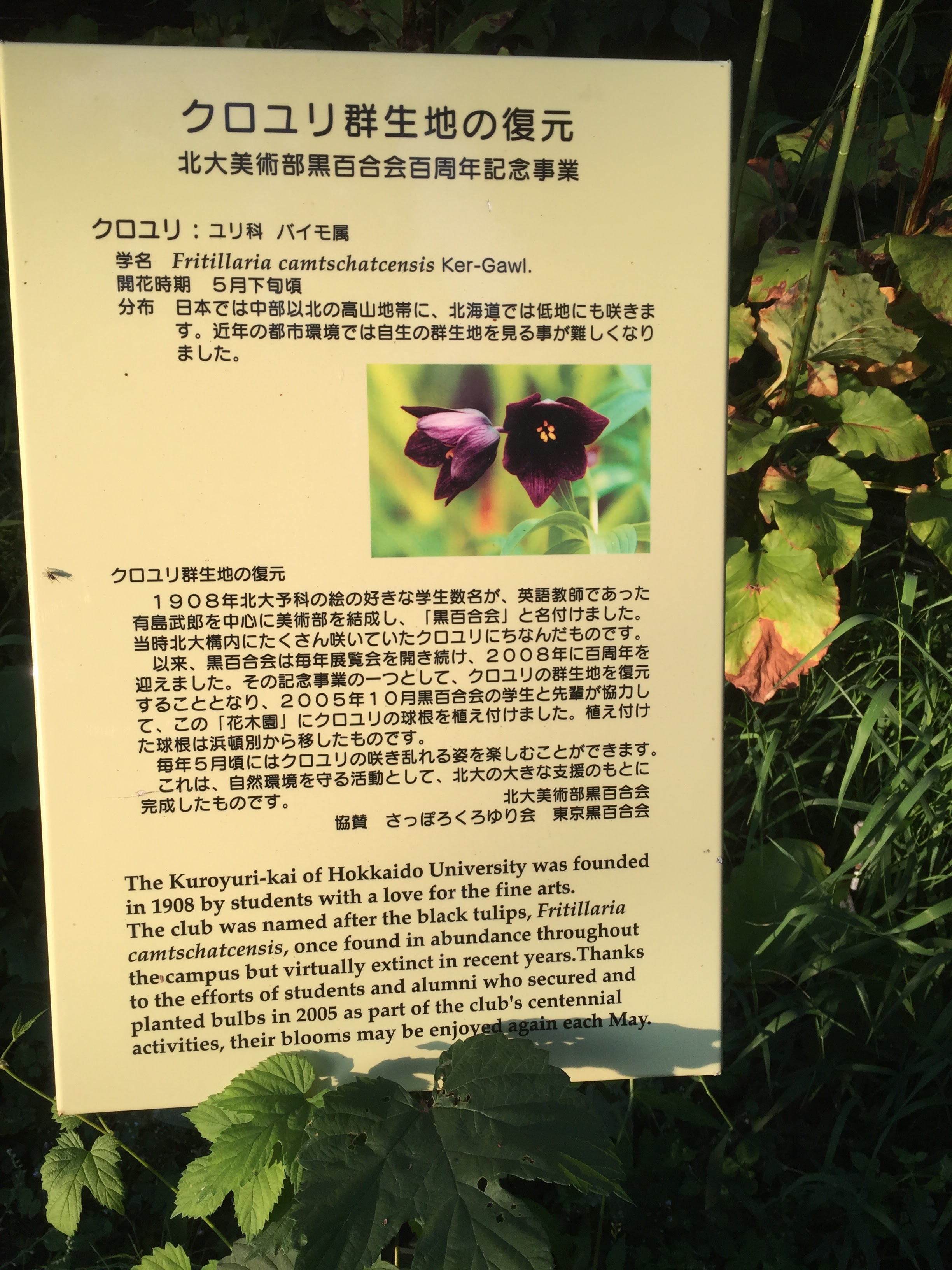
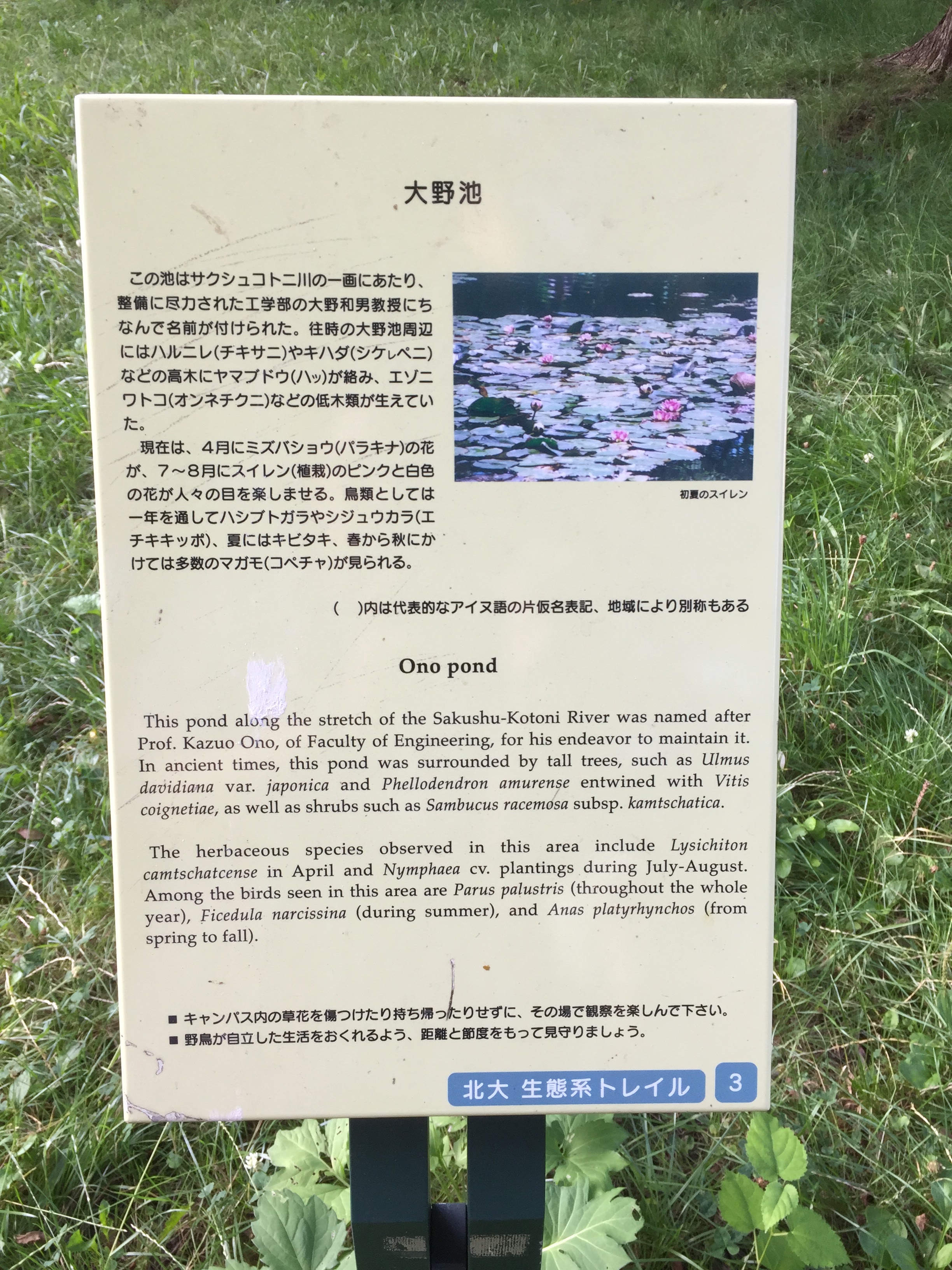
These photos are from a trip to Hokkaido University in August 2017. Hokkaido University is just walking distance away from Sapporo station, and is worth spending an afternoon there. Admission is free. Even in the hottest summer, Hokkaido has cool weather, ranging from around 17 degrees to 25 degrees.

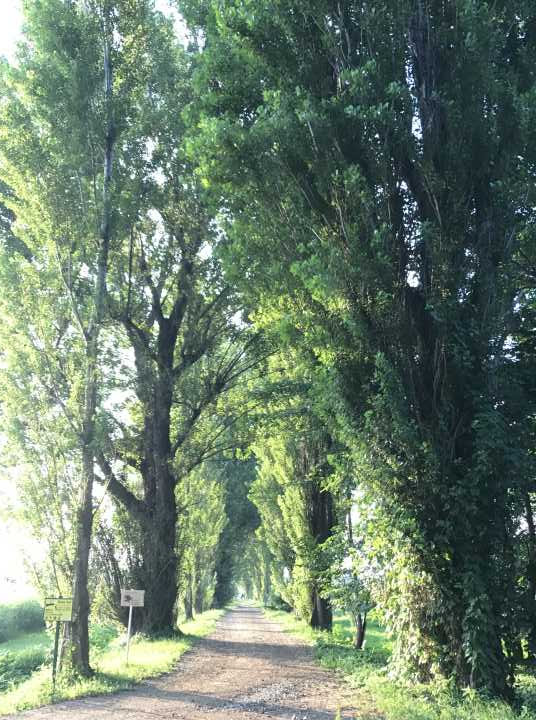
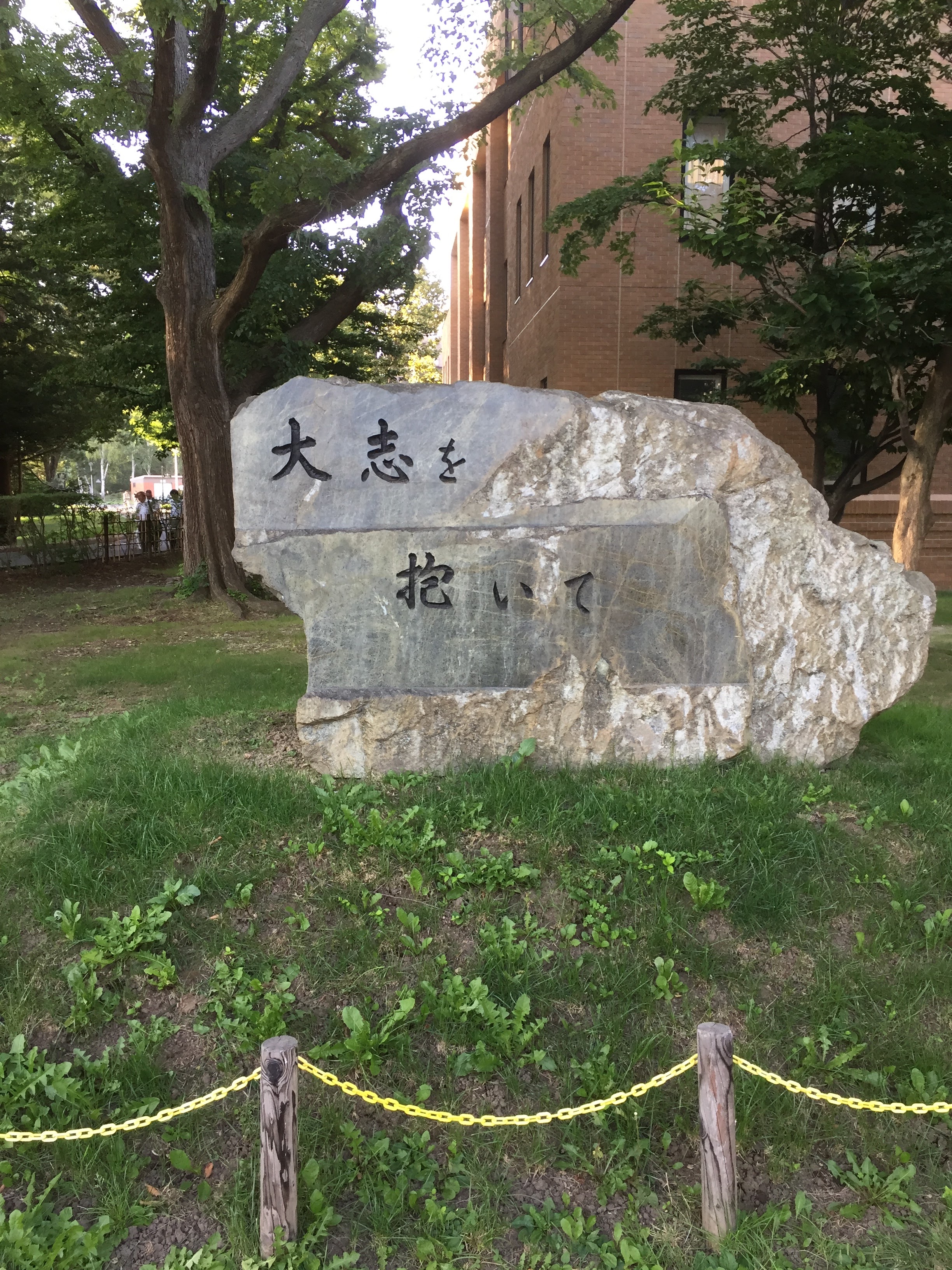
Some places to visit are the Poplar Avenue, and also the Hokkaido University Museum (check the time, it can close as early as 5pm.) Also, the statue of one of the founders, Dr. William Smith Clark, is also a good place to visit. There is also a monument of the school motto: “Be ambitious!” (少年よ、大志を抱け )

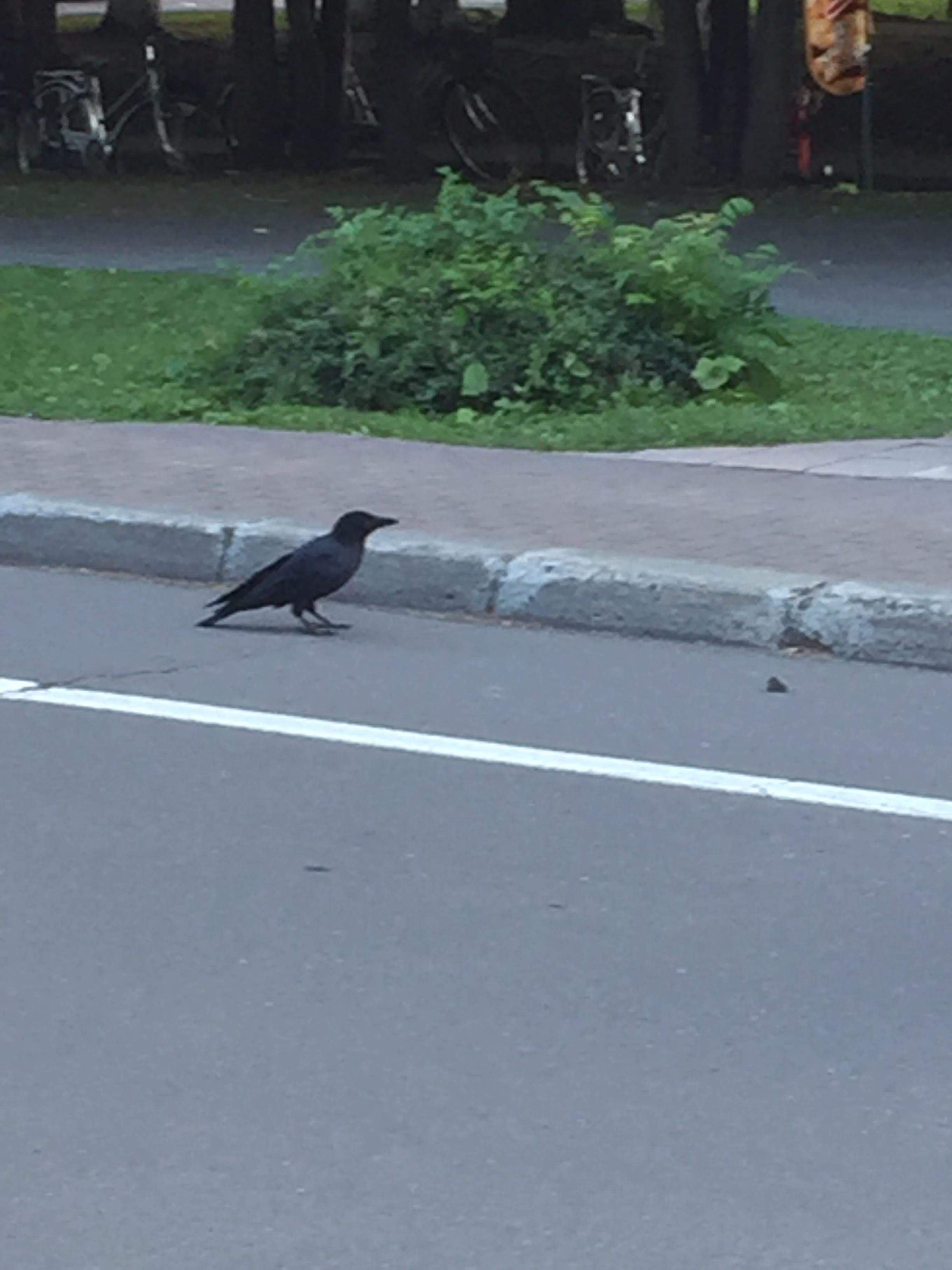
Raven/crows can be spotted all around the campus of Hokkaido University. They are the largest raven I have ever seen, about the size of a small eagle.

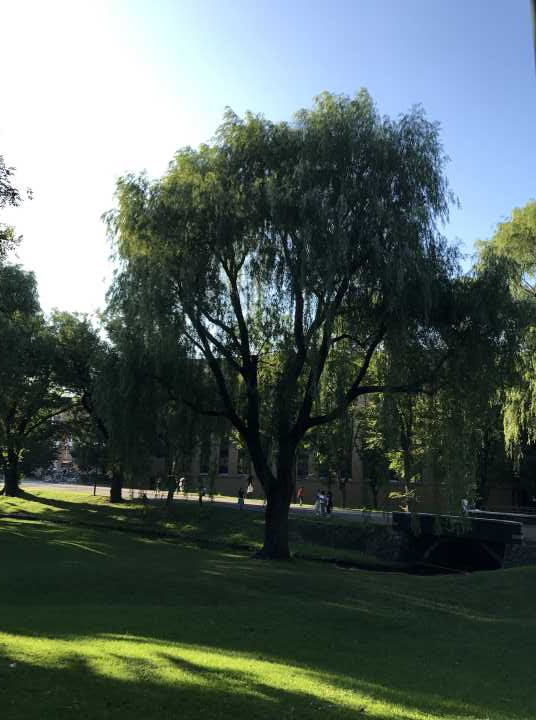
A random willow tree in Hokkaido University.
Students can be found reading or just sitting in the field. I even spotted one student practicing violin.
The famous Poplar Avenue of Hokkaido University.

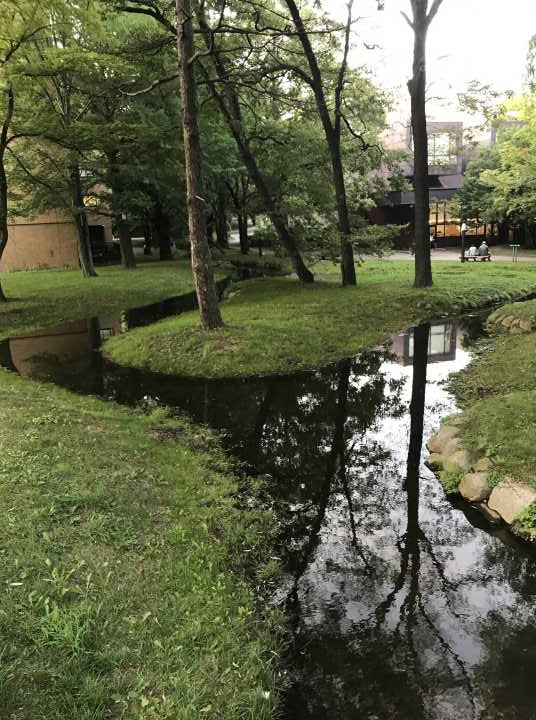
A small stream running through the middle of Hokkaido University.
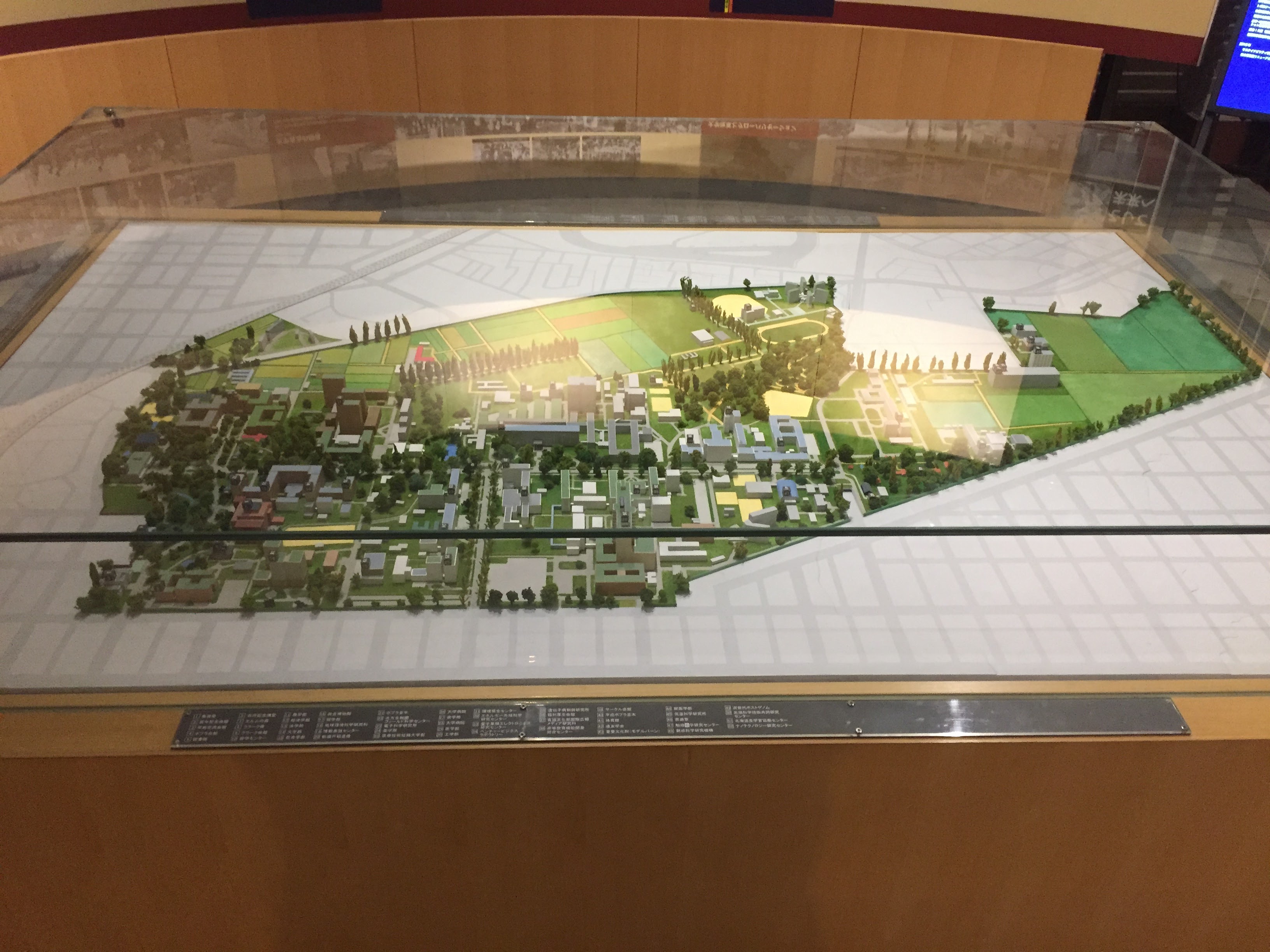
Hokkaido University Museum: A Town Plan of Hokkaido University.
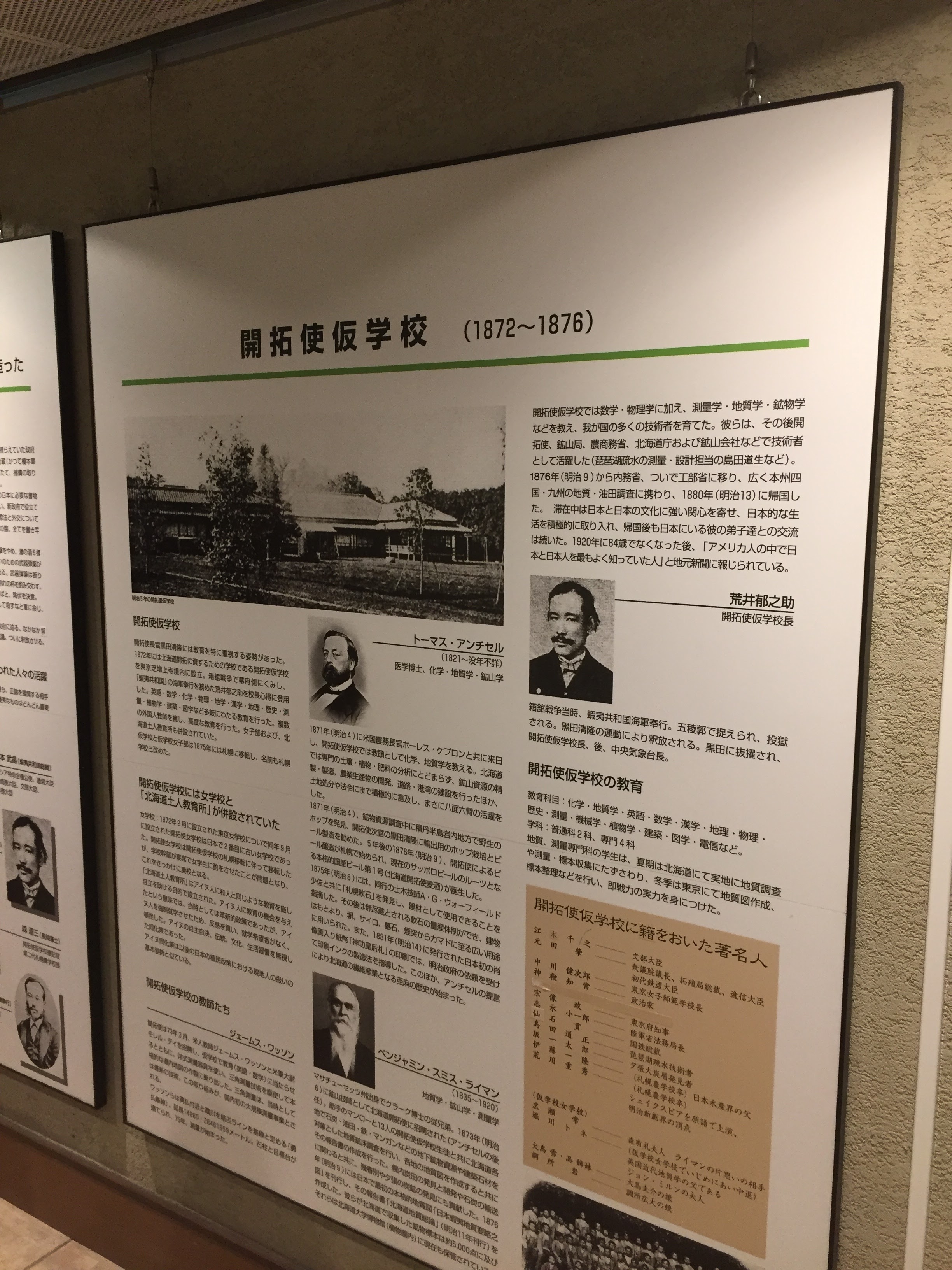
Poster in Hokkaido University Museum.
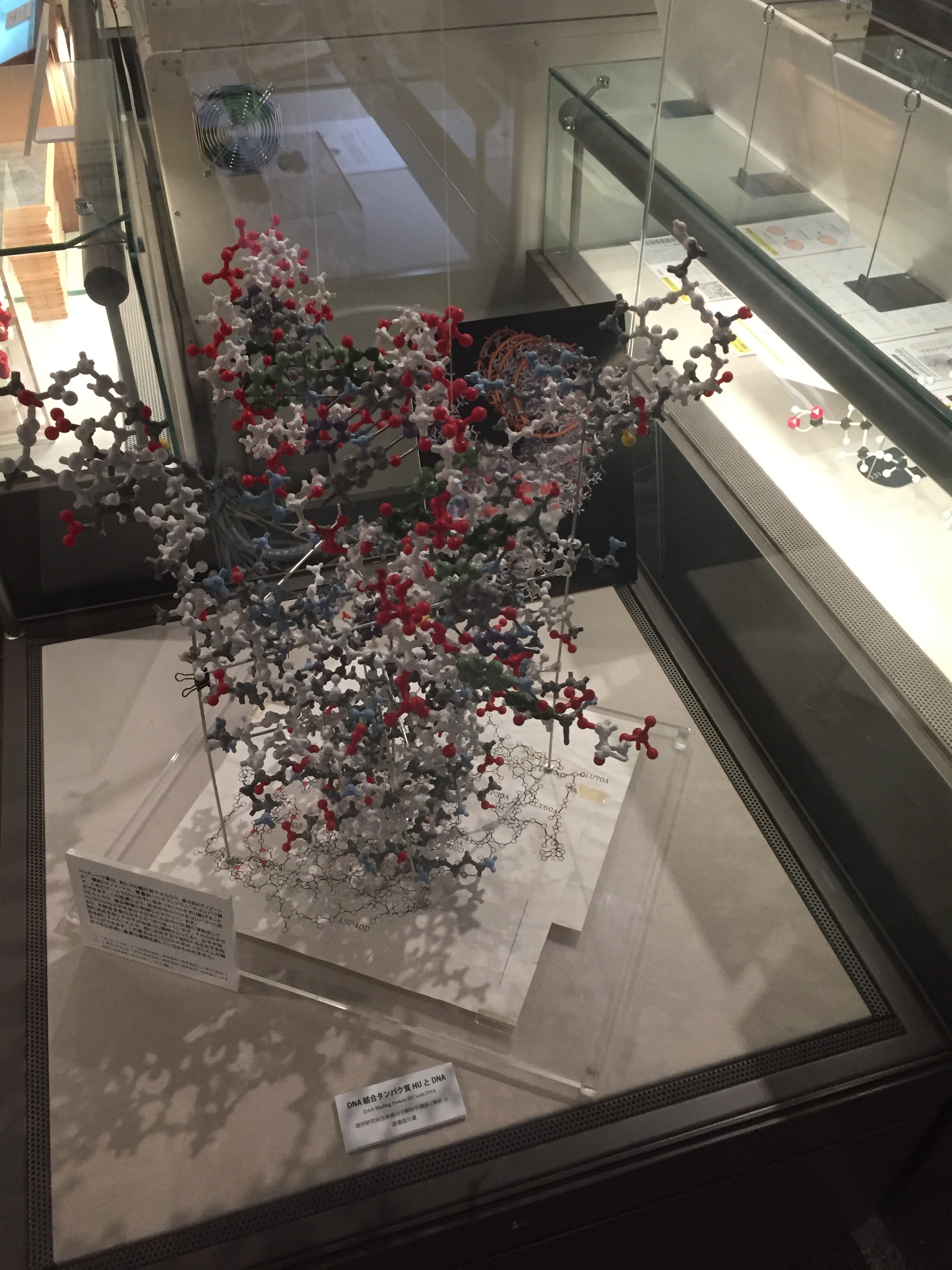
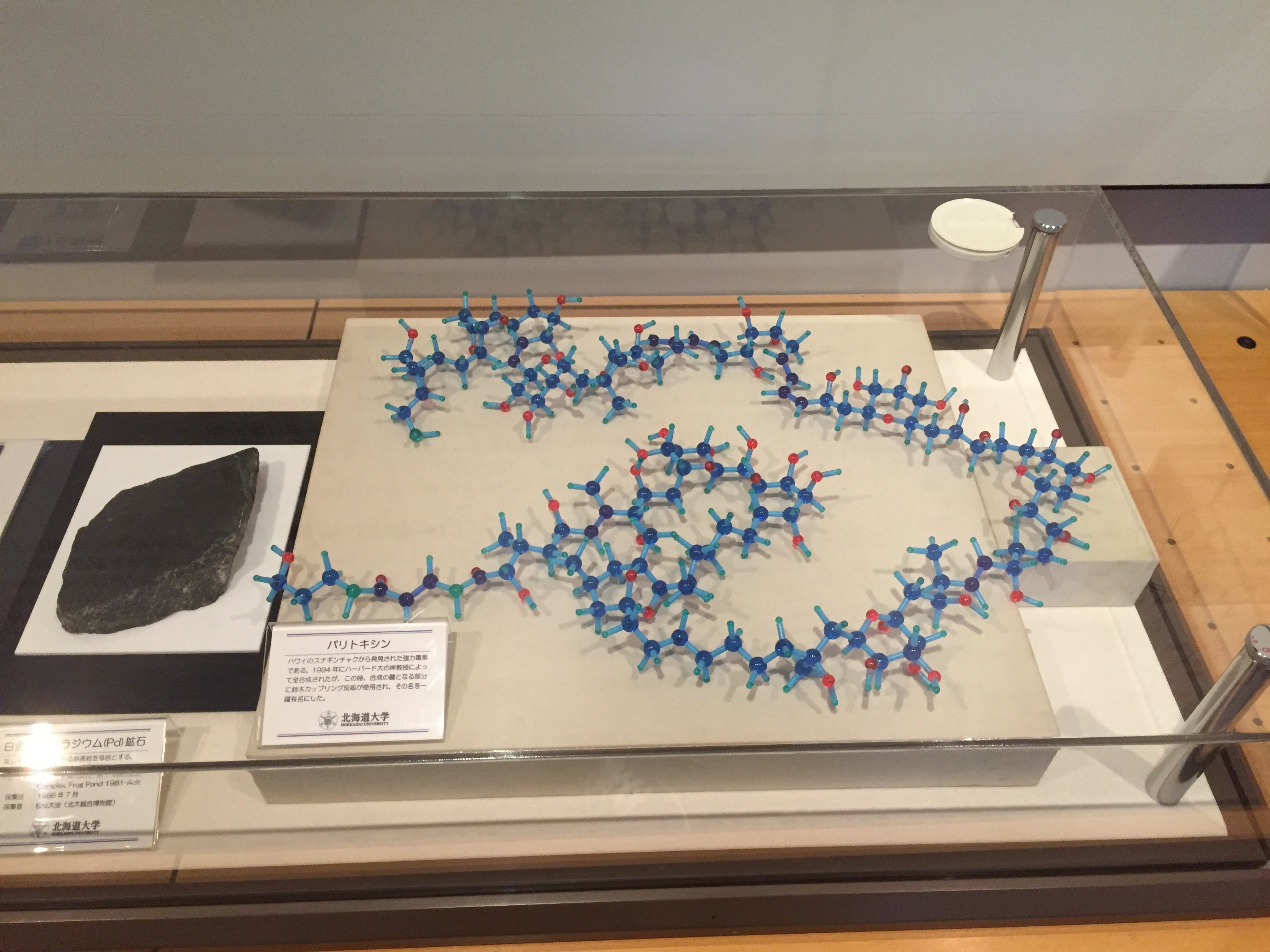
Chemical Structure in Hokkaido University Museum.
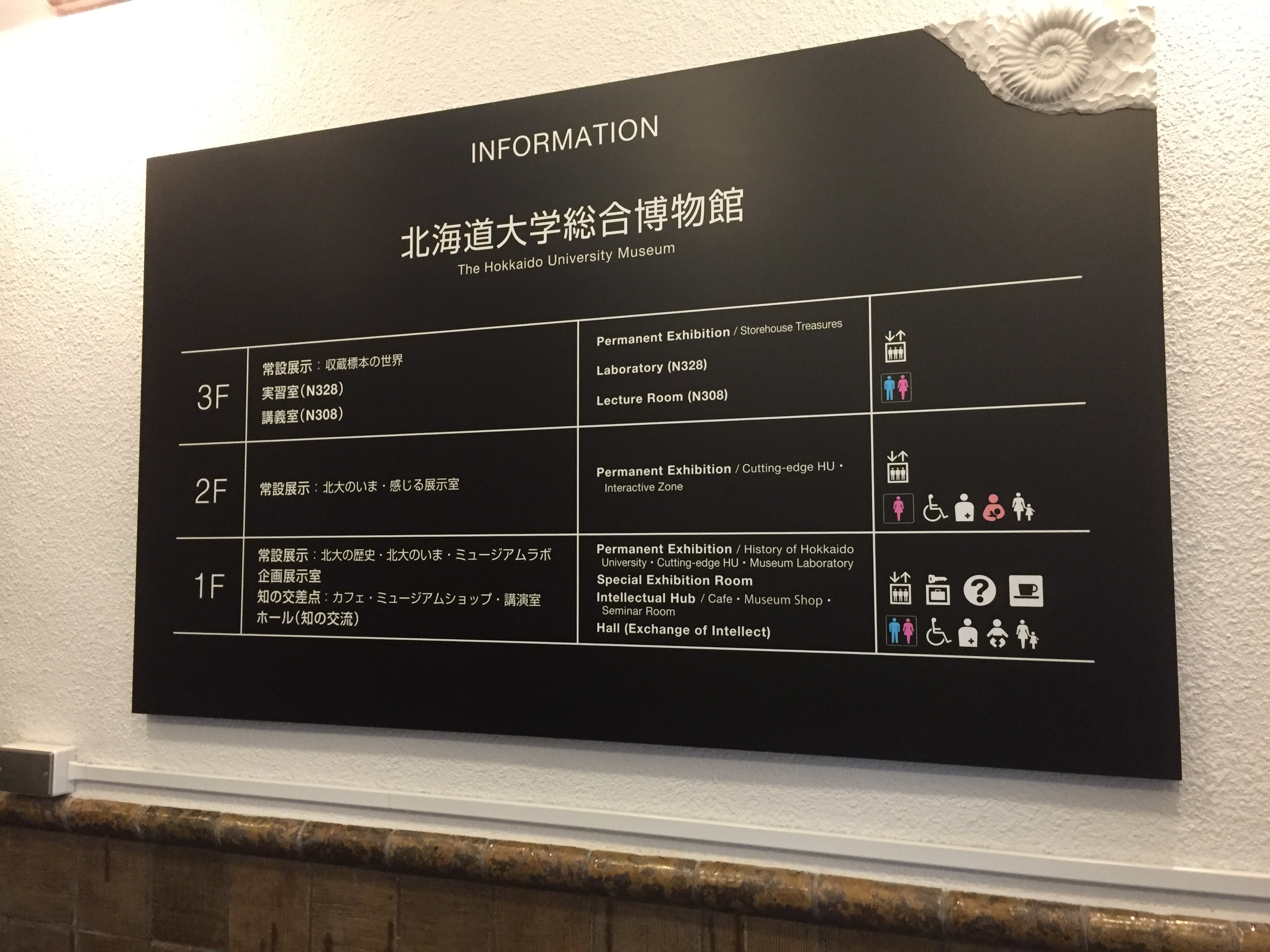
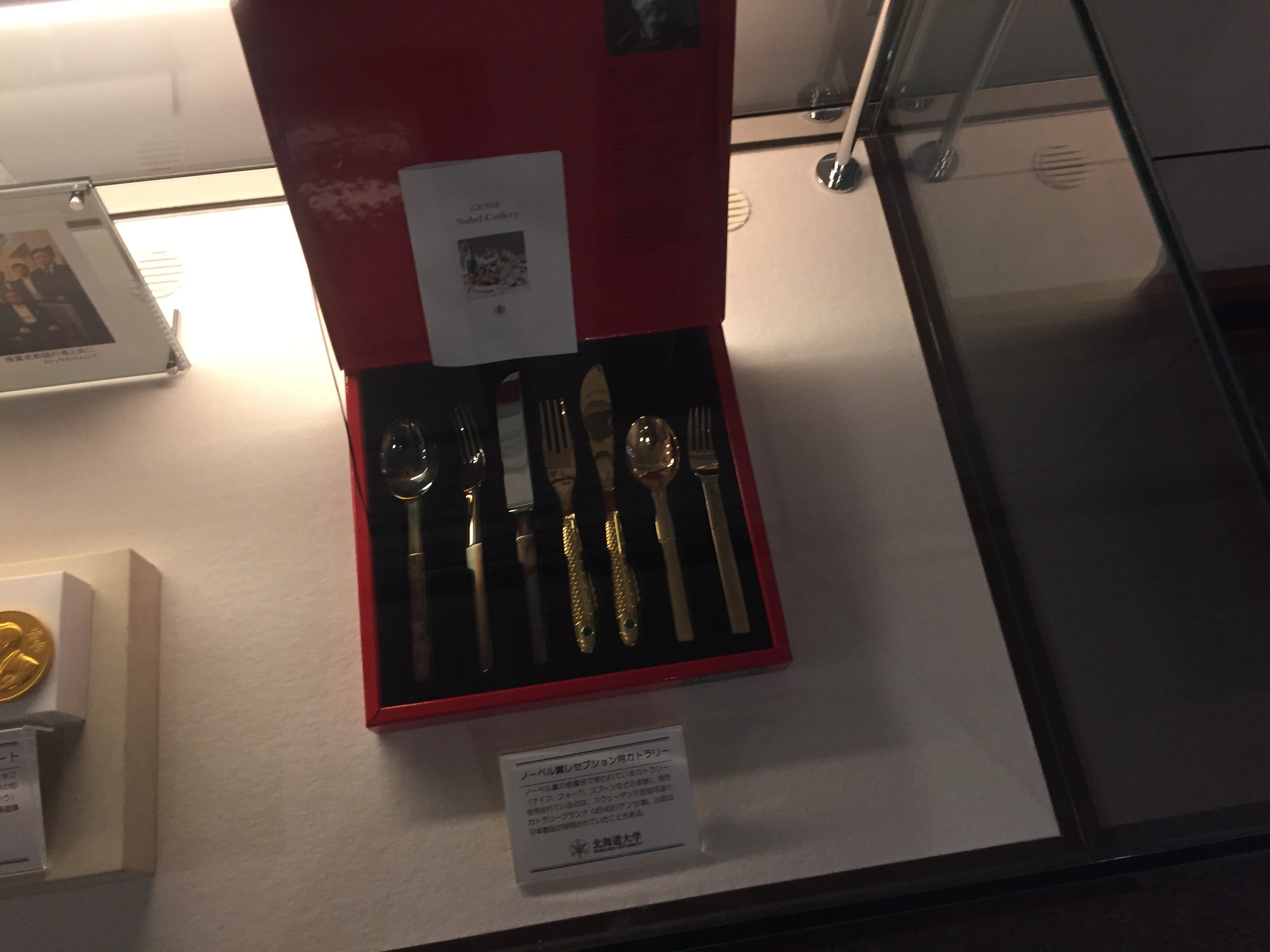
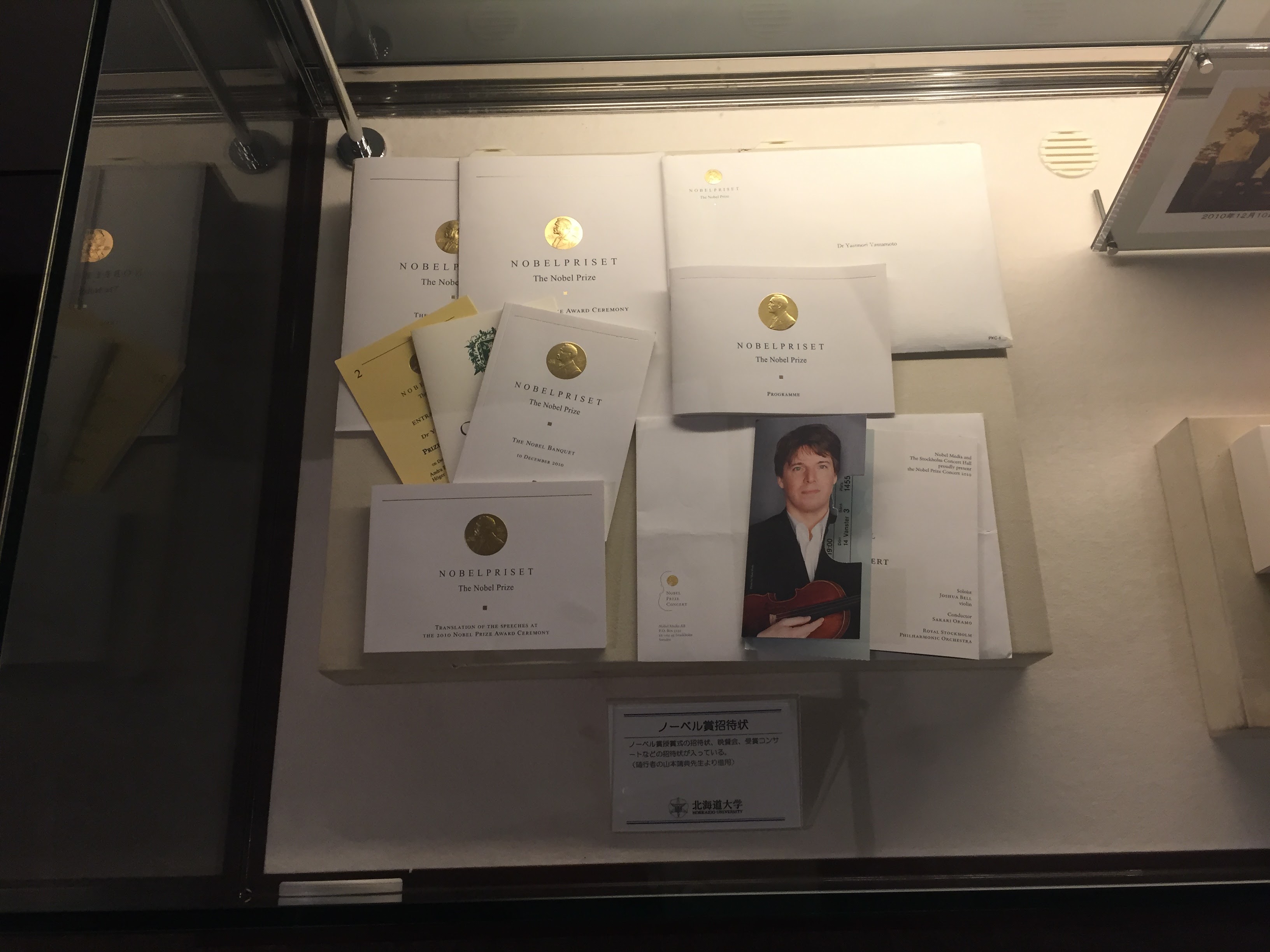
The Hokkaido University Museum is 3 storeys. It is quite big actually, there should be enough things to see for around one hour or more.

The below are some photos from inside the Hokkaido University Museum.


A signboard in a garden.


A large raven in Hokkaido University. It is much larger than it looks in the photo.
The famous motto of Hokkaido University: “Be ambitious!” (original words: “boys, be ambitious!”)

8 Facts About Infinity That Will Blow Your Mind

Nice article on infinity. Also little known is the fact that the symbol of infinity was introduced by clergyman and mathematician John Wallis, hundreds of years ago in 1655. Although not well-known, John Wallis was a talented individual as can be deduced from his biography. His works include integral calculus, analytic geometry, and collision of bodies. He was the one who coined the term “momentum”.

Source: ThoughtCo

Infinity has its own special symbol: ∞. The symbol, sometimes called the lemniscate, was introduced by clergyman and mathematician John Wallis in 1655. The word “lemniscate” comes from the Latin word lemniscus, which means “ribbon,” while the word “infinity” comes from the Latin word infinitas, which means “boundless.”

Wallis may have based the symbol on the Roman numeral for 1000, which the Romans used to indicate “countless” in addition to the number. It’s also possible the symbol is based on omega (Ω or ω), the last letter in the Greek alphabet.

Union-closed sets conjecture

Just read about this conjecture: Union-closed sets conjecture.

The conjecture states that for any finite union-closed family of finite sets, other than the family consisting only of the empty set, there exists an element that belongs to at least half of the sets in the family. (Wikipedia)

It is quite interesting in the sense that the statement is extremely elementary (just basic set notation knowledge is enough to understand it). But it seems that even the experts can’t prove it.

One basic example is: {{1},{2},{1,2}}. The element 2 belongs to 2/3>1/2 of the sets in the family.

He who loves learning is better than he who knows how to learn (Confucius)

From Baidu Baike:

知之者不如好之者,好之者不如乐之者: 对于学习,了解怎么学习的人,不如喜爱学习的人;喜爱学习的人,又不如以学习为乐的人。比喻学习知识或本领,知道它的人不如爱好它的人接受得快,爱好它的人不如以此为乐的人接受得更快。

Translation: He who knows how to learn, is not as good as he who likes learning. He who likes learning, is not as good as he who loves learning. (Confucius)

I guess this applies to mathematics as well. The first step to do well in mathematics is to keep an open mindset and try to get rid of any negative thoughts regarding math. Then, slowly proceed to like and enjoy, and even love math. Only then can one reach his full potential in mathematics.

Like most things, there is a nature and nurture component to this. Some people just naturally love logical things including math. Environment like parents and teachers are very important too, a negative encounter in early childhood can easily give a child a bad impression of learning math.


Learning to Love Math: Teaching Strategies That Change Student Attitudes and Get Results

It’s mathematically impossible to beat aging, scientists say

According to Math, no one can live forever. So far, the only counterexample that I know of is Turritopsis dohrnii, also known as the “immortal jellyfish”. The article doesn’t seem to address this counterexample though.

Source: Science Daily

Aging is a natural part of life, but that hasn’t stopped people from embarking on efforts to stop the process.

Unfortunately, perhaps, those attempts are futile, according to University of Arizona researchers who have proved that it’s mathematically impossible to halt aging in multicellular organisms like humans.

“Aging is mathematically inevitable — like, seriously inevitable. There’s logically, theoretically, mathematically no way out,” said Joanna Masel, professor of ecology and evolutionary biology and at the UA.

Masel and UA postdoctoral researcher Paul Nelson outline their findings on math and aging in a new study titled “Intercellular Competition and Inevitability of Multicellular Aging,” published in Proceedings of the National Academy of Sciences.

Current understanding of the evolution of aging leaves open the possibility that aging could be stopped if only science could figure out a way to make selection between organisms perfect. One way to do that might be to use competition between cells to eliminate poorly functioning “sluggish” cells linked to aging, while keeping other cells intact.

However, the solution isn’t that simple, Masel and Nelson say.

Two things happen to the body on a cellular level as it ages, Nelson explains. One is that cells slow down and start to lose function, like when your hair cells, for example, stop making pigment. The other thing that happens is that some cells crank up their growth rate, which can cause cancer cells to form. As we get older, we all tend, at some point, to develop cancer cells in the body, even if they’re not causing symptoms, the researchers say.

Read more at: Science Daily

Leibniz was a universal genius, but why is Isaac Newton more known? Does it have to do with Newton being British and Leibniz being German?

Answer by Albert Heisenberg, Science Historian M.A. Brown University

Leibniz’s formulation of differential and integral calculus was more refined, elegant, and ‘generalizable’ than Newton’s ‘fluxions.’ Leibniz, the natural genius that he was, became interested in mathematics much later in his life than Newton, and yet was able to generalize Descartes work on analytic geometry into calculus in a way that is so clear that till this day we still use Leibniz’s notation (e.g. dx/dy; his symbolism for time integration/differentiation, etc). Newton’s Principia is a work of incredible genius, but it is riddled with errors and inconsistent notation. As the co-founder of classical physics (along with Galileo) and the culmination of the scientific revolution, his legacy was deeply tied to the spread of natural philosophy as a mathematically rigorous discipline even though Leibniz’s formulation of infinitesimal calculus was superior. Newton achieved greater fame for a few reasons:

Read more at: https://www.quora.com/Leibniz-was-a-universal-genius-but-why-is-Isaac-Newton-more-known-Does-it-have-to-do-with-Newton-being-British-and-Leibniz-being-German

“Actual” GEP Questions 2017 (from Forum)

Since the actual GEP papers are never released, the next best source is from those who have actually taken it and post on forums like Kiasuparents.

Some Maths questions my girl remembers.

“ In a fishing competition, five kids caught 50 fish in total. A is the winner – she got 12 fish. B and C caught the same number of fish and both are at second place. D is at fourth place. E came in last, got only 6 fish. How many fish did B get?“

( my girl couldn’t solve this one. )

“ The red ribbon is twice as long as the blue ribbon. The green ribbon is 2cm shorter than the blue ribbon. A red ribbon and two green ribbon together measure 16cm. How Long is the blue ribbon? “

( she managed to solve this one- but only after spending a lot of time on it. )

Source: https://www.kiasuparents.com/kiasu/forum/viewtopic.php?f=72&t=89066&start=160

Review by mathtuition88: These two questions are not that hard. Can be solved by either model method or algebra.

Some tips from parents: English and GAT is actually harder to prepare than Maths:

Just sharing based on our experience last year. Of the 6 that were selected for GEP eventually from my child’s class, it seems English and GAT were the determining factors. For maths, a lot of kids are already very advanced and well – prepared nowadays. The majority of the balance 14 who went for round 2 found English harder than maths. According to them, English is somewhat like pitched at sec 1 and sec 2 standard, while maths was like up to P6 and Primary Maths Olympiad standard and more manageable. I think it was also more because anything can come out under the sun for English and you can’t really prepare for it. That’s what I heard last year.

Source: https://www.kiasuparents.com/kiasu/forum/viewtopic.php?f=72&t=89066&start=140


For more GEP tips and recommended GEP books, check out: Recommended Books for GEP Selection Test and How to Get Into GEP.

Why do people get so anxious about math? – Orly Rubinsten

View full lesson: http://ed.ted.com/lessons/why-do-peop… Have you ever sat down to take a math test and immediately felt your heart beat faster and your palms start to sweat? This is called math anxiety, and if it happens to you, you’re not alone: Researchers think about 20 percent of the population suffers from it. So what’s going on? And can it be fixed? Orly Rubinsten explores the current research and suggests ways to increase math performance. Lesson by Orly Rubinsten, animation by Adriatic Animation.

Also view my previous post on Coping with maths anxiety.

Free Math Games For Everyone

Free Math Games For Everyone

Multiplication of big numbers, complex mathematical problems – there are so many issues that people can face not only at school but also in their everyday lives! People need math everywhere and always! That is why understanding the fundamental principles of math is not less important than being able to read or write! Going shopping or starting your own business – gaining the needed mathematical knowledge and being able to apply it in practice will come in handy for everyone, no matter where they go and what they do!

How to learn this subject? Just like any other science, it requires time and efforts to learn it! However, thanks to the modern technologies and the Internet, everything has become a bit easier today and now, it is enough to find a few useful resources to resolve any academic matters! Some of the most useful resources offer people not only to find the answers for their homework sheets and read the main rules but also to enjoy math games and learn while playing!

Where To Look For Free Math Games For Everyone?

It is not a secret that children of a younger age, perceive the information much better if it is presented in a fun and engaging form, for example, while playing. This explains such a high demand for online educational games. However, not only kids can enjoy free maths games, in fact, many adults will also find such activities quite useful and fun!

What are the other benefits? The platforms that offer you to study maths online by means of playing games will help you to master all the possibilities of mathematics easily – you will learn how to add, subtract, divide and multiply. For kids, such activities will be useful for admission to the school. For adults, such activities can help fill in the gaps that they have in their knowledge!

Below you can find a list of top five free sources where you can learn mathematics fast and easily while enjoying an exciting game right from your browser in the online mode!

Math Playground

The website is convenient. There are many different categories, which make it simple to find suitable activities for everyone, while good graphics make the whole process really fun and enjoyable!

Math Game Time

This is one of the best platforms! All the games are organized by grade, but what really makes this site stand out is a wide range of additional opportunities like problem-solving, shapes and geometry, algebra or time and money games!

Cool Math Games

There are many strategy and logic activities. Also, on this platform, you can find some exciting and useful “skill games” that are aimed at developing the basic mathematical skills, and they can come in handy not only for the children but also for the whole family!

Knowledge Adventure

Unlike the previous platforms, this website offers a wide variety of fun educational activities on numerous subjects, including spelling, reading, science, etc. All the games are bright and colorful. This creates a pleasant atmosphere and will be especially interesting for younger kids. The highest age for games specified on the site is 12. However, some of them will also be useful for grown-ups!

Learning Games For Kids

Although from the first glance it seems like this site is created exclusively for children, I am sure that adult users will also find something interesting and useful for them! There is a wide range of choices. All activities are divided by their goals and grades, and there are also addition and random math activities; such divisions help to navigate through the website with ease and find exactly what you were looking for! There are also many other possibilities. The site also features many vocabularies, art, science, health, brain, literature, and some other activities!

There are just a few sources of many! You can look for more opportunities on the Internet. Find out what options you have – test a few games from different platforms to compare their efficiency, and, without a doubt, you should find something suitable for yourself! Also, if you are enjoying playing on the go – there are numerous applications for tablets and smartphones that you can use at any time and from any place, which will be convenient for busy people!

Final Words

Why is math so important in our lives? It is one of the basic sciences that every person should understand. It does not mean that each of you needs to become well-versed on this subject because if you lack certain skills that are needed to cope with your homework, you can always hire a tutor or turn to www.customwriting.com for academic help. However, having the necessary knowledge base is a must! Without it, you will find it difficult to do the most usual things like count the change in the grocery store, and thus, you will feel less confident!


Recommended Books for Spectral Sequences

Best Spectral Sequence Book

So far the most comprehensive book looks like McCleary’s book: A User’s Guide to Spectral Sequences. It is also suitable for those interested in the algebraic viewpoint. W.S. Massey wrote a very positive review to this book.

A User’s Guide to Spectral Sequences (Cambridge Studies in Advanced Mathematics)

Another book is Rotman’s An Introduction to Homological Algebra (Universitext). This book is from a homological algebra viewpoint. Rotman has a nice easy-going style, that made his books very popular to read.

The classic book may be MacLane’s Homology (Classics in Mathematics). This may be harder to read (though to be honest all books on spectral sequences are hard).

***Update: I found another book that gives a very nice presentation of certain spectral sequences, for instance the Bockstein spectral sequence. The book is Algebraic Methods in Unstable Homotopy Theory (New Mathematical Monographs) by Joseph Neisendorfer.

Interesting Facts about Green’s Theorem

Firstly, Green’s Theorem is named after the mathematician George Green (14 July 1793 – 31 May 1841). Something remarkable about George Green is that he is almost entirely self-taught. He only went to school for one year (when he was 8 years old). His father was a baker, and George helped out in the bakery. Later, at the age of 40 he went to Cambridge to get a formal degree, but even before that he had already discovered Green’s Theorem. It is a mystery where did George Green learn his mathematical knowledge from. (During his time there was clearly no such thing as internet.)

It is unclear to historians exactly where Green obtained information on current developments in mathematics, as Nottingham had little in the way of intellectual resources. What is even more mysterious is that Green had used “the Mathematical Analysis,” a form of calculus derived from Leibniz that was virtually unheard of, or even actively discouraged, in England at the time (due to Leibniz being a contemporary of Newton who had his own methods that were championed in England). This form of calculus, and the developments of mathematicians such as LaplaceLacroix and Poisson were not taught even at Cambridge, let alone Nottingham, and yet Green had not only heard of these developments, but also improved upon them.
-Wikipedia

One of the applications of Green’s Theorem that I find interesting is finding the area of the ellipse: https://www.whitman.edu/mathematics/calculus_online/section16.04.html. (Scroll down to Example 16.4.3). I find the proof very neat, you may want to check it out.

Pierre-Simon de Laplace; French Newton

To increase your interest in mathematics, let me introduce the French mathematician Pierre-Simon de Laplace, also known as the “French Newton” or “Newton of France”. He helped to calculate projectile motion for Napoleon’s artillery. Laplace was also the examiner for Napoleon when he entered military school. Laplace also invented “Laplace transform” and “Laplacian” which will be useful in advanced engineering calculations.

Some quotes:

In September 1785 Laplace subjected Napoleon to a rigorous examination in differential equations and algebra as well as the practical applications of mathematics.
Book on Napoleon

The French Revolution began in 1789. Laplace was fortunately situated for avoiding its dangers, in part because, like Lagrange, his talents were found useful in calculating artillery trajectories. Napoleon esteemed Laplace, and after the Revolution showered him with honors.
https://www.umass.edu/wsp/resources/french/personnnes/laplace.html

Napoleon himself was good at math, he proved a theorem called Napoleon’s Theorem. Napoleon was “close friends with several mathematicians and scientists, including Fourier, Monge, Laplace, Chaptal, Berthollet, and Lagrange.”

Napoleon also made the following quote:

The advancement and perfection of mathematics are intimately connected with the prosperity of the State. — Emperor Napoléon Bonaparte.

Hope the above interesting facts increase your interest in math.

5 Skills Students Need To Cope With School Pressures

According to an article published by the American Psychological Association (APA), many teenagers in the USA say they experience stress in patterns comparable to what adults go through. Teenagers also report higher stress levels than adults during the school year.

Tutors from Leaps ‘n Bounds, a learning center in Dubai, also observe that teen stress is not just confined to adolescents in certain countries; it is slowly becoming a widespread issue.

Teen stress can be caused by different factors including the pressure to perform well (or at least to pass) academically and in sports, and to have a great social life. In school, adolescents constantly face tough academic demands and responsibilities and experience social pressure.

Unfortunately, these challenges spill over even after the afternoon school bell rings, which can cause teenagers to feel even more stressed.

Dealing with Teen Stress

For teenagers to learn how to effectively deal with school pressures, they need to develop and rely on key personal skills. These include:

1.    Time management

All teenagers today always seem to be swamped with numerous activities: assignments, studying, extracurricular activities and sports. They need to find time for their friends, too.

Because teenagers need to have enough time to go through and complete these activities, they need to learn how to manage their time properly. Time management is an important skill they need to develop. This skill pertains to their ability to plan and control how they spend the hours in their day to complete their tasks and accomplish their goals.

 With proper time management, teens will be able to establish which tasks to prioritize and how to set their goals, and learn how to monitor where their time actually goes. As such, they will be able to avoid the stress of not having enough time on their hands to finish their assignments, complete their projects, meet their friends, and see their maths tutors in Dubai, if they have additional weekly tutorial or learning sessions.

2.    Setting realistic goals

Being number one in the class and, at the same time, for example, being the captain of the school football team are goals worth working hard for. However, overachieving teens tend to feel more pressure. When they fail or feel they didn’t perform up to expectations, they may develop low self-esteem and other negative feelings and attitudes.

Teenagers, therefore, are encouraged to lower their goals or set more realistic ones so that they can achieve more. By doing so, teens will also avoid pressure and boost academic success.

3.    Positive coping skills

 Coping skills are daily strategies and activities everyone uses or relies on to deal with, work through, or process emotions. Examples of positive coping skills include exercising, meditating, talking with friends or other family members, and having healthy hobbies such as reading and gardening.

Teenagers need to develop and practice positive coping skills instead of negative ones so that they will learn how to deal with stress through healthy ways. Positive coping strategies increase long-term resilience and well-being.

Negative coping techniques such as smoking and using drugs, on the other hand, may provide temporary relief from difficult emotions and pressure but lead to substance dependency and abuse.

For teenagers to effectively withstand adversity and deal confidently with daily stress and other challenges, they need to choose and apply positive coping strategies.

4.    Self-care

 For teens to better cope with pressure, they also need to have strong, healthy bodies. Teenagers, therefore, need to get enough sleep and rest, have a well-balanced diet, and get the right amount of exercise their bodies they need every day.

Adolescents need to take some time to pause from the relentless pace of everyday life and enjoy some creative activities that will help keep them from dwelling on or stressing over school pressures. This, in turn, will help them lower their stress levels.

5.    Optimism

Generally, stress is precipitated by stressful thinking. As such, teens can avoid stress and its negative effects by changing the way they think. When they have a positive mental attitude, they will have stronger coping strategies, better health, and a more stable, less stressful emotional life.

Adopting a positive way of thinking also helps teens complete their work and handle all their responsibilities. If they consistently think they won’t finish something or they don’t have enough time on their hands, they will lack the motivation to complete what they already started or even begin their task.

Teenagers only have a few more years before they enter another important phase in their lives: adulthood. But they can still enjoy all the experiences that come with adolescence and, at the same time, cope with all their school work and other activities without all the stress by simply developing the right skills.

AUTHOR BIO

Bushra Manna is one of the founders and Principal of Leaps and Bounds Education Centre – Motorcity. She has 20 years’ experience teaching the British and American curricula internationally at primary level – early middle school level, ages 4-12. Bushra believes in imparting deep learning to a child and not just rote learning, which is why she recommends the Magikats programme at her centre, to promote a genuine understanding with its multisensory, differentiated and interactive approach within a small group setting.



Best Online Resources to Improve Your Math Skills

Best Online Resources to Improve Your Math Skills

Although Maths is a compulsory subject in all the educational institutions all over the world, many students consider it as a complete waste of time and skip this issue, claiming that they prefer not mathematically oriented disciplines but only social sciences. But will it really help you in your future or it is just something you have to learn because everybody does it? Math, as well as other exact sciences, is essential for the intellectual development of a person from early years, it helps to develop intelligence and better your critical, analytical, deductive and prognostic abilities together with improving your abstract thinking. Very often people understand the importance of logic and algebra when they are already adults and try to make up for lost time, but do not know where to find a qualified help quickly. We think that a man is never too old to study, that is why we have selected the best online sources to improve your knowledge of numerous subjects:

  • Online courses

There are plenty of courses available on the web, which can offer math courses online at low prices or even for free. Online learning is a trendy way of getting new knowledge and experience nowadays, but still, there are people, who prefer old and traditional methods and say it is useless and wastefulness. But, if you keep up with the times, you can visit such sites as Academic Earth, Edx, TED, University of the People, Coursera and others and get a unique experience in exploring new things from universities all over the world, just sitting on your sofa and holding a laptop.

  • Online libraries

For those, who still hesitate, exist online libraries, where you can download books you need and dive into learning by yourself. Of course, there is nothing better than a smell of a written word, but the theme of books varies depending on the site, and mostly they have a plethora of them available for free, so everybody could find the one he needs. The one drawback of using web libraries is that you have to organize an academic process yourself, thus have good time-management and organizational skills. Nevertheless, if you are a person, who is self-motivated and can move towards the goal on your own, this type of e-learning is exactly what you need. Among the most popular web libraries are The Online Library, Harvard Library, Wiley Library, Open Library and others.

  • Online Tutors

There are different types of school teachers, some of them focus on the needs of each student, other – use discipline as a key to successful learning, but the thing that is common for all of them, is strict correspondence to the school program, established in the country. School program doesn’t care whether the student understood the material he had just learned, or he still needs time to master it. This is the time when online tutors come to stage. If you need to learn math or other subjects that you have missed at school or simply improve them, they can assist you as they are 100% students oriented and can present the material according to the students’ abilities and needs.

  • Online lessons

This type of lessons is a perfect variant of distance learning for those, who are limited on time and want to master something quickly and get great results. Individual classes can take place in the form of face-to-face conversation by means of various apps or programs such as Skype and other video calls. Among the advantages of this type of e-learning is easy access – you can learn from home and build up your own learning schedule, also there is wide choice of tutors available on the Internet, no matter how far away they are, different educational content – video and audio which you can find for free on the web and, of course, you can choose the subject or skills you want to level up – it could be mathematics assignment writing, organic chemistry, etc.

There are plenty of ways how to study maths online, and it depends on which directions of studying will you choose, the pros and cons of each method based on your goal and preferences. The one thing you should remember is that it is never late to gain new knowledge or skills. As Benjamin Franklin once said, “An investment in knowledge pays the best interest.”


An ancient Babylonian tablet known as Plimpton 322

Source: NY Times

One of my favorite YouTube Math Professors, Norman Wildberger, has made a historical math discovery: that the ancient Babylonian tablet known as Plimpton 322 is actually a trigonometric table.

“It’s a trigonometric table, which is 3,000 years ahead of its time,” said Daniel F. Mansfield of the University of New South Wales. Dr. Mansfield and his colleague Norman J. Wildberger reported their findings last week in the journal Historia Mathematica.

Check out my other blog posts on Prof. Norman Wildberger:
1) Algebraic Topology Video by Professor N J Wildberger

2) Video on Simplices and Simplicial Complexes

3) Critique on the Modern Axiomatic Approach of Mathematics

4) AlgTop1: One-dimensional objects

Education and the Blockchain – Should We be Teaching Blockchain in Schools?

Source: https://preply.com/

It goes without saying that tech progress is moving at a rapid pace. Futurists point to Moore’s law – the idea that tech capabilities double every two years – as evidence for tech’s expansion into nearly every facet of our lives.

Teaching Technology

Education has seen its own dramatic tech advances. Kids can learn math from gamified apps while riding in the backseat of the family minivan. Students can hire an online algebra tutor and learn from anywhere via Skype. Aspiring students can virtually attend free Ivy-league classes (Massive Open Online Course, or MOOC) with millions of other learners of all ages and backgrounds. And NASA now collaborates with high school students in inventive hardware and robotics projects.

The most significant advance in computer-based education isn’t AI or virtual-based learning or even big data – it’s the blockchain. Blockchain has its origins in cryptocurrency, i.e. Bitcoin. The blockchain is essentially a way of managing data transactions – and it’s considered a radical disruption of traditional banking.

Plus, its applications in education – both virtual and classroom-based – have the potential to change everything about schools, from instruction to student achievement.

Exposure Versus Creativity

In the US, three-quarters of children have access to a smartphone. But on its own, that’s not necessarily a good thing. Kids who simply learn to operate a phone, just downloading and playing games, become consumers. The future lies with creators.

US Department of Labor statistics tell us that 2020 will bring with it 1.4 million computer specialist job openings. But American universities produce woefully inadequate numbers of graduates in the right fields – enough to fill a mere 29% of the jobs.

So what’s wrong with the picture? Why the big gap? There are many societal reasons we could point to, but one thing seems to stand out. We’re teaching tech literacy the wrong way.

Textbook-style curriculum may have its place, but not in tech ed. When kids are taught to memorize coding sequences and churn out the same answers to the same textbook questions, there’s no creative spark. No outside-the-box thinking.

In the best way, blockchain is wildly unconventional. To advance the world-changing potential of anti-dogmatic thinking, we need to encourage kids’ inventiveness. If the educational focus is on robot-like achievements rather than innovation, where will we find our climate change-tackling problem solvers?

We’ve labeled a generation of kids “tech-savvy” without giving them the tools to move from consumption to creation. It’s a waste of their brain power to hook kids on the addictive side of tech without pulling back the curtains and showing them the remarkable inner workings. Children and teens want to know how things work.

One solution? Teach tech like art. Coding has more in common with drawing than accounting. Yes, there is a necessary foundation in understanding digital languages and principles – but without encouraging creativity, we’re creating a generation of the same brain. Even gamified learning, if done improperly, can be perilously bland.

Tackling the Education Gap

There are few key components of a sound approach to teaching creative thinking around technology.

  1. Let it be accessible. Kids will shy away from a big learning curve – learning and doing need an intimate relationship.
  2. Remove the achievement roof. Learning platforms and educational approaches which employ standardized tests as the litmus for success – and for what the content can achieve –inhibit creativity. Rather than saying “do this to produce this result,” what if we said, “here are your tools – now, what can you create?” Consider The Lego Movie’s message of the importance of imagination – for future tech innovation, we need makers, not managers.
  3. Embrace a shifting curriculum. In other subjects, things might stand as eternal truths; the Magna Carta will always have been signed in 1215. But in technology education, things move at a blistering pace. A particular tool or lesson may become quickly outdated, so the educational format needs flexibility, just like the subject it teaches.

Blockchain is set to change the world. But as we continue to encounter environmental and societal problems, we need amazing minds to solve them. Revolutionizing how we teach technology education might be the answer we didn’t know we needed.

Read more at: https://preply.com/

The scientist nuns: In pursuit of faith and reason

Source: Aleteia

Making a career out of science, just like joining a religious order, requires dedication and discipline. Some tireless souls have managed to do both.

In 1965, Mary Kenneth Keller became the first woman to obtain a PhD in Computer Science. She was also a nun.

Born in Cleveland, Ohio, in 1913, Keller entered the Sisters of Charity of the Blessed Virgin Mary in Dubuque, Iowa, in 1932. Eight years later, she professed her vows, before obtaining B.S. and M.S. degrees in mathematics from DePaul University in Chicago, where she became fascinated by the incipient field of computer science.

As a graduate student, she spent semesters at other schools, including New Hampshire’s Ivy League college Dartmouth, which at that time was not coeducational. For her, however, the school relaxed its policy on gender, and she worked in the computer center, where she contributed to the development of the BASIC programming language that became so instrumental to the early generation of programmers.

Read more at: https://aleteia.org/2017/08/05/3-scientist-nuns-you-might-not-know-about/?utm_campaign=NL_en&utm_source=daily_newsletter&utm_medium=mail&utm_content=NL_en

Theorem of the Day

Just to recommend this excellent website: Theoremoftheday where they feature one mathematical theorem each day.

The nice thing is that each theorem is a one-page summary, good for getting acquainted with the theorem, and subsequently you may read it up in more detail.

The website does have a XML feed, though it would be nice if there were a email subscription (with weekly emails).