How To Get a Degree in Mathematics: Preparing for the Journey

Pursuing a degree in mathematics can open numerous doors to careers in education, finance, technology, and beyond. Mathematics is the foundation of logical reasoning and quantitative analysis, skills highly sought after in many fields. Before you start on this path, it’s helpful to understand what lies ahead and how to prepare for the academic challenges.

Exploring the Scope of a Mathematics Degree

A mathematics degree isn’t just about learning to solve equations and mathematical problems; it’s about understanding patterns and structures and using this knowledge to solve real-world problems. At the core, you’ll engage in studies ranging from pure mathematics, which explores fundamental theories like number theory and abstract algebra. Additionally, you’ll delve into applied mathematics, focusing on using these theories and analytical skills to solve practical problems in science, business, and engineering.

Academic Preparation

To excel in mathematics, start with a solid foundation in high school mathematics. Subjects such as algebra, geometry, calculus, and statistics are essential. If your school offers advanced placement math courses or dual-enrollment options, taking these can give you a head start. In addition to formal classes, engaging with online resources and video tutorials can enhance your understanding and prepare you for college-level coursework.

Working on personal projects or exploring mathematical software tools can also deepen your practical understanding of mathematical concepts. It’s also beneficial to attend math-related workshops or lectures, which can provide insights into the latest developments in the field and foster a deeper interest in mathematics.

Choosing the Right College

Selecting the right institution is pivotal. Look for colleges with robust mathematics departments that offer a range of courses and specialties. Consider faculty expertise, available research opportunities, and the overall focus of the program—whether it leans more toward theoretical or practical applications of math.

You should also think about the overall environment and support services of the college. Supportive tutoring, mental health services, and academic advising can make a significant difference in your educational experience.

Application Process

When applying to programs, pay attention to the prerequisites required by each university. Ensure your application highlights not only your academic achievements but also your extracurricular involvement in mathematics.

Letters of recommendation are crucial; seek them from math teachers or mentors who can speak directly to your abilities and potential in the field. Craft a personal statement that reflects your passion for mathematics and your long-term career goals, explaining why you are drawn to this area of study.

Financing Your Education

Understanding the financial aspect of your education is essential. Research scholarships, grants, and fellowship opportunities specifically targeted at STEM (science, technology, engineering, and mathematics) students. Many organizations and colleges offer financial aid for students who excel in mathematics because of the critical need for these skills in the workforce.

Additionally, it’s wise to explore work-study programs that allow you to work part-time while studying, often in roles related to your field of study. Many universities also offer teaching assistantships or research assistantships to graduate students, which typically cover tuition and provide a stipend. Applying early for financial aid and continuously searching for funding opportunities can alleviate financial stress and allow you to focus more fully on your studies.

Career Opportunities

Graduating with a degree in mathematics equips you with a versatile skill set. You might choose to pursue careers in education, actuarial science, data analysis, or even in emerging tech fields like machine learning and artificial intelligence. Companies often seek out math graduates for their analytical abilities and problem-solving skills. Beyond these paths, mathematicians are invaluable in government and public policy, aiding in statistical analysis, budgeting, and logistics.

Careers in finance, such as quantitative analysis or risk management, also highly value the precise and logical thinking developed in mathematics studies. Additionally, as technology evolves, the need for mathematicians in fields like cybersecurity, the social sciences, and computational biology continues to grow, offering even more avenues for professional advancement.

Continuing Education

For those looking to delve deeper into mathematics or specialize further, considering postgraduate studies is a wise choice. Master’s and doctoral programs offer opportunities to specialize in areas like cryptography, numerical analysis, or mathematical biology. Advanced degrees can also lead to careers in research or academia. Pursuing these advanced studies enhances your understanding of complex mathematical concepts and opens doors to specialized roles in industries that depend heavily on advanced analytics and problem-solving capabilities.

Additionally, engaging in postgraduate research can contribute to significant advancements in mathematical sciences, impacting technology, science, and engineering fields globally. These programs often provide access to cutting-edge technology and collaborations with leading professionals and researchers, further enriching your educational and professional journey in mathematics.

Final Thoughts

Embarking on a math degree requires careful preparation and commitment. By understanding the academic requirements, choosing the right college, and exploring future career possibilities, you set yourself up for success in a field that values precision and analytical skills. Engage actively in your education journey, and you’ll find that mathematics can offer not just a degree but a lifetime of rewarding challenges and opportunities.

Decoding Math Word Problems: A Dual-Language Approach

Math word problems often seem like puzzles, mysterious strings of words that hide numbers and operations within their narratives. For students tackling mathematics in a language that isn’t their first, these problems can double as language comprehension challenges.

The intricate process of solving math word problems requires a firm grasp of language and the ability to decipher numerical information from text. The complexity magnifies for dual-language learners who must navigate these hurdles in both their native language and in English.

Introducing a dual-language approach to decoding math word problems can bridge the gap between language proficiency and mathematical success, making this educational journey more inclusive and effective.

Understand The Language Of Math

Before diving into the strategies for tackling word problems, it’s crucial to build a foundation in the language of mathematics.

Mathematical terms may have different meanings in everyday language. Words like ‘product,’ ‘difference,’ or ‘value’ carry specific mathematical weight, and understanding this particular vocabulary is the first step in solving word problems.

Moreover, you can’t underestimate the power of technology in aiding language comprehension. There are plenty of resources available to support math learning in multiple languages.

If you want to enhance your linguistic skills while mastering math, consider platforms where you can learn Mandarin online. They offer a prime example of how technology can foster an environment for dual-language education.

Identify Key Terms And Phrases

In tackling math word problems, zeroing in on pivotal terms and phrases is essential. These words often signal the mathematical operations you’ll need to employ. For example, cues like ‘total’ may suggest addition, whereas ‘fewer than’ likely pertains to subtraction.

As you go through the problem, think of these terms as signposts guiding you toward the correct path. Your task is to sift through the narrative and identify these markers in mathematical language—numbers and symbols.

Break Down The Problem Step-By-Step

When approaching math word problems, it’s essential to tackle them methodically. Read the problem thoroughly, paying attention to every detail. Next, translate the scenario into your own words, simplifying the information and clarifying the question.

Afterward, list what’s given and pinpoint exactly what you’re solving for. It may help visualize the problem: sketch a diagram or create a table to map the information graphically.

This stepwise breakdown transforms a complex narrative into manageable elements, setting you on a clear path to the solution. Remember, patience and precision are your allies in unraveling the numerical tale before you.

Apply Cross-Language Strategies

Don’t overlook the power of your bilingual abilities. Utilize your native language as a firm scaffold for comprehension. If you encounter complexities in English, translate the problem into your first language to improve your understanding. This translation can illuminate hidden nuances and solidify your grasp of mathematical concepts.

Furthermore, articulating the problem aloud in your native tongue can often clarify confusing aspects, enabling you to return to the English version with a sharper perspective and a strategy ready to be executed. This cross-linguistic technique leverages your existing knowledge, making the path to the solution more accessible.

Check Your Work With Reverse Operations

When you solve a math word problem, put your answer through a verification process using reverse operations. If your solution came from adding two numbers, subtract one from the other to see if it aligns with the original values given in the problem.

This step retraces the process to ensure no detail was overlooked. By working backward, you affirm the accuracy of your solution, solidifying your understanding of the problem’s underlying mathematical principles. It’s a robust method to confirm your results and fosters a habit of meticulousness in your problem-solving routine.

Encourage Collaboration And Discussion

In enhancing your proficiency with math word problems, collaboration and discussion should never be undervalued. Engage in problem-solving discussions with peers, especially those navigating the dual-language learning path.

As you articulate your problem-solving methods and listen to others, you’ll encounter diverse strategies and viewpoints. This exchange not only broadens your mathematical understanding but also enriches your linguistic competence.

Furthermore, active collaboration fosters a dynamic learning environment. Through sharing and debating techniques, each participant contributes to a collective advancement in tackling complex word problems across languages.

Use Technology To Your Advantage

Dive into applications and online platforms that offer a plethora of math word problems in both English and your native language. These tools provide immediate feedback, which is crucial for adjusting strategies and understanding concepts in real-time.

Harness these digital solutions to practice consistently; you’ll soon notice a significant improvement in your dual-language mathematical prowess.

Final Thoughts

Decoding math word problems through a dual-language approach is about developing a more versatile understanding of mathematics. It’s about making connections between languages and concepts, which can lead to a richer educational experience.

With dedication, practice, and the right strategies, you’ll not only become more proficient in math but also in your language abilities. So, take it step-by-step, don’t be afraid to lean on technology, and remember that every challenge is an opportunity to grow.

The Top 5 British boarding schools for Maths

According to the UK’s Independent Schools Council (ISC) annual census of 2023, over 25,000 international students were boarding in British independent schools during 2022. A good number of these students arrive via Singapore, with many Singaporeans and Singapore-based ex-pats looking to boost their chances of admission into some of the world’s top universities such as Oxford, Cambridge and Imperial College London.  

Maths remains the most popular A-level subject in the UK, with statistics from the UK’s gov. website showing over 80,000 Maths A-level exam entrants in ‘22. Revered as a “facilitating” subject, Maths combines well with almost any other subject and can lead to careers in pretty much every industry.

For students looking to study Maths-related subjects at a top British university, it is essential to get a top Maths grade in A-level or the IB Diploma. So which British boarding schools get the best exam results in Maths? Using data compiled by Top School Guide, a UK-based education consultancy, we’ve prepared the following list of the Top 5 boarding schools in the UK for Maths. The table, which also includes the top independent day schools for Maths, can be viewed in full here.

The data combines A-level, Pre-U and IB Diploma (HL) Mathematic exam results to calculate each school’s percentage of A*-A (or equivalent) grades.  For statistical viability, we’ve only included boarding schools with over 25 exam entrants in the list.

Here are the Top 5 British boarding schools for Maths:

  1. St Paul’s School

Average A*-A in Maths, 2022: 98.04%

One of the most well-known boys’ schools in London and the whole of the UK, St Paul’s only has about 40 boarding beds in a school of 1500 boys aged 13+.

Quite simply, boarding spaces there are rarer than hens’ teeth, but the handful of boarders who do win a place are treated to a prestigious education at the top-ranked boys only school in the UK. A modern, liberal, single-sex education does not get much better than this.

Average A*-A in Maths, 2022: 92.49%

Founded in 1560, this co-ed day and boarding school for students aged 13+ has to be amongst the most famous schools in the world.

Far removed from the stuffy stereotypical English boarding school, Westminster School welcomes a diverse and exceptionally capable cohort of students from around the world. Around 200 boarders are joined by 600 day students to make this one of the most buzzing and aspirational independent schools in the world.

Average A*-A in Maths, 2022: 92.31%

Another single-sex school, St Catherine’s Bramley lies within 30 minutes of Heathrow airport and hosts around 140 girl boarders from age 11+. Around half the boarders are international students (overseas nationals or children of British ex-pats.)

Boarders are joined by over 600 of the brightest girls in the local region, and Maths is the most popular A-level subject in 6th form, with 39 exam entries in 2022.

Average A*-A in Maths, 2022: 91.67%

Radley College in Oxfordshire is another all boys school and is about as boarding a boarding school as you can get – every single one of the 760+ pupils is a full boarder. The school welcome students at age 13+, though it helps if you can begin the application process 3 years in advance. The school is highly academically selective, so its impressive Maths A-level results and university destinations come as no real surprise.

Average A*-A in Maths, 2022: 90.00%

Most parents will be familiar with Brighton College, given its presence in Singapore. The original school welcomes its 440 boarders from age 13, and had 120 Maths A-level entrants in 2022.

The college regularly features as one of the top co-ed boarding schools for A-levels. Facilities are outstanding and the atmosphere is welcoming and progressive.

Applying to British boarding schools

As you’d expect, the top-ranked British boarding schools are the most academically selective, so you need to make sure you are applying to the right academic level of school. Applicants for the top schools for Maths will need to display an ability above and beyond the iGCSE or O-Level curriculum, and remember that these schools are also looking for students with personality, humour, and ambition.

Top School Guide can help you identify the best British boarding schools, and support with making the strongest possible applications.

Unveiling the Best Math Software for College: A Comprehensive Guide

Best Math Software for College

In today’s digital age, mathematics software has revolutionized the way we approach complex problem-solving and data analysis. College students, especially those pursuing STEM fields, greatly benefit from incorporating math software into their academic journey. This comprehensive guide will explore the best math software options available for college students, enabling them to excel in their mathematical endeavors and make the most of their educational experience.

Mathematica

Mathematica, developed by Wolfram Research, is a powerful and versatile software that combines symbolic and numerical computations. It provides a comprehensive range of mathematical capabilities, including calculus, algebra, statistics, and more. Mathematica’s intuitive interface and extensive documentation make it accessible for beginners while offering advanced features for experienced users. With its ability to handle complex mathematical problems, visualize data, and create interactive demonstrations, Mathematica is an excellent choice for college students across various disciplines.

Hands-on Start to Wolfram Mathematica and Programming with the Wolfram Language

MATLAB

MATLAB, short for Matrix Laboratory, is a widely used mathematical software package that offers a robust programming language and a vast collection of toolboxes for various applications. It excels in numerical analysis, data visualization, and algorithm development. MATLAB’s programming environment allows users to write and execute mathematical scripts efficiently. It is particularly popular among engineering and science students due to its ability to handle large datasets, perform complex calculations, and simulate real-world scenarios. MATLAB also supports the integration of external libraries, making it a flexible tool for tackling a wide range of mathematical problems.

MATLAB: A Practical Introduction to Programming and Problem Solving

Maple

Maple is a sophisticated mathematics software that focuses on symbolic computation, making it ideal for tackling complex algebraic problems and differential equations. With its user-friendly interface and extensive mathematical libraries, Maple provides a powerful platform for visualization, modeling, and simulation. Maple’s strength lies in its ability to seamlessly integrate symbolic and numerical approaches, enabling students to gain deeper insights into mathematical concepts. Its interactive plotting capabilities and advanced mathematical solvers make it an excellent choice for students studying advanced mathematics or pursuing research in mathematical fields.

Understanding Maple

GeoGebra

GeoGebra is a dynamic mathematics software that specializes in geometry, algebra, and calculus. It seamlessly combines visual representations with algebraic calculations, fostering a deeper understanding of mathematical concepts. GeoGebra’s interactive interface allows students to explore mathematical relationships, create visualizations, and even develop their own applets. It supports a wide range of mathematical topics, including geometry, algebra, calculus, and statistics, making it suitable for students at various levels, from basic geometry to advanced calculus. GeoGebra’s versatility and user-friendly interface make it an engaging tool for interactive learning and problem-solving.

Exploring Advanced Euclidean Geometry with GeoGebra

R

While primarily known as a statistical programming language, R has gained popularity as a powerful mathematical tool among college students. R offers an extensive library of statistical and mathematical functions, making it an excellent choice for data analysis, hypothesis testing, and visualization. Its flexibility and versatility enable users to perform complex calculations, create high-quality graphics, and develop statistical models. R’s open-source nature and active community ensure continuous updates, new packages, and a wealth of resources for learning and support. It is particularly valuable for students studying statistics, data science, and computational mathematics.

R for Data Science: Import, Tidy, Transform, Visualize, and Model Data

Conclusion

Embracing the right math software can significantly enhance a college student’s mathematical journey, helping them overcome challenges and explore new frontiers. The aforementioned math software options—Mathematica, MATLAB, Maple, GeoGebra, and R—offer an array of powerful tools to suit different needs and preferences. By leveraging these cutting-edge technologies, college students can unlock their full mathematical potential and excel in their academic pursuits. Whether it’s tackling complex equations, visualizing mathematical concepts, or performing data analysis, these math software options empower students with the necessary tools to succeed in their college education and beyond.

How is Calculus Used in Computer Science

The Multifaceted Influence of Calculus in Computer Science: From Graphics and Animation to Signal Processing and Computational Physics

Calculus, an indispensable mathematical tool, fuels innovation and advancements in computer science. Its versatility spans across multiple domains, including graphics and animation, signal processing and image analysis, as well as computational physics and engineering. In this article, we explore how calculus shapes computer science, from optimizing algorithms and navigating differentiable manifolds to enabling lifelike graphics, precise signal processing, and accurate simulations. Let’s dive into the multifaceted influence of calculus in the world of computer science.

Optimization and Numerical Analysis: Unleashing Algorithmic Efficiency

Calculus techniques, including differentiation and integration, play a crucial role in optimizing algorithms and conducting numerical analysis. Methods like gradient descent leverage calculus to adjust algorithm parameters, enhancing their performance and convergence. Numerical analysis, empowered by calculus, enables the efficient solving of complex equations, simulations of physical systems, and processing of extensive datasets. These applications contribute to enhanced computational efficiency and improved problem-solving capabilities in computer science.

Machine Learning and Differentiable Manifolds: The Power of Gradients

Machine learning, a thriving field of computer science, relies heavily on calculus for model optimization and training. Techniques such as backpropagation and gradient descent employ calculus to adjust weights and minimize errors in neural networks. Furthermore, differentiable manifolds provide a geometric framework for understanding complex data spaces. By leveraging calculus on these manifolds, computer scientists gain insights into data patterns, clustering, and geometric modeling, leading to breakthroughs in pattern recognition, data analysis, and computer-aided design.

Graphics and Animation: Bringing Virtual Worlds to Life

Calculus serves as the backbone for creating captivating graphics and lifelike animations. Concepts such as vectors, matrices, and parametric equations enable computer scientists to model and manipulate 3D objects and their motion. Calculus facilitates the rendering of smooth animations, realistic lighting effects, and physics-based simulations. Through the integration of calculus, computer-generated graphics and animations are able to immerse users in visually stunning virtual environments.

Signal Processing and Image Analysis: Unveiling Insights from Data

In signal processing and image analysis, calculus provides essential tools for extracting meaningful information from raw data. Techniques like Fourier analysis, wavelet transforms, and convolution employ integral calculus to analyze and process signals, images, and videos. Calculus-based operations enhance images, detect patterns, remove noise, and compress data efficiently. These applications find wide use in fields such as image recognition, medical imaging, video processing, and audio analysis.

Computational Physics and Engineering: Simulating Real-World Phenomena

Calculus is instrumental in computational physics and engineering simulations. It enables scientists and engineers to model complex physical systems, simulate fluid dynamics, and solve differential equations that govern these phenomena. By converting continuous equations into numerical approximations, calculus allows for precise simulations and predictions of real-world behavior. From exploring the behavior of celestial bodies to designing efficient structures, calculus empowers computer scientists to tackle complex problems and drive advancements in diverse fields.

Conclusion

Calculus is an essential force driving innovation in computer science. Its diverse applications extend beyond optimization and numerical analysis, permeating domains such as graphics and animation, signal processing and image analysis, as well as computational physics and engineering. By harnessing the power of calculus, computer scientists can optimize algorithms, navigate differentiable manifolds, and unlock transformative applications in lifelike graphics, precise signal processing, and accurate simulations. As the integration of calculus and computer science progresses, we can anticipate a future marked by stunning virtual environments, intelligent data analysis systems, and precise simulations of the natural world.

Math Books for Machine Learning

📚 Best Books for Machine Learning Mathematics 🧠

Are you ready to embark on an exhilarating journey into the world of machine learning? To truly master this cutting-edge field, you need a solid foundation in mathematics—the language of algorithms and data analysis. Whether you’re a beginner or an experienced data enthusiast, we’ve handpicked a selection of math books that will catapult your machine learning prowess to unprecedented heights! Get ready to dive deep into the numerical realm and elevate your skills to the next level. 🚀

📖 Book 1: “Mathematics for Machine Learning” by Marc Peter Deisenroth, A. Aldo Faisal, and Cheng Soon Ong 📖

Mathematics for Machine Learning

This gem of a book is an absolute must-have for anyone venturing into the realm of machine learning. Seamlessly blending theory and practice, the authors deliver a comprehensive guide to the mathematical foundations essential for success in this field. From linear algebra to calculus and optimization techniques, you’ll gain a profound understanding of the mathematical tools that power machine learning algorithms. This indispensable resource is filled with intuitive explanations, real-world examples, and interactive exercises, ensuring your journey from mathematical novice to machine learning maven is both enlightening and enjoyable!

📖 Book 2: “Pattern Recognition and Machine Learning” by Christopher M. Bishop 📖

Pattern Recognition and Machine Learning (Information Science and Statistics)

Prepare to be captivated by this masterpiece that beautifully marries pattern recognition and machine learning. Bishop’s expertise shines through every chapter as he navigates you through the intricate landscape of statistical inference and probabilistic modeling. With an emphasis on understanding mathematical concepts from a practical standpoint, this book equips you with the skills to tackle complex machine learning challenges head-on. With its accessible writing style, comprehensive coverage, and hands-on exercises, “Pattern Recognition and Machine Learning” will become your trusted companion on your journey to becoming a machine learning maestro!

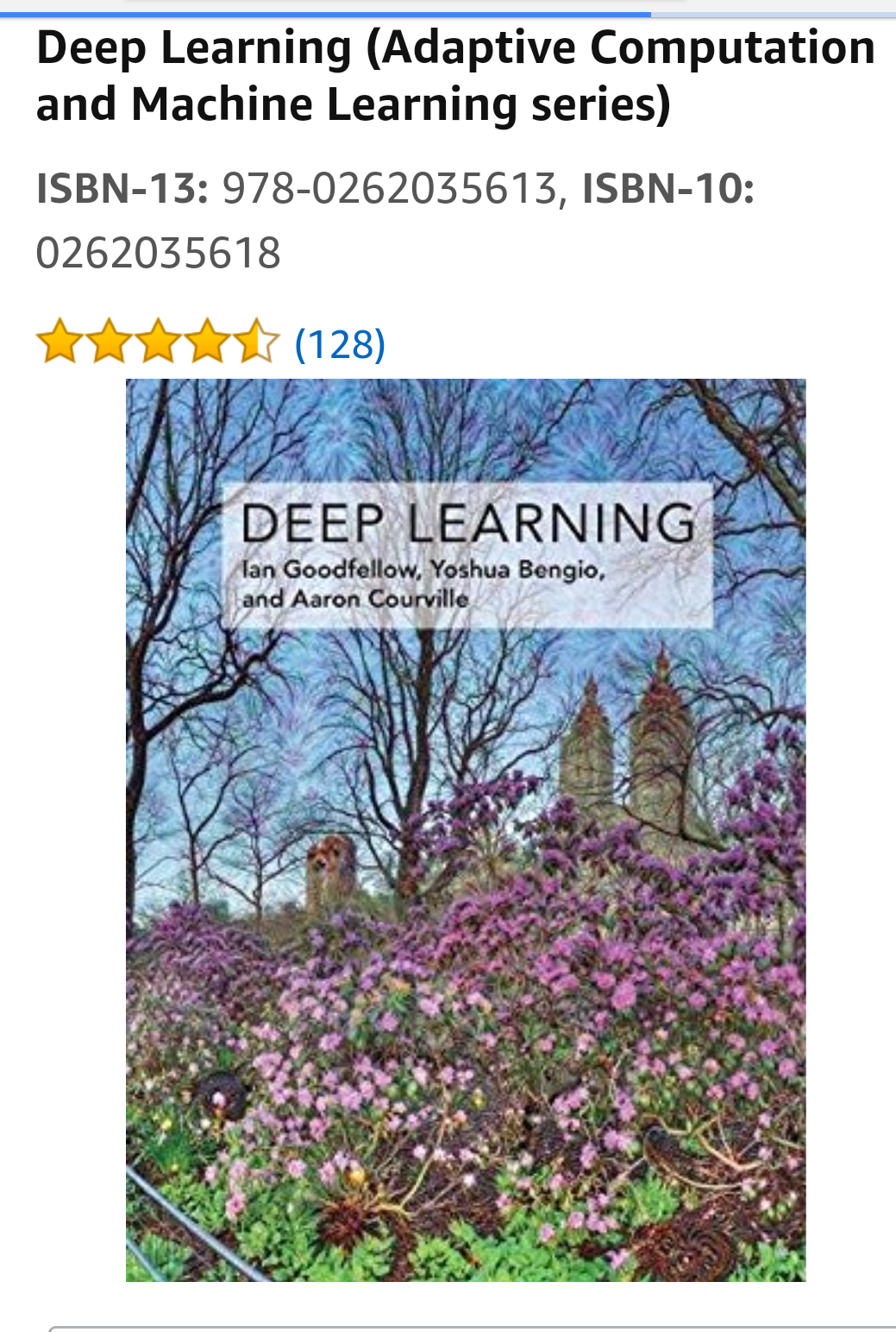
📖 Book 3: “Deep Learning” by Ian Goodfellow, Yoshua Bengio, and Aaron Courville 📖

Deep Learning (Adaptive Computation and Machine Learning series)

Take a deep breath and prepare to immerse yourself in the world of deep learning—a domain where mathematics meets artificial intelligence in the most extraordinary way. Goodfellow, Bengio, and Courville have created a masterpiece that will unlock the secrets of neural networks and convolutional architectures. By interweaving the theoretical underpinnings with practical insights, this book unravels the mysteries of deep learning, empowering you to build and train your own state-of-the-art models. Embark on an exhilarating journey where calculus, linear algebra, and probability theory converge to reshape the boundaries of what’s possible!

📖 Book 4: “The Elements of Statistical Learning” by Trevor Hastie, Robert Tibshirani, and Jerome Friedman 📖

The Elements of Statistical Learning: Data Mining, Inference, and Prediction, Second Edition (Springer Series in Statistics)

Get ready to delve into the fascinating world of statistical learning—a discipline that underpins the very essence of machine learning. Hastie, Tibshirani, and Friedman provide an in-depth exploration of the statistical principles that drive cutting-edge algorithms. With a treasure trove of illustrative examples and thought-provoking exercises, this book guides you through the intricate tapestry of regression, classification, and clustering techniques. Equip yourself with the tools of the trade and unravel the hidden patterns that lie within vast data sets!

🔥 Harness the Power of Mathematics and Unleash Your Machine Learning Potential! 🔥

These four math books are the catalysts that will revolutionize your machine learning journey. By mastering the mathematical foundations, you’ll gain a competitive edge in this rapidly evolving field. Whether you’re a data scientist, a programmer, or an aspiring machine learning enthusiast, these books will become your trusted companions on the road to success.

The Simple Math of Early Retirement: How to Achieve Financial Independence Sooner

Achieving early retirement is a goal that many individuals aspire to, allowing them to enjoy financial independence and pursue their passions. While the concept of retiring early may seem daunting, it is not an unattainable dream. By understanding the fundamental mathematical principles and implementing key strategies, anyone can embark on the path to early retirement. In this article, we will explore the simple math behind early retirement and discuss practical steps to make it a reality.

The Power of Saving

Saving a significant portion of your income is crucial for early retirement. Let’s consider an example: Suppose your annual expenses are $40,000, and you aim to retire when you have accumulated 25 times your annual expenses, as suggested by the 4% rule (discussed later). In this case, you would need to save $1 million ($40,000 x 25) before you can retire. By saving more each year, you accelerate the accumulation of your retirement savings and bring early retirement closer.

The 4% Rule

The 4% rule is a commonly used guideline in retirement planning. It states that if you withdraw 4% of your investment portfolio’s initial value in the first year of retirement and adjust subsequent withdrawals for inflation, your money should last for at least 30 years. To apply this rule, determine your desired annual retirement expenses and multiply that amount by 25. For example, if you want $40,000 in annual expenses, you would need to accumulate $1 million ($40,000 x 25) before retiring. This calculation ensures you have enough saved to sustain your lifestyle throughout retirement.

The Magic of Compound Interest

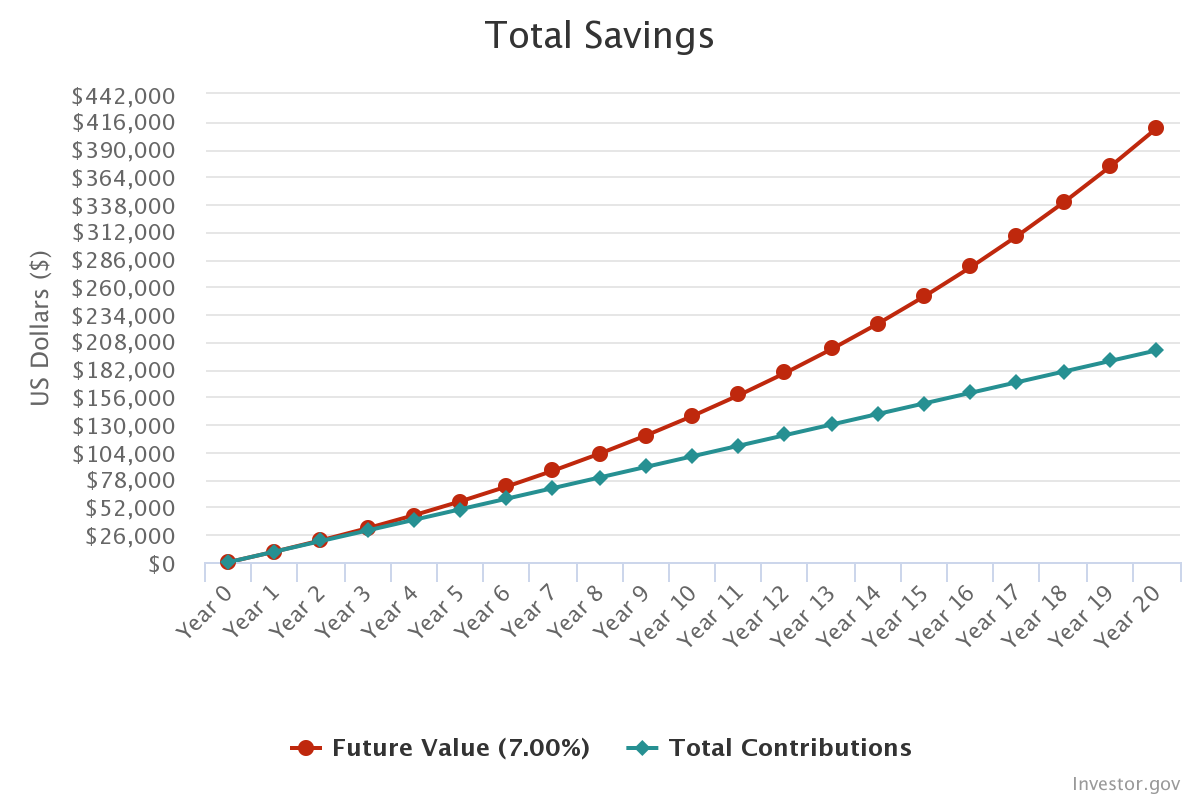
Compound interest is a powerful force that can significantly impact your savings. Let’s say you start saving $10,000 per year at age 25 and invest it in a retirement account with an average annual return of 7%. By the time you reach age 45, you would have contributed a total of $200,000 ($10,000 per year for 20 years). However, thanks to the compounding effect of interest, your retirement account balance would be approximately $410,000, more than double your total contributions. This example highlights the importance of starting early and letting compound interest work over a long period.

The Role of Return on Investment

The return on your investments plays a vital role in determining when you can retire. Consider the following example: Suppose you aim to accumulate $1 million for retirement, and you save $30,000 per year. If your investment portfolio has an average annual return of 5%, it would take approximately 21 years to reach your goal. Here’s how the calculation works: After the first year, you would have saved $30,000, and with a 5% return, your balance would be $31,500. In subsequent years, you save an additional $30,000 and earn a 5% return on your growing balance. By the end of 21 years, your savings would have grown to approximately $1 million. However, with a higher return of 8%, you could achieve the same target in around 17 years. The power of compounding is amplified by higher returns, enabling you to reach your retirement goals sooner.

The Time vs. Money Trade-Off

Early retirement requires finding the right balance between saving aggressively and enjoying life along the way. Saving a higher percentage of your income allows for a shorter accumulation phase. Evaluating your priorities and determining the optimal savings rate can help you align your financial and lifestyle objectives.

Reducing Expenses

Reducing expenses is a crucial aspect of early retirement. By identifying areas where you can cut back and adopting frugal habits, you can accelerate your savings growth. For example, reducing your annual expenses by $5,000 can save you an additional $125,000 over 25 years. Every dollar saved not only reduces your expenses but also lowers the amount you need to save for retirement.

Conclusion

Achieving early retirement is a realistic goal when armed with the knowledge of the simple math behind it. By saving a significant portion of your income, following the 4% rule, harnessing the power of compound interest, and carefully managing your investments, you can pave the way to financial independence sooner than you might have thought possible. Remember to find the right balance between saving and enjoying life along the way, and stay flexible to adapt to changing circumstances. Start crunching the numbers and take the first steps towards the fulfilling and liberating journey of early retirement.

Best Laptop for Math Majors

Are you a passionate math aficionado, tirelessly exploring complex equations and unraveling the mysteries of numbers? Introducing the latest and greatest laptops for math majors – a true game-changer that will elevate your studies to unprecedented heights of success!

As a college math major, you understand the vital role technology plays in your academic journey. From advanced calculus to linear algebra and data analysis, having a powerful and reliable laptop is no longer a luxury but a necessity. That’s where these exceptional laptops come into play, designed to meet the unique needs of math enthusiasts like you.

Here are the top laptops that will greatly aid your journey throughout your math degree:

ASUS ROG Zephyrus G14

This powerful laptop is equipped with an AMD Ryzen 9 processor and a dedicated NVIDIA GeForce RTX graphics card, providing exceptional computational power. The stunning 14-inch WQHD display offers precise visuals for graphing complex equations and exploring mathematical concepts. Its lightweight design and long battery life make it perfect for math majors on the move.

Asus – ROG Zephyrus 14 WQXGA 120Hz Gaming Laptop

Lenovo ThinkPad P15

Designed for demanding computational tasks, the ThinkPad P15 features an Intel Core i7 or i9 processor and a vibrant 15.6-inch 4K UHD display. Its powerful graphics capabilities enable smooth rendering of mathematical visualizations and simulations. With ample storage and memory, you can tackle large datasets and complex mathematical models effortlessly.

OEM Lenovo ThinkPad P15s Gen 2 15.6” FHD IPS (2022 P16s)

Dell Precision 5750

This professional-grade laptop boasts an Intel Xeon processor and a stunning 17-inch UltraSharp 4K display, providing exceptional performance and visual clarity. The NVIDIA Quadro graphics card ensures smooth rendering of complex mathematical visualizations and simulations. With its robust build and advanced cooling system, it can handle intensive mathematical computations with ease.

Dell Precision 5750 17.3″ Mobile Workstation

Microsoft Surface Book 3

Combining versatility and power, the Surface Book 3 features an Intel Core i7 processor and a detachable 13.5 or 15-inch PixelSense display. Its lightweight design and long battery life make it ideal for on-the-go math majors. With its high-resolution touchscreen and support for the Surface Pen, you can effortlessly sketch out mathematical proofs and take handwritten notes.

NEW Microsoft Surface Book 3 – 15″ Touch-Screen

HP ZBook Studio G8

This mobile workstation is a powerhouse, featuring an Intel Core i9 processor and a stunning 15.6-inch 4K UHD display. The NVIDIA RTX graphics card ensures smooth rendering of complex mathematical visualizations and simulations. Its durable build and extensive connectivity options make it a reliable choice for math majors requiring high-performance computing.

HP ZBook Studio G8 Mobile Workstation 2023


Best Laptop for Math Software

Now, let’s talk about the math software that will take your mathematical prowess to new heights:

  • MATLAB: This powerful software is widely used in various math disciplines, such as numerical analysis, linear algebra, and differential equations. With the computational capabilities of these laptops, you can run complex algorithms, perform simulations, and visualize data in MATLAB with remarkable speed and efficiency.
  • Mathematica: Known for its symbolic and numerical computation capabilities, Mathematica is a go-to software for math majors. The high-performance processors and ample memory of these laptops ensure smooth execution of Mathematica, allowing you to explore mathematical concepts, solve equations, and visualize mathematical models effortlessly.

These laptops are optimized to handle the computational demands of math software like MATLAB and Mathematica. From performing advanced calculus operations to solving complex linear algebra problems, these laptops provide the processing power, memory, and storage needed to tackle any mathematical challenge. The high-resolution displays enable clear visualization of mathematical concepts and graphical representations, enhancing your understanding and analysis.

Picture yourself immersed in the world of mathematics, armed with the latest and greatest laptops for math majors. From lectures to study groups, from complex calculations to groundbreaking discoveries, these laptops are your reliable partners, unleashing your full potential and propelling your mathematical pursuits to new heights.

In conclusion, the right laptop can be a transformative tool, enabling you to delve deeper into the realm of mathematics. Embrace the power of technology and equip yourself with the perfect laptop tailored to your needs. Unleash your mathematical genius and soar to unimaginable heights of success with the best laptop for math majors by your side!

Debunking the Myth: Is Calculus the Hardest Math Class?

Is calculus truly the toughest math? Discover the truth as we unravel the complexities of calculus while exploring its beauty and accessibility. We’ll also delve into other challenging math subjects that surpass calculus in difficulty.

Introduction

Is calculus the hardest math class? This question has intrigued many students and sparked numerous debates. In this article, we will delve into the intricacies of calculus, debunking myths and shedding light on its beauty and accessibility. Additionally, we’ll explore other challenging math subjects that surpass calculus in terms of difficulty.

The Foundation of Calculus

Calculus, often regarded as the pinnacle of mathematical achievement, is built upon fundamental principles. It consists of two main branches: differential calculus and integral calculus. Differential calculus focuses on understanding rates of change, while integral calculus deals with the accumulation of quantities. By grasping these foundational concepts, the perceived complexity of calculus can be demystified.

Practical Applications of Calculus

One reason calculus has gained a reputation for being challenging is its extensive use in various scientific fields. From physics and engineering to economics and computer science, calculus provides indispensable tools for modeling and solving real-world problems. It allows us to analyze motion, predict outcomes, optimize systems, and understand complex phenomena. By learning to apply calculus to practical situations, the perceived difficulty begins to fade.

Other Challenging Math Subjects

While calculus poses its own set of challenges, there are several math subjects that surpass it in terms of difficulty. Here are a few examples:

  1. Advanced Linear Algebra: Building upon the foundational concepts of linear algebra, advanced topics such as eigenvectors, eigenvalues, and matrix factorizations can be highly intricate and abstract.
  2. Abstract Algebra: Abstract algebra deals with algebraic structures such as groups, rings, and fields, which involve complex axioms and abstract concepts, requiring a strong grasp of mathematical logic.
  3. Number Theory: Exploring the properties of integers and prime numbers, number theory involves intricate patterns and challenging proofs, making it a fascinating but demanding branch of mathematics.
  4. Differential Geometry: Bridging calculus and geometry, differential geometry studies smooth curved surfaces and manifolds, requiring a deep understanding of differential equations and tensor calculus.

A Matter of Perspective

Is calculus inherently difficult, or does it simply require a shift in perspective? Many students approach calculus with preconceived notions, believing it to be insurmountable. However, understanding the underlying concepts and building a solid foundation through practice can make the subject more approachable. Like any discipline, mastering calculus requires patience, perseverance, and an open mind.

Conclusion

Contrary to popular belief, calculus may not necessarily be the hardest math class. While it presents challenges, it also offers profound beauty and practical applications. By debunking the myth surrounding calculus, we hope to inspire students to embrace this fundamental branch of mathematics. Additionally, we’ve explored other challenging math subjects that surpass calculus in difficulty, highlighting the breadth and depth of mathematical exploration.

So, let go of the notion that calculus is insurmountable, and embark on an exciting journey into the world of mathematics—where complexity meets elegance, and challenges transform into triumphs.

Best Laptop for STEM Majors

🔥💻 Unleash Your Potential with the Best Laptop for STEM College Students and Grad Students! 💻🔥

Attention, ambitious minds and future STEM trailblazers! Are you ready to take your academic journey to the next level? Look no further, for we have discovered a technological marvel that will revolutionize your pursuit of knowledge! Introducing the best laptops for STEM majors – your gateway to unparalleled success in the realm of science, technology, engineering, and mathematics!

🚀 Powerhouse Performance, Unrivaled Speed 🚀

Don’t settle for mediocre laptops when you can have a powerhouse that effortlessly handles the demands of complex STEM programs and projects! Let’s explore five exceptional laptop examples that are perfect for STEM college students and grad students:

Dell XPS 15

The Dell XPS 15 boasts a stunning InfinityEdge display with 4K resolution, providing exceptional clarity for STEM majors. Whether you’re a STEM college student or a grad student conducting advanced research, this laptop’s power and performance will excel in coding, data analysis, and design. With its powerful processors, dedicated graphics card, and ample memory, the Dell XPS 15 is the perfect companion for demanding STEM tasks.

Dell XPS 15 9520 (Latest Model) Intel 12th Gen Core i7

Apple MacBook Pro

Renowned for its reliability and performance, the Apple MacBook Pro is a favorite among STEM college students and grad students alike. Its brilliant Retina display showcases your work in exquisite detail, while its powerful processors and fast storage ensure seamless performance in intensive STEM applications. Whether you’re analyzing complex data sets, conducting simulations, or coding advanced algorithms, the MacBook Pro delivers the computing power you need.

Apple 2023 MacBook Pro Laptop M2 Pro chip with 10‑core CPU and 16‑core GPU

HP Spectre x360

The HP Spectre x360 is a versatile 2-in-1 laptop that caters to the needs of STEM majors. With its touch-enabled display and powerful processors, it allows you to sketch diagrams, take notes, and interact with scientific simulations directly on the screen. Its exceptional performance, long battery life, and portability make it an ideal choice for STEM majors on the go.

HP Spectre X360 2-in-1 Touchscreen Laptop

Lenovo ThinkPad X1 Carbon

Built for durability and reliability, the Lenovo ThinkPad X1 Carbon is a trusted companion for STEM college students. Its robust construction, comfortable keyboard, and stunning display make it an ideal choice for long hours of coding, research, and data analysis. With powerful processors, ample storage, and memory options, this laptop delivers exceptional performance for demanding STEM tasks.

Lenovo ThinkPad X1 Carbon 9th Gen 9 Intel Core i7-1165G7

ASUS ROG Zephyrus G14

The ASUS ROG Zephyrus G14 combines exceptional gaming capabilities with powerful performance for STEM applications. With its advanced processors and dedicated graphics, it excels in computational tasks, simulations, and data analysis. Its compact design, long battery life, and impressive specifications make it an attractive choice for STEM university students seeking a high-performance laptop.

Asus – ROG Zephyrus 14 QHD(2560×1600) Gaming Laptop

💡 Which Laptop is Best for Scientific Computing? 💡

When it comes to scientific computing, the above laptops that are considered excellent choices due to their powerful specifications and performance capabilities.

When selecting a laptop for scientific computing, it is crucial to consider the specific requirements of your scientific work, such as software compatibility, storage needs, and connectivity options. It is also advisable to check with your institution or research team for any recommended specifications or software preferences that may influence your decision. For example, some programs may only run on Windows, in which case a MacBook would not be suitable.

✨ Ignite Your Curiosity, Unleash Your Creativity ✨

Imagine a laptop that becomes an extension of your brilliant mind, a tool that seamlessly integrates with your thirst for knowledge and empowers you to explore the depths of your chosen field. Whether you’re a STEM college student or a grad student specializing in STEM majors, the best laptop is precisely what you need! Engineered to fuel your curiosity and unlock your creative potential, a cutting-edge device is the catalyst for your academic triumphs!

🎯 Seize Your Future Today! 🎯

Why waste precious time searching for the perfect laptop when the ultimate solution is within reach? The best laptop for STEM students is your key to unlocking unparalleled success in your academic pursuits. Embrace the power of technology, seize the tools that elevate your capabilities, and become the STEM superstar you were destined to be!

🌟 Ignite Your Passion with the Best Laptop for STEM Students! 🌟

Time is of the essence! The best laptop for STEM majors is your gateway to academic excellence and groundbreaking discoveries. Whether you’re a STEM college student or a grad student pursuing STEM majors, don’t let this opportunity pass you by. Get your hands on the best laptop now and embark on a transformative journey toward becoming a trailblazer in your chosen STEM field!

Best SAT Math Prep Book

🔥📚 Discover the Best SAT Math Books: Turbocharge Your Scores! 📚🔥

Attention, aspiring scholars and SAT conquerors! Are you ready to unlock the secrets to mastering the math section of the SAT? Look no further, for we have unearthed a hidden gem that will skyrocket your scores and propel you towards academic triumph! Introducing the following best SAT Math Books – your ultimate weapon for conquering the numbers game and clinching that dream score!

🚀 The Power of Proven Techniques 🚀

Don’t settle for mediocre prep materials when you can have access to cutting-edge strategies that guarantee success! Here are some of the best SAT math prep books recommended by experts:

“The Official SAT Study Guide” by The College Board

This comprehensive guide is the holy grail of SAT preparation. It includes real SAT questions from past exams, detailed answer explanations, and valuable test-taking strategies. With eight full-length practice tests, targeted practice questions, and a review of math concepts, it provides an authentic SAT experience and helps you track your progress.

The Official SAT Study Guide

“PWN the SAT: Math Guide” by Mike McClenathan

Known for its clear explanations and effective strategies, this book covers all math topics tested on the SAT. It breaks down complex concepts into easily digestible pieces, enabling you to master each topic and maximize your score. With over 350 practice questions and accompanying explanations, this guide offers ample opportunities to practice and reinforce your understanding.

PWN the SAT: Math Guide

“Dr. John Chung’s SAT Math” by Dr. John Chung

Dr. John Chung’s book is renowned for its challenging practice questions and rigorous content. It focuses on building a solid foundation of math concepts and provides in-depth explanations to help you understand the underlying principles. With over 600 practice questions, including those from previous SAT exams, this book offers extensive practice to enhance your problem-solving skills.

Dr. John Chung’s SAT Math

“SAT Prep Black Book: The Most Effective SAT Strategies Ever Published” by Mike Barrett

This book offers a unique approach to SAT preparation, focusing on understanding the SAT’s logic and mindset. It provides comprehensive explanations of SAT questions, strategies for each section, and tips to avoid common traps. With detailed walkthroughs of real SAT questions and a step-by-step guide to creating your own personalized study plan, this book equips you with the tools for success.

SAT Prep Black Book: The Most Effective SAT Strategies Ever Published

“The College Panda’s SAT Math: Advanced Guide and Workbook” by Nielson Phu

Geared towards students aiming for a top-notch score, this book delves into advanced math topics tested on the SAT. It covers challenging concepts such as advanced algebra, coordinate geometry, and trigonometry. With over 500 practice questions and multiple full-length practice tests, this guide helps you master the most difficult math problems and ace the SAT Math section.

The College Panda’s SAT Math: Advanced Guide and Workbook for the New SAT

📖 Comprehensive Content, Crystal Clear Explanations 📖

Let’s face it – SAT math can be daunting. But fear not, for the SAT Math prep books above have got your back! Packed with comprehensive content covering every essential topic, the books cover the essentials of SAT math. Each concept is explained in a crystal-clear manner, allowing you to grasp even the most complex mathematical ideas effortlessly. Say goodbye to confusion and hello to confidence!

🏆 Unrivaled Practice Makes Perfect 🏆

We all know that practice makes perfect, and the SAT Math prep books ensure you have ample opportunities to sharpen your skills. Featuring a treasure trove of practice questions and full-length mock exams, the books provide the ideal platform for you to put your newfound knowledge to the test. With each problem you solve, you inch closer to SAT math mastery!

🎯 The Shortcut to Success 🎯

Why waste precious time and effort searching for various resources when the ultimate SAT math prep solution is right here, within your grasp? The SAT Math prep books are your shortcut to success! They save students a lot of time by focusing on what is essential and likely to be tested. Imagine the confidence radiating from you as you walk into the SAT exam, armed with unrivaled knowledge and an unbeatable strategy. Success is no longer a dream; it’s a reality waiting to be seized!

🌟 Turbocharge Your Scores with the SAT Math Prep Books! 🌟

Time is of the essence! The SAT Math prep books are your ticket to unlocking academic excellence and propelling yourself towards a bright future. Don’t let this opportunity slip through your fingers. Grab your copy now and embark on a transformative journey towards SAT math domination!

Best GRE Math Prep Book

Best GRE Quant Prep Book

Are you ready to conquer the GRE Math (Quantitative) section and leave it trembling in fear? Are you on the hunt for the ultimate weapon to boost your math scores and secure your spot in the top percentile? Look no further! We are about to reveal the best-kept secret that will skyrocket your math prowess: the best GRE Math prep book recommendations handpicked just for you!

Now, you might be wondering, “What is the best GRE prep book out there?” These are no ordinary textbooks. They are game-changers, formidable weapons forged by the brightest math minds, tailored specifically to tackle the challenging GRE Math Quant section.

But don’t just take our word for it. Let’s dive into the actual book recommendations that have garnered glowing reviews and transformed countless aspiring test-takers into math champions:

“5 lb. Book of GRE Practice Problems” by Manhattan Prep

This behemoth of a book packs a punch with over 1,800 practice problems covering all areas of the GRE, including math. With detailed explanations for every problem, this comprehensive resource will strengthen your math skills and boost your confidence. It’s the perfect companion for those aiming to excel in the GRE Math section.

5 lb. Book of GRE Practice Problems Problems on All Subjects

“GRE Math Workbook” by Kaplan Test Prep

Kaplan is a trusted name in test preparation, and their GRE Math Workbook lives up to the reputation. Packed with targeted practice sets, this workbook hones your skills in the specific math areas tested on the GRE. The step-by-step explanations and test-taking strategies provided will ensure you’re well-prepared for the math challenges that lie ahead.

GRE Math Workbook: Score Higher with 1,000+ Drills & Practice Questions (Kaplan Test Prep)

“Official GRE Quantitative Reasoning Practice Questions” by Educational Testing Service (ETS)

Who better to turn to for GRE preparation than the creators of the exam themselves? ETS offers this official guide that includes real GRE questions to help you familiarize yourself with the test format. The book features hundreds of authentic practice questions, allowing you to gauge your math proficiency and identify areas that need improvement.

Official GRE Quantitative Reasoning Practice Questions

“GRE Math Prep Course” by Jeff Kolby

This comprehensive prep course offers a systematic approach to mastering GRE Math. With clear explanations, worked examples, and practice exercises, it covers all the essential topics and strategies you need to excel. The book also includes tips on how to manage your time effectively during the exam, ensuring you perform your best under pressure.

GRE Math Prep Course (Nova’s GRE Prep Course)

“GRE Math Bible” by Jeff Kolby and Derrick Vaughn

The GRE Math Bible lives up to its name, providing comprehensive coverage of the math concepts and techniques tested on the GRE. It offers a wealth of practice questions with detailed solutions, allowing you to reinforce your understanding and improve your problem-solving skills. With its focused approach, this book will help you unlock your maximum math potential.

GRE Math Bible


Remember, success favors the bold! Don’t settle for mediocrity when you can excel in the GRE Math section. Grab one or more of these highly recommended books today and embark on your journey to math mastery!

P.S. Act now and take advantage of the incredible resources available for GRE Math preparation. Alongside these books, you’ll find valuable tips, study guides, and additional practice materials to enhance your GRE Math preparation. Don’t miss out on this opportunity to skyrocket your math scores and secure your future success. Visit reputable online retailers or local bookstores to get your hands on the best GRE Math prep books today!

Taylor Swift and Math: Exploring the Fascinating Connections

Taylor Swift Math

Taylor Swift, the renowned singer-songwriter, has a curious affinity for numbers that weaves its way into her music and personal life. From her favorite number to the strategic use of numbers in her album titles, let’s delve into the intriguing connections between Taylor Swift and math.

13: Taylor Swift’s Lucky Number

One of the most well-known numerical associations with Taylor Swift is her fondness for the number 13. Throughout her career, Swift has expressed her love for this seemingly unconventional choice. Born on December 13th, she considers it her lucky number. In interviews, she has playfully mentioned that 13 has brought her good fortune, and she often incorporates it into her performances and personal choices.

Albums with Numbers: Symbolism and Chronology

1989 (CD) Taylor Swift

Taylor Swift’s discography showcases a distinctive pattern of album titles that feature numbers. These numbers hold personal significance to Swift and often represent specific time periods or themes in her life. Some notable examples include:

  • “1989” (2014): Named after the year of her birth, this album marked a departure from her country roots and embraced a pop sound.
  • “22” (2012): Symbolizing Youthful Joy and Carefree Moments

Released in 2012, “22” is a track on Taylor Swift’s album “Red”. While the album as a whole explores themes of love and heartbreak, “22” stands out as an anthem celebrating the exuberance of youth. The number 22 holds significance as a representation of carefree moments, wild adventures, and the joyous spirit of being young. The song captures the essence of embracing life’s possibilities and cherishing the freedom that comes with youth.

“Red” by Taylor Swift

In the lyrics of “22,” Swift sings, “Everything will be alright if we just keep dancing like we’re 22.” The line encapsulates the youthful energy and optimism that permeate the song. By incorporating the number 22, Swift creates a relatable and universal experience that resonates with her audience, reminding listeners of the joy and spontaneity associated with their own youth.

Taylor Swift Number

Taylor Swift’s fascination with numbers provides a captivating lens through which to appreciate her artistry. From her love for the number 13 to the deliberate use of numbers in album titles, Swift infuses her music with personal symbolism and chronicles her journey as an artist. While her connection to math extends beyond numerical patterns, it adds another layer of intrigue to her already captivating persona. Exploring the interplay between Taylor Swift and math reveals the multifaceted nature of her creative expression and further deepens our appreciation for her music.

Best Calculator for Statistics

Best Calculator for Probability and Statistics

When it comes to statistical analysis, having the best calculator by your side is paramount. We have handpicked the top-rated calculators available on Amazon, specifically designed to meet the rigorous demands of statistical computations. These calculators combine advanced statistical functions, intuitive interfaces, and unparalleled precision, making them indispensable for any statistical enthusiast. Say goodbye to manual calculations and unlock your statistical mastery with these extraordinary calculators.

Best Casio Calculator for Statistics: Casio FX-991EX Scientific Calculator

The Casio FX-991EX Scientific Calculator is a statistical powerhouse. With over 500 built-in functions, including a wide range of statistical analyses, regression, probability, and hypothesis testing, this calculator offers unrivaled versatility. Its high-resolution display and intuitive interface make it a user-friendly tool for tackling complex statistical problems. Experience the precision and reliability of the Casio FX-991EX Scientific Calculator available on Amazon.

Casio FX-991EX Engineering/Scientific Calculator

Texas Instruments TI-34 Multiview Calculator for Statistics

The Texas Instruments TI-34 Multiview Calculator is an excellent choice for students and professionals looking for a compact yet powerful calculator for statistical analysis. With its four-line display and intuitive interface, this calculator allows for easy entry and review of multiple calculations simultaneously. It offers statistical functions, including mean, standard deviation, and regression, making it a versatile tool for basic to intermediate statistical analyses. Discover the Texas Instruments TI-34 Multiview Calculator on Amazon and simplify your statistical computations.

Texas Instruments TI-34 MultiView Scientific Calculator

Texas Instruments TI-84 Plus CE Graphing Calculator

The Texas Instruments TI-84 Plus CE Graphing Calculator is renowned for its robust graphing capabilities and advanced statistical functions. With its vibrant color display, customizable features, and extensive statistical analysis tools, this calculator is a favorite among students and professionals alike. Whether you need to perform regressions, analyze data sets, or visualize statistical concepts, the TI-84 Plus CE has you covered. Explore the Texas Instruments TI-84 Plus CE Graphing Calculator on Amazon and unlock your statistical prowess.

Texas Instruments TI-84 Plus CE Color Graphing Calculator

HP 10BII+ Financial Calculator

While not strictly a statistical calculator, the HP 10BII+ Financial Calculator is a reliable and affordable option for basic statistical calculations. It offers functions for mean, standard deviation, and linear regression, making it suitable for introductory statistical courses or quick calculations on the go. With its intuitive interface and compact design, the HP 10BII+ is a convenient choice for statistical calculations. Discover the HP 10BII+ Financial Calculator on Amazon and simplify your statistical analyses.

HP 10bII+ Financial Calculator

Best Statistical Calculators on the Market

Statistical enthusiasts, your search for the perfect calculator ends here! Explore our meticulously selected calculators, available on Amazon, and unlock your statistical mastery. Whether you’re a student embarking on statistical coursework, a researcher diving into data analysis, or a professional seeking to make data-driven decisions, these calculators will be your trusted ally. Embrace precision, power, and versatility with the Casio FX-991EX, Texas Instruments TI-84 Plus CE, and HP 10BII+ calculators and unleash your analytical prowess.

Best Calculator for Engineering

Best Calculator for Mechanical Engineering

Mechanical engineering involves intricate calculations, such as solving equations, analyzing forces, determining stresses and strains, and designing mechanical systems. A calculator streamlines these calculations, saving time and ensuring accuracy.

Texas Instruments TI-Nspire CX CAS: The Engineering Powerhouse

The Texas Instruments TI-Nspire CX CAS is an engineering marvel. This calculator combines raw power with advanced functionality, including a Computer Algebra System (CAS), enabling you to conquer complex equations with ease. With its vibrant color display, intuitive interface, and extensive graphing capabilities, this calculator is a must-have for any engineering enthusiast. Discover the TI-Nspire CX CAS on Amazon and unlock a world of engineering possibilities.

Texas Instruments TI-Nspire CX II CAS Color Graphing Calculator with Student Software (PC/Mac)

Casio FX-115ES PLUS: Precision and Versatility at Your Fingertips

When precision is paramount, the Casio FX-115ES PLUS shines. This scientific calculator boasts over 280 built-in functions, including advanced engineering calculations, matrices, and equation solving. Its Natural Textbook Display ensures easy comprehension of mathematical expressions, making it a trusted companion for engineering courses and professional endeavors. Explore the Casio FX-115ES PLUS on Amazon and experience the power of precision.

Casio fx-115ESPLUS2 2nd Edition, Advanced Scientific Calculator

Best Calculator for Electrical Engineering

Electrical engineers often deal with complex circuit analysis, involving calculations of voltage, current, resistance, power, and other electrical parameters. Calculators with advanced mathematical functions enable engineers to perform these calculations accurately and efficiently, simplifying circuit analysis and design.

HP 35s Scientific Calculator: Classic Design, Unparalleled Performance

Engineers who appreciate the elegance of classic calculators will find solace in the HP 35s Scientific Calculator. With its retro charm and robust functionality, this calculator offers a rich set of features, including engineering notation, 100+ built-in functions, and programmability. Experience the enduring legacy of HP calculators and explore the HP 35s Scientific Calculator on Amazon.

HP 35s Scientific Calculator

Sharp EL-W516TBSL Advanced Scientific Calculator: Your Engineering Ally on a Budget

Looking for affordability without compromising on functionality? Look no further than the Sharp EL-W516TBSL Advanced Scientific Calculator. Packed with features like statistical calculations, complex number operations, and equation solving, this calculator proves that excellence can be accessible to all. Discover the Sharp EL-W516TBSL on Amazon and experience the engineering prowess within your budget.

Sharp EL-W516TBSL 16-Digit Advanced Scientific Calculator

Conclusion

Engineers, your quest for the ultimate calculator ends here! With these meticulously selected Amazon offerings, you can fuel your engineering journey and elevate your mathematical genius to unprecedented heights. Harness the power of precision, versatility, and affordability with these exceptional calculators. Remember, greatness awaits those who dare to engineer their success. Seize this opportunity, explore the provided Amazon links, and claim your calculator companion today. Prepare to engineer a future brimming with triumph and mathematical brilliance!

Introduction to Limits with its definition, types, examples, and rules

Introduction to Limits with its definition, types, examples, and rules

Limit is an essential topic in Calculus, it is used in almost all important and main topics like differentiation and integrals. Limits refer to something that confines, restricts, and bounds.

In mathematics, the concept of limit is based on closeness, it is normally used to assign values to some functions at that point at which no values are defined. In calculus, a limit is a value on which a function approaches the output.

The history of this mathematical concept is very old and authentic. Limits were firstly introduced by the Italian mathematician Archimedes almost 2300 years ago. He introduced the idea of limits to measure curved surfaces and figures.

In this post, we’ll study the basic definition, rules & types of limits with examples.

Definition:

According to Wikipedia:

“In mathematics, a limit is a value that a function (or sequence) approaches as the input (or index) approaches some value”

Formula of limit:

The formula of limit is usually written as:

We can read it as the limit of f(x) as x approaches c equal to L

  • f(x) is the function.
  • L is the answer
  • c is the limit value.

Types of limits:

Limit has three types.

  • Right-hand limit
  • Left-hand limit
  • Two-sided limit

Right-hand limit:

The right-hand limit is an approaching value of f(x) as the x approaches c from the right side.

The plus sign represents that the limit value comes from the right and must be greater than c.

Left-hand limit:

The approaching value of a function F(x) as the x approaches c from the left side is called the left-hand limit.

The negative symbol represents that the limit term comes from the left and must be less than c.

Two-sided limit:

The two-sided limit represents that the left-hand limit and right-hand limit exist and both have the same result. No sign is used for the two-sided limit.

Some basic rules of limit:

How to calculate limits in calculus?

To evaluate the limit, follow the below examples.

Example 1: Calculate the limit of 12x3 – 5x2 + 21x + 32 / x5, when x approaches 2.

Solution:

Step 1: Take the given function and apply the limits.

f(x) = 12x3 – 5x2 + 21x + 32 / x5

c = 2

Step 2: Apply the limits notation separately by using the sum, difference, and quotient rules

Step 3: Write the constants outside the limits.

Step 4: Now put the limit value.

To get rid of these long calculations you can use an online limit calculator with steps.      

How to use the limit calculator:

  1. Enter the function in the input box.
  2. Select the variable.
  3. Select the limit type.
  4. Enter the limit.
  5. Cross-check your input box from the display box.
  6. Hit calculate button. 

Example 2:

If the function is not giving a finite answer after putting the limits then we use the L’hospital rule to solve that kind of function.

Example: Let us consider a function f(x) = (3x3 – 9x2) / 3x – 9 as x approaches to 3.

Solution:

Step 1: Take the given function and apply the limits.

F(x) = (3x3 – 9x2) / 3x – 9

c = 3

Step 2: Now apply the value of the limit.

Step 3: To remove the indeterminate form apply the L’hospital rule. Take the derivative of the upper and lower side of the function separately.

d/dx F(x) = d/dx (3x3 – 9x2) / d/dx (3x – 9)

F(x) = (9x3-1 – 18x2-1) / (3(1) – 0)   

F(x) = (9x2 – 18x) / 3

F(x) = 3x2 – 6x 

Step 4: Now apply the limit value again.

Summary:

In the above article, we have studied the basic definition of Limit, its types, and the basic history of limits. After reading this article carefully you will be able to solve almost all the problems related to this topic. The basic intent of the L’hospital rule is discussed above.  

Best Udemy Data Science / Machine Learning / AI Courses

During this current lockdown period it is a good idea to pick up a data science skill. Most occupations can benefit from such a skill, including engineers, accountants, teachers, even students. Who knows, one day you may find deep learning useful!

In this page we introduce various Udemy courses (which come with certificates that you can put on your LinkedIn profile) that are the best in their class, be it for data science, machine learning (including deep learning), and AI (Artificial Intelligence).

Best Udemy Python Course

Currently, Python is the most popular language for data science and machine learning.  R is the second most popular language, and is especially good for statistics.

Hence, this Machine Learning A-Z™: Hands-On Python & R In Data Science Course is perfect as it introduces two of the most popular programming languages in one course! You will learn Machine Learning (ML) in the process as well, which is a great bonus.

If you only want to focus on Python, then check out 2020 Complete Python Bootcamp: From Zero to Hero in Python. It is designed to bring you from zero knowledge to a respectable expert in Python if you complete the course and exercises.

Best Udemy courses for data science

In the Python for Data Science and Machine Learning Bootcamp  course, students can learn how to use NumPy, Pandas, Seaborn, Matplotlib, Plotly, Scikit-Learn, Machine Learning, Tensorflow, and more! The aforementioned packages are all classic and popular in data science, data analysis and data visualization.

The Data Science Course 2020: Complete Data Science Bootcamp is another bootcamp style course that gives you complete Data Science training in: Mathematics, Statistics, Python, Advanced Statistics in Python, Machine & Deep Learning. It is especially suitable for beginners, as well as intermediate students who need to brush up on their skills.

Best Udemy course for Deep Learning

Deep learning (DL) is a subbranch of machine learning that is recently very hot and popular due to its superior accuracy in tasks such as image classification and NLP (natural language processing).

The Deep Learning A-Z™: Hands-On Artificial Neural Networks allows students to learn how to create Deep Learning Algorithms in Python from two Machine Learning & Data Science experts. Templates included, which is very important. Essentially, you can use and modify the templates to suit your individual task at hand.

Complete Guide to TensorFlow for Deep Learning with Python is a course for learn how to use Google’s Deep Learning Framework – TensorFlow with Python! Solve problems with cutting edge techniques! TensorFlow is one of the more popular deep learning framework, and is slightly ahead in popularity compared to its closest rival, PyTorch.

Udemy course benefits

The first benefit of Udemy courses, is that you get to learn content from the top trainers. Often, these courses are superior to free YouTube content, and may be even better than the courses in your school.

The second benefit is that Udemy provides a certificate upon completion that you can list in your CV, as well as put in your LinkedIn profile. This is especially important if you are trying to transition into a data scientist job from another field, like engineering or physical sciences.

What is your favorite Udemy course for AI/ML/DL? Feel free to comment below!

Why Asians Are Good At Math – Jimmy O. Yang Math Joke

Jimmy O. Yang is a famous US comedian of Chinese origin. This joke on “Why Asians Are Good at Math” is quite hilarious.

Warning on the YouTube video: Strong Language for Singapore/Asian standards (Recommended at least Age 16 or up to watch it.)

For US standards, apparently it is normal language, YouTube doesn’t even censor it.


To fully understand Jimmy’s joke, you need to understand what is a TI-83 Plus, which is covered in our recommended calculators page.

Jimmy is a talented Asian immigrant who excels in the standard repertoire of: playing ping-pong, violin and Math!

YANG: Absolutely. I grew up playing ping pong.

GARCIA-NAVARRO: (Laughter).

YANG: I grew up playing the violin. And I was extremely good at math.

Source: https://www.npr.org/2020/05/10/853415067/comedian-jimmy-o-yang-on-his-new-comedy-special-good-deal

How to develop students’ interest in mathematics

For interest in Math, it is totally understandable that many students may find math boring. One way to overcome it is to try to think of each Math question like a puzzle or game (like a Sudoku or Crossword Puzzle). Solving a Math question correctly should bring joy and a sense of achievement just like completing a stage of a game or a puzzle. And the more questions one solves, the better one gets at it.
“Mathematics, rightly viewed, possesses not only truth, but supreme beauty—a beauty cold and austere, like that of sculpture, without appeal to any part of our weaker nature, without the gorgeous trappings of painting or music, yet sublimely pure, and capable of a stern perfection such as only the greatest art can show.”
― Bertrand Russell
In the Singapore context, basically, Math is quite compulsory in SG education system (up till JC, even arts subject combinations requires math), but once JC is over one can skip Math entirely in university. So a secondary student just have to work hard for math for the upcoming few years, and “get it over with”, if he/she really does not like math. Similarly for Chinese, students need to work hard up till Secondary 4, score well and be exempted in JC. Math can be considered the “easiest” subject to get A, as long as one gets the answer correct he/she will get the full marks, many students complain that getting A for English or other humanities subjects like Literature is much harder due to strict or subjective marking.
The important thing is not to give up. Currently, in the Singapore education system it is quite common for students to “fail” exams (fail as in score below 50), especially in secondary school and JC internal exams. It is very possible to improve upon working hard after the failure.
“Trust me, its normal, I never passed a single A math test/exam during my sec 3/4 school years, got A2 for O levels in the end. (Mugged really hard after prelims) What matters is understanding the content I feel.”
– This student never passed a single A math test/exam up till prelims but eventually got A2 for O levels after “mugging” really hard after prelims.
Source: Reddit
trust me youre not alone. from mid sec 3 to prelims in sec 4 i got F9 all the way. but then in the end i got an A2 in olevels. one thing u need to know is to NEVER stop believing in yourself. keep on pushing urself all the way till the finishing point. aft seeing my score for prelims, i alm gave up but i told myself to atleast PASS amaths and i’d be satisfied with it. i started spamming my TYS, practice as much as i could. never give up and whenever in doubt just ask ur cher. it rly helps! atb and ik u can do it:))
Source: Reddit
dude chill. i got 8% for mye in sec 3 for A Math. form teacher told me drop the subject, but i didnt. ended up o level got A2. just do work given and practice more.
– This guy even more “power”, he got just 8/100 for Mid-year exams, but improved to A2 in O Levels.
Source: Reddit

Time needed for each O Level E Maths / A Maths Question

Just to reblog an old post on how much time to take per mark per question for ‘O’ level or IP Math. The above guideline applies for both E Math and A Math, Paper 1 and Paper 2.

The basic guideline is 1.5 min per mark.

So for a 2 mark question, the time taken should be 1.5×2=3 min.

For a 5 mark question, the time taken should be 1.5×5=7.5min.

This is the slowest speed allowed in order to finish the entire paper (there is no time to check). Hence, if one wishes to have some time for checking, it is recommended to do questions at a faster speed of around 1.2 or 1.3 min per mark.

mathtuition88's avatarMathtuition88

E Maths / A Maths: Maximum time per question

Paper 1: 2 hours (120 min) — 80 marks

Max. Time taken per mark: 1.5 min per mark

Paper 2: 2 hours 30 minutes (150 min) — 100 marks

Max. Time taken per mark: 1.5 min per mark

In O Levels Maths, speed and accuracy is very important indeed!

View original post

Best Calculator for Linear Algebra and Calculus

Many universities and colleges allow students to use advanced graphical calculators for exams in math courses, including linear algebra, calculus and engineering. Having the appropriate calculator can prove to be a huge advantage in terms of getting the correct answer and saving time. Even if the handwritten manual working is required, a good calculator can help to check the correctness of the answer.

Best Calculator for Linear Algebra

The key calculations in linear algebra include calculating the inverse and determinant of matrices. Additional features that are useful in calculators include the ability to calculate eigenvalues, eigenvectors, and RREF (reduced row echelon form). These features can be great time savers (or at the minimum, useful tools for checking your answer), as matrix operations are often tedious and prone to human error.


Our first choice would be Texas Instruments TI-84 Plus CE Color Graphing Calculator, Black. This is one of the flagship calculators by Texas Instruments. This type of calculator is something like a smart phone, you would need to download free apps that will greatly magnify its power in solving Linear Algebra equations. Some of the linear algebra capabilities of the TI-84 Plus are:

  • Calculate adjoint of a matrix
  • Solve Simultaneous Equations
  • Calculate dot product, cross product of vectors
  • Calculate inverse of matrix (when matrix is invertible)
  • Calculate LDU decomposition, Cholesky factorization
  • Calculate Eigenvalues and plot the characteristic polynomial
  • Compute the Frobenius norm of a matrix
  • Perform Gram Schmidt orthonormalization
  • Calculate null space (kernel) if a matrix
  • and more!

This calculator is good enough up till senior undergraduate level or even graduate level, for computational intensive modules, such as computational physics or any module that requires linear algebra calculations.

For a more budget-friendly version, you may check out the Texas Instruments TI-84 Plus Graphing Calculator, Black which is essentially the black and white version of the TI-84 Plus CE Color.

Or for an even cheaper option, you could opt for the older version Texas Instruments TI-83 Plus Graphing Calculator which still supports the linear algebra apps.

Often, linear algebra courses include applications to differential equations as well, which overlaps with the next topic on Calculus.

Update: For the latest TI-85/86 models, there is a new “Matrix Mode” inbuilt into the calculator that can perform basic matrix operations (including inverse) and other advanced operations such as LU Decompositions, and finding eigenvalues/eigenvectors.

Note that paradoxically, the newer TI calculator models may be cheaper than the older ones.


Texas Instruments TI-86 ViewScreen Calculator

Best Calculator for Calculus

For Calculus, the important features that a calculator should have are the ability to perform numerical differentiation and integration. There are also some amazing apps for TI83/84 that can perform symbolic differentiation, that is, find the derivative of a function in symbols (not just the numerical value at certain values of x).

So once again, the TI-84 Plus CE Color Graphing Calculator, White is a good suggested calculator for Calculus modules.

If your budget (and course requirements) permit, you should definitely check out the Texas Instruments TI-Nspire CX II CAS Color Graphing Calculator with Student Software (PC/Mac). CAS stands for “computer algebra system”, which means that the calculator is capable of producing symbolic results rather than just numerical results.

The TI-Nspire™ CX II features a deSolve wizard function for reducing syntax errors in solving differential equations. The TI-Nspire CX can even do vector calculus. It is a very powerful smart calculator that is essentially a mini-computer.

TI Calculator Alternatives

In my experience as a student and educator, TI (Texas Instruments) calculators dominate the market and are generally considered a good choice. But there are other viable alternatives that can also be considered good for linear algebra, calculus or engineering math.

A popular alternative is Casio calculators, for instance Casio fx-9750GII Graphing Calculator with icon based menu. Color white. An immediate advantage of Casio calculators is their low price.

The Casio fx-9750 (and related series) calculator is able to calculate determinant of matrix as well as basic matrix operations such as multiplying matrices, finding the inverse of matrix, etc.

As mentioned above, the main advantage of Casio graphical calculators is their low price. For advanced features, the TI calculators definitely trump over the Casio calculators.

Another alternative to TI calculators are the HP graphical calculators. Let us check out the most powerful HP calculator, the HP 50g Graphing Calculator.

The HP 50g Graphing Calculator has a “MatrixWriter form” to facilitate the entry of matrices. It is essentially like an Excel spreadsheet. Once the matrix is entered, there is a myriad of functions that can be applied, such as finding the determinant, trace, transpose, and rank of a matrix.

In terms of Calculus, the HP 50g can perform a wide range of calculus functions such as:

  • Limits and derivatives
  • Anti-derivatives and Integrals
  • Calculate the Taylor/Maclaurin series of a function symbolically (up to 4-th order relative power, i.e., the difference between the highest and lowest power in the expansion is 4)
  • Partial Derivatives (Multivariate Calculus)
  • Multiple Integrals such as double integral
  • Vector Calculus such as del, gradient, divergence, curl
  • Differential Equations
  • Fourier series

The list above is quite impressive! Overall, the HP 50g Graphical Calculator is a very strong competitor to the TI series graphical calculators.

Best Calculator for Engineering

Engineers often need to use Linear Algebra, as well as Calculus. Hence, the best calculator for engineering often overlaps with the best calculator for linear algebra or calculus. Do check out our above reviews and pick the calculator that best suits your needs.

In general, we have the below summary.

Best Budget Calculator: Casio graphical calculators, such as Casio fx-9750GII Graphing Calculator with icon based menu. Color white.

Safe choice, all-round best calculator: TI Texas Instruments Calculator, for instance the iconic Texas Instruments TI-84 Plus CE Color Graphing Calculator, Black

Super Powerful Calculator (very advanced and comprehensive features): HP 50g Graphing Calculator

H2 Math Tuition 2020

H2 Math can prove to be quite challenging for many students. Historically, the distinction rate is 50%, meaning that half of the student population will get an ‘A’ grade.

However, note that those 50% can be heavily represented by the top schools RI, HCI, NJC where almost all students get ‘A’. At the end of the day, the ‘A’ level students are facing heavy competition from the IP cohort (who were absent from the O levels).

Tough topics in ‘A’ level H2 Math:

Case study: I tutored a student (from China) studying in NJC for H2 Math. Although she was quite a strong student with good Math foundation (definitely above average), nevertheless the NJC H2 Math paper was set so tough that she only scored 50+ out of 100 in the prelims. Many students in her NJC class outright failed for the prelims (below 50 marks). There were some weaknesses in her H2 Math skills, for example certain topics like Integration and P&C, and also carelessness issues. After several months of tutoring, noticeable improvements were observed. In the end for the actual ‘A’ levels, she managed to score A grade for H2 Math.

Read more on student testimonials here: Testimonials


For H2 Math tuition, contact our experienced tutor Mr Wu at:

Email: mathtuition88@gmail.com

When religion (Pope Francis) met science (Stephen Hawking)

Also interesting is that the founder of the “Big Bang” theory was a Catholic priest!

A Catholic priest, Fr. Georges Lemaître, is “Father of the Big Bang Theory”

Source: https://aleteia.org/2016/12/03/when-religion-pope-francis-met-science-stephen-hawking/

The meeting was cordial, in spite of their diametrically opposed views regarding the existence of God.

[A surprising encounter took place between the pope, who holds that God’s mercy is infinite, and a scientist who rejects the existence of God due to the infinity of the Universe. On December 2, Stephen Hawking participated in a conference in Rome on the Big Bang, today considered the most widely accepted theory for the origin of the universe—a theory proposed by the Catholic priest Georges Lemaître (1894-1966) in 1927. ]

Pope Francis and Stephen Hawking: Faith and reason reach out to each other

British scientist Stephen Hawking and Pope Francis met face to face on November 28 in the Vatican, just days after that renowned astrophysicist had confidently declared that asking “what was before the Big Bang” is meaningless, since it “is like asking what lies south of the South Pole.”

The meeting between these two charismatic figures, world-renowned representatives of the Catholic Faith (Francis) and of reason based on scientific knowledge (Hawking), was rare but cordial, although they have completely opposite stances regarding the idea of God.

Pope Francis considers God to be an infinitely merciful Father, greater than the Universe He created — the same Universe that Hawking has been studying for decades and which he believes arose from nothing, without divine intervention.

Hawking stated that “the discovery of the expansion of the Universe” — the “big bang” theory —  has been one of the “most important intellectual discoveries” of recent times. However, “With James Hartle from the University of California, I worked out what physical conditions the early universe must have, if space-time had no boundaries in the past. Our model became known as the ‘No-Boundary Proposal,’” said Hawking, during the Science and Sustainability conference organized by the Pontifical Academy of Sciences at the Casina Pio IV in the Vatican.

Although the Big Bang is a well-accepted theory among experts, and it is fundamental for the formation of galaxies and planets, there is still no convincing answer to what happened before the explosion, what caused it, and consequently the reason for existence. Nevertheless, the theory fits into a logical explanation of the universe. “The message of science is that we are the children of logic and not of chaos,” explained Italian nuclear physicist Antonino Zichichi, a colleague of Hawking, in an interview with Vatican Radio.

Happy Pi Day!

Happy Pi Day to all readers of Mathtuition88.com!

Check out our previous posts on Pi:

Did you know, Pi day is also Einstein’s Birthday?

How to get Pi on Calculator – Without pressing the Pi Button

The Mystery of e^Pi-Pi (Very Mysterious Number)

Euler’s proof of Pi^2/6 (Basel Problem)

Category Theory: How to Make Pi

Pi hiding in prime regularities

Also, check out our cooking blog for the following Pie recipes!

Beef Pie

Strawberry Cheesecake Pie

Lemon Pie

Easy Banana Pie

Fudgy Fudge Pie

Zuji Promo Codes

Zuji is a famous flight and hotel booking service. By using the below Promo Codes, you can save some money from their cheap and good bookings.

(Please use the links provided below to enter the official Zuji website!)

Product: Flights
Period: 19 March 2018 – 1 April 2018
Coupon Code: ZUJI15DFLT
Coupon Value: S$15
Minimum Spend: S$500
Travel by: 30 September 2018

Product: Hotels
Period: 19 March 2018 – 1 April 2018
Coupon Code: ZUJI33DHTL
Coupon Value: S$33
Minimum Spend: S$500
Travel by: 30 September 2018

Product: Packages
Period: 19 March 2018 – 1 April 2018
Coupon Code: ZUJI22DPKG
Coupon Value: S$22
Minimum Spend: Nil
Travel by: 30 September 2018

Stephen Hawking dies aged 76

RIP Stephen Hawking.

Source: http://www.bbc.com/news/uk-43396008

The British physicist was known for his work with black holes and relativity, and wrote several popular science books including A Brief History of Time.

“We are deeply saddened that our beloved father passed away today,” a family statement said.

At the age of 22 Stephen Hawking was given only a few years to live after being diagnosed with a rare form of motor neurone disease.

Researchers studying the Flynn effect have found that scores on IQ tests have actually improved over time.

This is an interesting read for parents and students. Basically, IQ is a complex notion that is dependent on various factors, including environment and educational factors.

Source: ThoughtCo

You’ve probably heard someone lament the state of “kids today”: that current generations aren’t as smart as the ones that came before them. However, psychologists who study intelligence have found that there isn’t much support for this idea; instead, the opposite may actually be true. Researchers studying the Flynn effect have found that scores on IQ tests have actually improved over time. Below, we’ll review what the Flynn effect is, some possible explanations for it, and what it tells us about human intelligence.

What Is the Flynn effect?

The Flynn effect, first described in the 1980s by researcher James Flynn, refers to the finding that scores on IQ tests have increased in the past century. Researchers studying this effect have found wide support for this phenomenon. One research paper, published by psychologist Lisa Trahan and her colleagues, combined the results of other published studies (which included a total of over 14,000 participants) and found that IQ scores have indeed increased since the 1950s. Although researchers have documented some exceptions, IQ scores have generally increased over time. Trahan and her colleagues observed, “The existence of the Flynn effect is rarely disputed.”

Why Does the Flynn Effect Happen?

Researchers have put forward several theories to explain the Flynn effect. One explanation has to do with improvements in health and nutrition. For example, the past century has seen a decrease in smoking and alcohol use in pregnancy, discontinuation of the use of harmful lead paint, improvements in the prevention and treatment of infectious diseases, and improvements in nutrition.

As Scott Barry Kaufman writes for Psychology Today, “The Flynn effect serves as a reminder that when we give people more opportunities to prosper, more people do prosper.”

In other words, the Flynn effect could be partially due to the fact that, over the twentieth century, we’ve started addressing many of the public health issues that prevented people in earlier generations from reaching their full potential.

Another explanation for the Flynn effect has to do with societal changes that have occurred in the past century as a result of the Industrial Revolution. In a TED talk, Flynn explains that the world today is “a world where we’ve had to develop new mental habits, new habits of mind.” Flynn has found that IQ scores have increased the most rapidly on questions that ask us to find similaritiesbetween different things, and more abstract types of problem solving — both of which are things that we need to do more of in the modern world.

Several ideas have been put forward to explain why modern society might lead to higher scores on IQ tests. For example, today, many more of us have demanding, intellectually rigorous jobsSchoolshave also changed: whereas a test at school in the early 1900s might have been more focused on memorization, a recent test might be more likely to focus on explaining the reasons for something. Additionally, more people today are likely to finish high school and go on to college. Family sizes tend to be smaller, and it has been suggested that this may allow children to pick up on new vocabulary words while interacting with their parents. It’s even been suggested that the entertainment we consume is more complex today.

Trying to understand and anticipate plot points in a favorite book or TV drama may actually be making us smarter.

Singapore’s Only Live Turtle And Tortoise Museum Is Closing This March & Here’s How You Can Help

I have visited the Turtle Museum around 2015/2016. It was a very impressive collection of turtles and tortoises, right in the middle of the Chinese Gardens. Even includes rare species like the Alligator Snapping Turtle.

Quite sad to hear that they are closing down. Land price / rental in Singapore is notoriously expensive, so I can understand that having a space to house all those turtles is very hard in land-scarce Singapore. I would estimate that their rental would easily be at least S$10,000 a month for such a large space. They have kept the ticket prices low at just $5 for each person.

Do help by donating (https://gogetfunding.com/turtles-need-a-home/), or even just sharing this news will help. Every share leads to more views and potentially more donors.

Link: http://thesmartlocal.com/read/turtle-museum

Singapore’s Chinese Garden is known for its imperial styled pagodas and arch building, but within all that beauty lies another: Singapore’s very own Live Turtle & Tortoise Museum.

A Guiness World Record Holder, the museum holds over 500 turtles and tortoises from 40 different species, ranging from the most dangerous alligator snapping turtle to the world’s 2nd largest tortoise species, the Giant Aldabra. All this is run by Connie Tan and a handful of workers, as part of her family’s legacy.

Unfortunately, this marvel may soon no longer be – the museum is scheduled to be evicted from Chinese Gardens by 31st March. We headed down to understand what drives Connie to keep this museum alive against all odds.

Poll Results: Which JC is the Best?

62 people have voted for the best JC in Singapore. (Poll is at: Which JC is the best in Singapore?

At top place is Nanyang Junior College 12.9% (8 votes), tied with Raffles Institution 12.9% (8 votes).

Visit the poll to see the full results! Some other interesting options voted are as follows:

Other Answer Votes
DKJC 1
Definitely not SR 1

Also see: Which Secondary school is the best in Singapore.

Stolen A-Level scripts: 75 of 238 affected students will re-sit Chemistry Paper 3

Sincerely wishing good luck to those retaking their exams. It is certainly not easy, especially for boys who by that time will be in National Service. Also, for a fact-intensive course like Chemistry, with each passing month it gets harder since one’s memory would not be as fresh.

Read more at https://www.channelnewsasia.com/news/singapore/stolen-a-level-chemistry-papers-75-affected-students-resit-10036652

SINGAPORE: Of the 238 students whose A-Level Chemistry scripts were stolen in the United Kingdom last year, 75 have opted to be re-examined for the affected paper, the Singapore Examinations and Assessment Board (SEAB) told Channel NewsAsia on Monday (Mar 12).

The students, who received their A-Level results on Feb 23, are from Anderson JC, Anglo-Chinese JC (ACJC), Hwa Chong Institution (HCI) and Nanyang JC (NYJC). The stolen scripts were for Paper 3, which consists of free-response questions and carries a weightage of 35 per cent of the entire H2 Chemistry examination.

The final A-Level grades of the affected students were derived through a projection. But given the “unique circumstances”, the affected students were given the option to re-sit the H2 Chemistry Paper 3 in April or November, and have the better of their two grades recorded in their A-Level result slip and certificate.

Those who wished to register for the re-examination had to do so by Friday (Mar 9).

SEAB said that of the 75, there were 28 students each from AJC and ACJC, seven from HCI and 12 from NYJC.

Out of the total, 57 of the candidates registered for the re-examination in April, while 18 registered for the re-examination in November

Read more at https://www.channelnewsasia.com/news/singapore/stolen-a-level-chemistry-papers-75-affected-students-resit-10036652

The magic (and math) of skating on thin ice without falling in

Very interesting video. Do try to imagine the sound of the ice and check out the video to confirm your guess. Very surprising sound! It is a pity that not many countries have such ice to skate in.

The main mathematical principle is Archimedes’ Principle:

Congelation ice, while a solid form of water, does bend slightly and acts like an elastic plate buoyed by the water below. To Anje, it’s Archimedes buoyancy principle in action.

“A body partially immersed in water is buoyed by a force equal to the weight of the water displaced by the body,” he said.

Source: https://www.pbs.org/newshour/science/the-magic-and-math-of-skating-on-thin-ice-without-falling-in

Stepping onto an inch-and-a-half thick piece of lake ice — much less doing laps on it — is a no-go for most people. But for experienced Swedish skaters Henrik Trygg and Mårten Anje, few things top skating on thin ice.

In December, still photographer Trygg filmed Anje skating on 1.8 inches of fresh ice on a lake outside Stockholm. The resulting mini-documentary— filled with the eerie, laser-like sounds of bending ice — went viral in February.

One shot shows the ice, commonly called “black ice,” visibly bending under the skater’s weight. Which raised the question: Why doesn’t this thin frozen surface break?

For the answer, we turned to Anje, a 35-year veteran of nordic skating whose day job is calculating risk. He is a mathematician and actuary at a consulting firm.

Brand’s Essence of Chicken Effectiveness

Students studying hard for exams may often feel mentally tired, though technically they are sitting on the chair most of the time. This is because the brain actually uses around 20% of the body’s energy despite the brain only being 2% of total body weight.

Not to mention if the child is in a sports CCA, in addition to being mentally exhausted, he/she is also physically tired after all the training. Having energy after school has ended is very important, as 90% of the important revision takes place at home after school has ended.

Is Essence of Chicken Effective

There is quite a lot of scientific research on the effectiveness of chicken essence:

Effectiveness of Essence of Chicken in Improving Cognitive Function in Young People Under Work-Related Stress

Effects of chicken essence on recovery from mental fatigue in healthy males

Chicken essence is basically condensed chicken soup, which contains a lot of vitamins and amino acids in easily absorbed form. This may be even better than eating vitamin pills which may not be absorbed well by the body.

Brandsworld E-Store is the official online store of Brand’s, where you can buy Brand’s Chicken Essence online for your children, or even yourself. Other than Chicken Essence, Brand’s also sells other health products such as Birds Nest, and Collagen.


Brandsworld E-Store

Free Entry into Science Centre (In Conversation with … John Edmark)

Students interested in the fusion of math, science and art may be interested to attend this wonderful event. Note: Pre-registration is needed for your free entry into the Science centre.

URL: http://www.science.edu.sg/events/Pages/EventDetail.aspx?ID=1251@event?ID=1251

24 March 2018   10:30 – 12:00

Location: Maxwell Auditorium

The Tinkering Studio @ Science Centre Singapore cordially invites you to interact with John Edmark, inventor, designer and artist who teaches design at Stanford University in Palo Alto, California. His most recent work is a series of animated sculptures called Blooms which endlessly unfolds and animates as it spins beneath a strobe light.

Come join us for this talk where John will share his work with logarithmic spiral structures, Fibonacci numbers, and the Golden Ratio (Ф), and how it all led to his inventing Blooms. His masterful illusions are the results of a marriage between art and mathematics.

RSVP: to Ms Jenny Leong by 18 March 2018.

Pre-registration is required for your complimentary entry into the Science Centre.

Wakin Chau 周华健 was a Math Major at University

Something interesting that not many people know?

Also see Famous Nonmathematicians who studied Mathematics.

Wakin Chau was born in a rice store owned by his family in Sai Ying Pun, Hong Kong. Growing up as the fourth son in his seven-member family, Wakin learned to play the guitar when he was about 13 years old. In 1979, he left for Taipei to major in mathematics at National Taiwan University. During his college years, he sang and played folk songs in local coffee shops. This activity was a tradition among NTU students, and it is how Wakin learned to sing in Mandarin, which would be key to his future as a music-maker in Taiwan.

Source: Wikipedia

Probably one of his most famous songs is “Friends”, 朋友.

Latest SG Education News

Policies In Brief: Tuition fee subsidies

Income eligibility criteria for the Mendaki Tertiary Tuition Fee Subsidy scheme will be revised upwards from August. … Students previously unable to take part in Outward Bound Singapore adventure training or overseas volunteer programmes organised by Youth Corps Singapore may get opportunities …

More Malay students from low-income families to benefit from revision of Tertiary Tuition Fee …

SINGAPORE: The Government will revise the income eligibility criteria for the Tertiary Tuition Fee Subsidy (TTFS) scheme to benefit more Malay students from low-income families. The TTFS scheme, introduced in 1991, covers tuition fees at tertiary institutions and benefits 11,000 students currently.

Subsidies for master’s courses to be removed or reduced for foreign, PR students: Ong Ye Kung

SINGAPORE — From next year, foreign students will no longer receive subsidies for most of the vocation-based master’s degrees and post-graduate … For example, according to the tuition fee schedule for students admitted in the Nanyang Technological University last year, international students pay …

NUS to offer three new degrees in 2018, including a first in veterinary medicine

After that, the students will spend another three years in Melbourne to complete their studies. While they will pay prevailing NUS and University of Melbourne tuition fees during their time in Singapore and Australia, Singaporean students can expect to pay about 15 per cent less in tuition fees for the DVM …

RGS student who had learning disability pays it forward

But her business was unsustainable as her students couldn’t pay tuition fees. I believe in … She then founded HER Planet Earth (HPE) last year to raise funds for underprivileged women affected by climate change and organisations such as Zero Waste SG and World Wide Fund Singapore. Today, the …

Polytechnic courses to be cut by 20%, more Normal (Academic) students to enter poly via through …

If there isn’t any PFP, some students who have the potential to succeed in polytechnic cannot enter the school only because they didn’t do well in their O-Level exams,” said Mr Yap, who has an offer to study information systems at the Singapore Management University (SMU). “Imagine if there’s only a …


Wanton Noodles

chinesetuition88's avatarCooking For Fun

As a Chinese born and grew up in northern part of China, I’m very familiar with noodles. Yet, its very difficult for me to cook southern pattern noodles well, like rice noodle, Hokkien mee. I tried wanton noodles before and it didn’t turn out well. I guess the main reason is that I didn’t pay much attention to the difference between southern noodles and northern noodles. Northern noodles are more hard and thicker. They need more time to be cooked. That is completely different from southern ones.

I corrected my way of cooking wanton noodle this time.

Noodle was bought from supermarket and so was the wanton wrap.

1. Prepare the wanton filling:

Minced pork (100g), some shrimps ( around 10), 1 stalk spring onion, 1 small slice ginger, 3-4 water chestnut. Chop them together and let them be sticky to each other.

Put chopped pork and shrimp in a…

View original post 235 more words

The Best Job: Mathematician

ChefCouscous's avatarMath Online Tom Circle

The above survey was 2009 USA Job Market.
By 2018, Number 1 Job is AI / Data Scientist in USA / China / Europe high-tech market, which still needs Mathematics. eg.

  • Linear Algebra (Matrix)
  • Calculus (eg. Gradient descent, …)
  • Bayesian Statistics (Probability),
  • Algebraic Topology (eg. Homological Algebra, etc),
  • Abstract Algebra (eg. Category Theory, etc…)
  • etc.

View original post

French Math “Coniques” : ellipses, paraboles, hyperboles.

ChefCouscous's avatarMath Online Tom Circle

French Math is unique in treating these 3 conic curves: (ellipse, parabola, hyperbola), always starts from the first principle – a la the Cartesian Spirit “I think therefore I am” (我思故我在).

“Catersian” Analytical Geometry was co-invented by two 17CE French mathematicians René Déscarte and Pierre de Fermat.

Note: The “elliptic curve” is a powerful geometry tool used in Number Theory (proved the 350-year-old Fermat’s Last Theorem in 1994 by Andrew Wiles), also in the most advanced Encryption algorithm.

View original post

Chinese Competition (Total Prize of $20,000 SGD)

Quite a good deal if you are also interested in obtaining the HSK (Hànyǔ Shuǐpíng Kǎoshì) Grade 6 Qualification (HSK六级成绩报告), which will be useful if you study/work in China in the future.

Entry fee is S$90 for test takers at Singapore location. For Malaysia location, it is RM 250.

By the way, Grade 6 is the highest grade in the HSK, designed for “learners who can easily understand any information communicated in Chinese and are capable of smoothly expressing themselves in written or oral form.”.

This is open to both students and adults. Previous years youngest participant is 10 years old. Also, there is a “Singaporean and Malaysian Citizen” Category, together with an “International” Category.

As we can see from the photos, there is a mixture of adults and children taking this test, there is no age limit.

Link: http://mp.weixin.qq.com/s/whIrKetruAlgzUVcvm_iqg

重磅 | 比华语水平,赢丰厚奖金;总奖金2万新元,人人有机会!

华语,一直是你的骄傲吗?

曾经错过的,这一次全力把握;

曾经不甘的,这一次再决高低;

曾经获奖的,这一次重返荣耀!

第三届国际华语水平大赛(新马地区)

欢迎各路华语水平高手勇敢参与!


“国际华语水平大赛(新马地区)”旨在提升新马各界人士学好华文的信心和自豪感。在新马两地社会各界的热烈响应下,大赛今年已傲然迈入第三个年头。前两届赛事共有逾千名来自各行各业的人士参与,其中不乏职场人士、华文教师、大学生、中学生,更有金发碧眼的外国人士。

数学范畴化 Categorification

ChefCouscous's avatarMath Online Tom Circle

https://www.zhihu.com/question/31823394/answer/53592663?from=timeline

Key Points:

  • Category and Functor are above the underlying algebraic structures (Set, Group, Ring, Vector Spaces, etc), study the relations between these structures.
  • Early 19 CE mathematicians before “Category Theory” already knew there is 1:1 mapping between the Field Extension and Galois Group.

Treat Structures and Relation between them (Functors) on equal f

View original post

Why Math is so Sexy?

ChefCouscous's avatarMath Online Tom Circle

Cédric Villani (Field Medal 2010) mathematician becomes a deputé (Member of Parliament) in President Emmanuel Macron’s new party “En Marche” consisting of 90% non politicians.

His new revolution in French Primary School Math Education is introducing “Singapore Math” : the 1960s Chinese secondary school 1 math (算术) modified by ex-南大 Prof Lee Peng Yee (李秉彝) with the Polya Problem Solving Method plus visual model diagram.

View original post

Six books that have shaped my mathematical worldview

AI – DeepLearning – Machine Learning

ChefCouscous's avatarMath Online Tom Circle

3 Waves of AI Evolution:

1st Wave (1950s) : Alan Turing “The Father of AI” and his Princeton Prof Alonzo Church (Lambda Calculus). MIT Prof Malvin Minksy’s “Lisp” Functional Programming (a.k.a. Symbolic or Declarative) Language.

2nd Wave (1980s – 1990s) : Knowledge-Based Rule Engine Expert Systems.
Failed because knowledge acquisition process is too difficult with limited rigid rules.

3rd Wave (2010s -): DeepLearning is the latest AI tool for Machine Learning, famous after 2016 “AlphaGo” game by a former Funan-center UK Kid Demis Hassabis (UK/Greek father & Singapore Chinese mom teacher) beat 2 “Go” World Champions (Korean Lee Sedol李世乭 and China 柯洁).

Great Books Recommended

1. Learn Everything in 《Deep Learning》:

  • Math (eg. Gradient Descent – by French GrandMaster Cauchy 1847),
  • Linear Algebra (eg. Matrix, Eigen-decomposition),
  • Probability (eg. Bayesian, etc),
  • Key Deep Learning techniques.

Note: Available at Singapore National…
View original post 94 more words

《The Master Algorithm》

ChefCouscous's avatarMath Online Tom Circle

Main Point:One single “Master Algorithm” for all kinds of knowledge from chess to Go to Medicine to Stocks to …, only differ in ‘Data’ context, but the same One thinking “Mind”.

《The Master Algorithm》must have these 5 features:

  1. Evolving-structure-based(ala genetic),
  2. Learning parameters (connected) ,
  3. Probability-based (Baeysian),
  4. Symbolic (knowledge representation as symbols),
  5. Analogy-based (recognise similarities).

  • Symbolic like “equation” used in Physics: F = ma => F – ma = 0 => general equation “U (X) = 0”
  • Evolutionist: rules create new rules and discard old irrelevant rules, like the nature selection “survival the fittest “.
  • Overfitting Data: Bias vs Variance. Eg. A clock aways late by 1 hour (high B, low V); if it tells almost the right time but alternate erractically between fast & slow (low B high V)

Induction is the inverse of Deduction: Deduction:

A is a, (A = Socrates, a = human) if…

View original post 200 more words

The Pros & Cons of the French Elitist Grandes Ecoles

tomcircle's avatarMath Online Tom Circle

The French Grandes Écoles System is characterized by one unique Ultra-Selective Exams – “Concours” (pronounced as Kongu) or 科举 (pronounced in Chinese dialect Fujian as “Kogu”) a la the 1,300- year Chinese Imperial Exams dated since 600AD till 1905. Napoléon Bonaparte had great admiration of the Chinese mandarin meritocractic selection system, he was influenced by the Jesuit priests who were mostly working in China coastal province Fujian, decided to implement “Concours” for his newly established military engineering college ”École Polytechnique” (aka ‘X’).

Like any system, there are always two sides : the pros & the cons. Kogu served China well for 1300 years, producing top mandarins who ruled China with the most intelligent scholars through layers of selective exams from county (乡试选拔”秀才”) to province (省试选拔 “举人”) to the capital (京都 殿试选拔 “进士” – 前三名状元 /榜眼 / 探花). The Cons came from its Implementation “devils” – too focus on one…

View original post 411 more words

Reform in French Baccalaureat

ChefCouscous's avatarMath Online Tom Circle

Current Baccalaureat Drawback:

  • Study too many subjects,
  • High Drop out

New Reform:

  • Specialised on 4 major subjects – include compulsory French Literature (penultimate year before Bac) & Philosophy.
  • ala British A-level on 4 Advanced Subjects (eg. For Science stream: 1. Math, 2.Physics, 3.Chemistry /& Biology, 4.Economics) + 1 “Ordinary” Subject (English General Papers) + Project (Social / current affairs)

https://www.economist.com/news/europe/21736539-reforming-french-education-will-not-be-easy-emmanuel-macron-wants-change-beloved

View original post

英国留学生带你回忆被数学支配的恐惧

ChefCouscous's avatarMath Online Tom Circle

这位中国留英数学专业的小伙子有很好的口才: 数学之美, 他的数学遗憾。

华威大学(The University of Warwick),famous for mathematics in UK.

Key Points:

Einstein用 Riemann Geometry 数学救了Newton 物理。

中国数学的没落: 自从明朝科举废除数学考试

3位大师救近代中国数学: 华罗庚, 陈省身, 苏步青

数学光明的未来: AI, Big Data, Cloud Computing

天才的崎岖道路: “扫地僧”张益唐

时代的”指数” exponential快脚步, 不要追风, 要一以贯之 : Prof. Andrew Wiles proved 350-year-old “Fermat’s Last Theorem” (FLT).

[纠正]: Andrew Wiles 超过40岁, 没赶上Fields Medal, 只得个”奖励”。他看到椭圆(Ellipse)气球, 得到突破 FLT “工具”的灵感 – “Elliptic Curve” 。

数学是什么: 爱情, 艺术, 音乐, 科技

View original post

Top 20 Math Books on Machine Learning / AI

tomcircle's avatarMath Online Tom Circle

https://www.quora.com/If-you-could-buy-20-math-books-for-machine-learning-what-books-would-you-buy/answer/Sridhar-Mahadevan-6?share=75acc7bc&srid=oZzP

The first 4 books (by Strang, Lang, etc) are the Masterpieces.

  • Linear Algebraby Strang. He writes math like few folks do, no endless paragraphs of definitions and theorems. He tells you why something is important. He wears his heart on his sleeve. If you want to spend a lifetime doing ML, sleep with this book under your pillow. Read it when you go to bed and wake up in the morning. Repeat to yourself: “eigen do it if I try.”

Strang’s MIT OpenCourse:

https://tomcircle.wordpress.com/2016/12/21/animation-linear-algebra/

https://tomcircle.wordpress.com/2016/02/28/best-linear-algebra-by-mit/

  • Introduction toApplied Mathby Strang. You’ll need to understand differential equations at some point, even to understand the dynamics of deep learning models, so you’ll benefit from Strang’s tour de force of a survey through a vast landscape of ideas, from numerical analysis to Fourier transforms.
  • Algebraby Lang. This legendary Yale professor has written more “yellow jacketed” tomes…

View original post 1,717 more words