Patient and Dedicated Maths Tutor available for Maths Tuition (NUS Maths Major 1st Class Honours, Dean’s List, RI Alumni)
Past students have gone from fail to top in class! Mr Wu is a good mentor, and elder brother to two medical students (one studying in Monash University, Australia, another studying in NUS)
Despite being in the Gifted Education Programme (GEP), Mr Wu is just an ordinary Singaporean. His secret to academic success is hard work and the Maths Techniques he has discovered by himself while navigating through the education system.
He would like to teach these techniques to students, hence choosing to become a full-time Mathematics tutor. Mr Wu has developed his own methods to check the answer, remember formulas (with understanding), which has helped a lot of students. Many Math questions can be checked easily, leading to the student being 100% confident of his or her answer even before the teacher marks his answer, and reducing the rates of careless mistakes.
Mr Wu’s friendly and humble nature makes him well-liked by students. Many of his students actually request for tuition by themselves! (not the parents) His students also look forward to tuition, instead of dreading tuition.
O Level E Maths and A Maths Tuition starting next year at Bishan, the best location in Central Singapore.
Timings are Monday 7-9pm, Thursday 7-9pm. Perfect for students who have CCA in the afternoon, or students who want to keep their weekends free.
Register with us now by email (mathtuition88@gmail.com). Vacancies will be allocated on a first-come-first-serve basis.
Mr Wu’s O Level Certificate (with A1 for both Maths). Mr Wu sincerely wishes his students to surpass him and achieve their fullest potential.
Despite being in the Gifted Education Programme (GEP), Mr Wu is just an ordinary Singaporean. His secret to academic success is hard work and the Maths Techniques he has discovered by himself while navigating through the education system.
Directions to Bishan Tuition Centre:
A) Via BISHAN MRT (NS17/CC15)
(10 minutes by foot OR 2 bus stops from Junction 8. From J8, please take bus numbers, 52, 54 or 410 from interchange. The centre is just after Catholic High School, just beside Clover By-The-Park condominium.
Other landmarks are: the bus stop which students alight is in front of Blk 283, where Cheers minimart and Prime supermarket are.)
It’s one street away from Raffles Institution Junior College (RIJC), previously known as Raffles Junior College (RJC). It’s also very convenient for students of Catholic Junior College (CJC), Anderson Junior College (AJC), Yishun Junior College (YJC) and Innova Junior College (IJC).
Other secondary schools located near Bishan are Catholic High School, Kuo Chuan Presbyterian Secondary School, and Raffles Institution (Secondary).
Asia-Pacific higher education is becoming a global force, but only some nations in the region have achieved or approached parity with Western Europe and North America.
The truly spectacular success story is from the Confucian zone in East Asia. Japan achieved high participation rates and research-intensive universities in the 1970s: now Hong Kong, Singapore, South Korea, Taiwan and China are following suit. Student numbers and research are growing by leaps and bounds.
…
East Asia embodies a new Confucian model of higher education. The key is the willingness of families to invest in schooling, tertiary education and extra tuition. Households are driving the growth in participation. Private investment is secured less by neoliberal ideology than an older Confucian respect for self-formation via education, within a social hierarchy “harmonised” by fierce competition for university entry.
…
China and Singapore maintain higher public funding. But the jury is still out on the extent to which these systems can foster a spirit of openness, criticism and free-wheeling creativity.
O Level Group Tuition Flyer
O Level E Maths & A Maths
Tuition at Bishan
碧山数学补习
Location: Block 230 Bishan Street 23 #B1-35 S(570230)
Schedule:
• Monday 7pm-9pm (E Maths)
• Thursday 7pm-9pm (A Maths)
Website: https://mathtuition88.com/group-tuition/
Tutor: Mr Wu
(from RI GEP, NUS Maths 1st Class Honours, Dean’s List)
Class size is limited to 8 students only! (Small Group Tuition)
“How many of our leaders and top officers who say that every school is a good school put their children in ordinary schools near their home? (Only) until they actually do so are parents going to buy (it).”
During the first panel discussion, which was attended by about 200 participants, several educators expressed hope that parents would recognise the efforts of all schools to bring out the best in students.
The neighbourhood school’s vice principal’s startling remark drew applause from those who attended the event.
A 37-year-old mother, who has a primary-school-going child and another child attending pre-school, who did not want to be named, told Yahoo Singapore she agrees with the vice-principal’s comments.
“Look at the ministers, most of them are from good schools, like SJI and Hwa Chong,” she said.
Mr Wu’s O Level Certificate (with A1 for both Maths). Mr Wu sincerely wishes his students to surpass him and achieve their fullest potential.
Despite being in the Gifted Education Programme (GEP), Mr Wu is just an ordinary Singaporean. His secret to academic success is hard work and the Maths Techniques he has discovered by himself while navigating through the education system.
Directions to Bishan Tuition Centre:
A) Via BISHAN MRT (NS17/CC15)
(10 minutes by foot OR 2 bus stops from Junction 8. From J8, please take bus numbers, 52, 54 or 410 from interchange. The centre is just after Catholic High School, just beside Clover By-The-Park condominium.
Other landmarks are: the bus stop which students alight is in front of Blk 283, where Cheers minimart and Prime supermarket are.)
It’s one street away from Raffles Institution Junior College (RIJC), previously known as Raffles Junior College (RJC). It’s also very convenient for students of Catholic Junior College (CJC), Anderson Junior College (AJC), Yishun Junior College (YJC) and Innova Junior College (IJC).
Other secondary schools located near Bishan are Catholic High School, Kuo Chuan Presbyterian Secondary School, and Raffles Institution (Secondary).
‘Above all, it is a cultural thing.” Professor Lianghuo Fan is reflecting on the differences he has noticed between maths education in China and Singapore, where he lived and taught for 40 years, and in Britain, where he is now based. “In China, all parents know that maths is the number one subject in schools, and they expect that in a modern society everyone must be comfortable with maths, even if that means they have to work hard at it.“That attitude is passed on to their children. But here in Britain, you can feel students’ attitude about mathematics is different. They feel all right if they say they don’t like mathematics.”
Professor Fan is not alone in highlighting this national phobia of ours about maths. The government has this week shown itself determined to tackle the problem head on with the unveiling of a new “back-to-basics” primary school maths curriculum, with a renewed emphasis on times-tables, mental arithmetic, fractions and rote learning.
Most people over 40 will see the proposals as a return to the classroom practice of their childhood – but in its introductory remarks the Department for Education claimed inspiration from Asian model that Professor Fan knows so well: “I never heard a child in China or Singapore say that they don’t like maths’,” he stresses, “without a sense of embarrassment.”
We are sitting in a café near Southampton University – where 50-year-old Professor Fan has been head of the Mathematics and Science Education Research Centre since 2010 – as we try to decide if anything lies behind the popular stereotype that Asian children are “naturally” better at maths than those in the West. It is, for example, in the core storyline of Safe, the recent Hollywood blockbuster, starring Jason Statham. An 11-year-old girl, Mei (played by Chinese-born actress Catherine Chan), is a maths prodigy who can decode number sequences at a glance – and therefore has to be protected from the baddies.
SINGAPORE: Education Minister Heng Swee Keat has said that two important shifts must be made in the education system in order to prepare the young for the future.
In a Facebook post on Friday evening, Mr Heng said firstly, the education system must help the young acquire deep skills and integrate theory with practice through applied learning.
Secondly, the system should make it easier for students to continue learning in their areas of strength and interest, and encourage lifelong learning.
Mr Heng said the education system needs to better link the interest and strengths of students to jobs of the future.
He explained that when students develop a deep interest, when their imagination is captured, they can go on to do wonderful things.
Here is a Math Formula trick to have fun with your friends, to guess their Month of Birthdaygiven their NRIC, within two tries.
(only works for Singapore citizens born after 1970)
The formula is: take the 3rd and 4th digit of the NRIC, put them together, divide by 10, and multiply by 3.
For an example, if a person’s NRIC is S8804xxxx, we take 04, divide by 10 to get 0.4
Then, 0.4 multiplied by 3 gives 1.2
Then, guess that the person is either born in January (round down 1.2 to 1) or February (round up 1.2 to 2). There is a high chance that you are right! Usually, round up for the first six months (Jan to Jun), and round down for the last six months (Jul to Dec).
This formula was developed and tested by me. There are some exceptions to the rule, but generally it works fine especially for people born from 1980 to 2000.
Hope you have fun with maths, and impress your friends!
Doctor and Lawyer are the top two favourite careers in Singapore. Do doctors need to use Maths? Read the below to find out.
Even if Maths is not directly needed, the logical thinking skills learnt in Mathematics will definitely be of great use. 🙂
I am not a medical doctor, but my two younger siblings are medical students, and the Mathematical knowledge and thinking skills have definitely helped them in their medical studies.
Functional numeracy is as essential to an aspiring medical professional as functional literacy. As a physician, perhaps the most important mathematical skills you will need are:
1. Basic mathematical knowledge sufficient to calculate drug doses, concentrations, etc.
2. An understanding of the core statistical concepts most commonly represented in the medical literature.
3. Knowledge of algebra to understand calculations of acid–base status, etc.
4. Ability to appreciate whether or not results are mathematically plausible. (Nusbaum, 2006)
The careful logical reasoning that is necessary for the study of mathematics is an essential element of clinical reasoning. Although you do not need higher mathematics to get through medical school, you will need the ability to manipulate numbers, including fractions, ratios, powers of 10 and logarithms. You will also need a basic understanding of probability, graphs and simple algebra. You will need to rearrange equations and convert between units of measure.
It’s often unclear from your interactions with a doctor how much math she is using in order to treat you. While not all doctors have to use math as directly and frequently as engineers do, all of them must understand the complex mathematical equations that inform different medical treatments in order to administer treatments correctly.
Dosages and Half-Life
One of the most common ways in which doctors use mathematics is in the determination of medicine prescriptions and dosages. Doctors not only have to use basic arithmetic to calculate what dosage of a particular drug will be effective for your height and body type over a specific period of time, they will also have to be aware of the medicine’s cycle through the body and how the dosage of one drug compares with the dosage of a similar type of drug. Sometimes doctors have to use calculus to figure out the right dosage of a drug. Calculus is the study of how changing variables affect a system. In the human body, the kidney processes medicine. However, people’s kidneys are at varying levels of health. Doctors can designate the kidney as a changing function in a calculus equation known as the Cockroft-Gault equation. This equation uses the level of creatine in a patient’s blood to find the level of the kidney’s functioning, which allows the doctor to determine the appropriate dose.
Cancer Treatment
When a doctor administers radiation therapy to a cancer patient, the radiation beams have to cross each other at specific angles, so that they harm the cancerous tumor without harming the surrounding healthy tissue. The precise numbers for these angles must be calculated mathematically. Cancer tends to respond to any drug by mutating so that its DNA is no longer affected by that drug. Oncologists and medical scientists have decided to target cancerous tumors with many different kinds of drugs at once so that the cancer is unable to respond adequately. They use complex mathematical models that plot the speed and timing of the cancer’s different mutations to figure out what combinations and dosages of different drugs should be used.
Medical Images and Tests
Doctors in medical imaging use two-dimensional images of a patient’s body taken from thousands of angles to create a three-dimensional image for analysis. Determining what angles should be used and how they will fit together requires mathematics. Medical researchers who study disease will analyze the mathematical dimensions of these images. Neurologists who run EEGs on patients to measure their brain waves must add and subtract different voltages and use Fourier transforms to filter out signal static. Fourier transforms are used to alter functions in calculus.
Treatment Research
Medical scientists working with cardiologists use differential equations to describe blood flow dynamics. They also build sophisticated computer models to find the ideal size of an artificial aorta and where to place it in an infant pending a heart transplant. Doctors have to read medical journals to keep up on the latest scientific findings for the benefit of their patients. In addition to describing the calculus used to model health conditions, medical journal studies also make heavy use of statistics and probability to describe the health conditions of whole populations and the likelihood that different treatments will be effective.
Aggregate Scores of Junior Colleges (JC) Outliers: The Story of Success This is a very inspirational book on why do some people succeed, and what makes high-achievers different? Famous author Malcolm Gladwell reveals the secret and how it is possible for average ordinary people to achieve the same results. (Best Seller on Amazon.com)
For students seeking admission to JC/Poly/ITE and with the following CCA grades:a. Grades of A1 – A2 (2 points)b. Grades of B3 – C6 (1 point)
For students seeking admission to JC/MI courses and with grades of A1 to C6 in both their first languages (i.e. English and a Higher Mother Tongue). This is provided that these choices come before any Poly/ITE choices.(2 points)
For students seeking admission to JC/MI courses and with grades of A1 to C6 in Malay/Chinese (Special Programme) (MSP/CSP) or Bahasa Indonesia (BI) as their third language. This is provided that these choices come before any Poly/ITE choices.(2 points)
For students from feeder schools if they choose their affiliated Junior College course(s) as their:a. 1st choice, or b. 1st and 2nd choices. (2 points)
The bonus points can be deducted from their total points, and will be helpful to enter the JC (depending on the JC’s Cut Off Points). Theoretical Minimum Score is 0 points (if under CLEP or MLEP programme), otherwise minimum score is 2 points.
Education Minister Heng Swee Keat said teachers “grow knowledge, instill beliefs, inculcate values, nurture passion, and in so doing, they shape the future” of students.
File photo: Minister for Education Heng Swee Keat
SINGAPORE: Education Minister Heng Swee Keat said on Thursday “teachers affect all of us more deeply” than one can know.
In a Facebook post ahead of Teachers’ Day on Friday, Mr Heng sent his warmest thoughts and admiration to all teachers who dedicate themselves to bringing out the best in children.
In the tribute to all teachers, Mr Heng said they “grow knowledge, instill beliefs, inculcate values, nurture passion, and in so doing, they shape the future” of their students.
He added that every child who grows up confident and compassionate has been affected by a caring teacher in some way.
Mr Heng said in order to give every child a profound educational experience, every teacher must be a caring educator.
Attached below are the Formula Lists for E Maths and A Maths (O Level)
Do be familiar with all the formulas for Elementary Maths and Additional Maths inside, so that you know where to find it when needed!
Wishing everyone reading this all the best for their exams. 🙂
Despite being in the Gifted Education Programme (GEP), Mr Wu is just an ordinary Singaporean. His secret to academic success is hard work and the Maths Techniques he has discovered by himself while navigating through the education system.
He would like to teach these techniques to students, hence choosing to become a full-time Mathematics tutor. Mr Wu has developed his own methods to check the answer, remember formulas (with understanding), which has helped a lot of students. Many Math questions can be checked easily, leading to the student being 100% confident of his or her answer even before the teacher marks his answer, and reducing the rates of careless mistakes.
Mr Wu’s friendly and humble nature makes him well-liked by students. Many of his students actually request for more tuition by themselves! (not the parents)
O Level E Maths and A Maths Tuition starting next year at Bishan, the best location in Central Singapore.
Timings are Monday 7-9pm, Thursday 7-9pm. Perfect for students who have CCA in the afternoon, or students who want to keep their weekends free.
Register with us now by email (mathtuition88@gmail.com). Vacancies will be allocated on a first-come-first-serve basis.
Thanks and wishing all a nice day.
Standard matrix in mathematics (Photo credit: Wikipedia)
Q5) The speed of a boat in still water is 60 km/h.
On a particular day, the speed of the current is km/h.
(a) Find an expression for the speed of the boat
(I) against the current, [1]
Against the current, the boat would travel slower! This is related to the Chinese proverb, 逆水行舟,不进则退, which means “Like a boat sailing against the current, we must forge ahead or be swept downstream.”
Hence, the speed of the boat is km/h.
(ii) with the current. [1]
km/h
(b) Find an expression for the time required to travel a distance of 80km
(I) against the current, [1]
Recall that
Hence, the time required is h
(ii) with the current. [1]
h
(c) If the boat takes 20 minutes longer to travel against the current than it takes to travel with the current, write down an equation in and show that it can be expressed as [2]
Note: We must change 20 minutes into 1/3 hours!
There are many ways to proceed from here, one way is to change the Right Hand Side into common denominator, and then cross-multiply.
Cross-multiply,
(shown)
(d) Solve this equation, giving your answers correct to 2 decimal places. [2]
Using the quadratic formula,
Answer to 2 d.p. is
(e) Hence, find the time taken, in hours, by the boat to complete a journey of 500 km against the current. [2]
Now we know that the speed of the current is 7.386 km/h.
(10 minutes by foot OR 2 bus stops from Junction 8. From J8, please take bus numbers, 52, 54 or 410 from interchange. The centre is just after Catholic High School, just beside Clover By-The-Park condominium.
Other landmarks are: the bus stop which students alight is in front of Blk 283, where Cheers minimart and Prime supermarket are.)
It’s one street away from Raffles Institution Junior College (RIJC), previously known as Raffles Junior College (RJC). It’s also very convenient for students of Catholic Junior College (CJC), Anderson Junior College (AJC), Yishun Junior College (YJC) and Innova Junior College (IJC).
Other secondary schools located near Bishan are Catholic High School, Kuo Chuan Presbyterian Secondary School, and Raffles Institution (Secondary).
Three guests check into a hotel room. The clerk says the bill is $30, so each guest pays $10. Later the clerk realizes the bill should only be $25. To rectify this, he gives the bellhop $5 to return to the guests. On the way to the room, the bellhop realizes that he cannot divide the money equally. As the guests didn’t know the total of the revised bill, the bellhop decides to just give each guest $1 and keep $2 for himself. Each guest got $1 back: so now each guest only paid $9; bringing the total paid to $27. The bellhop has $2. And $27 + $2 = $29 so, if the guests originally handed over $30, what happened to the remaining $1?
But perhaps the most memorable moment of all was when Lee became visibly emotional after sharing the heartwarming success story of visually handicapped A-star researcher Dr Yeo Sze Ling.
“Sze Ling proves that you can do well if you try hard, no matter what your circumstances, and that is also how we can contribute back to society, to keep the system fair for all,” said Lee, who then visibly teared and choked up, but quickly composed himself.
PM Lee was emphasising the importance of meritocracy in Singapore’s education system, which he acknowledged needed more changes — for example, it can be more holistic and less competitive.
SINGAPORE – Five government scholarship recipients, including a missionaries’ child who grew up in Papua New Guinea and a Youth Olympic Games triathlete, have been awarded the prestigious President’s Scholarships this year, at a ceremony at the Istana on Friday evening.
Chairman and Members of the Public Service Commission
Ladies and Gentlemen
Good evening.
Each year, the Public Service Commission awards scholarships to outstanding young men and women who want to serve Singapore and Singaporeans through a career in the Public Service. The most prestigious undergraduate scholarship awarded by the Commission is the President’s Scholarship.
It is awarded to young Singaporeans who have the integrity and commitment to work for Singapore’s continued success. To be awarded a President’s Scholarship, one must demonstrate more than just excellence in academic and non-academic pursuits. One must also show a strong ethos for public service, impeccable character, remarkable leadership and dedication towards improving the lives of Singaporeans.
2013 President’s Scholars This evening, the President’s Scholarship is awarded to five exceptional young individuals who have distinguished themselves based on their leadership capabilities and calibre, and their passion to bring the nation forward.
Education Minister Heng Swee Keat has said that with information readily available, rote learning has to make way for digital literacy.
SINGAPORE: Education Minister Heng Swee Keat has said that with information readily available, rote learning has to make way for digital literacy.
Speaking at the Second International Summit of the Book on Friday, Mr Heng said there is a need to place greater emphasis on critical and inventive thinking.
Whether it is a papyrus, print or the iPad, it seems that books are here to stay.
Professor Tommy Koh, chairman of the Organising Committee of the Second International Summit of the Book, and Ambassador-at-Large, said: “I think the book will endure to the end of time.
“But the form of the book has changed and will change. The container will change, the platform on which we read the book will also change.
“My children, for example, prefer to read the book either on the computer, on the iPad, on the tablet and other electronic forms. I still prefer the printed book. But in one form or another, the book will endure. There can be no human civilisation without books.”
But the question is whether readers are able to discern truths from untruths, especially in an era that is inundated with information.
Mr Heng said: “Some fear that the technologically sophisticated books of the future will dull the mind, as we no longer bother to use our imagination to render words into sounds and images.
“They worry too that we will forget to think for ourselves after we close the book because social media offers such an array of ready-made opinions that we will just pick one off the virtual shelf rather than form our own.
“We need to place greater emphasis on critical and inventive thinking, so that we may go on to imagine and create new insights.
“At the workplace, as the information revolution transforms the nature of work, our ability to move from theory to practice, to apply learning imaginatively in different contexts, and to create new knowledge, will become increasing valuable.”
The head of the Government Parliamentary Committee (GPC) for Education, Member of Parliament Lim Biow Chuan, said that the Primary School Leaving Examination could do with less focus on aggregate scores.
SINGAPORE: The head of the Government Parliamentary Committee (GPC) for Education, Member of Parliament Lim Biow Chuan, said that the Primary School Leaving Examination (PSLE) could do with less focus on aggregate scores.
He said that this would take away the stress associated with the examination.
Education Minister Heng Swee Keat said recently that changes to the PSLE will be announced at the National Day Rally on Sunday.
It is an annual affair that sends the nation’s parents, students and teachers into a frenzy — for many in Singapore, the PSLE has become a high-stakes examination.
Roger Cheong, a parent, said: “Maybe there should not be so much emphasis on PSLE at such a young age… Maybe as a gauge, but there shouldn’t be so so much weightage on it.
The Education Ministry has acknowledged this and embarked on a year-long review sometime in 2012.
Ahead of the announcements of possible changes, some have suggested going back to basics.
Mr Lim said: “I never knew what was my PSLE score. We selected a few schools that we chose and from there, MOE would post us to those schools, based on our performance. So you don’t have to go down to those minute details as to whether you score 270 or 265 or 275.
“You get broad-based results, and from there, you are allocated schools of your choice. It may not be the exact school of your choice, but it may be a group of schools that you choose and all of them are in the same category.”
Mr Lim also hoped to see more places set aside for the Direct School Admission (DSA) exercise, where students apply to secondary schools based on their achievements and talents before the release of their PSLE results.
The history of the Department of Mathematics at NUS traces back to 1929, when science education began in Singapore with the opening of Raffles College with less than five students enrolled in mathematics. Today it is one of the largest departments in NUS, with about 70 faculty members and teaching staff supported by 13 administrative and IT staff. The Department offers a wide selection of courses (called modules) covering wide areas of mathematical sciences with about 6,000 students enrolling in each semester. Apart from offering B.Sc. programmes in Mathematics, Applied Mathematics and Quantitative Finance, the Department also participates actively in major interdisciplinary programs, including the double degree programme in Mathematics/Applied Mathematics and Computer Science, the double major programmes in Mathematics and Economics as well as with other subjects, and the Computational Biology programme. Another example of the Department’s student centric educational philosophy is the Special Programme in Mathematics (SPM), which is specially designed for a select group of students who have a strong passion and aptitude for mathematics. The aim is to enable these students to build a solid foundation for a future career in mathematical research or state-of-the-art applications of mathematics in industry.
The Department is ranked among the best in Asia in mathematical research. It offers a diverse and vibrant program in graduate studies, in fundamental as well as applied mathematics. It promotes interdisciplinary applications of mathematics in science, engineering and commerce. Faculty members’ research covers all major areas of contemporary mathematics. For more information, please see research overview, selected publications, and research awards.
Singapore‘s grading system in schools is differentiated by the existence of many types of institutions with different education foci and systems. The grading systems that are used at Primary, Secondary, and Junior College levels are the most fundamental to the local system used.
The GPA table differs from school to school, with schools like Dunman High School excluding the grades “C+” and “B+”(meaning grades 50-59 is counted a C, vice-versa) However, in other secondary schools like Hwa Chong Institution and Victoria School, there is also a system called MSG (mean subject grade) which is similar to GPA that is used.
Grade
Percentage
Grade point
A1
75-100
1
A2
70-74
2
B3
65-69
3
B4
60-64
4
C5
55-59
5
C6
50-54
6
D7
45-49
7
E8
40-44
8
F9
<40
9
The mean subject grade is calculated by adding the points together, then divided by the number of subjects. For example, if a student got A1 for math and B3 for English, his MSG would be (1+3)/2 = 2.
O levels grades
A1: 75% and above
A2: 70% to 74%
B3: 65% to 69%
B4: 60% to 64%
C5: 55% to 59%
C6: 50% to 54%
D7: 45% to 49%
E8: 40% to 44%
F9: Below 40%
The results also depends on the bell curve.
Junior college level (GCE A and AO levels)
A: 70% and above
B: 60% to 69%
C: 55% to 59%
D: 50% to 54%
E: 45% to 49% (passing grade)
S: 40% to 44% (denotes standard is at AO level only), grade N in the British A Levels.
Interview of Professor Béla Bollobás, Professor and teacher of our Prime Minister Lee Hsien Loong
I: Interviewer Y.K. Leong
B: Professor Béla Bollobás
I: I understand that you have taught our present Prime Minister Lee Hsien Loong.
B: I certainly taught him more than anybody else in
Cambridge. I can truthfully say that he was an exceptionally good student. I’m not sure that this is really known in
Singapore. “Because he’s now the Prime Minister,” people
may say, “oh, you would say he was good.” No, he was truly
outstanding: he was head and shoulders above the rest of the students. He was not only the first, but the gap between him and the man who came second was huge.
I: I believe he did double honors in mathematicsand computer science.
B: I think that he did computer science (after mathematics) mostly because his father didn’t want him to stay in pure mathematics. Loong was not only hardworking, conscientious and professional, but he was also very inventive. All the signs indicated that he would have been a world-class research mathematician. I’m sure his father never realized how exceptional Loong was. He thought Loong was very good. No, Loong was much better than that. When I tried to tell Lee Kuan Yew, “Look, your son is phenomenally good: you should encourage him to do mathematics,”then he implied that that was impossible, since as a top-flight professional mathematician Loong would leave Singapore for Princeton, Harvard or Cambridge, and that would send the wrong signal to the people in Singapore. And I have to agree that this was a very good point indeed. Now I am even more impressed by Lee Hsien Loong than I was all those years ago, and I am very proud that I taught him; he seems to be doing very well. I have come round to thinking that it was indeed good for him to go into politics; he can certainly make an awful lot of difference.
The only centralised institute is Millennia Institute (MI), which offers a three-year course leading to the GCE A-level examination in arts, science, and commerce.[3]
SINGAPORE – Douglas Tan was only seven years old when he discovered a knack for solving mathematical problems, tackling sums meant for the upper primary and secondary levels.
He went on to join the Gifted Programme in Rosyth Primary School and, in 2006, enrolled in the National University of Singapore High School of Math and Science (NUSHS). At 15, he was offered a place at the National University of Singapore (NUS) Faculty of Science to study mathematics.
Tomorrow, the 19-year-old will be this year’s youngest graduate at NUS, receiving his Mathematics degree with a First Class Honours. This puts him almost six years ahead of those his age.
Douglas, who is currently serving his National Service (NS), said the thought of going to prestigious universities overseas never occurred to him. “I was just happy doing what I was doing – solving math problems,” he said.
In every class he took, Douglas was the youngest but it was neither “awkward nor tough to fit in”, he said. In fact, his age was a good conversation starter and his classmates, who were typically three to five years older, would take care of him.
Seeing that he could complete his degree before he entered NS, Douglas took on three modules a semester and completed the four-year course in just two and a half years.
The longest he had ever spent on a math problem was 10 hours over a few days. “I’m a perfectionist. When I do a problem, I try to do it with 100 per cent,” he noted.
Douglas aspires to be a mathematician and is looking into a Masters degree but he has yet to decide if he wants to do it here or overseas.
Another young outstanding graduate this year is 20-year-old Carmen Cheh, who received her degree in Computer Science last Friday with a First Class Honours and was on the dean’s list every academic year of the four-year course.
Offered a place at the NUS School of Computing after three and a half years in NUSHS, Carmen was then the youngest undergraduate of the programme at 16.
She was introduced to computer science and concept programming at 11 by her father, a doctor who also challenged her to solve puzzles he created. Her inability to solve them spurred her interest in the subject.
Carmen, who is from Perak in Malaysia, said she decided to study for her degree in Singapore as she wanted to study in a country she felt “comfortable” in. At the same time, she was awarded an ASEAN scholarship to study in the Republic.
Next month, Carmen will begin her doctoral programme in Computer Science with a research assistantship at the University of Illinois at Urbana-Champaign.
The youngest ever to enrol into the NUS undergraduate programme is Abigail Sin, who entered the Yong Siew Toh Conservatory of Music at 14. She graduated in 2010 at age 18 with First Class Honours. She also received the Lee Kuan Yew gold medal.
This week, NUS celebrates the graduation of 9,913 students, its largest cohort in six years. http://www.todayonline.com/Singapore/EDC120709-0000039/Theyre-ahead-of-the-class
Just for curiosity, I went to research on the top keywords for Maths Tuition for Google search engine.
Keywords:
mathematics tuition singapore
a maths tuition singapore
maths tuition singapore
singapore maths tuition
a math tuition singapore
a level maths tuition
a maths tuition
a level maths tuition singapore
o level maths tuition singapore
maths tutors singapore
maths tuition in singapore
maths tutor singapore
maths tuition
a level maths tutoring
tuition maths
o level maths tuition
o level maths tutor
mathematics tuition
e math tuition
a level tuition singapore
maths a level tuition
tutor in maths
online mathematics tuition
maths tuition teacher singapore
a level maths tutor
singapore tutor
home maths tuition
best maths tuition singapore
online math tuition
a level mathematics tutors
ip maths tuition singapore
tuition for maths
a level tuition
maths tutor a level
online maths tuition
best math tuition singapore
ip math tuition
h2 maths tuition singapore
maths tutor
a level tutor
a level math tutor
math tuition online
o level tuition singapore
as maths tutor
mathematics tuition online
e maths tuition
tutor maths
maths tutor for a level
secondary maths tuition singapore
h2 math tuition singapore
tuition singapore
maths a level tutor
maths singapore
o level tutor
a maths tutor
tuition a level
primary maths tuition singapore
tutor singapore
maths tuition online
h2 maths tuition
teach tuition singapore
looking for tuition teacher singapore
ip maths tuition
singapore tuition
best maths tutor singapore
be a tutor singapore
maths in singapore
home maths tutor
primary maths tuition
o level a maths
maths for a level
maths tuition teacher
maths at a level
a levels maths
online tuition singapore
maths home tuition singapore
maths online tuition
maths tuition fees
tutor in singapore
secondary math tuition
tutor maths online
ib maths tuition
ib maths tuition singapore
singapore online tuition
home tutor for maths
singapore math
tuition home
tuition in singapore
tutor tuition
one to one maths tuition
o level math
that math tutor
advanced level maths
best maths tutor
secondary maths tuition
experienced maths tutor
chemistry tuition singapore
o level a math
maths tutor online
o level math questions
If you or a friend are looking for Maths tuition: O level, A level H2 JC (Junior College) Maths Tuition, IB, IP, Olympiad, GEP and any other form of mathematics you can think of.
Experienced, qualified (Raffles GEP, NUS Maths 1st Class Honours, NUS Deans List) and most importantly patient even with the most mathematically challenged.
So if you are in need of the solution to your mathematical woes, drop me a message!
Tips on attempting Geometrical Proof questions (O Levels E Maths/A Maths)
1) Draw extended lines and additional lines. (using pencil)
Drawing extended lines, especially parallel lines, will enable you to see alternate angles much easier (look for the “Z” shape). Also, some of the more challenging questions can only be solved if you draw an extra line.
2) Use pencil to draw lines, not pen
Many students draw lines with pen on the diagram. If there is any error, it will be hard to remove it.
3) Rotate the page.
Sometimes, rotating the page around will give you a fresh impression of the question. This may help you “see” the way to answer the question.
4) Do not assume angles are right angles, or lines are straight, or lines are parallel unless the question says so, or you have proved it.
For a rigorous proof, we are not allowed to assume anything unless the question explicitly says so. Often, exam setters may set a trap regarding this, making the angle look like a right angle when it is not.
5) Look at the marks of the question
If it is a 1 mark question, look for a short way to solve the problem. If the method is too long, you may be on the wrong track.
6) Be familiar with the basic theorems
The basic theorems are your tools to solve the question! Being familiar with them will help you a lot in solving the problems.
Hope it helps! And all the best for your journey in learning Geometry! Hope you have fun.
“There is no royal road to Geometry.” – Euclid
Animation of a geometrical proof of Pythagoras theorem (Photo credit: Wikipedia)
My take is that Maths tuition should not be forced. The child must be willing to go for Maths tuition in the first place, in order for Maths tuition to have any benefit. Also, the tuition must not add any additional stress to the student, as school is stressful enough. Rather Maths tuition should reduce the student’s stress by clearing his/her doubts and improving his/her confidence and interest in the subject. There is a quote “One important key to success is self-confidence. An important key to self-confidence is preparation.“. Tuition is one way to help the child with preparation.
Median = 50th percentile = $22,000 (approximately)
The mean is lower than $22000 because from the graph, there is a large number of people with income less than $22000, and fewer with income more than $22000. (From the wording of the question, calculation does not seem necessary)
Hence, the median is higher.
The mean is a better measure of central tendency, as it is a better representative of the gross annual income of the people. This is because more people have an income closer to the mean, rather than the median.
Many parents have feedback to me that their child often makes careless mistakes in Maths, at all levels, from Primary, Secondary, to JC Level. I truly empathize with them, as it often leads to marks being lost unnecessarily. Not to mention, it is discouraging for the child.
Also, making careless mistakes is most common in the subject of mathematics, it is rare to hear of students making careless mistakes in say, History or English.
Fortunately, it is possible to prevent careless mistakes for mathematics, or at least reduce the rates of careless mistakes.
From experience, the ways to prevent careless mistakes for mathematics can be classified into 3 categories, Common Sense, Psychological, and Math Tips.
Common Sense
Firstly, write as neatly as possible. Often, students write their “5” like “6”. Mathematics in Singapore is highly computational in nature, such errors may lead to loss of marks. Also, for Algebra, it is recommended that students write l (for length) in a cursive manner, like to prevent confusion with 1. Also, in Complex Numbers in H2 Math, write z with a line in the middle, like Ƶ, to avoid confusion with 2.
Leave some time for checking. This is easier said than done, as speed requires practice. But leaving some time, at least 5-10 minutes to check the entire paper is a good strategy. It can spot obvious errors, like leaving out an entire question.
Psychological
Look at the number of marks. If the question is 5 marks, and your solution is very short, something may be wrong. Also if the question is just 1 mark, and it took a long time to solve it, that may ring a bell.
See if the final answer is a “nice number“. For questions that are about whole numbers, like number of apples, the answer should clearly be a whole number. At higher levels, especially with questions that require answers in 3 significant figures, the number may not be so nice though. However, from experience, some questions even in A Levels, like vectors where one is suppose to solve for a constant , it turns out that the constant is a “nice number”.
Mathematical Tips
Mathematical Tips are harder to apply, unlike the above which are straightforward. Usually students will have to be taught and guided by a teacher or tutor.
Substitute back the final answer into the equations. For example, when solving simultaneous equations like x+y=3, x+2y=4, after getting the solution x=2, y=1, you should substitute back into the original two equations to check it.
Substitute in certain values. For example, after finding the partial fraction , you should substitute back a certain value for x, like x=2. Then check if both the left-hand-side and right-hand-side gives the same answer. (LHS=1/3, RHS=1/2-1/6=1/3) This usually gives a very high chance that you are correct.
Thanks for reading this long article! Hope it helps! 🙂
This book is a New York Times Bestseller by actress Danica McKellar, who is also an internationally recognized mathematician and advocate for math education. It should be available in the library. Hope it can inspire all to like Maths!



 This is a very inspirational book on why do some people succeed, and what makes high-achievers different? Famous author Malcolm Gladwell reveals the secret and how it is possible for average ordinary people to achieve the same results. (Best Seller on Amazon.com)


 File photo: Minister for Education Heng Swee Keat

 km/h.
km/h. km/h.
km/h. km/h
km/h
 h
h h
h [2]
[2]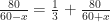


 h
h


 to prevent confusion with 1. Also, in Complex Numbers in H2 Math, write z with a line in the middle, like Ƶ, to avoid confusion with 2.
 , it turns out that the constant is a “nice number”.
 , you should substitute back a certain value for x, like x=2. Then check if both the left-hand-side and right-hand-side gives the same answer. (LHS=1/3, RHS=1/2-1/6=1/3) This usually gives a very high chance that you are correct.

 Mathtuition88