Math Blog

VPN that works in China (2018): Lantern Pro Review

The Great Firewall of China is exceptionally intelligent, it is rumored to use machine learning, deep learning and various other strategies to block users from accessing websites such as Google, Facebook, etc.

You probably have realized that most VPNs are not working well in China anymore, as of 2018.

Lantern Pro Review (China)

The one “VPN” that remains good to use is Lantern Pro. It isn’t actually a VPN, but rather a “network sharing” tool. As such, it remains relatively unaffected by the ban on VPNs by China. I have personally tested Lantern in August 2018 and find it working in good condition.

There is a free version, and also a paid version that is more stable and faster. You can first try the free version (data limit of around 800 MB) to see if you like it or not. The installation is extremely simple, basically you just click one button to connect.

URL: https://getlantern.org/

Lantern Referral Code: Use my code YJVD2WT and get 3 months free when you sign up!

Note that you need to install it before you enter China. Once you enter China there is no way you can download the installer as the entire website is blocked.

Use this referral code YJVD2WT and both you and I will get free months (1 or 3 months depending on which plan you buy).

PureVPN (Mac, iOS) not working in China (2018)

Unfortunately, to my disappointment, PureVPN is not working in China as of 2018. I previously wrote a post on PureVPN, it used to be good, but now it has been defeated by the Great Firewall of China.

The Inextricable Relationship Between Exams and Weather

Singapore is a country that prides itself on its scholastic achievements – with tuitions centers in almost every neighbourhood advertising its rockstar tutors and top-scoring students. The first day of school starts like clockwork, nobody misses a beat, everyone is punctual, assignments are due, and classes start rushing to finish the curriculum again.

This relentless pace for Singapore’s education system is because the exams are just around the corner. It may seem scary for readers that have graduated years ago but yet to have children. The pressure of school is cranked up to 11 on a scale of 10 almost immediately. Especially so for those in crucial streaming years (primary 4 / secondary 2) or graduating years (primary 6 / secondary 4 and 5 / junior college 2).

The importance of exams to the Singaporean society is paramount. As a meritocratic society, education is seen as the equalising force among the varying socio-economic classes. With a thriving bureaucratic government, the best and the brightest in national examinations tend to get the best scholarships and positions in public service afterwards. The fact is that every exam is one step closer or further away from securing the place in society.

Singapore is just above the equator – a hot and humid city with students all seeking a cool place to study. To combat the elements, the only way is cranking up the air conditioner. Almost every home in Singapore has one so to get some much respite from the hot and humid air. Students furiously studying for exams (colloquially termed “mugging” and those who do so called “muggers”) are more than likely doing so under the cool breeze of artificial temperature control.

It will be a common sight to see public places with free strong air conditioners like libraries, fast food outlets, cafes, even airport being full of students cramming away. Expect also to see plenty of midnight oil being burnt in the bedrooms and living rooms of students during the next few months. Because of the humidity of the climate being at an average of 84.2%, no matter what the temperature is, the weather is still often uncomfortable and sweat-inducing.

These are hardly the best conditions for students to focus and study. Extreme temperatures causes students to be annoyed and hence distracted. According to experts, the best temperature to be productive is at 23.5 degrees Celcius. With the average Singapore temperature in the day in the low thirties and at night in the high twenties, natural conditions are definitely not beneficial.

Does it mean that all students need to do is to set the air conditioner to high fan and low temperature? Unfortunately no. The same study also added that while that might work for the majority, 30% of people will be too cold or too hot. That means 1 in 3 will have to keep tweaking the air conditioner time and time again (yet another distraction to the studying process).

So what is a parent or student to do? Leave it up to fate on what the weather conditions are like outdoors? All the while constantly dealing with a fluctuating levels of comfort from the air-conditioner (a device purchased for the express purpose of delivering comfort)? Thank goodness that technology can step in to help.

With Ambi-Climate , a smart AI-enabled air conditioner controller, what we will have is a device that can recognise the students’ unique needs, and tailor temperatures for optimal comfort without having to ask. While traditional air conditioners only account for temperature and ignore other key factors – humidity, sunlight, changes in outdoor weather, and your daily metabolic cycle – Ambi Climate takes everything into account to help create an optimal, personalised home environment while saving up to 30% on energy

By connecting to your air conditioner and learning from your feedback, Ambi’s unique A.I. engine and smart sensors will work their magic to match the students’ needs and adjust to what they deem comfortable. Also, Ambi has an away mode, that efficiently keep your home within desired temperature or humidity thresholds. After setting a threshold of your choice (heating, cooling or drying), Ambi Climate will fulfill your preference in the most energy-efficient way; it will only turn the AC on when needed to maintain the threshold. Your home stays safe and you save money! This will come as good news for muggers as they can enjoy the breeze to keep them concentrated on the upcoming exams at hand.

153 St. Peter Fish

tomcircle's avatarMath Online Tom Circle

Bible Math: 153 St. Peter Fish
[John 21:3-11]
3  So they went out and got into the boat, but that night they caught nothing.
6 He said, “Throw your net on the right side of the boat and you will find some.” When they did, they were unable to haul the net in because of the large number of fish... It was full of large fish, 153, but even with so many the net was not torn.

1) 153= 1! + 2! + 3! + 4! + 5! = (1+2+6+24+120)

2) $latex 1^3+5^3 +3^3$ = 1 + 125 + 27 = 153

3) Take any multiple of 3, e.g. 78
-> $latex 7^3+8^3$ = 855

-> $latex 8^3+5^3+5^3$ = 762

762 -> 567 ->684 ->792 ->1080 ->513 ->153 (Always!)

View original post

French Baccalaureate Math

tomcircle's avatarMath Online Tom Circle

Below are two French Baccalaureate Math textbooks (Volume 1 & 2) for Grade 12th (or Junior College Year 2, GCE A Level, Lycée: Terminale C) students in the late 1970s.

There was a strong Bourbaki style of influence in this Math teaching, which was later criticized as being too abstract and less applied for 18-year-old students.

Nevertheless, the syllabus proved to be excellent for those Math-inclined young minds who later entered the special 2-year Classe Préparatoire aux Grandes Ecoles – Preparatory class (equivalent to Bachelor of Science) for graduate schools in crème de la crème top universities (Grandes Écoles ) such as Ecole Normale Supérieure or Ecole Polytechnique , where the solid Preparatory Math trainings (Maths Supérieures, Maths Spéciales) are extremely rigorous and high standard, incubating most of the French great mathematicians, Fields Medalists and Nobel Prize Scientists.

Voici les 2 tomes de Mathematiques Terminales C et E

View original post 303 more words

Singapore PSLE Math baffled Anxious Parents

ChefCouscous's avatarMath Online Tom Circle

One afternoon 5 friends rented 3 bikes from 5 p.m. to 6:30 p.m. and took turns to ride on them. At any time, 3 of them cycled while the other 2 friends rested.

If each of them had the same amount of cycling time, how many minutes did each person ride on a bike?

Note: PSLE (Primary Schools Leaving Exams) is the Singapore National Exams for all 12 year-old pupils at Primary 6 year end. The result of which will determine which secondary school the pupil is qualified to enter the following year. Math subject, besides Science, English and mother tongue (Chinese or Malay or Tamil) are tested in PSLE.

[Answer] Try before you scroll down below ….

.

.

.

.

.

.

.

.

.

.

.

.

.

.

.

.

.

.

.

.

.

.

.

.

.

.

.

.

.

View original post 97 more words

The Universal Pattern Popping Up in Math, Physics and Biology

tomcircle's avatarMath Online Tom Circle

Key Points:

  • Bus Waiting Time Pattern
  • Biology Chicken eyes
  • Physics: Random matrix / Eigenvalues / Riemann Zeta-function for Prime Numbers
  • Universal Pattern: Normal Distribution Curve

https://www.quantamagazine.org/the-universal-pattern-popping-up-in-math-physics-and-biology-20180823/

View original post

Category Theory III for Programmers (Parts 1 & 2)

tomcircle's avatarMath Online Tom Circle

The most interesting “Category Theory” (范畴论) for Programmers course III by Dr. Bartosz Milewski , a follow-up of last year’s course II.

Prerequisites:

  1. Fundamental of Category Theory: Functor, Natural Transformation, etc. (Course II Series)
  2. (Nice to have) : Basic Haskell Functional Programming Language. (Quick Haskell Tutorial)

1.1: Overview Part 1

Category Theory (CT) = Summary ofALL Mathematics

Functional Programming = Application of CT

Philosophical Background:

  • Math originated 3,000 years ago in Geometry by Greek Euclid with Axioms and deductive (演译) Proof-drivenLogic.
  • Geometry = Geo (Earth) + Metry (Measurement).
  • Math evolved from 2-dimensional Euclidean Geometry through 17 CE French Descartes’s Cartesian Geometry using the 13CE Arabic invention “Algebra” in Equations of n dimensions: $latex (x_1, x_2,…, x_n) $, $latex (y_1, y_2,…, y_n) $
  • Use of Algebra: 1) Evaluation of algebraic equations (in CT: “Functor”) ; 2) Manipulation. eg. Substitution (in CT :…

View original post 194 more words

Took special needs son to Australia; he graduated from uni at 17

Very motivational story. Suitable for parents to read; sometimes a change of environment is what it takes for your child to reach his/her full potential. Though the Singapore education system is quite good on the whole, there are some gifted children who are unsuited to such an education.

Note that the financial costs are very high to study in Australia: It costs at least $262,000 for an Australian degree, according to Straits Times. The mother in the story below has 4 children studying in Australia, so one can imagine the heavy financial burden.

Also see our previous post on: School System Video (Do not make a fish climb trees).


Source: Facebook of Pamela Liu

(There is also a forum discussion at Kiasuparents.)

This is just a piece of paper, but a paper that is full of sweat, tears and stories.

Just not too long ago, in 2011, Sean was labeled with multiple learning disabilities. Even though he was selected to be in the gifted education program (GEP) in Singapore, we were told we have to withdraw him from the program because they didn’t want him after spending a year there. Instead, they wanted me to put him into a school for special needs children.

Sean did not want to go to the special needs school, because he felt that he did not belong there. The psychologist we hired told us that the place was not suitable for him. MOE and the school were not happy we did not heed their advice, some are not happy that I refused to put him on ritalin. So the only solution they gave me was to exclude Sean in all school activities if I were to send him to school.

They would put him in the principal’s office. The school, out of the goodwill of the principal, will assign a Math teacher to him.

What about other subjects? And what if you just allow him to take PE and recess with his peers? I asked. It was a straight no.

I couldn’t send my son to school to sit in the principal’s office all day long, he would never understand why he was not allowed to mingle with his friends. So I took him home.

I had no solution, but I was determined to find one. I will educate him myself, I thought.

The psychologist told me that homeschooling Sean will endanger me, I had no clue what that meant when she first told me that, but I did not have an alternative. So I brought him together with the rest of the 4 kids to Australia, determined to find a solution for each kid.

The older two kids were attending university but Sean and the other two younger ones had no school to go to, since they were not residents, no public school could take them, the private schools were full.

Out of the container that I rented, I taught Jo and Sean daily for two hours. He was 10, and we moved quickly from Year 4 work to Year 12 work. All within six months. He was attentive and a quick learner. He even won some medals for his SAT exams for being a top scorer. Jo moved from Year 8 to Year 12 in that time period too.

Jo became the youngest the university matriculated at 13, outdone only by Sean. By 11, he enrolled in UQ, and became the youngest they matriculated in history. The condition for him to attend university at this age was that I must accompany him for every class.

I gladly did. Every class, every day, every moment. 30 to 40 hours a week, plus having to bring up 3 other teenagers and a younger son, and all by myself.

Half way through the degree, he started to fail everything. He told me he really did not like that he had no age peers. So we stopped university and got him enrolled in high school.

In high school, he felt out of place, he found kids noisy and boisterous. After 18 months in high school, we decided to dual enroll him, both in the university and high school.

When it got too noisy in school, he would hide in the toilet, sometimes for the whole day. It became so bad, the tutor wanted me to bring to see a psychologist. The psychologist, to my surprise, told me that Sean is way ahead of his peers socially. All these years, I was told he is autistic, in that he is socially poor, and all these years, I was told to send him to therapies so he could catch up and learn social skills. Five years of doing all these later, I was told he is the opposite. His problem is that he cannot endure the childish behaviour of his age peers.

Sean turned 16, he could attend classes in the university alone finally. After sitting in for 2 years full-time and 2 years part-time, I finally bought some time for myself (except that Youngest One started university on the same terms, and so I have to sit his classes).

Sean started to skip many many classes. In the end, we found out that he was sleeping in the library. It is also then we found out that he has a sleeping disorder, narcolepsy. The university made some provisions for him, so that his exams are never in difficult hours of the day.

That was just last year. And with that, he finally graduated with his degree, and is into his second semester on his masters program.

What a journey. This piece of paper is probably the most hard earned one for me this lifetime. It is also the most precious.

Sean is now 18, he is officially an adult (in Australia), and looking back, I will never do it any other way. I think, journeying this with him has made me a much better person than otherwise. I am thankful for all that we had to go through, and I am thankful he was put into my life. I learned so much.

Well done, Sunshine Boy.

*Even though Sean started university the earliest, he did not
graduate the youngest at 17 because of his multiple anxiety problems. Jo graduated at 16 and the Youngest One will graduate at 16 as well. It really does not matter. We took the time to adjust and ensure each child is comfortable in the education path. Education is about finding our kids’ potential and bringing that to the fullest. Isn’t it? Time and age should not determine what we do with them.

**If you want to know about the costs of doing this, I have made some videos and in the midst of editing them. They will be available in two weeks. Go to this link and watch for it: www.facebook.com/liupam

2018 Fields Medallists

URL: https://www.quantamagazine.org/tag/2018-fields-medal-and-nevanlinna-prize-winners/

I find that the above link by Quanta Magazine has the most detailed and educational write up about the 4 new Fields Medallists:

  1. Akshay Venkatesh, a former prodigy who struggled with the genius stereotype
  2. The 30-year-old math sensation Peter Scholze is now one of the youngest Fields medalists
  3. The mathematician Caucher Birkar was born on a subsistence farm and raised in the middle of the brutal war between Iran and Iraq.
  4. he mathematician Alessio Figalli is rarely in one place for very long. But his work has established the stability of everything from crystals to weather fronts by using concepts derived from Napoleonic fortifications.
  5. Also included is the theoretical computer scientist Constantinos Daskalakis, who has won the Rolf Nevanlinna Prize for explicating core questions in game theory and machine learning.

Programming is Math Proof: Structured Programming

ChefCouscous's avatarMath Online Tom Circle

Keywords:

  • Dijkstra, Edge Wyber (born 1930 Rotterdam)
  • Goto is harmful
  • Structures: sequence, selection, iteration

Three Programming Paradigms:

1. Structured Programming (1968 Dijkstra)

  • Impose discipline on direct transfer of control aka “Goto“.
  • “If/ then /else, do/while” control structures are structured.

2. Object-Oriented ‘OO’ (1966 Ole Johan Dahl & Kristen Nygaard)

  • Impose discipline on Indirect transfer of control (polymorphism, ‘constructor‘ function of class, it’s local variables = instance variables).

OO = Combination of Data & Function.

3. Functional Programming (1958 John McCarthy’s LISP language, based on Math “Lambda Calculus” from Alonzo Church 1936).

  • Impose discipline upon assignment (side effect, immutability of data, Referential Transparency).

4. Any more ?

All Programs can be constructed from just 3 structures (Böhm and Jacopini, 1966):

Sequence / Selection / Iteration.

Dijkstra’s Math Proofs for:

1. Sequence – by simple enumeration.

  • Math Technique: trace the inputs…

View original post 72 more words

Parasite in cat poop could be reducing our fear of failure, study finds

This news sounds bizarre, but is true. I have been “researching” on this topic sometime ago, it is a true scientific research topic, not bogus or fake. Basically the parasite “Toxoplasma gondii” affects human brains in some subtle ways that can affect one’s personality.

Source: https://www.nbcnews.com/health/health-news/parasite-cat-poop-could-be-reducing-our-fear-failure-study-n894221

A mind-controlling parasite found in cat feces may give people the courage they need to become entrepreneurs, researchers reported Tuesday.

They found that people who have been infected with the Toxoplasma gondii parasite are more likely to major in business and to have started their own businesses than non-infected people.

The parasite, which makes rodents unafraid of cats, may be reducing the fear of failure in people, Stefanie Johnson of the University of Colorado and colleagues said.

They haven’t actually shown that. But toxoplasma does get into the brain, and it’s been linked to a variety of mental effects in mice and people alike. And fear of failure could be a good thing, Johnson said.

Toxoplasmosis has been linked to a greater risk of “car accidents, mental illness, neuroticism, drug abuse and suicide,” Johnson and her colleagues wrote in their paper, published in the Proceedings of the Royal Society B.

It might be affecting message-carrying chemicals in the brain called neurotransmitters, or hormones such as testosterone, they wrote.

In particular, scientists have studied whether the parasite might increase risk-taking behavior.

Johnson is an associate professor of management at the University of Colorado and often told her students about the odd effects of the parasite, which travels to the brains of rodents and causes them to lose their innate fear of the smell of cat urine.

The 17 best universities in the world to study math

Source: https://www.businessinsider.com/the-17-best-universities-in-the-world-to-study-math-2018-7/?IR=T/#17-kyoto-university-japan-2189-1

According to the above source, the best 17 universities to study Math are:

  1. Princeton, United States
  2. University of Paris-Sud, France
  3. Stanford University, United States
  4. Oxford University, United Kingdom
  5. New York University, United States.
  6. 6-17 are listed in the website.

The above ranking is a little strange, Cambridge (7th) and Harvard (12th) are both outside the top 5. Most typical rankings will have these 2 universities in the top 10.The ranking “looked at factors including how many Field Medalists had studied at each institution”.

See also: Singapore universities should look beyond international rankings: Panel

Math shapes our primal ‘number system,’ not vice-versa

Interesting article on the “power of education in modeling the brain”.

Source: https://www.futurity.org/approximate-number-system-math-1819602-2/

Scientists have long believed that our ability to solve symbolic math problems such as 3+2=5 depends on an imprecise, primal brain function called the Approximate Number System. A new study suggests otherwise.

“Our study shows that gaining expertise with symbolic math, which is a human cultural invention, actually refines this evolutionarily ancient system of quantity representation, not the other way around,” says lead author Macarena Suárez Pellicioni, an educational neuroscience postdoctoral researcher at Vanderbilt University’s Peabody College of education and human development.

Free Limited Edition National Geographic (Singapore Edition)

Students / parents do take note of this once-in-a-lifetime opportunity to get the free limited edition National Geographic magazine. Need to be quick since anything free in Singapore is snapped up almost instantaneously.

Share to your friends via Facebook!

Source: Yahoo

To celebrate Singapore’s 53rd birthday, we’ve got a special Singapore edition of a little magazine you may have heard of called National Geographic. Dropping islandwide at community centers and libraries, the limited edition publication will see 250,000 copies distributed for free from Aug 1 onwards.

Of course, this being a collaboration with the Ministry of Communications and Information, the mag will feature an interview with Prime Minister Lee Hsien Loong about his thoughts on the future of Singapore, alongside a series of local stories about individuals contributing to “shaping our future home through their pursuits.”

Source: PM Lee’s Facebook

Gov.sg has partnered National Geographic to do a special Singapore edition of the magazine titled “Singapore – City of Tomorrow”!

Read about the people shaping the future Singapore – they are active in design, sports, sustainable urban farming, volunteerism and other unexpected areas. The articles are accompanied by great photos, of course.

You can pick up your complimentary copy at Suntec City, West Atrium from today till 29 Jul, and at Community Centres and libraries from 1 Aug.

In conjunction with the magazine launch, the #WhatMakesSG photo exhibition is currently on at Suntec City till 29 Jul. It features Nat Geo photojournalist Michael Yamashita’s photos taken during his visit here in May, as well as the winning entries of the #WhatMakesSG photo contest. Do drop by if you’re nearby. – LHL

Chinese Tuition HCL O Level

Chinese Tuition Singapore
新加坡华文补习老师
Tutor: Ms Gao (高老师)

Ms Gao is a patient tutor, and also effectively bilingual in both Chinese and English.

A native speaker of Mandarin, she speaks clearly with perfect accent and pronunciation. She is also well-versed in Chinese history, idioms and proverbs.

Ms Gao is able to teach Chinese at the Secondary school level (Chinese and Higher Chinese). She will teach in an exam-oriented style, but will also try her best to make the lesson interesting for the student.

Ms Gao has taught students from: Nanyang Girl’s High (NYGH), RGS, RI, and other schools.

Contact:

HP: 8339 6353

Email: chinesetuition88@gmail.com

Website : https://chinesetuition88.com/
(Preferably looking for students staying in the West side of Singapore)

NUS High School DSA Selection Test Results Out

The first round results of NUS High School DSA Selection Test are apparently out since yesterday July 24. (Source: Kiasuparents)

Those who are successful will receive the following email:

Thank you for attending NUS High School DSA Selection Test and Camp. Candidates who passed the selection will be invited to our DSA School Preview to gain a sneak peek into the unique learning experience at NUS High School.

The outcome of the DSA Selection Exercise will be announced by the 3 August 2018 via the registered e-mail.

We would like to notify you early that the DSA School Preview would be on 8 August 2018. The shift is made after the consideration of the PSLE oral examination which will happen on the 16 August 2018 as well as to provide you and your family an uninterrupted 4-day long weekend break from 9 – 12 August 2018. We hope that the shift of date will allow you to have more family time with your parents during weekend as well as sufficient time for you to prepare for the coming PSLE oral examinations.

We seek your understanding and patience in this matter.

Congratulations to those who have passed this round! Do check out our tips for DSA interview.

Tip for SST Selection Camp

SST (School of Science and Technology) is a relatively new secondary school (established in 2010) that offers an alternative approach to the usual MOE secondary schools. It is not very well known at the moment and I wouldn’t be surprised if majority of Singaporeans did not hear of it or know its existence. It does seem like a good school though.

According to Kiasuparents, majority of parents (53%) are concerned that SST does not have a good track record yet. However, there are students who are very keen to enter SST, and it is not that easy given its limited enrollment. They have to attend some selection camp similar to NUS High School. (SST admits 100% of the students through DSA exercise, so there is no way to get in via PSLE score alone.)


Also check out: NUS High Selection Test (DSA). Most probably students applying for SST are also considering NUS High School as their alternative choice.


SST Selection Camp Review

Came across an “insider tip” for the School of Science and Technology selection camp at Kiasuparents. Quite impressive actually that a secondary student can write so well.

Hello!

I’m a student is currently studying in SST, while the teachers do look for prospective students, they look out for those with the ability to think on the spot, work well with others and conquer unexpected challenges. The school wants those with the passion for science and technology, but also those who have the desire to do well. In my personal experience, just be yourself, do not try to “fake” your way through, because our teachers can see through the smoke… Erm, let’s say, they deal with it a lot, especially during humanities. Be yourself; the teachers do look for one thing, the most important thing, which is respect and honesty.

The DSA Phase II for our school will have the students split up into groups of 4/5, in which group interviews are carried out, but do note, in these interviews, respect your other interviewees, or they usually won’t accept you. After the group interviews, they would have you go through a challenge. In 2015 they had my team design and built a parachute, which had various requirements and restrictions, which will hinder prospective students, in a right way. This is a part of the process to see what prospective students can achieve via creative and critical thinking.

For those going for the Phase 2 next week, CONGRATULATIONS AND GOOD LUCK!
I hope to see you for the “A Day @ SST” and/or in school next year!

Regards,
An SST Student

Basically, I think SST is looking for a creative student that is genuinely interested in science and technology (i.e. not being forced by their parents). Personality traits matter too, at the minimum the student should be able to coexist peacefully with his/her fellow students. Good teamwork is definitely a plus point.


According to the official Selection Criteria, these are the factors that will give you better admission chances to SST:

Selection Criteria

Academic and Cognitive Abilities

Applicants are assessed on both academic achievements and cognitive abilities based on academic track records and other accomplishments, as well as the outcome of the General Ability Test (GAT) and Comprehension Reasoning Test (CRT).

Aptitude for Applied Learning

SST aims to engage our students through Applied Learning approaches. Shortlisted candidates will thus have to participate in a selection activity and be assessed for their suitability  to work and learn in the fast-paced and rigorous environment of the school.

Interests and Motivation

Candidates’ proclivity and passion for areas related to mathematics, science and technology may be gauged through their CCA involvement, student portfolios, teachers’ recommendations and personal statements. Students who have done well in Science, Technology, Engineering and Mathematics (STEM) competitions may be considered favourably for admission.

Hint: Math Olympiad may be useful here. Check out our post on Math Olympiad.

(For admission into Secondary 3, particular emphasis will be placed on personal leadership, academic strength and consistent performance.)

What Knitting Can Teach You About Math | Innovation | Smithsonian

One snowy January day, I asked a classroom of college students to tell me the first word that came to mind when they thought about mathematics. The top two words were “calculation” and “equation.”

When I asked a room of professional mathematicians the same question, neither of those words were mentioned; instead, they offered phrases like “critical thinking” and “problem-solving.”

This is unfortunately common. What professional mathematicians think of as mathematics is entirely different from what the general population thinks of as mathematics. When so many describe mathematics as synonymous with calculation, it’s no wonder we hear “I hate math” so often.

So I set out to solve this problem in a somewhat unconventional way. I decided to offer a class called “The Mathematics of Knitting” at my institution, Carthage College. In it, I chose to eliminate pencil, paper, calculator (gasp) and textbook from the classroom completely. Instead, we talked, used our hands, drew pictures and played with everything from beach balls to measuring tapes. For homework, we reflected by blogging. And of course, we knit.

via What Knitting Can Teach You About Math | Innovation | Smithsonian

Singaporean van Gogh – Mr Sim Kah Lim

This is an amazing story of an amazing artist. His passion for painting is so great, according to his therapist he wants to paint 24/7 without eating or sleeping. I find his paintings of Singapore River very good.

“Bumboats on Old Singapore River”
“Singapore River of a Previous Era”

SINGAPORE: For nearly 35 years, Mr Sim Kah Lim’s world has been the walls of his ward at the Institute of Mental Health (IMH).

Outside, changes have swept the landscape, old buildings falling and new ones rising – skylines and shorelines of a 21st-century nation transformed.

But in his mind’s eye – and in his bold-stroked acrylic and watercolour paintings – Mr Sim’s homeland is one where bumboats still crowd the Singapore River, ferrying goods and passengers; and where Chinatown’s open-air markets thrive and its five-foot ways are bustling with locals, not tourists.

They are pictures, frozen in time and memory, from early childhood when his father used to take him to these places.

“My father brought me outdoors (for) painting. I saw the Singapore River and all the artists,” the 50-year-old said, words spilling out without pause in a torrent of English and Mandarin, sometimes incoherent and muddied, like the river of his paintings during monsoon season.

It’s through his art that he finds order, focus and clarity in expressing himself.

Read more at https://www.channelnewsasia.com/news/cnainsider/schizophrenia-imh-sim-kah-lim-artist-singapore-mental-health-10530970

Sim Kah Lim 2019 Update

Found 2 more excellent updated videos on Mr Sim Kah Lim, the artist:

This video also features Mr Sim Kah Lim and his sister Cindy (including two other guests). Very enlightening interview.

Experience in Elite School (Hwa Chong aka Chinese High)

Check out this interesting article about the experience and “privileges” of elite schools in Singapore. Also covered are the competitiveness and academic pressure in such schools. Finally, the author shares his experience of studying overseas in New York.

Also see: Hwa Chong IP Sec 2 Maths Question: Equation of Parabola

Source: https://sg.style.yahoo.com/went-elite-school-privileged-024122633.html

My heart sank when I received my PSLE results. Falling a few points short of qualifying for Raffles Institution, 12-year-old me broke down in the school hall, my elitist dreams crushed.

Qualifying for Chinese High was the next best thing, although I hated the idea of attending a “communist” school. At least, that was my impression. You can’t blame me for believing what people told me when I was 12.

A number of us (including myself) were RI rejects. However, for some, Chinese High was their first choice for its focus on Chinese language and character education.

From the moment I entered the school, the principal and school leaders were unabashed about informing us of our elite status. The principal would do so during school assemblies, only to be echoed later by teachers in a classroom setting.

Whenever we misbehaved, as boys often do, a good chunk of each lecture revolved around how we took our place in the school for granted. Being there was a privilege, and it lay on our shoulders to continue the prestigious legacy of the school.

We were also reminded that we should be thankful for the resources and the very upscale school facilities that we had.

And so from the very beginning, we were told that we were different and maybe better. No surprise that many of us grew up believing it.

Challenging P6 Math Question (Cycling)

One afternoon, 5 friends rented 3 bicycles from 5.00 p.m. to 6.30 p.m. and took turns to ride on them. At any time, 3 of them cycled while the other 2 friends rested.

If each of them had the same amount of cycling time, how many minutes did each person ride on a bicycle?

Hint: There is an “easy” way and also a “complicated” way to do this question. The “easy” way involves calculating total cycling time, while the “complicated” way involves working out a timetable to determine exactly who is cycling at which time.

(Source: Hardwarezone)

(Ans: 54)

Lambda Calculus – The Math Behind Functional Programming

tomcircle's avatarMath Online Tom Circle

Functional Programming (FP) Languages : Lisp, Haskell, Scala, Kotlin, etc.

Other non-FP influenced by Lambda Calculus: Python, Ruby, Javascript, Java 8, C++

Inventor of Lambda Calculus : Alonzo Church (1903 – 1995), whose student in Princeton University (1936-1938) was Alan Turing (The Father of Artificial Intelligence).

Lambda Calculus is not : another Differential Calculus !

Note: Calculus has a meaning of manipulating symbolic expressions : either in functions (differentiation, integration) or computations.

Lambda Calculus is almost programming!

I. Syntax of Lambda Calculus: $latex boxed {lambda text { param . body }}&fg=aa0000&s=3$

eg. $latex lambda : x : . : x + 1 $

Notice: it has only one parameter “x”.

  1. Function definition: $latex lambda $
  2. Identifier reference: $latex x $
  3. Function application: $latex x + 1 $

II. Currying 柯里化 : (named after Haskell Curry ) for multiple parameters.

eg. $latex lambda : x : …

View original post 358 more words

Hong Kong and Singapore have highest average IQ

Just saw this news online. Note that top 3 are all Asian countries. Probably one factor is that IQ test is after all still a paper-based test that rewards good test-taking skills. IQ test does not really cover all forms of creative and intellectual ability. Also, most likely the effect of early-age tuition has boosted the IQ scores. Since IQ is defined as the ratio of mental age over actual age, if a child learns material (be it math or vocabulary) beyond his age, by definition his/her IQ would be increased, though this does not mean that he is “smarter”.

In Singapore it is now common that a child by age 6 has already mastered the Primary 1 (age 7) syllabus. This achievement alone will give a mental age of 7, versus a actual age of 6, giving an estimated IQ of 7/6×100%=117.

For those gifted students that pass the GEP test (age 9), it is common that they already possess knowledge of Primary 5 (age 11) syllabus, or even Primary 6 (age 12). This translates to an IQ of around 11/9×100=122 to 12/9×100=133.

See also:

Recommended Books for GEP Selection Test and How to Get Into GEP

Results:

Joint 1st: Hong Kong and Singapore (108)

2nd: South Korea (106)

Joint 3rd: Japan and China (105)

Source: https://iq-research.info/en/average-iq-by-country

How Piano Lessons May Improve Language Learning for Kids | Time

Music => Language => Abstractness (Abstract Mathematics, Advanced Physics), these 3 faculties reside on the same (right) part of our brain., the earlier a kid develops it through music education (piano, violin or any instrument) the better.

http://time.com/5322121/music-lessons-language-learning/?utm_source=time.com&utm_medium=email&utm_campaign=the-brief-pm&utm_content=2018070217pm&xid=newsletter-brief&eminfo=%7b%22EMAIL%22%3a%226hTLoMQ3HIhtENFGEFPcksEFAz5azrR8%22%2c%22BRAND%22%3a%22TD%22%2c%22CONTENT%22%3a%22Newsletter%22%2c%22UID%22%3a%22TD_TBP_92EEC7AD-17B1-46E0-BF78-846FB8B42C92%22%2c%22SUBID%22%3a%2284478629%22%2c%22JOBID%22%3a%22807604%22%2c%22NEWSLETTER%22%3a%22THE_BRIEF_PM%22%2c%22ZIP%22%3a%22%22%2c%22COUNTRY%22%3a%22USA%22%7d

Celebrates Mathematician Gottfried Wilhelm Leibniz’s 372nd Birthday

ChefCouscous's avatarMath Online Tom Circle

https://www.forbes.com/sites/kionasmith/2018/06/30/sundays-google-doodle-celebrates-mathematician-gottfried-wilhelm-leibniz/

My favorite mathematician is German Leibniz, who co-invented Calculus with Newton.

Today we thank Leibniz for his elegant Calculus symbols:

$latex boxed {frac{dy}{dx}}&s=3&fg=aa0000$

$latex boxed{int_{0}^{infty}x^{n}e^{-x}dx}&s=3&fg=aa0000$

Leibniz also invented 01 binary algebra, which he later found it was already in the 3,000-year-old Chinese “Yin-Yang” (阴阳 八卦), so impressed that he recommended to the most powerful western (French) king Louis XIV (14th) to use Chinese as the Universal Language of the world.

The rich Newton sued Leibniz for plagiarism of Calculus, until Leibniz died poor in bankruptcy, buried in a common unknown grave.

The war between Newton & Leibniz extended & lasted 100 years between UK Math Community and Continental Europe Math Community. As a result UK lost its math leadership after Newton, France (Lagrange, Fourier, Cauchy, Galois… ) followed by Germany (Felix Klein, Gauss, Hilbert, Riemann …) took over as the world…

View original post 27 more words

Sunday’s Google Doodle Celebrates Mathematician Gottfried Wilhelm Leibniz

If you log in to Google today, you will see a doodle of binary numbers that celebrates Leibniz’s development of the binary system. Leibniz is very honest and generous to credit Chinese books for his inspiration behind developing the binary numbers.

See also:

Leibniz was a universal genius, but why is Isaac Newton more known? Does it have to do with Newton being British and Leibniz being German?

Leibniz Integral Rule (Differentiating under Integral) + Proof

Quote: Leibniz also developed the binary system, whose notation of zeroes and ones is the basis of modern computer languages. His book, Explication de l’Arithmétique Binaire, credited the ancient Chinese divination manual, the I Ching, with inspiring the binary system of zeroes and ones, since the I Ching’s hexagrams use a very similar notation to record numbers. In an age of European ethnocentrism, Leibniz still recognized China’s long-standing mathematical advancement.

Source: https://www.forbes.com/sites/kionasmith/2018/06/30/sundays-google-doodle-celebrates-mathematician-gottfried-wilhelm-leibniz/#3d748c371398

Singapore Families with Many Children

In Singapore, having 5 kids is so rare that even the newspaper reports it!

Another related video is about raising 7 kids in modern Singapore:

This YouTube video is only a short excerpt, for those who want to watch the full series, it is available on Toggle, under the title of “Full House”.

Source 1: Starting a family of 7 in Singapore at the age of 21 (Family of 7 in this case means 5 kids and 2 adults apparently, not 7 kids.)

Source 2: Raising 7 children on under S$3,000 a month in Singapore

(These are two separate stories, the first is about a family with 5 kids, the second is with 7 children.)

It seems that the biggest worry for most families (be it big or small) is still their children’s education.

Quote:

Her husband’s absence or his relationship with their children, however, is not her biggest concern. “My greatest worry is Bryan. His PSLE,” she declared.

Her Primary 6 son seems to be more interested in playing – or fighting – with his siblings than in his coming examinations.

Said his mother: “He doesn’t really bother about his studies, but I can’t push him … because the more you push him, the more he doesn’t want (to listen).”

Growing up dyslexic and recently diagnosed with hearing difficulties, Bryan has been struggling in school. And in a family of seven, it has been hard to devote attention and resources to just one child.

We did try giving them tuition. It did help, but it’s quite costly, so we cut down,” Mrs Lim said. “Nick and I are still … working out with teachers – taking (their) advice – how to handle him.

“But he’s a very stubborn boy, and he keeps everything to himself, so it’s kind of hard to get him to open up.”

His parents only want him to pass his subjects, but in his recent report card, he passed only his English out of three subjects.

“I did try, but … I always end up with only a few more marks (needed) to pass,” said the 12-year-old, who had to then promise his parents that he would do better or else they would take away his phone.

困扰了人类358年 费马大定理 Fermat’s Last Theorem

tomcircle's avatarMath Online Tom Circle

Keywords:

  1. Fermat’s Last Theorem (FLT):$latex boxed {x^{n} +y^{n} = z^{n} ; ; forall n >2 }&s=3&fg=aa0000$
  2. Pierre de Fermat (France 17CE): FLT Conjecture or Prank ?
  3. Euler (n= 3)
  4. Taniyama-Shimura-Weil Conjecture: Modular Form = Elliptic Curve
  5. Galois Group Symmetry
  6. Andrew Wiles (UK Cambridge 1994): (Modular Form = Elliptic Curve) = FLT (q.e.d.)

Notes: Do not confuse Prof Andrew Wiles (proved FLT) with (French/American) Prof André Weil (Founder of Bourbaki School of Modern Math in POST-WW2 universities worldwide) who proved (4) laying the ground work for FLT.

View original post

Singapore universities should look beyond international rankings: Panel

Singapore universities should look beyond international rankings: Panel
Read more at https://www.channelnewsasia.com/news/singapore/singapore-universities-should-look-beyond-international-rankings-10484568.


Singaporean students are quite lucky that 2 of Asia’s top universities NUS, NTU are located here. I think that there should be room for even more universities to be built here, to cater to those students whose grades are decent but not good enough to enter NUS, NTU, SMU.

Ranking wise, I think maintaining current ranking should be good enough. In practice, there should not be any big difference in say a Top 5 or Top 20 university in the world. (Currently NUS is around 12th in the world, compared to say Yale which is 25th in the world, for Natural Sciences.) There should not be a need for a deliberate push to be top in the world, at expense of other factors.

World Cup Soccer Maths

Do check out the following books on the Math (and Economics) of the World Cup Soccer Match. The second book “Soccernomics” has a very interesting title, it predicts that one day Japan, Iraq, and the United States will become World Cup Soccer champions?


Soccermatics: Mathematical Adventures in the Beautiful Game Pro-Edition (Bloomsbury Sigma)


Soccernomics (2018 World Cup Edition): Why England Loses; Why Germany, Spain, and France Win; and Why One Day Japan, Iraq, and the United States Will Become Kings of the World’s Most Popular Sport

How Abstract Math Can Analyze Social Injustice

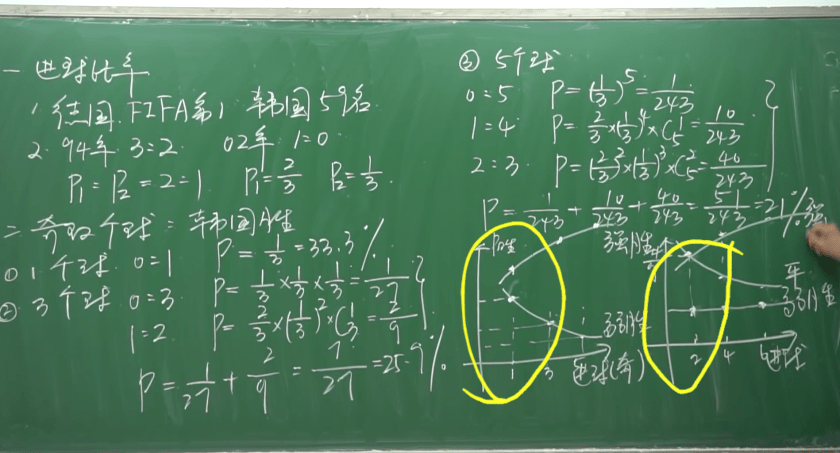
Worldcup Math Analysis : Korea vs Germany (2:0)

Football played with Math strategy !

ChefCouscous's avatarMath Online Tom Circle

Worldcup 2018

Surprising Result:

World No.1 (Germany) Lost to World No.59 (Korea) – why ?

Reason: Math !

For weak Korea to win, the best strategy is to keep the goals number as low as possible with strongest defence.

Note : 2017 International Math Olympiad (IMO) World Champion Team was Korea.

The actual Game proved the Korean “Math” strategy was right: (2:0)

View original post

Carbon Dioxide Levels in Closed Bedroom (Students should read this)

Just read this article by a researcher at MIT. Students and parents especially should read this as it affects cognition and alertness levels. Students in Singapore typically have preciously little time (usually less than 8 hours) to sleep, hence the quality of sleep is very important.

Basically to summarize, sleeping in a closed bedroom (without ventilation, with windows and door closed) leads to high carbon dioxide levels that can possibly affect the brain in negative ways (decreased cognitive function). Switching on air conditioner should be fine as essentially fresh air is introduced from the outside.

The solution can be as easy as opening the door/window. Open window is said to be better than open door. However in Singapore, light pollution is another potential problem, most likely there is some form of light shining through the window at night. Singapore’s doors and windows are not as airtight as those in winter countries, but it seems there is still some cause for concern.

A scientific paper for those who want to read in greater detail: https://onlinelibrary.wiley.com/doi/pdf/10.1111/ina.12254.

Korg G1 Air Digital Piano Review

I was searching for digital piano brands when I stumbled upon the Korg G1 Air. Korg is relatively unknown compared to Yamaha/Kawai etc, but it makes excellent digital pianos. Do check out the video above, it features Fantaisie-Impromptu by Chopin, one of my favorite piano pieces.

According to many reviews (see AZ Piano Reviews, Pianodreamers), Korg G1 Air is one of the best digital pianos in its price range. I went to the showroom and tested it out, it is indeed good. The weighted keys do feel like an actual acoustic piano. Touch of keys is very important for classical pianists. The 3 piano sounds are supposedly sampled from Steinway, Bosendorfer and Yamaha respectively. It also has bluetooth audio, so you can stream your music from your phone through the piano’s speaker systems.

The price is surprisingly affordable too, it is around S$1800 (Singapore dollars). According to many reviews online, it is equal or better than many other digital pianos in a much higher price range! I do agree, I have tried Yamaha’s Clavinova (higher priced than Korg G1), the Korg does not lose out to it in terms of sound and touch. Korg is fully made in Japan. Richard Clayderman endorses the Korg digital pianos:

There is another even cheaper model Korg C1 Air (priced at around S$1400), which many also say that it is quite good.

International buyers may want to check the Korg G1 out on Amazon:


Korg G1 AIR Digital Piano Black

For Singapore, the Korg G1 is available on Qoo10: Korg G1 Air. (comes with bench and headphone)

I think in Singapore especially, having a digital piano is a good idea if you want to practice at night (e.g. after 10pm) without disturbing the neighbors. Its design is quite space-saving too, it can fit into the smallest of homes without any problem.

Experts suspect ancient Stonehenge was built using the Pythagorean theorem

Interesting news. It seems that the ancient builders are wiser and more mathematically advanced than previously thought.

Source: Aleteia

A new book suggests that the Neolithic builders of these ancient monuments were more learned than previously thought.

At every great ancient monument visitors often marvel at the ingenuity of our early ancestors. The most common question when it comes to Stonehenge is how they raised such large pillars without modern tools. Those with engineering know-how, however, may ponder the precision of design achieved by its Neolithic builders.

A new book, Megalith, suggests that the builders of Stonehenge and other such Neolithic sites may have known more about construction than we ever could have guessed. In Megalith, Robin Heath, a megalithic expert, claims that the presence of Pythagorean triangles found in the sites are evidence that these builders had discovered the Pythagorean theorem 2,000 years before the birth of Pythagoras.


Megalith: Studies in Stone

What is it like to study at Raffles Junior College?

Quora: https://www.quora.com/What-is-it-like-to-study-at-Raffles-Junior-College

Quite a few interesting answers can be found there. It is highly recommended that students read it before choosing to study at Raffles Junior College.

Also check out: Which JC is the best in Singapore?

Selected Quotes:

  1. Not pleasant,” would be my answer.Like some other posters, I wasn’t from the Raffles family in any capacity before JC, though I had a few (distant) friends who were Rafflesians. Being in the GEP also served as an insulating factor- gifted kids hung out with other gifted kids, and mainstream kids saw us as aloof. It was a self-fulfilling prophecy that turned itself into a vicious cycle, like a snake swallowing its own tail. Singapore society tends to be stratified like that.So when I got there, there was no in-built friend base waiting for me as a safety net. JC was a pretty shallow place, as far as I can remember.
  2. Honestly? Nothing special.Resources aside (or perhaps more importantly, even with the Resources), Raffles is very much a stereotypical high school. Even though students are touted as the “cream of the cream” in a detestably common turn of phrase or the “top 3% of Singapore“, and everyone probably achieved above 265/300 in their examinations at the age of 12, or topped their secondary schools…it doesn’t mean that everyone is a genius, or a notoriously self-disciplined hard worker. In the words of Mean Girls, there are “preps, jocks, Asian nerds, cool Asians, varsity jocks…” so on and so forth. Everyone’s human, and no one’s flawless. I expected cutthroat competition at every turn, and impossibly well-put-together teenagers, but I’m glad I was wrong.
  3. Academic Rigour
    The archetypal RJC student will not score above D in common tests right up to prelims – but, come A levels, he/she will score straight As. It will be drilled into you for 2 years that you only possess a modicum on intelligence. You get frustrated, then you study hard and you study smart. When you get your result slip, your first instinct would be to walk up to your GP teacher and tell her,”You told me for 2 years straight I wouldn’t make it in life with my current grades. I got all As… including GP. Take that lah.”  Then she knowingly smiles and congratulates you, like that was part of the plan all along. That’s how ‘cutthroat’ the teachers in RJC are.
  4. Leader. Leadership is emphasized and celebrated in the institution. Student leaders are mostly hand-picked by peers and are then trained by the school to hone their leadership skills. Based on high levels of self-motivation, these leaders end up organizing events that demand a high level of coordination and huge amounts of time and effort. They provide tremendous inspiration to their juniors, especially those aspiring to be student leaders as well.

Chinese Tutor (has experience in tutoring NYGH/RGS/RI students)

Chinese Tuition Singapore
新加坡华文补习老师
Tutor: Ms Gao (高老师)

Ms Gao is a patient tutor, and also effectively bilingual in both Chinese and English.

A native speaker of Mandarin, she speaks clearly with perfect accent and pronunciation. She is also well-versed in Chinese history, idioms and proverbs.

Ms Gao is able to teach Chinese at the Secondary school level (Chinese and Higher Chinese). She will teach in an exam-oriented style, but will also try her best to make the lesson interesting for the student.

Ms Gao has taught students from: Nanyang Girls’ High (NYGH), RGS, RI, and other schools.

Contact:

Email: chinesetuition88@gmail.com

Website : https://chinesetuition88.com/
(Preferably looking for students staying in the West side of Singapore)

1 Million Views (Education and Math Website)

Thank you all readers of mathtuition88.com!

Mathtuition88.com has achieved 1 million views (currently 1,002,090 views)!

I find that the Pareto principle is quite true, even for blog views. The Pareto principle states that roughly 80% of the effects come from 20% of the causes.

For 2017, Mathtuition88.com had 267,859 views. The top 10 posts (out of around 2000 posts) alone accounted for 136,587 views, or around 50% of the views!

Check out the below catchy song about “1 Million”:

Various Benefits of Math Tutor

If you feel that your little child is spending more time watching TV or other electronic gaming devices, then you have a number of reasons to find something interesting and exciting over the next few lines. As the child starts going to school, he or she will have to spend some time doing the home tasks or learning what has been taught in the school. While it is applicable to all subjects, there are reasons to believe that math is a subject in which many students struggle a lot. You could even think of putting your child into the neighborhood tuition center to brush up his or her knowledge of math.

While there are reasons to believe that such tuition centers may not be the best thing going forward though it could help the skill sets of the child to a certain extent. It will not be long before you find that boredom creeping into the child. Should that happen it is just a matter of time before he or she starts developing a hatred for subject and once this happens things could be very difficult to mend and put back on track. Hence, as parents we need to find out a more interesting and enticing way in which math can be taught to the students. It is here that have a math tutor app perhaps could be useful in more ways than one. There are obviously a number of advantages and benefits and we will look at a few of them over the next few lines. Experts in teaching methods and child psychology believe that this could be the way forward and therefore as parents you must know something more about it.

They Are Very Convenient

 In today’s world where time could be a constraint for many, having these math tutors could be convenient both for you as a parent and also for the child. Instead of putting your child in the math tuition center and perhaps waiting outside as the child goes through the grind, would it not be better to use this tutor app and teach what the child wants. It is fun to learn while on the move and this is what makes it quite different from other options.

They Support Better Engagement

 While some students love doing math, there are others who are not very favorably inclined towards the subject. We also have many children who outright detest being with math subject and they are allergic to it. In such cases when you spend some time and choose the right app for math you can be sure that you will be giving them something which they will be happy with and something which will help them to be more engaged and interested in the subject.

Immediate Feedback Is Possible

 Getting the right instruction and feedback as the child learns is something which makes it much more engaging and interesting for the child. There is no denying the fact that when you choose the right math apps you will be in a position to get immediate and meaningful feedback which will be helpful in more ways than one.

It Has A Rewarding And Points System

When you choose an app based tutoring and learning system, you can be sure that it will come with some of the best rewarding and points systems and this certainly makes it very interesting and exciting for children. This is often referred to as massaging the ego of the child and psychologically it has been found out to be extremely interesting for the children who have a special dislike and allergy towards math. This positive reinforcement will certainly encourage students to find quite a bit of interest towards math and even those who are allergic to the subject will certainly fall in line over a period of time.

Portability Is A Big Advantage

 Since many parents and their wards are always on the move it is quite possible that you may not have time to teach their wards in their homes. Hence, having a math app for tutoring could be the best solutions for teaching the children while on the move. The app is something which can be downloaded on your computer and then you can start teaching your child even when you are traveling in a car or any other means of transport.

Improve Your Grades to Perfection: 5 Benefits of a College GPA Calculator

Improve Your Grades to Perfection: 5 Benefits of a College GPA Calculator

If you’re hoping to improve your grades, you can do this by using a college GPA calculator. There are a few different ways to do this. This can leave you with a handful of benefits and help you out with your college success. Let’s look at a few of the benefits that you can get from using a GPA calculator.

1.   You Always Know Your Results

When you use a GPA calculator, you will be able to figure out your expected GPA at all times. You won’t need to wait until the end of the semester to calculate your academic standing. You also won’t have to get in touch with your professor or advisor in order to check in on your grades.

This can be helpful in making sure that you are able to stay in your selected program as some majors have GPA requirements. Additionally, you will know if you need to raise your grade at all. It’s better to be aware of your GPA before it’s too late to make a change in your study habits.

2.   You Can Calculate the Final Grade

You can use a GPA calculator to determine your final grade. This is helpful at all points in the semester so that you can see how you’re doing. This can be applied to multiple classes so you can see your overall GPA too.

As mentioned before, it’s important to know exactly where you stand as you move through the semester. If there is a problem with your grades or your GPA, you should resolve these issues immediately.

Calculating your final grade will show you whether or not you need to seek out a tutor or get additional help. This can give a peace of mind if you are a little bit worried as well.

3.   You Don’t Have to Calculate the Grade by Yourself

There are formulas for calculating your GPA or grade on your own. These work, of course, but they can be time-consuming. It’s much easier to plug the information into a GPA calculator.

If you’re not skilled at math or get lost easily, even simple formulas can be confusing. This can be frustrating and can cause minor errors. In addition, you will be less likely to make a mistake by using a calculator. We can all mess up while working out formulas by hand.

A GPA calculator can save you time and energy! Plus, the results will be instant.

4.   You Can Get Help with Your Grades

If you decide to use a GPA calculator, you will be able to see your GPA right away. You will also be able to calculate it and view it at any time. You don’t have to wait until the end of the semester.

By calculating your GPA, you can see if you will need any help with your grades. If you notice that one of your grades is bringing your GPA down, you can get help.

Some universities have tutoring centers where you can get free study help. You can also meet with your professor to go over any confusing content. Making these efforts to raise your grades can be effective long-term!

5.   GPA Calculators Are Easy to Use

GPA calculators have very straightforward directions. Nearly anyone can figure out how to use them. They are definitely easier to use than formulas!

There are also countless GPA calculators that you can use online, so you should be able to access them. You don’t have to spend a lot of time searching for them.

As you can see, there are plenty of easy ways to raise your grade by using a GPA calculator. Take a few minutes to figure out your GPA before it’s too late to get help and get better grades in your classes!

The GPA Calculator: What? Why? How?

The GPA Calculator: What? Why? How?

As a student, having a high GPA (grade point average) is pretty important. It’s based on a student’s letter grade and the number of credit hours each course is. The final answer is the GPA, which has a lot of weight tied to it. A high or low GPA can be very meaningful to a student’s status at a university.

What Is a GPA?

Many colleges will not allow students to be at their school if they do not maintain a high enough GPA. Certain majors require a specific GPA in order to be a part of that program. This can be scary for a student who doesn’t know exactly what their GPA is.

Why Do We Need to Know the GPA?

If a student is not keeping track of their GPA, they could be falling behind without even noticing it. This could lead to the student being removed from their program or being dismissed from the college. This is why students must be monitoring their GPA at all times. If a student isn’t aware of how low their GPA is, they could suffer the consequences.

How to Calculate the GPA?

Students can take advantage of a GPA calculator as they work through their courses. A GPA calculator allows students to plug in their grades and the number of credit hours for each course. The calculator then gives them their GPA. There are many different GPA calculators available online.

These GPA calculators are essential for students. They help students to keep track of their GPA before the end of the semester. When students monitor their GPA, they can see how their GPA might turn out at the end of the semester. This can show the student if they might need additional help in certain subjects in order to bring their GPA up.

Many colleges will have an online system set up where students can view their grades and their GPA. This usually isn’t updated throughout the semester though. It’s only changed at the end of the term. While it’s useful to see a GPA at the end of the semester, it’s better to know what it is earlier than that. Students can actually make a change when it counts if they know what their GPA is as they progress.

If students use GPA calculators, they can see their current grades. This can show them if they are doing enough or not. It can also help them see If they can keep putting in the same efforts that they have been and maintain a good academic standing. Some students will need to seek out tutoring or additional assistance from a professor if they are concerned about their GPA.

What Are the Benefits?

Aside from being able to stay in the school or the particular program, students can also receive scholarships for high GPAs. If a student knows what their GPA is, they can be applying for additional scholarships. Keep in mind that a low GPA can mean losing a scholarship that has already been received.

As students move through college, they need to be knowledgeable about the GPA requirements for their university, major, any scholarships, and financial aid they might be receiving. GPA calculators are a quick and easy way to check on a GPA at any time.

By knowing their GPA, students can seek out additional help or try to raise their grades. Raising their marks would then increase their final grade, which is the goal. It’s important for students to know what’s going on with their GPA and academic standing at all times! This will help them to be the most successful that they can be throughout their college career!

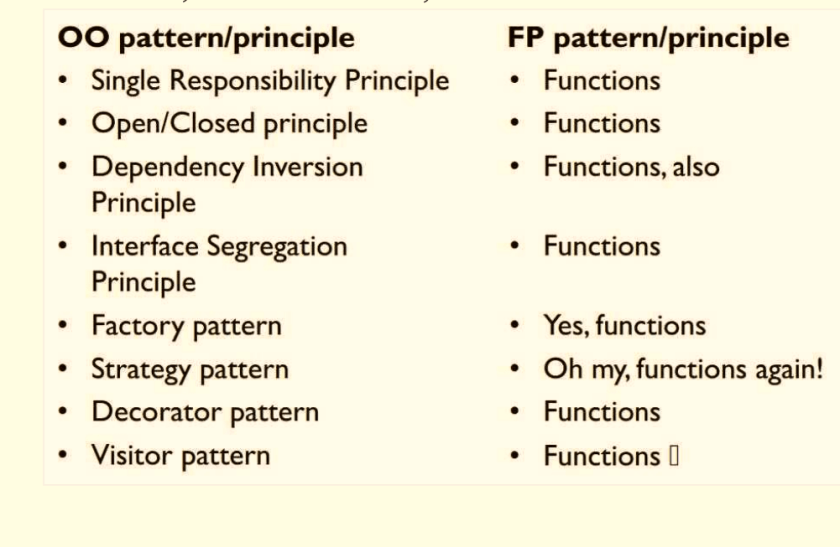
The Software War : Object-Oriented Programming (OOP) vs Functional Programming (FP)

ChefCouscous's avatarMath Online Tom Circle

The “war” of OOP vs FP is akin to Applied Math vs Pure Math.

The formers (OOP & Applied Math) are not “rigourous” but practical, compared to the laters (FP & Pure Math) which are elegant but too abstract for popular usage.

OOP: SmallTalk and its followers – C++, C#, Objective-C, Java…

FP: LISP and its followers – Haskell, Clojure, …

The “hybrid” (OOP&FP): Scala, Kotlin (Google: Java ‘cousin’), Swift (Apple: Objective -C ‘cousin’), F# (MicroSoft)

The “cons” of OOP, which are bad for concurrency / parallel computing in multi-cored CPU:

  1. State changed
  2. Side-effect
  3. Mutability of data
  4. Polymorphism

https://blog.cleancoder.com/uncle-bob/2014/11/24/FPvsOO.html

View original post

Group is Symmetry

tomcircle's avatarMath Online Tom Circle

Landau’s book “Symmetry” explains it as follow:

Automorphism = Congruence= 叠合 has
1). Proper 真叠合 (symmetry: left= left, right = right)
2). Improper 非真叠合 (non-symmetry: reflection: left changed to right, vice-versa).
Congruence => preserve size / length
=> Movement 运动 (translation 平移, rotation about O )
= Proper congruence (Symmetry)

In Space S, the Automorphism that preserves the structure of S forms a Group Aut(G).
=> Group Aut(G) describes the Symmetry of Space S.

Hence Group is the language to describe Symmetry.


View original post

Noether Theorem: Symmetry

tomcircle's avatarMath Online Tom Circle

Symmetry (hence Group) explains :
1. Conservation of Energy;
2. Conservation of Angular Momentum;
3. Periodic Table;
4. Laws of Thermodynamic.

Emmy Noether Theorem (1918): Conservation Laws owes to Symmetry :
1. In Linear motion
=> Conservation of Momentum

2. In Angular movement
=> Conservation of Angular Momentum

3. In Time
=> Conservation of Energy

View original post

Why do the French excel in maths ?

ChefCouscous's avatarMath Online Tom Circle

It is not only owed to the Ecole Normale Superieure where the 11 Fields medalists were educated, but the prominent “Math Culture” in French society.

This is similar to the International Math Olympiad (IMO) “craze” in China since 1980s till today, where the parents send their primary school kids to drill in IMO boot- camps, because that is a “direct-entry” gateway to enter top university, bypassing the highly competitive “Gao-kao” 高考 (High-school College Entrance Exams for 500,000 places among 7 million students each year).

https://www.theguardian.com/world/2012/may/31/europa-french-maths-ecoles-normales-superieures

Quora: read how this middle-age (48) French recounts his “French Math” education since 6 to 15 years old:

The curriculum was designed in the late 60s in part by a group of real mathematicians, the Bourbaki. It was very abstract. I learned about basic set theory when I was 6. I did learn about the basic operators but not before I was able to perform…

View original post 97 more words

Chinese Remainder Theorem 中国剩余定理

tomcircle's avatarMath Online Tom Circle

中国剩余定理CRT (Chinese Remainder Theorem)
X ≡ 2 (mod 3)
X ≡ 3 (mod 5)
X ≡ 2 (mod 7)
Solve X?
明. 程大位 “算法统宗” (1593)
3人同行70稀
5树梅花21支
7子团圆半个月(15)
除百零五(105)便得知
Let remainders:
$Latex r_3=2, r_5=3, r_7=2$
$Latex r= r_3.70+ r_5.21 + r_7.15 (mod 3.5.7)$
r= 2.70 +3.21 +2.15 (mod 105)
r= 140 +63 +30 (mod 105)
r= 233 (mod 105)
$latex r= 23 = x_{min}$
or X= 23 +105Z (23 + multiples of 105)

——————————————-
CRT: Why 3:70, 5:21, 7:15
X ≡ 2 (mod 3)
X ≡ 3 (mod 5)
X ≡ 2 (mod 7)

1) Find A such that
A ≡ 1 (mod 3)
A ≡ 0 (mod 5)
A ≡ 0 (mod 7)

=> 5|A, 7|A => 35 |A

A=35, 70 …
70 ≡ 1 (mod 3)
=> 70×2 ≡ 2 (mod 3)
2) Find B s.t.:
B ≡ 0 (mod 3)
B ≡ 1 (mod 5)
B ≡…

View original post 181 more words