Excellent explanation found on Math Stackexchange.
Basically for finite index sets (finite number of factors), the two constructions are the same.
Only when there is an infinite number of factors, the direct sum 



Excellent explanation found on Math Stackexchange.
Basically for finite index sets (finite number of factors), the two constructions are the same.
Only when there is an infinite number of factors, the direct sum
Source: BBC
Getting into good schools or universities is tough in many parts of the world, but in Hong Kong the pressure begins earlier. Often parents try to get children into a good kindergarten – and before that, into a good nursery. So there are now classes preparing toddlers for that all-important nursery interview.
Yoyo Chan is preparing for an important interview that could help her succeed in life. She is one-and-a-half years old.
At two she will start nursery, but competition is fierce in Hong Kong, and some of the most prestigious nurseries are selective. Her parents want her to be well-prepared for her first big test in life.
The best nurseries and kindergartens are seen as a gateway into the best primary schools – which in turn, parents believe, pave the way to the best secondary schools and universities.
So the most renowned of them can receive more than 1,000 applications for just a few dozen places. As a result, enterprising tuition companies are now offering interview training for toddlers.
Startutor is Singapore’s most popular online agency, providing tutors to your home. There are no extra costs for making a request. The tutors’ certificates are carefully checked by Startutor.
(Website: http://startutor.sg/request,wwcsmt)
There are many excellent tutors from RI, Hwa Chong, etc. at Startutor, teaching various subjects at all levels.
High calibre scholars from NUS/overseas universities like Stanford are also tutoring at Startutor.
(Website: http://startutor.sg/request,wwcsmt)
(Please use the full link above directly, thanks!)
Fill in the request form in the link above to request for a tutor and our coordinators will attend to you within the day.
You get to enjoy the following:
French Math Education Movie, 7 episodes, made in collaboration with Cédric Villanni (2010 Fields Medal).
In both French and English languages.
“Why I hate Math” – (Comment j’ai détesté les maths)
Cédric Villanni – French Fields Medalist (2010)
The French Movies (7 episodes) :
http://www.youtube.com/playlist?list=PLYp_byFGNmhSIzeX-Eiee_4bZPfxNaHTP
Jim Simons (episode 7/7) : The billionaire Mathematician who cracked Wallstreet – a PhD Math student of SS Chern (陈省身) and the university colleague of Prof Frank Yang (杨振宁).
Lisp family language, invented since 1958, is the second oldest computer language (after Fortran), by MIT Professor John McCarthy (who also pioneered in Artificial Intelligence).
Some of the Lisp dialects are Common Lisp anf Clojure (run on top of Java VM). They are called Functional Programming Language, versus Imperative language (C language…) or Object-Oriented languages (C++ / Java).
Lisp is a Functional programming language, a 1950s product created for symbolic computing in Mathematics, used popularly in 1980s for Artificial Intelligence.
Famous software “Mathematica” is written in Lisp.
The original Lisp language, as defined by John McCarthy as “Recursive Functions of Symbolic Expression and Their Computation by Machine.”, defined the entire language in terms of only 7 functions (atom, car, cdr, cond, cons, eq, quote) and 2 special forms (lambda, label). Through the composition of ONLY these 9 forms, McCarthy was able to describe the WHOLE of computation — it doesn’t get more beautiful than that.
Unfortunately, because of the memory hungry requirement — hence the unique Garbage Collection slow backend processes — Lisp lost its attractiveness in the PC-dominant era of 1990s and 2000s, replaced by the most polular language Java which was invented by James Gosling, a former ‘Lisper’ who had created the popular FranzLisp.
View original post 176 more words
Mid-Year CL/ML/TL (Written Paper)
Date: Monday, 30 May 2016
Source: http://www.seab.gov.sg/content/examCalendar/2016_ExamCalendar_O-Level.pdf
For Chinese Tuition, check out http://chinesetuition88.com
Calculate:
$latex (3+1). (3^2 +1). (3^4 + 1)(3^8 +1)…. (3^{32} +1)
$
Let
$latex x = (3+1). (3^2 +1). (3^4 + 1)(3^8 +1)…. (3^{2n} +1)
$
Or:
$latex displaystyle
x = sum_{n=0}^{n}(3^{2n} + 1) $
Quite messy to expand out:
$latex displaystyle {
sum_{n=0}^{n} (3^{2n})
+
sum_{n=0}^{n}(1)
= ….
}
$
This 14-year-old vienamese student in Berlin – Hyyen Nguyen Thi Minh discovered a smart trick using the identity:
$latex displaystyle { (a -1).(a + 1) = a^{2} – 1}$
or more general,
$latex displaystyle boxed {
(a^{n} -1).(a^{n} + 1) = a^{2n} – 1
}$
He multiplies x by (3-1):
$latex
x. (3-1) = (3-1)(3+1). (3^{2} +1)… (3^{2n} + 1)
$
$latex 2x = (3^{2} -1). (3^{2} +1)…(3^{2n} + 1)
$
$latex 2x = (3^{4} -1).(3^{4} +1) … (3^{2n} + 1)
$
.
.
.
$latex 2x = (3^{4n} -1) $
$latex displaystyle boxed
{
x = (3^{4n}…
View original post 25 more words
[Continued from (Part I)…]
Category Theory (范畴学) is the “lingua franca” (通用语) of mathematicians, used commonly by the 2 different major Math branches : Algebra & Analysis.
比喻:
武术分”外家拳”少林派, “内家拳” 武当派。
两家的 lingua franca (通用语)是 “气” – 硬气功(少林), 柔气功(武当)。
In essence: A Category consists of
1. Objects
2. Relationship among objects (Morphism)
3. Structure: preserved by Morphism
4. An identity (Self)
Examples:
1. SET Category:
◇ Objects (Sets),
◇ Structure (Cardinality),
◇ Morphism (Set Functions: which preserve Set Structure)
◇ Identity (Set itself)
2. GROUP Category
◇ Objects (groups)
◇ Structure (Set, 1 closed binary operation)
◇ Morphism (group mapping)
◇ Identity (neutral element ‘e’)
3. SINGAPOREAN Category
◇ Objects (Singapore citizens)
◇ Structure (multi-racial)
◇ Morphism (kiasu-ism)
◇ Identity (I = ME = 令伯 ‘lim-Peh-ism’)
Lecture 2:
◇ Functor: morphism between Categories
◇ Diagrams: arrows
◇ Commute
◇ Special Types of Functors:
View original post 92 more words
After some trials, finally got Kenzo to run on Mac:
First download it from (https://github.com/gheber/kenzo). Quicklisp needs to be installed and loaded first.
Type:
(ql:quickload :kenzo)
followed by
(in-package “CAT”)
followed by any Kenzo commands.
Screenshot:

Summary: Sleeping on the side seems to clear brain’s waste most efficiently.
New research suggests that body posture during sleep may affect the efficiency of the brain’s self-cleaning process
The human brain can be compared to something like a big, bustling city. It has workers, the neurons and glial cells which co-operate with each other to process information; it has offices, the clusters of cells that work together to achieve specific tasks; it has highways, the fibre bundles that transfer information across long distances; and it has centralised hubs, the densely interconnected nodes that integrate information from its distributed networks.
Like any big city, the brain also produces large amounts of waste products, which have to be cleared away so that they do not clog up its delicate moving parts. Until very recently, though, we knew very little about how this happens. The brain’s waste disposal system has now been identified. We now know that it operates while we sleep at night, just like the waste collectors in most big cities, and the latest research suggests that certain sleeping positions might make it more efficient.
Quite easy to follow this “Mr.Bean” lecturer in Computational Topology. Pre-requisite is undergraduate elementary Abstract Algebra (Linear Algebra, Surjectivity, Injectivity, Isomorphism, Quotient Vector Space, Matrices, ….). He used Python to compute rather than Lisp.
This is a series of 6 lectures on Computational Topology : Applied Math using computer in Algebraic Topology. Computer tool languages used can be Phyton (this lecture) or Common Lisp (the preferred Functional Programming like Lisp for its rich mathematical background in Lambda Calculus — new main feature in next Java 8).
As explained by this professor in Lecture 1, Computational Toplogy begins with Algebraic Topology aided by the arrival of computers in 1950s. The role of Algebraic Topology is to study Topology (Geometric Spaces “Manifolds” (流形) with continuous functions) using algebra (mainly Advanced Linear Algebra).
Just like Google Search revolutionises the world in 2000s, using only the classical Linear Algebra; Algebraic Topology will revolutionise Big Data Analytics using the Advanced Linear Algebra — the next wave in Mobile Age.
In layman’s term, it means using this tool to analyse Big Data in a geometric picture form…
View original post 187 more words
1st speaker :
◇ History: Riemann discovered Topology on his papers left behind after death. He told friend Betti.
◇ Betti Number: number of
– scissor cut to make a tree (in 2 dim),
– drill cutty make a disk (in 3 dim).
◇
2nd speaker:
◇ Evolution (bacteria) using Topology Barcoding.
3 speaker:
◇ Liquid Crystal: Homology
Homology (同调) is easier to compute than Homotopy (同伦) , hence Computational Topology uses the Algebraic Topology of Homology.


千里马指日行千里,善跑的骏马。
伯乐本名孙阳,是古代春秋时期秦穆公时人。他擅长相马,对马很有研究。
唐代文学家韩愈写过一篇文章《马说》。文章中写道”世有伯乐,然后有千里马。千里马常有,而伯乐不常有。”意思是:世界上有了伯乐才会有千里马。千里马经常会有,但是伯乐却很少。”
现在的”千里马”通常用来比喻人才,而”伯乐”则是用来比喻发现,推荐,培养和使用人才的人。
“千里马”,即人才有很多,但是能够赏识人才的”伯乐”却很少。如果人才不被发现和重用,那就和普通人没有区别。只有当伯乐发掘了他们,他们的价值才会被体现出来,才会发挥一个人才的价值。所以先有伯乐,才有千里马。
An excellent article on the Future of world economy. A view from Stanford University….
3 Keywords: Clean Energy, Robotics, 3D-Printing
Governments, businesses, and economists have all been caught off guard by the geopolitical shifts that happened with the crash of oil prices and the slowdown of China’s economy. Most believe that the price of oil will recover and that China will continue its rise. They are mistaken. Instead of worrying about the rise of China, we need to fear its fall; and while oil prices may oscillate over the next four or five years, the fossil-fuel industry is headed the way of the dinosaur. The global balance of power will shift as a result.
LED light bulbs, improved heating and cooling systems, and software systems in automobiles have gradually been increasing fuel efficiency over the past decades. But the big shock to the energy industry came with
View original post 986 more words
Excellent Category Theory lectures by retired Prof Steven Roman from Uni. California: he used pen and A4 – paper with iPhone camera. Simple & good. (Only lighting could be brighter.)
Category Theory is one level higher abstraction, above the Abstract Algebra (Group, Ring, Field, Vector Space, Set…). It is the “Math of Math”, to make difficult math easy by studying the ‘relationship’ (or Morphism).
This year my 61st birthday cake is going to be cut mathematically !

This is the correct way to teach Math to children, but it makes parents crazy ! 🙂
Why anything multiplying by 0 gives 0 ?
Proof:
0.x + 0.x = (0 + 0).x [distribution law]
= .x [definition of 0]
Subtracting 0.x from both sides,
0.x + 0.x = 0.x
we get
$latex boxed{0.{x} = 0 }$ [QED]
Parents teach children the intuitive way:
“nothing times anything is nothing”
but this is not rigorous.
Later in life, the children would learn that when doing “zero times” of any thing (eg. bad behaviors: fighting, stealing…) produces “something” (good) 🙂
In the USA and UK, many parents grow up feeling great antipathy towards Math, whereas in Asia like China, Japan, Korea, HK, Singapore, and Europe (eg. France), we grow up fearing Math, probably because of how Math was taught in school. I remember during schools (and…
View original post 19 more words
I am intending to install Common Lisp on Mac. Installing Lisp is quite troublesome, for normal users who are used to installing everything in one click.
Clozure CL (App for Mac) seems to be the easiest option. However, I have been faced with Clozure CL App error: “Unknown Error” message, followed by “We Could not complete your request”. This error appears when I click on install the app.
The next method I am trying is http://www.jonathanfischer.net/modern-common-lisp-on-osx/. Currently at the step of installing Aquamacs, everything seems to be going smoothly so far.
Update: The above website’s method is not as easy as it looks. http://www.yellosoft.us/installing-common-lisp may be another easier option.
Some interesting Lisp books:
Proposition: If 


Proof: Let 


Then 


Since 


Proposition:
(Representing map of 

![f_x:\Delta[n]\to X](https://s0.wp.com/latex.php?latex=f_x%3A%5CDelta%5Bn%5D%5Cto+X&bg=ffffff&fg=1a1a1a&s=0&c=20201002)

Proof:
Let ![(i_0,i_1,\dots,i_k)\in\Delta[n]](https://s0.wp.com/latex.php?latex=%28i_0%2Ci_1%2C%5Cdots%2Ci_k%29%5Cin%5CDelta%5Bn%5D&bg=ffffff&fg=1a1a1a&s=0&c=20201002)





This defines a unique simplicial map 
Visual Discrimination, Grades 2 – 8
Some readers of my blog has bought this book on Amazon. Upon closer inspection, I realised this is actually an excellent book for preparing for pattern recognition (visual discrimination) which is tested in GEP / DSA under the logic portion.

The above is a sample of what the book teaches. If you are familiar with the GEP / DSA test, this is exactly what the logic part of the test is about. Not just the GEP / DSA tests use this, basically any IQ test worldwide will test something like this.
Getting familiar with such tests will obviously be an advantage. No harm giving it some practice rather than seeing such tests the first time in the GEP / DSA test.
Pattern recognition is a skill that can be learnt, and one can argue that many intellectual activities like chess / math are just advanced forms of pattern recognition!
Source: http://www.seab.gov.sg/content/syllabus/alevel/2017Syllabus/9649_2017.pdf
Related posts: What is the difference between H1, H2, H3 Maths
From the syllabus, it looks like Further Maths has some overlap with H2 Maths. This is a good thing, since students can reinforce their knowledge by learning it twice. It is also like killing two birds with one stone!
Some new things in Further Math:
Further Math is a good subject to take for those intending to enter physical science or engineering in university, since it will cover many of the topics learnt in the first year of university.
Overall, there are quite a lot of advanced topics crammed into Further Math, so I doubt the teachers have time to teach everything in depth in two years. Matrices and Linear Spaces (Linear Algebra) alone will take half a year to teach it properly. Most likely it will be a touch-and-go event and students will get to see the tip of the iceberg. Students wishing to learn more can read up some undergraduate math books listed here.
Let 


Let 


![\partial\Delta[n]](https://s0.wp.com/latex.php?latex=%5Cpartial%5CDelta%5Bn%5D&bg=ffffff&fg=1a1a1a&s=0&c=20201002)
A fibrant simplicial set is said to be minimal if it has the property that 
Let 


In other words, it means that a fibrant simplicial set is minimal iff for any two elements with all faces but one the same, then the missed face must be the same.
We can generalise the idea to higher homotopy groups as follows.
Let 


The product structure in ![[x]+[x']=[d_1w]](https://s0.wp.com/latex.php?latex=%5Bx%5D%2B%5Bx%27%5D%3D%5Bd_1w%5D&bg=ffffff&fg=1a1a1a&s=0&c=20201002)


Very nice!
Hi all! Today I’ll introduce simplicial sets, and talk about how they relate to higher categories. Simplicial sets are basically combinatorial models for topological things; in fact, a particular kind of simplicial set (a Kan complex) is essentially equivalent to a topological space! So more general kinds of simplicial sets should model something more general than a topological space. Exploring this will be the topic of this post. The reader should note that these are directly from the (rather terse) notes I took while preparing for the Intel International Science and Engineering Fair last year (so this blog post is currently also serving as the notes for preparing for the Intel Science Talent Institute), so there may be small errors.
We will begin by talking about some combinatorial constructions. Let $latex [n]&s=1$ denote the set $latex {0,…,n}&s=1$ equipped with the linear ordering. Define $latex mathbf{Delta}&s=1$ to be the category whose objects are the sets $latex…
View original post 1,357 more words
My second grade teacher was convinced that I had a learning disability. Now I am in my third year at Yale, working on a PhD degree in mathematics (I’m into analytic number theory, if you are curious).
“Prodigy” describes neither me nor anyone that I know. I think that it is a word that is far too overused, abused, and misused. My experience tells me that (with possibly a few, singular exceptions that we don’t yet understand well enough to properly gauge) people don’t become experts in something by being innately good at it, but by putting in the 10,000 hours necessary to make the subject an inherent part of their make-up.
I have told this to students before—there is no shame in not studying higher math because you think your time would be better used elsewhere. But for the love of God, don’t quit just because you feel like you aren’t good enough.
Read more at: http://recode.net/2016/02/02/think-you-stink-at-math-amazon-wants-to-change-that/
“I stink at math.”
If you have kids, you’ve probably heard that phrase — or maybe you’ve even uttered some variant of it yourself. But in a world where good jobs increasingly require good math skills, that mind-set should no longer be acceptable, according to Rohit Agarwal, general manager of Amazon’s Education business unit.
“We believe that the attitude that it’s okay not to be good at math is just becoming too common,” Agarwal said in an interview. “Developing good math skills is essential to success at life.”
Happy Chinese New Year to all readers of this blog! The first day of Chinese New Year is on Monday, February 8 2016. In Singapore, we have two days of public holidays, on February 8 and February 9.
Related:
The Mathematics of Chinese New Year (How to calculate its date)
Soure: http://www.christiantoday.com/article/the.bible.says.that.youre.going.to.fail/78603.htm
Interesting perspective on faith!
We look at society and the things around us and it’s obvious that most of the things around us teach us to be afraid of failure. We were taught not to get “F’s” in school because it’s a bad thing to fail. We try not to look clumsy and fail socially because people would laugh at us. We were told maybe once or twice by our parents not to make a fuss because we’ll embarrass them (and if you’re a parent who’s done that, don’t worry, I’ve done it too!)
Psychologists claim that every human being has a certain amount of fear towards failure. As a result of this fear of failure that we have adopted, we try to avoid it as much as we can. However, the Bible tells us that there is no use in avoiding failure because we have already failed.
Romans 3:23 puts it this way: “for all have sinned and fall short of the glory of God.” We have all failed God, and as a result we have failed so miserably at the one thing we were created to do, which is to bring glory and honour to God. There’s not one person except Jesus who has succeeded at living life the way it should be lived, and everyone else has just failed.
And here’s the thing, we’re going to continue to fail. We’ll try and try and sometimes we may do one or two things right, but sooner or later everything is just going to go south on us. It’s a given for us to fail.
However, there is good news. Even when we fail, we’re still going to win because God has already won the battle for us. It’s like we’re in a game of basketball and we’re shooting 0 out of 100 baskets and it doesn’t matter because God is scoring where we’re failing. Psalm 73:26 tells us, “My flesh and my heart may fail, but God is the strength of my heart and my portion forever.”
Attached are some solutions to the book “Functional Analysis” by Peter D. Lax. Selected solutions from Chapter 1 to Chapter 28.
Highly recommend parents to consider letting their child read this book, especially those going for interviews like scholarship, Medicine, Law interviews. Inside this book describe 7 habits that, if followed, will make one a highly effective person. This book is especially good for those who want to learn leadership and interpersonal skills, which will be essential for scholarship interviews and in competitive interviews like Medicine / Law where the interview is the only thing that separates one from the rest of the perfect scorers with 4As!
The 7 Habits of Highly Effective People: Powerful Lessons in Personal Change
Younger students can consider reading the equally good “teen” version:
The 7 Habits of Highly Effective Teens
Continued from Path product and fundamental groupoids
(Associativity). Let 


Let 


(Path Inverse). Let 

![\lambda*\lambda^{-1}\simeq\epsilon_{\lambda(0)}\ \text{rel}\ \partial\Delta[1]](https://s0.wp.com/latex.php?latex=%5Clambda%2A%5Clambda%5E%7B-1%7D%5Csimeq%5Cepsilon_%7B%5Clambda%280%29%7D%5C+%5Ctext%7Brel%7D%5C+%5Cpartial%5CDelta%5B1%5D&bg=ffffff&fg=1a1a1a&s=0&c=20201002)
We are following the notation in Complex Variables and Applications (Brown and Churchill)
The method of using complex analysis to evaluate integrals is to consider a very large semicircular region’s boundary, which consists of the segment of the real axis from 





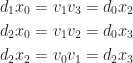
Let two functions 


Let ![\sigma_1=(0,1)\in\Delta[1]_1](https://s0.wp.com/latex.php?latex=%5Csigma_1%3D%280%2C1%29%5Cin%5CDelta%5B1%5D_1&bg=ffffff&fg=1a1a1a&s=0&c=20201002)
![\lambda:\Delta[1]\to X](https://s0.wp.com/latex.php?latex=%5Clambda%3A%5CDelta%5B1%5D%5Cto+X&bg=ffffff&fg=1a1a1a&s=0&c=20201002)
![\text{Hom}(\Delta[1],X)\cong X_1](https://s0.wp.com/latex.php?latex=%5Ctext%7BHom%7D%28%5CDelta%5B1%5D%2CX%29%5Ccong+X_1&bg=ffffff&fg=1a1a1a&s=0&c=20201002)




Let 


Let ![\pi_n(X)=[S^n,X]](https://s0.wp.com/latex.php?latex=%5Cpi_n%28X%29%3D%5BS%5En%2CX%5D&bg=ffffff&fg=1a1a1a&s=0&c=20201002)


An element 

Given a spherical element ![S^n=\Delta[n]/\partial\Delta[n]](https://s0.wp.com/latex.php?latex=S%5En%3D%5CDelta%5Bn%5D%2F%5Cpartial%5CDelta%5Bn%5D&bg=ffffff&fg=1a1a1a&s=0&c=20201002)


Path product and fundamental groupoids
Let
Source: http://news.asiaone.com/news/singapore/3-unhealthy-trends-plaguing-education-denise-phua
To summarise, the 3 unhealthy trends are:
In my spare time, I am intending to read this psychology book: Mindset: The New Psychology of Success
Dweck explains why it’s not just our abilities and talent that bring us success—but whether we approach them with a fixed or growth mindset. She makes clear why praising intelligence and ability doesn’t foster self-esteem and lead to accomplishment, but may actually jeopardize success. With the right mindset, we can motivate our kids and help them to raise their grades, as well as reach our own goals—personal and professional. Dweck reveals what all great parents, teachers, CEOs, and athletes already know: how a simple idea about the brain can create a love of learning and a resilience that is the basis of great accomplishment in every area.
In abstract algebra, the Artin–Wedderburn theorem is a classification theorem for semisimple rings and semisimple algebras. The theorem states that an (Artinian) [1] semisimple ring R is isomorphic to a product of finitely many ni-by-ni matrix rings over division rings Di, for some integers ni, both of which are uniquely determined up to permutation of the index i. In particular, any simple left or right Artinian ring is isomorphic to an n-by-nmatrix ring over a division ring D, where both n and D are uniquely determined. (Wikipedia)
This is quite a powerful theorem, as it allows semisimple rings/algebras to be “represented” by a finite direct sum of matrix rings over division rings. This is in the spirit of Representation theory, which tries to convert algebraic objects into objects in linear algebra, which is relatively well understood.
Let 

(i) 


(ii) The pair 
(iii) Conversely, suppose 
The definition of a semisimple
Example: 

Source: http://qz.com/603267/an-nfl-player-was-just-accepted-to-the-math-phd-program-at-mit/
This guy is the ultimate definition of “All rounded”. Good at both sports and studies. His motivation to play football is a little creepy though: “I play because I love the game. I love hitting people.” Note: American football is the “Upsized” version of the rugby in Singapore schools. Protective helmet and gear are needed.
The National Football League offseason is supposed to be a time for players to relax, recover from the brutality of the prior season, and prepare for the next one.
Not for Baltimore Ravens player John Urschel. The 6’3”, 305-pound offensive lineman will begin a PhD in mathematics at the Massachusetts Institute of Technology this year. The Hulk-like math geek, who graduated from Penn State with a 4.0 grade point average,will study spectral graph theory, numerical linear algebra, and machine learning.
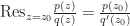
Despite the latest O-level results being the best in decades, there was little change in the minimum entry requirements for most junior colleges this year.
Students (future batches) thinking of which JC to enter should read this book by Malcolm Gladwell: David and Goliath: Underdogs, Misfits, and the Art of Battling Giants
In it he discusses whether it is better to be a big fish in a small pond or small fish in big pond at early stage of life. Also read: http://news.bitofnews.com/malcom-gladwells-mindblowing-theory-on-why-its-better-to-be-a-big-fish-in-a-small-pond/. This is very true, as entering an elite JC can be quite demoralizing, not to mention not a good fit as the lectures progress too fast, leading to students requiring either tuition or very intensive self-revision at home. The final result may be that the student may do better in ‘A’ levels in a mid-tier JC than in the elite JC’s like RI or HCI.
Hence, students and parents who are undecided and asking the question “Should I go to X JC” should read the above book. If you decide to go to the elite JCs, do not be demoralised if you are not at the top of the cohort. In fact, even if you are in the bottom half of the cohort, you do still have a good chance in doing well in the ‘A’ levels. It is all about the mindset, which is discussed in the above excellent book. The bottomline is that it may not be the best idea to enter the JC with the “lowest” cut-off point, some decision may be required.
To the outsiders of the USA, we can understand the “Common Core Math Program” is good for American children education, which is supported by Bill Gates with generous $6-billion donation.
The American parents who resist and oppose the ‘Common Core’ Math were like the Singaporean parents who opposed the “Singapore Math Program” in the 1980s. The Singapore parents had to go through remedial classes before they could coach their kids in the ‘new way’. Result proved that after 20 years, Singapore is ranked 2nd in the PISA Test World Ranking in Math (after Shanghai of China).
All good medicines are bitter to swallow. 良药苦口 !
Here are 4 methods of subtraction:
1st : Traditional (aka Abacus) “Carry” Method
2nd: Mental Calculation
3rd : “Singapore Math” (no Carry)
4th: Common Core: “Count Up” (French Method), with which French supermart cashiers usually perform changes at counter — much…
View original post 108 more words
Let 


Geometrically, matching faces are faces that “match” along lower-dimensional faces. In other words, they are “adjacent”.

In the 2-simplex, let 


In the 3-simplex, let 


This is a very old case, but the mystery of Thallium poisoning endures till today. The murderer is still walking scot-free to this day! Do spread this news, as the name “Zhu Ling” is in danger of being forgotten after more than 20 years. Zhu Ling was a very talented student in chemistry, music (she plays the ancient instrument Guqin) and literature.
To learn more or to donate, visit: http://www.helpzhuling.org/english.aspx
From late 1994 to early 1995, 21-year old Zhu Ling 朱令 was poisoned at Tsinghua, Beijing, one of the most prestigious universities in China. Globally, physicians reviewed her symptoms, which were sent to the Internet through a Usenet group after no correct diagnostics availed themselves for months. This world first ever large scale tele-medicine trial suggested thallium poisoning, which was subsequently proven, and its treatment. Her life was ultimately saved, but she suffered serious neurological damage and permanent physical impairment.
Who poisoned this promising and multi-talented young college girl? One of her dormitory roommates with strong political connections was the prime suspect. Yet the police closed the case in 1998 without a definitive conclusion, claimed due to evidences being stolen.
After 19 years, the murderer is still at large. And it may be someone around you, with a changed identity.
Let ![f:\Lambda^i[n]\to X](https://s0.wp.com/latex.php?latex=f%3A%5CLambda%5Ei%5Bn%5D%5Cto+X&bg=ffffff&fg=1a1a1a&s=0&c=20201002)
Assume that 
Thus, since 


![g=f_w:\Delta[n]\to X](https://s0.wp.com/latex.php?latex=g%3Df_w%3A%5CDelta%5Bn%5D%5Cto+X&bg=ffffff&fg=1a1a1a&s=0&c=20201002)

Conversely let ![f_{x_j}:\Delta[n-1]\to X](https://s0.wp.com/latex.php?latex=f_%7Bx_j%7D%3A%5CDelta%5Bn-1%5D%5Cto+X&bg=ffffff&fg=1a1a1a&s=0&c=20201002)
![f:\Lambda^i [n]\to X](https://s0.wp.com/latex.php?latex=f%3A%5CLambda%5Ei+%5Bn%5D%5Cto+X&bg=ffffff&fg=1a1a1a&s=0&c=20201002)

commutes for each 
By the assumption, there exists an extension ![g:\Delta[n]\to X](https://s0.wp.com/latex.php?latex=g%3A%5CDelta%5Bn%5D%5Cto+X&bg=ffffff&fg=1a1a1a&s=0&c=20201002)
![g|_{\Lambda^i[n]}=f](https://s0.wp.com/latex.php?latex=g%7C_%7B%5CLambda%5Ei%5Bn%5D%7D%3Df&bg=ffffff&fg=1a1a1a&s=0&c=20201002)


A simplicial set is a purely algebraic model representing topological spaces that can be built up from simplices and their incidence relations. This is similar to the method of CW complexes to modeling topological spaces, with the critical difference that simplicial sets are purely algebraic and do not carry any actual topology.
To return back to topological spaces, there is a geometric realization functor which turns simplicial sets into compactly generated Hausdorff spaces. A topological space 


Here are some tips on how to give (Math) Talks. Talks on other scientific topics should be similar.
Source 1: http://www.math.wisc.edu/~ellenber/mntcg/TalkTipSheet.pdf
One tip I found very useful is this: For long talks (1 hour) and above, it is better to use the whiteboard / blackboard. As this will give you “the flexibility to add or omit material as you see fit, and it forces you not to go to fast.”
For shorter talks, it is better to use slides. “A good rule of thumb: you should allow between 30 seconds and 1 minute per slide.” So if you are preparing for a 30 minute talk, around 30-60 slides would be ideal.
Source 2: https://faculty.washington.edu/heagerty/Courses/b572/public/HalmosHowToTalk.pdf
This is advice by the legendary Paul Halmos. His first advice is to “Make it simple, and you won’t go wrong.”
Our next few posts on complex analysis will focus on evaluating real integrals like 
To calculate those real integrals, the first step is to study the theory of residues and poles. This can be found in Chapter 6 of Churchill’s book Complex Variables and Applications (Brown and Churchill)
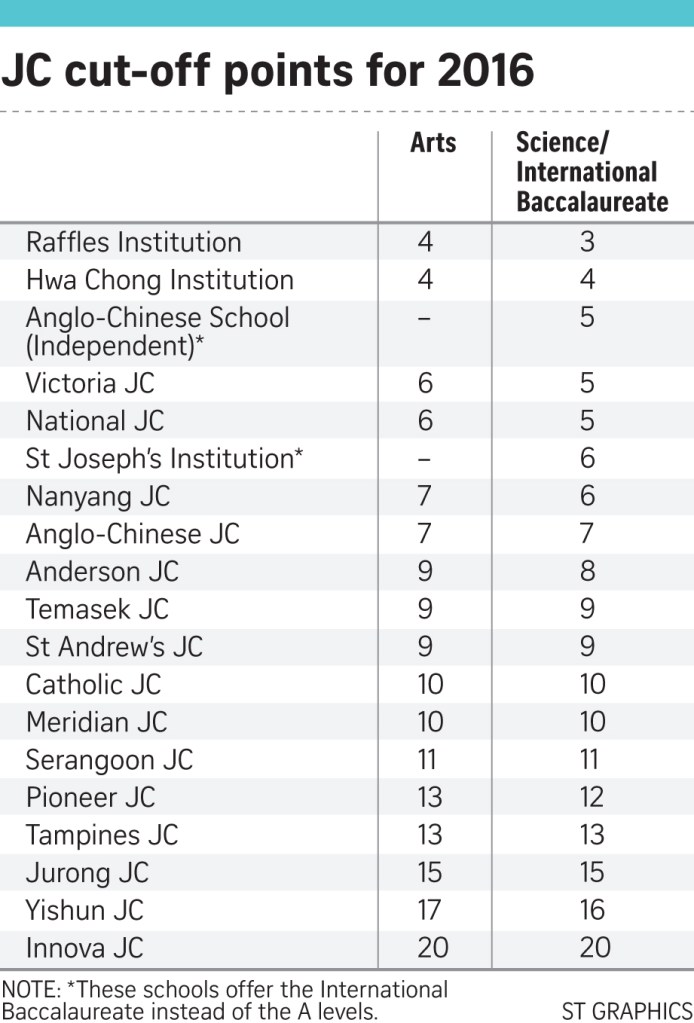
The extremely powerful theorem that one first needs to know is called Cauchy’s Residue Theorem:
Let 


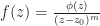
A Summary of the 3 types of Isolated Singular Points:
 . The coefficients
  of the Laurent series contain a finite (nonzero) number of nonzero terms, i.e. eventually becomes zero after a certain number. i.e.
  . is zero. in the principal part are nonzero.
Theorem: An isolated singular point 




This is a very short crash course on the theorems needed. The next blog post on complex analysis will go into calculating some actual integrals.


![(\lambda_1*\lambda_2)*\lambda_3\simeq\lambda_1*(\lambda_2*\lambda_3)\ \text{rel}\ \partial\Delta[1]](https://s0.wp.com/latex.php?latex=%28%5Clambda_1%2A%5Clambda_2%29%2A%5Clambda_3%5Csimeq%5Clambda_1%2A%28%5Clambda_2%2A%5Clambda_3%29%5C+%5Ctext%7Brel%7D%5C+%5Cpartial%5CDelta%5B1%5D&bg=ffffff&fg=1a1a1a&s=0&c=20201002)



 Mathtuition88