This week’s career memes are an ode to mathematicians, the numerical wizards who use their knowledge to solve practical problems in disciplines such as business, commerce, technology, engineering and the sciences.
A mathematician’s job involves performing computations and analysing and interpreting data, reporting conclusions from a data analysis and using those findings to support or improve business decisions, and developing mathematical or statistical models to analyse data.
Many mathematicians work for governments or for private scientific and R&D companies.
This challenging problem book by renowned US Olympiad coaches, mathematics teachers, and researchers develops a multitude of problem-solving skills needed to excel in mathematical contests and in mathematical research in number theory. Offering inspiration and intellectual delight, the problems throughout the book encourage students to express their ideas in writing to explain how they conceive problems, what conjectures they make, and what conclusions they reach. Applying specific techniques and strategies, readers will acquire a solid understanding of the fundamental concepts and ideas of number theory.
How many marks to get A1 for A Maths / E Maths for O Levels?
The official answer is not released by Cambridge / MOE, but it is definitely not 75 as the papers are subject to the bell curve (using normal distribution).
Hello! Was wondering how much marks do I have to get in order to get A1… Many have been saying you need to get 90%. Is it really 90% for both Maths?
Cambridge has never revealed its score. Was wondering what you hve heard from your teachers or from other reliable sources. Thank you!
Appreciate it very much.
Ans by a forummer: 90 marks for emaths. 80+ for amaths
Now, getting 90 marks for E Maths is no mean feat. But it is possible with practice and the right coaching!
Getting 80+ for A Maths is no joke either. If you have taken A Maths before you know how difficult it is, and usually for any test in school more than half the class will fail.
We must approach the O Levels with the right positive mindset:
1) It is always possible to improve. No matter how weak the student is in Maths, it is always possible to improve. The key thing is to:
2) Start revision and practice early. The earlier you start revision and practicing Maths, the more chance of improvement you have!
3) Learn to love math and appreciate its beauty, or at least try your best not to hate math. Since Math is pretty much compulsory till JC, why not try to like it? Adopt a positive mindset and you will be able to study for longer hours for Maths, which will translate to a better score in the end.
If you are looking to brush up on your A Maths / E Maths skills and learn some tips on scoring during exams, join our weekly group tuition at Bishan!
1. Galois’s mother home-schooling him Latin & other languages before entering Lycée Louis-Le-Grand.
2. William Hamilton: knew 15 languages include Chinese before discovered Quarternions (1,i,j,k) on Monday 16 Oct 1843 walking along Brougham Bridge, Ireland.
3. Pascal, Descartes are philosopher good in writing.
4. Gauss learnt even at old age Russian to read Lobatschefsky’s Non-Euclidean Geometry
5. Cauchy’s father heeded the advice of his neighbour Laplace to teach young Cauchy language before mathematics.
A Southern Song dynasty (南宋) officer. During his 3-yr leaves when his mother died, he generalised 孙子算经 (4th century)’s “Chinese Remainder Theorem” in ‘大衍求一术’. After leaves, he went back to chase money & women, produced no more Maths.
G. Polya / Paul Halmos advocate getting math students to construct not just one but classes of examples to:
1. Extend & enrich own Example Spaces;
2. Develop full appreciation of concepts, definitions, techniques that they are taught.
[Polya, Halmos, Feynman]: they collect and build a personal ‘repertoire’ of “Examples Space” (include counter-examples) for each abstract math idea, which they can relate to a concrete object.
Examples:
Group abelian = (Z,+)
Ring = Z
Principal Ideal = nZ
Equivalence Relation = mod (n)
Cosets = {3Z, 1+3Z, 2+3Z}
…
There is a less well-known proof that is a direct constructive approach to proving that the square root of 2 is irrational!
We consider an arbitrary rational number , and show that the difference between and cannot be zero. Hence, the square root of 2 cannot be rational.
Firstly, we have:
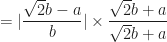
(Rationalizing the numerator)
Now, we analyse the numerator. We can write ,
, where are odd.
Then ,
.
Since the largest power of two dividing is an odd power, whilst for the largest power of two dividing it is an even power, and cannot be the same number. Hence we have .
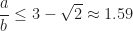
Now, we analyse the denominator. Firstly, we can consider just the rationals . Because if , it is clear that is not going to be .
Rearranging, we have: .
Multiplying throughout by , .
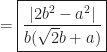
Going back to the original equation (boxed), we can conclude that:
.
We have shown constructively that is not a rational number!
Every math student needs a tool belt of problem solving strategies to call upon when solving word problems. In addition to many traditional strategies, this book includes new techniques such as Think 1, the 2-10 method, and others developed by math educator Ed Zaccaro. Each unit contains problems at five levels of difficulty to meet the needs of not only the average math student, but also the highly gifted. Answer key and detailed solutions are included. Grades 4-12
Build a foundation and focus on what matters most for math readiness with Common Core Math 4 Today: Daily Skill Practice for fourth grade. This 96-page comprehensive supplement contains standards-aligned reproducible activities designed to focus on critical math skills and concepts that meet the Common Core State Standards. Each page includes 16 problems to be completed during a four-day period. The exercises are arranged in a continuous spiral so that concepts are repeated weekly. An assessment for the fifth day is provided for evaluating students’ understanding of the math concepts practiced throughout the week. Also included are a Common Core State Standards alignment matrix and an answer key.
These are the top 10 tough Mathematics:
1. Motivic cohomology or cohomology Theory 上同调理论
2. Langlands Functoriality Conjecture
3. Advanced Number Theory (eg. Fermat’s Last Theorem) 高等数论
4. Quantum Group 量子群
5. Infinite Dimensional Banach Space 无穷维度巴拿哈空间
6. Local and Micro-local Analysis of Large Finite Group 大有限群之局部与微局分析
7. Large and Inaccessible Cardinals 大与不可达基数
8. Algebraic Topology 代数拓扑学
9. Super-String Theory 超弦论
10. Langlands Theory 非阿贝尔互反性,自守性表现和模数变化
Do we really live in 10-dimensional Space ? Harvard Prof S.T. Yau (1st Chinese Fields Medalist) talked on the inner space of Geometry and String Theory in Physics:
4) GEP Books are an excellent source of DSA questions, since the scope of GAT testing overlaps with the Logic portion of the GEP test. Check out the myriad of GEP Books that can be used to prepare for DSA questions equally effectively.
The Logic portion of GEP test / DSA test is not taught anywhere in the MOE syllabus, and hence the most challenging to prepare for. Your child would need to solve DSA questions like the one below, which is quite obviously not taught anywhere from Primary 1 to Primary 6. However, like all skills, these kind of logic puzzles can be taught, trained, and practiced, in the Mensa book listed below (Scroll down)!
Children can be trained to solve this type of DSA GAT questions easily
If you are looking for more DSA GAT pattern/logic questions, this is the Complete Quiz Book by Mensa. Highly rated on Amazon. These book will be helpful for those seeking for a boost in their DSA GAT scores, since GAT (General Ability Test) is just a politically correct name for IQ Test.
Furthermore, the IQ of a person is not static, it can be changed. The way to change IQ is via reading books and acquiring more knowledge.
Another good book for DSA/GAT/HAST is Ultimate IQ Tests: 1000 Practice Test Questions to Boost Your Brain Power. This book is like the “Ten Year Series” of GAT DSA tests, it will be a good and trusted book for Singaporeans who are used to studying using the practice “Ten Year Series” method, which has undoubtedly worked for generations of Singaporeans (including myself). The 1000 Practice questions (!!!) (similar to GAT) would definitely go a long way in your DSA preparation.
Subscribe to our free newsletter, for updates on Math, Education and other General Knowledge topics!
Many people think that the infamous Cheryl Birthday puzzle is very difficult. However, to a well trained Math Olympian, the Cheryl Birthday question is actually considered comparatively easy! This shows that IQ of a person can be increased by reading, learning, and practicing the relevant books.
P.S. These kind of books are rarely found in Singapore bookstores, not to mention that most decent Singapore bookstores like Borders/Page One have closed down. I have compiled the most helpful books for DSA Score-Boosting in the above link. Hope it helps!
As Singapore is a very high-tech society, there are many children who are addicted to handphones /computer games and as a result have no motivation to learn. Needless to say, this would result in rather severe consequences in exam results if not corrected early. Even for gifted children, the consequence of computer/cellphone addiction is really harmful, not to mention students who already have a weak academic foundation. Hence, motivational books like those listed here are actually of great importance. Only if a child sees the value of learning, will he be interested and self-motivated in learning. Related book:Cyber Junkie: Escape the Gaming and Internet Trap.
NUS High DSA
If you are looking for information regarding NUS High DSA, please click here.
Finally, all the best and good luck for your DSA test!
The problem with the iPad is that there are too many games! Children (and even adults) will find it hard to resist the games. The Kindle would be better for education, since it is primarily a reading device, and there are many educational books available at low cost or even free.
For example, this course CK-12 Algebra I – Second Edition, Volume 1 Of 2 is totally free and costs $0.00 if you have the Kindle. Hence, the Kindle is a much better alternative to iPad for students.
Hua Luogeng (华罗庚) urged using the daily 10-20 mins intervals while waiting for buses, queues, idle times, make it at least 1 hour a day to read Math books which you carry along with you.
Hua advised on speedy self-learning Math :
1) Choose the Best book on the Topic written by the Master (say, Abstract Algebra), read completely and do the exercises.
2) Read other reference books. Read only those new topics not covered in 1).
If not much new things, return them to bookshelf. This way speed up reading many books in short time.
3) Then read International renown Math Journals.
Beware 90% are copy-cats or rubbish by University lecturers to meet their yearly publishing quota. Only < 10% are masterpieces.
4) Pick one topic to do your independent research.
5) Discuss with friends with better knowledge in the field. This way you can be a Master in…
华罗庚 《数论导引 》序言
Preface on “Introduction to Number Theory” by Hua Luogeng (1950).
“Math evolved from concrete to abstract, the former is the source of inspiration of the latter. One cannot just study the abstract definitions and theorems without going back to the source of concrete examples, which prove valuable applications in Physics and other sciences.”
“Mathematics, in essence, is about the study of Shapes and Numbers. From Shapes give rise to the Geometrical Intuition, from Numbers give the Relationship and Concepts ”
RIO DE JANEIRO (AP) — Every four years, the World Cup forces fans to remember their math lessons.
Working out what each team needs from its final match to finish in the top two of a group and advance to the knockout rounds takes some algebra knowledge and powers of prediction.
After Brazil and Mexico played to a scoreless draw on Tuesday, the calculation became clear: Both teams just need to draw in their next matches to advance with five points in Group A. Croatia, which beat Cameroon Wednesday, would get to six points by beating Mexico. So a draw with Cameroon would still get Brazil through with five points. If Mexico beats Croatia, Brazil would advance even if it loses. But if Mexico and Croatia draw, and Brazil loses — then it gets complicated with tiebreakers.
For many students, calculus can be the most mystifying and frustrating course they will ever take. The Calculus Lifesaver provides students with the essential tools they need not only to learn calculus, but to excel at it.
All of the material in this user-friendly study guide has been proven to get results. The book arose from Adrian Banner’s popular calculus review course at Princeton University, which he developed especially for students who are motivated to earn A’s but get only average grades on exams. The complete course will be available for free on the Web in a series of videotaped lectures. This study guide works as a supplement to any single-variable calculus course or textbook. Coupled with a selection of exercises, the book can also be used as a textbook in its own right. The style is informal, non-intimidating, and even entertaining, without sacrificing comprehensiveness. The author elaborates standard course material with scores of detailed examples that treat the reader to an “inner monologue”–the train of thought students should be following in order to solve the problem–providing the necessary reasoning as well as the solution. The book’s emphasis is on building problem-solving skills. Examples range from easy to difficult and illustrate the in-depth presentation of theory.
The Calculus Lifesaver combines ease of use and readability with the depth of content and mathematical rigor of the best calculus textbooks. It is an indispensable volume for any student seeking to master calculus.
Serves as a companion to any single-variable calculus textbook
Informal, entertaining, and not intimidating
Informative videos that follow the book–a full forty-eight hours of Banner’s Princeton calculus-review course–is available at Adrian Banner lectures
More than 475 examples (ranging from easy to hard) provide step-by-step reasoning
Theorems and methods justified and connections made to actual practice
Difficult topics such as improper integrals and infinite series covered in detail
Tried and tested by students taking freshman calculus
“Only by taking an infinitesimal small unit for observation (the differential of history, that is, the individual tendencies of men) and attaining to the art of integrating them (that is, finding the sum of these infinitesimals) can we hope to arrive at the laws of history.”
Our mission: to make math a fun part of kids’ everyday lives.
We all know it’s wonderful to read bedtime stories to kids, but what about doing math? Many generations of Americans are uncomfortable with math and numbers, and too often we hear the phrase, “I’m just not good at math!” For decades, this attitude has trickled down from parents to their kids, and we now have a culture that finds math dry, intimidating, and just not cool.
Bedtime Math wants to change all that. Inside this book, families will find fun, mischief-making math problems to tackle—math that isn’t just kid-friendly, but actually kid-appealing. With over 100 math riddles on topics from jalapeños and submarines to roller coasters and flamingos, this book bursts with math that looks nothing like school. And with three different levels of challenge (wee ones, little kids, and big kids), there’s something for everyone. We can make numbers fun, and change the world, one Bedtime Math puzzle at a time.
Recently, I saw that many people searched the following terms on Google and landed on my website:
Why is the mid-year exams difficult and many people fail it?
How to be good in additional mathematics.
Let me try to answer the above questions:
Why is the mid-year exams difficult and many people fail it?
Usually teachers will set the mid-year exams and the prelims at a (much) higher level than the actual O Levels. This is the current trend, which may result in many people failing the mid-year exam. The idea may be to motivate students to study harder and avoid being complacent with their results. Do not be demoralized by failing the exam! On the contrary, do reevaluate your study strategies, and strive to improve your knowledge and technique in mathematics.
How to be good in additional mathematics.
The way to be good at additional mathematics is the same as the way to be good at piano, chess, and virtually any human endeavour. The key to improving is practice! Practice with understanding is the key. Would you imagine to be possible to improve in playing the piano without practicing the song? Improve in badminton without training? Definitely not! Similarly, improving in additional mathematics is not possible without practice. This is why the Ten Year Series is such a popular book: it is indeed the most useful book you can buy for studying Additional Mathematics.
Practicing with understanding helps with Application of Concepts, Increase Speed, Accuracy, which all helps in being good at additional mathematics.
In addition, during the practice sessions, try to practice checking for careless mistakes. It will help tremendously in improving your grades. Practicing with understanding means that we need to understand the method used, to the extent that if the teacher sets a slightly different question we are still able to do it. This is the secret to being good at additional maths. 🙂
From a well-known actress, math genius and popular contestant on “Dancing With The Stars”—a groundbreaking guide to mathematics for middle school girls, their parents, and educators
The World Cup is back, and everyone’s got a pick for the winner. Gamblers have been predicting the outcome of sporting contests since the first foot race across the savannah, but in recent years a unique type of statistical analysis has taken over the prediction business. Everyone from Goldman Sachs to Bloomberg to Nate Silver’s FiveThirtyEight has an online World Cup predictor that uses numbers, not hunches, to generate precise probabilities for match outcomes. Goldman Sachs, for instance, gives host nation Brazil a 48.5 percent chance of winning it all; FiveThirtyEight puts the odds at 45 percent while Bloomberg Sports has concluded there’s just a 19.9 percent chance of a triumph for the Seleção.
Where do these numbers come from? All statistical analysis must start with data, and these soccer prediction engines skim results from former matches. A fair bit of judgment is necessary here. Big international soccer tournaments only come around every so often, so the analysts have to choose how to weight team performance in lesser events such as international “friendlies,” where nothing of consequence is at stake. The modelers also have to decide how far back to pull data from—does Brazil’s proud soccer history matter much when its oldest player is 34?—and how to rate the performance of individual players during their time playing for club teams such as Manchester United or Real Madrid.
Wherever the data comes from, the modeler now has to incorporate it into a model. Frequently, the modeler translates the question of “who is going to win?” into the form “how many goals will team X score against team Y?” And for this, she relies [PDF] on a statistical tool called a bivariate Poisson regression.
Read more at: http://blogs.scientificamerican.com/observations/2014/06/11/world-cup-prediction-mathematics-explained/
Statistics and mathematics is useful after all! Only time will tell if the prediction is correct.
This inexpensive paperback provides a brief, simple overview of statistics to help readers gain a better understanding of how statistics work and how to interpret them correctly. Each chapter describes a different statistical technique, ranging from basic concepts like central tendency and describing distributions to more advanced concepts such as t tests, regression, repeated measures ANOVA, and factor analysis. Each chapter begins with a short description of the statistic and when it should be used. This is followed by a more in-depth explanation of how the statistic works. Finally, each chapter ends with an example of the statistic in use, and a sample of how the results of analyses using the statistic might be written up for publication. A glossary of statistical terms and symbols is also included.
It’s puzzling but true that in any group of 23 people there is a 50% chance that two share a birthday. At the World Cup in Brazil there are 32 squads, each of 23 people… so do they demonstrate the truth of this mathematical axiom?
Imagine the scene at the Brazilian football team’s hotel. Hulk and Paulinho are relaxing after another stylish win. Talk turns from tactics to post World Cup plans.
“It’ll be one party after another,” says Hulk, confidently assuming Brazilian victory on home soil. “First the World Cup, then my birthday a couple of weeks later.”
“Your birthday’s in July?” replies Paulinho. “Me too – 25 July, when’s yours?
“No way, exactly the same day!” exclaims Hulk incredulously. “What are the chances of that?”
With 365 days in a regular year, most people’s intuitive answer would probably be: “Pretty small.”
But in this case our intuition is wrong – and the proof of that is known as the birthday paradox.
If you can read this clock, you are without a doubt a geek. Each hour is marked by a simple math problem. Solve it and solve the riddle of time. Matte black powder coated metal. Requires 1 AA battery (not included). 11-1/2″ Diameter.
Suppose a party has six people. Consider any two of them. They might be meeting for the first time—in which case we will call them mutual strangers; or they might have met before—in which case we will call them mutual acquaintances. The theorem says:
In any party of six people either at least three of them are (pairwise) mutual strangers or at least three of them are (pairwise) mutual acquaintances.
It is a video of a girl who once did a math quiz and totally blanked out for the whole quiz. However, it turned out that her teacher did not actually ask for the quiz back, and gave her as much time as she wanted to complete the quiz. Under the relaxed circumstances, she completed the quiz and got a ‘C’. (big improvement from totally blank).
Then, she went to UCLA (very good school in US), and became a mathematics major, and wrote the book that is listed below the video!
Truly inspiring. For some kids, too much pressure may result in Math anxiety and totally blankout, while for other kids a little bit of pressure is needed to ensure that they do take studies seriously. Need to find the perfect balance for each child.
Leonhard Euler published the polynomial x2 − x + 41 which produces prime numbers for all integer values of x from 0 to 40. Obviously, when x is equal to 41, the value cannot be prime anymore since it is divisible by 41. Only 6 numbers have this property, namely 2, 3, 5, 11, 17 and 41.
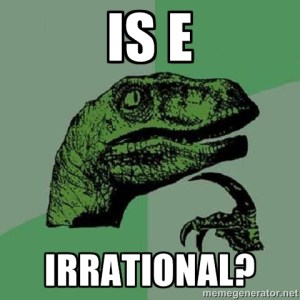
Anyone who has taken high school math is familiar with the constant .
Today we are going to prove that e is in fact irrational! We will go through Joseph Fourier‘s famous proof by contradiction. The maths background we need is to know the power series expansion: . The proof is slightly tricky so stay focussed!
Did you know the constant e is sometimes called Euler’s number?
Learn more about Euler in this wonderful book. Rated 4.9/5 stars, it is one of the highest rated books on the whole of Amazon.
Leonhard Euler was one of the most prolific mathematicians that have ever lived. This book examines the huge scope of mathematical areas explored and developed by Euler, which includes number theory, combinatorics, geometry, complex variables and many more. The information known to Euler over 300 years ago is discussed, and many of his advances are reconstructed. Readers will be left in no doubt about the brilliance and pervasive influence of Euler’s work.
Watch this video for another proof that e is irrational!
This is the #1 Top-Selling book recommended on my website! It includes Mathematical Logic Puzzles from Mensa. Highly recommended for gifted children. Parents, if your child is gifted and you want to stretch his or her learning potential, you may want to buy this book as it is the most complete quiz book on the market. It doesn’t matter whether you are in the Gifted Education Programme, as long as you have an interest in logic puzzles this book is for you.
Maths and Science is essentially about logical thinking, so logic puzzles will directly benefit studies in maths and science. Above all, logic puzzles are meant to be fun and a good and healthy pastime.
Puzzle fans have bought more than 650,000 copies of the Mensa Genius Quiz series—the only books that let readers “match wits with Mensa,” comparing how well they do against members of the famous high-IQ society. Here, in a giant omnibus edition, are four best-selling titles: The Mensa Genius Quiz Books 1 & 2, The Mensa Genius Quiz-A-Day Book, and The Mensa Genius ABC Book. Here are more than 800 fun mindbenders to exercise every part of your brain—word games, trivia, logic riddles, number challenges, visual puzzles—plus tips on how to improve your thinking skills. All the puzzles have been tested by members of American Mensa, Ltd., and include the percentage of Mensa testers who could solve each one, so that you can score yourself against some of the nation’s fittest mental athletes.
Dyscalculia specialist Ronit Bird talks about the difficulties some children have in developing number sense and learning basic arithmetic. She explains some of the common symptoms and indicators for dyscalculia and offers suggstions for how parents can help their children at home. For more information on Dyscalculia please visit http://www.ronitbird.com/
‘The new dyscalculia toolkit has a great introduction that is broken down into manageable chunks, brilliant explanations and interesting reading. The new tables explain what each game entails at the start of the book, making planning and using the toolkit much easier and effective especially if short on time! Very enjoyable to read, and highly recommended’ -Karen Jones, Chartered Educational Psychologist, The Educational Guidance Service
With over 200 activities and 40 games this book is designed to support learners aged 6 to 14 years, who have difficulty with maths and numbers. Ronit Bird provides a clear explanation of dyscalculia, and presents the resources in a straightforward fashion.
This is the clearest and most interesting explanation of the Monty Hall Problem I have ever seen:
What is the Monty Hall Problem? It is basically a game show with 3 doors. Behind one of the doors is a car, while behind the other two doors are two goats. Most people will want to get the car of course.
The player gets a chance to choose one of the doors. Then, the host will open a door which contains a goat. Now, the player is allowed two choices: either stick to his original choice, or switch to the other unopened door. Which choice is better?
Mathematicians call it the Monty Hall Problem, and it is one of the most interesting mathematical brain teasers of recent times. Imagine that you face three doors, behind one of which is a prize. You choose one but do not open it. The host–call him Monty Hall–opens a different door, always choosing one he knows to be empty. Left with two doors, will you do better by sticking with your first choice, or by switching to the other remaining door? In this light-hearted yet ultimately serious book, Jason Rosenhouse explores the history of this fascinating puzzle. Using a minimum of mathematics (and none at all for much of the book), he shows how the problem has fascinated philosophers, psychologists, and many others, and examines the many variations that have appeared over the years. As Rosenhouse demonstrates, the Monty Hall Problem illuminates fundamental mathematical issues and has abiding philosophical implications. Perhaps most important, he writes, the problem opens a window on our cognitive difficulties in reasoning about uncertainty.



 .
.


 , and show that the difference between
  and
and 
 (Rationalizing the numerator)
 ,
, , where
  are odd.
 ,
, .
. is an odd power, whilst for
  the largest power of two dividing it is an even power,
  .
. . Because if
  , it is clear that
  is not going to be
  .
. .
. ,
,  .
. .
.




 . This book is like the “Ten Year Series” of GAT DSA tests, it will be a good and trusted book for Singaporeans who are used to studying using the practice “Ten Year Series” method, which has undoubtedly worked for generations of Singaporeans (including myself). The
 .
.


 is totally free and costs $0.00 if you have the Kindle. Hence, the Kindle is a much better alternative to iPad for students.









 .
.
 . The proof is slightly tricky so stay focussed!
 .
.
 ,
, 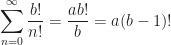

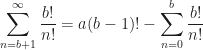
 .
.  is an integer since both
  and
and  are integers and their difference (which is x) will be an integer.
 . For all terms with
  we have the upper estimate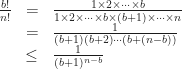
 . Changing the index of summation to
  and using the formula for the infinite geometric progression
  , we obtain:
 . This is a contradiction (since there is no integer strictly between 0 and 1), and so
  must be irrational. (QED)


 Mathtuition88