Hua Luogeng (华罗庚) urged using the daily 10-20 mins intervals while waiting for buses, queues, idle times, make it at least 1 hour a day to read Math books which you carry along with you.
Hua advised on speedy self-learning Math :
1) Choose the Best book on the Topic written by the Master (say, Abstract Algebra), read completely and do the exercises.
2) Read other reference books. Read only those new topics not covered in 1).
If not much new things, return them to bookshelf. This way speed up reading many books in short time.
3) Then read International renown Math Journals.
Beware 90% are copy-cats or rubbish by University lecturers to meet their yearly publishing quota. Only < 10% are masterpieces.
4) Pick one topic to do your independent research.
5) Discuss with friends with better knowledge in the field. This way you can be a Master in…
华罗庚 《数论导引 》序言
Preface on “Introduction to Number Theory” by Hua Luogeng (1950).
“Math evolved from concrete to abstract, the former is the source of inspiration of the latter. One cannot just study the abstract definitions and theorems without going back to the source of concrete examples, which prove valuable applications in Physics and other sciences.”
“Mathematics, in essence, is about the study of Shapes and Numbers. From Shapes give rise to the Geometrical Intuition, from Numbers give the Relationship and Concepts ”
RIO DE JANEIRO (AP) — Every four years, the World Cup forces fans to remember their math lessons.
Working out what each team needs from its final match to finish in the top two of a group and advance to the knockout rounds takes some algebra knowledge and powers of prediction.
After Brazil and Mexico played to a scoreless draw on Tuesday, the calculation became clear: Both teams just need to draw in their next matches to advance with five points in Group A. Croatia, which beat Cameroon Wednesday, would get to six points by beating Mexico. So a draw with Cameroon would still get Brazil through with five points. If Mexico beats Croatia, Brazil would advance even if it loses. But if Mexico and Croatia draw, and Brazil loses — then it gets complicated with tiebreakers.
For many students, calculus can be the most mystifying and frustrating course they will ever take. The Calculus Lifesaver provides students with the essential tools they need not only to learn calculus, but to excel at it.
All of the material in this user-friendly study guide has been proven to get results. The book arose from Adrian Banner’s popular calculus review course at Princeton University, which he developed especially for students who are motivated to earn A’s but get only average grades on exams. The complete course will be available for free on the Web in a series of videotaped lectures. This study guide works as a supplement to any single-variable calculus course or textbook. Coupled with a selection of exercises, the book can also be used as a textbook in its own right. The style is informal, non-intimidating, and even entertaining, without sacrificing comprehensiveness. The author elaborates standard course material with scores of detailed examples that treat the reader to an “inner monologue”–the train of thought students should be following in order to solve the problem–providing the necessary reasoning as well as the solution. The book’s emphasis is on building problem-solving skills. Examples range from easy to difficult and illustrate the in-depth presentation of theory.
The Calculus Lifesaver combines ease of use and readability with the depth of content and mathematical rigor of the best calculus textbooks. It is an indispensable volume for any student seeking to master calculus.
Serves as a companion to any single-variable calculus textbook
Informal, entertaining, and not intimidating
Informative videos that follow the book–a full forty-eight hours of Banner’s Princeton calculus-review course–is available at Adrian Banner lectures
More than 475 examples (ranging from easy to hard) provide step-by-step reasoning
Theorems and methods justified and connections made to actual practice
Difficult topics such as improper integrals and infinite series covered in detail
Tried and tested by students taking freshman calculus
“Only by taking an infinitesimal small unit for observation (the differential of history, that is, the individual tendencies of men) and attaining to the art of integrating them (that is, finding the sum of these infinitesimals) can we hope to arrive at the laws of history.”
Our mission: to make math a fun part of kids’ everyday lives.
We all know it’s wonderful to read bedtime stories to kids, but what about doing math? Many generations of Americans are uncomfortable with math and numbers, and too often we hear the phrase, “I’m just not good at math!” For decades, this attitude has trickled down from parents to their kids, and we now have a culture that finds math dry, intimidating, and just not cool.
Bedtime Math wants to change all that. Inside this book, families will find fun, mischief-making math problems to tackle—math that isn’t just kid-friendly, but actually kid-appealing. With over 100 math riddles on topics from jalapeños and submarines to roller coasters and flamingos, this book bursts with math that looks nothing like school. And with three different levels of challenge (wee ones, little kids, and big kids), there’s something for everyone. We can make numbers fun, and change the world, one Bedtime Math puzzle at a time.
Recently, I saw that many people searched the following terms on Google and landed on my website:
Why is the mid-year exams difficult and many people fail it?
How to be good in additional mathematics.
Let me try to answer the above questions:
Why is the mid-year exams difficult and many people fail it?
Usually teachers will set the mid-year exams and the prelims at a (much) higher level than the actual O Levels. This is the current trend, which may result in many people failing the mid-year exam. The idea may be to motivate students to study harder and avoid being complacent with their results. Do not be demoralized by failing the exam! On the contrary, do reevaluate your study strategies, and strive to improve your knowledge and technique in mathematics.
How to be good in additional mathematics.
The way to be good at additional mathematics is the same as the way to be good at piano, chess, and virtually any human endeavour. The key to improving is practice! Practice with understanding is the key. Would you imagine to be possible to improve in playing the piano without practicing the song? Improve in badminton without training? Definitely not! Similarly, improving in additional mathematics is not possible without practice. This is why the Ten Year Series is such a popular book: it is indeed the most useful book you can buy for studying Additional Mathematics.
Practicing with understanding helps with Application of Concepts, Increase Speed, Accuracy, which all helps in being good at additional mathematics.
In addition, during the practice sessions, try to practice checking for careless mistakes. It will help tremendously in improving your grades. Practicing with understanding means that we need to understand the method used, to the extent that if the teacher sets a slightly different question we are still able to do it. This is the secret to being good at additional maths. 🙂
From a well-known actress, math genius and popular contestant on “Dancing With The Stars”—a groundbreaking guide to mathematics for middle school girls, their parents, and educators
The World Cup is back, and everyone’s got a pick for the winner. Gamblers have been predicting the outcome of sporting contests since the first foot race across the savannah, but in recent years a unique type of statistical analysis has taken over the prediction business. Everyone from Goldman Sachs to Bloomberg to Nate Silver’s FiveThirtyEight has an online World Cup predictor that uses numbers, not hunches, to generate precise probabilities for match outcomes. Goldman Sachs, for instance, gives host nation Brazil a 48.5 percent chance of winning it all; FiveThirtyEight puts the odds at 45 percent while Bloomberg Sports has concluded there’s just a 19.9 percent chance of a triumph for the Seleção.
Where do these numbers come from? All statistical analysis must start with data, and these soccer prediction engines skim results from former matches. A fair bit of judgment is necessary here. Big international soccer tournaments only come around every so often, so the analysts have to choose how to weight team performance in lesser events such as international “friendlies,” where nothing of consequence is at stake. The modelers also have to decide how far back to pull data from—does Brazil’s proud soccer history matter much when its oldest player is 34?—and how to rate the performance of individual players during their time playing for club teams such as Manchester United or Real Madrid.
Wherever the data comes from, the modeler now has to incorporate it into a model. Frequently, the modeler translates the question of “who is going to win?” into the form “how many goals will team X score against team Y?” And for this, she relies [PDF] on a statistical tool called a bivariate Poisson regression.
Read more at: http://blogs.scientificamerican.com/observations/2014/06/11/world-cup-prediction-mathematics-explained/
Statistics and mathematics is useful after all! Only time will tell if the prediction is correct.
This inexpensive paperback provides a brief, simple overview of statistics to help readers gain a better understanding of how statistics work and how to interpret them correctly. Each chapter describes a different statistical technique, ranging from basic concepts like central tendency and describing distributions to more advanced concepts such as t tests, regression, repeated measures ANOVA, and factor analysis. Each chapter begins with a short description of the statistic and when it should be used. This is followed by a more in-depth explanation of how the statistic works. Finally, each chapter ends with an example of the statistic in use, and a sample of how the results of analyses using the statistic might be written up for publication. A glossary of statistical terms and symbols is also included.
It’s puzzling but true that in any group of 23 people there is a 50% chance that two share a birthday. At the World Cup in Brazil there are 32 squads, each of 23 people… so do they demonstrate the truth of this mathematical axiom?
Imagine the scene at the Brazilian football team’s hotel. Hulk and Paulinho are relaxing after another stylish win. Talk turns from tactics to post World Cup plans.
“It’ll be one party after another,” says Hulk, confidently assuming Brazilian victory on home soil. “First the World Cup, then my birthday a couple of weeks later.”
“Your birthday’s in July?” replies Paulinho. “Me too – 25 July, when’s yours?
“No way, exactly the same day!” exclaims Hulk incredulously. “What are the chances of that?”
With 365 days in a regular year, most people’s intuitive answer would probably be: “Pretty small.”
But in this case our intuition is wrong – and the proof of that is known as the birthday paradox.
If you can read this clock, you are without a doubt a geek. Each hour is marked by a simple math problem. Solve it and solve the riddle of time. Matte black powder coated metal. Requires 1 AA battery (not included). 11-1/2″ Diameter.
Suppose a party has six people. Consider any two of them. They might be meeting for the first time—in which case we will call them mutual strangers; or they might have met before—in which case we will call them mutual acquaintances. The theorem says:
In any party of six people either at least three of them are (pairwise) mutual strangers or at least three of them are (pairwise) mutual acquaintances.
It is a video of a girl who once did a math quiz and totally blanked out for the whole quiz. However, it turned out that her teacher did not actually ask for the quiz back, and gave her as much time as she wanted to complete the quiz. Under the relaxed circumstances, she completed the quiz and got a ‘C’. (big improvement from totally blank).
Then, she went to UCLA (very good school in US), and became a mathematics major, and wrote the book that is listed below the video!
Truly inspiring. For some kids, too much pressure may result in Math anxiety and totally blankout, while for other kids a little bit of pressure is needed to ensure that they do take studies seriously. Need to find the perfect balance for each child.
Leonhard Euler published the polynomial x2 − x + 41 which produces prime numbers for all integer values of x from 0 to 40. Obviously, when x is equal to 41, the value cannot be prime anymore since it is divisible by 41. Only 6 numbers have this property, namely 2, 3, 5, 11, 17 and 41.
Anyone who has taken high school math is familiar with the constant .
Today we are going to prove that e is in fact irrational! We will go through Joseph Fourier‘s famous proof by contradiction. The maths background we need is to know the power series expansion: . The proof is slightly tricky so stay focussed!
Did you know the constant e is sometimes called Euler’s number?
Learn more about Euler in this wonderful book. Rated 4.9/5 stars, it is one of the highest rated books on the whole of Amazon.
Leonhard Euler was one of the most prolific mathematicians that have ever lived. This book examines the huge scope of mathematical areas explored and developed by Euler, which includes number theory, combinatorics, geometry, complex variables and many more. The information known to Euler over 300 years ago is discussed, and many of his advances are reconstructed. Readers will be left in no doubt about the brilliance and pervasive influence of Euler’s work.
Watch this video for another proof that e is irrational!
This is the #1 Top-Selling book recommended on my website! It includes Mathematical Logic Puzzles from Mensa. Highly recommended for gifted children. Parents, if your child is gifted and you want to stretch his or her learning potential, you may want to buy this book as it is the most complete quiz book on the market. It doesn’t matter whether you are in the Gifted Education Programme, as long as you have an interest in logic puzzles this book is for you.
Maths and Science is essentially about logical thinking, so logic puzzles will directly benefit studies in maths and science. Above all, logic puzzles are meant to be fun and a good and healthy pastime.
Puzzle fans have bought more than 650,000 copies of the Mensa Genius Quiz series—the only books that let readers “match wits with Mensa,” comparing how well they do against members of the famous high-IQ society. Here, in a giant omnibus edition, are four best-selling titles: The Mensa Genius Quiz Books 1 & 2, The Mensa Genius Quiz-A-Day Book, and The Mensa Genius ABC Book. Here are more than 800 fun mindbenders to exercise every part of your brain—word games, trivia, logic riddles, number challenges, visual puzzles—plus tips on how to improve your thinking skills. All the puzzles have been tested by members of American Mensa, Ltd., and include the percentage of Mensa testers who could solve each one, so that you can score yourself against some of the nation’s fittest mental athletes.
Dyscalculia specialist Ronit Bird talks about the difficulties some children have in developing number sense and learning basic arithmetic. She explains some of the common symptoms and indicators for dyscalculia and offers suggstions for how parents can help their children at home. For more information on Dyscalculia please visit http://www.ronitbird.com/
‘The new dyscalculia toolkit has a great introduction that is broken down into manageable chunks, brilliant explanations and interesting reading. The new tables explain what each game entails at the start of the book, making planning and using the toolkit much easier and effective especially if short on time! Very enjoyable to read, and highly recommended’ -Karen Jones, Chartered Educational Psychologist, The Educational Guidance Service
With over 200 activities and 40 games this book is designed to support learners aged 6 to 14 years, who have difficulty with maths and numbers. Ronit Bird provides a clear explanation of dyscalculia, and presents the resources in a straightforward fashion.
This is the clearest and most interesting explanation of the Monty Hall Problem I have ever seen:
What is the Monty Hall Problem? It is basically a game show with 3 doors. Behind one of the doors is a car, while behind the other two doors are two goats. Most people will want to get the car of course.
The player gets a chance to choose one of the doors. Then, the host will open a door which contains a goat. Now, the player is allowed two choices: either stick to his original choice, or switch to the other unopened door. Which choice is better?
Mathematicians call it the Monty Hall Problem, and it is one of the most interesting mathematical brain teasers of recent times. Imagine that you face three doors, behind one of which is a prize. You choose one but do not open it. The host–call him Monty Hall–opens a different door, always choosing one he knows to be empty. Left with two doors, will you do better by sticking with your first choice, or by switching to the other remaining door? In this light-hearted yet ultimately serious book, Jason Rosenhouse explores the history of this fascinating puzzle. Using a minimum of mathematics (and none at all for much of the book), he shows how the problem has fascinated philosophers, psychologists, and many others, and examines the many variations that have appeared over the years. As Rosenhouse demonstrates, the Monty Hall Problem illuminates fundamental mathematical issues and has abiding philosophical implications. Perhaps most important, he writes, the problem opens a window on our cognitive difficulties in reasoning about uncertainty.
SMU to broaden learning for freshmen Straits Times
Freshmen entering the Singapore Management University (SMU) in August next year will go through a revamped syllabus, in the university’s bid to …
School Library Journal’s Best Education Pick of 2014; Mom’s Choice Awards® Gold Award Recipient; Backed by Harvard and MIT math experts
Written by experienced math teachers and a United States Chess Champion for K-8 supplemental math learning and K-8 math practice
Made in USA: Includes tournament classic chess set, interactive coloring math comic book and colored pencils
Suitable for complete beginners to chess and children at all levels of math ability, from underachievers to gifted students
With contribution from the Harry Potter chess consultant, American International Master Jeremy Silman, creator of the Harry Potter chess scene in Harry Potter and the Sorcerer’s Stone (Warner Bros. Pictures, 2001)
Written for the gifted math student, the new math coach, the teacher in search of problems and materials to challenge exceptional students, or anyone else interested in advanced mathematical problems. Competition Math contains over 700 examples and problems in the areas of Algebra, Counting, Probability, Number Theory, and Geometry. Examples and full solutions present clear concepts and provide helpful tips and tricks. “I wish I had a book like this when I started my competition career.” Four-Time National Champion MATHCOUNTS coach Jeff Boyd “This book is full of juicy questions and ideas that will enable the reader to excel in MATHCOUNTS and AMC competitions. I recommend it to any students who aspire to be great problem solvers.” Former AHSME Committee Chairman Harold Reiter
An ideal book for enlivening undergraduate mathematics…he (Dunham) has Euler dazzling us with cleverness, page after page. — Choice
Mathematician William Dunham has written a superb book about the life and amazing achievements of one of the greatest mathematicians of all time. Unlike earlier writings about Euler, Professor Dunham gives crystal clear accounts of how Euler ingeniously proved his most significant results, and how later experts have stood on Euler’s broad shoulders. Such a book has long been overdue. It will not need to be done again for a long long time. — Martin Gardner
William Dunham has done it again! In “Euler: the Master of Us All”, he has produced a masterful portrait of one of the most fertile mathematicians of all time. With Dunham’s beautiful clarity and wit, we can follow with amazement Euler’s strokes of genius which laid the groundwork for most of the mathematics we have today. — Ron Graham, Chief Scientist, AT&T
William Dunham has written a superb book about the life and amazing achievements of one of the greatest mathematicians of all time. Unlike earlier writings about Euler, Dunham gives crystal clear accounts of how Euler ingeniously proved his most significant results, and how later experts have stood on Euler’s broad shoulders. Such a book has long been overdue. It will not need to be done again for a long, long time.Martin Gardner
Dunham has done it again! In “Euler: The Master of Us All,” he has produced a masterful portrait of one of the most fertile mathematicians of all time. With Dunham’s beautiful clarity and wit, we can follow with amazement Euler’s strokes of genius which laid the groundwork for most of the mathematics we have today. — Ronald Graham, Chief Scientist, AT&T
1. Matrix (M): stretch & twist space
2. Vector (v): a distance along some direction
3. M.v = v’ stretched & twisted by M
Some directions are special:-
a) v stretched but not twisted = Eigenvector;
b) The amount of stretch = constant = Eigenvalue (λ)
Let M the matrix, λ its eigenvalue,
v eigenvector.
By definition: M.v = λ.v
v = I.v (I identity matrix)
M.v = λI.v
(M – λI).v=0
As v is non-zero,
1. Determinant (M- λI) =0 => find λ
2. M.v = λ.v => find v
Note1: Why call Eigenvalue ?
From German: “Die dem Problem eigentuemlichen Werte”
= “The values belonging to this problem”
=> eigenWerte = EigenValue
Eigenvalue also called ‘characteristic values’ or ‘autovalues’.
Eigen in English = Characteristic (but already used for Field).
Note2: Schrödinger Quantum equation’s Eigenvalue = Maximum probability of electron presence at the orbit…
Is your child disinterested in Math? Looking for some fun and educational Math games?
Math Whiz plays like a video game and teaches like electronic flash cards. This portable ELA quizzes kids on addition, subtraction, multiplication and division, AND works as a full-function calculator at the press of a button. Problems are displayed on the LCD screen. Features eight skill levels, as well as lights and sounds for instant feedback. Two AAA batteries required (not included).
New Geometry (新几何) invented by Zhang JingZhong (張景中) derived from 2 basic theorems:
1) Triangles internal angles =180º
2) Triangle Area = ½ base * height
=> derive all geometry
=> trigonometry
=> algebra
(These 3 maths are linked, unlike current syllabus taught separately)
The powerful Area (Δ) Proof Techniques:
1) Common Height:
Line AMB, P outside line
Δ PAM / Δ PBM = AM/BM
2) Common 1 Side (PQ):
Lines AB and PQ meet at M
Δ APQ /Δ BPQ = AM/BM
Chinese students typically outperform U.S. students on international comparisons of mathematics competency. Paradoxically, Chinese teachers receive far less education than U.S. teachers–11 to 12 years of schooling versus 16 to 18 years of schooling.
Studies of U.S. teacher knowledge often document insufficient subject matter knowledge in mathematics. But, they give few examples of the knowledge teachers need to support teaching, particularly the kind of teaching demanded by recent reforms in mathematics education.
This book describes the nature and development of the “profound understanding of fundamental mathematics” that elementary teachers need to become accomplished mathematics teachers, and suggests why such teaching knowledge is much more common in China than the United States, despite the fact that Chinese teachers have less formal education than their U.S. counterparts.
As Chinese we are good at memorizing poems since young (think of reciting 唐诗300首 – no sweat! ).
By chanting in Hokkien I remember complicated trigo formula:)
Cos 3A = 4Cos^3 A – 3.Cos A
($ 1.3 = $4.3 -$3 with $ =Cos in Hokkien sound).
Once I performed this ‘memory power’ in a lecture hall with me called up by the professor to solve a Physics problem. Halfway in the computation we need to open up the “Cos 3A”, the prof asked the whole class to help me, but I wrote the above down quickly on the white board to the awe of the class. Guess what, when the prof saw it, instead of praising me I got a scolding ! He said “Do not keep unnecessary things in your head”. The prof is a French, he did not know I have Hokkien language advantage… haha.
Anyway, joke aside, try to memorize minimum, go by first principle so that you will never ever forget iin whole life (yes, I remember them now after 40 years).
This math teacher is excellent in teaching the students to memorize minimum. His example is integrate secant. Most textbooks use a trick ie multiply (sec + tan) above and below, then by substitution. He goes by first principle, change sec = 1/cos, then try to use 2 common trigo sine and cosine, he multiplies cos above & below to make: sec = cos / 1-sin^2,… then integrate by part…
This is the breathtaking story of Daniel Tammet. A twenty-something with extraordinary mental abilities, Daniel is one of the world’s few savants. He can do calculations to 100 decimal places in his head, and learn a language in a week.
He also meets the world’s most famous savant, the man who inspired Dustin Hoffman’s character in the Oscar winning film ‘Rain Man’.
This documentary follows Daniel as he travels to America to meet the scientists who are convinced he may hold the key to unlocking similar abilities in everyone.
Bestselling author Daniel Tammet (Thinking in Numbers) is virtually unique among people who have severe autistic disorders in that he is capable of living a fully independent life and able to explain what is happening inside his head.
He sees numbers as shapes, colors, and textures, and he can perform extraordinary calculations in his head. He can learn to speak new languages fluently, from scratch, in a week. In 2004, he memorized and recited more than 22,000 digits of pi, setting a record. He has savant syndrome, an extremely rare condition that gives him the most unimaginable mental powers, much like those portrayed by Dustin Hoffman in the film Rain Man.
The irresistibly engaging book that “enlarges one’s wonder at Tammet’s mind and his all-embracing vision of the world as grounded in numbers.” –Oliver Sacks, MD
THINKING IN NUMBERS is the book that Daniel Tammet, mathematical savant and bestselling author, was born to write. In Tammet’s world, numbers are beautiful and mathematics illuminates our lives and minds. Using anecdotes, everyday examples, and ruminations on history, literature, and more, Tammet allows us to share his unique insights and delight in the way numbers, fractions, and equations underpin all our lives.
Think of the 4th solution, if any, for this
“Monkey & Coconuts” Problem.
It was created by Nobel Physicist Prof Paul Dirac, which he told another Chinese Nobel Physicist Prof Li ZhengDao (李政道)。
Pro Li wanted to test the Chinese young students in the first China Gifted Children University of 13 year-old kids, none of them could solve this problem (proved they are not so gifted after all for unknown problems :)
The first 2 solutions were solved by Prof Paul Richard Halmos, the 3rd solved by myself using the Singapore Modelling Math (a modified version of Arithmetics from traditional Math taught in 1970s Chinese Secondary 1 “中学数学” in Singapore).










 .
.
 . The proof is slightly tricky so stay focussed!
 .
.
 ,
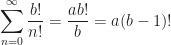
, 

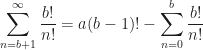
 .
.  is an integer since both
  and
and  are integers and their difference (which is x) will be an integer.
 . For all terms with
  we have the upper estimate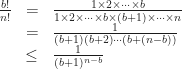
 . Changing the index of summation to
  and using the formula for the infinite geometric progression
  , we obtain:
 . This is a contradiction (since there is no integer strictly between 0 and 1), and so
  must be irrational. (QED)


 is
is 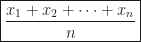 .
.![\boxed{\sqrt[n]{x_1\cdot x_2 \cdots x_n}}](https://s0.wp.com/latex.php?latex=%5Cboxed%7B%5Csqrt%5Bn%5D%7Bx_1%5Ccdot+x_2+%5Ccdots+x_n%7D%7D&bg=ffffff&fg=1a1a1a&s=0&c=20201002) .
.![\displaystyle\boxed{\frac{x_1+x_2+\cdots+ x_n}{n}\geq\sqrt[n]{x_1\cdot x_2 \cdots x_n}}](https://s0.wp.com/latex.php?latex=%5Cdisplaystyle%5Cboxed%7B%5Cfrac%7Bx_1%2Bx_2%2B%5Ccdots%2B+x_n%7D%7Bn%7D%5Cgeq%5Csqrt%5Bn%5D%7Bx_1%5Ccdot+x_2+%5Ccdots+x_n%7D%7D&bg=ffffff&fg=1a1a1a&s=0&c=20201002) , and equality holds if and only if
, and equality holds if and only if  .
.
 . Can we know what is the largest possible product
  ?
?![\displaystyle \frac{a+b+c}{3}\geq \sqrt[3]{abc}](https://s0.wp.com/latex.php?latex=%5Cdisplaystyle+%5Cfrac%7Ba%2Bb%2Bc%7D%7B3%7D%5Cgeq+%5Csqrt%5B3%5D%7Babc%7D&bg=ffffff&fg=1a1a1a&s=0&c=20201002) .
.![\displaystyle 10\geq \sqrt[3]{abc}](https://s0.wp.com/latex.php?latex=%5Cdisplaystyle+10%5Cgeq+%5Csqrt%5B3%5D%7Babc%7D&bg=ffffff&fg=1a1a1a&s=0&c=20201002)
 .
. , i.e.
  . Hence, the largest possible product
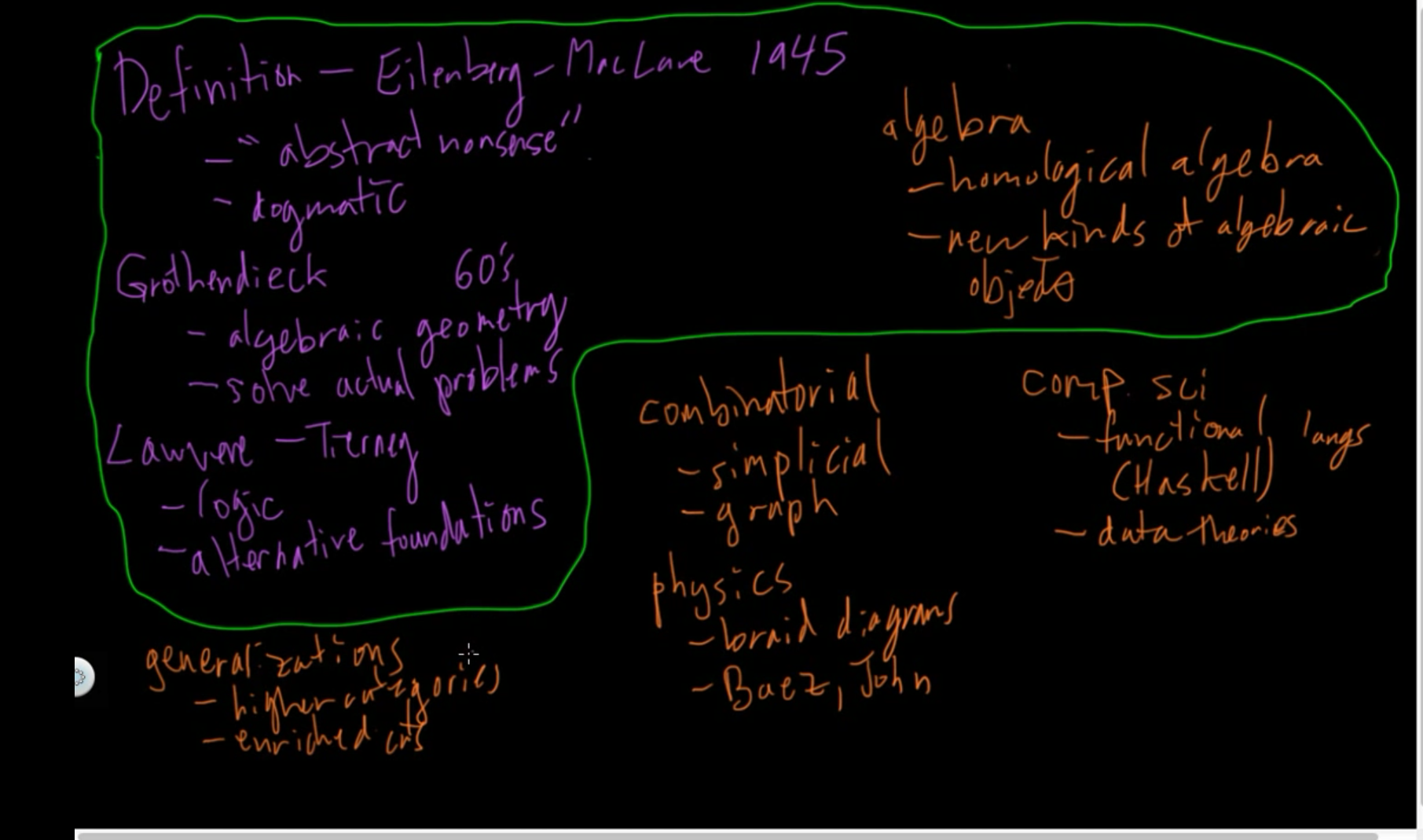


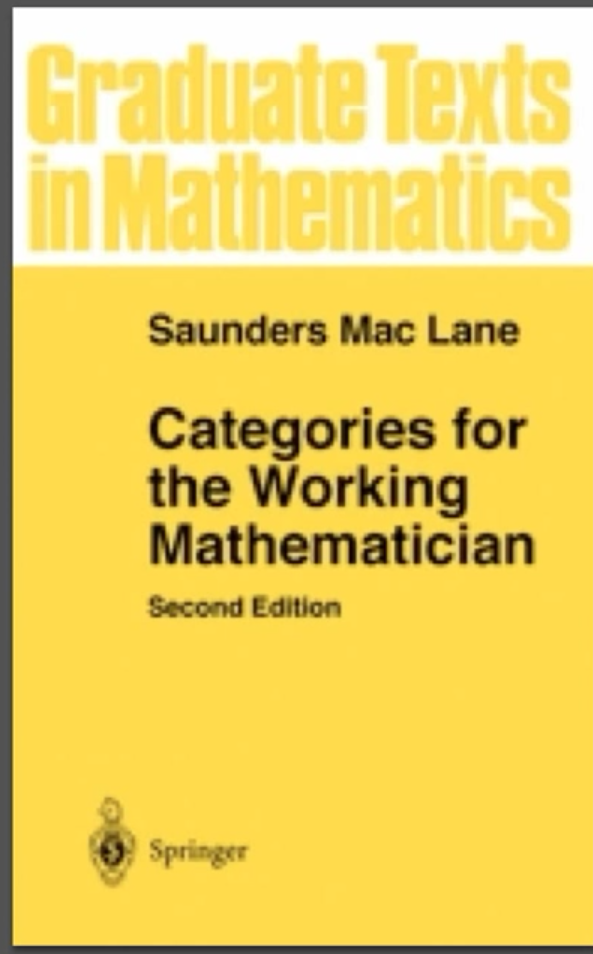



 .
.