

Month: October 2015
Calculus World Cup
Just to share this news:
The National Taiwan University is holding the first ever Calculus World Cup (CWC) in February 2016. It’s the first time students from global top universities will be able to compete over Calculus in e-sports. The competition will be held on PaGamO – a social online gaming platform for education. The top 12 teams will be invited to Taiwan for the final round, and great prizes with a value of over $70,000 await the finalists!
Official website: http://cwc.pagamo.com.tw
Registration: https://pagamo.com.tw/calculus_cup
Facebook: https://www.facebook.com/PaGamo.glo
Contractible space as Codomain implies any two maps Homotopic
Click here for: Free Personality Quiz
Recall that a space Y is contractible if the identity map 


Proof: Let Y be a contractible space and let X be any space. 

![F: Y\times [0,1]\to Y](https://s0.wp.com/latex.php?latex=F%3A+Y%5Ctimes+%5B0%2C1%5D%5Cto+Y&bg=ffffff&fg=1a1a1a&s=0&c=20201002)



Let ![G:X\times [0,1]\to Y](https://s0.wp.com/latex.php?latex=G%3AX%5Ctimes+%5B0%2C1%5D%5Cto+Y&bg=ffffff&fg=1a1a1a&s=0&c=20201002)

When 




Therefore
Motivational Video of the Weekend
Just chanced upon this video on YouTube, really made a lot of sense and is very uplifting. Dream big, and don’t set any limits on yourself and what you can do.
Some other books by Nick:


Outer measure of Symmetric Difference Zero implies Measurability
Free Career Quiz: Please help to do!
Just came across this neat beginner’s Lebesgue Theory question. As students of analysis know, just to show a set is measurable is no easy feat. The usual way is to use the Caratheodory definition, where a set E is said to be measurable if for any set A, 
Question: Suppose E is a Lebesgue measurable set and let F be any subset of 

The short way to do this is to note that 


Next comes the critical observation: 


Thus 
Interesting indeed!
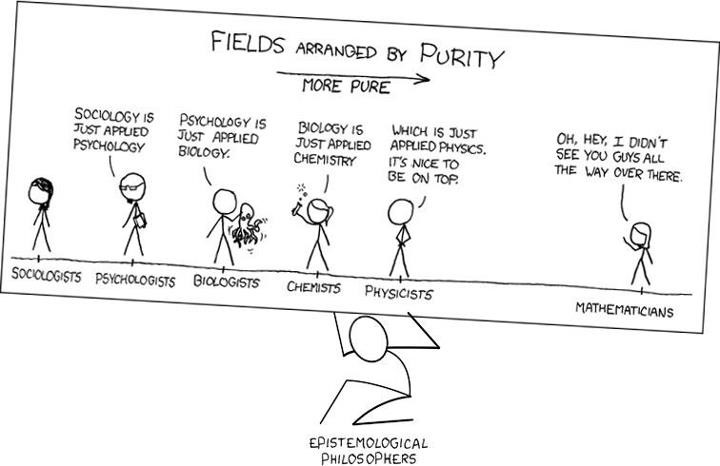
Math Joke (Fields Arranged by Purity)
Click here for free Career Quiz: https://career-test.com/s/sgamb?reid=210
I came across this joke on another blog: http://phdlife.warwick.ac.uk/
Quite true! A Math student will understand this at the university level and beyond, where Math has no more numbers and is full of symbols and jargon! Although even the most abstract Math has applications, the applications are only discovered years later, hence Pure Math is indeed one of the most pure subjects around.
Fail H2 Maths Promos or Prelims
For H2 (or H1) Maths students who are getting low marks for internal school exams, do not be overly discouraged. The current trend for schools is to set very tough internal exams (i.e. Promos and Prelims) to spur students to study hard, and (hopefully) ace the eventual final A level exams. If you look at the actual A Level Ten Year Series, you will find that the standard of questions is much easier than Prelim level.
A rule of thumb is that the eventual A level grade is 2 grades above the internal school grade. E.g., in internal exams a student getting D for H2 Maths is most likely equivalent to a B in the final A levels, provided the student continues to study hard.
Jumping from E to A grade has been done by many seniors. Do not give up, continue to believe in yourself, and keep calm while constantly revising.
Do check out this highly condensed H2 Math Notes (comes with free exam papers). The key thing to do before exams is to remember Math formulas (many students forget the AP/GP formulae for instance, and lost some free marks). Constant practice and exposure to questions is also a must.
Here are some sources of true stories:
1) https://www.facebook.com/RJConfessions/posts/220752441406251
To all the J1 and J2 kids who are struggling with math, let me share with you my personal experience. I took H2 math by the way, and refused to drop to H1 when people started dropping.
J1 CT 1: Math: U
J1 promos: Math: S
J2 CT1: Math S
J2 CT2: Math S
J2 Prelims: Math E
A levels: Math A.The moral of the story is simple: It can be done. My math teacher used to motivate us with stories of seniors who have also flunked their way through math in the 2 years and clinched an A at the end. I didnt really believed it could happen, but I guess I chose to believe it anyways.
2) https://www.reddit.com/r/singapore/comments/3nkq4t/jc_prelims_alevels_correlation/
H2 Math: E A
H2 Chem: D B
H2 Econs: D D
H1 Physics: U A
H1 GP: B A
The grades on the left were prelims and right were my actual results. Of course it depends on your school and how hard they set the prelim papers
Fermat’s Two Squares Theorem (Gaussian Integers approach)
Today we will discuss Fermat’s Two Squares Theorem using the approach of Gaussian Integers, the set of numbers of the form a+bi, where a, b are integers. This theorem is also called Fermat’s Christmas Theorem, presumably because it is proven during Christmas.
Have you ever wondered why 

Theorem: An odd prime p is the sum of two squares, i.e. 

(=>) The forward direction is the easier one. Note that 


(<=) Conversely, assume
First we prove a lemma called Lagrange’s Lemma: If 
Proof: By Wilson’s Theorem, 
![(4k)!\equiv [(2k)!]^2\equiv -1\pmod p](https://s0.wp.com/latex.php?latex=%284k%29%21%5Cequiv+%5B%282k%29%21%5D%5E2%5Cequiv+-1%5Cpmod+p&bg=ffffff&fg=1a1a1a&s=0&c=20201002)



![[(2k)!]^2+1\equiv 0\pmod p](https://s0.wp.com/latex.php?latex=%5B%282k%29%21%5D%5E2%2B1%5Cequiv+0%5Cpmod+p&bg=ffffff&fg=1a1a1a&s=0&c=20201002)


Then 





Let 
This proof is pretty amazing, and shows the connection between number theory and ring theory.
Holder’s Inequality Trick
Click here: Free Career Quiz
Holder’s Inequality is a very useful inequality in Functional Analysis, hence many results can be proved by applying Holder’s Inequality.
Suppose that 


Proof: Assume 


Then,

Since 


Therefore, 
Abstract Algebra 抽象代数 (石生明教授)

这位石教授的”抽象代数”很棒, 一来是他退休前的最后一课, 二来他总结为何老师教不好, 学生上完课好像听到3个大头”鬼” (群group, 环ring, 域field), 但没实际摸过。
他的第一和第二课很好, 与众不同的花时间讲 “动机”: Motivation – Why study Abstract Algebra ?
抽象代数01: Motivation
抽象代数02: 复数扩域 C
$latex
x^{2} +1=0
$
扩域 (Extended Field)数学思维 = 人解决问题的思维
例: 国内不可行的问题, 跳出国门, 扩大到世界领域, 就找到可行的方法。
马云的Alibaba国内不看好, 跑去美国上市, 让他马上成为中国首富的亿万富翁。
张益唐: 速食店员竟然是数学天才
【台湾壹週刊】
速食店员竟然是数学天才
张益唐 (1955 – ) : 北京大学 – 美国数学博士。因为执着数学理论的真理, 得罪美国大学台湾籍论文教授, 毕业后找不到大学教职, 在朋友的 Subway 速食店做会计8年, 潜心业余思考世界数学大难题: Twin Primes Gap, 终于攻破。
他的下一个目标是Riemann Hypothesis, 困扰数学家百年的难题: “素数 (Prime numbers)的分布”都集中在 Zeta function complex plane的 实轴(real = 1/2) 上。大数学家David Hilbert说如果五百年后复活, 第一件事会急着问 “Riemann Hypothesis” 证明了吗?
James H. Simons, the mathematician who cracked Wallstreet
James H. Simons, the Jewish mathematician who made $14 billion using Math modelling for Hedge Fund.
[Watch from 31:00 mins to 35 mins]. He told the Nobel Physicist Frank Yang (杨振宁) that the Math “Gauge Theory on Fiber Bundles(纤维丛)” which Yang was developing already existed 30 yrs ago in “Differential Geometry” by SS Chern (陈省身) from Berkeley.
“James H. Simons: Mathematics, Common Sense and Good Luck”
[Video 54:00 mins]
After being billionaire, at old age Simons went back to Math in 2004 to take refuge of sadness of the loss of a son.
He beat the German mathematicians in Differential Co-homology (Topology).
5 Guiding Principles of Success:
1) Don’t run with the pack – be original
2) Choose wonderful partner(s) in research, business…
3) Guided by Beauty
4) Don’t give up !
5) Have good luck.
Jim Simons | TED Talks
“A Rare Interview with the Mathematician Who…
View original post 3 more words
Decoding The Universe Great Math Mystery –
Simons Foundation
New 2015 Full Documentary #WorldMathsDay” –
Math Mystery Tour (BBC)
245A, Notes 4: Modes of convergence

If one has a sequence $latex {x_1, x_2, x_3, ldots in {bf R}}&fg=000000$ of real numbers $latex {x_n}&fg=000000$, it is unambiguous what it means for that sequence to converge to a limit $latex {x in {bf R}}&fg=000000$: it means that for every $latex {epsilon > 0}&fg=000000$, there exists an $latex {N}&fg=000000$ such that $latex {|x_n-x| leq epsilon}&fg=000000$ for all $latex {n > N}&fg=000000$. Similarly for a sequence $latex {z_1, z_2, z_3, ldots in {bf C}}&fg=000000$ of complex numbers $latex {z_n}&fg=000000$ converging to a limit $latex {z in {bf C}}&fg=000000$.
More generally, if one has a sequence $latex {v_1, v_2, v_3, ldots}&fg=000000$ of $latex {d}&fg=000000$-dimensional vectors $latex {v_n}&fg=000000$ in a real vector space $latex {{bf R}^d}&fg=000000$ or complex vector space $latex {{bf C}^d}&fg=000000$, it is also unambiguous what it means for that sequence to converge to a limit $latex {v in {bf R}^d}&fg=000000$ or $latex {v in {bf C}^d}&fg=000000$; it means…
View original post 6,079 more words
mu is countably additive if and only if it satisfies the Axiom of Continuity
Free Career Personality Quiz (Hundreds of people have tried it!)
Let 


(=>) Assume 


Suppose 


(<=) Assume 

Then 


Therefore

Measure that is absolutely continuous with respect to mu
Interesting Career Personality Test (Free): https://mathtuition88.com/free-career-quiz/
Let 
![f:X\to [0,\infty]](https://s0.wp.com/latex.php?latex=f%3AX%5Cto+%5B0%2C%5Cinfty%5D&bg=ffffff&fg=1a1a1a&s=0&c=20201002)
![\lambda:\mathcal{M}\to[0,\infty]](https://s0.wp.com/latex.php?latex=%5Clambda%3A%5Cmathcal%7BM%7D%5Cto%5B0%2C%5Cinfty%5D&bg=ffffff&fg=1a1a1a&s=0&c=20201002)


(a) Show that 
(b) Show that for any measurable function ![g:X\to[0,\infty]](https://s0.wp.com/latex.php?latex=g%3AX%5Cto%5B0%2C%5Cinfty%5D&bg=ffffff&fg=1a1a1a&s=0&c=20201002)

![[0,\infty]](https://s0.wp.com/latex.php?latex=%5B0%2C%5Cinfty%5D&bg=ffffff&fg=1a1a1a&s=0&c=20201002)
Proof: For part (a), we routinely check that


If 


(b) We note that when 


Hence the equation holds. By linearity, we can see that the equation holds for all simple functions. Let 


Note that 


Calculus: Difficult Integration
Question on @Quora:

In the French Classe Préparatoire 1st year “Mathematiques Supérieures”, we wanted to test our admired Math Prof whom we think was a “super know-all” mathematician. We asked him the above question. He immediately scolded us in the unique French mathematics rigor:
“L’intégration n’a pas de sense!
Quelle-est la domaine de définition?”
(The integration has no meaning! What is the domain of definition ?)
He was right! Under the British Math education, we lack the rigor of mathematics. We are skillful in applying many tricks to integrate whatever functions, but it is meaningless without specifying the domain (interval) in which the function is defined ! Bear in mind Integration of a function f (curve) is to calculate the Area under the curve f within an interval (or Domain, D). If f is not defined in D, then it is meaningless to integrate f because there won’t be…
View original post 3 more words
Visual Math

99% of my friends get it wrong, except a 13-year-old boy who can ‘see’ it.
Wrong answer : 25
Answer (below):
Try before you scroll down.
.
.
.
.
.
.
.
.
.
.
.
.
.
.
.
.
.
.
.
.
.
.
.
.
.
.
.
.
.
.
.
.
.
.
.
.
.
.
..
.
.
.
.
.
.
.
.
.
.
.
.
.
.
.
.
.
.
.
.
.
.
.
.
.
.
.
.
.
.
.
.
.
.
.
.
.
..
.
.
.
.
.
.
.
.
.
.
.
.
.
.
.
.
.
.
..
.
.
.
.
.
.
.
.
.
.
.
.
.
.
.
.
.
.
.
.
.
.
.
.
.
.
.
.
View original post 58 more words
Singapore PSLE 2015 Math

PSLE is “Primary School Leaving Exams” for 11~12 year-old children sitting at the end of 6-year primary education. The result is used as selection criteria to enter the secondary school of choice.

Hint: Without seeing or feeling the weight of the $1 coin, you still can guess the answer. This is the essence of “Singapore Math” — using “Guesstimation“.
Answer (below):
Try before you scroll down.
If wrong answer, please go back to primary school 🙂
.
.
.
.
.
.
.
.
.
.
.
.
.
.
.
.
.
.
.
.
.
.
.
.
.
.
.
.
.
.
.
.
.
.
.
.
.
.
..
.
.
.
.
.
.
.
.
.
.
.
.
.
.
.
.
.
.
.
.
.
.
.
.
.
.
.
.
.
.
.
.
View original post 118 more words
f integrable implies set where f is infinite is measure zero
Let 
(a) Show that the set 
(b) Show that the set 
We may use Markov’s inequality, which turns out to be very useful in this question.
Proof: (a) Let 


Then
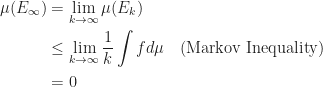
Therefore, 
(b) Let 

Therefore, 
Once again, do check out the Free Career Quiz!
Markov Inequality + PSLE One Dollar Question
Many people have feedback to me that the Career Quiz Personality Test is surprisingly accurate. E.g. people with peaceful personality ended up as Harmonizer, those who are business-minded ended up as Entrepreneur. Do give it a try at https://mathtuition88.com/free-career-quiz/. Please help to do, thanks a lot!
Also, some recent news regarding PSLE Maths is that a certain question involving weight of $1 coins appeared. It is very interesting, and really tests the common sense and logical thinking skills of kids.
Markov inequality is a useful inequality that gives a rough upper bound of the measure of a set in terms of an integral. The precise statement is: Let 


The proof is rather neat and short. Let 
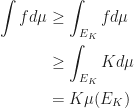
Therefore, 
Free Career Personality Quiz (Please help to do!)

URL: https://career-test.com/s/sgamb?reid=210
The results of this Personality Test is quite surprisingly accurate, do give it a try to see if you are a Careerist, Entrepreneur, Harmonizer, Idealist, Hunter, Internationalist or Leader?
Do try out this Free Career Guidance Personality Test at https://career-test.com/s/sgamb?reid=210 while it is still available!
Benefits of doing the (Free) Career Test:
- Get familiar with the top companies in Singapore
- There are seven distinct career types based on career preferences, goals and personality. Get to know yours! (My result: Harmonizer)
- Take part in the annual Universum survey and win prizes!
Necessary and Sufficient Condition for Integrability in finite measure space
URL: https://career-test.com/s/sgamb?reid=210
The results of this Personality Test is quite surprisingly accurate, do give it a try to see if you are a Careerist, Entrepreneur, Harmonizer, Idealist, Hunter, Internationalist or Leader?
Do try out this Free Career Guidance Personality Test at https://career-test.com/s/sgamb?reid=210 while it is still available!
Benefits of doing the (Free) Career Test:
- Get familiar with the top companies in Singapore
- There are seven distinct career types based on career preferences, goals and personality. Get to know yours! (My result: Harmonizer)
- Take part in the annual Universum survey and win prizes!
Let 


This proof has a cute solution that is potentially very short. We will elaborate more on this proof. Other approaches include using Markov’s Inequality / Chebyshev’s inequality.
Proof: Consider 
Note that for each 


Integrating with respect to 

(=>) Now assuming f is integrable, i.e. 


(<=) Conversely, if 

We are done.
Note: For a more rigorous proof of 
Let 


εδ Confusion in Limit & Continuity
1. Basic:
|y|= 0 or > 0 for all y
2. Limit: $latex displaystylelim_{xto a}f(x) = L$ ; x≠a
|x-a|≠0 and always >0
hence
$latex displaystylelim_{xto a}f(x) = L$
$latex iff $
For all ε >0, there exists δ >0 such that
$latex boxed{0<|x-a|<delta}$
$latex implies |f(x)-L|< epsilon$
3. Continuity: f(x) continuous at x=a
Case x=a: |x-a|=0
=> |f(a)-f(a)|= 0 <ε (automatically)
So by default we can remove (x=a) case.
Also from 1) it is understood: |x-a|>0
Hence suffice to write only:
$latex |x-a|<delta$
f(x) is continuous at point x = a
$latex iff $
For all ε >0, there exists δ >0 such that
$latex boxed{|x-a|<delta}$
$latex implies |f(x)-f(a)|< epsilon$
Limit: ε-δ Analysis
For x->0, find limit L of
f(x)= (x³+5x)/x
1) guess L:
f(x)= x(x²+5)/x= x²+5
=> L= 5 when x->0
2) epsilon-delta Proof: find δ in function of ε such that:
|f(x)-5| < ε
|(x²+5)-5| <ε
|x|< √ε
Choose δ=√ε
For all ε, there is δ=√ε such that |x-0|< δ =>|f(x)-5|< ε
If ε=0.5, δ=√0.5=0.25
Newtonian Calculus not rigorous !
Why Newton’s Calculus Not Rigorous?
$latex f(x ) = frac {x(x^2+ 5)} { x}$ …[1]
cancel x (≠0)from upper and below => $latex f(x )=x^2 +5 $
$latex mathop {lim }limits_{x to 0} f(x) =x^2 +5= L=5 $ …[2]
In [1]: we assume x ≠ 0, so cancel upper & lower x
But In [2]: assume x=0 to get L=5
[1] (x ≠ 0) contradicts with [2] (x =…)
This is the weakness of Newtonian Calculus, made rigorous later by Cauchy’s ε-δ ‘Analysis’.
View original post 1 more word
Rigorous Calculus: ε-δ Analysis
Rigorous Analysis epsilon-delta (ε-δ)
Cauchy gave epsilon-delta the rigor to Analysis, Weierstrass ‘arithmatized‘ it to become the standard language of modern analysis.
1) Limit was first defined by Cauchy in “Analyse Algébrique” (1821)
2) Cauchy repeatedly used ‘Limit’ in the book Chapter 3 “Résumé des Leçons sur le Calcul infinitésimal” (1823) for ‘derivative’ of f as the limit of
$latex frac{f(x+i)-f(x)}{i}$ when i ->…
3) He introduced ε-δ in Chapter 7 to prove ‘Mean Value Theorem‘: Denote by (ε , δ) 2 small numbers, such that 0< i ≤ δ , and for all x between (x+i) and x,
f ‘(x)- ε < $latex frac{f(x+i)-f(x)}{i}$ < f'(x)+ ε
4) These ε-δ Cauchy’s proof method became the standard definition of Limit of Function in Analysis.
5) They are notorious for causing widespread discomfort among future math students. In fact, when it…
View original post 92 more words
German Terms
German before WW2 was the World’center of Science (Einstein etc) and Modern Math (Gauss, Klein, Hilbert etc), that’s why we inherit some letter symbols eg. Z (Zahl, Integer) …
1. The electron orbits: first 4 orbits from atom
s, p, d, f
s = Sharfe (Sharp)
p =prinzipielle (principle)
d = diffusiv (diffuse)
f= fundamentale (fundamental)
2. eigen (special)
eigenvector
eigenvalue
eigenfunction
eigenfrequency
3. Math:
e = neutral element (I=Identity)
K=Korps (Fields)
Z = Zahl (Integer)
4. Physics:
F-center = Color Center (F=Farbe=color)
Umklapp process = reverse process
Aufbau principle (quantum chemistry) = Building (bau) Up (Auf) principle
“Well-defined”( “定义良好”)
万门大学抽象代数7:
“定义良好” (Well-defined)

集合: Set (S)
等价关系: Equivalence Relation (~)
商集 : Quotient Set (S/~)
映射 : Mapping (f)
Prove : f is well-defined ?
抽象代数 Abstract Algebra
北京航空航天大学:数学大观 第2讲 数学抽象 无招胜有招”
1. Euclid 5条公理 (Axioms) => 全部 几何 (Geometry)
2. Galois 运算律 (Laws of Operations) => 抽象代数 (Abstract Algebra)


Abstract Math discomforts
Abstract Algebra is the killer Math subject for university-bound Singaporean A-level students educated in the British GCE syllabus. Except a fews who are born with the gift, most of them get lost in the first year of university. Yet Abstract Algebra is important math “language” of science and technology : IT, Chemistry, Physics, Advanced Math… if you want to describe a complex structure (quantum physics, crystallography), algorithm (search), method (encryption), you use this precise and concise language “Abstract Algebra” (such as Group, Vector Space, …). Countries like China and USA havevmade Abstract Algebra a compulsory subject for 1st year undergrads in Science, Engineering, IT students beside Math majors …
3 Wide Discomforts For Abstract Math Students
1. Group : Coset, Quotient group, morphism…
2. Limit ε-δ: Cauchy
3. Bourbaki Sets: Function f: A-> B is subset of Cartesian Product AxB.
Students should learn from their historical genesis rather than the formal abstract definitions
<a href=”http://http://en.wikipedia.org/wiki/Wu_Wenjun“>Wu Wenjun (吳文俊) on Learning Abstract Math
“…It is more important to understand the ‘Principles’ 原理 behind, à la Physics (eg. Newton’s 3 Laws of Motion), and not blinded by its abstract ‘Axioms’ 公理.”
Prof I.Herstein http://en.wikipedia.org/wiki/Israel_Nathan_Herstein
“… Seeing Abstract Math for the first time, there seems to be a common feeling of being adrift, of not having something solid to hang on to.”
“Do not be discouraged. Stick with it! The best road is to look at examples. Try to understand what a given concept says, most importantly, look at particular, concrete examples of the concept.”
“
View original post 47 more words
Probability: Dice
Throw 2 dies, the sum of points i, j and probability P (i+j):
2(1/36) 3(1/18) 4(1/12) 5(1/9) 6(5/36) 7(1/6)
8(5/36) 9(1/9) 10(1/12) 11(1/18) 12(1/36)
=> Bell curve symmetric both sides, peak 1/6 (sum 7).
Probability by 2 Great Friends
Today Probability is a “money” Math, used in Actuarial Science, Derivatives (Options) in Black-Scholes Formula.
In the beginning it was “A Priori” Probability by Pascal (1623-1662), then Fermat (1601-1665) invented today’s “A Posteriori” Probability.
“A Priori” assumes every thing is naturally “like that”: eg. Each coin has 1/2 chance for head, 1/2 for tail. Each dice has 1/6 equal chance for each face (1-6).
“A Posteriori” by Fermat, then later the exile Protestant French mathematician De Moivre (who discovered Normal Distribution), is based on observation of “already happened” statistic data.
Cardano (1501-1576) born 150 years earlier than Pascal and Fermat, himself a weird genius in Medicine, Math and an addictive gambler, found the rule of + and x for chances (he did not know the name ‘Probability’ then ):
Addition + Rule: throw a dice, chance to get a “1 and 2” faces:
1/6 +1/6 = 2/6 = 1/3
View original post 193 more words
Quotations
1. Issac Newton: Hypotheses non fingo (I frame no hypotheses)
2. Gauss: Pauca sed matura (Few but ripe)
3. Descartes: Bene vixit qui bene latuit (he has lived well who has hidden well.)
Galois Theory Simplified
Galois discovered Quintic Equation has no radical (expressed with +,-,*,/, nth root) solutions, but his new Math “Group Theory” also explains:
$latex x^{5} – 1 = 0 text { has radical solution}$
but
$latex x^{5} -x -1 = 0 text{ has no radical solution}$
Why ?
$latex x^{5} – 1 = 0 text { has 5 solutions: } displaystyle x = e^{frac{ikpi}{5}}$
$latex text{where k } in {0,1,2,3,4}$
which can be expressed in
$latex x= cos frac{kpi}{5} + i.sin frac{kpi}{5} $
hence in {+,-,*,/, √ }
ie
$latex x_0 = e^{frac{i.0pi}{5}}=1$
$latex x_1 = e^{frac{ipi}{5}}$
$latex x_2 = e^{frac{2ipi}{5}}$
$latex x_3 = e^{frac{3ipi}{5}}$
$latex x_4 = e^{frac{4ipi}{5}}$
$latex x_5 = e^{frac{5ipi}{5}}=1=x_0$
=>
$latex text {Permutation of solutions }{x_j} text { forms a Cyclic Group: }
{x_0,x_1,x_2,x_3,x_4} $
Theorem: All Cyclic Groups are Solvable
=>
$latex x^{5} -1 = 0 text { has radical solutions.}$
However,
$latex x^{5} -x -1 =…
View original post 41 more words
Interesting Analysis Question (Measure Theory)
Do try out this Free Career Guidance Personality Test at https://career-test.com/s/sgamb?reid=210 while it is still available!
Benefits of doing the (Free) Career Test:
- Get familiar with the top companies in Singapore
- There are seven distinct career types based on career preferences, goals and personality. Get to know yours! (My result: Harmonizer)
- Take part in the annual Universum survey and win prizes!
Let 


Proof: For 


Then 
Let 


Note that 

Therefore 
We can choose 

Then

We are done!
The Arrival of New Era of “Knowledge Sharing”
2010 Steve Jobs declared Post-PC era has arrived with iPhone/iPad, little did he know that he had accidentally also brought the Post-TV & Post-Publication (books, Newspapers) on iPhone/iPad platform for YouTube, ebooks.
Today, you don’t have to sit on sofa at scheduled time to watch TV programmes, buy/loan/housekeep books, subscribe to political-biased newspapers.
The advent of Web 2.0 and Internet of Things (IoT) will open up the new era of freedom of “Knowledge Sharing”:
1. Instead of reading 100 books to understand a complex economic/politics/history/science topic, you can go YouTube to attend free seminars by TED, MOOC (Cousera, Khan Academy…), or follow YouTube series by book expert reviewers (罗辑思维, 袁腾飞, 百家论坛, 宋鸿兵货币战争)…
2. You can ask any questions on “Quora”. Anybody with the expertise will volunteer to teach you.
3. You can keep your reading notes in text, video and hyperlink to the vast internet resources (wikipedia, ..) and shared…
View original post 9 more words
A solvable group that has a composition series is necessarily finite
Do try out this Free Career Guidance Personality Test at https://career-test.com/s/sgamb?reid=210 while it is still available!
Benefits of doing the (Free) Career Test:
- Get familiar with the top companies in Singapore
- There are seven distinct career types based on career preferences, goals and personality. Get to know yours! (My result: Harmonizer)
- Take part in the annual Universum survey and win prizes!
Let G be a solvable group. We prove that if G has a composition series, then G has to be finite. (Note that this is sort of a converse to “A finite group has a composition series.”)
Let 


Since 

We can prove that 

If 
Key step: 

Since 


Conjugacy Classes of non-abelian group of order p^3
Do try out this Free Career Guidance Personality Test at https://career-test.com/s/sgamb?reid=210 while it is still available!
Benefits of doing the (Free) Career Test:
- Get familiar with the top companies in Singapore
- There are seven distinct career types based on career preferences, goals and personality. Get to know yours! (My result: Harmonizer)
- Take part in the annual Universum survey and win prizes!
Let p be a prime, and let G be a non-abelian group of order 
First we prove a lemma: Z(G) has order p.
Proof: We know that since G is a non-trivial p-group, then 


Case 1) 
Case 2) 


Case 3) 
Next, let 


Then by the Class Equation, we have ![\displaystyle p^3=|G|=\sum_{i=1}^n [G:C_G(x_i)]](https://s0.wp.com/latex.php?latex=%5Cdisplaystyle+p%5E3%3D%7CG%7C%3D%5Csum_%7Bi%3D1%7D%5En+%5BG%3AC_G%28x_i%29%5D&bg=ffffff&fg=1a1a1a&s=0&c=20201002)
If 

![[G:C_G(x_i)]=1](https://s0.wp.com/latex.php?latex=%5BG%3AC_G%28x_i%29%5D%3D1&bg=ffffff&fg=1a1a1a&s=0&c=20201002)
If 


![[G:C_G(x_i)]=p^3/p^2=p](https://s0.wp.com/latex.php?latex=%5BG%3AC_G%28x_i%29%5D%3Dp%5E3%2Fp%5E2%3Dp&bg=ffffff&fg=1a1a1a&s=0&c=20201002)
By the Class Equation, we thus have 

 Mathtuition88