Information about Mathematics Department Courses (Nanyang JC)

Source: http://nanyangjc.org/index.php/staff/organisation-chart/mathematics-department/

H1 Mathematics

H1 Mathematics provides a foundation in mathematics for students who intend to enrol in university courses such as business, economics and social sciences. The syllabus aims to develop mathematical thinking and problem solving skills in students. A major focus of the syllabus will be the understanding and application of basic concepts and techniques of statistics. This will equip students with the skills to analyse and interpret data, and to make informed decisions. The use of graphic calculator is expected.

H2 Mathematics

H2 Mathematics prepares students adequately for university courses including mathematics, physics and engineering, where more mathematics content is required. The syllabus aims to develop mathematical thinking and problem solving skills in students. Students will learn to analyse, formulate and solve different types of problems. They will also learn to work with data and perform statistical analyses. The use of graphic calculator is expected.

This subject assumes the knowledge of O-Level Additional Mathematics.

Continue reading at http://nanyangjc.org/index.php/staff/organisation-chart/mathematics-department/

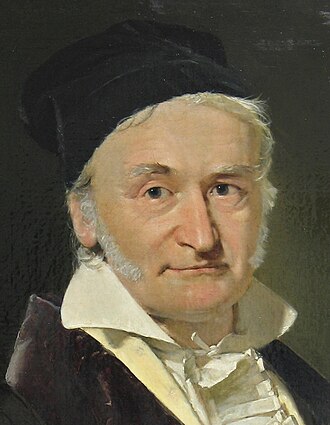
Carl Friedrich Gauss

Source: http://en.wikipedia.org/wiki/Carl_Friedrich_Gauss

Johann Carl Friedrich Gauss (/ɡs/; German: Gauß, pronounced [ɡaʊs] ( listen); Latin: Carolus Fridericus Gauss) (30 April 1777 – 23 February 1855) was a German mathematician and physical scientist who contributed significantly to many fields, including number theory, algebra, statistics, analysis, differential geometry, geodesy, geophysics, electrostatics, astronomy and optics.

Sometimes referred to as the Princeps mathematicorum[1] (Latin, “the Prince of Mathematicians” or “the foremost of mathematicians”) and “greatest mathematician since antiquity“, Gauss had a remarkable influence in many fields of mathematics and science and is ranked as one of history’s most influential mathematicians.[2]

Carl Friedrich Gauss.jpg

Continue reading at http://en.wikipedia.org/wiki/Carl_Friedrich_Gauss

Number Theory Notes – Art of Problem Solving

Source: http://www.artofproblemsolving.com/Resources/Papers/SatoNT.pdf

Excellent notes on Olympiad Number Theory!

Preface:

This set of notes on number theory was originally written in 1995 for students

at the IMO level. It covers the basic background material that an IMO

student should be familiar with. This text is meant to be a reference, and

not a replacement but rather a supplement to a number theory textbook;

several are given at the back. Proofs are given when appropriate, or when

they illustrate some insight or important idea. The problems are culled from

various sources, many from actual contests and olympiads, and in general

are very difficult. The author welcomes any corrections or suggestions.


Advice to Students

Source: http://www.math.union.edu/~dpvc/courses/advice/welcome.html

Advice to Students:

Over the years, I have collected some information that I hope will help  students, particularly beginning math students, to improve their study  and learning habits.  An important part of what you learn at college is  how to learn, so that you can carry that on for the rest of your  life.  Find out what works for you and what doesn’t.

These observations are centered around first-year calculus courses, so not  everything may apply to you, but even more advanced students can benefit  from some of them.

As you develop your own learning habits, please think carefully about the  following topics:

Continue reading at http://www.math.union.edu/~dpvc/courses/advice/welcome.html

Student Advice: Comments on Perseverance

Source: http://www.math.union.edu/~dpvc/courses/advice/perseverance.html

Comments on Perseverance:

One source of confusion for students when they reach college and begin to  do college-level mathematics is this:  in high school, it is usually pretty  apparent what formula or technique needs to be applied, as much of the  material in high school is computational or procedural.  In college,  however, mathematics becomes more conceptual, and it is much harder to  know what to do when you first start a problem.  As a consequence of this,  many students give up on a problem too early.

If you don’t immediately know how to attack a problem, this doesn’t mean you  are stupid,


If you already know how to do it, it’s not  really a problem.

or that you don’t understand what’s going on; that’s just how  real problems work.  After all, if you already know how to do it, it’s not  really a problem, is it?  You should expect to be confused at first.   There’s no way you can know ahead of time how to solve every problem that  you will face in life.  You’re only hope, and therefore your goal as a  student, is to get experience with working through hard problems on your  own.  That way, you will continue to be able to do so once you leave  college.

One of the first steps in this is to realize that not knowing how, and the  frustration that accompanies that, is part of the process.  Then you have  to start to figure out the questions that you can ask to help you to break  down the problem, so that you can figure out how it really works.  What’s  really important in it?  What is the central concept?  What roles do the  definitions play?  How is this related to other things I know?

Continue reading at http://www.math.union.edu/~dpvc/courses/advice/perseverance.html

Does one have to be a genius to do maths?

Source: http://terrytao.wordpress.com/career-advice/does-one-have-to-be-a-genius-to-do-maths/

Better beware of notions like genius and inspiration; they are a sort of magic wand and should be used sparingly by anybody who wants to see things clearly. (José Ortega y Gasset, “Notes on the novel”)

Does one have to be a genius to do mathematics?

The answer is an emphatic NO.  In order to make good and useful contributions to mathematics, one does need to work hard, learn one’s field well, learn other fields and tools, ask questions, talk to other mathematicians, and think about the “big picture”.  And yes, a reasonable amount of intelligence, patience, and maturity is also required.  But one does not need some sort of magic “genius gene” that spontaneously generates ex nihilo deep insights, unexpected solutions to problems, or other supernatural abilities.

Continue reading at http://terrytao.wordpress.com/career-advice/does-one-have-to-be-a-genius-to-do-maths/

There’s more to mathematics than grades and exams and methods

Source: http://terrytao.wordpress.com/career-advice/there%E2%80%99s-more-to-mathematics-than-grades-and-exams-and-methods/

When you have mastered numbers, you will in fact no longer be reading numbers, any more than you read words when reading books. You will be reading meanings. (W. E. B. Du Bois)

When learning mathematics as an undergraduate student, there is often a heavy emphasis on grade averages, and on exams which often emphasize memorisation of techniques and theory than on actual conceptual understanding, or on either intellectual or intuitive thought. There are good reasons for this; there is a certain amount of theory and technique that must be practiced before one can really get anywhere in mathematics (much as there is a certain amount of drill required before one can play a musical instrument well). It doesn’t matter how much innate mathematical talent and intuition you have; if you are unable to, say, compute a multidimensional integral, manipulate matrix equations, understand abstract definitions, or correctly set up a proof by induction, then it is unlikely that you will be able to work effectively with higher mathematics.

However, as you transition to graduate school you will see that there is a higher level of learning (and more importantly, doing) mathematics, which requires more of your intellectual faculties than merely the ability to memorise and study, or to copy an existing argument or worked example. This often necessitates that one discards (or at least revises) many undergraduate study habits; there is a much greater need for self-motivated study and experimentation to advance your own understanding, than to simply focus on artificial benchmarks such as examinations.

Continue reading at http://terrytao.wordpress.com/career-advice/there%E2%80%99s-more-to-mathematics-than-grades-and-exams-and-methods/

The Key To Career Success

Source: http://www.huffingtonpost.com/brooks-mccorcle/the-key-to-career-success_b_3511254.html

“The essence of mathematics is not to make simple things complicated, but to make complicated things simple.” ~ Stan Gudder, Mathematician

Math, at its core, is about solving problems — about breaking a challenge into its basic elements to be investigated, tested, manipulated and understood. Math can give you the tools to find a winning formula. And, it can create the path to your career.

Math is the key to unlocking possibilities. It frees you up to think creatively about solutions and to focus your attention on what truly matters at the end of the day.

Finally, math empowers you to be a better leader and to remain open to new ideas. It sparks creativity and learning. It gives you confidence and conviction to say “YES!” when you’re asked to take on a new challenge. It helps you attract and energize the people you hire to help you.  In a marketplace that’s moving so fast, it’s important to constantly listen, learn, analyze and formulate new ways to serve customers.  Math provides the foundation for doing just that.

Want to succeed? It’s simple … math.

Mathematics is an art

Taken from http://www.maa.org/devlin/lockhartslament.pdf

The first thing to understand is that mathematics is an art. The difference between math and the other arts, such as music and painting, is that our culture does not recognize it as such. Everyone understands that poets, painters, and musicians create works of art, and are expressing themselves in word, image, and sound. In fact, our society is rather generous when it comes to creative expression; architects, chefs, and even television directors are considered to be working artists. So why not mathematicians? Part of the problem is that nobody has the faintest idea what it is that mathematicians do. The common perception seems to be that mathematicians are somehow connected with science— perhaps they help the scientists with their formulas, or feed big numbers into computers for some reason or other. There is no question that if the world had to be divided into the “poetic dreamers” and the “rational thinkers” most people would place mathematicians in the latter category. Nevertheless, the fact is that there is nothing as dreamy and poetic, nothing as radical, subversive, and psychedelic, as mathematics. It is every bit as mind blowing as cosmology or physics (mathematicians conceived of black holes long before astronomers actually found any), and allows more freedom of expression than poetry, art, or music (which depend heavily on properties of the physical universe). Mathematics is the purest of the arts, as well as the most misunderstood. So let me try to explain what mathematics is, and what mathematicians do. I can hardly do better than to begin with G.H. Hardy’s excellent description: A mathematician, like a painter or poet, is a maker of patterns. If his patterns are more permanent than theirs, it is because they are made with ideas.

.

Tangent Secant Theorem (A Maths Tuition)

Nice Proof of Tangent Secant Theorem:

http://www.proofwiki.org/wiki/Tangent_Secant_Theorem

Note: The term “Square of Sum less Square” means a^2-b^2=(a+b)(a-b)

The proof of the Tangent Secant Theorem, though not tested, is very interesting. In particular, the proof of the first case (DA passes through center) should be accessible to stronger students.

The illustration for theorem about tangent and...
The illustration for theorem about tangent and secant (Photo credit: Wikipedia)

O Level E Maths Tuition: Statistics Question

statistics-olevel-tuition-graph

Solution:

From the graph,

Median = 50th percentile = $22,000 (approximately)

The mean is lower than $22000 because from the graph, there is a large number of people with income less than $22000, and fewer with income more than $22000. (From the wording of the question, calculation does not seem necessary)

Hence, the median is higher.

The mean is a better measure of central tendency, as it is a better representative of the gross annual income of the people. This is because more people have an income closer to the mean, rather than the median.

积少成多: How can doing at least one Maths question per day help you improve! (Maths Tuition Revision Strategy)

We all know the saying “an apple a day keeps the doctor away“. Many essential activities, like eating, exercising, sleeping, needs to be done on a daily basis.

Mathematics is no different!

Here is a surprising fact of how much students can achieve if they do at least one Maths question per day. (the question must be substantial and worth at least 5 marks)

This study plan is based on the concept of 积少成多, or “Many little things add up“. Also, this method prevents students from getting rusty in older topics, or totally forgetting the earlier topics. Also, this method makes use of the fact that the human brain learns during sleep, so if you do mathematics everyday, you are letting your brain learn during sleep everyday.

Let’s take the example of Additional Mathematics.

Exam is on 24/25 October 2013.

Let’s say the student starts the “One Question per day” Strategy on 20 May 2013

Days till exam: 157 days  (22 weeks or 5 months, 4 days)

So, 157 days = 157 questions (or more!)

Each paper in Ten Year Series has around 25 questions (Paper 1 & Paper 2), so 157 questions translates to more than 6 years worth of practice papers! And all that is achieved by just doing at least one Maths question per day!

A sample daily revision plan can look like this. (I create a customized revision plan for each of my students, based on their weaknesses).

Suggested daily revision (Additional Mathematics):

Topic

Monday

Algebra

Tuesday

Geometry and Trigonometry

Wednesday

Calculus

Thursday

Algebra

Friday

Geometry and Trigonometry

Saturday

Calculus

Sunday

Geometry and Trigonometry

(Calculus means anything that involves differentiation, integration)

(Geometry and Trigonometry means anything that involves diagrams, sin, cos, tan, etc. )

(Algebra is everything else, eg. Polynomials, Indices, Partial Fractions)

By following this method, using a TYS, the student can cover all topics, up to 6 years worth of papers!

Usually, students may accumulate a lot of questions if they are stuck. This is where a tutor comes in. The tutor can go through all the questions during the tuition time. This method makes full use of the tuition time, and is highly efficient.

Personally, I used this method of studying and found it very effective. This method is suitable for disciplined students who are aiming to improve, whether from fail to pass or from B/C to A. The earlier you start the better, for this strategy. For students really aiming for A, you can modify this strategy to do at least 2 to 3 Maths questions per day. From experience, my best students practice Maths everyday. Practicing Ten Year Series (TYS) is the best, as everyone knows that school prelims/exams often copy TYS questions exactly, or just modify them a bit.

The role of the parent is to remind the child to practice maths everyday. From experience, my best students usually have proactive parents who pay close attention to their child’s revision, and play an active role in their child’s education.

This study strategy is very flexible, you can modify it based on your own situation. But the most important thing is, practice Maths everyday! (For Maths, practicing is twice as important as studying notes.) And fully understand each question you practice, not just memorizing the answer. Also, doing a TYS question twice (or more) is perfectly acceptable, it helps to reinforce your technique for answering that question.

If you truly follow this strategy, and practice Maths everyday, you will definitely improve!

Mathematics homework

Hardwork \times 100% = Success! (^_^)

There is no substitute for hard work.” – Thomas Edison

Exam Time Management and Speed in Maths (Primary, O Level, A Level)

Time management is a common problem for Maths, along with careless mistakes.

For Exam Time management, here are some useful tips:
1) If stuck at a question for some time, it is better to skip it and go back to it later, rather than spend too much time on it. I recall for PSLE one year, there was a question about adding 1+2+…+100 early in the paper, and some children unfortunately spent a lot of time adding it manually.
2) Use a exam half-time strategy. At the half-time mark of the exam, one should finish at least half of the paper. If no, then need to speed up and skip hard questions if necessary.

To improve speed:
1) Practice. It is really important to practice as practice increases speed and accuracy.
2) Learn the faster methods for each type of question. For example, guess and check is considered a slower method, as most questions are designed to make guess and check difficult.

Sincerely hope it helps.
For dealing with careless mistakes (more for O and A levels), you may read my post on How to avoid Careless Mistakes for O-Level / A-Level Maths?

English: an animated clock
English: an animated clock (Photo credit: Wikipedia)

How to avoid Careless Mistakes for Maths?

Many parents have feedback to me that their child often makes careless mistakes in Maths, at all levels, from Primary, Secondary, to JC Level. I truly empathize with them, as it often leads to marks being lost unnecessarily. Not to mention, it is discouraging for the child.

Also, making careless mistakes is most common in the subject of mathematics, it is rare to hear of students making careless mistakes in say, History or English.
Fortunately, it is possible to prevent careless mistakes for mathematics, or at least reduce the rates of careless mistakes.

From experience, the ways to prevent careless mistakes for mathematics can be classified into 3 categories, Common Sense, Psychological, and Math Tips.

Common Sense

  1. Firstly, write as neatly as possible. Often, students write their “5” like “6”. Mathematics in Singapore is highly computational in nature, such errors may lead to loss of marks. Also, for Algebra, it is recommended that students write l (for length) in a cursive manner, like \ell to prevent confusion with 1. Also, in Complex Numbers in H2 Math, write z with a line in the middle, like Ƶ, to avoid confusion with 2.
  2. Leave some time for checking. This is easier said than done, as speed requires practice. But leaving some time, at least 5-10 minutes to check the entire paper is a good strategy. It can spot obvious errors, like leaving out an entire question.

Psychological

  1. Look at the number of marks. If the question is 5 marks, and your solution is very short, something may be wrong. Also if the question is just 1 mark, and it took a long time to solve it, that may ring a bell.
  2. See if the final answer is a “nice number“. For questions that are about whole numbers, like number of apples, the answer should clearly be a whole number. At higher levels, especially with questions that require answers in 3 significant figures, the number may not be so nice though. However, from experience, some questions even in A Levels, like vectors where one is suppose to solve for a constant \lambda, it turns out that the constant is a “nice number”.

Mathematical Tips

Mathematical Tips are harder to apply, unlike the above which are straightforward. Usually students will have to be taught and guided by a teacher or tutor.

  1. Substitute back the final answer into the equations. For example, when solving simultaneous equations like x+y=3, x+2y=4, after getting the solution x=2, y=1, you should substitute back into the original two equations to check it.
  2. Substitute in certain values. For example, after finding the partial fraction \displaystyle\frac{1}{x^2-1} = \frac{1}{2 (x-1)}-\frac{1}{2 (x+1)}, you should substitute back a certain value for x, like x=2. Then check if both the left-hand-side and right-hand-side gives the same answer. (LHS=1/3, RHS=1/2-1/6=1/3) This usually gives a very high chance that you are correct.

Thanks for reading this long article! Hope it helps! 🙂

I will add more tips in the future.

Recommended Maths Book:

Math Doesn’t Suck: How to Survive Middle School Math Without Losing Your Mind or Breaking a Nail

This book is a New York Times Bestseller by actress Danica McKellar, who is also an internationally recognized mathematician and advocate for math education. It should be available in the library. Hope it can inspire all to like Maths!