5 Reasons Why Science Is Essential in Our Daily Lives

5 Reasons Why Science Is Essential in Our Daily Lives

Dive into the wonders of science and discover how it impacts our daily lives. Uncover the magic of science and see the world in a whole new light.

[Pexel]

Ever stopped to think about why your smartphone works the way it does or how we manage to cure once-deadly diseases? It’s all thanks to science, the unsung hero of our daily lives. Here in Singapore, where we’re always pushing the envelope in education and technology, understanding science isn’t just for the Einsteins and the Curies of the world—it’s crucial for all of us. Let’s dive into five rock-solid reasons why science is super important in our everyday lives.

1. Innovation at Your Fingertips

[Pexel]

First up, innovation. Science is the driving force behind every new gadget and breakthrough we see today. Remember the last time you used GPS to navigate around town or Googled something? Science made that possible. It’s all about getting curious, asking questions, and experimenting to find answers—skills that are golden in today’s world and, yes, even in your science tuition class.

2. Keeping Us Healthy and Happy

[Pexel]

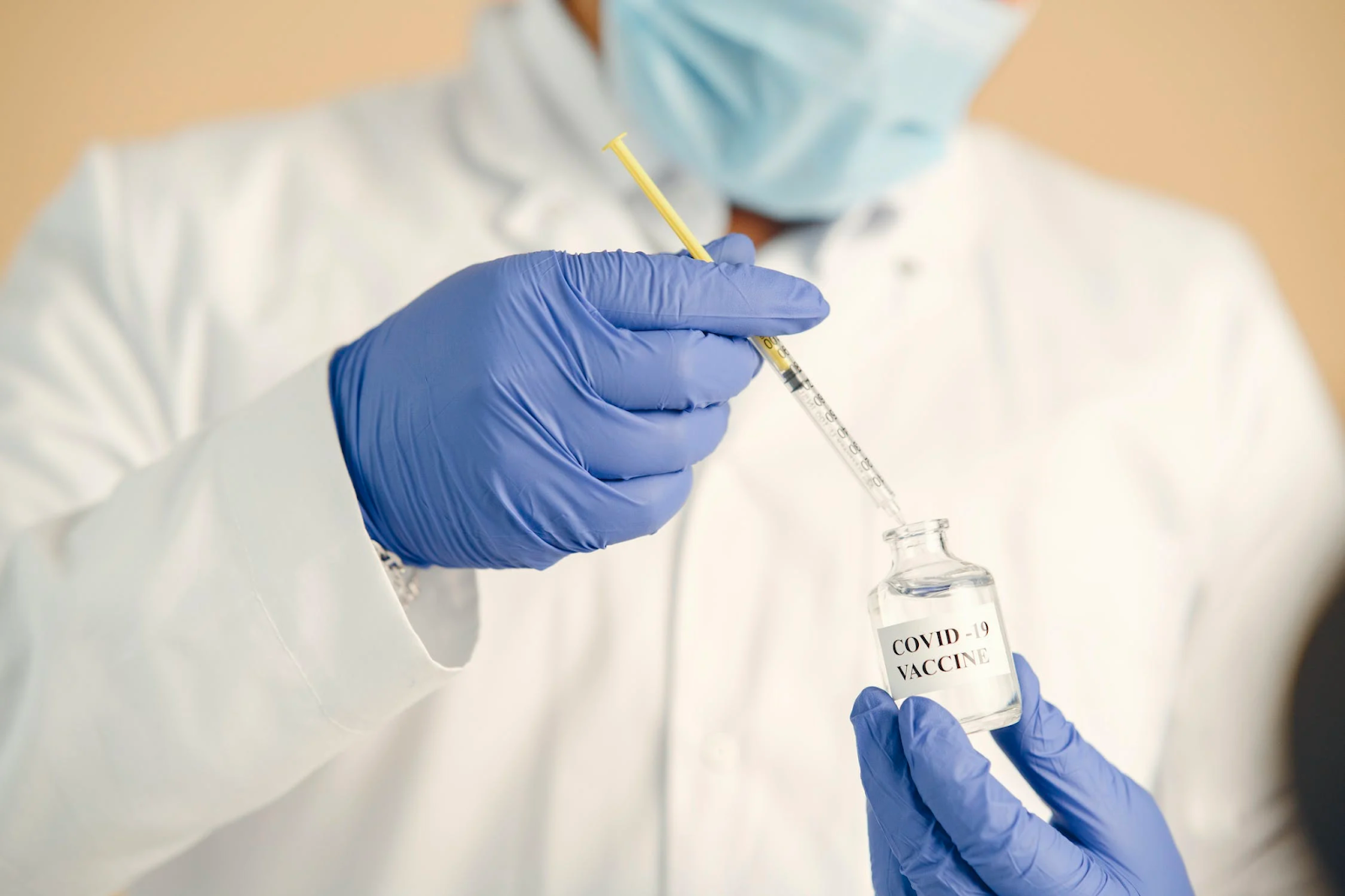
Next, let’s talk health. Thanks to science, diseases that once wiped out entire populations are now a thing of the past. Vaccines, antibiotics, and even the fitness tracker on your wrist—all these health wonders are the fruits of scientific labour. It’s pretty cool to think that by understanding the science behind staying healthy, we’re actually living longer and better lives.

3. Green Is the New Black

[Pexel]

Life science also teaches us how to care for our planet. From recycling tips to understanding climate change, science provides the know-how to make smarter choices for a greener Earth. It’s like having a roadmap for sustainability, showing us how to reduce, reuse, and recycle our way to a healthier planet.

4. The Universe Is Your Playground

[Pexel]

Ever looked up at the night sky and wondered about the stars? Science is your ticket to exploring the universe. It’s not just about telescopes, solar systems and space missions; it’s about understanding the fundamental laws that govern everything. Through learning about astronomy, either in classrooms, at science tuition centres, or through your own curiosity, you connect with the vast mysteries of the universe, opening your mind to the endless possibilities and wonders that science unveils.

5. Tech-Savvy and Future-Ready

[Pexel]

Lastly, science is the backbone of all the tech wizardry we can’t live without. From streaming your favourite show to keeping cities running smoothly, science is there, making life easier and more fun. By getting a grip on science basics, you’re setting yourself up to thrive in a world where technology is king.

Wrapping It Up

So, there you have it—science is a big deal; it doesn’t just stay in the best science tuition lesson, nor is it just for the lab coats. It’s about curiosity, innovation, health, sustainability, and understanding the cosmos. Here in Singapore, we’re all about embracing science, whether through top-notch education, cutting-edge research, or just everyday problem-solving. And hey, whether you’re acing your classes, attending science group tuition, or just keen on learning something new, remember: science isn’t just a subject; it’s the future. Let’s dive in and see where science can take us next!

How is Math Used in Computer Science

Discover the powerful alliance between mathematics and computer science. Explore how math fuels algorithmic design, data analysis, cryptography, artificial intelligence, and more. Unveil the practical applications of math in the digital landscape and witness its transformative impact on computer science.

The Synergy of Mathematics and Computer Science: Unveiling the Role of Math in the Digital Age

In the digital age, the marriage between mathematics and computer science is stronger than ever. Mathematics serves as the language of computation, providing the foundation for the development of algorithms, data analysis techniques, cryptography, artificial intelligence, and numerous other applications. In this post, we dive into the symbiotic relationship between math and computer science, unveiling the practical applications of mathematics in the digital landscape and its transformative impact on the field.

Algorithm Design: The Power of Mathematical Logic

Mathematics plays a fundamental role in algorithm design, the backbone of computer science. Concepts such as logic, set theory, and graph theory enable computer scientists to create efficient algorithms for problem-solving. Mathematical logic ensures algorithms are sound, complete, and able to provide correct solutions. By leveraging mathematical principles, computer scientists can devise algorithms that optimize resource usage, minimize complexity, and handle large-scale data efficiently.

    Mathematical logic provides a rigorous framework for reasoning about the correctness and efficiency of algorithms. Notions such as truth tables, propositional logic, and predicate logic help computer scientists define algorithmic conditions and make logical deductions. Set theory and graph theory provide the basis for data structures and algorithms, allowing for efficient storage, retrieval, and manipulation of data. By utilizing mathematical logic, computer scientists can ensure the reliability and efficiency of algorithms, leading to optimal problem-solving in various domains.

    Data Analysis: Unveiling Patterns with Statistical Mathematics

    In the era of big data, mathematics provides the tools for extracting insights and patterns from vast datasets. Statistical mathematics equips computer scientists with techniques such as regression analysis, hypothesis testing, and data visualization. These methods enable the identification of trends, correlations, and anomalies in data, facilitating informed decision-making and the development of data-driven solutions. Mathematical foundations in probability theory and linear algebra enhance data analysis techniques like machine learning, enabling accurate predictions and pattern recognition.

      Statistical mathematics provides the means to analyze and interpret data effectively. Techniques such as regression analysis enable computer scientists to model relationships between variables and make predictions based on observed data. Hypothesis testing allows for rigorous evaluation of the significance of results and the validation of assumptions. Mathematical concepts like probability distributions and statistical inference provide the theoretical underpinnings for data analysis, allowing computer scientists to draw meaningful conclusions from data and make informed decisions.

      Additionally, linear algebra plays a vital role in data analysis and machine learning. Techniques such as dimensionality reduction, eigenvalue decomposition, and singular value decomposition enable computer scientists to extract relevant features from high-dimensional datasets, reduce noise, and uncover latent patterns. By leveraging the power of mathematical tools, computer scientists can transform raw data into actionable insights, driving advancements in fields such as marketing, finance, healthcare, and more.

      Cryptography: Securing Data with Number Theory

      Cryptography, the art of secure communication, relies heavily on mathematical principles, particularly number theory. Mathematical concepts such as prime numbers, modular arithmetic, and discrete logarithms form the basis of encryption algorithms and digital signatures. By utilizing mathematical structures and properties, computer scientists can safeguard sensitive information, protect digital transactions, and ensure the confidentiality and integrity of data in a digital world.

        Number theory provides the foundation for many cryptographic algorithms. Prime numbers, for example, serve as the building blocks for public key cryptography systems like the RSA algorithm. Modular arithmetic enables the efficient computation of cryptographic functions, while discrete logarithms form the basis for elliptic curve cryptography, a widely used cryptographic technique. By leveraging the mathematical properties of these concepts, computer scientists can design secure encryption schemes, digital signatures, and secure communication protocols, ensuring the privacy and authenticity of digital information.

        Cryptography plays a critical role in various domains, including e-commerce, financial transactions, secure communication, and data protection. It allows for secure transmission of sensitive information, secure storage of data, and authentication of users in digital systems. The application of mathematical principles in cryptography ensures that data remains confidential, protected from unauthorized access, and resistant to attacks by malicious entities.

        Artificial Intelligence: Mathematical Models of Intelligence

        Artificial intelligence (AI) thrives on mathematical models that mimic human intelligence. Machine learning algorithms, such as neural networks and support vector machines, leverage mathematical frameworks to learn patterns and make predictions. Probability theory, optimization techniques, and linear algebra are integral to developing and training AI models. Mathematics enables the creation of intelligent systems that can recognize speech, analyze images, process natural language, and make autonomous decisions.

          Probability theory plays a crucial role in machine learning algorithms, enabling the quantification of uncertainty and the estimation of probabilities. Bayesian networks utilize probability theory to model complex relationships between variables and perform probabilistic inference. Optimization techniques, such as gradient descent, employ calculus and linear algebra to adjust model parameters and optimize performance. Linear algebra facilitates the manipulation of matrices and vectors, which are essential for tasks like image recognition, natural language processing, and recommendation systems.

          Mathematics provides the theoretical foundations for AI algorithms and enables computer scientists to create intelligent systems that can learn, adapt, and make informed decisions based on data. By harnessing mathematical models of intelligence, computer scientists can build machine learning models capable of solving complex problems, analyzing vast amounts of data, and automating tasks in various domains.

          Computational Science: Simulating Real-World Phenomena

          Mathematics is indispensable in computational science, where computer simulations are used to model and predict real-world phenomena. Differential equations, numerical analysis, and mathematical modeling facilitate accurate simulations of physical, biological, and engineering systems. By converting real-world processes into mathematical equations, computer scientists can simulate and analyze complex systems, aiding scientific research, engineering design, and decision-making processes.

            Differential equations provide a mathematical framework for describing dynamic systems, from the behavior of planets to the spread of diseases. Numerical analysis techniques, such as finite element methods and Monte Carlo simulations, enable the approximation and solution of complex equations, allowing for realistic simulations. Mathematical modeling allows computer scientists to represent real-world systems using mathematical abstractions, facilitating the study of system behavior and the prediction of outcomes.

            Computational science, empowered by mathematics, enables computer scientists to simulate and analyze complex systems that would otherwise be challenging or impossible to study directly. From simulating the behavior of weather patterns to modeling the spread of epidemics, computational science enhances our understanding of the natural world, aids in engineering design, and supports decision-making processes in numerous fields.

            Conclusion

            Mathematics is an essential pillar of computer science, permeating every facet of the field. From algorithm design to data analysis, cryptography, artificial intelligence, and computational science, mathematics plays a central role in shaping the digital landscape. By harnessing the power of mathematical principles, computer scientists can develop efficient algorithms, extract insights from data, ensure data security, build intelligent systems, and simulate real-world phenomena. As technology continues to advance, the synergy between mathematics and computer science will drive transformative innovations, paving the way for a future empowered by intelligent algorithms and data-driven solutions.

            Best Laptop for STEM Majors

            🔥💻 Unleash Your Potential with the Best Laptop for STEM College Students and Grad Students! 💻🔥

            Attention, ambitious minds and future STEM trailblazers! Are you ready to take your academic journey to the next level? Look no further, for we have discovered a technological marvel that will revolutionize your pursuit of knowledge! Introducing the best laptops for STEM majors – your gateway to unparalleled success in the realm of science, technology, engineering, and mathematics!

            🚀 Powerhouse Performance, Unrivaled Speed 🚀

            Don’t settle for mediocre laptops when you can have a powerhouse that effortlessly handles the demands of complex STEM programs and projects! Let’s explore five exceptional laptop examples that are perfect for STEM college students and grad students:

            Dell XPS 15

            The Dell XPS 15 boasts a stunning InfinityEdge display with 4K resolution, providing exceptional clarity for STEM majors. Whether you’re a STEM college student or a grad student conducting advanced research, this laptop’s power and performance will excel in coding, data analysis, and design. With its powerful processors, dedicated graphics card, and ample memory, the Dell XPS 15 is the perfect companion for demanding STEM tasks.

            Dell XPS 15 9520 (Latest Model) Intel 12th Gen Core i7

            Apple MacBook Pro

            Renowned for its reliability and performance, the Apple MacBook Pro is a favorite among STEM college students and grad students alike. Its brilliant Retina display showcases your work in exquisite detail, while its powerful processors and fast storage ensure seamless performance in intensive STEM applications. Whether you’re analyzing complex data sets, conducting simulations, or coding advanced algorithms, the MacBook Pro delivers the computing power you need.

            Apple 2023 MacBook Pro Laptop M2 Pro chip with 10‑core CPU and 16‑core GPU

            HP Spectre x360

            The HP Spectre x360 is a versatile 2-in-1 laptop that caters to the needs of STEM majors. With its touch-enabled display and powerful processors, it allows you to sketch diagrams, take notes, and interact with scientific simulations directly on the screen. Its exceptional performance, long battery life, and portability make it an ideal choice for STEM majors on the go.

            HP Spectre X360 2-in-1 Touchscreen Laptop

            Lenovo ThinkPad X1 Carbon

            Built for durability and reliability, the Lenovo ThinkPad X1 Carbon is a trusted companion for STEM college students. Its robust construction, comfortable keyboard, and stunning display make it an ideal choice for long hours of coding, research, and data analysis. With powerful processors, ample storage, and memory options, this laptop delivers exceptional performance for demanding STEM tasks.

            Lenovo ThinkPad X1 Carbon 9th Gen 9 Intel Core i7-1165G7

            ASUS ROG Zephyrus G14

            The ASUS ROG Zephyrus G14 combines exceptional gaming capabilities with powerful performance for STEM applications. With its advanced processors and dedicated graphics, it excels in computational tasks, simulations, and data analysis. Its compact design, long battery life, and impressive specifications make it an attractive choice for STEM university students seeking a high-performance laptop.

            Asus – ROG Zephyrus 14 QHD(2560×1600) Gaming Laptop

            💡 Which Laptop is Best for Scientific Computing? 💡

            When it comes to scientific computing, the above laptops that are considered excellent choices due to their powerful specifications and performance capabilities.

            When selecting a laptop for scientific computing, it is crucial to consider the specific requirements of your scientific work, such as software compatibility, storage needs, and connectivity options. It is also advisable to check with your institution or research team for any recommended specifications or software preferences that may influence your decision. For example, some programs may only run on Windows, in which case a MacBook would not be suitable.

            ✨ Ignite Your Curiosity, Unleash Your Creativity ✨

            Imagine a laptop that becomes an extension of your brilliant mind, a tool that seamlessly integrates with your thirst for knowledge and empowers you to explore the depths of your chosen field. Whether you’re a STEM college student or a grad student specializing in STEM majors, the best laptop is precisely what you need! Engineered to fuel your curiosity and unlock your creative potential, a cutting-edge device is the catalyst for your academic triumphs!

            🎯 Seize Your Future Today! 🎯

            Why waste precious time searching for the perfect laptop when the ultimate solution is within reach? The best laptop for STEM students is your key to unlocking unparalleled success in your academic pursuits. Embrace the power of technology, seize the tools that elevate your capabilities, and become the STEM superstar you were destined to be!

            🌟 Ignite Your Passion with the Best Laptop for STEM Students! 🌟

            Time is of the essence! The best laptop for STEM majors is your gateway to academic excellence and groundbreaking discoveries. Whether you’re a STEM college student or a grad student pursuing STEM majors, don’t let this opportunity pass you by. Get your hands on the best laptop now and embark on a transformative journey toward becoming a trailblazer in your chosen STEM field!

            RIP Sir Michael Atiyah

            Rest in peace, Sir Michael Atiyah. Many scientists have called Atiyah the best mathematician in Britain since Isaac Newton.

            Read also our previous posts:

            Source: New York Times

            Michael Atiyah, a British mathematician who united mathematics and physics during the 1960s in a way not seen since the days of Isaac Newton, died on Friday. He was 89.

            The Royal Society in London, of which he was president in the 1990s, confirmed the death but gave no details. Dr. Atiyah, who was retired, had been an honorary professor in the School of Mathematics at the University of Edinburgh.

            Dr. Atiyah, who spent many years at Oxford and Cambridge universities, revealed an unforeseen connection between mathematics and physics through a theorem he proved in collaboration with Isadore Singer, one of the most important mathematicians of the last half of the 20th century.

            His work with Dr. Singer, of the Massachusetts Institute of Technology, led to the flowering of string theory and gauge theory as ways to understand the structure and dynamics of the universe, and has provided powerful tools for both mathematicians and theoretical physicists.

            Indian Scientist: Albert Einstein was wrong and that gravitational waves should be renamed “Narendra Modi Waves”

            Source: BBC

            According to BBC World News,

            Some academics at the annual Indian Science Congress dismissed the findings of Isaac Newton and Albert Einstein.

            Hindu mythology and religion-based theories have increasingly become part of the Indian Science Congress agenda.

            But experts said remarks at this year’s summit were especially ludicrous.

            The 106th Indian Science Congress, which was inaugurated by Prime Minister Narendra Modi, runs from 3-7 January.

            The head of a southern Indian university cited an old Hindu text as proof that stem cell research was discovered in India thousands of years ago.

            G Nageshwar Rao, vice chancellor of Andhra University, also said a demon king from the Hindu religious epic, Ramayana, had 24 types of aircraft and a network of landing strips in modern day Sri Lanka.

            Another scientist from a university in the southern state of Tamil Nadu told conference attendees that Isaac Newton and Albert Einstein were both wrong and that gravitational waves should be renamed “Narendra Modi Waves”.

            Read more at: https://www.bbc.com/news/world-asia-india-46778879

            Christmas Present for Gifted Kids

            This microscope set will be ideal for gifted children who are interested in biology, or science in general. Learning about the microscope is the first step towards the study of life sciences/medicine/biological sciences.

            This set is made and endorsed by National Geographic, a popular science magazine in the US.


            National Geographic Dual LED Student Microscope – 50+ Pc Science Kit Includes Set of 10 Prepared Biological & 10 Blank Slides, Lab Shrimp Experiment, 10X-25X Optical Glass Lenses & More! (Silver)


            See also: Recommended Educational Toys

            Free Entry into Science Centre (In Conversation with … John Edmark)

            Students interested in the fusion of math, science and art may be interested to attend this wonderful event. Note: Pre-registration is needed for your free entry into the Science centre.

            URL: http://www.science.edu.sg/events/Pages/EventDetail.aspx?ID=1251@event?ID=1251

            24 March 2018   10:30 – 12:00

            Location: Maxwell Auditorium

            The Tinkering Studio @ Science Centre Singapore cordially invites you to interact with John Edmark, inventor, designer and artist who teaches design at Stanford University in Palo Alto, California. His most recent work is a series of animated sculptures called Blooms which endlessly unfolds and animates as it spins beneath a strobe light.

            Come join us for this talk where John will share his work with logarithmic spiral structures, Fibonacci numbers, and the Golden Ratio (Ф), and how it all led to his inventing Blooms. His masterful illusions are the results of a marriage between art and mathematics.

            RSVP: to Ms Jenny Leong by 18 March 2018.

            Pre-registration is required for your complimentary entry into the Science Centre.

            It’s mathematically impossible to beat aging, scientists say

            According to Math, no one can live forever. So far, the only counterexample that I know of is Turritopsis dohrnii, also known as the “immortal jellyfish”. The article doesn’t seem to address this counterexample though.

            Source: Science Daily

            Aging is a natural part of life, but that hasn’t stopped people from embarking on efforts to stop the process.

            Unfortunately, perhaps, those attempts are futile, according to University of Arizona researchers who have proved that it’s mathematically impossible to halt aging in multicellular organisms like humans.

            “Aging is mathematically inevitable — like, seriously inevitable. There’s logically, theoretically, mathematically no way out,” said Joanna Masel, professor of ecology and evolutionary biology and at the UA.

            Masel and UA postdoctoral researcher Paul Nelson outline their findings on math and aging in a new study titled “Intercellular Competition and Inevitability of Multicellular Aging,” published in Proceedings of the National Academy of Sciences.

            Current understanding of the evolution of aging leaves open the possibility that aging could be stopped if only science could figure out a way to make selection between organisms perfect. One way to do that might be to use competition between cells to eliminate poorly functioning “sluggish” cells linked to aging, while keeping other cells intact.

            However, the solution isn’t that simple, Masel and Nelson say.

            Two things happen to the body on a cellular level as it ages, Nelson explains. One is that cells slow down and start to lose function, like when your hair cells, for example, stop making pigment. The other thing that happens is that some cells crank up their growth rate, which can cause cancer cells to form. As we get older, we all tend, at some point, to develop cancer cells in the body, even if they’re not causing symptoms, the researchers say.

            Read more at: Science Daily

            The scientist nuns: In pursuit of faith and reason

            Source: Aleteia

            Making a career out of science, just like joining a religious order, requires dedication and discipline. Some tireless souls have managed to do both.

            In 1965, Mary Kenneth Keller became the first woman to obtain a PhD in Computer Science. She was also a nun.

            Born in Cleveland, Ohio, in 1913, Keller entered the Sisters of Charity of the Blessed Virgin Mary in Dubuque, Iowa, in 1932. Eight years later, she professed her vows, before obtaining B.S. and M.S. degrees in mathematics from DePaul University in Chicago, where she became fascinated by the incipient field of computer science.

            As a graduate student, she spent semesters at other schools, including New Hampshire’s Ivy League college Dartmouth, which at that time was not coeducational. For her, however, the school relaxed its policy on gender, and she worked in the computer center, where she contributed to the development of the BASIC programming language that became so instrumental to the early generation of programmers.

            Read more at: https://aleteia.org/2017/08/05/3-scientist-nuns-you-might-not-know-about/?utm_campaign=NL_en&utm_source=daily_newsletter&utm_medium=mail&utm_content=NL_en

            Alternate Admission Route to NUS Computing

            Source: http://www.straitstimes.com/singapore/education/nus-eyes-more-aptitude-based-admissions

            Good news to students who are interested to study Computer Science. There is now an alternative route for students who are short of the cut-off point (currently at least two A’s).

            To win a place on the increasingly popular computer science degree course at the National University of Singapore (NUS), students need at least two As for their A levels. Next year though, students eyeing a computing degree can be admitted through another route.

            They can take up a five-month-long computer programming course at NUS and if they do well, gain fast-track admission into the degree course, even though they may fall short of the required grades.

            Recommended Educational Toys

            Does your child complain that science is “boring”? This may be because science is often taught in a boring manner. The solution may be to supplement teaching with hands-on experiments that develop the inner curiosity of the child.

            For parents looking to buy an educational toy for their child, here are two recommendations:

            Educational Insights GeoSafari Micropro 48-Piece Microscope Set

            For its price, it is one of the most affordable microscopes around. Suitable as a starter microscope for children interested in doing experiments. Suitable for upper primary (Grade 5/6) onwards.

            For more serious/experienced students, they can consider AmScope B120C-E1 Siedentopf Binocular Compound Microscope, 40X-2500X Magnification, LED Illumination, Abbe Condenser, Two-Layer Mechanical Stage, 1.3MP Camera and Software Windows XP/Vista/7/8/10 which is probably even better than the microscope in your secondary school / junior college. It can be connected to the computer for deeper analysis.

            Snap Circuits Jr. SC-100 Electronics Discovery Kit

            Electricity is one of the greatest inventions in the past century, and also a key component of the science syllabus from primary all the way to university. Learn more about circuits in this amazing toy. Suitable for lower primary onwards (Grade 1-3).