Category: Uncategorized


紫禁城里的外国数学家 Foreign Mathematicians in Ancient China
《国宝档案》 20140407 紫禁城里的外国人—— 利玛窦 Matteo Ricci, Italian Jesuit: 中国”几何”之父。
《国宝档案》 20140408 紫禁城里的外国人——汤若望, German Jesuit
《国宝档案》 20140409 紫禁城里的外国人——南怀仁, Belgian Jesuit
《国宝档案》 20140411 紫禁城里的外国人——蒋友仁, French Jesuit
Discoverer of 易经 Yijing = Binary Mathematics 白晋 French Jesuit “The Louis 14 King’s Mathematician”
Math and Music

If you want your kids to grow up with Math talent, start young in Music, be it playing simple drum or flute, later at age 4 or 5 progressing to piano or violin, along the way pick up musical theory…
Notice that great mathematicians (or Physicists the close cousins of Math) are often music talents, but the converse not true! Einstein performed violin with an orchestra formed by a group of Nobel Prize Physicists; never heard Mozart or any great musicians proofed any Math Conjectures.

http://www.thecrimson.com/article/1988/11/30/music-math-a-common-equation/?page=3
Standard Form Resources
A nice post about Standard Form!

Coming across You’re Getting Old, it struck me that the numbers generated by the site would be perfect for standard form exercises; put in a student’s date of birth and even the young ones will have some big numbers reported! For example, for a 12 year old, the following figures are generated, some updated while you watch.
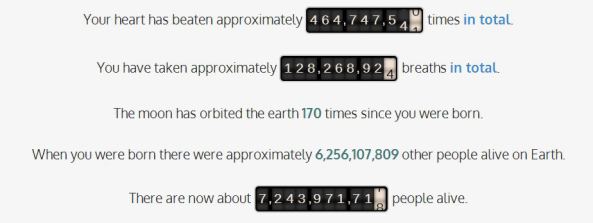 You’re getting old!
Some other resources for standard form:
I have been interested in Astronomy since discovering Patrick Moore’s books in the library as a child so enjoyed Richard Byrne’s post on resources to help students understand the size of the universe, I particularly like 100,000 Stars, a visualization of the 100,000 stars closest to Earth. All those lovely big numbers in Astronomy are excellent for teaching Standard Form; I wrote some time ago on the excellent mathematics resources available from NASA, see this on Scientific notation for example.
From…
View original post 169 more words
Landau’s Beautiful Proofs
Landau’s beautiful proofs:
1= cos 0 = cos (x-x)
Opening cos (x-x):
1 = cos x.cos (-x) – sin x.sin (-x)
=> 1= cos² x + sin² x
[QED]
Let cos x= b/c, sin x = a/c
1= (b/c)² + (a/c)²
c² = b² + a²
=> Pythagoras Theorem
[QED]
Landau (1877-1938) was the successor of Minkowski at the Gottingen University (Math) before WW II.
Prime Numbers * +
Prime Numbers
God multiplies Primes: Fundamental Law of Arithmetic (Euclid):
Any number (n) can be UNIQUELY Prime Factorized: n = P1 x P2 x …Pn
e.g. 12= 2 x 2 x 3,
28=2 x 2 x7
Men add Primes: Goldbach Conjecture.
2n = P1+P2
e.g. 12= 5 + 7, 28 = 17 + 11, 30 = 11+19
Chen (1+ 2) Theorem
Chen Theorem 陈景润 @1966‘1+2’ 陈式定理
2n= p1 + p2 (Goldbach Conjecture “1+1“)
or
2n = p1+ p2*p3 (Chen Theorem “1+2″)
Examples:
62 = 43 + 19
62= 7 + 5*11
4-level MathThinking
4 Levels:
L1. S&T (See & Touch) Concrete: 1 apple, 2 oranges…
e.g. Math Modeling: visualise the problem [Primary School]
L2. S~T (See, no Touch but can guess):
e.g. Guess x,y for 2x+3y=8 ? [Secondary School]
e.g. Chimpanzees can guess where you hide the banana.
L3. ~S~T&I (no See, no Touch but Imagine):
e.g. Complex i = [Junior College].
L4. ~S~T~I (no See, no Touch, no imagine)
e.g. Abstract Math: Galois Group, ε-δ Analysis, Ring, Field, etc. [University]
Language & Math
1. Galois’s mother home-schooling him Latin & other languages before entering Lycée Louis-Le-Grand.
2. William Hamilton: knew 15 languages include Chinese before discovered Quarternions (1,i,j,k) on Monday 16 Oct 1843 walking along Brougham Bridge, Ireland.
3. Pascal, Descartes are philosopher good in writing.
4. Gauss learnt even at old age Russian to read Lobatschefsky’s Non-Euclidean Geometry
5. Cauchy’s father heeded the advice of his neighbour Laplace to teach young Cauchy language before mathematics.
Good Mathematics
Good Mathematics [Lagrange’s definition]
1. Easy to understand by people on the streets
2. Difficult to solve
Example: Fermat’s Last Theorem
China ‘Gauss’: 秦九韶 Qin Jiushao
秦九韶 Qin Jiushao(1202-1261 AD): http://en.wikipedia.org/wiki/Qin_Jiushao
A Southern Song dynasty (南宋) officer. During his 3-yr leaves when his mother died, he generalised 孙子算经 (4th century)’s “Chinese Remainder Theorem” in ‘大衍求一术’. After leaves, he went back to chase money & women, produced no more Maths.
Note: ‘求一’: solve a.X ≡ 1 (mod b); a < b
Topology
Topology (by Poincaré)
Moniker “Rubber-Sheet Geometry“, compared with Geometry’s ‘rigid objects‘.
[Greek]= τοΠοζ(Place) λΟγια(Study)
[Latin]= Analysis Situs (Situation)
1. Remove (invariants) of geometry:
- a. Euclidean (distance)
- b. Affine (//, ratio)
- c. Projective (cross-ratio)
2. Preserve ‘Neighbourhood’ (Nearness)
- define ‘Continuity’ (Analysis)
3. Elastic deformation (stretch, bend, twist)
- a line is no longer a line.
The “Book”
Paul Erdös liked to talk about ‘The Book’, in which God maintains the perfect proofs for mathematical theorems (& he ‘peeped’ 1,000 from there).
Find Prime numbers
Primes (Landau’s trick)
List down systematically the primes below n < 4,000
Start with 2
2×2= 4 => take 3 (<4)
< 2×3 =6 => 5
< 2×5 =10 =>7
< 2×7 =14 => 13
…
23, 43, 83, 163, 317, 631, 1259, 2503, (4001)
Learn with Example Space
Learn Math With Own Example Space
G. Polya / Paul Halmos advocate getting math students to construct not just one but classes of examples to:
1. Extend & enrich own Example Spaces;
2. Develop full appreciation of concepts, definitions, techniques that they are taught.
[Polya, Halmos, Feynman]: they collect and build a personal ‘repertoire’ of “Examples Space” (include counter-examples) for each abstract math idea, which they can relate to a concrete object.
Examples:
Group abelian = (Z,+)
Ring = Z
Principal Ideal = nZ
Equivalence Relation = mod (n)
Cosets = {3Z, 1+3Z, 2+3Z}
…
Induction in Geometry
Given: a unit length.
Use only a straightedge (ruler without markings) & a compass.
Prove: we can construct a line segment of √n for all n ∈N.
Proof:
1) n=1 (given).
2) Assume true for n, i.e. can construct √n
3) Construct a right-angled triangle with height = 1, base= √n
=> hypotenuse = $latex sqrt {n+1} $
=> True for n+1
Therefore true for all n ∈N [QED]
Math Application in Today’s Society數學在今日社會的應用–丘成桐教授
Prof ST Yau (Fields Medal, Harvard Math Dean)
OUHK – 數學在今日社會的應用–丘成桐教授 (第一部分):


1. Wavelet Data Compression Algorithm:
2. RSA Encryption
OUHK – 數學在今日社會的應用–丘成桐教授 (第二部分):
OUHK – 數學在今日社會的應用–丘成桐教授 (第三部分):
3. Akamai Network Distribution
OUHK – 數學在今日社會的應用–丘成桐教授 (第四部分):
4. Insurance Risks (Actuary)
OUHK – 數學在今日社會的應用–丘成桐教授 (第五部分):
5. GOOGLE Search:
OUHK – 數學在今日社會的應用–丘成桐教授 (第六部分):
6 不急功近利走捷径
7. 做大数学家成功之道:
– 对数学浓厚的兴趣
– 行则的培养: 不肤浅, 不偷功,不炫耀。
– 打好基本功
See also:
Top 10 Tough Math
These are the top 10 tough Mathematics:
1. Motivic cohomology or cohomology Theory 上同调理论
2. Langlands Functoriality Conjecture
3. Advanced Number Theory (eg. Fermat’s Last Theorem) 高等数论
4. Quantum Group 量子群
5. Infinite Dimensional Banach Space 无穷维度巴拿哈空间
6. Local and Micro-local Analysis of Large Finite Group 大有限群之局部与微局分析
7. Large and Inaccessible Cardinals 大与不可达基数
8. Algebraic Topology 代数拓扑学
9. Super-String Theory 超弦论
10. Langlands Theory 非阿贝尔互反性,自守性表现和模数变化
Introduction to Algebraic Topology
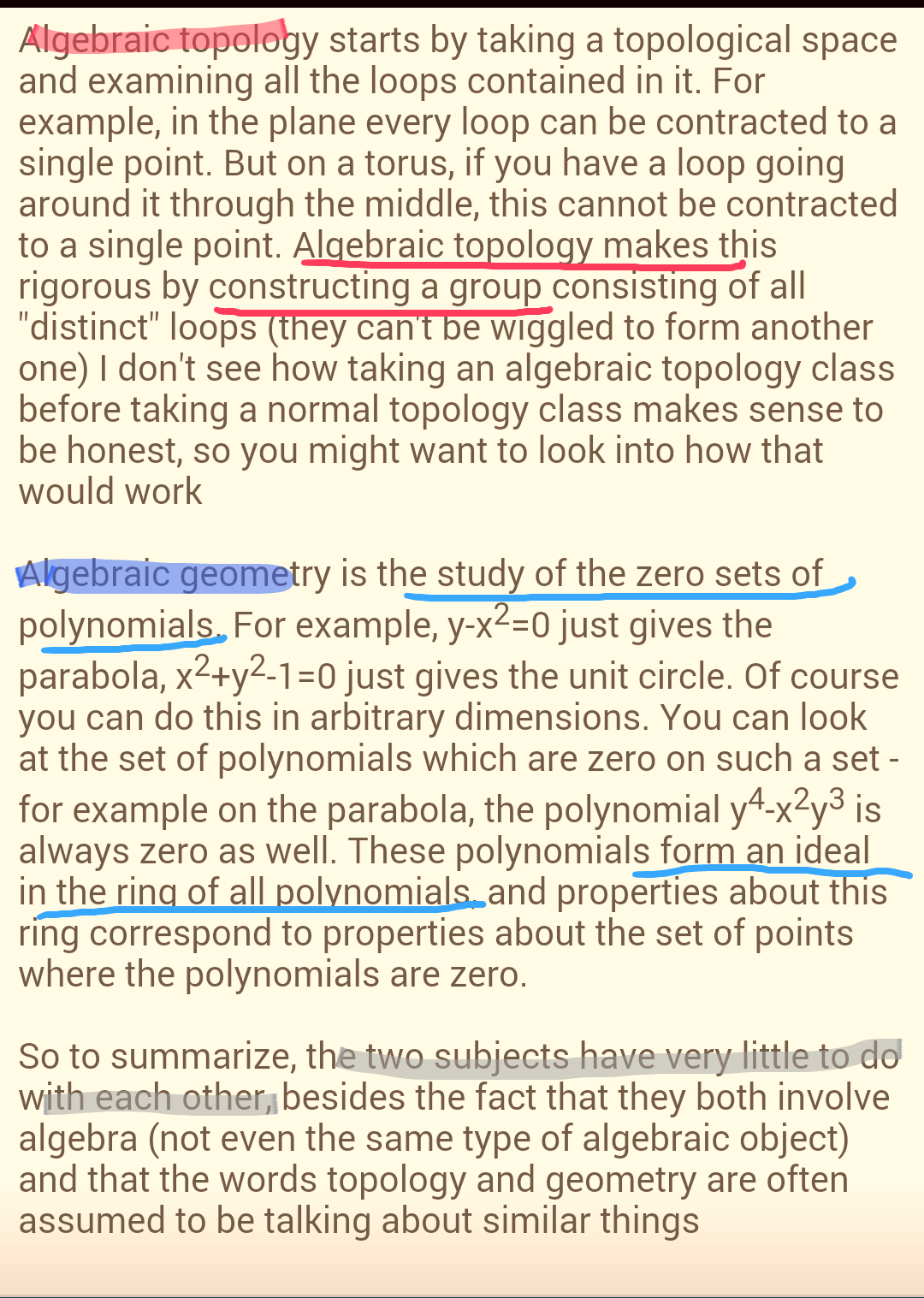
Algebraic Topology: using algebra (eg. Group Theory) to study geometrical shapes.
Difference between Algebraic Topology and Algebraic Geometry (see the previous blog):
Introduction to Algebraic Geometry
“Algebra is the written Geometry,
Geometry is the drawn Algebra.”
— Sophie Germain (France, 19 CE)
Algebraic Geometry is the study of the zeroes (or roots) of Polynomials.
Harvard Math’s 150 years 哈佛數學之百年歷史
Birkhoff 是哈佛土生土長培养的学生, 数学大师, 他又培养了50个博士, 教育了7,500学生成为世界一流数学家。
Calabi-Yau “Shape Inner Space”

Do we really live in 10-dimensional Space ? Harvard Prof S.T. Yau (1st Chinese Fields Medalist) talked on the inner space of Geometry and String Theory in Physics:
我們真的活在十維時空裡嗎?丘成桐院士從幾何和弦論談空間的內在形狀:
See also :
https://tomcircle.wordpress.com/2013/04/01/st-yao%e4%b8%98%e6%88%90%e6%a1%90/
GAT DSA Past Year Paper
GAT: General Ability Test
Most schools DSA (Direct School Admissions) now requires sitting for a test called GAT.
While the actual past year papers are not to be found online, there are many similar test papers from other countries:
1) http://bettereducation.com.au/Resources/PastTestPapers.aspx
2) http://acedmy.yolasite.com/resources/gat_sample_paper.pdf
3) http://www.cpapers.com/past-papers/gat-general-test-model-questions-answers.php
4) GEP Books are an excellent source of DSA questions, since the scope of GAT testing overlaps with the Logic portion of the GEP test. Check out the myriad of GEP Books that can be used to prepare for DSA questions equally effectively.
The Logic portion of GEP test / DSA test is not taught anywhere in the MOE syllabus, and hence the most challenging to prepare for. Your child would need to solve DSA questions like the one below, which is quite obviously not taught anywhere from Primary 1 to Primary 6. However, like all skills, these kind of logic puzzles can be taught, trained, and practiced, in the Mensa book listed below (Scroll down)!

Boost your DSA GAT Scores with Mensa Book:
Match Wits With Mensa: The Complete Quiz Book


If you are looking for more DSA GAT pattern/logic questions, this is the Complete Quiz Book by Mensa. Highly rated on Amazon. These book will be helpful for those seeking for a boost in their DSA GAT scores, since GAT (General Ability Test) is just a politically correct name for IQ Test.
Furthermore, the IQ of a person is not static, it can be changed. The way to change IQ is via reading books and acquiring more knowledge.
Another good book for DSA/GAT/HAST is Ultimate IQ Tests: 1000 Practice Test Questions to Boost Your Brain Power

Subscribe to our free newsletter, for updates on Math, Education and other General Knowledge topics!
Many people think that the infamous Cheryl Birthday puzzle is very difficult. However, to a well trained Math Olympian, the Cheryl Birthday question is actually considered comparatively easy! This shows that IQ of a person can be increased by reading, learning, and practicing the relevant books.
More Books to Ramp Up your DSA GAT Score:
https://mathtuition88.com/2013/11/11/recommended-books-for-gep-selection-test/
P.S. These kind of books are rarely found in Singapore bookstores, not to mention that most decent Singapore bookstores like Borders/Page One have closed down. I have compiled the most helpful books for DSA Score-Boosting in the above link. Hope it helps!
Update (2016): Check out this Pattern Recognition (Visual Discrimination) book that is a guided tutorial for training for GEP / DSA Tests!
Motivational Books for DSA
As Singapore is a very high-tech society, there are many children who are addicted to handphones /computer games and as a result have no motivation to learn. Needless to say, this would result in rather severe consequences in exam results if not corrected early. Even for gifted children, the consequence of computer/cellphone addiction is really harmful, not to mention students who already have a weak academic foundation. Hence, motivational books like those listed here are actually of great importance. Only if a child sees the value of learning, will he be interested and self-motivated in learning. Related book: Cyber Junkie: Escape the Gaming and Internet Trap

NUS High DSA
If you are looking for information regarding NUS High DSA, please click here.
Finally, all the best and good luck for your DSA test!
Kindle for Singaporean Students
Parents who like the idea of technology combined with education may want to check out the Kindle rather than the iPad.
Kindle Paperwhite, 6″ High-Resolution Display (212 ppi) with Built-in Light, Wi-Fi – Includes Special Offers


The problem with the iPad is that there are too many games! Children (and even adults) will find it hard to resist the games. The Kindle would be better for education, since it is primarily a reading device, and there are many educational books available at low cost or even free.
For example, this course CK-12 Algebra I – Second Edition, Volume 1 Of 2

Buy Kindle from Qoo10 (Singapore’s Taobao/Amazon)

WWW.QOO10.SG
IMO Number Theory

11 = ?

Test if you have Mathematical Mind ?
Do not scroll to below to see the answer until you have tried …
…
.
.
.
.
.
.
.
.
.
.
.
.
.
.
.
.
.
.
.
.
.
.
.
.
.
.
.
.
.
.
.
.
.
.
.
.
.
.
.
.
.
.
.
.
.
.
.
.
.
.
.
.
.
.
.
.
.
.
.
.
.
.
.
.
.
.
.
.
.
.
.
.
.
.
.
.
.
.
.
.
.
.
.
Answer:
Since 1 = 11,
of course 11 = 1
That is the mathematical meaning of ‘=’
Self-Study Math Master
Hua Luogeng (华罗庚) urged using the daily 10-20 mins intervals while waiting for buses, queues, idle times, make it at least 1 hour a day to read Math books which you carry along with you.
Hua advised on speedy self-learning Math :
1) Choose the Best book on the Topic written by the Master (say, Abstract Algebra), read completely and do the exercises.
2) Read other reference books. Read only those new topics not covered in 1).
If not much new things, return them to bookshelf. This way speed up reading many books in short time.
3) Then read International renown Math Journals.
Beware 90% are copy-cats or rubbish by University lecturers to meet their yearly publishing quota. Only < 10% are masterpieces.
4) Pick one topic to do your independent research.
5) Discuss with friends with better knowledge in the field.
This way you can be a Master in…
View original post 7 more words
Concrete and Abstract in Modern Math
华罗庚 《数论导引 》序言
Preface on “Introduction to Number Theory” by Hua Luogeng (1950).
“Math evolved from concrete to abstract, the former is the source of inspiration of the latter. One cannot just study the abstract definitions and theorems without going back to the source of concrete examples, which prove valuable applications in Physics and other sciences.”
“Mathematics, in essence, is about the study of Shapes and Numbers. From Shapes give rise to the Geometrical Intuition, from Numbers give the Relationship and Concepts ”

张益唐谈做数学
2003/7/13 台大访问笔记则要:
http://blog.sina.cn/dpool/blog/s/blog_c24597bf0101ctdp.html

突破瓶頸: “先上对车, 后补上票”


Holistic Approach to Attack Math :

新酒进旧瓶, 可以突破: 勤能补拙

10岁的启蒙书:


现代”科举”考场失意:

文学与数学相通:Intuition

Ref: 白居易写给元稹的《与元九书》
如何教好数学?

Shimura Modular Form:

好书推荐: 华罗庚的《数论导引》 , 华的剑桥老师Hardy…

解析数论 Analytic Number Theory:

选对导师和有兴趣的题目
On Riemann Hypothesis:

Math Formulas in Kungfu (Brick Breaking)
教授會武術,流氓也擋不住 – 川大教授課堂利用數學公式劈磚:
This science professor uses kungfu to demonstrate 2 simple Physics mathematical formulas :
2 formulas:
Impulse : http://www.physicsclassroom.com/class/momentum/u4l1b.cfm

Lever : http://www.theclevver.com/theory.htm

Calculus and Novels
Tolstoy’s “War and Peace”:
“Only by taking an infinitesimal small unit for observation (the differential of history, that is, the individual tendencies of men) and attaining to the art of integrating them (that is, finding the sum of these infinitesimals) can we hope to arrive at the laws of history.”
World University Ranking: Times Higher Education
National University of Singapore (21st),
Nanyang Technological University (91-100th)
http://www.timeshighereducation.co.uk/world-university-rankings/2014/reputation-ranking

Asia Ranking:
NUS (2nd) after The University of Tokyo (1st).
http://www.timeshighereducation.co.uk/world-university-rankings/2013-14/regional-ranking/region/asia

Pi in the Bible :1 Kings 7:23

This is the first appearance of
$latex boxed {pi = 3 }$
in any human’s text in history.
45 feet / 15 feet = 3
Transcendental Numbers: e, pi
The French Mathematician and Physicist Joseph Fourier proved
e is irrational,
Another French mathematician Charles Hermite went further: e belongs to another mathematical world:
e is transcendental.
Hermite’s German student Lindermann followed the same method, proved:
pi is also transcendental.
Introduction to Category Theory 范畴论
[Source:
] All lectures & exercises here:
http://ureddit.com/class/36451
http://ureddit.com/class/36451

Introduction to Category Theory 1:
Course Overview:
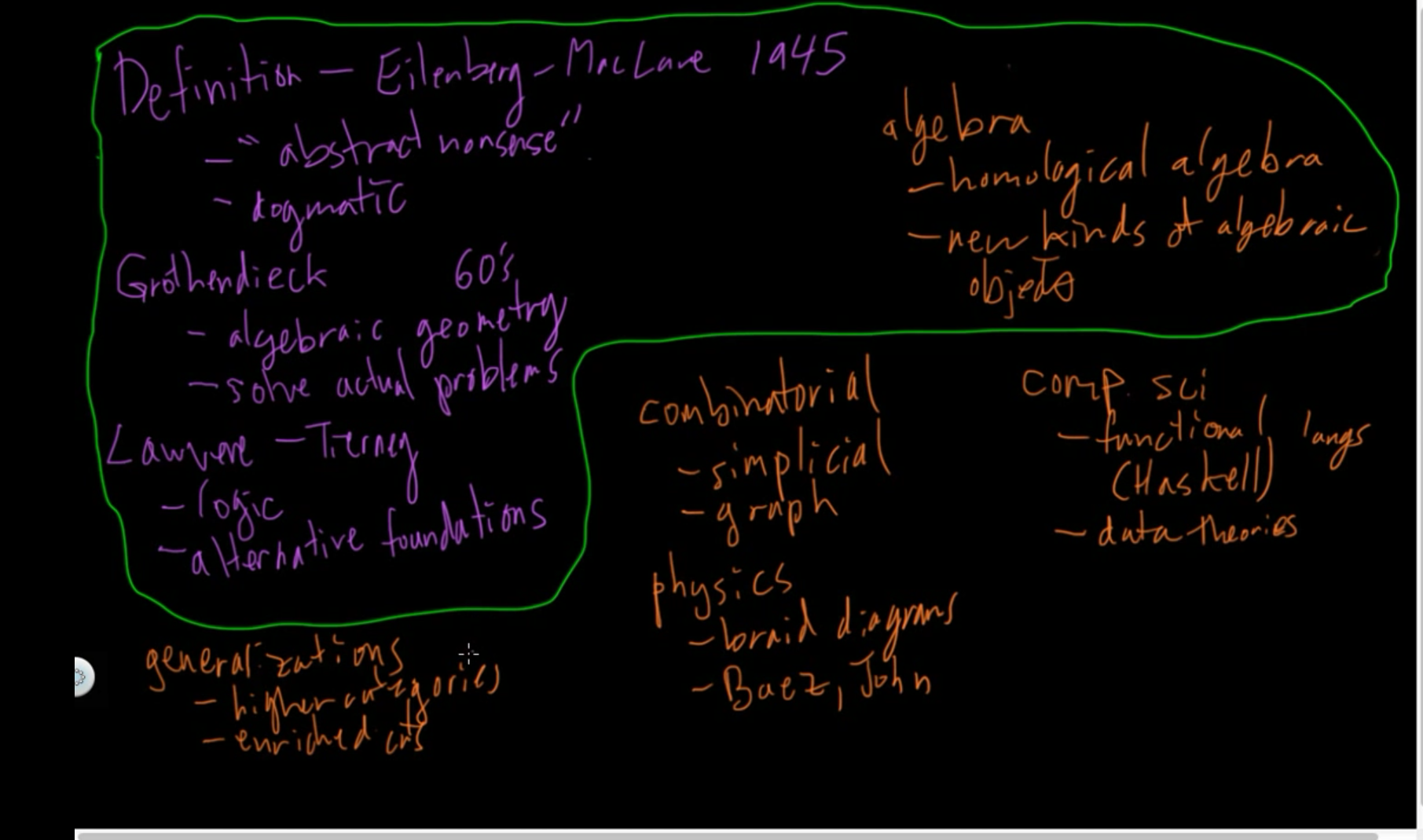
Category Theory = Abstract Algebra of Functions
Lambda Calculus = Calculus of Functions
Lambda Calculus = Category
History:

$latex cap bigotimes$
Introduction to Category Theory (2) Monoids 么群
Introduction to Category Theory (3)Real lecture begins from here: Categories, Functors, Natural Transformation:
1. Category Definition:

1a) Examples of Categories:
Excellent example on “Natural Transformation“:

Ref: Classic Textbook
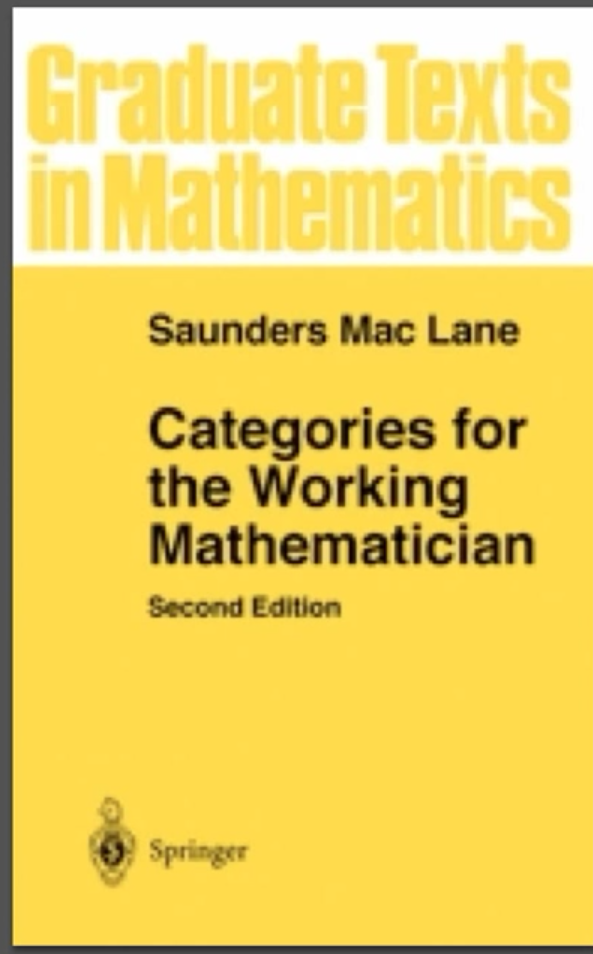
范畴论 Category Theory :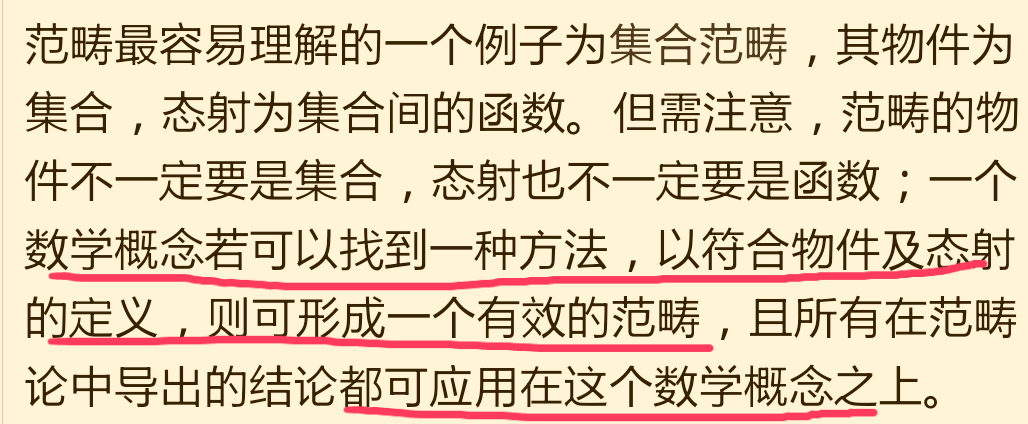
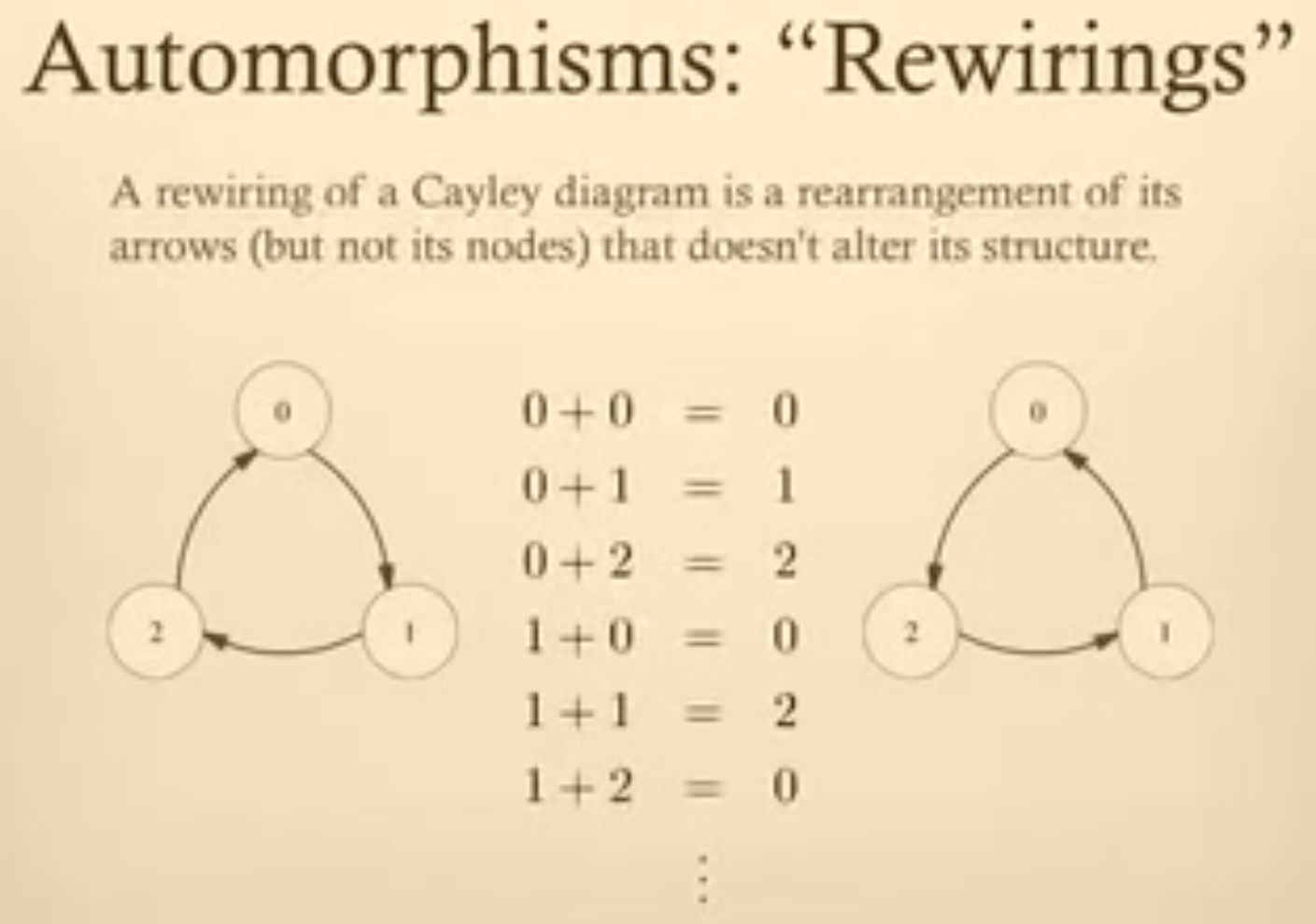
Why is group theory useful for physics?

Visualizing Group Theory


How many Pentagons and Hexagons are there on a Soccer Ball?
Watch the above video to prove that there has to be 12 Pentagons and 20 Hexagons on a Soccer Ball!
The video also teaches us about the beautiful Euler Formula, 
Featured Book:
Euler: The Master of Us All (Dolciani Mathematical Expositions, No 22)


An ideal book for enlivening undergraduate mathematics…he (Dunham) has Euler dazzling us with cleverness, page after page. — Choice
Mathematician William Dunham has written a superb book about the life and amazing achievements of one of the greatest mathematicians of all time. Unlike earlier writings about Euler, Professor Dunham gives crystal clear accounts of how Euler ingeniously proved his most significant results, and how later experts have stood on Euler’s broad shoulders. Such a book has long been overdue. It will not need to be done again for a long long time. — Martin Gardner
William Dunham has done it again! In “Euler: the Master of Us All”, he has produced a masterful portrait of one of the most fertile mathematicians of all time. With Dunham’s beautiful clarity and wit, we can follow with amazement Euler’s strokes of genius which laid the groundwork for most of the mathematics we have today. — Ron Graham, Chief Scientist, AT&T
William Dunham has written a superb book about the life and amazing achievements of one of the greatest mathematicians of all time. Unlike earlier writings about Euler, Dunham gives crystal clear accounts of how Euler ingeniously proved his most significant results, and how later experts have stood on Euler’s broad shoulders. Such a book has long been overdue. It will not need to be done again for a long, long time.Martin Gardner
Dunham has done it again! In “Euler: The Master of Us All,” he has produced a masterful portrait of one of the most fertile mathematicians of all time. With Dunham’s beautiful clarity and wit, we can follow with amazement Euler’s strokes of genius which laid the groundwork for most of the mathematics we have today. — Ronald Graham, Chief Scientist, AT&T
A Neat Trick For Determining The Integrals Of exp(x) cos x And exp(x) sin x
Eigenvector & Eigenvalue
1. Matrix (M): stretch & twist space
2. Vector (v): a distance along some direction
3. M.v = v’ stretched & twisted by M
Some directions are special:-
a) v stretched but not twisted = Eigenvector;
b) The amount of stretch = constant = Eigenvalue (λ)
Let M the matrix, λ its eigenvalue,
v eigenvector.
By definition: M.v = λ.v
v = I.v (I identity matrix)
M.v = λI.v
(M – λI).v=0
As v is non-zero,
1. Determinant (M- λI) =0 => find λ
2. M.v = λ.v => find v
Note1: Why call Eigenvalue ?
From German: “Die dem Problem eigentuemlichen Werte”
= “The values belonging to this problem”
=> eigenWerte = EigenValue
Eigenvalue also called ‘characteristic values’ or ‘autovalues’.
Eigen in English = Characteristic (but already used for Field).
Note2: Schrödinger Quantum equation’s Eigenvalue = Maximum probability of electron presence at the orbit…
View original post 12 more words
Relationship-Mapping-Inverse (RMI)
Relationship-Mapping-Inverse (RMI)
(invented by Prof Xu Lizhi 徐利治 中国数学家 http://baike.baidu.com/view/6383.htm)
Find Z = a*b
By RMI Technique:
Let f Homomorphism: f(a*b) = f(a)+f(b)
Let f = log
log: R+ –> R
=> log (a*b) = log a + log b
1. Calculate log a (=X), log b (=Y)
2. X+Y = log (a*b)
3. Find Inverse log (a*b)
4. ANSWER: Z = a*b
Prove:
$latex sqrt{2}^{sqrt{2}^{sqrt{2}}}= 2$
1. Take f = log for Mapping:
$latex logsqrt{2}^{sqrt{2}^{sqrt{2}}} $
$latex = sqrt{2}logsqrt{2}^{sqrt{2}}$
$latex = sqrt{2}sqrt{2}logsqrt{2} $
$latex = 2logsqrt{2} $
$latex = log (sqrt{2})^2 $
$latex = log 2$
2. Inverse of log (bijective):
$latex log sqrt{2}^{sqrt{2}^{sqrt{2}}}= log 2$
$latex sqrt{2}^{sqrt{2}^{sqrt{2}}}= 2$
A Practical Use For Logarithms, Part 2: How We Multiplied Large Numbers 40 Years Ago, And How Integral Transforms Use The Same Basic Idea
A Practical Use For Logarithms
Viete’s Formula – A Method for Computing pi
New Geometry 新几何
New Geometry (新几何) invented by Zhang JingZhong (張景中) derived from 2 basic theorems:
1) Triangles internal angles =180º
2) Triangle Area = ½ base * height
=> derive all geometry
=> trigonometry
=> algebra
(These 3 maths are linked, unlike current syllabus taught separately)
The powerful Area (Δ) Proof Techniques:
1) Common Height:
Line AMB, P outside line
Δ PAM / Δ PBM = AM/BM
2) Common 1 Side (PQ):
Lines AB and PQ meet at M
Δ APQ /Δ BPQ = AM/BM
3) Common 1 Angle:
∠ABC=∠XYZ (or ∠ABC+∠XYZ = ∏ )
Δ ABC /Δ XYZ= AB.BC /XY.YZ
These 3 theorems can prove Butterfly and tough IMO problems.
Butterfly Theorem
Butterfly Theorem
In a circle draw a chord PQ with mid-point M. Through M draw 2 chords AB, CD. Join AD, BC cut PQ at X, Y resp. (Butterfly M)
1. Prove: M = mid-point of XY
http://gogeometry.com/GeometryButterfly.html
2. If circle changed to ellipse, still true?
Yes. Affine transformation from circle elongated to ellipse, like distorted image through funny mirror => still MX = MY
 Butterfly theorem (Pho
新几何 (张景中)New Geometry

Minimum Memorize in Math – Go by 1st Principle
Do not remember these:
$latex boxed {
cos 3A = 4cos^{3} A – 3cos A
}$
$latex boxed {displaystyle
int frac {dx}{sec x}
=
int
frac {1}{sec x}
frac {sec x + tan x}{sec x + tan x}dx
}&fg=aa0000
$
However, it helps, though, to remember:
“Nine Zulu Queens Rule China”
$latex boxed {
mathbb{N}subset mathbb{ Z }subset mathbb{ Q }subset mathbb{ R} subset mathbb{ C }
}&fg=00bb00&s=3
$
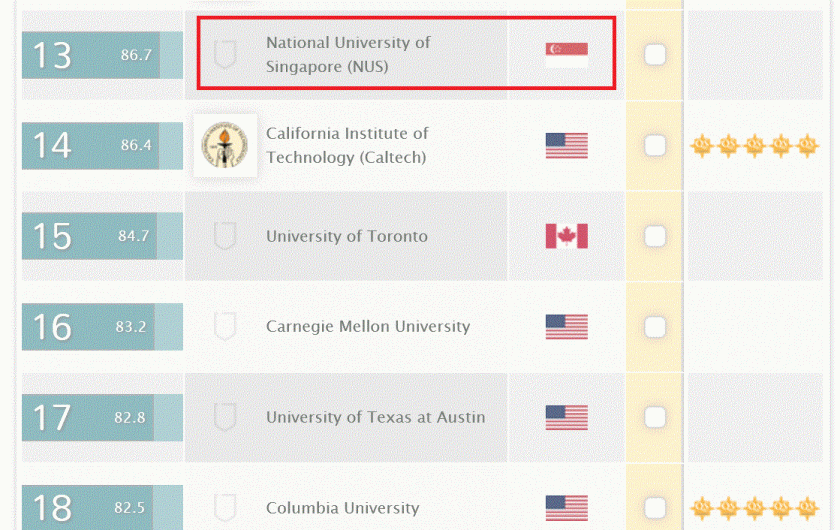
NUS Math Ranked among Top in Asia
In the latest Quacquarelli Symonds (QS) World University Rankings by Subject (2014), NUS Math is ranked among the best mathematics departments in Asia.


Chinese students typically outperform U.S. students on international comparisons of mathematics competency. Paradoxically, Chinese teachers receive far less education than U.S. teachers–11 to 12 years of schooling versus 16 to 18 years of schooling.
Studies of U.S. teacher knowledge often document insufficient subject matter knowledge in mathematics. But, they give few examples of the knowledge teachers need to support teaching, particularly the kind of teaching demanded by recent reforms in mathematics education.
This book describes the nature and development of the “profound understanding of fundamental mathematics” that elementary teachers need to become accomplished mathematics teachers, and suggests why such teaching knowledge is much more common in China than the United States, despite the fact that Chinese teachers have less formal education than their U.S. counterparts.
Why Radian Measure Makes Life Easier In Mathematics And Physics
Why radian is preferred in Math? Very good explanation here…
How Much Mathematics Should a Student Memorize?
As Chinese we are good at memorizing poems since young (think of reciting 唐诗300首 – no sweat! ).
By chanting in Hokkien I remember complicated trigo formula:)
Cos 3A = 4Cos^3 A – 3.Cos A
($ 1.3 = $4.3 -$3 with $ =Cos in Hokkien sound).
Once I performed this ‘memory power’ in a lecture hall with me called up by the professor to solve a Physics problem. Halfway in the computation we need to open up the “Cos 3A”, the prof asked the whole class to help me, but I wrote the above down quickly on the white board to the awe of the class. Guess what, when the prof saw it, instead of praising me I got a scolding ! He said “Do not keep unnecessary things in your head”. The prof is a French, he did not know I have Hokkien language advantage… haha.
Anyway, joke aside, try to memorize minimum, go by first principle so that you will never ever forget iin whole life (yes, I remember them now after 40 years).
 Mathtuition88