
Three mysterious Math Objects:
- Pi,
- Complex Numbers,
- Prime Numbers
are hiding in circle.


Three mysterious Math Objects:
are hiding in circle.
5 Math Tips That Will Speed Up Your Calculations
For most students, regardless of their age, studying math seems like a nightmare. Taking tuition for maths helps when you or your child struggle with calculations.
Check out these 5 simple tricks for making mental math faster and more accurate:
If the total is more than 9, add 1 to the first digit and insert the second number, e.g. 78 x 11 = 7(7+8)8, or 7(15)8. Move the 1, so 7+1(5)8 = 858.
What about 8% of 350? Add up the 8s for each 100, and half of an 8 for the remaining 50, so (8 x 3) + 4 = 28. The same for 8 x 35, but moving the decimal point, so 2.8. Percentages can also be flipped, so 32% of 5 is the same as 5% of 32.
Math doesn’t have to be scary, and an online math tutor can help you deal with advanced problems without getting overwhelmed.
About Author: Making education simple and easy to comprehend is Dana Jandhayala’s forte. She’s had a long career as an educator where she has taught in several different schools and institutes in multiple countries. Today, she helps students with personalized online tutorials by SchoolPage that help make concepts easy to understand, making learning fast and fun. She writes to help students study better, and to coach parents so they can facilitate the success of their children.
After the defeat in 1st match, Ke Jie said “AlphaGo is approaching God!”.
This version of AlphaGo is 10x more powerful than last year’s version which has beateb the South-korean Go player Lee.
https://www.theguardian.com/technology/2017/may/23/alphago-google-ai-beats-ke-jie-china-go
Kotlin is the “New Java” officially supported by Google from May 2017! It is less verbose (罗唆) than Java which is clumsy with boilerplates (样板), interoperates with Java on JVM, with modern functional programming features, and most importantly,it is Multi-Platform : Java, Android, Javascript, and future versions run as native codes on iOS, MacOS and Linux (Microsoft – work in progress). This eliminates the current headache of having to re-write the same applications for different platforms in different languages.
Google makes Kotlin a first-class language for writing Android apps
https://blog.plan99.net/kotlin-fp-3bf63a17d64a
Kotlin Tutorials:
https://kotlinlang.org/docs/tutorials/
https://developer.android.com/kotlin/get-started.html
Hands-on:
https://try.kotlinlang.org/#/Kotlin%20Koans/Introduction/Hello,%20world!/Task.kt
Two ways to program in Kotlin:
1) Google way: Download Android Studio 3.0 (with Kotlin and Java 8 Support):
2) (A better way): use Jetbrains “Intelli IDEA for kotlin” (bundled with Kotlin)
https://kotlinlang.org/docs/tutorials/getting-started.html
Books:
https://antonioleiva.com/kotlin-android-developers-book/
https://www.amazon.com/gp/aw/s/ref=is_s_ss_i_5_6?k=kotlin+for+android+developers&sprefix=kotlin
Just read this very nice article on Quora, on the relationship between Math and Chess: https://www.quora.com/What-math-tricks-are-hidden-in-chess
Also interesting is this YouTube documentary “My Brilliant Brain” featuring Susan Polgar.

There’s lots of clever math tricks hidden in chess. Here are some examples.
Pawn race: Want to know if you can catch your opponents pawn before it becomes a queen? Use simple geometry! Draw a diagonal line starting from the pawn to the first row, then make a box. If your king can enter that box, he can catch the pawn! No need to count moves or calculate.

Opposition: Want to know if you have the distant opposition in a king and pawn engame? Well you could calculate it out, or you could use simple parity! If the king’s are on the same line (diagonally, horizontally, or vertically) look at how many squares are in-between the kings. If it’s your turn: an even number of squares means you have the opposition, an odd number of squares means your opponent has the opposition. There’s six squares between the kings in the diagram below. If it’s white’s turn, they have the opposition!

Calculating the relative value of pieces:
If you randomly place a piece on an empty chess board, how many moves will it have on average? I calculated this out a long time ago, then I compared it to what the pieces are assumed to be worth.

This is over-simplistic, but interesting. So it looks like the king has a relative value of 4, and Bishop’s are slightly better than knights. The downside of only looking at available moves is that it ignores things like the fact that the Bishop can only attack one color square, or how pieces work together. The Bishop pair, for example, is worth more than the sum of each individual bishop, as they complement each other. This fact is used in chess engine programming.
Shortcut to calculating knight moves:
I use this trick all the time in my games. Want to know how long it takes a knight to get somewhere? Simply memorize this square. The knight square is a beautifully symmetrical pattern, which makes it really easy to memorize. Each number represents the number of moves it will take the knight to reach that square.
Interesting fact – If you wanna reach any of the fours, then any move the knight makes will get you closer to reaching that square.

Knight’s also operate according to parity. That is, they attack dark squares, then light squares, then dark squares, and so on. See the pattern above – even moves get you to the same color square that your sitting on, odd moves get you to the opposite colored square.
Pythagorean Theorem does not apply in chess:
Our brains are hardwired to think that diagonals are longer than edges of a square. This is not the case in chess. This can lead to some interesting positions. For example:
White to move. It looks like black is going to promote their pawn and white will lose. If white tries to promote their pawn right away the black king will catch it. Miraculously, white can actually force a draw here. They do so by marching their king diagonally as shown. They will either catch the black pawn or promote their white pawn. This is only possible because it takes the same number of moves for white to move their king from h8 – e5 t- h2 as it does to go in a straight line from h8 to h2. Counter intuitively, going diagonally doesn’t increase the trip length.

Centralization matters! Except for rooks…
(Almost) Every piece in chess will have more available moves in the center of the board than they will on the edge of the board. More available moves = more control. This is why chess strategy tells you to always control the center.
This doesn’t apply to rooks… Like the honey badger, rooks just don’t care. If you place a rook on an empty board, they will always have 14 moves. Doesn’t matter where you place them. This is due to the square symmetry of the board, which lines up with the way rooks move.

The 8 Queens Puzzle:
How many Queens can you place on a chessboard such that none of them could capture each other? 8 of course. After all, a chess board is just an 8 by 8 grid. But trying to find the solution is much more difficult. There are actually 96 solutions (12 if you don’t count symmetry or rotations). This is a complex math and computer science problem. They have solved the same puzzle for every solution on a 27 by 27 sized board.

Counting the number of possible games in chess:
A clever mathematician named Claude Shannon calculated the upper bound limit for chess, resulting in about 10^120 possible different games. This was a huge influence on the field of computer science and chess, and shows why we cannot solve chess using brute force.
There are many other interesting math tricks hidden in chess. I look forward to reading about others.
Emmanuel Macron is the youngest French President (39) since Napoleon Bonaparte (40).
A brilliant student since young, he impressed his secondary school Drama teacher 24 years older, finally married her.
Like any genius (Einstein, Galois, Edison, …) who doesn’t adapt well in the traditional education system, Macron entered the prestigious and highly competitiveClasse Préparatoire (Art Stream) Lycée Henri IVin Paris to prepare for the “Concours” (法国抄袭自中国的)”科举” Entrance Examsin France’s top Ecole Normale Supérieure (ENS). Like the 19CE Math geniusEvariste Galoiswho failed the Ecole Polytechnique Concours twice in 2 consecutive years, Macron also failed ENS “Concours” in 2 consecutive years.
He revealed recently, ”The truth was I didn’t play the game. I was too much in love (with my former teacher) for seriously preparing the Concours …”

Note: French traditional name for the elitist tertiary education (first 2 or 3 years if repeat…
View original post 104 more words
This site (https://www.sharelatex.com/blog/2013/08/09/thesis-series-pt5.html) has a guide on how to create your own 
The actual Tex source code is found here: https://www.sharelatex.com/project/51fa85c3db89c3c351085071.
I like it as the source code is neat and clean, you can easily edit it if you know some basic Latex. Some other templates out there are quite complex and convoluted, it is hard to customize it.
Tutor: Mr Wu (Raffles Alumni, NUS Maths Grad)
Email: mathtuition88@gmail.com
Syllabus: Primary / Secondary Maths Olympiad. Includes Number Theory, Geometry, Combinatorics, Sequences, Series, and more. Flexible curriculum tailored to student’s needs. I can provide material, or teach from any preferred material that the student has.
Target audience: For students with strong interest in Maths. Suitable for those preparing for Olympiad competitions, DSA, GEP, or just learning for personal interest.
Location: West / Central Singapore at student’s home
Very good idea by NYGH. Sleep is important for students.
SINGAPORE: For almost a year now, Nanyang Girls High (NYGH) students have been starting school at 8.15am – a good 45 minutes later than most secondary schools.
And the results have been telling.
The school in Bukit Timah has been taking part in ground-breaking sleep studies conducted by Duke-NUS Medical School researchers – whose studies have shown that 80 per cent of teens here don’t get enough sleep, which affects their health, grades and cognitive abilities.
It was what the teachers of NYGH had been suspecting all along.
Mrs Ho-Sam Choon Juen, NYGH dean of student systems and info management, said: “For a long time, we’d known that our girls were not sleeping enough because of their academic and extra-curricular demands.
Read more at http://www.channelnewsasia.com/news/cnainsider/a-big-difference-in-students-after-nanyang-girls-starts-school-8833844
Maths Tuition
Tutor (Mr Wu):
– Raffles Alumni
– NUS 1st Class Honours in Mathematics
Experience: More than 10 years experience, has taught students from RJC, NJC, ACJC and many other JCs. Also has experience teaching Additional Math (O Level, IP).
Personality: Friendly, patient and good at explaining complicated concepts in a simple manner. Provides tips for how to check for careless mistakes, and tackle challenging problems.
Email: mathtuition88@gmail.com
Areas teaching (West / Central Singapore, including Bukit Batok, Dover, Clementi, Jurong)
[Continued from previous BM Category Theory …]
$latex boxed {
text {type Algebra f a = f a} to text {a}
}&fg=aa0000&s=3$
Intuition: [Artificial Intelligence] You teach the computer, like a Primary 6 kid, that Algebra is atype of expression (f) which, after evaluation, returns a value.
If a = i (initial)[or u (terminal)],
$latex boxed {
text {(f i} to text {i )} implies
text {f = Fix-point}
}&fg=0000aa&s=3$
Intuition: Fix-point because, the Initial “i” after the evaluating the expression f, returns itself “i”.
Lambek’s Lemma
$latex boxed {
text {Endo-functor = Isomormphism}
}&fg=00aa00&s=3$
Note: Endo-functor is a functor (equivalent tofunction in Set Theory) within the same Category (Endo = Self = 自)


Video 8.1F-Algebras & Lambek’s Lemma
Video 8.2Catamorphism & Anamorphism
foldr ~ catamorphism (浅层变质) of a Fix-point endo-functor on a List.
Examples: Fibinacci, Sum_List
View original post 147 more words
Maths Tuition
Tutor (Mr Wu):
– Raffles Alumni
– NUS 1st Class Honours in Mathematics
Experience: More than 10 years experience, has taught students from RJC, NJC, ACJC and many other JCs. Also has experience teaching Additional Math (O Level, IP).
Personality: Friendly, patient and good at explaining complicated concepts in a simple manner. Provides tips for how to check for careless mistakes, and tackle challenging problems.
Email: mathtuition88@gmail.com
Areas teaching (West / Central Singapore, including Bukit Batok, Dover, Clementi, Jurong)
Source: https://news.cgtn.com/news/3d517a4e33637a4d/share_p.html
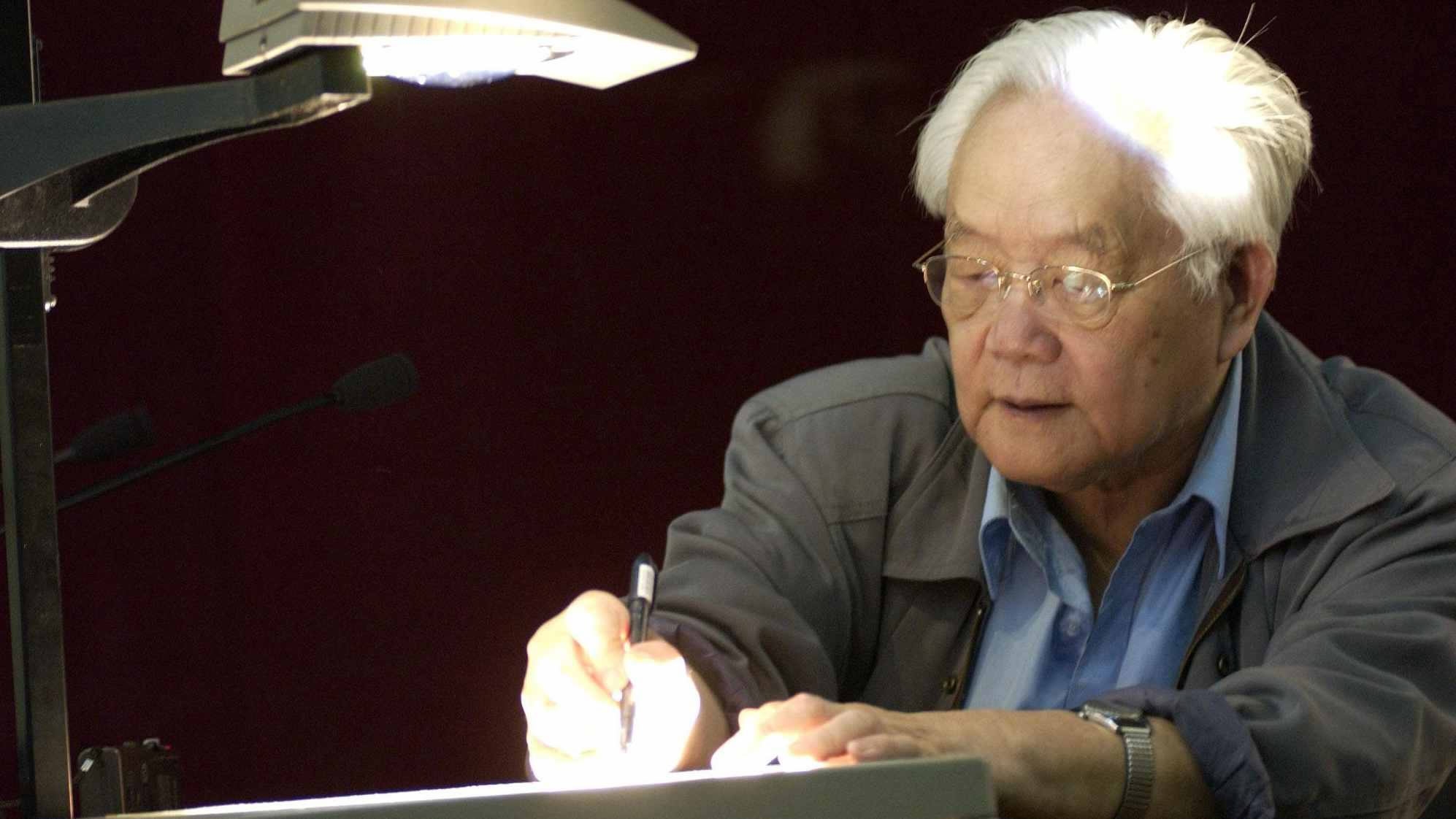
Wu Wenjun, distinguished mathematician, member of the Chinese Academy of Sciences (CAS), and winner of China’s Supreme Scientific and Technological Award winner, died at the age of 98 on Sunday in Beijing, according to the CAS.
Wu was born in Shanghai on May 12, 1919. In 1940, he graduated from Shanghai Jiao Tong University, and received a PhD from the University of Strasbourg, France in 1947.
In 1951, Wu returned to China and served as a math professor at Peking University. He made great contributions to the field of topology by introducing various principles now recognized internationally.
In the field of mathematics mechanization, Wu suggested a computerized method to prove geometrical theorems, known as Wu’s Method in the international community.
He was elected as a member of the CAS in 1957 and as a member of the Third World Academy of Sciences in 1990.
Wu Wenjun was given China’s Supreme Science and Technology Award by the then President Jiang Zemin in 2000, when this highest scientific and technological prize in China began to be awarded.
WordPress and WordAds have been doing a good job, I must say. In this year (2017), the earnings have increased gradually for my site (view count is approximately constant).
Certainly a great improvement from 2016, where I got a measly $0.70 for 11824 ad impressions in one month.
Keep it up, WordPress!
Nice traditional hymn.
Replace Field scalar as in a Vector Space to Ring scalar in a Module.
Module is more powerful than Vector Space – because Ring has an “Ideal” (理想) which can partition it to Quotient Ring, but Field (scalar in a Vector Space) can’t.

 Mathtuition88