When is PSLE 2014

When is PSLE?

Please double confirm with the source at: http://www.seab.gov.sg/examTimeTable/2014PSLEExamTimetable.pdf

PSLE Exam Dates/Schedule/Timetable

A. Oral Examination

Date Paper Time
Thursday, 14 August&Friday, 15 August


English Language / Foundation EnglishChinese / Malay / TamilFoundation Chinese / Foundation Malay / Foundation Tamil


0800 – 1300 h
Friday, 15 August Bengali / Gujarati / Hindi / Panjabi / UrduFoundation Bengali / Foundation Gujarati / Foundation Hindi / Foundation Panjabi / Foundation Urdu 0800 – 1300 h
C. Written Examination Date


Paper


Time


Duration


Thursday,

25 September


English Language Paper 1

English Language Paper 2

Foundation English Paper 1

Foundation English Paper 2


0815 – 0925 h

1030 – 1220 h

0815 – 0925 h

1030 – 1150 h


1 h 10 min

1 h 50 min

1 h 10 min

1 h 20 min


Friday,

26 September


Mathematics Paper 1

Mathematics Paper 2

Foundation Mathematics Paper 1

Foundation Mathematics Paper 2


0815 – 0905 h

1015 – 1155 h

0815 – 0915 h

1015 – 1130 h


50 min

1 h 40 min

1 h

1 h 15 min


Monday,

29 September


Chinese / Malay / Tamil

Bengali / Gujarati / Hindi / Panjabi / Urdu

Paper 1

Chinese / Malay / Tamil

Bengali / Gujarati / Hindi / Panjabi / Urdu

Paper 2

Foundation Chinese/ Foundation Malay/ Foundation Tamil Paper 1


0815 – 0905 h

1015 – 1155 h

0815– 0845 h


50 min

1 h 40 min

30 min


Tuesday,

30 September


Science

Foundation Science


0815 – 1000 h

0815 – 0930 h


1 h 45 min

1 h 15 min


Wednesday,

1 October


Higher Chinese / Higher Malay / Higher Tamil Paper 1

Higher Chinese / Higher Malay / Higher Tamil Paper 2


0815 – 0905 h

1015 – 1135 h


50 min

1 h 20 min


Our Daily Story #4: Niels Henrik Abel, a poor Math genius

tomcircle's avatarMath Online Tom Circle

Galois and Abel had many things in common: both worked on the Quintic equation (of degree 5). Abel first proved there was NO radical solution; Galois, who was 9 years younger, went one step further to explain WHY no solution (with Group theory).

Both were young Math genius not recognized by the world of mathematics. Their fates were ruined by the same French mathematician Cauchy, who hid their Math papers from the recognition of the French Academy of Science.

Both died young: Abel at 26,  Galois 20.
Abel was poor and weak in health. His dream job of professorship came 2 days (too late) after his death.

Ironically, today the top Math award in monetary term (US$ 1 million) for the world’s top mathematician is named after this extremely poor mathematician – the Abel Prize.

http://scienceworld.wolfram.com/biography/Abel.html

(Go to YouTube “Niels Henrik Abel” to read the English sub-title)

View original post

A series of tubes…uh….numbers

danielg421's avatarMathematically Inclined

Image


If you want to feel comfortable with math, you have to understand that the world exists through a series of complex patterns. Admittedly, we can’t say this for sure. The universe is so infinitely large (and by the time you finish reading this blog post it will have already grown by an immeasurable amount), and our grasp on math is so tentative as humans that it’s impossible to notice or even understand the pattern at work on a large scale. However, the belief in patterns can be thought of more as a philosophy rather than an explanation for the world.


One of the most fundamental patterns in Algebra and number theory is the Fibonacci sequence. Now, this can get pretty dense, so bear with me.


The Fibonacci sequence was first introduced in 1202 by an (you guessed it) Italian mathematician Leonardo Fibonacci. Though, as we’ll soon see…

View original post 324 more words

Our Daily Story #2: The man who cracked FLT

tomcircle's avatarMath Online Tom Circle

Follow up with the story #1 on FLT (Fermat’s Last Theorem),  it was finally cracked 358 years later in 1994 by a British mathematician Professor Andrew Wiles in Cambridge.
The proof of FLT is itself another exciting story, a 7-year lonely task on the attic top of his Cambridge house, nobody in the world knew anything about it, until the very day when Prof Wiles gave a seemingly unrelated lecture which ended with his announcement: FLT is finally proved. The whole world was shocked!

http://en.m.wikipedia.org/wiki/Wiles%27_proof_of_Fermat%27s_Last_Theorem

Part 1/5 Andrew Wiles and FLT Proof:

(Part 2 – 5 to follow from YouTube)

Speech at IMO by Andrew Wiles:

View original post

Our Daily Story #1 : The Fermat’s Last Theorem

tomcircle's avatarMath Online Tom Circle

While reading “Our Daily Bread” during my daily Bible reading time, it strikes me an idea to create a series of “Our Daily Story” for our Math studying time.
The former makes the Bible alive, connected to our daily life in the context of scriptures; the later will make Math alive, motivate the interest and curiosity of the students to the otherwise cold (and scary, boring) subject, connecting Math to their familiar world.

It is encouraged by Math educationists that a10-minute math story time before class will enthuse the students, to want to know more about the Math topic relating to the mathematician in the story.

My first story will start from The Fermat’s Last Theorem (or FLT), simply because I admire the amateur mathematicians who, for all better choices to spend their spare times, are attracted by the beauty of Math and to become great mathematician…

View original post 156 more words

Our Daily Story #3: The Math Genius Who Failed Math Exams Twice

tomcircle's avatarMath Online Tom Circle

To prove the FLT, Prof Andrews Wiles used all the math tools developed from the past centuries till today. One of the key tool is the Galois Group,  invented by a 19-year-old French boy in 19th century, Evariste Galois. His story is a tragedy – thanks to the 2 ‘incompetent’ examiners of the Ecole Polytechnique (a.k.a. “X”), the Math genius failed in the Concours (Entrance Exams) not only once, but twice in consecutive years.
Rejected by universities and the ugly French politics and academic world, Galois suffered set back one after another, finally ended his life in a ‘meaningless’ duel at 20.

He wrote down his Math findings the eve before he died – “Je n’ai pas le temps” (I have no more time) – begged his friend to send them to two foreigners (Gauss and Jacobi) for review of its importance. “Group Theory”…

View original post 24 more words

Creating Computer Games with Maths

makingpi's avatarmakingpi

Computer games – some people like them and some people hate them (usually parents).  However at Gastrells Primary School the students  make computer games.  These computer games  have a difference, the student design them to teach Maths.  The first project they undertook was the development of their own coordinate game. This was so successful that the students have volunteered to teach the whole class how to develop coordinate games.  Furthermore, the school has gained some great homegrown resources.

View original post

(Finite) Fields — A Primer

Jeremy Kun's avatarMath ∩ Programming

So far on this blog we’ve given some introductory notes on a few kinds of algebraic structures in mathematics (most notably groups and rings, but also monoids). Fields are the next natural step in the progression.

If the reader is comfortable with rings, then a field is extremely simple to describe: they’re just commutative rings with 0 and 1, where every nonzero element has a multiplicative inverse. We’ll give a list of all of the properties that go into this “simple” definition in a moment, but an even more simple way to describe a field is as a place where “arithmetic makes sense.” That is, you get operations for $latex +,-, cdot , /$ which satisfy the expected properties of addition, subtraction, multiplication, and division. So whatever the objects in your field are (and sometimes they are quite weird objects), they behave like usual numbers in a very…

View original post 2,648 more words

7. How are theorems in circles used? How are trigonometric functions embedded?

akkiara's avatarAkkiara Symonn May Sawali's

Ferris Wheel :)

In a Ferris wheel, the circle is used as the main shape of the ride and makes the ride continuous. A circle is special and useful in this situation in the aspect that all the carts are equally distant from the center point and the wheel rotates 360 degrees. The second picture shows a slide from one of the rides in Star City that when it was built, people calculated the right slope in order to give excitement to the riders but not that much for safety. The concept of slope was used then.

SUUUN SHADOW YEAHHH

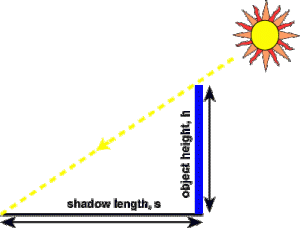
Trigonometric Functions are used to “solve” or think of a solution to everyday life problems even though we don’t see them all. For example, the picture above shows a sketch that we can solve by using trigonometry. There are many other examples like:

a. Hula Hoop-concept of tangents is used. Every time it rotates one side…

View original post 42 more words

Clash of Clans Math: Mortar Damage Per Hit

Today, we will use Math to calculate the Mortar Damage (Per Hit) for the popular game Clash of Clans!

Mortar6Mortar7Mortar8

Reference: http://clashofclans.wikia.com/wiki/Mortar

The formula needed is Damage per second (DPS) = Damage / Time.

Hence, Damage = DPS x Time!

The Mortar takes 5 seconds to fire. Hence, take the DPS reading from the game, and multiply it by 5, and you will get the actual damage done by the Mortar!

For instance, Mortar Level 1 has 4 DPS. Hence, each shot does 4×5=20 damage.

The full stats are listed here:

Level Damage per Second Damage per Shot
1 4 20
2 5 25
3 6 30
4 7 35
5 8 40
6 9 45
7 11 55
8 13 65

Subscribe to our free newsletter, for updates on Math, Education and other General Knowledge topics!

Enter your email address to subscribe to this blog and receive notifications of new posts by email.

Kinematics

Distance = Speed x Time

Time = Distance / Speed

Speed = Distance / Time

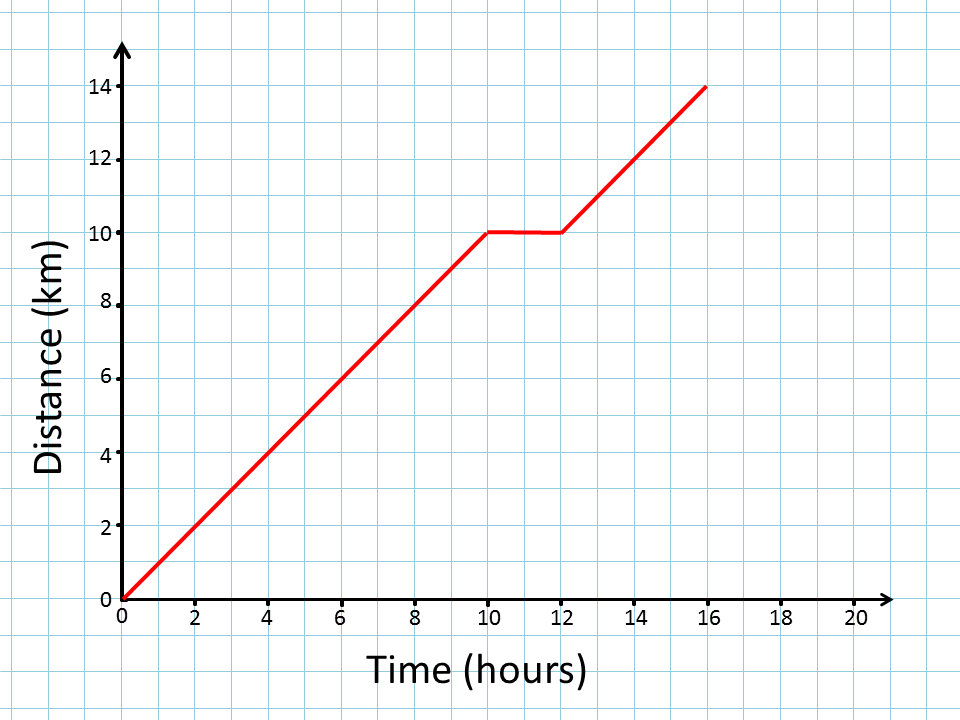
Distance-time graph

Speed = gradient

Remember Formula Using Units E.g.

Units of speed = km/h

Units of gradient = km/h

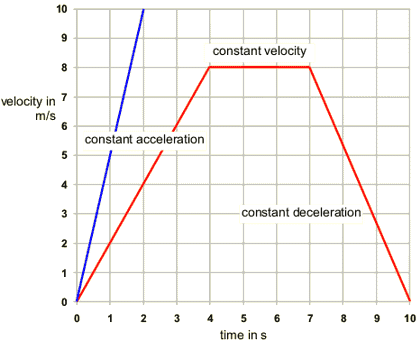
Speed-time graph

Distance travelled = Area under graph

Acceleration = gradient

Remember Formula using Units: E.g.

Units of distance = m

Units of area under graph = (m/s)s=m

Units of acceleration = m/s^2

Units of gradient = (m/s)/s=m/s^2

Useful Formula:

Area of trapezium = 1/2 x height x (sum of parallel sides)

The formula rhymes! 🙂

100 Chicken and Rabbit Questions and Answers

Questions: (Answers Below)

Generated using: Chicken and Rabbit Question Generator

Q1) A farmer has 35 chickens and cows in total.
He counted 108 legs altogether.
How many chickens and how many cows are there?

Q2) A farmer has 45 ducks and horses in total.
He counted 140 legs altogether.
How many ducks and how many horses are there?

Q3) A farmer has 6 chickens and cows in total.
He counted 20 legs altogether.
How many chickens and how many cows are there?

Q4) A farmer has 24 chickens and horses in total.
He counted 70 legs altogether.
How many chickens and how many horses are there?

Q5) A farmer has 33 chickens and horses in total.
He counted 84 legs altogether.
How many chickens and how many horses are there?

Q6) A farmer has 23 ducks and rabbits in total.
He counted 86 legs altogether.
How many ducks and how many rabbits are there?

Q7) A farmer has 31 chickens and cows in total.
He counted 96 legs altogether.
How many chickens and how many cows are there?

Q8) A farmer has 26 ducks and cows in total.
He counted 98 legs altogether.
How many ducks and how many cows are there?

Q9) A farmer has 25 chickens and rabbits in total.
He counted 80 legs altogether.
How many chickens and how many rabbits are there?

Q10) A farmer has 29 ducks and horses in total.
He counted 84 legs altogether.
How many ducks and how many horses are there?

Q11) A farmer has 24 chickens and horses in total.
He counted 62 legs altogether.
How many chickens and how many horses are there?

Q12) A farmer has 28 ducks and cows in total.
He counted 76 legs altogether.
How many ducks and how many cows are there?

Q13) A farmer has 27 chickens and cows in total.
He counted 104 legs altogether.
How many chickens and how many cows are there?

Q14) A farmer has 34 chickens and cows in total.
He counted 112 legs altogether.
How many chickens and how many cows are there?

Q15) A farmer has 39 chickens and cows in total.
He counted 124 legs altogether.
How many chickens and how many cows are there?

Q16) A farmer has 35 ducks and rabbits in total.
He counted 84 legs altogether.
How many ducks and how many rabbits are there?

Q17) A farmer has 30 chickens and rabbits in total.
He counted 76 legs altogether.
How many chickens and how many rabbits are there?

Q18) A farmer has 33 chickens and rabbits in total.
He counted 96 legs altogether.
How many chickens and how many rabbits are there?

Q19) A farmer has 31 ducks and cows in total.
He counted 68 legs altogether.
How many ducks and how many cows are there?

Q20) A farmer has 30 ducks and cows in total.
He counted 106 legs altogether.
How many ducks and how many cows are there?

Q21) A farmer has 11 ducks and horses in total.
He counted 26 legs altogether.
How many ducks and how many horses are there?

Q22) A farmer has 31 chickens and cows in total.
He counted 120 legs altogether.
How many chickens and how many cows are there?

Q23) A farmer has 46 ducks and cows in total.
He counted 150 legs altogether.
How many ducks and how many cows are there?

Q24) A farmer has 21 chickens and horses in total.
He counted 66 legs altogether.
How many chickens and how many horses are there?

Q25) A farmer has 55 ducks and horses in total.
He counted 164 legs altogether.
How many ducks and how many horses are there?

Q26) A farmer has 44 ducks and rabbits in total.
He counted 120 legs altogether.
How many ducks and how many rabbits are there?

Q27) A farmer has 36 ducks and cows in total.
He counted 94 legs altogether.
How many ducks and how many cows are there?

Q28) A farmer has 20 chickens and rabbits in total.
He counted 48 legs altogether.
How many chickens and how many rabbits are there?

Q29) A farmer has 37 ducks and cows in total.
He counted 128 legs altogether.
How many ducks and how many cows are there?

Q30) A farmer has 15 ducks and rabbits in total.
He counted 34 legs altogether.
How many ducks and how many rabbits are there?

Q31) A farmer has 25 chickens and cows in total.
He counted 90 legs altogether.
How many chickens and how many cows are there?

Q32) A farmer has 12 ducks and rabbits in total.
He counted 46 legs altogether.
How many ducks and how many rabbits are there?

Q33) A farmer has 47 ducks and cows in total.
He counted 150 legs altogether.
How many ducks and how many cows are there?

Q34) A farmer has 20 ducks and cows in total.
He counted 54 legs altogether.
How many ducks and how many cows are there?

Q35) A farmer has 45 ducks and rabbits in total.
He counted 132 legs altogether.
How many ducks and how many rabbits are there?

Q36) A farmer has 18 ducks and horses in total.
He counted 48 legs altogether.
How many ducks and how many horses are there?

Q37) A farmer has 17 chickens and horses in total.
He counted 64 legs altogether.
How many chickens and how many horses are there?

Q38) A farmer has 48 ducks and rabbits in total.
He counted 154 legs altogether.
How many ducks and how many rabbits are there?

Q39) A farmer has 37 chickens and horses in total.
He counted 106 legs altogether.
How many chickens and how many horses are there?

Q40) A farmer has 23 ducks and horses in total.
He counted 46 legs altogether.
How many ducks and how many horses are there?

Q41) A farmer has 34 chickens and cows in total.
He counted 92 legs altogether.
How many chickens and how many cows are there?

Q42) A farmer has 20 chickens and rabbits in total.
He counted 58 legs altogether.
How many chickens and how many rabbits are there?

Q43) A farmer has 31 ducks and cows in total.
He counted 118 legs altogether.
How many ducks and how many cows are there?

Q44) A farmer has 26 ducks and rabbits in total.
He counted 96 legs altogether.
How many ducks and how many rabbits are there?

Q45) A farmer has 23 ducks and horses in total.
He counted 84 legs altogether.
How many ducks and how many horses are there?

Q46) A farmer has 34 chickens and horses in total.
He counted 80 legs altogether.
How many chickens and how many horses are there?

Q47) A farmer has 51 ducks and cows in total.
He counted 156 legs altogether.
How many ducks and how many cows are there?

Q48) A farmer has 18 chickens and horses in total.
He counted 50 legs altogether.
How many chickens and how many horses are there?

Q49) A farmer has 8 chickens and horses in total.
He counted 18 legs altogether.
How many chickens and how many horses are there?

Q50) A farmer has 45 ducks and cows in total.
He counted 124 legs altogether.
How many ducks and how many cows are there?

Q51) A farmer has 28 chickens and horses in total.
He counted 100 legs altogether.
How many chickens and how many horses are there?

Q52) A farmer has 21 ducks and cows in total.
He counted 66 legs altogether.
How many ducks and how many cows are there?

Q53) A farmer has 19 ducks and rabbits in total.
He counted 70 legs altogether.
How many ducks and how many rabbits are there?

Q54) A farmer has 45 ducks and cows in total.
He counted 132 legs altogether.
How many ducks and how many cows are there?

Q55) A farmer has 17 chickens and rabbits in total.
He counted 48 legs altogether.
How many chickens and how many rabbits are there?

Q56) A farmer has 28 chickens and cows in total.
He counted 86 legs altogether.
How many chickens and how many cows are there?

Q57) A farmer has 41 chickens and cows in total.
He counted 122 legs altogether.
How many chickens and how many cows are there?

Q58) A farmer has 21 ducks and rabbits in total.
He counted 68 legs altogether.
How many ducks and how many rabbits are there?

Q59) A farmer has 11 chickens and rabbits in total.
He counted 30 legs altogether.
How many chickens and how many rabbits are there?

Q60) A farmer has 29 chickens and horses in total.
He counted 116 legs altogether.
How many chickens and how many horses are there?

Q61) A farmer has 24 chickens and cows in total.
He counted 52 legs altogether.
How many chickens and how many cows are there?

Q62) A farmer has 39 chickens and rabbits in total.
He counted 130 legs altogether.
How many chickens and how many rabbits are there?

Q63) A farmer has 23 ducks and rabbits in total.
He counted 54 legs altogether.
How many ducks and how many rabbits are there?

Q64) A farmer has 30 ducks and cows in total.
He counted 104 legs altogether.
How many ducks and how many cows are there?

Q65) A farmer has 16 ducks and horses in total.
He counted 32 legs altogether.
How many ducks and how many horses are there?

Q66) A farmer has 19 chickens and rabbits in total.
He counted 50 legs altogether.
How many chickens and how many rabbits are there?

Q67) A farmer has 52 chickens and cows in total.
He counted 156 legs altogether.
How many chickens and how many cows are there?

Q68) A farmer has 33 chickens and rabbits in total.
He counted 108 legs altogether.
How many chickens and how many rabbits are there?

Q69) A farmer has 55 ducks and rabbits in total.
He counted 168 legs altogether.
How many ducks and how many rabbits are there?

Q70) A farmer has 38 chickens and horses in total.
He counted 112 legs altogether.
How many chickens and how many horses are there?

Q71) A farmer has 42 ducks and rabbits in total.
He counted 110 legs altogether.
How many ducks and how many rabbits are there?

Q72) A farmer has 26 ducks and horses in total.
He counted 60 legs altogether.
How many ducks and how many horses are there?

Q73) A farmer has 39 ducks and rabbits in total.
He counted 104 legs altogether.
How many ducks and how many rabbits are there?

Q74) A farmer has 36 chickens and rabbits in total.
He counted 86 legs altogether.
How many chickens and how many rabbits are there?

Q75) A farmer has 14 chickens and cows in total.
He counted 38 legs altogether.
How many chickens and how many cows are there?

Q76) A farmer has 37 chickens and cows in total.
He counted 128 legs altogether.
How many chickens and how many cows are there?

Q77) A farmer has 39 ducks and cows in total.
He counted 102 legs altogether.
How many ducks and how many cows are there?

Q78) A farmer has 54 ducks and cows in total.
He counted 158 legs altogether.
How many ducks and how many cows are there?

Q79) A farmer has 20 chickens and rabbits in total.
He counted 74 legs altogether.
How many chickens and how many rabbits are there?

Q80) A farmer has 47 ducks and rabbits in total.
He counted 134 legs altogether.
How many ducks and how many rabbits are there?

Q81) A farmer has 25 chickens and rabbits in total.
He counted 70 legs altogether.
How many chickens and how many rabbits are there?

Q82) A farmer has 42 ducks and horses in total.
He counted 136 legs altogether.
How many ducks and how many horses are there?

Q83) A farmer has 41 ducks and rabbits in total.
He counted 128 legs altogether.
How many ducks and how many rabbits are there?

Q84) A farmer has 10 ducks and cows in total.
He counted 20 legs altogether.
How many ducks and how many cows are there?

Q85) A farmer has 34 ducks and horses in total.
He counted 116 legs altogether.
How many ducks and how many horses are there?

Q86) A farmer has 28 chickens and cows in total.
He counted 78 legs altogether.
How many chickens and how many cows are there?

Q87) A farmer has 12 ducks and rabbits in total.
He counted 32 legs altogether.
How many ducks and how many rabbits are there?

Q88) A farmer has 26 chickens and horses in total.
He counted 82 legs altogether.
How many chickens and how many horses are there?

Q89) A farmer has 20 ducks and cows in total.
He counted 70 legs altogether.
How many ducks and how many cows are there?

Q90) A farmer has 42 ducks and cows in total.
He counted 128 legs altogether.
How many ducks and how many cows are there?

Q91) A farmer has 15 ducks and cows in total.
He counted 42 legs altogether.
How many ducks and how many cows are there?

Q92) A farmer has 46 chickens and horses in total.
He counted 132 legs altogether.
How many chickens and how many horses are there?

Q93) A farmer has 23 chickens and horses in total.
He counted 46 legs altogether.
How many chickens and how many horses are there?

Q94) A farmer has 27 ducks and cows in total.
He counted 98 legs altogether.
How many ducks and how many cows are there?

Q95) A farmer has 40 ducks and horses in total.
He counted 134 legs altogether.
How many ducks and how many horses are there?

Q96) A farmer has 35 chickens and horses in total.
He counted 122 legs altogether.
How many chickens and how many horses are there?

Q97) A farmer has 24 chickens and horses in total.
He counted 96 legs altogether.
How many chickens and how many horses are there?

Q98) A farmer has 22 ducks and rabbits in total.
He counted 80 legs altogether.
How many ducks and how many rabbits are there?

Q99) A farmer has 11 chickens and cows in total.
He counted 36 legs altogether.
How many chickens and how many cows are there?

Q100) A farmer has 26 chickens and horses in total.
He counted 60 legs altogether.
How many chickens and how many horses are there?

Answers:
Q1) chickens=16
cows=19

Q2) ducks=20
horses=25

Q3) chickens=2
cows=4

Q4) chickens=13
horses=11

Q5) chickens=24
horses=9

Q6) ducks=3
rabbits=20

Q7) chickens=14
cows=17

Q8) ducks=3
cows=23

Q9) chickens=10
rabbits=15

Q10) ducks=16
horses=13

Q11) chickens=17
horses=7

Q12) ducks=18
cows=10

Q13) chickens=2
cows=25

Q14) chickens=12
cows=22

Q15) chickens=16
cows=23

Q16) ducks=28
rabbits=7

Q17) chickens=22
rabbits=8

Q18) chickens=18
rabbits=15

Q19) ducks=28
cows=3

Q20) ducks=7
cows=23

Q21) ducks=9
horses=2

Q22) chickens=2
cows=29

Q23) ducks=17
cows=29

Q24) chickens=9
horses=12

Q25) ducks=28
horses=27

Q26) ducks=28
rabbits=16

Q27) ducks=25
cows=11

Q28) chickens=16
rabbits=4

Q29) ducks=10
cows=27

Q30) ducks=13
rabbits=2

Q31) chickens=5
cows=20

Q32) ducks=1
rabbits=11

Q33) ducks=19
cows=28

Q34) ducks=13
cows=7

Q35) ducks=24
rabbits=21

Q36) ducks=12
horses=6

Q37) chickens=2
horses=15

Q38) ducks=19
rabbits=29

Q39) chickens=21
horses=16

Q40) ducks=23
horses=0

Q41) chickens=22
cows=12

Q42) chickens=11
rabbits=9

Q43) ducks=3
cows=28

Q44) ducks=4
rabbits=22

Q45) ducks=4
horses=19

Q46) chickens=28
horses=6

Q47) ducks=24
cows=27

Q48) chickens=11
horses=7

Q49) chickens=7
horses=1

Q50) ducks=28
cows=17

Q51) chickens=6
horses=22

Q52) ducks=9
cows=12

Q53) ducks=3
rabbits=16

Q54) ducks=24
cows=21

Q55) chickens=10
rabbits=7

Q56) chickens=13
cows=15

Q57) chickens=21
cows=20

Q58) ducks=8
rabbits=13

Q59) chickens=7
rabbits=4

Q60) chickens=0
horses=29

Q61) chickens=22
cows=2

Q62) chickens=13
rabbits=26

Q63) ducks=19
rabbits=4

Q64) ducks=8
cows=22

Q65) ducks=16
horses=0

Q66) chickens=13
rabbits=6

Q67) chickens=26
cows=26

Q68) chickens=12
rabbits=21

Q69) ducks=26
rabbits=29

Q70) chickens=20
horses=18

Q71) ducks=29
rabbits=13

Q72) ducks=22
horses=4

Q73) ducks=26
rabbits=13

Q74) chickens=29
rabbits=7

Q75) chickens=9
cows=5

Q76) chickens=10
cows=27

Q77) ducks=27
cows=12

Q78) ducks=29
cows=25

Q79) chickens=3
rabbits=17

Q80) ducks=27
rabbits=20

Q81) chickens=15
rabbits=10

Q82) ducks=16
horses=26

Q83) ducks=18
rabbits=23

Q84) ducks=10
cows=0

Q85) ducks=10
horses=24

Q86) chickens=17
cows=11

Q87) ducks=8
rabbits=4

Q88) chickens=11
horses=15

Q89) ducks=5
cows=15

Q90) ducks=20
cows=22

Q91) ducks=9
cows=6

Q92) chickens=26
horses=20

Q93) chickens=23
horses=0

Q94) ducks=5
cows=22

Q95) ducks=13
horses=27

Q96) chickens=9
horses=26

Q97) chickens=0
horses=24

Q98) ducks=4
rabbits=18

Q99) chickens=4
cows=7

Q100) chickens=22
horses=4

The Power of Maths

Nice post about “The Power of Maths”

drdeblogs's avatardrdeblogs

Image 1 My kids have invented a number called “one-finity”. It seems to be bigger than any other number they know but still finite, so they could theoretically have one-finity chocolate bars or one-finity birthday presents. It’s a word I hear frequently and I wonder if they’ll eventually brainwash me into using it.

Recently I’ve been thinking a lot about maths education. How can we improve students’ experience? Are the majority of students leaving with maths skills relevant to their future plans? Are we explaining why the techniques we teach are useful? The list goes on.

Despite recent suggestions in the media, there is one thing I have never questioned: if maths is worth teaching to everyone. I believe teaching maths is as essential as teaching a child to read. Whether we are buying groceries, choosing medical treatment, taking out a pension, reading a news article or refitting a kitchen, our lives…

View original post 129 more words

Quantum Groups

The subject of quantum groups is a fascinating and new area of mathematics.

The term “quantum groups” was first introduced by Vladimir Drinfeld in the 1980s. There is no formal definition for the term “quantum groups”, but in general it stands for certain special Hopf algebras.
In some of the literature, a quantum group is defined as a noncommutative and noncocommutative Hopf algebra.
Quantum groups have close connections with many areas of mathematics and physics.

A starting approach is to study the theory of quantum groups, and related topics like Hopf algebras. An example can be as follows.
Chapter 1 introduces the definition of Hopf algebras and its properties.
Chapter 2 focuses on the theory of quantum groups. Chapter 3 includes examples of quantum groups, with some examples from physics.
The main reference for the project can be Quantum Groups by C. Kassel ([2]).

For a project, one can refer to Part One of the book, from Chapter I to VII. Before researching on quantum groups, one can also study Hopf algebras, including viewing online lectures by F. Ardila ([3]).
A good project topic is to study and write a summary and a brief introduction to the vast subject of quantum groups.

Ampere’s Law Project

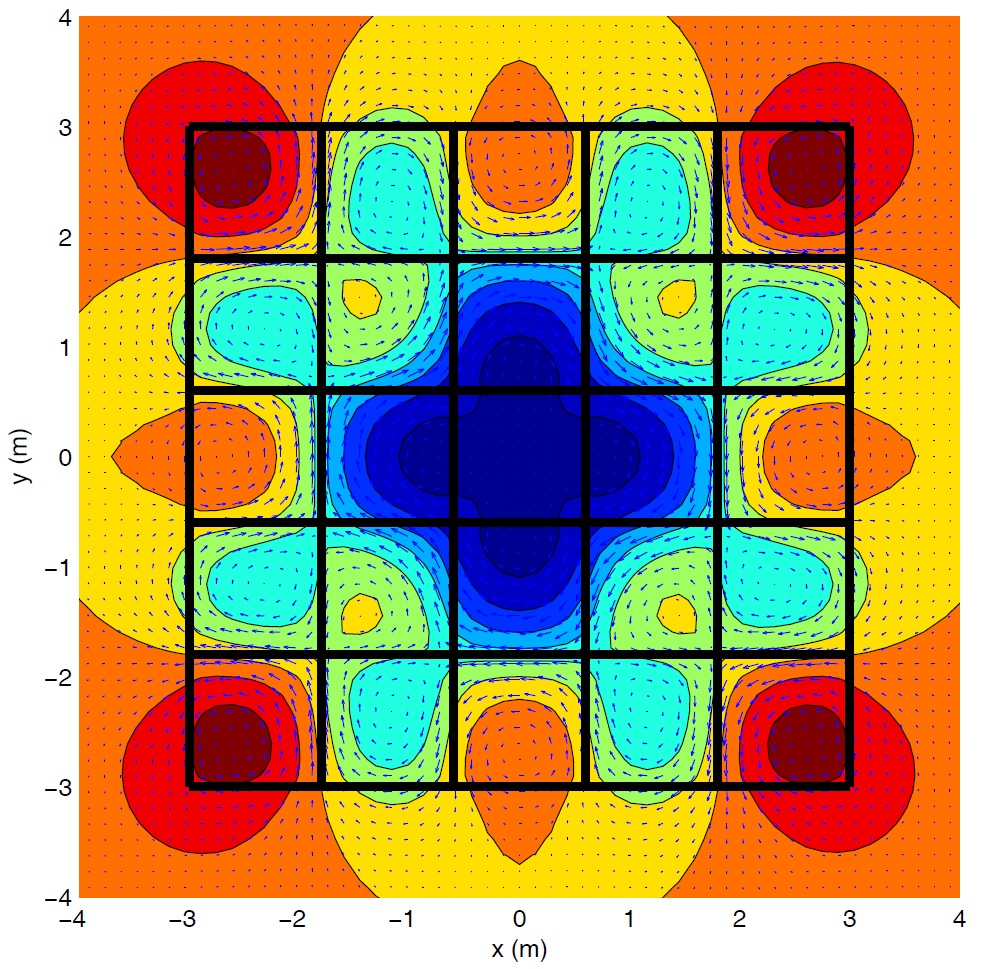
In this project, we investigate Ampere’s Law by considering a 2D problem
with the axis of the wire perpendicular to the plane. We calculate the magnetic potential A_z for a certain current density, and generate and plot the magnetic field.
Later, we generalize the approach to two wires with parallel currents and
antiparallel currents.
Finally, we adapt the code to plot for three wires, wire of other shapes
(\pi shape), and a 5×5 grid of 25 wires.
For the 5×5 grid of wires, we consider a case whereby each wire is
switched on one at a time, in a certain pattern. The objective is to observe
the interactions of magnetic fields.

wire

Primes and prime factorisation

Prime numbers are numbers that only have two factors, one and itself.

Examples of prime numbers are 2, 3, 5, 7, 11, 13, ….

Note: 1 is NOT a Prime number!!

Perfect squares and perfect cubes

For a perfect square’s prime factorisation, each factor is to the power of a multiple of 2.

For a perfect cube’s prime factorisation, each factor is to the power of a multiple of 3.

HCF & LCM

HCF, or Highest Common Factor, is the greatest common factor between two numbers.

LCM, or Lowest Common Multiple, is the smallest common multiple between two numbers.

Laws of Indices

Check out: Indices and Logarithm Laws

Featured Image -- 2381

PSLE Exam Dates

Source: http://www.seab.gov.sg/examCalendar.html

Please double check with the above source for confirmation!

2014 PSLE EXAMINATION CALENDAR (TENTATIVE) Registration Mon, 10 March – Fri, 28 March 2014


Oral Examination Thu, 14 August – Fri, 15 August 2014


Listening Comprehension Fri, 19 September 2014


Written Examination


Thu, 25 September – Wed, 01 October 2014


Marking Exercise Tue, 14 October – Fri, 17 October 2014


O Level Exam Dates

Source: http://www.seab.gov.sg/examCalendar.html

Please double-check with the above source for confirmation!

(TENTATIVE) Registration
School Candidates


Mon, 24 February – Fri, 7 March


Private Candidates

Mon, 10 March – Tue, 25 March


Oral Examination


EL


Thu, 14 August – Thu, 28 August


CL / ML / TL

Fri, 4 July – Fri, 18 July


CL / ML (Special Programme)

Mon, 11 August – Tue, 12 August


Arabic as 3rd Language / Bahasa

Indonesia as 3rd Language

Mon, 11 August – Wed, 13 August


CLB / MLB / TLB (Mid-Year)

Thu, 3 July


CLB / MLB / TLB (Year-End)

Fri, 26 September


Foreign Languages

Tue, 30 September – Tue, 7 October


Listening Comprehension (LC)


CL / ML / TL


Tue, 22 July


CLB / MLB / TLB (Mid-Year)

Tue, 22 July


Practical Examination


Science


Tue, 7 October – Thu, 16 October


Music Performing


Tue, 23 September – Thu, 25 September


Written Examination


Mid-Year CL/ML/TL Exam


Mon, 2 June


Mid-Year CLB/MLB/TLB Exam

Tue, 3 June


End of Year Exam

Mon, 20 October – Fri, 14 November


Design and Technology tuition

For other subjects besides Mathematics, request for a tutor at Startutor! Startutor is Singapore’s most popular online agency, providing tutors to your home. There are no extra costs for making a request. (Website: http://startutor.sg/request,wwcsmt)

Startutor is suitable for English Tuition, Social Studies Tuition, Geography Tuition, Physics Tuition, Chemistry Tuition, Biology Tuition, Chinese Tuition, Economics Tuition and more!

General Paper (GP) Tuition

For other subjects besides Mathematics, request for a tutor at Startutor! Startutor is Singapore’s most popular online agency, providing tutors to your home. There are no extra costs for making a request. (Website: http://startutor.sg/request,wwcsmt)

Startutor is suitable for English Tuition, Social Studies Tuition, Geography Tuition, Physics Tuition, Chemistry Tuition, Biology Tuition, Chinese Tuition, Economics Tuition and more!

Economics Tuition

For other subjects besides Mathematics, request for a tutor at Startutor! Startutor is Singapore’s most popular online agency, providing tutors to your home. There are no extra costs for making a request. (Website: http://startutor.sg/request,wwcsmt)

Startutor is suitable for English Tuition, Social Studies Tuition, Geography Tuition, Physics Tuition, Chemistry Tuition, Biology Tuition, Chinese Tuition, Economics Tuition and more!

Chinese Tuition 华文补习

For other subjects besides Mathematics, request for a tutor at Startutor! Startutor is Singapore’s most popular online agency, providing tutors to your home. There are no extra costs for making a request. (Website: http://startutor.sg/request,wwcsmt)

Startutor is suitable for English Tuition, Social Studies Tuition, Geography Tuition, Physics Tuition, Chemistry Tuition, Biology Tuition, Chinese Tuition, Economics Tuition and more!

Biology Tuition

For other subjects besides Mathematics, request for a tutor at Startutor! Startutor is Singapore’s most popular online agency, providing tutors to your home. There are no extra costs for making a request. (Website: http://startutor.sg/request,wwcsmt)

Startutor is suitable for English Tuition, Social Studies Tuition, Geography Tuition, Physics Tuition, Chemistry Tuition, Biology Tuition, Chinese Tuition, Economics Tuition and more!

Chemistry Tuition

For other subjects besides Mathematics, request for a tutor at Startutor! Startutor is Singapore’s most popular online agency, providing tutors to your home. There are no extra costs for making a request. (Website: http://startutor.sg/request,wwcsmt)

Startutor is suitable for English Tuition, Social Studies Tuition, Geography Tuition, Physics Tuition, Chemistry Tuition, Biology Tuition, Chinese Tuition, Economics Tuition and more!

Physics Tuition

For other subjects besides Mathematics, request for a tutor at Startutor! Startutor is Singapore’s most popular online agency, providing tutors to your home. There are no extra costs for making a request. (Website: http://startutor.sg/request,wwcsmt)

Startutor is suitable for English Tuition, Social Studies Tuition, Geography Tuition, Physics Tuition, Chemistry Tuition, Biology Tuition, Chinese Tuition, Economics Tuition and more!

Geography Tuition

For other subjects besides Mathematics, request for a tutor at Startutor! Startutor is Singapore’s most popular online agency, providing tutors to your home. There are no extra costs for making a request. (Website: http://startutor.sg/request,wwcsmt)

Startutor is suitable for English Tuition, Social Studies Tuition, Geography Tuition, Physics Tuition, Chemistry Tuition, Biology Tuition, Chinese Tuition, Economics Tuition and more!

Social Studies Tuition

For other subjects besides Mathematics, request for a tutor at Startutor! Startutor is Singapore’s most popular online agency, providing tutors to your home. There are no extra costs for making a request. (Website: http://startutor.sg/request,wwcsmt)

Startutor is suitable for English Tuition, Social Studies Tuition, Geography Tuition, Physics Tuition, Chemistry Tuition, Biology Tuition, Chinese Tuition, Economics Tuition and more!

English Tuition

For other subjects besides Mathematics, request for a tutor at Startutor! Startutor is Singapore’s most popular online agency, providing tutors to your home. There are no extra costs for making a request. (Website: http://startutor.sg/request,wwcsmt)

Startutor is suitable for English Tuition, Social Studies Tuition, Geography Tuition, Physics Tuition, Chemistry Tuition, Biology Tuition, Chinese Tuition, Economics Tuition and more!

Differentiation Rules

Today, we will recap the four basic rules of Differentiation:

  • Differentiating Powers of x

\displaystyle\frac{d}{dx}x^n=nx^{n-1}

(Power comes down, and the remaining power reduced by 1)

  • Chain Rule (i.e. times differentiate inside the bracket)
  • Product Rule

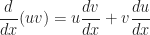
\displaystyle\frac{d}{dx}(uv)=u\frac{dv}{dx}+v\frac{du}{dx}

(Keep the first term X differentiate the second, PLUS keep the second term X differentiate the first)

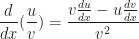
  • Quotient Rule

\displaystyle\frac{d}{dx}(\frac{u}{v})=\frac{v\frac{du}{dx}-u\frac{dv}{dx}}{v^2}

(Keep the bottom term differentiate the top MINUS keep the top differentiate the bottom, whole thing over v^2)

Maths- Tessellations, rotational symmetry and art

schooledwa's avatarschooledwa

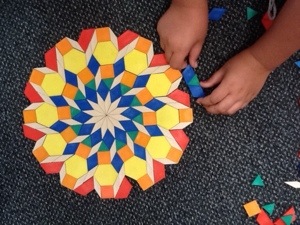
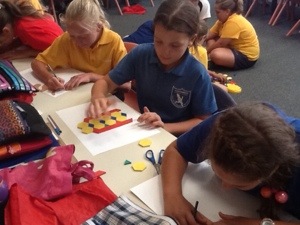
This week the students have been learning a bit about geometric properties. We look at what symmetrical means and where we find it in real life. The students found out how to find lines of symmetry and what it means to have rotational symmetry. By looking at the work of MC Escher the students began making their own tessellating shape patterns using regular shapes and creating their own jigsaw pieces. The jigsaw pieces were made by drawing a random squiggle on one side of a square piece of card and then sticking it to the vertically opposite side. I hope you agree the work they have produced is pretty amazing!

20140223-113524.jpg

20140223-113543.jpg

View original post

History Included part 1

kaleb40's avatarTo Accumulate a Rate --- Integrate!

20140222-135422.jpg

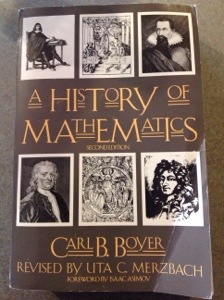
Doesn’t it seem like we should teach math with it’s history attached. Wouldn’t adding a historical perspective while teaching and learning about Mathematics help bring the concepts to life? Sometimes it’s hard to know the exact approach to include it and sometimes it’s hard because we are not very familiar with the history. And let’s face it, textbooks do a horrible job including the history, occasionally attaching mere tidbits here and there that usually are superficially related to the content on the surrounding pages.
I’m going to read, “A History of Mathematics,” by Carl Boyer to help me learn more of the history and get some perspective on including it in lessons. Hopefully I’ll come up with some great ideas about embedding historical motivation for the discovery of Mathematics into my teaching.
More to come….

View original post

For your students’ sake: Don’t stop being a learner

Andrew's avatarMr. Shauver - Learner Educator

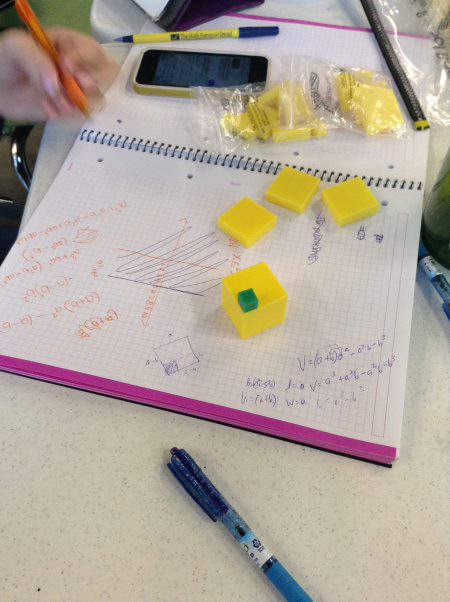
Yesterday, we designed an Algebra II lesson using 3D modeling to derive the factored formula for difference of cubes. As we began to finish up, Sheila (@mrssheilaorr), the math teacher sitting beside me made a passing reference to being frustrated trying to prove the sum of cubes formula. Me, being a geometry teacher by trade decided to give it a try perhaps hoping to offer a fresh perspective. I mean, I was curious. It looked like this:

2014-02-20 13.26.00

On the surface, it didn’t seem unapproachable. I quickly became frustrated as well. Most frustrating was the mutual feeling that we were so stinkin’ close to cracking the missing piece. Finally, Luann, a math teaching veteran sat down beside us, commented on her consistently getting stuck in the same spot we were stuck and then, as the three of us talked about it, the final piece fell in and it all made sense (it’s…

View original post 467 more words

Threes: A Simple and Addictive Grid-based Math Puzzle for iOS

kunalchheda05's avatarTechGrade

Let’s be honest. One of the most dangerous things about trying new games every now and then on the iPhone or other iOS devices is that you risk finding something cheap and addictive that can seriously take away from your free time. And the fact that in most cases these games can be played using just one hand makes them even more fun.

Threes-Review

View original post 397 more words

JC Cut Off Points (Latest)

Joint Admissions Exercise 2014

Source: http://nanyangjc.org/index.php/joint-admissions-exercise-2014/

Cut Off & Bonus Points

Applicants applying to enter NYJC must meet the entry criteria based on the L1R5 aggregate.For JAE, this aggregate is calculated from results obtained in the previous year’s Singapore-Cambridge GCE ‘O’ Level Examinations.Please note that the entry criteria changes from year to year and the following table should only be used as a guide.

MINIMUM L1R5 AGGREGATE [after bonus points deduction]

FACULTY ARTS SCIENCE
JAE 2013 8 8

Source: http://www.ajc.edu.sg/admission/admission_jae.html

AJC Cut Off Points:

FACULTY ARTS SCIENCE
JAE 2013 8 10

Free Resources for Higher Math

linklady's avatarGratisLearning

InteractiveMathematics There is something for those who are learning everything from integers to higher (gulp) calculus here. There is also the option to download a variety of graph paper from the site as well. In addition to the examples, answers and explanations of a wide variety of math levels, there are also some games thrown in, just in case you didn’t get enough math fun in for the day. I love that this site, and all of the other free math sites exist, I just wish all of this free help had been around in my day…(sighs)

WolframMathWorld While this site is primarily geared toward higher math, it’s an invaluable resource to have “at the ready” for when your student (or you) venture into this level of mathematics. A worthy site to keep on hand!

View original post