
Youngest NUS graduates for 2012 – 08Jul2012

Source: http://www.youtube.com/watch?v=q-53rIy7RGg

Published on Jul  9, 2012

SINGAPORE – Douglas Tan was only seven years old when he discovered a knack for solving mathematical problems, tackling sums meant for the upper primary and secondary levels.
He went on to join the Gifted Programme in Rosyth Primary School and, in 2006, enrolled in the National University of Singapore High School of Math and Science (NUSHS). At 15, he was offered a place at the National University of Singapore (NUS) Faculty of Science to study mathematics.
Tomorrow, the 19-year-old will be this year’s youngest graduate at NUS, receiving his Mathematics degree with a First Class Honours. This puts him almost six years ahead of those his age.
Douglas, who is currently serving his National Service (NS), said the thought of going to prestigious universities overseas never occurred to him. “I was just happy doing what I was doing – solving math problems,” he said.
In every class he took, Douglas was the youngest but it was neither “awkward nor tough to fit in”, he said. In fact, his age was a good conversation starter and his classmates, who were typically three to five years older, would take care of him.
Seeing that he could complete his degree before he entered NS, Douglas took on three modules a semester and completed the four-year course in just two and a half years.
The longest he had ever spent on a math problem was 10 hours over a few days. “I’m a perfectionist. When I do a problem, I try to do it with 100 per cent,” he noted.
Douglas aspires to be a mathematician and is looking into a Masters degree but he has yet to decide if he wants to do it here or overseas.
Another young outstanding graduate this year is 20-year-old Carmen Cheh, who received her degree in Computer Science last Friday with a First Class Honours and was on the dean’s list every academic year of the four-year course.
Offered a place at the NUS School of Computing after three and a half years in NUSHS, Carmen was then the youngest undergraduate of the programme at 16.
She was introduced to computer science and concept programming at 11 by her father, a doctor who also challenged her to solve puzzles he created. Her inability to solve them spurred her interest in the subject.
Carmen, who is from Perak in Malaysia, said she decided to study for her degree in Singapore as she wanted to study in a country she felt “comfortable” in. At the same time, she was awarded an ASEAN scholarship to study in the Republic.
Next month, Carmen will begin her doctoral programme in Computer Science with a research assistantship at the University of Illinois at Urbana-Champaign.
The youngest ever to enrol into the NUS undergraduate programme is Abigail Sin, who entered the Yong Siew Toh Conservatory of Music at 14. She graduated in 2010 at age 18 with First Class Honours. She also received the Lee Kuan Yew gold medal.
This week, NUS celebrates the graduation of 9,913 students, its largest cohort in six years.
http://www.todayonline.com/Singapore/EDC120709-­0000039/Theyre-ahead-of-the-class
The Singapore Math

tomcircle's avatarMath Online Tom Circle

The famous Singapore Math for children in primary schools is based on  visual models.

The Singapore Ministry of Education has published a new 2013 Math syllabus for primary and secondary schools, which will roll out in examinations within 4 to 6 years. Todate only Primary 1 and Secondary 1 Math syllabuses are published here:

http://www.moe.gov.sg/education/syllabuses/sciences

View original post

Algebra vs Singapore Math

tomcircle's avatarMath Online Tom Circle

Who wins?

This comic video illustrates Singapore Math’s Arithmetics Polya-style problem solving process vs Algebra’s mechanical method.

The problem is as follow:
R is 3 times older than S two years ago. From now 2 years later, their total age is 32. How old is R now ?

See my previous blog (search “Monkey”) the Nobel Physicist Paul Dirac’s problem “The Monkeys and Coconuts“, 3 methods are used: 2 adanced modern math (by Sequence, eigenvector & eigenvalue), and the easiest & intuitive method (by Singapore Modelling Math). High-school Algebra method is impossible, if not cumbersome, to solve the Monkey problem !

View original post

St Gabriel’s Secondary School Mathematics Syllabus

Source: https://sites.google.com/a/moe.edu.sg/st-gabriel-s-secondary-school-maths-dept/syllabuses

For more information on the various Mathematics syllabuses, please click on the links provided at

“I hear, I forget. I see, I remember. I do, I understand.” (Chinese proverb that was a favorite of Moore’s. Quoted in Halmos, P.R. (1985) I want to be a mathematician: an automathography. Springer-Verlag: 258)

“I hear, I forget. I see, I remember. I do, I understand.” (Chinese proverb that was a favorite of Moore’s. Quoted in Halmos, P.R. (1985) I want to be a mathematician: an automathography. Springer-Verlag: 258)

The Moore method is a deductive manner of instruction used in advanced mathematics courses. It is named after Robert Lee Moore, a famous topologist who first used a stronger version of the method at the University of Pennsylvania when he began teaching there in 1911.

Source: http://en.wikipedia.org/wiki/Moore_method

Information about Mathematics Department Courses (Nanyang JC)

Source: http://nanyangjc.org/index.php/staff/organisation-chart/mathematics-department/

H1 Mathematics

H1 Mathematics provides a foundation in mathematics for students who intend to enrol in university courses such as business, economics and social sciences. The syllabus aims to develop mathematical thinking and problem solving skills in students. A major focus of the syllabus will be the understanding and application of basic concepts and techniques of statistics. This will equip students with the skills to analyse and interpret data, and to make informed decisions. The use of graphic calculator is expected.

H2 Mathematics

H2 Mathematics prepares students adequately for university courses including mathematics, physics and engineering, where more mathematics content is required. The syllabus aims to develop mathematical thinking and problem solving skills in students. Students will learn to analyse, formulate and solve different types of problems. They will also learn to work with data and perform statistical analyses. The use of graphic calculator is expected.

This subject assumes the knowledge of O-Level Additional Mathematics.

Continue reading at http://nanyangjc.org/index.php/staff/organisation-chart/mathematics-department/

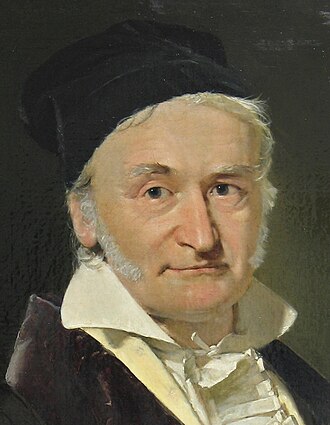
Carl Friedrich Gauss

Source: http://en.wikipedia.org/wiki/Carl_Friedrich_Gauss

Johann Carl Friedrich Gauss (/ɡs/; German: Gauß, pronounced [ɡaʊs] ( listen); Latin: Carolus Fridericus Gauss) (30 April 1777 – 23 February 1855) was a German mathematician and physical scientist who contributed significantly to many fields, including number theory, algebra, statistics, analysis, differential geometry, geodesy, geophysics, electrostatics, astronomy and optics.

Sometimes referred to as the Princeps mathematicorum[1] (Latin, “the Prince of Mathematicians” or “the foremost of mathematicians”) and “greatest mathematician since antiquity“, Gauss had a remarkable influence in many fields of mathematics and science and is ranked as one of history’s most influential mathematicians.[2]

Carl Friedrich Gauss.jpg

Continue reading at http://en.wikipedia.org/wiki/Carl_Friedrich_Gauss

अगले साल शुरू करने के लिए गणित समूह ट्यूशन क्लास, 2014.

अगले साल शुरू करने के लिए गणित समूह ट्यूशन क्लास, 2014.
गणित शिक्षण केंद्र