This blog post is on Rouche’s Theorem and some applications, namely counting the number of zeroes in an annulus, and the fundamental theorem of algebra.
Rouche’s Theorem: Let  ,
,  be holomorphic inside and on a simple closed contour
  , such that
  on . Then
  and
and  have the same number of zeroes (counting multiplicities) inside .
Rouche’s Theorem is useful for scenarios like this: Determine the number of zeroes, counting multiplicities, of the polynomial  in the annulus
  .
.
Solution:
Let  be the unit circle
  . We have

on .
Since  has 2 zeroes in , therefore has 2 zeroes inside , by Rouche’s Theorem.
Let  be the circle
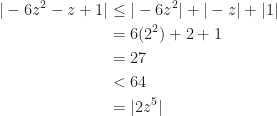
on . Therefore has 5 zeroes inside .
Therefore has 5-2=3 zeroes inside the annulus.
We do a computer check using Wolfram Alpha (http://www.wolframalpha.com/input/?i=2z%5E5-6z%5E2-z%2B1%3D0). The moduli of the five roots are (to 3 significant figures): 0.489, 0.335, 1.46, 1.45, 1.45. This confirms that 3 of the zeroes are in the given annulus.
Fundamental Theorem of Algebra Using Rouche’s Theorem
Rouche’s Theorem provides a rather short proof of the Fundamental Theorem of Algebra: Every degree n polynomial with complex coefficients has exactly n roots, counting multiplicities.
Proof: Let  . Chose
  sufficiently large so that on the circle
  ,
,
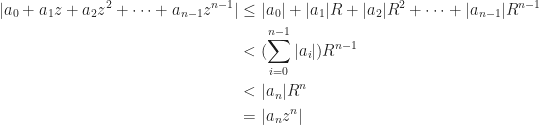
Since  has
has  roots inside the circle, also has roots in the circle, by Rouche’s Theorem. Since
  can be arbitrarily large, this proves the Fundamental Theorem of Algebra.

 is a function that is holomorphic (analytic) and injective, then
  for all
  in
in  . The condition of having nonzero derivative is equivalent to the condition of conformal (preserves angles). Hence, this result can be stated as “A holomoprhic and injective function is conformal.”
 for some
  . Using Taylor series,
 for all
  , with
  ,
,  and
and  where
where  is analytic.
 , we write
  where
where  .
. on a small circle centered at
  has at least two zeroes inside that circle, Rouche’s theorem implies that
  has at least two zeroes there.
 but sufficiently close to
  ,
,  be the two roots of
  ,
,  . If
. If  , then
  for some analytic function
  . This means
  , which implies that
  are holomorphic inside and on some closed contour
  in the disk
  . Let
. Let  ,
,  , then
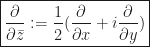
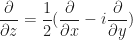
 . The Cauchy-Riemann equations are:
 where
where  is the Wirtinger derivative with respect to the conjugate variable.
 is a complex-valued function which is differentiable as a function
  . Then
  iff it satisfies the Cauchy-Riemann equations in the domain.
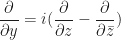
 by considering
  . Since
  , we can also view
  .
. .
. .
. . Thus,
  .
. .
. be the open unit disk in the complex plane
  centered at the origin and let
  be a holomorphic map such that
  .
. for all
  and
and  .
. for some non-zero
  , then
  for some
  with
with  .
. of the complex plane
  for all
  cannot exhibit a true local maximum that is properly within the domain of
  .
. to
to  and the top half of the circle
  .
. . If
. If  , then
  . Furthermore if
  .
. and
and  be analytic at a point
  , and
, and  , then
  and
and 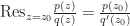 .
. using residue theory from Complex Analysis. This is something amazing about Complex Analysis, it can be used to solve integrals in real numbers, something which is not immediately obvious.
 be a simple closed positively oriented contour. If a function
  (
( ) inside
  .
. . The coefficients
  of the Laurent series contain a finite (nonzero) number of nonzero terms, i.e.
  .
.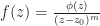 where
where  is analytic and nonzero at
  if
if  and
and  . if
. if  .
. is continuous in
 ,
,  .
.![\int_C f(z)\,d(z)=\int_a^b f[z(t)]z'(t)\,dt](https://s0.wp.com/latex.php?latex=%5Cint_C+f%28z%29%5C%2Cd%28z%29%3D%5Cint_a%5Eb+f%5Bz%28t%29%5Dz%27%28t%29%5C%2Cdt&bg=ffffff&fg=1a1a1a&s=0&c=20201002) where
where  and
and  . Thus

 and
and  are also continous. This is exactly what we need for Green’s Theorem.
 which is exactly zero in view of the Cauchy-Riemann equations
  ,
,  !
! onto the upper half plane. Reference book is
  , Example 3 page 44.
 . This is easily accomplished by
  . The factor
  is responsible for the rotation (90 degree anticlockwise), while the factor
  is responsible for the scaling.
 . Consider line
  . This line will be mapped onto the ray (from the origin) with argument
  . Since
  that “sweeps” across and covers the entire upper half plane.
 will do the job for mapping the vertical strip
  onto the upper half plane
  .
. , under the transformation
  , where
  are of the same sign.
 , note that by arguments similar to
  .
. , upon completing the square, becomes
 — Circle 1
 is transformed into:
 — Circle 2
 gets larger, the radius of the resultant circle gets smaller.
 to the vertical strip
  . Now we are in the situation of our above analysis, thus inversion
  . The map
  (reflection), followed by
  , finally finishing up with a scaling of factor 2 brings us to the vertical strip desired.
 to the very nice strip
  .
. in a subsequent blog post.
 , with
  , and
, and  are complex constants, is called a linear fractional transformation, or Mobius transformation.
 ,
,  ,
,  onto the points
  ,
,  ,
,  . (Question taken from
 ,
,  and
and  .
. :
:  ,
,  ,
,  . Substituting back into the Mobius Transformation gives us the answer.
 Mathtuition88