

In a statistical hypothesis test, a critical value is a precise point on a probability distribution that marks the border between the area of acceptance and the region of rejection. These tests are intended to determine if a certain population parameter hypothesis should be rejected in favor of a different hypothesis based on the observed data.
The critical value is used to assess if a test statistic falls into the critical region and the null hypothesis is rejected while conducting hypothesis testing. If the test statistic is greater than the threshold number, likely, that the observed data did not occur as predicted by the null hypothesis.
In this article, we will discuss the introduction, its representation, confidence interval, and detailed F critical value. Also, we explained the topic with the help of example.
Critical value and its representation
The critical value is a crucial concept in statistical hypothesis testing, providing a clear boundary that helps us make decisions about the validity of hypotheses and the significance of observed data. It acts as a dividing line between acceptance and rejection regions in various statistical tests.
Represented numerically, a critical value corresponds to a specific point on a probability distribution, often derived from standard tables or statistical software. This point is chosen based on the desired significance level (alpha), which indicates the probability of making a Falsely rejecting a correct null hypothesis is a type I mistake.
In the context of hypothesis testing, here’s how critical values are used:
· Null Hypothesis ((H0) and Alternative Hypothesis ((Ha)): In any hypothesis test, we start with a null hypothesis that represents a default assumption about a population parameter. The competing theory puts out a different assertion.
· Significance Level (alpha): The significance level is chosen before conducting the test and represents the probability of rejecting the null hypothesis when it’s true. The usual thresholds for significance are 0.05 (5%) or 0.01 (1%).
· Test Statistic Calculation: Depending on the test being conducted (e.g., t-test, z-test, chi-square test), a test statistic is calculated from the observed data. This statistic measures how far the observed data deviates from what is expected under the null hypothesis.
· Critical Value: The critical value is found from statistical tables or calculated using specific distributions (like the standard normal distribution for z-tests) and corresponds to the chosen significance level.
· Decision: If the test statistic falls in the acceptance region (within the critical value), there isn’t enough evidence to reject the null hypothesis.
Confidence interval
In this parts we discuss the detailed about confidence interval.
Step 1: Determine the sample mean and sample standard deviation or proportion, depending on the type of test being conducted.
Step 2: Determine the critical value based on the required confidence level and degrees of freedom.
Step 3: The result of multiplying the crucial value by the statistic’s standard error gives the margin of error. The standard error, which is the standard deviation of the sampling distribution of the statistic, is obtained by dividing the sample standard deviation by the square root of the sample size (n) for means or by the square root of the product of the sample proportion and its complement by the sample size for proportions.
Step 4: To determine the lower and upper boundaries of the confidence interval we subtract the margin of error from the sample statistic and add it back.
F-Critical value
The F-test is mostly used to compare two sets where the variance of the two sets is known. F-test results are frequently utilized for regression analysis.
We can find the F critical value given in the following step.
· Evaluate the value of α.
· To obtain the value of x subtract one from the first sample size. The first degree of freedom is provided by this method.
· Similarly, repeat this process for the second sample of size obtain the second df, and give the name of y.
· The junction of the y row and the x column will yield the f critical value using the f distribution table.
For large samples test statistic: f= σ 21/ σ21
The second sample variance is σ 22, first sample Variance is σ 21
For small samples test statistic: f= s21/ s22
s22 called the variance of the second sample and s21 called the variance of the first sample.
Example section
Example 1:
Assume a one-tailed t-test is being run on data with a sample size of 9 and a significance level of 0.025. Locate the crucial value next.
Solution
Step 1:
Given the data in question
n=9
df=9-1= 8
Step 2:
Using the one-tailed t-distribution table
t(8, 0.025)= -2.896
You can also find the critical t-value with a t value calculator instead of using t-distribution tables.
Example number 2:
Examine the critical value for a two-tailed f test conducted on the sample is given at a α = 0.05
Variance = 100, Sample size = 21
Variance = 90, Sample size = 41
Solution
To find the critical value for a two-tailed F-test, you can follow these steps:
Step 1: From both the nominator and denominator find the df.
For the numerator degrees of freedom (df1), it’s the sample size of the first group minus 1:
df1 = Sample size of Group 1 – 1
= 21 – 1
= 20
For the denominator degrees of freedom (df2), it’s the sample size of the second group minus 1:
df2 = Sample size of Group 2 – 1
= 41 – 1
= 40
Step 2: Choose the significance level (α).
In your case, α = 0.05.
Step 3: Find the critical value from the F-distribution table or calculator.
The number that leaves 2.5% of the area in the left tail and 2.5% is referred to as the right-tailed F distribution will be the crucial value for a two-tailed F-test at a 0.05 significance level.
You need to find the critical F-value with df1 = 20 and df2 = 40 at the 0.025 significance level (since it’s a two-tailed test).
Using an F-distribution table or calculator, you can find that the critical F-value is approximately 2.535.
So, for the given sample sizes and significance levels:
Critical F-value = 2.535
Maximum asked question
Question number 1:
When doing a statistical test, what does a critical value signify?
Answer:
A critical value marks the point beyond which you would reject the null hypothesis. The observed data may not have occurred under the null hypothesis if the estimated test statistic is greater than the critical value, according to this hypothesis.
Q. Number 2:
What are one-tailed and two-tailed critical values?
Answer:
One-tailed critical values are used in hypothesis tests where the alternative hypothesis is directional (greater than or less than). Two-tailed critical values are used when the alternative hypothesis is non-directional (not equal to). Two-tailed tests take into account both of the distribution’s extremes.
Question number 3:
Can critical values be found in standard statistical tables?
Answer:
Yes, critical values for common significance levels can often be found in statistical tables associated with various distributions. Many statistical software packages also provide critical values based on the chosen parameters.
Conclusion
In this article, we have discussed the introduction, confidence interval, its representation and detailed F critical value. Also, we with the help of detailed example we more explained the critical value. After complete understanding, anyone can defend this article easily.


 .
.
 is a good book to start learning from. An intuitive, yet precise introduction to probability theory, stochastic processes, and probabilistic models used in science, engineering, economics, and related fields. You may also wish to refer to our comprehensive list of

 by the eccentric French Mathematician Cédric Villani who received the Fields’ Medal in 2010. It contains the story of his life, his favorite songs, his love of manga, and the imaginative stories he tells his children.
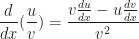 , you will automatically memorize it once you have done enough practice.

 Mathtuition88