
How To Get a Degree in Mathematics: Preparing for the Journey

Pursuing a degree in mathematics can open numerous doors to careers in education, finance, technology, and beyond. Mathematics is the foundation of logical reasoning and quantitative analysis, skills highly sought after in many fields. Before you start on this path, it’s helpful to understand what lies ahead and how to prepare for the academic challenges.

Exploring the Scope of a Mathematics Degree

A mathematics degree isn’t just about learning to solve equations and mathematical problems; it’s about understanding patterns and structures and using this knowledge to solve real-world problems. At the core, you’ll engage in studies ranging from pure mathematics, which explores fundamental theories like number theory and abstract algebra. Additionally, you’ll delve into applied mathematics, focusing on using these theories and analytical skills to solve practical problems in science, business, and engineering.

Academic Preparation

To excel in mathematics, start with a solid foundation in high school mathematics. Subjects such as algebra, geometry, calculus, and statistics are essential. If your school offers advanced placement math courses or dual-enrollment options, taking these can give you a head start. In addition to formal classes, engaging with online resources and video tutorials can enhance your understanding and prepare you for college-level coursework.

Working on personal projects or exploring mathematical software tools can also deepen your practical understanding of mathematical concepts. It’s also beneficial to attend math-related workshops or lectures, which can provide insights into the latest developments in the field and foster a deeper interest in mathematics.

Choosing the Right College

Selecting the right institution is pivotal. Look for colleges with robust mathematics departments that offer a range of courses and specialties. Consider faculty expertise, available research opportunities, and the overall focus of the program—whether it leans more toward theoretical or practical applications of math.

You should also think about the overall environment and support services of the college. Supportive tutoring, mental health services, and academic advising can make a significant difference in your educational experience.

Application Process

When applying to programs, pay attention to the prerequisites required by each university. Ensure your application highlights not only your academic achievements but also your extracurricular involvement in mathematics.

Letters of recommendation are crucial; seek them from math teachers or mentors who can speak directly to your abilities and potential in the field. Craft a personal statement that reflects your passion for mathematics and your long-term career goals, explaining why you are drawn to this area of study.

Financing Your Education

Understanding the financial aspect of your education is essential. Research scholarships, grants, and fellowship opportunities specifically targeted at STEM (science, technology, engineering, and mathematics) students. Many organizations and colleges offer financial aid for students who excel in mathematics because of the critical need for these skills in the workforce.

Additionally, it’s wise to explore work-study programs that allow you to work part-time while studying, often in roles related to your field of study. Many universities also offer teaching assistantships or research assistantships to graduate students, which typically cover tuition and provide a stipend. Applying early for financial aid and continuously searching for funding opportunities can alleviate financial stress and allow you to focus more fully on your studies.

Career Opportunities

Graduating with a degree in mathematics equips you with a versatile skill set. You might choose to pursue careers in education, actuarial science, data analysis, or even in emerging tech fields like machine learning and artificial intelligence. Companies often seek out math graduates for their analytical abilities and problem-solving skills. Beyond these paths, mathematicians are invaluable in government and public policy, aiding in statistical analysis, budgeting, and logistics.

Careers in finance, such as quantitative analysis or risk management, also highly value the precise and logical thinking developed in mathematics studies. Additionally, as technology evolves, the need for mathematicians in fields like cybersecurity, the social sciences, and computational biology continues to grow, offering even more avenues for professional advancement.

Continuing Education

For those looking to delve deeper into mathematics or specialize further, considering postgraduate studies is a wise choice. Master’s and doctoral programs offer opportunities to specialize in areas like cryptography, numerical analysis, or mathematical biology. Advanced degrees can also lead to careers in research or academia. Pursuing these advanced studies enhances your understanding of complex mathematical concepts and opens doors to specialized roles in industries that depend heavily on advanced analytics and problem-solving capabilities.

Additionally, engaging in postgraduate research can contribute to significant advancements in mathematical sciences, impacting technology, science, and engineering fields globally. These programs often provide access to cutting-edge technology and collaborations with leading professionals and researchers, further enriching your educational and professional journey in mathematics.

Final Thoughts

Embarking on a math degree requires careful preparation and commitment. By understanding the academic requirements, choosing the right college, and exploring future career possibilities, you set yourself up for success in a field that values precision and analytical skills. Engage actively in your education journey, and you’ll find that mathematics can offer not just a degree but a lifetime of rewarding challenges and opportunities.
10 Tips for Helping Your Child Prepare for Online Maths Tutoring

Singapore ranks as one of the top countries in the world in terms of its education system. The last Programme for International Student Assessment (PISA) indicates that Singaporean students ranked second in the world compared to students from other nations. Competition among students is also known to be fierce, especially when it comes to maths and science subjects.

To be able to keep up with their classmates and gain good prospects for their university admission and future careers, many Singapore students enrol in tuition centres online and offline. Maths and science usually emerge as the top subjects they need help with. Knowing how much a good tutor can strengthen their maths skills, it’s a good idea to look for a tutor and to prepare your child for upcoming tutorial sessions. Here are a few suggestions to optimise their maths tutorial experiences:

1) Create an Optimal Learning Environment for Them

You’ll want to start by crafting a dedicated, distraction-free study zone for your child. First, ensure the area is well-lit and equipped with a comfortable chair and desk. Next, have all necessary materials at hand—notebooks, textbooks, and stationery, and the like. This will help your child focus solely on the tutoring session without worrying about trivial things such as a lost pen or a messy desk.

Don’t forget about the need for a fast and reliable internet connection to eliminate any lags that will prevent your child from following their lesson. Moreover, make sure your child can access the online tutoring class anywhere they are with a mobile data plan. Do a mobile plan comparison in Singapore to find the best options for your child’s needs.

2) Set a Consistent Schedule

As with all healthy habits, consistency is the key to effective learning. Work with your child to establish a fixed timetable for their online maths tutoring sessions. Moreover, remember to strike a balance between these sessions and other activities to prevent burnout and create a routine that promotes both rest and discipline.

3) Teach Them Time Management and Study Skills

Research learning strategies that could help your child clear their weakness areas when it comes to mathematical concepts, and consider practising these techniques with them before they continue them with their tutor. In addition, teach your child time management and organisational strategies to help them juggle school with tutoring and other activities. Indeed, these skills will serve them well beyond their maths lessons.

4) Familiarise Yourself with the Online Tutoring Platform

If your sessions will take place on a particular online tutoring platform, take the time to familiarise yourself with it. You’ll want to understand how to navigate the platform to help your child prepare for online sessions, especially if they’re younger graders. Knowing how to use the platform also means that you can come to your child’s assistance for minor troubleshooting if any technical issues arise.

5) Practise Open Communication with Your Tutor

It’s not enough that you interact with your children’s regular teacher. You should also build rapport and an open line of communication with your child’s online maths tutor. For instance, you can share your child’s strengths, weaknesses, and learning preferences before the sessions begin so that the tutor can tailor them to your child’s specific needs.

6)  Encourage Active Participation in Each Tutorial Session

Motivate your child to actively engage during online tutoring sessions. Encourage them to ask questions, for example, or perhaps share their doubts about mastering a particular mathematical concept. Active participation will enhance their comprehension and foster a deeper understanding of the material.

7) Supplement Their Learning with Additional Materials

Remember that you can also extend your child’s learning experience beyond their tutoring sessions. Gather supplementary materials such as practice worksheets, extra problems, and reference books. These materials will offer your child opportunities for additional practice and consolidation of their maths concepts.

8) Celebrate Your Child’s Achievements

It’s important to understand that mastering maths is not easy for everyone, so don’t be hard on your child when they take longer to fully grasp a concept. Instead, boost their motivation and self-esteem by celebrating and acknowledging even their smallest achievements, like being able to use a certain formula for the first time. In doing so, you’ll encourage them to persist and excel in their studies.

9) Foster Independence and Ownership Over Your Child’s Learning Journey

Empower your child to slowly take ownership of their learning journey and to take the lead during their tutoring sessions. Encourage them to prepare questions for their tutor and set specific learning goals for each session. Ultimately, building independence and self-directed learning skills will benefit them throughout their academic journey.

10) Reflect and Review Together

After each online maths tutoring session, take the time to review what was covered in the lesson. It’s also possible for you and your child to work through problems and concepts together to reinforce learning. Not only will this shared experience strengthen their understanding of the lesson, but also provide an opportunity for meaningful bonding between you and your child.

Being a student in Singapore’s competitive campuses is not easy. Your child will need all the help and support you can give. With your behind their back, your child will be further motivated and inspired to do their best in school and in their after-class online maths tutoring sessions. Don’t hesitate to let them know that you support them in their quest to get better at their maths subjects and that their hard work with their tutor will soon pay off.

Finding E Maths or A Maths Difficult?

Are you finding Elementary Maths (E Maths) or Additional Maths (A Maths) Difficult?

Do not be discouraged if you find E Maths or A Maths difficult. The main reason why you are finding it to be difficult is that it is new. You have not gotten enough exposure to the type of questions asked. It is like learning to ride a bicycle, at the start it is difficult and you may even fall down. But after you have mastered riding the bicycle, you will be able to ride as fast as you wish. You need to get over the initial difficulty of learning in order to master the art of riding the bicycle.

At our Group Tuition at Bishan, we constantly practice actual exam questions, be it on Trigonometry, Differentiation or Integration (A Maths), or Vectors, Matrices and Probability (E Maths). We learn different methods to check and do the questions. You will find out, at last, that once you master the art of solving O Level questions, all the O Level questions are just repackaging the same questions in different forms. Once you know how to do one question, you will know how to do all similar questions. Expanding your repertoire of questions you know will enable you to get that coveted “A”. Constant practice, as opposed to cramming one month before the O Levels, is absolutely necessary to avoid panic and to consolidate our Mathematical memory.

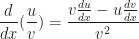
Some Math formulas like the quotient rule, \displaystyle\frac{d}{dx}(\frac{u}{v})=\frac{v\frac{du}{dx}-u\frac{dv}{dx}}{v^2}, you will automatically memorize it once you have done enough practice.

In the end, you may even find that E Maths or A Maths is easy!


Motivational Story to motivate you

(Source: http://www.indianchild.com/inspiring_stories.htm)

THE OBSTACLE IN OUR PATH
In ancient times, a king had a boulder placed on a roadway. Then he hid himself and watched to see if anyone would remove the huge rock. Some of the king’s wealthiest merchants and courtiers came by and simply walked around it.

Many loudly blamed the king for not keeping the roads clear, but none did anything about getting the big stone out of the way. Then a peasant came along carrying a load of vegetables. On approaching the boulder, the peasant laid down his burden and tried to move the stone to the side of the road. After much pushing and straining, he finally succeeded. As the peasant picked up his load of vegetables, he noticed a purse lying in the road where the boulder had been. The purse contained many gold coins and a note from the king indicating that the gold was for the person who removed the boulder from the roadway. The peasant learned what many others never understand.

Every obstacle presents an opportunity to improve one’s condition.


Chinese Version

石头的故事

从前有一个国王,他故意派人搬来一块大石头放在道路中间。然后这个国王躲在旁边静静地观察,想知道是否会有人过来把这块大石头搬走。有几个富有的商人经过这块石头,只是直接绕过它。之后又来了几个人,他们只是埋怨国王居然没有找人来清理道路,然后仍然是绕过这块巨石走掉了。又过了一会,一个农夫经过这里,他身上背着沉甸甸的蔬菜。走到巨石的前面,把身上背的蔬菜放下,然后试着去把这块巨大的石头移到道路的旁边。农夫竭尽全力去推那块巨石,终于成功得把石头推到道路的一侧。农夫背起蔬菜准备继续赶路,却发现石头原来所在的地方下面有一个袋子。农夫好奇得打开袋子,里面有许多金币还有一个纸条。纸条是国王留下的,原来金币是用来奖励移走石头的人。
这个小故事讲述了一个简单的道理:困境也有可能是机会。遇到困难的时候,有些人会像商人那样,直接选择放弃。有些人会像那几个埋怨者,只会抱怨却不想着付出行动来改变现状。很少人会像故事中的农夫那样选择迎难而上。然而,最终收获最多的往往就是这部分迎难而上的人。
平常生活中和工作中也是这样,遇到问题,首先要不抛弃不放弃,积极寻求解决方法。无休止的抱怨只会白白错失机会,抱怨多了,好运气也会绕道而行。在困境中寻找机会方法,在挫折中吸取经验教训,那么就会很容易走出困境了,说不定还会有意外的收获哦!

Is the Universe Made of Math?

Source: http://www.scientificamerican.com/article.cfm?id=is-the-universe-made-of-math-excerpt


Our Mathematical Universe: My Quest for the Ultimate Nature of Reality

In this excerpt from his new book, Our Mathematical Universe, M.I.T. professor Max Tegmark explores the possibility that math does not just describe the universe, but makes the universe

By Max Tegmark

What’s the answer to the ultimate question of life, the universe, and everything? In Douglas Adams’ science-fiction spoof “The Hitchhiker’s Guide to the Galaxy”, the answer was found to be 42; the hardest part turned out to be finding the real question. I find it very appropriate that Douglas Adams joked about 42, because mathematics has played a striking role in our growing understanding of our Universe.

The Higgs Boson was predicted with the same tool as the planet Neptune and the radio wave: with mathematics. Galileo famously stated that our Universe is a “grand book” written in the language of mathematics. So why does our universe seem so mathematical, and what does it mean? In my new book “Our Mathematical Universe”, I argue that it means that our universe isn’t just described by math, but that it is math in the sense that we’re all parts of a giant mathematical object, which in turn is part of a multiverse so huge that it makes the other multiverses debated in recent years seem puny in comparison.

Math, math everywhere! But where’s all this math that we’re going on about? Isn’t math all about numbers? If you look around right now, you can probably spot a few numbers here and there, for example the page numbers in your latest copy of Scientific American, but these are just symbols invented and printed by people, so they can hardly be said to reflect our Universe being mathematical in any deep way.

Continue reading at: http://www.scientificamerican.com/article.cfm?id=is-the-universe-made-of-math-excerpt