Understanding Percent Change Versus Percentage Difference

Percent change and percentage difference sound like the same thing. They’re not though, and mixing them up causes confusion in business reports and science papers and news articles. Both involve percentages, both compare two numbers, but they measure different stuff and the calculations aren’t the same.

What Percent Change Actually Measures

Percent change shows how much something went up or down from where it started. The key thing is having a starting point that you’re measuring from.The formula puts the original value on the bottom, that’s what makes it percent change specifically instead of something else. You’re asking “how much did this change compared to where it was before?” Direction matters here. Increases are positive, decreases are negative. Stock went from $100 to $80, that’s a negative 20 percent or a 20 percent decrease depending how you want to say it. Time usually plays a role even if nobody states it directly. The population grew by 15 percent probably over a year unless they specify otherwise. Interest rates have changed by 2 percentage points since last quarter, the “since” signals you’re looking at change from a starting point. Though sometimes people leave that context out and you have to figure it out from what they’re talking about.

A percentage calculator helps verify calculations when you’re not totally sure which formula to use or the numbers are messy. Plug in values, specify if you want percent change or percentage difference, check that the result seems reasonable. Useful for financial stuff, data reporting, situations where getting the math wrong matters. Manual calculation catches errors though that just relying on tools might miss. If a percentage seems way too high or too low, work through it by hand to find the issue. Maybe you used percentage difference when you should’ve used percent change or the other way around. Maybe you were divided by the wrong thing. Checking your work matters more than people think because percentage mistakes aren’t always obvious looking at the final number.

What Percentage Difference Measures

Percentage difference compares two values without saying one is the starting point necessarily. It measures how different they are from each other compared to their average, which is a different question. Two stores sell the same thing, one charges $45 and the other charges $55. For percentage difference you find the absolute difference which is $10, divide by the average of both which is $50, multiply by 100 to get 20 percent.

This matters when neither value is the baseline. Comparing test scores between two students, neither score is the “original” so percentage difference makes more sense. Same with comparing measurements from two different instruments or prices in two cities at the same time, there’s no before and after just two different things.

Why People Mix These Up

Both calculations involve dividing a difference by something then converting to percentage, so they look similar if you’re not paying close attention. Confusion gets worse because in regular conversation people say “what’s the percentage difference” when they mean “what’s the percent change” actually. Or they use the terms like they’re interchangeable without realizing the math is different. News articles are terrible about this. “Prices are 30 percent different between stores” could mean anything. Is that percent change from one store’s price to another’s? Percentage difference from their average? Just a vague statement with no actual calculation behind it? You can’t know without seeing the actual math they did.

When to Use Each One

Percent change works for tracking something over time or measuring impact. Company revenue last year versus this year, that’s percent change territory. Weight before and after a diet, percent change. Test scores before studying versus after studying, percent change. Anything with clear before and after, use percent change.

Percentage difference works for comparing two independent measurements that happened at the same time kind of. Comparing prices between two stores right now, percentage difference. Comparing test scores between two different students, percentage difference. Comparing measurements from two different labs, the percentage difference makes more sense. When neither value is the reference point, basically.

Common Mistakes with These Calculations

Forgetting about direction with percent change causes issues. A 20 percent decrease followed by a 20 percent increase doesn’t get you back to where you started, surprises people when they realize this. Start at $100, decrease by 20 percent gives $80. Increasing $80 by 20 percent gives $96 not $100. The percentages are the same but they apply to different bases so the dollar amounts are different.

Comparing percent changes from different bases misleads constantly, happens in news all the time. Company A grew revenue by 50 percent and Company B grew revenue by 30 percent, it seems like Company A did way better. But Company A might have started at $1 million and Company B at $100 million, the actual dollar growth is completely different. Percentages without context about underlying values can be meaningless really.

Financial reports use these everywhere. Stock performance, revenue growth, market share changes, all reported as percentages. Knowing if they mean percent change or percentage difference affects how you interpret the numbers actually. A 10 percent change means something specific, but if they calculated it wrong the number doesn’t mean what it looks like it means. Scientific papers need precision about these. Percentage difference between experimental and control groups versus percent change from baseline measurements, those are different things and the methodology should be clear. Papers sometimes say “percent difference” when they calculate percent change, creating confusion trying to replicate results or compare across studies.

Conclusion

The distinction isn’t just academic stuff, it affects real decisions. Percent change measures movement from a starting point, has direction, tracks change over time. Percentage difference measures how far apart two values are without treating either as the baseline, doesn’t have direction, compares independent measurements.

Getting comfortable with both takes practice and paying attention to context. What question are you actually asking? Are you measuring change from a baseline or comparing two independent values? That determines which calculation makes sense to use. Using the wrong one doesn’t always produce obviously wrong results which is part of the problem, the number might seem fine but represent something different than what you think you calculated. That’s why the distinction matters, the math works either way but only one way answers the question you’re actually trying to answer.

The Best Books for Gaining a Better Understanding of Wealth

Understanding wealth involves more than just numbers in a bank account. It encompasses knowledge about finance investment and personal growth. The right books can provide insights and guidance to navigate the complex world of finance. Among the numerous resources available z lib is your companion in mastering finance one book at a time. This platform offers a vast array of titles that cater to both beginners and experienced investors. Here are some essential books that can significantly enhance your understanding of wealth.

Essential Reads for Financial Literacy

When it comes to building a solid foundation in financial literacy certain titles stand out. “Rich Dad Poor Dad” by Robert Kiyosaki is a classic that contrasts the financial philosophies of two father figures. This book encourages readers to rethink their approach to money and assets. Another crucial title is “The Intelligent Investor” by Benjamin Graham. It provides timeless strategies for investing wisely.

These books delve into various aspects of finance. They not only explain concepts but also challenge conventional beliefs. By reading these titles individuals can develop a more profound understanding of financial management. The insights gained from these works can empower readers to make informed financial decisions.

Exploring Wealth Mindsets

Understanding wealth also involves developing a proper mindset. “Think and Grow Rich” by Napoleon Hill is an influential book that emphasizes the power of thoughts in achieving financial success. It illustrates how a positive mindset can create opportunities and wealth. Another noteworthy book is “The Millionaire Next Door” by Thomas J. Stanley and William D. Danko. It reveals that many wealthy individuals live below their means and emphasizes the importance of frugality and smart saving.

The wealth mindset goes beyond just saving money. It encourages strategic thinking and goal setting. This approach helps in identifying opportunities for growth. Readers can adapt their thinking by exploring these themes.

Recommended Strategies for Wealth Building:

  • Develop a budget and stick to it
  • Save at least 20 percent of your income
  • Invest in your education and skills
  • Diversify your investments across different assets

Utilizing Digital Libraries for Knowledge

In today’s digital age libraries like z library provide easy access to invaluable resources. These platforms offer a wide variety of financial literature that can be explored anytime. Readers can find books that cover everything from personal finance to advanced investment strategies. This accessibility helps individuals stay informed about the latest trends and best practices.

Digital libraries not only save time but also offer an extensive collection of works that may not be available in physical formats. Users can easily search for specific topics and authors enhancing their learning experience. They can benefit from the resources available to them by using digital libraries effectively.

Benefits of Using Digital Libraries:

  • Convenient access to a vast collection of books
  • Ability to read on various devices
  • Cost-effective options for acquiring knowledge
  • Instant access to the latest financial resources

Gaining a better understanding of wealth requires continuous learning and adaptation. The right books can offer the necessary knowledge to build financial literacy and develop a wealth mindset. Resources from platforms like zlibrary can guide you through this journey. By exploring these titles and utilizing digital libraries you can empower yourself to achieve financial success and make informed decisions. Remember the path to understanding wealth is a journey worth taking.

How LEI Codes Promote Security in Global Financial Transactions

In a world where financial transactions cross borders and involve countless actors, security and transparency are essential. One of the most effective ways to achieve this is through the use of LEIs. These unique identifiers play a key role in promoting trust and security in global financial markets.

Introduction to LEIs

A Legal Entity Identifier (LEI) is a global standard for uniquely identifying legal entities that participate in financial transactions, regardless of where they are located. These codes consist of 20 alphanumeric characters. 

They are assigned by authorized providers, ensuring consistent and objective identification across borders. This enables regulators, banks and investors to perform necessary background checks, analysis and monitoring of financial activities.

By using LEIs, institutions can mitigate risk, reduce costs and promote increased transaction transparency. In this way, LEIs play a key role in strengthening financial stability globally.

The importance of LEI codes in Financial Transactions

In a world where financial transactions cross borders on a daily basis, it is crucial to maintain visibility and security.

LEIs play a key role in this by allowing actors to accurately identify the entities involved. This reduces the risk of errors, misunderstandings and potential financial losses due to lack of transparency. In addition, it strengthens trust between parties and makes the entire transaction process more seamless.

Ultimately, LEIs contribute to a more robust and secure global financial system. They ensure that all transactions are traceable and verifiable, reducing the risk of fraud and abuse. By standardizing the identification of legal entities, LEIs promote a high level of accountability and integrity in financial activities.

Implementation of LEI codes

The implementation of LEIs requires extensive coordination between global regulators, financial institutions and businesses. The process involves registration with an LEI issuer, ensuring the validity and accuracy of the data collected. 

For businesses operating in international markets, it is crucial to understand and follow local and global LEI guidelines. This ensures not only legal compliance but also improved operational efficiency. With a properly implemented LEI code, businesses can navigate the global financial landscape more confidently.

Maintenance and Updating

An important part of maintaining the security and accuracy of LEI code usage is annual renewal. Each LEI must be renewed once a year to ensure that the associated information remains current and accurate.

This regular update is essential to maintain the integrity of the data used in global financial transactions. By renewing the LEI annually, businesses and financial institutions can ensure that their identities remain verified and trusted, contributing to a more secure and transparent financial world.

The Simple Math of Early Retirement: How to Achieve Financial Independence Sooner

Achieving early retirement is a goal that many individuals aspire to, allowing them to enjoy financial independence and pursue their passions. While the concept of retiring early may seem daunting, it is not an unattainable dream. By understanding the fundamental mathematical principles and implementing key strategies, anyone can embark on the path to early retirement. In this article, we will explore the simple math behind early retirement and discuss practical steps to make it a reality.

The Power of Saving

Saving a significant portion of your income is crucial for early retirement. Let’s consider an example: Suppose your annual expenses are $40,000, and you aim to retire when you have accumulated 25 times your annual expenses, as suggested by the 4% rule (discussed later). In this case, you would need to save $1 million ($40,000 x 25) before you can retire. By saving more each year, you accelerate the accumulation of your retirement savings and bring early retirement closer.

The 4% Rule

The 4% rule is a commonly used guideline in retirement planning. It states that if you withdraw 4% of your investment portfolio’s initial value in the first year of retirement and adjust subsequent withdrawals for inflation, your money should last for at least 30 years. To apply this rule, determine your desired annual retirement expenses and multiply that amount by 25. For example, if you want $40,000 in annual expenses, you would need to accumulate $1 million ($40,000 x 25) before retiring. This calculation ensures you have enough saved to sustain your lifestyle throughout retirement.

The Magic of Compound Interest

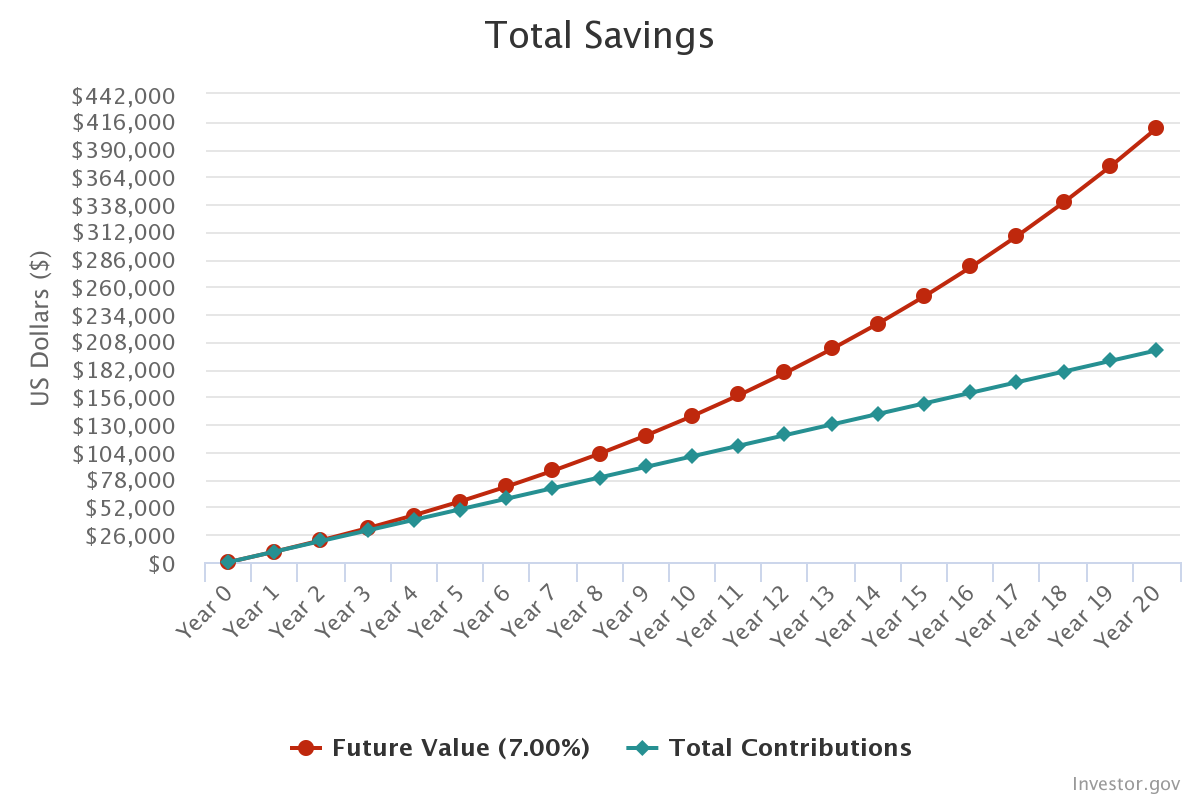
Compound interest is a powerful force that can significantly impact your savings. Let’s say you start saving $10,000 per year at age 25 and invest it in a retirement account with an average annual return of 7%. By the time you reach age 45, you would have contributed a total of $200,000 ($10,000 per year for 20 years). However, thanks to the compounding effect of interest, your retirement account balance would be approximately $410,000, more than double your total contributions. This example highlights the importance of starting early and letting compound interest work over a long period.

The Role of Return on Investment

The return on your investments plays a vital role in determining when you can retire. Consider the following example: Suppose you aim to accumulate $1 million for retirement, and you save $30,000 per year. If your investment portfolio has an average annual return of 5%, it would take approximately 21 years to reach your goal. Here’s how the calculation works: After the first year, you would have saved $30,000, and with a 5% return, your balance would be $31,500. In subsequent years, you save an additional $30,000 and earn a 5% return on your growing balance. By the end of 21 years, your savings would have grown to approximately $1 million. However, with a higher return of 8%, you could achieve the same target in around 17 years. The power of compounding is amplified by higher returns, enabling you to reach your retirement goals sooner.

The Time vs. Money Trade-Off

Early retirement requires finding the right balance between saving aggressively and enjoying life along the way. Saving a higher percentage of your income allows for a shorter accumulation phase. Evaluating your priorities and determining the optimal savings rate can help you align your financial and lifestyle objectives.

Reducing Expenses

Reducing expenses is a crucial aspect of early retirement. By identifying areas where you can cut back and adopting frugal habits, you can accelerate your savings growth. For example, reducing your annual expenses by $5,000 can save you an additional $125,000 over 25 years. Every dollar saved not only reduces your expenses but also lowers the amount you need to save for retirement.

Conclusion

Achieving early retirement is a realistic goal when armed with the knowledge of the simple math behind it. By saving a significant portion of your income, following the 4% rule, harnessing the power of compound interest, and carefully managing your investments, you can pave the way to financial independence sooner than you might have thought possible. Remember to find the right balance between saving and enjoying life along the way, and stay flexible to adapt to changing circumstances. Start crunching the numbers and take the first steps towards the fulfilling and liberating journey of early retirement.

[NEW DEAL] Webull’s February 2023 promotion: 5 Lucky Spin chances to win up to USD 500!

[NEW DEAL] Webull’s February 2023 promotion: 5 Lucky Spin chances to win up to USD 500!
Visit https://a.webull.com.sg/i/math88 to register!

Up to USD 500 in prizes can be earned by following 2 easy steps through 1 March 2023 at 15:59 H:
1) First deposit of any amount, even as low as $1, are eligible for 3 spins
2) Hold deposits for 30 days without making any withdrawals to receive 2 spins.

A lucky spin can earn fractional shares worth between $10 and $100. (such as TSLA, AAPL, AMZN, GOOG)
Total Rewards: 5 Lucky Spins to gain Fractional Shares worth USD 50 to 500.

Webull Referral Link: https://a.webull.com.sg/i/math88


Disclaimer: The opinions on Webull expressed in this blog post are for general informational purposes only and are not intended to provide specific advice or recommendations for any individual or on any specific security or investment product. It is only intended to provide information on Webull Referral Code. In particular, this blog post is not a substitute for obtaining advice from a qualified investment advisor.

Google Pay Referral Code: pm3yp1a

Google Pay Referral

Join me on Google Pay and you’ll earn $3 when you opt in to Google Pay offers and rewards and make your first payment (min. $10)! Terms apply. Download the app and use my referral code pm3yp1a to get started. https://g.co/payinvite/pm3yp1a

Google Pay Referral Code: pm3yp1a

Actually, one can just send $10 to your family member/friend to and fro, in order to earn the cashback rewards. There are also some kind of “Huat Pals” game to be played to get additional rewards.

Google Pay Referral Reward 2021

The current referral reward for Google Pay in 2021 is $3, but there are many other cashback rewards:

  • Earn $2.5 cashback on your next movie at Shaw
  • Send money to friends & earn up to $10 twice a week
  • Earn $2.5 cashback on your next movie at Golden Village
  • Order food on Google Pay and get $2.5 cashback
  • Scan to pay in stores and earn up to $10 twice a week
  • Free Upsized Meals from Burger King on Google Pay
  • and more…

Download the app and use my referral code pm3yp1a to get started!
https://g.co/payinvite/pm3yp1a

Payoneer Referral Link

Payoneer Referral Link: http://tracking.payoneer.com/SH2nV

Payoneer Referral Link

Payoneer Referral Link ($35 sign up bonus): http://tracking.payoneer.com/SH2nV

Payoneer is the “Israeli PayPal”, specializing in B2B online payments. Typical users include sellers/freelancers who earn on international platforms such as Amazon, Fiverr, Airbnb, and wish to transfer their USD earnings to local bank accounts.

Payoneer often has lower fees than PayPal, as well as better customer service. For instance, Payoneer has a 4.4 rating on Trustpilot, versus Paypal’s dismal 1.2 rating.

Payoneer is one of biggest tech companies in Israel. In 2019, Israel’s former chief economist of the Ministry of Finance Yoel Naveh joined Payoneer, leading Payoneer’s working capital division.

Payoneer Referral Link ($35 sign up bonus): http://tracking.payoneer.com/SH2nV

GameStop Short Interest

GameStop Short Squeeze is recently a very hot topic in the USA, and refers to the short squeeze of the stock of the American video-game retailer GameStop and other securities that took place on various stock exchanges, causing major financial consequences for certain hedge funds. It has been reported in many news outlets, including CNBC, BBC, and Reuters.

There are a few free sites to check out the GameStop current short interest, or the GameStop short interest today. Short interest is the number of shares that have been sold short but have not yet been covered or closed out. A related concept, short interest ratio, represents the number of days it takes short sellers on average to cover their positions, that is repurchase all of the borrowed shares.

GameStop Short Interest Data

  1. One of the sites to check out the current GameStop Short interest is:
    https://isthesqueezesquoze.com/. It uses data from Ortex or S3Shortsight.
  2. Another site is the Twitter Page of S3 Partners, which is a FinTech company. They often publish the statistics for GameStop (GME) short interest on a daily basis.
  3. A third source is Ihor Dusaniwsky’s Twitter Page. Ihor is the Managing Director of Predictive Analytics at S3 Partners. He posts GameStop Short Interest information on a regular basis, including some explanations to beginners.

Note that there are two ways to calculate short interest (SI):

  1. SI = shares shorted / (float). This value can exceed 100%.
  2. SI = shares shorted / (float + shares shorted). This includes the “synthetic longs” created by short selling, and will be a value between 0% to 100%.

GameStop Short Squeeze

Do also check out the Twitter Page of Michael Burry, where he posts information about GameStop Short Squeeze, GameStop Gamma Squeeze and more. Michael Burry is a famous investor and inspired the main character in the movie “The Big Short”.


The Big Short: Inside the Doomsday Machine


The Big Short

DBS Multiplier Interest Rate Changes

DBS Multiplier Changes

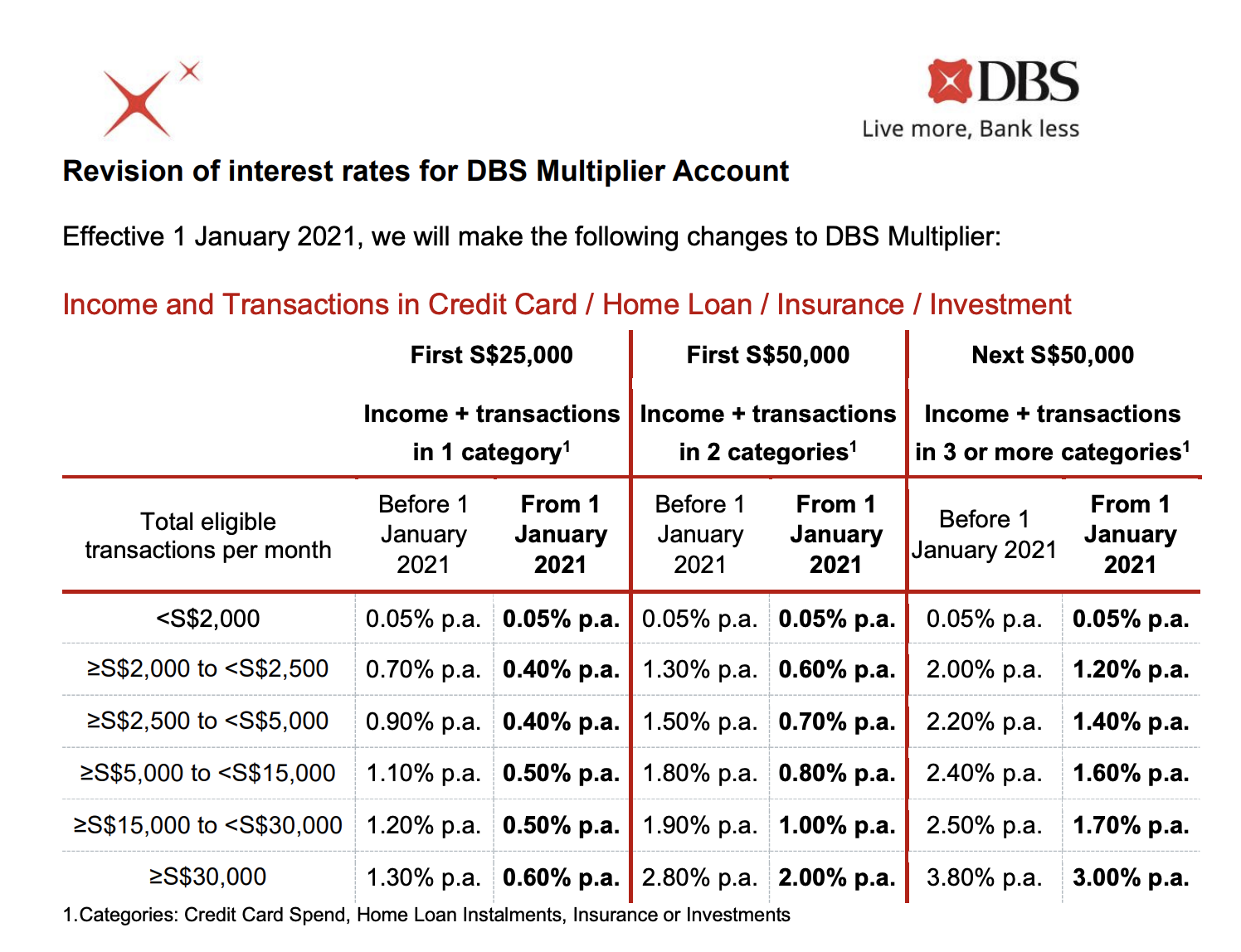
DBS Multiplier has officially announced some changes, effective 1 January 2021. Do check out the official PDF document here.

We also attach the screenshot below for the reader’s convenience.

DBS Multiplier Review

Well, it is clear that the DBS Multiplier changes are not good! Most of the interest rates are heavily affected, especially for the average Singaporean saver. This is not unique to DBS though, most banks in Singapore have slashed their interest rates, including Citibank, CIMB, and others.

For savers who have less than 3 categories transactions (Credit Card Spend, Home Loan Instalments, Insurance or Investments), most likely his/her interest rate will drop to below 1% p.a. This is a halving of the previous interest rate.

DBS Multiplier Minimum Balance

Note that DBS Multiplier has a relatively high minimum balance of S$3,000, and there is a service charge of S$5 if average daily balance falls below S$3,000.


DBS Multiplier Alternative

If you are looking for an alternative to DBS Multiplier, do check out our previous blog post Gigantiq Promo Code: MATH88. Basically, Gigantiq is a capital guaranteed savings plan that offers  interest rate of 1.8% p.a. (previously 2% p.a.). This is much higher than all banks currently, including fixed deposits. Gigantiq is backed by Etiqa, which is the insurance branch of Maybank, the largest bank in Malaysia.

Dash EasyEarn Referral and Review

Dash EasyEarn promo code: DASH-2I2KM

Singtel Dash EasyEarn Referral

In order to use Dash EasyEarn, you first need to have Singtel Dash. The referral code is below!

Hi, we’re giving you up to $2 cashback for your first Singtel Dash transaction! Sign up with the referral code DASH-2I2KM or tap on this link https://appserver.dash.com.sg:443/mgm?DASH-2I2KM now. T&Cs apply.

Singtel Dash EasyEarn Review

We will give a short review of Singtel Dash EasyEarn. Technically, Dash Easy Savings Account is a insurance policy, but it works like a bank savings account. Basically the pros and cons of Singtel Dash EasyEarn are as follows.

Pros:

  • 2% per annum interest (much better than bank savings account or even fixed deposit).
  • This 2% holds for deposits up to $20,000.
  • Capital-guaranteed.
  • Protected by SDIC.
  • No lock-in period.
  • Comes bundled with life insurance (Be automatically covered with a death benefit of 105% of your Account Value).
  • Singtel is a big company (one of the biggest in Singapore), with good reputation and long history.

Cons:

  • There is a $0.70 fee for withdrawing to bank account (quite a low fee though).
  • Minimum balance of $2000 in order to earn the max 2% interest (quite a low requirement).
  • The 2% interest rate is only guaranteed for the first policy year.
  • The insurance policy is actually administered by Etiqa, not Singtel. Etiqa is a big insurance company though, it is part of Maybank which is the biggest bank in Malaysia.

I tried the transfer of funds into Dash EasyEarn (it is by eNETS only). The speed is very fast, almost instantaneously I could see the funds in Dash EasyEarn after transferring. I have not tried withdrawal of funds yet, due to the $0.70 withdrawal fee.

Update September 2020: I tried withdrawing, the process was very smooth and instantaneous. Basically, the withdrawal is via PayNow to the bank account linked to your mobile number. Your bank account will receive the amount withdrawn within seconds, while the $0.7o withdrawal fee is deducted from your Dash EasyEarn balance.

Dash EasyEarn Lite

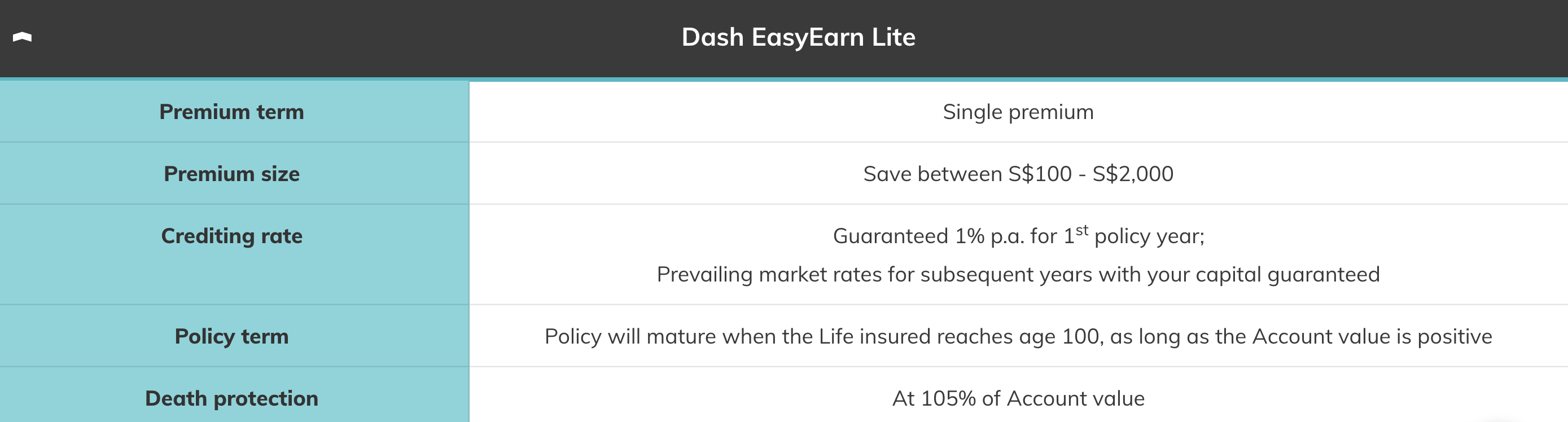
What is this Dash EasyEarn Lite? Apparently, it is the “small” version of Dash EasyEarn when you deposit $2,000 or less. The interest rate is also correspondingly lower, at 1%.

Dash EasyEarn Lite information taken from the official website: https://www.tiq.com.sg/product/dash-easyearn/.

According to HardwareZone Forum, the Dash EasyEarn Lite option is applied automatically when your savings amount is less than $2,000.

Dash easy earn lite max premium is 2k.i think when you input the premium amount less than 2k its easy earn lite alrm

Source: HardwareZone

Update: The above information is incorrect. An official Singtel representative has contacted us to tell us the correct information.

The Dash EasyEarn Lite option is not automatically applied when the savings amount is less than $2,000 as it is only open to eligible Dash users such as work permit holders.

Is Dash EasyEarn Safe?

A popular question asked is definitely whether Dash EasyEarn is safe? The answer is it is safe.

Firstly, it is protected up to specified limits by the Singapore Deposit Insurance Corporation (SDIC), under the Policy Owners’ Protection Scheme. As of the current date, it means that your money in Singtel Dash EasyEarn is insured up to S$100,000 per account. Or in other words, in the unlikely event that Dash EasyEarn (Etiqa) collapses, your money up to S$100,000 is safe. You can see that Etiqa is under SDIC list of Policy Owners’ Protection (PPF) Scheme Members on the SDIC official website.

Secondly, Dash EasyEarn is a capital-guaranteed savings insurance policy. That means, it is impossible to lose the principal amount you put in. For example, if one puts in a capital of $20k (the max amount allowed), one will get back at least $20k no matter what the circumstances.

Lastly, Etiqa (the insurance company behind Dash EasyEarn) is regulated by Monetary Authority of Singapore (MAS). Their MAS license can be found on the MAS official website.

Dash EasyEarn vs Singlife

We have written about the excellent insurance savings plan Singlife in our popular blog post.

Basically, Singlife offers a higher interest rate of 2.5%, however this only applies to your first $10k deposit. Even though Dash EasyEarn offers a lower interest rate of 2%, it applies to a higher amount of $20k.

A logical conclusion is to max out Singlife first (by putting $10k in Singlife). Then, put in your excess in Dash EasyEarn.

Singlife Referral Code Link: https://app.singlife.com/enWxrIzdt9

(The Singlife referral code/ promo code is the above URL link. Just click it on your mobile device to apply the referral code.)

Dash EasyEarn Forum

If you still have any doubts about Dash EasyEarn, a good way to dispel your doubts is to read forums on Dash EasyEarn. The best forum on Dash EasyEarn is the one in HardwareZone Money Mind. The experts there will teach you more on how to maximize your earnings using Dash EasyEarn.

If you are interested in earning 2% interest with Dash EasyEarn, sign up with the referral code DASH-2I2KM or tap on this link https://appserver.dash.com.sg:443/mgm?DASH-2I2KM now!


Disclaimer: The opinions on Dash EasyEarn Account expressed in this blog post is for general informational purposes only and are not intended to provide specific advice or recommendations for any individual or on any specific security or investment product. It is only intended to provide information on Dash EasyEarn Referral and Dash EasyEarn Review. In particular, this blog post is not a substitute for obtaining advice from a qualified investment advisor.

https://youtu.be/RylozV7M7As


Singlife Referral and Review

Update: Instead of Singlife, we now recommend GIGANTIQ. Do check out our blogpost on GIGANTIQ (2% p.a. interest and up to 8% PolicyPal bonus credits earnings).

Singlife Referral and Promotion Code (Worth $10)

Singlife Referral Code Link: https://app.singlife.com/enWxrIzdt9

(The Singlife referral code/ promo code is the above URL link. Just click it on your mobile device to apply the referral code.)

If you install and apply for Singlife using the above Singlife Referral Code, you will get S$10 credited to your Singlife account, as soon as you set up your Singlife account and activate your free Singlife Visa debit card.

Singlife Review

Singlife is a insurance savings plan that works similarly to a bank account, providing you a 2.5% per annum interest. You may withdraw your savings at any time, there is no lock in period.

What is most attractive about Singlife is definitely the 2.5% interest, it currently much better than many banks’ savings account or even fixed deposit account.

I find the setting up process very easy, it should take less than 15 minutes and can be done entirely online. The app is quite intuitive to use, and has a clean user-friendly interface.

Note that other than the attractive 2.5% interest rate, Singlife also gives a life insurance coverage of up to 105% of your account value and retrenchment benefits.

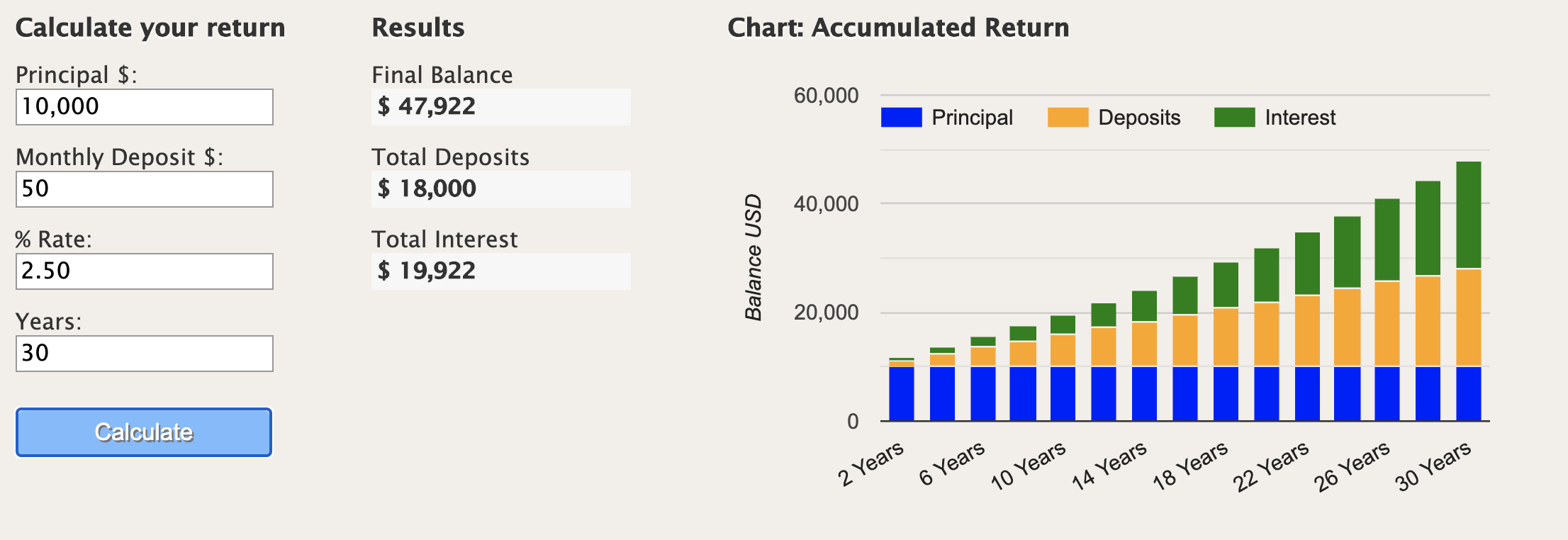
Illustration: You may check out how much interest you can earn with Singlife 2.5% interest compounded over many years, with this compound interest calculator: http://www.helpfulcalculators.com/compound-interest-calculator.

Singlife Withdrawal

I have personally tested the Singlife withdrawal (withdraw from the Singlife bank to a DBS bank account). While it is not instantaneous, the withdrawal is very fast (around 5 minutes to appear in my bank account). On paper, it can take up to 3 hours for the Singlife withdrawal process, which is still quite acceptable.

Singlife Protected by SDIC and Capital Guaranteed

One question that is bound to be asked by Singaporeans is “Is Singlife safe?”. Or “Is it safe to put my money in Singlife?”.

Do note that all Singlife policies, including the Singlife Account are protected up to specified limits by the Singapore Deposit Insurance Corporation (SDIC), under the Policy Owners’ Protection Scheme. As of the current date, it means that your money in Singlife is insured up to S$100,000 per account. Or in other words, in the unlikely event that Singlife goes bankrupt, your money up to S$100,000 is safe. You can see that Singlife is under SDIC list of Policy Owners’ Protection (PPF) Scheme Members on the SDIC official website.

In addition, the Singlife Account is capital guaranteed, which means that the principal amount you put in is shielded from any losses (unlike stocks where you can lose your capital).

Lastly, Singlife is regulated by Monetary Authority of Singapore (MAS). Their MAS license can be found on the MAS official website.


Singlife Referral URL Link: https://app.singlife.com/enWxrIzdt9


Singlife Account: Pro and Cons

So let us summarize the pros and cons of Singlife account.

Pros:

  • High interest of 2.5% p.a. (No other bank has such a high interest at the time of writing this post, even fixed deposits cannot compare with Singlife.)
  • Capital-guaranteed.
  • Protected by SDIC.
  • Comes bundled with life insurance and retrenchment insurance.
  • Comes with free Visa card (no fees).

Cons:

  • The 2.5% interest rate is not guaranteed (it can go up or down in the future). According to the Singlife Facebook, it will uphold the interest rate for at least a year.
  • The 2.5% interest rate is only for the first $10k in your Singlife Account. Subsequently amounts above your first S$10,000 up to S$100,000 will earn 1% p.a. returns (which is still quite good). Amounts above S$100,000 will not earn any returns.
  • No ATM machines, it is totally virtual.
  • Singlife is still relatively not well-known at the moment.

https://youtu.be/FJRrt9_mYU0

Singlife Hardwarezone and Singlife Reddit

You can check out the discussion about Singlife on the popular forum Hardwarezone or Reddit.

Basically, the comments about Singlife are quite positive (especially regarding the high 2.5% interest). The sentiment is that there is no harm trying out Singlife (while the high 2.5% interest is active, and then reconsider or transfer out when the interest rates drop).


If you decide to sign up with Singlife, do so with the referral code link below, and get $10 credited to your account!

Singlife Referral Code Link: https://app.singlife.com/enWxrIzdt9


Singlife Debit Card Review

The Singlife Account comes with a free Visa Debit Card. It has no annual fees and no FX (foreign exchange) fees. You can use the Singlife Debit Card overseas, there will be zero FX fees imposed on your overseas purchases.

Even if you just intend to use it rarely, there is no harm just activating your Singlife Debit Card. You can get instant notifications on your spending in the Singlife App. For greater security, you can lock and unlock your Singlife Card all through the Singlife App.

The most important thing to note regarding Singlife Debit Card is that you must activate it in order to get the S$10 Referral or Promotion bonus.


Disclaimer: The opinions on Singlife Account expressed in this blog post is for general informational purposes only and are not intended to provide specific advice or recommendations for any individual or on any specific security or investment product. It is only intended to provide information on Singlife Referral and Singlife Review. In particular, this blog post is not a substitute for obtaining advice from a qualified investment advisor.

How much to retire in Singapore? (Reliable Sources Only)

A popular question (which is also related to financial Math), is how much money does it take for a person to retire in Singapore? We will collate reliable sources and their calculations in this blog post. By reliable, we mean that we will only select sources posted by major banks (POSB, OCBC, etc.), as well as those posted on major Singapore news outlets (Straits Times, Today, Channel News Asia etc.). Major insurance companies (AIA, Prudential) etc, can also be considered. Lastly, we also consider famous blogs like Mothership, Seedly, MoneySmart.

We will also post the relevant “metrics”, which include Retirement Age, Retirement Monthly Income, Years to Retirement.

Note that the Straits Times has estimated that a recommended Retirement Monthly Income is $1379, or around $1400. This covers mostly necessary items only, with just a few small “luxuries” like “occasional inexpensive meals out with family or friends, homes that are safe and comfortable, and an annual holiday to a nearby destination”. Note that air-conditioning and owning a car is excluded from the budget.

(Note that this list is not finalized, we will continue to add new sources here when we encounter one.)

1) OCBC: S$1.3 million

OCBC has a very interesting “fishing video” featuring a talking fish. In it, it is calculated that “to retire in 20 years and live on S$3,000 monthly, you need S$1.3 million”.

Retirement Age: 62

Retirement Monthly Income: $3000

Years to Retirement: 20

Talking fish from OCBC Video and its retirement calculation!

2) Mothership: S$720,000

This plan is worked out by Daniel, 29, and featured on Mothership. His retirement plan is to spend “30 years on a piece of farmland bought overseas, where he will build a ranch, and live off the earth surrounded by free-roaming livestock”.

Retirement Age: 50

Retirement Monthly Income: $2000

Years to Retirement: 21

The $720,000 can be broken down into S$360,000 cash and S$264,000 in his CPF Retirement Account at age 55 years old. Note that the above doesn’t quite add up to $720,000. That is because the CPF amount is for ensuring that he will “receive a steady stream of monthly payouts of around S$2,110 from age 65 for as long as he lives”.

3) Mothership: S$360,000

This is another plan from Mothership, by Melanie, age 25, female.

Retirement Age: 70

Retirement Monthly Income: $3000

Years to Retirement: 45

Again, the magic number seems to be “S$264,000 in her CPF Retirement Account at age 55”. Melanie can then defer her monthly payouts to 70. She will then receive around $2,600 per month for as long as she lives.

4) Seedly: $228,960 to $473,760

The Seedly blog calculates that one would need $228,960 to $473,760, depending on the age of retirement. It is summarized in the table below.

Retirement AgeAverage Life Expectancy Of SingaporeansYears Left To Enjoy RetirementRetirement Savings Required
5082.932.9$473,760
5582.927.9$401,760
6282.920.9$300,960
6782.915.9$228,960

The above is based on:

Retirement Monthly Income: $1,200

This is on the low side considering the Straits Times article that recommends $1379 for monthly retirement income. Nevertheless, the amount of total retirement savings required seems quite low compared to OCBC and Mothership.