A very famous mathematical problem known as the “Basel Problem” is solved by Euler in 1734. Basically, it asks for the exact value of .
Three hundred years ago, this was considered a very hard problem and even famous mathematicians of the time like Leibniz, De Moivre, and the Bernoullis could not solve it.
Euler showed (using another method different from ours) that bringing him great fame among the mathematical community. It is a beautiful equation; it is surprising that the constant , usually related to circles, appears here.
Squaring the Fourier sine series
Assume that
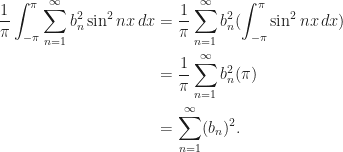
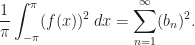
Then squaring this series formally,
To see why the above hold, see the following concrete example:
Leonhard Euler published the polynomial x2 − x + 41 which produces prime numbers for all integer values of x from 0 to 40. Obviously, when x is equal to 41, the value cannot be prime anymore since it is divisible by 41. Only 6 numbers have this property, namely 2, 3, 5, 11, 17 and 41.
Anyone who has taken high school math is familiar with the constant .
Today we are going to prove that e is in fact irrational! We will go through Joseph Fourier‘s famous proof by contradiction. The maths background we need is to know the power series expansion: . The proof is slightly tricky so stay focussed!
Did you know the constant e is sometimes called Euler’s number?
Learn more about Euler in this wonderful book. Rated 4.9/5 stars, it is one of the highest rated books on the whole of Amazon.
Leonhard Euler was one of the most prolific mathematicians that have ever lived. This book examines the huge scope of mathematical areas explored and developed by Euler, which includes number theory, combinatorics, geometry, complex variables and many more. The information known to Euler over 300 years ago is discussed, and many of his advances are reconstructed. Readers will be left in no doubt about the brilliance and pervasive influence of Euler’s work.
Watch this video for another proof that e is irrational!







![\displaystyle \frac 1\pi\cdot\left[\frac{x^3}{3}\right]_{-\pi}^\pi=\sum_{n=1}^\infty\frac{4}{n^2}.](https://s0.wp.com/latex.php?latex=%5Cdisplaystyle+%5Cfrac+1%5Cpi%5Ccdot%5Cleft%5B%5Cfrac%7Bx%5E3%7D%7B3%7D%5Cright%5D_%7B-%5Cpi%7D%5E%5Cpi%3D%5Csum_%7Bn%3D1%7D%5E%5Cinfty%5Cfrac%7B4%7D%7Bn%5E2%7D.&bg=ffffff&fg=1a1a1a&s=0&c=20201002)


 .
.
 . The proof is slightly tricky so stay focussed!
 .
.
 ,
, 

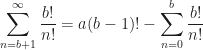
 .
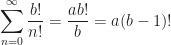
.  is an integer since both
  and
and  are integers and their difference (which is x) will be an integer.
 . For all terms with
  we have the upper estimate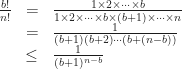
 . Changing the index of summation to
  and using the formula for the infinite geometric progression
  , we obtain:
 . This is a contradiction (since there is no integer strictly between 0 and 1), and so
  must be irrational. (QED)

 Mathtuition88